
Tales from the Editor’s Skull – Interview with Howard Jones

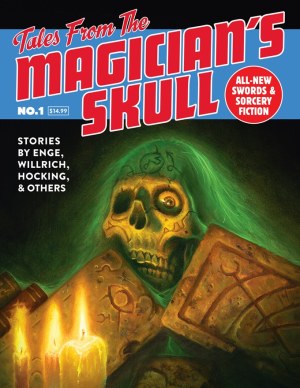
Goodman Games is about to unleash a brand-new sword-and-sorcery magazine on the world called Tales from the Magician’s Skull. The first issue is filled with old-school pulpy goodness written by authors who know the genre well (including yours truly). I recently spoke with Howard Jones, the editor-in-chief of Goodman Games’ latest venture, and he was kind enough to answer some questions about the magazine and the current Kickstarter campaign to support it.
1) Okay, give us the skinny on Tales from the Magician’s Skull. The elevator pitch if you will.
It’s a magazine dedicated to old-school sword-and-sorcery. Not pastiche, not homage, but new fiction about new characters in new worlds, inspired by the great old ground-breaking stuff. That means there’s forward momentum and inventive world building and dark sorcery and darker deeds and heroes wandering where brave men fear to tread.
2) Tells us a bit about your background as a writer and editor. How did you get involved with the project?
I’ve written a historical fantasy series set in ancient Arabia for St. Martin’s, four Pathfinder novels, and a slew of short stories. A new fantasy series from me will be dropping (again from St. Martin’s) next summer. I grew up reading and loving the kind of fiction this magazine emulates, fantasizing and dreaming what it would have been like to edit for one of the great old pulp magazines, so this is a dream come true.
Long before I was a published author I was an in-house editor for Macmillan Computer Publishing, breaking into fiction editing when I assembled eight volumes of swashbuckling historicals by Harold Lamb. And I was the Managing Editor for a sword-and-sorcery e-zine, Flashing Swords, and then, near the end of its run, Black Gate Magazine. I met Joseph Goodman when I was reviewing role-playing supplements he’d published for Goodman Games, and one year at GenCon I dropped by his booth to hand him my first published novel.
In short, over the course of a few years, we came to admire and appreciate the work the other was doing.
3) How did you and Goodman land on sword and sorcery for Tales from the Magician’s Skull? What about that genre interests you?
We’re both drawn by the sense of the adventure and the pacing. There’s little to no navel gazing. It’s all about the story. And while there IS darkness and dread, most of the time the tales aren’t drowning in it. These are typically tales with heroics and death-defying action. In earlier fiction there are fewer conventions about what magic looks like or what elves are or other issues that have become so codified some have a hard time breaking out of the mold. We love that.
There are tombs and treasure and strange enchantments, bizarre and curious locations, and protagonists desperate to get in or out of such places, sometimes in pursuit of lofty goals but more often simply to live another day.
4) Who are the writers in the first issue? And, uh, how did they get so damn lucky?
Here’s a funny thing. It started out as Joseph Goodman asking me if I wanted to contribute a story to the Goodman Games 2017 GenCon magazine. He’d asked me for one for the 2016 mag, and I said yes both times. Shortly after receiving the one for 2017, though, he wondered if maybe I knew some other sword-and-sorcery writers. Well, most of my writer friends are sword-and-sorcery writers, so that was easy.
He kept asking for a few more, and before we knew it, there were more than enough for an entire magazine. When Joseph proposed that, I lobbied to become its editor.
Because the whole thing grew organically, we tapped people we knew well who could exactly get the sword-and-sorcery vibe we were after. For issue two we’re reaching a little further afield but still working for the same feel.
As for who’s within, there’s you and me! Then there’s Chris Willrich, best known for his Gaunt and Bone sword-and-sorcery tales and books, which are a well-known secret amongst modern sword-and-sorcery fans. He penned a new one about his characters. And James Enge, perhaps the breakout writer from Black Gate, who’s drafted a new adventure starring Morlock the Maker. There’s Bill Ward, who wrote a tale of dark conspiracy in an Asian-inspired fantasy coastal setting. And Clint Werner, well-known Warhammer author, who gave us a creepy Hammer-horror infused sword-and-sorcery tale, and John C. Hocking, probably best known as the author of Conan and the Emerald Lotus, but more recently known for his tales of the archivist, writing a dark, punchy adventure set in that character’s world.
If you want to know more, the Kickstarter gives you thumbnail synopses of each story!
5) So besides awesome tales of sword and sorcery, what else can we expect from Tales from the Magician’s Skull?
Well, there’s horror and suspense as well, which are important components of the genre, and I think you’ll see an occasional tale with those features more primary than secondary. But within the magazine you’ll find some great artwork, and maps to lost places within the stories, and then an appendix that presents the monsters and challenges in Dungeon Crawl Classics game statistics, in case you want to bring any of the events to life at your own game table.
6) I know a lot of my readers are dying to know the answer to this next question. Will the magazine be opened up to unsolicited submissions at some point? If so, tell us a little about what Editor-in-chief Howard Jones looks for in a story.
To know what I look for in a story, check out the first two issues, and read yourself some great old sword-and-sorcery, like the Conan stories, or the early Fafrhd and Gray Mouser stuff (particularly from the Swords Against Death collection) or practically anything from Leigh Brackett. We don’t plan on publishing space opera, as she often wrote, but her sense of color and pacing is definitely something to model off of.
We do plan on opening to submissions, eventually. But it’s likely to be a few issues yet. First we want to establish the magazine and build up a reader base, which is challenging enough without adding slush reading on top of it!
7) How and where can folks support this awesome project?
Not only can you drop by the Kickstarter campaign and pledge for an e-copy or physical copy of the magazine (or maybe even join our secret society) you can help spread the word. I’m tremendously pleased that we met our funding goal in the first day. But I’m also certain there are many more sword-and-sorcery fans out there. Surely they must number in the thousands. Help us reach them! Spread the word. We love this fiction and want to share it!
Howard lives in a lonely tower in Indiana with a wicked and beautiful enchantress. When not running his small farm or spending time with his gifted children, he can be found hunched over a laptop, mumbling about flashing swords and doom-haunted moors. His books have been acclaimed by well-known mortal critics. Sometimes he edits short stories for magazines and he once anthologized the work of historical writer Harold Lamb. He knows karate. Yah!
Submission Statement: September 2017
September was a slow month, and this is gonna be the shortest submission statement I’ve ever published. I mean, I didn’t even get any rejections. That can’t be good for my brand.
September 2017 Report Card
- Submissions Sent: 3
- Rejections: 0
- Acceptances: 0
- Publications: 0
- Other: 0
Yep, three submissions and nothing else. Part of the reason for this lack of activity is a lack of new material. Luckily, I finished three flash pieces and two longer pieces late last month, so submissions and their accompanying rejections should pick up.
New Markets
Well, since I don’t have any rejections to share with you, I thought I’d tell you about some new markets I’ve recently submitted to that look promising. These are both paying markets that primarily publish flash fiction.
The Arcanist
I’ve mentioned The Arcanist a bunch of times, and I even interviewed their editor, Josh Hrala, in a recent Ranks of the Rejected. I’ve also published a story with them, “Cowtown.” The Arcanist publishers fantasy and science fiction up to 1,000 words, though their definitions of these two genres are pretty broad, and I know for a fact they’re not adverse to a little horror in the mix. There’s a lot to like about editor Josh Hrala’s publication, but the fact that they pay .05/word per story is high on my list. Here’s the submission guidelines for The Arcanist.
Buckshot Magazine
Another new short fiction market, Buckshot Magazine publishes stories up to 2,000 words in length. They publish all genres and styles, so they’ll take your lit-fic and your genre stuff. They are also a paying market, offering 10 CAD for each story (that’s about 8 USD). What I really like about Buckshot is they’ll accept multiple stories per submission, up to three. There aren’t a lot of markets that do that, and when I find one, I always try and take advantage. You can find Buckshot Magazine’s submission guidelines here.
And that’s my September. Tell me about yours in the comments.
Ranks of the Rejected: Mitch Malloy
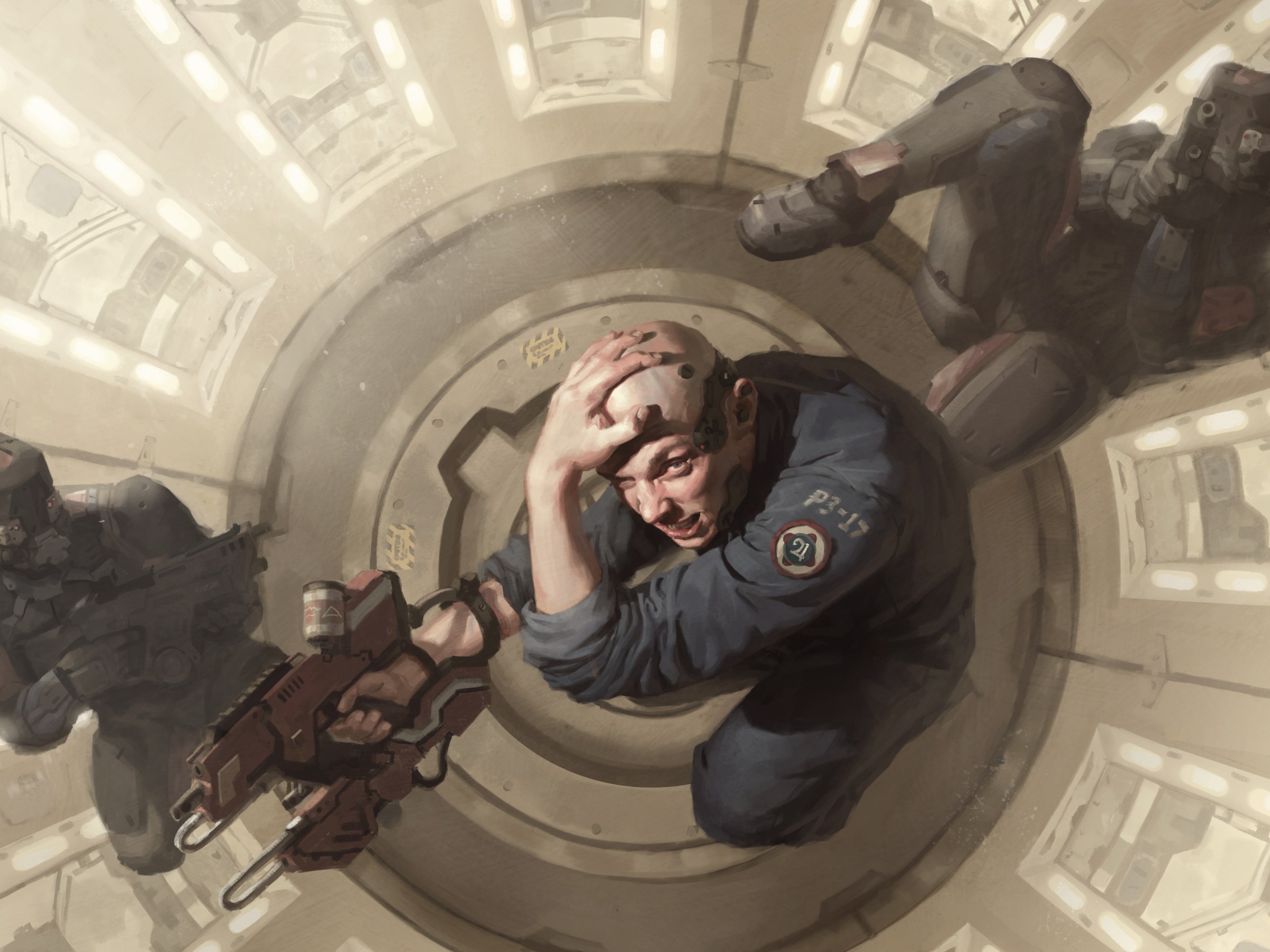
In the past, I’ve interviewed writers and editors for Ranks of the Rejected, but as it turns out, they aren’t the only creative folks who get rejected. I’ve worked with a fair number of freelance illustrators in my professional career, so I thought I’d get the skinny on the trials and tribulations of that line of work straight from the horse’s mouth. I turned to the very talented Mitch Malloy, an illustrator I’ve worked with recently. Mitch was kind enough to answer questions about his work (and provide me with some awesome samples) and tell me about rejection for the freelance illustrator.
Be sure to check out Mitch’s website and gallery right here: www.mitchmalloyart.com
1) Tell us a about your work. Who are your typical clients?
My work is all over the place. Generally, my style is contemporary realism, but I do a lot of stylized work too and some hybrids of those two. I prefer realism most, though. The lion’s share of my work is science fiction and fantasy. I mostly do work for clients in traditional gaming and video games, but I occasionally do book or publishing work. I’d like to do more book work for sure.
I do most of my work digitally since that was what I learned on, but increasingly I’ve been working toward incorporating more oils, gouache, watercolor, and graphite pieces into my professional assignments.

2) How do you typically get contracts as a freelance artist? Do you send your portfolio out to potential publishers, like writers do with submissions? Or does the work come to you at this point?
I’m lucky that most of my work finds me at this point. But every other season work dries up, and I’m back to slinging my portfolio at art directors and hoping something sticks. A lot of work gets lost to cold calls, so I go out of my way to try and figure out a specific email address for an art director to be sure somebody at least sees my work before throwing it out. It’s worked, but I’m not sure they don’t hate it.
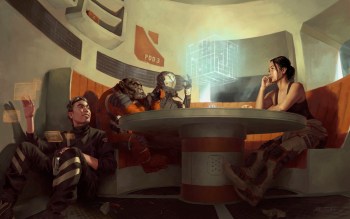
3) You and I worked closely on a project recently, the cover of Red Sun Magazine #3, where you illustrated my story “Caroline.” It’s not typical for an illustrator to work directly with an author (as cool as it was), so what is the usual process?
Normally, once I’m on somebody’s roster for work, it takes a while for the right project to roll around. When it does (whatever that project is), an art director or outsource manager reaches out, asks about my availability, and negotiates a rate. Then I receive a brief, which has specs and a written description of the assignment. Usually things like the focus and mood of the piece are called out, which helps me nail a specific idea earlier. Sometimes it’s nebulous, and I have to shoot a bit broader in my ideation. My absolute least favorite is when a client calls to deliver this information instead of writing it out in an email. I like things clear and concise so I can dive right in, but most conversations of this nature tend to be unfocused, and it immediately gets me out of my groove.
Anyway, once I get a brief, I do thumbnails for myself, pick my best ideas, and refine them for presentation. The client narrows it down to one option, then I gather my reference and work up that comp with color, a drawing, etc., working toward a final and reviewing along the way.
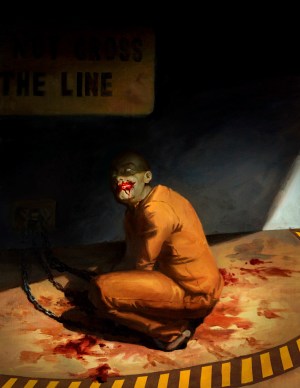
4) I assume that anyone working in any creative field will get rejected in some fashion. What does rejection look like for the freelance illustrator?
For me, rejection has often been silence. So many unreturned emails, ghost clients, or cold call emails lost to the void. I get rejected by going unanswered. Otherwise, I might get a form letter or (rarely) a handcrafted bit of rejection. I’ve also been subject to a lot of rejection once clients find out my rates. I work some great-paying gigs at this point. I don’t usually want to work the cheaper ones (with rare exception). A lot of potential clients flee when they find out I want a fair wage for my work, which I’m okay with. Makes it easier to focus on jobs that will pay fairly (though they’re rarer).

5) What have you learned from rejection? How has it helped you grow as an artist?
Rejection usually pisses me off so much it sends me into a self-improvement spiral. One of the ways I handle rejection is to just grind until I prove to whoever that I am capable of the work. It’s not like I can get better on a timeline that would make them notice. It’s irrational. But rejection fuels a lot of my study. Thankfully, more and more, I just do studying because I’ve found the love for it. Every once in a while that letter comes in and I get swept up in the fury again.
(It probably isn’t healthy)

6) Got a favorite rejection? Memorable, funny, mean, just straight-up weird?
I once was told in a client meeting that I couldn’t offer feedback on their product until I was capable of doing the work myself. The work wasn’t very good. I could have done it myself. It freaked me out so much I went and worked my ass off to show them up. They later told me they were impressed by my growth, so I guess it worked?
On a more lighthearted note, I was once rejected because somebody thought I was the singer/songwriter Mitch Malloy. When they found out I wasn’t, they were no longer interested in commissioning me to do a painting for them. For reasons I’m not sure I’ll ever understand.

7) Okay, plug away. Tells us about your latest project and where we can run out and see/buy it.
Most of my latest projects are for clients I can’t talk about for another few months or even years. This is my life! But if you want to see a really wonderful fantasy setting with great fiction and RPG supplements, go check out Aetaltis. I’m the art director for the project, and it’s a huge passion for me. Check out what we’re doing here: www.aetaltis.com

Mitch is an artist with a deep passion for craftsmanship and storytelling. He has over 5 years of experience working as an artist in games. He is currently at Riot Games where he works as an illustrator. Outside the office, Mitch is a freelance artist for novels and traditional games. Mitch lives in the greater Los Angeles area with his lovely wife, his adorable son, two cats, and a dog.
Mitch’s clients include Wizards of the Coast, Riot Games, S2 Games, Privateer Press, Modiphius Entertainment, Onyx Path Publishing, Mechanical Muse, Posthuman Studios, Conceptopolis, Fantasy Flight Games, Present Creative, Super Genius Games, Wyrd Miniatures, and Broken Egg Games.

Ranks of the Rejected – Josh Hrala (The Arcanist)

Time for another installment of Ranks of the Rejected. This time I interviewed Josh Hrala, the editor at The Arcanist, a new flash fiction market that focuses on fantasy and science fiction. I’m always excited when a new flash fiction market appears on the scene, especially a paying one, and Josh and The Arcanist are off to a great start. Josh has an extensive background as a professional writer, so he’s no stranger to rejection, and now that he’s working the other side of the literary fence, he has some great advice for writers looking to publish their fiction with The Arcanist or anywhere for that matter. Check it out.
1) Give us the short and sweet on The Arcanist. The description on the label if you will.
The Arcanist is a flash fiction publication that focuses on SFF stories that are 1,000 words or shorter. Our goal is to provide a place where people can get new SFF stories every week and devour them wherever they are. Alongside these stories we pepper in non-fiction pieces about SFF authors, news, and other things related to the genres.
2) You have an impressive writing background, so what made you decide to jump the fence and try your hand at the editorial side of things?
It’s really hard to nail down an exact moment. I’d say that I’ve always wanted to be an editor, and I’ve always loved the tasks I had to do in editorial at my various staff writer positions. Even while writing 2-3 articles per day, I enjoyed working on stories written by others, developing them into working pieces, and making them the best they could be. I even enjoyed the scheduling and formatting of the pieces. There’s just something to it, you get to put everything in place and give it a final polish.
As these thoughts started to sharpen in my mind, Andie, Patrick, and I started to write together and talk about stories. All three of us love SFF in all of its forms and originally started writing short films and mini-bibles for TV shows when we could. It turned out that almost everything we made worked better as fiction than it did for film, and we’re still developing stories right now. Eventually, The Arcanist was born out of the idea that we loved doing this, and we could use our collective fiction knowledge and my editorial background to make something new.
What really excites me about being on this side of the fence is giving SFF writers a new place to publish their work, a place where they get paid, a place that looks modern, isn’t behind a paywall, and presents their work in ways that other sites don’t. What we’re trying to do with The Arcanist is bring new readers and writers into the SFF fold by publishing solid stories in a new, easy-to-access way.
We are giant craft nerds, too. We all met at Point Park University where we were a part of the creative writing program. This formal writing education made us love well-crafted literary stories. So we want to use that know-how to elevate both SFF and flash fiction because both genres take a lot of heat. SFF often gets critiqued because it involves more world-building than plot, character development, and structure while flash fiction can be viewed as too short of a medium to be taken seriously. While those can obviously be true depending on the work itself, we want to show what can happen when craft is valued more than settings and ideas while also showing that great fiction – regardless of genre – can be accomplished in very few words.
3) Why flash fiction? How did you and The Arcanist land on that story length over more traditional short stories?
When we were coming up with what we wanted The Arcanist to be, we had a few goals in mind. The first was to find a way to spread our love for well-crafted SFF content to people who may not read it otherwise. While many hardcore SFF fans love a long, epic narrative, I know a lot of people in my life who would never sit down with something that big. However, they are the same people who don’t blink an eye when it comes to reading a bunch of long articles on Facebook. This gave way to the idea that flash fiction is a great ice breaker and – if presented in on the right platform – could inspire new readers and writers to give the genres a shot.
Of course, traditional short fiction was an option – one we might revisit later alongside flash – but we wanted something smaller, something that can be read on the bus ride home. A bite-sized bit of magic that people can read anywhere.
Secondly, as I mentioned above, we love craft and believe that short form content is a great way for writers to hone – or show off – those skills. When a SFF writer is forced to stay under a certain word count, especially when it’s as tiny as 1,000 words, things get interesting fast. Characters have to be active and making choices right from the start or even the best ideas can fall flat.
In short, it makes writers question what they need to tell a story, and that can lead to some really cool things that readers will love.
4) What advice can you give writers submitting to The Arcanist? Which stories have the best chance at publication? Which stories are absolute nonstarters?
The first rule of submitting your work to us is to please, please, please read the submission guidelines. They aren’t even that hard to nail down: a SFF story that is 1,000 words or less. It’s surprising how many people just scroll down until they see the submit link and send things off without actually knowing if it’s what we want.
If your story meets these requirements, you’re already in a good place. However, there are some tips that will really put your story over the top.
The biggest problem we see on a craft level is that the characters in the story are often more boring than the world they inhabit. You can have a great world, but your story will be ruined by a passive character who merely walks through it and doesn’t make a choice or have any agency.
Also, make sure that you aren’t starting your story at the wrong place. This happens with monster stories quite a bit. What’s more interesting: how the monster got out or what happens when the monster is already out and the character has to deal with it? It’s the latter 99 percent of the time. If you need to write the buildup to the monster getting loose to make sure you know how it happened, that’s fine, but then the submitted story should probably take place afterwards. We get many stories that end where they actually should have started.
So, as tips go, you want your story to start at the right place, to make sure your characters are active, and make sure you aren’t relying on a witty idea to push your narrative. Ideas are cheap, execution is hard. We are all about the execution here.
5) How about a glimpse behind the scenes at The Arcanist. What does the evaluation process for a story look like?
We have two ways to submit stories. You can either email them to us or use our form, which requires you to submit a Google Doc version of your story. We HIGHLY recommend using the form, it makes it way easier on our end and we end up getting to those ones first and the inbox second.
The stories are then divided up and assigned to either me, Andie, or Patrick. We do not use slush readers, so everything that is submitted goes straight to an editor. The assigned editor reads the story and makes sure it follows the rules. If the story flat-out doesn’t work for us, it is rejected. If the first editor reads it and is on the fence, we all talk about it. If an editor really likes it, we do the same.
The on-the-fence stories and the ones individual editors want to greenlight are talked about in person, and we break them down and see if they truly work. Personally, these discussions are my favorite part because we really dig in and make a decision.
After that, it’s all about either breaking the bad news or sending acceptance letters, setting up payments and publication dates, and finally unleashing the story into the world.
6) This blog is called Rejectomancy for a reason, so let’s get to the good stuff. What are the top three reasons The Arcanist rejects a story. Be blunt, even savage if you must.
The number one reason is that you didn’t follow the rules. They are there for a reason. They are meant to challenge writers and be a bit difficult. When you write “approx. 1,000 words” we know that typically means “I went a bit over, sorry.”
The second is not knowing what your story is about. This goes back to what I said earlier about ideas and narrative. A lot of the time, we love the ideas presented in a story. We often scratch our heads and wonder how someone came up with this, which is fantastic. It’s a great feeling to have. The worst feeling to have, though, is realizing that the story is merely that concept with no narrative, action, or anything to back it up. It’s hollow, and doesn’t work on a craft level because narrative took a backseat to a clever idea, making the story more about the idea than anything else.
The third is a simple question: does anything actually happen in the story? With our 1,000-word limit, you don’t have a lot of time to flesh out a world or describe tons of scenery, you have to get to the point. There’s not enough space to have a character walk around and take things in for longer than maybe a sentence before something has to push them to action. Just because it is short doesn’t mean the story doesn’t need to have a beginning, middle, and end. The best stories we see have active characters and twists that make us look at the whole thing differently. The “turn” is one of our favorite moments, but even these can fall flat without active characters.
Also, just as note, please don’t submit your story with weird colored fonts, large sections underlined, or any other strange formatting. We read a lot, and these attempts to get our attention only hurt our eyes. I don’t know why people do this, and we won’t outright reject stories for this, but it makes us sad and gives us a headache, which doesn’t help your chances.
7) You’re a writer too, so you understand that rejection comes with the gig. Any pro tips for dealing with it?
I’m not sure there is way to actually prepare yourself for a rejection. You have to learn early on that you can’t get your hopes up even if you think your story is gold because, let’s face it, we all think all of our own stories are gold.
If you want to get your work published, you need to wrestle with the fact that rejection is likely in your future far more often than acceptance, but you have to also understand that just because one place rejects a piece doesn’t mean it won’t work elsewhere. Make a plan, send out your story, follow all of the rules the publication asked for, and see what happens because it’s always worth it in the end. Remember that rejections are nothing personal and that every rejection is a chance to make the story better.
Josh is the founder and Editor-in-Chief of The Arcanist. His work has appeared on Cracked, PopSci, ScienceAlert, Geek & Sundry, ModernNotion, and others. You can get The Arcanist’s stories delivered straight to your inbox every Friday by subscribing for free here.
AFSG (Always Follow the Submission Guidelines)
Recently, I committed the nigh-unforgivable writerly sin of failing to follow the submission guidelines. I will pause a moment to soak in your righteous and fully justified finger-wagging.
Ouch.
Okay, my particular sin was submitting a story that did not meet the word count requirements. This particular market wanted stories with a minimum length of 2,000 words, and I sent in a story that was a tad below that. They were gracious enough to let me resubmit the story after I revised it to fit their guidelines, but the shame of making such a mistake will haunt me. Like, seriously. I pride myself on following the guidelines, and I felt like such an asshole for missing one so glaringly obvious.
So, let’s call this post a PSA, a reminder to always, always, always double check the submission guidelines, even for the no-brainer stuff like story length. It can be easy to focus only on the maximum length for a story because, generally, the minimum doesn’t come into play. I did a quick bit of research on Duotrope and found that of the twenty-four pro and semi-pro horror markets, more than half had word count ranges for short stories between 1,000 and 7,500 words. Since most of us don’t write short stories around the 1,000-word mark (that’s generally considered flash fiction), that word count minimum is rarely an issue.
BUT.
There are plenty of markets that set their word count minimum at 2,000, 2,500, even as high as 4,000. That last number is likely to jump out at you, but the other two can fade into the background if you’re not paying attention. So pay attention! Read and reread those guidelines before you hit the send button. Write the acronym AFSG (always follow the submission guidelines) on a post-it note and put it on your computer (I clearly need to).
Okay, make me feel better about my little blunder. Tell me about a time you missed something in the submission guidelines (please).
Submission Protocol: Don’t Fear the Query

I’ve previously covered the submission status query letter, but I thought it was worth a revisit mostly because I’ve seen writers questioning if they should send a query letter and wondering if a publisher would be offended or angry if they did. Let me cut to the chase here. Unless a publisher specifically asks you not to query in the submission guidelines, there is no reason they should get upset if you send a query letter, provided you follow a few basic rules. What are those rules? Numbered list incoming! (Note, this post is NOT about initial queries to agents or publishers for novels. That’s a whole different beast.)
- Always check the guidelines. A lot of publishers deal with submission status queries in their guidelines and will give you very specific details on if and when you should send one. For example: Responses take 60-90 days on average. Feel free to send a follow-up query after that point. In this case, if you send a query on day 91, you are absolutely in the clear.
- Wait an appropriate amount of time. So what if the publisher doesn’t deal with submission queries in their guidelines? Easy. Most publishers will at least tell you when to expect a response, usually somewhere between 30 and 90 days. In my opinion, if you haven’t heard from the publisher after the stated response time, you should probably send a query letter. Again, there’s no reason for the publisher to get upset here. A polite query shouldn’t offend anyone in this business. One thing to keep in mind, though, is that a publisher’s stated response time and their actual response time can be very different. If you use a service like Duotrope, it’ll tell you how long, on average, a publisher takes to respond to submissions. If it’s longer than the stated response time, you could wait until then to send a query.
- Be polite and to the point. Your query letter should be short and polite. Tell them the name of your story, when you submitted it, and ask for an update. You don’t need to say anything else unless the publisher specifically requests it in the guidelines (for example, some publishers give every story an ID number and may want you to include that in a submission query).
So, let’s put this all together in a real-world example. I recently sent the following submission status query to a publisher:
Dear Editors,
I would like to inquire about the status of my short story “XXX” submitted for XXX on June 21st, 2017.
Best,
Aeryn Rudel
In this case the publisher did not list an expected response time in their guidelines nor did they cover when/if to send queries. So I turned to Duotrope, which told me the publisher was responding to submissions in about 30 days, on average. I sent my query letter after 60 days. I might have sent it sooner, but 60 days felt like an appropriate amount of time to wait. I received a response (a rejection) two days after my query. So, did I follow the rules? I think so. I checked the guidelines, I waited an appropriate amount of time, and my letter was short, polite, and to the point. The result: I got a prompt response. The publisher did not send me an angry “how dare you” letter, just the form rejection I was going to get anyway.
To recap, if you follow the guidelines above, there’s no reason for a publisher to get upset if you send a query letter. Honestly, if something as simple and commonplace as a submission status query does upset a publisher, that’s likely a publisher you don’t want to work with. Just remember publishers are regular (and often very busy) folks who sometimes make mistakes, lose submissions, fall behind, and so on. Because of that, the query letter is often just as useful to the publisher as it is to the author. Hell, I’ve had publishers thank me for sending a query letter.
Of course, if you query and still don’t get a response after a reasonable amount of time, say two weeks, it might be time to consider a withdrawal letter so you can send your story somewhere else. For more info on withdrawal letters, check out this post.
Got a question or comment on submission status queries? I’d love to hear it in the comments.
Submission Statement: August 2017

August, the month of my birth, was pretty uneventful, submission-wise. I spent a lot of time working on a new novel, and I finished a novelette that will be part of my first foray into self-publishing (more on that soon). Anyway, here’s the down-and-dirty for the month.
August 2017 Report Card
- Submissions Sent: 5
- Rejections: 6
- Acceptances: 0
- Publications: 1
- Other: 0
I’m still hitting an average of one submission per week. I keep thinking I should do more, but that seems to be a comfortable pace when I’m working on big projects. Maybe I should just learn to live with it.
Rejections
Six rejections this month, and one of them is noteworthy because it represents a nigh-unforgivable brain fart.
Rejection 1: Submitted 8/2/17; Rejected 8/12/2017
Thank you for your interest in XXX.
Unfortunately, your short story has not been assessed as it does not meet our submission guidelines based on word count (it’s just a bit off the 2,000 word minimum at 1,980).
You are welcome to resubmit after reviewing the submission guidelines and ensuring your submission meets the guidelines. If you haven’t done so already, I would also suggest reading XXX to become familiar with the type of content we publish.
If you’ve followed this blog for any length of time, then you’ve heard me lecture everyone about following submission guidelines to the letter. Well, sometimes that’s a do-as-I-say-and-not-as-I-do situation. How embarrassing. I mean, how hard is it to do a quick word count check, like I do FOR EVERY OTHER SUBMISSION? I am exceedingly grateful the publisher was a) very nice and professional when they pointed out my mistake and b) that I can resubmit the story. I did resubmit it, along with an apology for not following the guidelines the first time. Say it with me: ALWAYS FOLLOW THE SUBMISSION GUIDELINES.
Rejection 2: Submitted 7/29/17; Rejected 8/14/2017
Thank you for the opportunity to review your work. Unfortunately it doesn’t quite fit our needs at the time. Best of luck placing it elsewhere.
This is a simple form rejection, but I should note that it came one day after I sent a submission status query letter to the publisher. Now, I do not for a second believe that I was rejected because I sent a query. I waited the appropriate amount of time, and my letter was polite and to the point. There’s a chance the query got my story read a bit sooner, but it’s not why it was rejected. There does seem to be this fear among some writers that sending a submission status query will anger a publisher, but I think that fear is misplaced as long as you wait an appropriate amount of time and follow any submission guidelines the publisher may have about queries.
Thanks so much for entering our Flash Worlds contest. As always, we had so many great entries.
Unfortunately, “XXX” did not make it into our Top 10. However, we are happy to report that the piece did make it through several rounds of cuts and was still in consideration until the later stages of judging. As a result, we’ve given you a shout-out on our “Close But No Cigar” short list, which can be found on our Flash Worlds results page (https://themolotovcocktail.com/).
Though it didn’t place in the contest, we’d be happy to consider this piece for one of our regular issues. Feel free to resubmit through our regular submissions portal (no submission fee, of course) on Submittable. We’ve published a good number of short-listed entries that way in the past.
Thanks again for your participation, and for sending us such great work.
A close-but-no-cigar rejection from one of my favorite publishers. These guys have published a ton of my work, and I got close to another publication here. If you have a chance, you should definitely check out the winning stories for the Flash Worlds contest. There’s some really good stuff in there. I have sent this story out again, and it’ll pop up in another rejection below. 🙂
Rejection 4: Submitted 8/16/17; Rejected 8/26/2017
Thank you for submitting your story, “XXX”, to XXX. Unfortunately, we have decided not to publish it. To date, we have reviewed many strong stories that we did not take. Either the fit was wrong or we’d just taken tales with a similar theme or any of a half dozen other reasons.
Best success selling this story elsewhere.
A form rejection from a top-tier magazine that I have yet to crack. I’ve yet to even get a higher-tier form rejection from this market. That doesn’t discourage me, though. These pro markets have incredibly high standards, and they should be difficult to place a story with. I like to think I’ll eventually write something that appeals to this market and a bunch of others in the same category.
Rejection 5: Submitted 8/16/17; Rejected 8/30/2017
Thank you for considering XXX for your story, “XXX.”
Unfortunately, we have decided not to accept it. We wish you the best of luck finding a home for your story elsewhere.
Another form rejection from a pro market. I’ve gotten higher-tier rejections from this publisher in the past, but this isn’t one of those. Like the market in rejection 4, I’ll keep submitting until I crack or they do. 😉
Rejection 6: Submitted 8/30/17; Rejected 8/31/2017
Thank you for the opportunity to read “XXX.” Unfortunately, your story isn’t quite what we’re looking for right now.
In the past, we’ve provided detailed feedback on our rejections, but I’m afraid that due to time considerations, we’re no longer able to offer that service. I appreciate your interest in XXX and hope that you’ll keep us in mind in the future.
So, I shit you not, this rejection arrived as I was writing this blog post. How’s that for timing? Anyway, another form rejection from a pro market. Those of you who submit spec-fiction on a regular basis will no doubt recognize the publisher from this rejection. They’ve always had a super-quick turnaround (one day, in this case), which I appreciate, as it allows me to fire the story off to another publisher right away.
Publications
One publication in August. My flash fiction story “Cowtown” was published by The Arcanist. You can read it by clicking the link below.
And that’s August. Tell me about your August in the comments.
Which Work Do You Read? – A Poll

As some of you know, my current published works reside in two very different camps. First, there’s the work I do for Privateer Press, which includes two novels, a handful of novellas, and a whole bunch of short stories. All that fiction is set in Privateer Press’ Iron Kingdoms setting, a steampunk-esque fantasy world. Then there’s my other work, which is, of course, my own IP, and is primarily horror (with a smattering of sci-fi and fantasy). That’s mostly short stories, though I’m currently working on a novel.
I’m just curious who reads what. Do my IK readers read my stand-alone work, and do my horror, sci-fi, etc. readers read my IK work? If you’ll indulge me, I’ve created a little poll here to get something of an answer to that question. No judgment either way. I completely understand that horror or fantasy may not be someone’s cup of tea. I’m just thrilled anyone reads anything I write. Period. 🙂
Okay, now that you’ve answered the poll. Here’s some free stuff to read.
If you’re interested in checking out the Iron Kingdoms writing I do for Privateer Press, there’s a bunch of links to various published works here. There’s also a couple of free stories on the blog published when I was still on staff with Privateer. Links below.
Finally, if you have a Kindle Unlimited membership, you can read one of my IK novellas, On a Black Tide, for free. Otherwise, it’s .99 cents.

If you’d like to check out the other stuff I write, mostly horror, there’s a whole bunch of that free on the internet. There’s a fairly comprehensive list on the blog with links right here, but I’ll list a couple of my favorites below.
- “Night Games” – This is a story about vampires and baseball. Yep, you heard that right. Read it from Devilfish Review or listen to Pseudopod’s awesome audio version.
- “Scare Tactics” – A parapsychologist and her pet demon get up to some supernatural hijinks in this one. This is another one you can read at Devilfish Review or check out a fun audio version from Dunesteef.
- “Cowtown” – My most recent publication, “Cowtown” is a flash fiction piece (1,000 words) that mixes horror and comedy. You can read that one at The Arcanist.
Anyway, please vote in the poll if you’re so inclined, and if you have any questions about any of my work, ask away in the comments.
Read “Cowtown” at The Arcanist

My story “Cowtown,” a flash piece (1,000 words) that mixes comedy, horror, and a dash of sci-fi, was recently published over at The Arcanist. The story is free to read on The Arcanist’s website; just click the cow below to check it out.
A little more about the publisher. The Arcanist is a new market that publishes sci-fi and fantasy, but their definitions of those two genres are broad enough to include a bit of horror, as evidenced by my story. They’ve really put their best foot forward, with a good-looking website, a solid team of editors, clear submission guidelines, and a pay-rate of $50.00 a story, which works out to .05/word or more for flash fiction. That all adds up to a market you should check out if you write speculative flash fiction. Here’s the submission guidelines.
So, a little about “Cowtown.” This is another story that began life as part of a one-hour flash fiction challenge. I’ve participated in a bunch of these, first at the Shock Totem forums and now with a private Facebook writing group. The idea is pretty simple: someone posts a prompt, usually a photo, and then you have one-hour to write a flash piece of no more than 1,000 words. The authors then vote on the stories, and the winner gets to post the prompt on the next go-around. Anyway, these contests have been very good for me, and I’ve published eighteen stories that began life in a one-hour writing blitz. A number of those stories I later expanded, sometimes considerably, but many I simply cleaned up and sent out in more-or-less in their original form. “Cowtown” is one of the latter, and I’m glad the editors over at The Arcanist dug it enough to publish it.
Submission Statement: July 2017

July was a much better month mostly because I finally ended my six-month-long acceptance drought. That alone is enough to crown July as my best month of the year. Here’s the nitty-gritty on my submission endeavors in July.
July 2017 Report Card
- Submissions Sent: 5
- Rejections: 2
- Acceptances: 1
- Publications: 1
- Other: 0
Again, I’m getting an average of one submission per week. I keep telling myself I need to double that.
Rejections
Only two rejections this month, but both are noteworthy.
Rejection 1: Submitted 4/19/17; Rejected 7/5/2017
Very sorry for the delay in getting back to you, but we just made our final decisions today. We are going to have to pass on the story, however. This is the hardest part of the job, having to decline stories that we enjoyed so much, simply because didn’t have the space to include them all. It was a real struggle choosing the final stories. I appreciate your patience and hope to see submissions from you in the future.
Another heartbreaker rejection for a story that was short-listed. This is the second rejection of this type for this particular story, and although it’s certainly a positive sign that it keeps making short lists, it’s frustrating to get so close and fall short again. Of course, my frustration is not in any way directed at the publication (that would be real silly and unprofessional). This was the first issue of this particular magazine, and I know they had some very tough decisions to make. I’ll definitely submit to them again when they reopen for their second issue, and I’m looking forward to reading the stories in issue number one.
Rejection 2: Submitted 7/5/17; Rejected 7/5/2017
Thank you so much for thinking of XXX. Unfortunately “XXX” is not quite what we’re looking for at the moment. Best of luck placing it elsewhere.
This is just a garden-variety form rejection, but what makes it noteworthy is how quickly I received it. This market has a very quick turnaround, usually rejecting submissions (mine, at least) in the same day, but this particular rejection came in less than thirty minutes. Now, it’s important not to read too much into that. I think it’s likely the editor was reading submissions when I submitted, read mine, decided it was a no, and fired off the rejection. I have no issues with that whatsoever. The quicker I get it back, the quicker I can send it out again.
Acceptances
One acceptance for July, and a welcome one, ending a six-month slump.
Acceptance 1: Submitted 6/22/17; Rejected 7/22/2017
Thanks for letting us read XXX! We would love to publish it in XXX.
There’s more to this acceptance letter, but it’s just the usual contract/legal stuff. This is a new market that pays solid semi-pro rates, and I’m glad to be among their initial bunch of published stories. They publish sci-fi and fantasy but under very broad definitions, so some horror is not out of the question (as evidenced by the story they accepted). The story is tentatively scheduled for publication on 8/5, and you’ll be able to read it on their site. I’ll announce it, of course, as soon as it’s live.
Publications
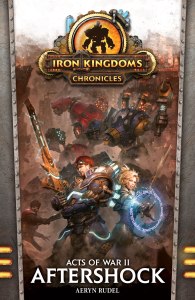
One BIG publication in July, my second novel for Privateer Press, Acts of War: Aftershock. Details below.
War Has Come Again to Llael
On the heels of inflicting defeat upon the Khadorans at Riversmet, Lord General Coleman Stryker marches deeper into enemy territory to prepare a major assault. But he is unprepared for the avalanche of a massive Khadoran counterstrike. Empress Ayn Vanar and Supreme Kommandant Irusk send their nation’s most fearsome warcasters to retaliate against the invaders and secure her conquered territories at any cost. Hope comes in the form of Ashlynn d’Elyse, warcaster and leader of the Llaelese Resistance, a woman with no love for Cygnar but who could make for a powerful ally if convinced to help. Along with Asheth Magnus, Stryker’s enemy-turned-ally, this unlikely team must fight to persevere despite being outnumbered, outmaneuvered, and cornered with only their wits and a few warjacks to save their cause from utter annihilation…
Get an eBook – $7.99:
Get it in Print $15.99:
And that’s it’s for July. Tell me about your submission adventures for the month in the comments.
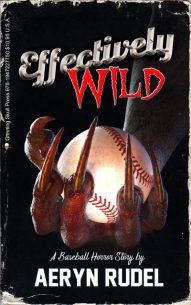
Effectively Wild – A Baseball Horror Story
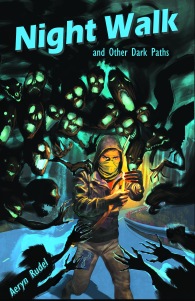
Night Walk & Other Dark Paths
Acts of War: Flashpoint

Acts of War: Aftershock

Acts of War: Stormbreak


