
Iron Kingdoms Fiction – Old Friends, New Blood
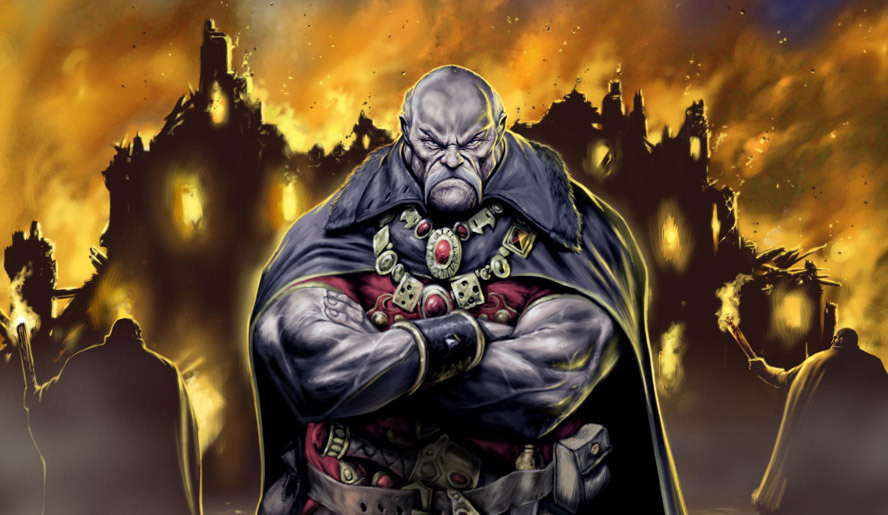
Hey, Iron Kingdoms readers, got something special for you today. In the past, I’ve put up stories that were published in the pages of No Quarter magazine or part of organized play for Privateer Press, but not today. Today, I present a completely new and unpublished Iron Kingdoms short-short story that has never been read by anyone outside of the Privateer Press editorial staff. That same editorial staff has given me the go-ahead to share it with you. (Thanks, Mike. Thanks, Doug.)
So let’s head to war-torn Llael for “Old Friends, New Blood.”
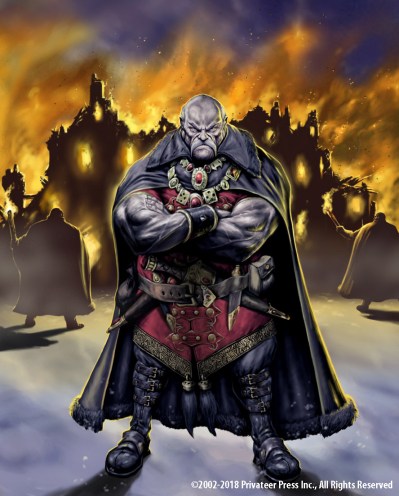
Old Friends, New Blood
By Aeryn Rudel
“Your weapons,” the guard said and pointed to a low table beside the door. He was little more than a boy, and the casual, almost bored tone of his request rankled Fyodor Goska.
“Do you think I mean to put a knife in Kovnik Ivachev?” Fyodor stepped close. “Do you think you could stop me?”
The guard stiffened, and his hand fell to the haft of his axe. For a brief moment, Fyodor toyed with letting him pull it off his belt. Then he placed one broad hand on the boy’s shoulder, laughed and unbuckled the broad belt that held his knives. “You are too serious, soldier.”
The guard relaxed. “Thank you, sir.” Fyodor heard respect now, and, he noted, the appropriate amount of fear.
He put his weapons on the table, and the guard opened the door to the kovnik’s office. Fyodor found Ivachev behind his desk, head down over some document. The room was sparsely appointed, but the few pieces of furniture looked expensive. Gregor Ivachev was the same age as Fyodor and nearly as big. He loomed behind his desk, a gray-haired warlord out of place in these clerical surroundings. “Fyodor,” he said and stood. “Good to see you, old friend.”
Fyodor nodded. “It has been a long time since we met face to face.”
“Too true, but there are certain protocols that must be followed.” Ivachev gestured to one of the chairs in front of his desk.
Fyodor moved closer but did not sit; instead, he gripped the back of the offered chair and leaned forward. The pose made the big muscles in his arms and shoulder bulge. “Protocols you have now violated.”
Ivachev frowned. “I am aware. I did so because you are my friend.”
“Is that what I am?” Fyodor said. “Maybe, once, on the streets of Korsk, when we were young.”
“I do not regret leaving the bratya,” Ivachev said. “Just as you do not regret staying. We chose different paths, but here we are, together.”
“Very well,” Fyodor said. “Speak on, friend.”
“You have done good work for us in Llael,” Ivachev began. “I am pleased with your many successes—“
“Before your office reeks of horse shit, get to the point,” Fyodor said.
The kovnik smiled. “I have spent too long among dignitaries and aristocrats.” He cleared his throat. “The incident at the docks has given some in the High Kommand reason to doubt the effectiveness of your men.”.
Fyodor laughed, short and sharp. “You mean the incident where the Khadoran military failed to inform me the insurgents were led by a warcaster? The incident where I lost eight men and my son lost a leg?”
Ivachev drew in a deep breath. “I know what happened could not be avoided, Fyodor. But some in Merywyn do not approve of the use of the bratyas to enforce our rule. They seek any excuse.”
“And I am that excuse, eh?” Fyodor said and spat. “My men and I have served you well, Gregor. You know this.”
“I do, and you must not forget we have both profited by our agreement.” Ivachev pointed one thick finger at Fyodor.
“Then how do we maintain our agreement in light of my failure?”
“That is why I called you here,” Ivachev said. “I have convinced those with doubts in the High Kommand to give you another chance, let you prove your worth. I wanted to tell you personally.”
“I have been underboss for twenty years,” Fyodor said, shaking his head. “I took that position and maintained it by proving myself, again and again, to my men, to rival bratyas, and to you, Gregor. What more must I prove?”
“To me? Nothing,” Ivachev said. “To those who doubt, you must kill someone.”
Fyodor shrugged. “The blades of my bratya are red and wet.”
“What of your own blades?”
For a moment, Fyodor could not speak. The question struck him like a hammer blow. His vision swam with images of closing his fingers around Ivachev’s throat and squeezing the life from him. “You dare . . .” was all he could manage, but his glare would have loosened the bowels of most men.
Ivachev was not most men, and he held Fyodor’s murderous gaze, unflinching, and slid a folder across his desk. “Kill this man. By your own hand. No one will doubt you again.”
Fyodor sucked in a great gulp of air and took a tight rein on his anger—it would not serve him here. He picked up the folder but did not look at its contents. “It will be done,” he said, his voice flat and measured.
Ivachev nodded. “I am sorry it has come to this. I wish it were otherwise.”
“I am sorry too, old friend.”
***
It had been some time since he stalked a target on his own. It felt good to worry about nothing but himself and his quarry.
The man he would kill this night thought himself invulnerable in his grand house along the river, his station shielding him from harm like a suit of Man-O-War armor. Fyodor would prove him wrong.
Only one guard patrolled the grounds, making a slow circuit around the outer wall. Fyodor watched him from the shadows, waiting for the right moment. It came soon enough. The guard stopped, set his rifle against the wall, and unbuckled his pants. The splash of urine against the stone covered Fyodor’s approach. He clamped one hand around the man’s mouth, wrenched his head back, and slashed his throat. The blood emptied in steaming gouts, and Fyodor pushed the body into the shadows at the base of the wall. Then he leaped, grasped the top of the ten-foot barrier with one hand, and pulled himself up and over. He dropped to the cobblestones on the other side in a tight, controlled roll, then crossed the courtyard to the house.
Fyodor made his way to the rear of the building and found a servant’s entrance. Unguarded. Beyond lay a short hallway, leading to an antechamber and a broad stairway.
He climbed the stairs, both long knives in hand. At the top stretched another hallway, this one with many doors to the left and right. He ignored them. The door at the end of the hall was his destination. Warm yellow light spilled from beneath it, and he heard voices beyond.
He flipped one of his blades over into a throwing grip and kicked open the door. His hand flashed down, the knife spinning from it on a lethal arc. The weapon struck one target with a dull thud as he stepped into the room and he surged toward the other.
Ivachev stared in horror, his mouth a round O of surprise. The boy who had stood guard outside his office the other morning lay on the floor before the kovnik, Fyodor’s knife buried to the hilt in his chest. The boy’s eyes were wide, terrified, and he tried in vain to pull the knife from his heart.
Ivachev had a pistol at his belt, but he’d been too long away from the streets of Korsk, and the lessons it taught, one of which was a knife is always quicker than a gun in close quarters. The gun came up, too slow, and Fyodor smashed it aside. He lashed out with a heavy boot, and kicked Ivachev’s feet out from under him. The kovnik crashed to the floor, and Fyodor followed him down, planting a knee in Ivachev’s chest, pinning him. He put a knife at the kovnik’s throat.
The boy had stopped moving and lay still in a wide pool of scarlet.
“Why?” Ivachev said.
“More than a leg,” Fyodor whispered. “But we pay our blood debts in full and then some, do we not? It was your information that cost me so dear.” He leaned down, pushing his face inches from Ivachev’s. “Your information that caused some to lose faith in you.”
Ivachev opened his mouth to say something, but Fyodor had finished talking. He opened his old friend’s throat with a quick sawing cut, then held him down while he bled out.
When it was over, Fyodor retrieved his blade from the body of young Marcus Ivachev, then returned to the corpse of his father and wiped his blades clean on Ivachev’s uniform. “You were right about one thing, Kovnik. I did have to kill a man.”
A Week of Writing: 9/17/18 to 9/23/18

Welcome to my Monday and another week of writing.
Words to Write By
This week’s quote is from Truman Capote.
“Good writing is rewriting.”
—Truman Capote
I’ve seen similar quotes from a number of writers, but Capote’s is probably the most succinct. Every published story or novel has likely gone through a number of revisions where the author has rewritten, revised, and reworked the plot, the characters, the prose, you name it. That’s where I’m at now, laboriously addressing all the problems in the first draft of my novel Late Risers, trying to turn writing into a good writing. My guess is I’ll turn writing into okay writing this round, and then maybe get to something approaching good in the next pass.
The Novel
Last week the second round of revisions started in earnest. The main goal was to write at least one of the new chapters that’ll go at the beginning of the book. I accomplished that (and a few other things), and this week I’ll write the second new chapter and probably a bit more. These new chapters address a couple of sizable issues my critique partners pointed out in their notes, namely in setting up the rules of my world and better establishing an important relationship between my protagonist and another character. I’m pretty happy with the first new chapter, and now that I’ve really taken stock of what needs to be fixed in the rest of the novel, it’s not too bad, very doable, in fact.
Short Stories
I got back on track with short story submissions last week. I also started a new short story I quite like and knocked out a couple of thousand words on it. I hope to finish that one this week.
- Submissions Sent: 4
- Rejections: 3
- Acceptances: 0
- Publications: 0
- Shortlist: 0
The four submissions I sent last week put me at 93 for the year. Getting really close to that 100 mark.
The Blog
Two blog posts last week.
9/18/18: A Week of Writing: 9/10/18 to 9/16/18
The usual weekly writing update.
9/21/18: The Long View II: Genre Markets for Novelettes & Novellas
In this post I took another look at genre markets for works over 7,500 words in length.
Goals
This week I want to finish all the new chapters for the novel, and then start the actual revisions and rewriting on the existing text. I’d also like to finish the short story I started last week and get that to my critique partners.
Submission Spotlight
This week I’d like to call your attention to a market I’ve been meaning to submit to forever and finally got around to doing it last week. They’re a well-regarded publisher with one of the coolest names in the biz, especially if you’re a big dinosaur nerd like me. The market is GigaNotoSaurus, and they accept fantasy and science fiction stories from 5,000 to 25,000 words. That’s a nice spread, and they’re one the few paying markets that’ll take novelettes and novellas. You can check out GigaNotoSaurus‘ submission guidelines below.
GigaNotoSaurus Submission Guidelines
That was my week. How was yours?
The Long View II: Genre Markets for Novelettes & Novellas

A couple of years ago I wrote a post called The Long View: Genre Markets for Novelettes & Novellas, and it turned out to be one of my more popular posts. Guess there are a lot of folks writing at that length. Anyway, in that post, I took a broad look at the number of genre markets that accept novelettes and novellas using Duotrope as my primary source. I think it’s time for an update on this subject, especially since my last post did not include The Submission Grinder and my methods were, uh, less than perfect. I’ve also included two more genres in this analysis: mystery and romance.
It’s important to note that my numbers are not complete. They’re a snapshot in time of which markets are currently accepting novelettes and novellas and are listed on Duotrope and The Submission Grinder. Though I’m likely hitting most of the markets that accept stories of these lengths, there are certainly others not listed on either market database or are currently closed to submissions.
We’re only going to look at novelettes and novellas, which Duotrope and the Submission Grinder define as such:
- Novelette: 7,500 to 15,000 words
- Novella: 15,000 to 40,000 words
As for pay scale, I’m looking at three categories, defined as:
- Token: under 1 cent per word
- Semi-Pro: 1 cent to 4 cents per word
- Pro: 5 cents per word and up
Lastly, (D) stands for Duotrope and (SG) stands for The Submission Grinder in the tables below. Also, note the two databases have a lot of overlap, and many publishers are listed on both. This is reflected in the numbers below.
Okay, lets look at those genres.
Horror
Since I’m a horror writer, primarily, let’s look at the horror market first:
| Horror | Token (D) | Token (SG) | Semi-Pro (D) | Semi-Pro (SG) | Pro (D) | Pro (SG) |
| Novelette | 12 | 21 | 4 | 4 | 2 | 3 |
| Novella | 4 | 11 | 0 | 1 | 2 | 2 |
There are a fair amount of token horror markets that will accept longer works, and a lot of these can be found on The Submission Grinder. Pickings get thin once you hit semi-pro and pro, however, and you’re really restricted to just a few markets for novelettes and novellas. The other thing to note here is that many of these publishers are not pure horror markets. For example, Clarkesworld and Orson Scott Card’s Intergalactic Medicine Show accept a wide array of speculative fiction that includes horror.
Fantasy
Let’s move on to fantasy, where thing open up a little.
| Fantasy | Token (D) | Token (SG) | Semi-Pro (D) | Semi-Pro (SG) | Pro (D) | Pro (SG) |
| Novelette | 20 | 33 | 5 | 10 | 9 | 10 |
| Novella | 11 | 18 | 2 | 3 | 7 | 6 |
You have a pretty wide range of markets to choose from for long-form fantasy, even pro markets. There’s a fair bit of overlap between novellas and novelettes in that often the same market will publish both lengths. The pro markets here are some of the biggest names in speculative fiction, including Asimov’s Science Fiction, Clarkesworld, and Fantasy & Science Fiction. Though a number of these pro markets are listed as publishing novellas, they cap word counts at 25,000 words or less.
Science Fiction
Now science fiction, likely the best genre for long-form fiction in terms of available pro markets.
| Sci-Fi | Token (D) | Token (SG) | Semi-Pro (D) | Semi-Pro (SG) | Pro (D) | Pro (SG) |
| Novelette | 19 | 23 | 6 | 11 | 11 | 11 |
| Novella | 7 | 13 | 4 | 3 | 9 | 8 |
There are more semi-pro and pro markets for science fiction novellas and novelettes than any other genre. That said, many of these markets are also present in the fantasy accounting above (and even horror). Also, word counts here, like fantasy, are often restricted to the lower end for novellas. You’ll find a lot of the big names you’d expect among these markets, including those that publish only sci-fi, such as Analog Science Fiction Fact.
Mystery/Crime
Next is mystery/crime, and options are limited here.
| Mystery/Crime | Token (D) | Token (SG) | Semi-Pro (D) | Semi-Pro (SG) | Pro (D) | Pro (SG) |
| Novelette | 1 | 6 | 1 | 2 | 2 | 3 |
| Novella | 1 | 3 | 0 | 0 | 2 | 3 |
There really aren’t that many semi-pro and pro markets for mystery/crime of any length, and you’re really restricted if you want to write something longer than a short story. Ellery Queen Mystery Magazine and Alfred Hitchcock’s Mystery Magazine are the big names here. Note Hitchcock’s does not accept novellas, and while Ellery Queen does, they cap them at 20,000 words.
Romance/Erotica
Finally, let’s look at romance and erotica.
| Romance | Token (D) | Token (SG) | Semi-Pro (D) | Semi-Pro (SG) | Pro (D) | Pro (SG) |
| Novelette | 4 | 8 | 1 | 1 | 0 | 1 |
| Novella | 4 | 6 | 0 | 0 | 0 | 1 |
Your options are even more limited in the romance and erotica genres. The only pro romance market that came up was East of the Web Romance Imprint, which does publish novellas up to 40,000 words. I found no professional erotica markets listed on either database for novellas and only one semi-pro.
Pro Markets for Novelettes and Novellas
Finally, here’s a list of all the pro markets from the tables above that publish novelettes and novellas and where they cap word counts for novellas. As always, make sure you read the guidelines thoroughly before you submit to any of these publishers.
| Market | Genres | Novelette | Novella |
| Alfred Hitchcock’s Mystery Magazine | M, T | Y | N |
| Amazing Stories | S | Y | N |
| Analog Science Fiction & Fact | S | Y | to 40,000 words |
| Asimov’s Science Fiction | F, S | Y | to 20,000 words |
| Beneath Ceaseless Skies | F | Y | N |
| Clarkesworld Magazine | F, H, S | Y | to 16,000 words |
| East of the Web Children’s Stories | F, S | Y | to 40,000 words |
| East of the Web Horror Imprint | H | Y | to 40,000 words |
| East of the Web Mystery Imprint | M | Y | to 40,000 words |
| East of the Web Romance Imprint | R, M, T | Y | to 40,000 words |
| East of the Web Science Fiction/Fantasy Imprint | F, S | Y | to 40,000 words |
| Ellery Queen Mystery Magazine | M | Y | to 20,000 words |
| Fantasy & Science Fiction (F&SF) | F, S | Y | to 25,000 words |
| Future Science Fiction Digest | S | Y | N |
| Grantville Gazette | S | Y | unspecified |
| Orson Scott Card’s Intergalactic Medicine Show | F, H, S | Y | to 17,500 words |
| Reckoning | F, S | Y | to 40,000 words |
| Strange Horizons | F, H, S | Y | N |
| Universe Annex [Grantville Gazette] | F, S | Y | to 40,000 words |
| Writers of the Future Contest | F, S | Y | to 17,000 words |
F – fantasy, H – horror, M – mystery, R – romance, S – science fiction, T – thriller
You’ll of course notice a lot of overlap, especially with fantasy and science fiction, and slim pickings for pro horror, romance, and mystery markets. As I said earlier, this is not an exhaustive list. It’s a snapshot of which publishers are currently open to submissions and are listed on either Duotrope or The Submission Grinder.
So, what’s the take-away? I don’t want to give the impression you shouldn’t write long form genre fiction, but it’s important to understand that works over 7,500 words limits your options for publication in traditional magazines, zines, and anthologies, especially if you want to submit to semi-pro and pro markets. That said, sometimes a story just needs to be the length it needs to be.
Besides the markets I’ve listed above, what other options does a novelette/novella writer have? Well, a few big publishers, like Tor.com and Hydra (a digital imprint of Random House), occasionally accept submissions for novellas (both are currently closed to submissions). I’ve also seen a number of smaller book publishers put out open calls for novellas. Examples include Parvus Press (recently closed to submissions) and Twelfth Planet Press (open to submissions). A little research is likely to pull up more small publishers that produce novellas, just make sure you vet these markets thoroughly to make sure they’re a good fit for your work and that they’re legit publishers (not vanity publishers in disguise, for example).
Lastly, there’s self-publishing, which seems to be a popular option for novellas, and I see a fair amount of authors going that route. Obviously, self-publishing comes with its own share of challenges, and you definitely want to do your homework before diving in.
Well, that’s all I’ve got for today. If you know of any good markets for genre novelettes and novellas, please share them in the comments.
A Week of Writing: 9/10/18 to 9/16/18
A day late and a dollar short, as they say, but here’s my writing week that was.
Words to Write By
This week’s quote is from Jack London.
“You can’t wait for inspiration. You have to go after it with a club.”
– Jack London
I really dig this quote. What it says to me is I can’t sit idle until I feel like writing. I have to get on with it. I have to hit my word count or work on those revisions, even when writing is the last thing I want to do. This is especially true when I have a deadline, and editors are waiting on an outline, or a draft, or revisions. This is not to say I always hit my word count or that I write every single day of my life, but I do it enough to finish the draft in a reasonable amount of time, hit the deadline, and keep the ol’ assembly line moving.
Note, this “write no matter what” attitude doesn’t work for everyone, and I’m not selling it as the one true way, but it does works for me.
The Novel
I’ve started the second round of revisions on Late Risers. Last week that consisted of reading through all the notes from my critique partners, creating a plan of attack, and addressing some minor issues throughout the novel as a way to reacquaint myself with the story. This week I’ll write some new chapters in the beginning of the book that better establish the rules of my world and a few important character relationships. I’ll also trim roughly the same amount of words from the exiting first act, which dragged on a bit.
Short Stories
Since my focus was primarily on the novel (and some out-of-town guests), I didn’t do much of anything with short stories. In fact, I didn’t do squat.
- Submissions Sent: 0
- Rejections: 0
- Acceptances: 1
- Publications: 1
- Shortlist: 0
I did get an acceptance last week (my 15th of the year) and one of my earlier acceptances was published. So, you know, not a terrible week on the ol’ submission front.
The Blog
I also lagged behind on blogging, and I only managed a single blog post.
9/10/18: A Week of Writing: 9/3/18 to 9/9/18
The usual weekly writing update.
Goals
Same as last week, the major goal is work on the revisions for Late Risers. Secondary to that goal is submit more short stories and get back on track with the blog.
Story Spotlight
This week’s story spotlight is “What Kind of Hero?” published last week by EllipsisZine. You can check it out by clicking the link or picture below.
“What Kind of Hero?”

That was my week. How was yours?
A Week of Writing: 9/3/18 to 9/9/18
It’s Monday, and I’m back on track with weekly, writerly updates.
Words to Write By
Today’s quotes comes from one of my favorite fantasy authors, Robin Hobb.
The challenge is always to find the good place to end the book. The rule I follow with myself is that every book should end where the next book would logically begin. I know that some readers wish that literally all of the threads would be neatly tied off and snipped, but life just doesn’t work that way.
– Robin Hobb
I wholeheartedly agree with Robin Hobb here. To me, there’s something really artificial about an ending that ties everything up neatly, and it always leaves me unsatisfied. Like she says, life doesn’t work that way. I think life is largely a collection of loose threads we spend, well, a lifetime trying to resolve. Although fiction doesn’t have to reflect how the real world works, this is an area where I try to cleave as close to reality as I can. The ending of Late Risers is messy, the resolution of some plot points uncertain, and I’m fine with that. Some of this has to do with my hope there will be a another book, but, even if there is only this one, I think Late Risers works as a standalone novel. (I really just hope it works as a novel, period.)
The Novel
My critique partners have finished my novel Late Risers, and I have their notes. The good news is a lot of the problems are ones I suspected were there, and my critique partners are in agreement on the major issues. That makes my job a lot easier, since we’re all basically on the same page with what is wrong with the book. The other good news is they liked the draft, the story, the concept, and the writing. Yes, there’s work to do on all of those elements, but after getting the notes, I think the first draft went about as well as I could have hoped.
This week I’m going to dive in and start my second round of revisions. I’ll still focus on fixing big-picture problems first, then worry about tightening the prose after that.
Short Stories
Not a whole lot to report on this front. I did get one story back that has had a number of near misses, and I promptly sent it out again. I tinkered with some old stories, and even unearthed an ancient short story from a backup hard drive that has a great concept with some, uh, archaic writing. That’ll be my next short story project. I currently have nine submissions pending with various publishers.
A very slow week for submissions.
- Submissions Sent: 1
- Rejections: 2
- Acceptances: 0
- Publications: 0
- Shortlist: 0
I have 89 submissions for the year, and I’m still on a very comfortable pace to hit my goal of 100.
The Blog
Here are the blog posts from the last couple of weeks.
8/27/18: A Week of Writing: 8/20/18 to 8/26/18
The usual weekly writing update.
8/31/18: Submission Protocol: Summary Execution
Another entry in the submission protocol series. In this one I discuss summarizing your short story when a publisher asks for a synopsis.
9/4/18: Submission Statement: July & August 2018
I missed the July submission statement, so this is two months of my submission endeavors.
9/7/18: Iron Kingdoms Fiction – Peace of Mind
Another Iron Kingdoms story originally published in the pages of No Quarter magazine.
Goals
One major goal for the week: start the second round of revisions on Late Risers. Everything else will take a backseat until that’s finished.
Submission Spotlight
This week I’d like to point you at a brand new pro-paying (.06/word) speculative fiction market called Constellary Tales. Here’s what they’re looking for:
We love SF stories that carry characters from their beginning to their end. That take the reader along on the journey of discovery (or loss, or redemption, or whatever). And of course, they have to be speculative. The name “Constellary” betrays our love for science fiction, but we’re fans of fantasy too.
Note, they’re closed to submissions from September 11th through September 30th–no doubt to sort through the tons of submissions they’ve already received–but they will reopen to submissions on October 1st. Guidelines in the link below.
Constellary Tales Guidelines
That was my week. How was yours?
Iron Kingdoms Fiction – Peace of Mind

Got another piece of Iron Kingdoms fiction you today. This one is called “Peace of Mind” and it also comes from an issue of No Quarter magazine. It features members of the Searforge Commission, a mercenary company drawn from the dwarven empire of Rhul. This story centers around a group of miscreants and unfortunates stationed at a backwater fort where they can’t get into much trouble. Well, that’s the theory anyway.
New to Privateer Press and the Iron Kingdoms? Check out this link for an introduction to this war-torn world of steam power and sorcery.
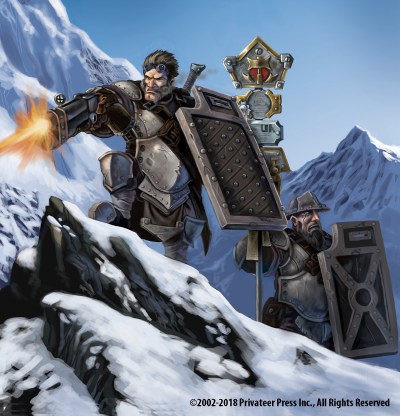
Peace of Mind
By Aeryn Rudel
Valkar rubbed his hands together and shivered. The sun was sinking on the horizon, and the tolerable cold of the day gave way to the unbearable chill of the long winter night. His watch didn’t end for another two hours, and he looked longingly back through the gates of Baram Fort toward the light and noise from the barracks. He shook his head and turned his gaze back to the small winding road that led up to the small fortress. Warmth and food would have to wait. Although the High Shield Gun Corps stationed at Baram Fort was not exactly known for following the rigid guidelines set forth by the Searforge Commission, Captain Vornek Blackheel considered dereliction of watch one of the few actionable offenses.
Drinking while on duty, fortunately, was not on the captain’s list of punishable activities. “Ecken,” Valkar said to his fellow guard, a much younger dwarf standing on the other side of the wide gate. “Give me a bit of that. These old bones are aching something fierce.”
Ecken had been dozing on his feet, a skill at which he was quite accomplished. The young dwarf came awake with a start and fixed Valkar with a hazy stare. “What did you say, Valk?”
“I said gimme a swig of uiske.”
Ecken looked down at the battered metal flask he’d been clutching to his breastplate and smiled. “Sure, Valk.” He walked across the short space between them, swaying slightly. He wasn’t quite falling-down drunk yet.
Ecken held out the flask. Valkar reached for it, but before he could take it, Ecken dropped it. The young dwarf stooped to retrieve the container, and his helmet tumbled from his head, revealing the huge scar above his left ear. The surgeons had removed a portion of Ecken’s brain after a Khadoran bullet had plowed through his skull. The hair hadn’t grown back over the wound.
Valk grimaced. “I’ll get it, Ecken.” He bent down and retrieved the flask and Ecken’s helmet, wincing as his aching knees popped.
“Sorry, Valk.” Ecken put his helmet back on.
Valk took a drink from Ecken’s flask, letting the cheap uiske burn a path of warmth down his middle, then handed it back. “You’re a good lad, Ecken. When our watch is over we’ll get some food, hey? You need more in your stomach than that Khadoran fire water.”
Ecken frowned. “I’m not hungry. I just want to go to sleep. My head hurts.”
Valkar put a hand on the younger dwarf’s shoulder. “I know. But I got my orders, and one of them is make sure Ecken eats.” Captain Blackheel had placed Ecken under Valkar’s care shortly after the wounded dwarf arrived at Fort Baram. It was the only place the Searforge would allow him to serve, a high mountain fortress in the middle of nowhere filled with the dregs of the Gun Corps: drunks, thieves, and miscreants. Ecken’s wound gave him near constant headaches, and it made him prone to violent mood swings, leaving him largely unfit for anything but guard duty at a fort that rarely saw visitors. It was a mercy, Valkar supposed, the Searforge had let Ecken remain in the corps, draw pay, and receive something resembling supervision and care.
A black look fell across Ecken’s face, and Valkar thought he might explode into one of his rages. They came on with little provocation, and Ecken would shout and bellow, even physically assault anyone who came near. The rest of the dwarves at Baram Fort knew to avoid their injured compatriot during these times, and only Valkar could calm Ecken down, usually. Last week, Lieutenant Murgan, the fort’s ogrun second-in-command, had to restrain Ecken, holding him immobile while he thrashed and cursed. After that, he’d fallen into a black depression that lasted days. The only thing that seemed to give him some measure of peace was drinking, and though Valkar knew inebriation wasn’t doing anything but masking the pain, he couldn’t begrudge the young dwarf his one escape from a grim reality.
“Okay, Valk,” Ecken said, and his face softened. “I’ll eat some porridge. I think I can keep that down.”
Valkar smiled, relieved. “Good lad. Now back to your post.”
Ecken nodded and returned to his side of the gate. Valkar didn’t mind looking after the young dwarf; it gave him something to do, a purpose. He’d come to Baram Fort not because he was a drunk, a coward, or even a bad soldier. His only crime was growing old. He’d served in the Gun Corps for fifty years, never rising above the rank of sergeant because he was happiest in the trenches, wading through the mud and blood with the grunts. Then they’d told him he was too old to serve, that it was time to set his rifle and axe down. They offered him a fair pension, but what would he do with it? He had no children, no wife, and only distant relatives. He’d get older, grow decrepit, and then die alone. He’d refused to retire, so they granted him one final post, a place where the Searforge Commission could forget about him. He accepted and found his place among Baram Fort’s group of misfits. At least he wouldn’t die alone.
“There’s a wagon coming, Valk,” Ecken said, pulling Valkar out of his thoughts.
Valkar looked down the narrow road, a nameless and little-used trade route that ran from the Rhulic city of Drotuhn and climbed through the Thundercliff Peaks, eventually connecting to Hellspass, the more conventional route for traders travelling between Khador and Rhul. Fort Baram was positioned to guard this all-but-forgotten route from the few travelers and merchants who used it—mostly to avoid the steep tolls of Hellspass.
A large wagon pulled by two huge Khadoran draft horses rumbled toward the fort. The driver wore a heavy black cloak with a hood, and eight men in chainmail hauberks with axes on their belts and rifles over their shoulders walked alongside the wagon.
Valkar frowned. He’d never seen a wagon so heavily guarded pass through Baram Fort. He glanced back through the gates; there were a few other dwarves moving about in the yard, on duty, and two or three more manning the walls, but they were coming up on a watch change and most of the troops were in the barracks.
“Ecken, let me do the talking here. Alright, lad?” Ecken nodded and took another drink from his flask. “And put that away.”
The wagon drew to a stop twenty feet from the gate. It was Valkar’s and Ecken’s jobs to speak with all those passing through and to check their goods for contraband. Valkar picked up his shield, a heavy square thing with a notch at the top that served as a rifle rest, and approached the Khadorans. His breastplate and chainmail felt heavier than usual, and his joints ached with every step. Ecken followed him.
“Good day, friend,” the driver in the wagon called down in passable Rhulic.
Valkar looked up at a weathered, bearded face and blue eyes that glinted like chips of ice from the depths of a hood. “What’s your business, and where are you headed?” Valkar asked, beginning their standard line of questioning.
“I am a dealer in exotic animals, and I have purchased one of your famed white bears from a trainer in Drotuhn.” He looked back at the payload of his wagon. There were three cages there, covered in a tarp. The tarp was rimed with ice. “We are travelling back to Skirov, where I run a menagerie.”
Valkar nodded. “Bear, huh?” He’d visited Drotuhn on many occasions, and they were known for quarrying stone, not training dangerous beasts. “Why are there three cages?”
The Khadoran merchant smiled. “I was hoping to buy a few other beasts, but the deals fell through. Two are empty.”
Valkar looked over at Ecken. The young dwarf was standing on the other side of the wagon, closer to the cages. His brows were furrowed in puzzlement, “I don’t smell bear, Valk,” he said. “I’ve smelled them before. Something stinks over here, but it’s not bear.”
The Khadoran’s guards had moved closer, four on each side of the wagon. Their faces were hard, weathered, experienced. They were professional fighting men.
“Do you have a bill of sale?” Valkar asked. He could feel the tension in the air. Something was wrong here, and he felt exposed, vulnerable. He had a horn at his belt he could sound to alert the fort of an attack, and his hand crept down to it.
“Of course,” the Khadoran said. He rummaged through the inside of his cloak. It took a little too long, and Valkar’s hand closed around the horn. But the Khadoran produced nothing more threatening than a thin sheaf of papers. He handed them down to Valkar.
Valkar ran his eyes over the first page. The Khadoran’s name was Dima Glukhov, or at least it was the name he’d put on the bill of sale. Everything looked in order. The man had purchased a bear from the market in Drotuhn and paid one hundred gul for it—more money than Valkar would see in a year. He handed the papers back to the Khadoran. “This looks in order, Tradesman Glukhov.”
“Excellent. Then we can be on our way and pass through your fortress?”
Valkar considered that. The papers were in order, but it was their job to confirm the goods stated by a merchant were actually what they were carrying. He could let them go. Captain Blackheel wouldn’t care. But something bothered him, a curious sense of dread that seemed to hang over the Khadoran and his wagon. He drew in a deep breath and let it out slowly, then said to the Khadoran, “One more bit of business. I need to verify if your cargo is what you say it is.”
A black look fell across the Khadoran’s face, and his eyes became flat and hard. “I hardly think that is necessary.” His voice was low, measured. “Perhaps we can come to some kind of arrangement.” He reached again into his cloak and pulled out a small sack tied with a drawstring. It clinked. “There is fifty gul here. Take it and let us be on our way.”
It was a lot of money, and almost every other member of Baram Fort would have taken it and let the Khadorans through. It just made Valkar angry. He opened his mouth to say something, but Ecken’s voice cut him off.
“Valk, there’s a man in this cage . . . with swords on his hands.”
Ecken had lifted the tarp on the closest cage and was peering beneath it. Valkar had been a soldier for over fifty years, and in that time he’d developed something like a sixth sense when it came to violence. He could almost taste it in the air. He knew the Khadorans were going to attack, but he was too slow to shout a warning as the guard nearest Ecken unlimbered his axe and smashed it into the young dwarf’s helmet. Arcane runes formed around Dima Glukhov’s fist and he unleashed a blast of freezing air at Valkar, smashing him to the ground and robbing the strength from his limbs.
Valkar’s hands were gloved against the chill, and they had kept the worst of the Khadoran sorcerer’s spell at bay. He fumbled for the horn at his belt, hearing Khadoran thugs moving toward him. He brought the horn to his lips and blew a single sharp note.
***
Mindslaver Orixus came awake to the sound of the human and dwarf speaking. He could feel their minds at the edge of his consciousness, but he couldn’t touch them yet. The alchemical mist the human had used on him was crude but effective; it dulled his mental abilities, made his thinking sluggish and uncoordinated. But his faculties were returning to him, and as they did, they brought cold anger and shame. That this pathetic human had managed to ensnare him and four drudges stung him. He’d taken a risk by leaving the hive with such a small guard, but the wounded soldiers on the battlefield near the hive offered a tantalizing collection of raw materials, and he wanted them before his rivals could lay claim.
The human had been waiting for him, expecting him. Orixus had been hit with the sorcerer’s freezing spell and unable to move or think. They’d stuffed him and his drudges into cages, treating him—Mindslaver Orixus, second of five in the Terxat Hive—like a mindless beast.
Rage flowed through his body, and its heat steadily burned away the fog in his mind. He could feel the human’s alchemical tranquilizer fading, like a melting iceberg. He would soon be free. The sounds of combat erupted outside his cage, and the cephalyx was pleased. His enemies would be distracted, long enough for him to regain full control of his abilities. He gathered all the mental force he could muster and pushed against the poison restraining him, hastening its dissipation.
Soon.
***
Valkar climbed to his feet, his legs heavy and slow. Ecken had gone down, and he feared the young dwarf had been killed, but he had more pressing concerns. He could hear the dwarves in the fort responding to his horn. The sound of many voices and the clatter of armor drifted through the gates.
One of the Khadoran thugs bore down on him. The man was big, maybe twice Valkar’s height, and he was swinging a two-handed axe. Valkar brought his shield up and the heavy axe cracked into it, biting deep into the top edge. This is just what Valkar had wanted. He let go of his shield, and his opponent had twenty pounds of iron and wood dangling at the end of his now-useless weapon. The human tried to pull the axe free, but Valkar brought up his carbine with practiced ease and shot the man through the chest. The heavy dwarven slug ripped through the man’s chain mail and shredded his heart.
Loud cursing in Khadoran drew Valkar’s attention back to Dima Glukhov. The Khadoran had jumped down from the wagon and held a single-bitted war axe in his right hand, its head encircled with runes. Glukhov was heading for Valkar, and a ring of azure light formed around his fist.
Valkar backpedaled, heading toward the open gate. He stood little chance against the Khadoran spellcaster. The loud cracks of dwarven carbines sounded behind him, and he heard one voice rising above the din. “What in the name of Ghor’s bleeding ass is going on out here?!” Captain Blackheel had a drill instructor’s volume, and everyone turned in his direction. Looming beside him was his second, Murgan. The ogrun was armored head-to-toe in chain and plate and had his warcleaver and shield in hand.
A line of gun corps riflemen had formed before the dwarven commander, and they parted to let Valkar through. Glukhov stood in front of his wagon, his men around him. The spell runes had disappeared.
“What happened, sergeant?” Murgan asked as Valkar drew near.
“We were checking their goods, and they attacked. One of ‘em knocked Ecken down. He’s still out there.”
Captain Blackheel grunted in irritation. Then he settled his helmet on his head, hitched his breastplate into a more comfortable position, and took hold of his axe. He stepped through the line of dwarven riflemen, his face a black cloud of anger.
“Alright, you bloody Reds,” he began, looking directly at Glukhov. “You can lay down your arms and tell me why you attacked my boys, or I can give the order and shoot you until you stop twitching. What’ll it be?”
The captain was black-tempered, surly, and frequently drunk, but he was also one of the bravest dwarves Valkar knew and a skilled battle leader. He’d always meant to ask the captain how he’d ended up at Baram.
Glukhov lowered his axe and smiled. “You seem a reasonable sort. I need to get through your fort, and I’m willing to pay to do it.”
“You killed one of my boys,” Blackheel said. “I can’t let that stand.”
Valkar didn’t know if Ecken was dead, but he dared not say anything.
“And you killed one of mine, so we’re even on that score.”
Captain Blackheel spat out the wad of sourleaf he’d been chewing, reached into his pouch for another, and stuffed the dried leaves under his bottom lip. Then he shook his head. “No, I don’t like it. You’re gonna put your weapons down, let us take you into custody, and then we’ll see what the Trademaster at Hellspass has to say about your cargo. Whatever the hell it is.”
Glukhov’s eyes went wide, and something that looked like fear flashed across his face. The runes formed around his fist again, and Blackheel raised his hand, signaling to the twenty rifles behind him to take aim. “I mean it, Red.”
Valkar felt the air grow thick with tension, but then something else appeared in the back of his mind, a presence, looming and dark. He heard the telltale metallic clatter of locks falling away, and then something rose up over the wagon, hovering like a grim black wraith.
Dread speared Valkar’s guts as the thing came into the light, drifting through the air behind Glukhov. It was man-shaped and clad entirely in black leather, but its head was a swollen orb from which five blue lights shone, eyes maybe. Worst of all, four metallic limbs jutted over the creature’s back, each tipped with a hooked blade.
“Captain,” Valkar called out, but it was too late. The creature descended on Glukhov like a great black spider, its metallic limbs scything forward. The Khadoran spellcaster’s head came away from his neck in a spray of blood, and he collapsed to the ground twitching.
“Fire!” Captain Blackheel called.
Nothing happened.
Valkar looked down the lines of riflemen and saw blank stares, their weapons hung limply in their hands.
Valkar then felt the creature’s presence grow in his mind, and he heard its voice, an irresistible whisper. Come to me. His feet moved at the behest of another, and he saw he was not alone, the rest of Baram Fort had lowered their weapons and shuffled toward the spindly black horror
Valkar tried to fight it, to push away the monster’s influence, but he couldn’t. He was a prisoner in his own head, watching his body move and react as if it belonged to someone else. The Khadoran thugs were enthralled as well, moving closer to the creature.
From behind the wagon came four more abominations. They were men, or might have been once, but their bodies had been altered, augmented. Each wore a heavy helmet that covered the head and neck. Yellow light glowed from the visor slits. Their arms ended in a curious array of blades, clamps, and saws, like something you might see on a warjack.
Yes, this is your future, you pathetic worms, the creature whispered into Valkar’s mind, maybe into all their minds. He was shown images of dark caverns filled with terrible apparatuses where men became monsters, where flesh was replaced with steel and wire, and where the soul and will were scrubbed clean from mortal minds.
Movement to Valkar’s left caught his eye. He couldn’t turn his head, but, on the periphery of his vision, he saw Ecken stand up. He was relieved the young dwarf had survived but horrified he would be subjected to the same terrible fate as the rest of them.
Ecken was closer to the black-shrouded monster, and he shuffled up to it. It glanced down at him, and Valkar felt its curiosity ripple through his mind . . . then, shockingly, fear. The creature tried to move away, but Ecken had his axe in hand. He swung it, buried the steel in the creature’s midsection.
A piercing psychic wail of shock and agony burst through Valkar’s mind and he fell to his knees, clutching his head. The dwarves and humans around him did the same.
Ecken yanked his axe free in a spray of blood and brought it around again, this time in an overhand strike at the creature’s misshapen skull. The blow landed true, and the monster’s head burst like an overripe melon, splattering gore in all directions.
The presence in Valkar’s mind winked out, and he was once again in control of his body. He climbed to his feet and broke into a stumbling run toward Ecken. The young dwarf stood over the corpse of the alien creature, a puzzled look on his face.
“Are you okay, lad?” Valkar said and took Ecken by the shoulders.
Ecken smiled and pushed his helmet off his head. It had a big dent in it where the Khadoran thug had struck him. He let the helmet fall to the ground, reached up, and touched the gruesome scar above his ear. “I felt it, Valkar. It was in my head, but it couldn’t make me do what it wanted.” He laughed softly. “I think the surgeons cut that part out.”
Valkar pulled the injured dwarf into a tight embrace. “Thank the ancestors,” he said then gently pushed Ecken back and looked into his eyes. “You’re still a soldier, lad. And you did a soldier’s work today. Saved us all. Don’t you forget that.”
“Put these bastards in shackles,” Captain Blackheel bellowed behind them. The rest of the gun corps collected the weapons of the remaining Khadoran thugs, who had lost all interest in fighting and handed them over without a fuss. “Now put ‘em in cold storage until we figure this mess out.”
The captain walked over to Ecken and Valkar and looked down at the corpse of the black-clad creature at their feet. “What in the name of all that is good and green is that bloody thing?” he said. “Never seen anything like it. What about you, old man?”
Valkar shook his head. “No, sir.”
“Well put it into cold storage with the rest of these Khadoran fools,” Blackheel said. “And, Ecken, good work, soldier.” He walked away, bellowing more orders.
Ecken pulled his flask from his belt and shook it, but he didn’t take the cap off.
“Go on, lad. You’ve more than earned yourself a drink,” Valkar said.
Ecken looked up at him, his eyes filled with a deep and abiding sadness. The clear understanding of all that Khadoran bullet had taken from him was overwhelmingly evident on Ecken’s face. It hurt Valkar to see it. “Not now, Valk,” Ecken said, putting the flask away. “Maybe I should eat something.”
Valkar looked away and wiped at his eyes, but he showed Ecken a smile when he turned back. “Right, lad; let’s get some food into you.”
***
Originally appeared in No Quarter #67, published by Privateer Press
If you’d like to read more about the dwarves of Baram Fort, you can do so right here on this blog. The story “Wayward Fortunes” features another adventure with the misfit Rhulfolk and their captain, Vornek Blackheel.
Submission Statement: July & August 2018

Well, I missed the submission statement for July, so I’m just gonna lump it in with August. Here’s a couple of months of submissions, rejections, and acceptances.
July & August 2018 Report Card
- Submissions Sent: 13
- Rejections: 10
- Acceptances: 7
- Publications: 3
- Other: 3
Thirteen submission is pretty good, though most of those came in August. Ten rejections for two months is a little on the low side, but that’s because seven acceptances in on the very high side. Three of the acceptances were also published in in July or August. Lastly, the three others are short-list letters, two of which became acceptance letters. So, despite just an average amount of submissions sent for these two months, results-wise, this might be my best two month period, uh, period.
As for total submissions, I hit 86 for the year by the end of August. I’ve already sent some September submissions, though, putting me at 88 and just twelve away from my goal of 100.
Rejections
Ten rejections, five for July and five for August.
- Standard Form Rejections: 7
- Upper-Tier Form Rejections: 2
- Personal Rejections: 1
More form rejection than anything, and these were all from pro markets. The two upper-tier form rejections were from a semi-pro and a pro market. The personal rejection was from a pro market.
Spotlight Rejection
The spotlight rejection for the July and August is the personal rejection I received.
Thank you for allowing us to read your story, [story title].
Thank you for being patient while we held your story, but we did not choose it for the lineup. Any story in the hold pile was one that we would have been happy to publish, but we didn’t have the resources to publish all of the stories that we liked and we have to make some hard choices. We hope you find a publisher for it, and that you will submit again in the next submission window.
While we don’t always offer comments on stories, this time we did. These comments are meant to be helpful; if you disagree with the comments, then you should feel free to disregard.
“A well-done piece of flash, foreshadowing major consequences, letting the reader wonder, until the chilling reveal and a solid final line.”
Best,
[editor]
[publication]
This is a personal rejection after a short-list letter for a pro market that received over 1,200 submissions during their submission window. The comments here are great since they basically tell me I’ve got a good story on my hands. But you know what I’m gonna say. Yep, good stories get rejected too, especially when you’re up against tons of other submissions by lots of talented writers. If you get a rejection like this, don’t overthink it. Just send that story out again. That’s what I did.
Acceptances
So, yeah, seven acceptances is pretty damn nice. It broke down as three for July and four for August. The only really interesting thing about these acceptance letters is most of them were essentially form letters. That’s not uncommon, honestly, as editors have to get across a lot of information in an acceptance letter about contracts, publication dates, editing, and what they need from the author (bios, author photos, etc.). Since many publication send their acceptances in batches just like their rejections, a form letter makes a lot of sense. Sometimes a personal note about the story will be tacked on to the end of the acceptance letter, but that stuff usually comes in the emails that follow.
Here’s an example of one of those acceptance form letters:
Hi Aeryn,
Thank you for taking the time to submit your story [story title]. I’d be delighted to publish it on [publication].
I’ve scheduled it for publication on 14 September, if this date changes I will let you know.
Thanks again for submitting your work.
Regards
More on this acceptance and some of the others as they near publication.
Publication
Three of the stories accepted in July and August have been published, and you can read them by clicking the links below.
“Two Legs”
Published by The Molotov Cocktail

“Do Me a Favor”
Published by The Arcanist

“Bear Necessity”
Published by The Molotov Cocktail

And that was my July and August. Tell me about yours.
Submission Protocol: Summary Execution
In my opinion, one of the toughest things for writers to do is summarize their work into a few sentences. I mean get it down to pitch length, still make it interesting, and avoid giving away the entire plot. Authors aren’t called on to do this very often with short story submissions, but a few markets ask for a brief synopsis in the cover letter.
So how do you write a good summary? Well, I’ll tell you how I do it, but before we get started be advised that story summaries are somewhat rare in publisher guidelines and you should never include one unless the publisher specifically asks for it.
Okay, as with everything submission-related, always read and follow the guidelines. When a publisher asks for a summary, they’ll usually say something like this:
Please put your title, byline, and word count in your cover letter, as well as a brief note about how your story fits the theme.
Brief and fit the theme are the important bits there. When you write a summary or synopsis, keep it to a single paragraph, and make sure you clearly demonstrate how the story fits the theme of the magazine or anthology. Something like this:
Set in the mid-50s, “When the Lights Go On” takes place in a small towns near Arco, Idaho, the first to be powered entirely by nuclear energy in the United States. The townsfolk have noticed terrible changes in themselves whenever they turn on the lights powered by this new energy source.
What I want the editor to get out of my summary are three things: how my story fits the theme/subject matter of the publication, the general premise of the story, and the primary plot hook. I feel if I can accomplish all that, I’m in good shape.
Here’s another, longer story summary. It’s still a single paragraph, however, and again, my goal is to explain how it fits the theme of the publication, set the premise, and give a plot hook.
In an alternate version of the United States, the country has instituted archaic dueling codes overseen by a government agency called the Bureau of Honorable Affairs. Victims of certain offenses can force their tormentors to face them in state-sanctioned combat. In a “Point of Honor,” the protagonist, Jacob Mayweather, is challenged to a duel by a man he has never met for a crime he does not remember committing.
This is about as long as I would go with a summary (this one is 70 words). More than that, and I think you risk a) giving away too much of the story, b) losing the interest of your reader (the editor), and c) failing to follow guidelines that include words like “brief” or “quickly.”
That’s how I write a story summary, but why would publishers want one in the first place? I think there are two reasons and editor might request one.
- Fit the theme. More often than not, when I see a request for a story summary its from an anthology with a very specific theme. By asking writers to briefly summarize their stories, the editors can determine if the story is going work for the anthology before reading it. If the theme is hard sci-fi and the editors get a submission with a story summary that is clearly epic fantasy, they don’t have to waste time reading that story.
- Writing sample. A story summary is going to give the editors a sneak peek at the author’s writing ability. Can they clearly and engagingly describe their story? Do they use punctuation and grammar correctly? This is not to say a badly written summary means the editors won’t read the story or that a good one increases chances of an acceptance, but it’s a first impression that will likely color the editor’s opinion of the story to follow.
What are your thoughts on summaries and synopses? Tell me in the comments.
Accepting the Unacceptance

I’ve had a good year for acceptances, and I’m up to an even dozen so far. But, as they say, in every life a little rain must fall, and one of those acceptances is, well, not an acceptance anymore. Let me explain.
Earlier this year I received an acceptance for a story with a promise of publication in around three months. When I didn’t hear from the publisher by the end of that period, I sent them an email asking for a status update. Then I checked their website and discovered it had disappeared. I followed up by checking Duotrope and learned they’d been marked as “Permanently Closed.” I waited a month to see if they’d respond to my email. They didn’t, so I sent the following withdrawal letter (more or less).
Dear [publisher]
It appears [market] has closed and is no longer publishing fiction. At this time, I’d like to withdraw my story [story title].
[personal note]
Best,
Aeryn Rudel
Did I have to send a withdrawal letter? Probably not, but as I’ve said before in these circumstances, you don’t know what’s happening on the other side of that email. No publisher wants to go under, and though I would have preferred notification that my story would not be published, I also understand this is not personal. It’s just the fallout from what is certainly a bad situation for everyone. I sent this letter because I want to submit the story elsewhere, and if the publisher were to start up again, I don’t want there to be any confusion on that point. I also included a personal note thanking the publisher for accepting the story and expressing my condolences the market would no longer be publishing.
After comparing notes with Michael Bracken, an author whose knowledge on the subjects of submissions and rejections far exceeds my own, he called this an example of the unacceptance. If you’d like to learn more about that particular phenomenon, Michael was kind enough to write a guest post about it a while back. You can find that post right here: The Unacceptance Letter by Michael Bracken.
Do you have any experience with the unacceptance? Tell me about it in the comments.
A Week of Writing: 8/13/18 to 8/19/18
Finally managed to squeak one of these things out on a Monday. Here’s my writing week that was.
Words to Write By
This week’s quote comes from one of my favorite speculative authors, C. J. Cherryh.
It is perfectly okay to write garbage—as long as you edit brilliantly.
– C. J. Cherryh
When I finished the first draft of my novel Late Risers (currently with my critique partners), some friends and family were surprised by my rather subdued celebration of that milestone. I think C. J. Cherryh’s quote speaks to that a bit. You see, the first draft is the easy part for me (well, less difficult), and maybe it’s not all garbage, but significant portions of it are destined for the revision dumpster. The hard part, the crucial part, the absolutely gotta-nail-it part is the second piece of her quote, “edit brilliantly.” That’s the process I’ve started, and that’s the process that will determine whether I end up with a salable novel or something destined for the trunk.
The Novel
Late Risers is still with my critique partners, and I eagerly await their notes. One of them is a good friend who lives nearby, and he’s been giving me tidbits of feedback as he goes through the book. Based on what he’s told me, I’m happy with the things that are working, and I’m not surprised by the the things that aren’t. So far, so good, but I know there’s going to be a lot of work to do once I get the manuscript back and start going through the notes.
Short Stories
I write a lot of flash fiction, but I really struggle to complete those stories in under 1,000 words. Last week, I submitted a story to a market that capped stories at 800 words, so I cut one of my flash pieces down to size. It was a good exercise in keeping only what you absolutely need, and I honestly think the story is better after losing 200 words.
Got a few more submission out last week.
- Submissions Sent: 2
- Rejections: 0
- Acceptances: 0
- Publications: 0
No rejections last week, but I have a number of stories pushing that 60-day mark, so I expect a response pretty soon. The two submissions last week put my at 81 for the year. My pace has definitely slowed in the second half of the year, but I only need 19 more submissions to hit my goal of 100.
The Blog
Two blog posts last week.
8/14/18: A Week of Writing: 8/6/18 to 8/12/18
The usual weekly writing update.
8/17/18: The Rejection Reversal with Michael Bracken
The prolific and talented Michael Bracken shared a rare type of publisher response he recently received and let me blog about it.
Goals
I’d like to pick up the pace on my short story submissions this week, so I’ll focus on that. I’ll also continue to read through the 35,000 words I have of another novel and continue to tinker with its outline.
Submission Spotlight
This week I’d like to call your attention to a newer market that publishes flash fiction (and just a bit longer) and pays a professional rate of .08/word. The market is Factor Four Magazine, and the speculative genres they’re interested in are: “. . . science fiction, fantasy, supernatural, super hero, or any combination of these . . .” Definitely give them a look if you have a story that fits. Guidelines in the link below.
Factor Four Magazine Guidelines
That was my week. How was yours?
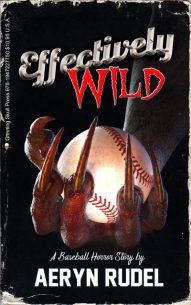
Effectively Wild – A Baseball Horror Story
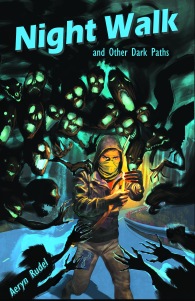
Night Walk & Other Dark Paths
Acts of War: Flashpoint

Acts of War: Aftershock

Acts of War: Stormbreak


