
100 Rejections: Achievement Unlocked

In 2018 I achieved a landmark (for me) literary achievement – 100 rejections in a single year. I know that might sound like a dubious goal. I mean, why would you want to get rejected 100 times? Let me see if I can explain.
- 100 rejections means at a minimum 100 submissions and probably more. In fact, I managed 120 for the year. So, basically, you have to write a lot and submit a lot to accumulate 100 rejections in a year. I did both, and that’s a good thing.
- 100 rejections means you (should) learn quite a bit about the markets you’re submitting to. That definitely happened, and with each rejection, especially the upper-tier and personal varieties, I learned more about what specific markets wanted. That data paid off, and last year I cracked a couple of markets that had rejected me more than ten times prior.
- 100 rejections (should) mean more acceptances. Why? Mostly because of the first two points. The more stories you submit, and the more you learn about the markets you’re submitting to, the better your chance of acceptance. So, yeah, I set a yearly record for rejections, but I also set a yearly record for acceptances at 19.
Okay, those are the broad reasons why I set a goal of 100 rejections, but let me break it down a bit further and really dig into the data.
1) Total Markets: 48
My rejections came from 48 distinct markets, most of which I’ve submitted to before. That said, I did get rejected by 15 new markets, some of which were established this year.
2) Total Stories: 29
I had 29 distinct stories rejected in 2018. I’d say around half were stories I started and finished in 2018. The others were a mix of reprints or stories I’d started or finished in 2017 (or earlier).
3) Form Rejections: 67; Upper Tier Form Rejections: 18; Personal Rejections: 15
So, 67% of my rejections were standard form rejections, which is about what I’d expect from the markets I focused on in 2018 (pro and semi-pro). The upper-tier and personal rejections include three short-list rejections.
4) Most Rejections for a Single Story: 10
That’s a lot, but nowhere near my record (21), and this story is out for submission again. I think the story is one of my better ones, and it’s gotten some decent feedback, so, hopefully, it’ll find a home in 2019.
5) Story with Most Rejections Before Acceptance: 8
The story “When the Lights Go On” is, I think, one of the best pieces of flash fiction I’ve written, and it was responsible for two of the short-list rejections I mentioned above (all from pro markets). So, why did it take so long to get published? It’s just part of the gig. Good stories get rejected all the time, but when you’re making short lists and getting good personal rejections, you gotta keep sending that sucker out because it WILL find a home.
6) Rejected Stories Published: 9
Nine of my 29 rejected stories did go on to get published. This does not count reprints that were published prior to 2018. The average number of rejections for these pieces is 5 (most of those coming in 2018).
7) Most Rejections from a Single Market: 8
Unfortunately, I wasn’t able to crack this particular pro market in 2018, but I came close. I did, however, get published by the runner up, who had rejected me 7 times.
That’s how I got to 100 rejections in 2018. I’m gonna shoot for the same goal in 2019. Though I hope it will be harder to hit next year, I want to keep up the same level of production, just with a few more acceptances in the mix. 🙂
2018 Review: Writing by the Numbers

Well, here we are with a brand new year, so I thought I’d look back at 2018 and talk a bit about how I did, writing-wise, in the last twelve months. This is gonna be one of those posts where I give you a whole bunch of numbers, so here we go!
Total Words Written: 153,842
This total ONLY includes projects I started and finished in 2018. This includes 1 novel, 1 novella, 1 Dungeons & Dragons adventure, and 17 short stories. Of the 17 short stories, I subbed 13, and 6 were accepted for publication. The novella will be published by Privateer Press this month. The novel, hopefully, will be published in 2019. The Dungeons & Dragons adventure was published by Goodman Games back in August.
Of course, I wrote a lot more than that. The number above doesn’t count stories I started in 2018 and haven’t finished yet or the stories (and novels) I started in 2017, worked on in 2018, and still haven’t finished. It also doesn’t count things like blog posts. If I had to guess what all that other writing would add up to, I’d guess it’d be another 100,000 words or so (96 blog posts is an easy 50k all by itself).
The Novel
I wrote a horror/urban fantasy novel called Late Risers in 2018, and I’ll turn over the “final” draft to my agent next week. I’ve been trying to get to that stage for months, revising and revising and revising, but now, finally, it’s almost ready. Anyway, here are the basic stats for the novel:
- Word Count: 93,549
- Time Spent Writing First Draft: 3.5 months
- Time Spent Revising Draft(s): 6.5 months
- Number of Revisions: 4
The word count might drop a little more once I finish this final round of revisions, but it’ll still be around 90,000 words. That’s a nice, comfortable 350ish-page novel. When I wrote the outline, that’s what I was aiming for, and I’m pleased that I pretty much nailed the length. It took me exactly 111 days to write the first draft. That wasn’t a continuous thing, though. I took about three weeks off to work on another project. The revision time includes about a month where my critique partners were reviewing the book.
The revision process went like this. After I finished the first draft, I immediately started the first revision. That revision was to fix all the huge, glaring issues I knew were there. When that was done, I sent the book to my critique partners. Once I had their notes in hand, I started the second revision, fixing the issue they called out. When I was done with that, I went back through again, fixing more issues that cropped up after some extensive rewrites. Now, in this fourth revision, I’m polishing the language as well as making minor continuity and character fixes. If this book goes anywhere, I have no doubt more revisions will be needed, but, hopefully, those will be suggestions from my publisher.
So, roughly a year of work on this novel, give or take a week or two, that will hopefully pay off in 2019.
Short Story Submissions
Okay, let’s get to the nitty-gritty here. Here are my stats for short story submissions in 2018.
- Total Submissions: 120
- Total Rejections: 100
- Total Acceptances: 19
This is by far my best year for submissions, and I exceeded my yearly bests in submissions, rejections, and, most importantly, acceptances by a wide margin. I managed to crack some markets that had rejected me a bunch, and I got close with a few others.
Submission Details
- Distinct Stories Submitted: 38
- Flash Fiction Stories Submitted: 26
- Short Stories Submitted: 12
- Reprints Submitted: 7
I sent 38 distinct stories in 2018, 13 of which I wrote in the same year. I sent more than double the number of flash fiction stories over standard shorts, as I tend to write flash over shorts at about the same ratio. Finally, I sent seven reprints, two of which were accepted.
Market Details
- Distinct Markets: 53
- Pro Markets: 31
- Semi-Pro: 19
- Token/Free: 3
I sent stories to 56 distinct markets, most of them paying a pro rate. I also sent a fair number of submissions to semi-pro markets, but I limited my submissions to token and free markets in 2018. As usual, I used Duotrope’s definition of pro, semi-pro, and token/free pay scales.
Rejection Details
- Standard Form Rejections: 67
- Upper-Tier Form Rejections: 18
- Personal Rejections: 15
I submitted to a lot of pro markets, hence the large number of standard form rejections. That said, I did receive a good number of upper-tier and personal rejections. Since 100 rejections in a single year is kind of a big deal for me, I’ll break that all down further in another blog post. This here is just the basic stats.
Acceptance Details
- Pro Acceptances: 6
- Semi-Pro Acceptances: 5
- Token/Free Acceptances: 8
More than half of my acceptances were of the paying variety, and more than half of those were paid at a pro rate. That’s not too bad, and, of course, I’d like to increase the number of paying publications. That said, I’ll continue to submit to some of my favorite token/free markets.
Free to Read Publications
Okay, if you’re so inclined, here are all the stories I published this year that are available to read online for free. You’ll note the number of publications and the number of acceptances don’t jive, that’s simply because some of the stories accepted in 2018 have yet to be published and some are not free to read online.
“The Food Bank” published by The Arcanist
“Simulacra” published by EllipsisZine
“Two Legs” published by The Molotov Cocktail
“The Inside People” published by EllipsisZine
“Do Me a Favor” published by The Arcanist
“The Last Scar” published by Trembling with Fear
“What Kind of Hero” published by EllipsisZine
“Bear Necessity” published by The Molotov Cocktail
“When the Lights Go On” published by The Arcanist
And that was my 2018. Tell me about your year in the comments and/or link to a blog post with all the details.
A Week of Writing: 12/17/18 to 12/23/18

I’m late with the update for obvious reasons, but even with the holiday in full swing, I did manage a few writing-related endeavors.
Words to Write By
This week’s quote comes from George R.R. Martin.
“Some writers enjoy writing, I am told. Not me. I enjoy having written.”
– George R.R. Martin
This quote might surprise some folks, but I’ll bet a fair number of authors would say Martin’s quote accurately describes them. It often describes me, and though there are times when I do enjoy the raw creative act of writing, there are plenty of times I don’t. That said, I think it’s important to note that even writers who don’t always enjoy writing probably still feel the need to write, the compulsion to tell that story or work on that novel. Then, when the writing is done, and you manage to publish something, that feeling of genuine accomplishment is pretty great. I know chasing that “having-written” high is part of what focuses and sharpens my own efforts and keeps me plugging along through the endless revisions and rejections.
The Novel
I’m nearing the end of my last revision for Late Risers before I ship it off to my agent. As I said in my last update, I’m doing a fair amount of polishing with the language, much of which revolves around removing problem words and phrases. Last time, I spoke about overusing was, were, wasn’t, and weren’t, but those are only a few of the literary goblins that end up on the chopping block. For example, I also hunt down seemingly innocuous adverbs that add nothing to a sentence. I’m talking about words like still, now, just, up, down, around, behind, and so on. Of course, sometimes you need these words and some did survive the cut (often in dialog), but like any word on my hit list, they had to prove their worth.
Short Stories
Again, with the holiday, just a little activity here.
- Submissions Sent: 1
- Rejections: 1
- Acceptances: 0
- Publications: 0
- Shortlist: 0
That submission put me at 118 for the year and the rejection was number 99. I did receive rejection number 100 this morning, and I’ll post a full breakdown on that particular milestone in the new year.
The Blog
One blog posts last week.
12/18/18: A Week of Writing: 12/10/18 to 12/16/18
The usual weekly writing update.
Goals
Just one goal. Finish the final revision of Late Risers.
That was my week. How was yours?
A Week of Writing: 12/10/18 to 12/16/18
Another update on the writing week that was.
Words to Write By
This week’s quote comes from Edgar Rice Burroughs.
If you write one story, it may be bad; if you write a hundred, you have the odds in your favor.
– Edgar Rice Burroughs
This is pretty much my writing and submission philosophy in a nutshell. I’ve written a lot of stories, and some of them are very bad. That said, even the bad ones taught me something, something I could apply to the next story and make it a little bit better. Those incremental improvements add up over time, and now if I write, say five stories, one is bad, three are mediocre, and one of them might be publishable. Still working on that ratio.
The Novel
I’m still in the middle of the final revision of my novel Late Risers and it’s going well. I’m primarily focusing on cleaning up the language, adding clarity and simply sharpening the prose. I find this is largely a process of subtraction, and I have a hit list of words, phrases, and other stuff that’ll get the chop. For example, I often overuse the “was” sentence construction, which can create unwanted distance, especially in action scenes. So, I search for every instance of was, wasn’t, were, and weren’t, and see if I can’t find a more descriptive (and active) verb. Of course, was is a perfectly fine word to use, and my novel still has plenty of them, but those that remain have earned their keep.
Short Stories
A little more submission activity last week than the week before.
- Submissions Sent: 2
- Rejections: 4
- Acceptances: 0
- Publications: 0
- Shortlist: 0
The four rejection last week put me at 98 for the year. So, getting close to my 100-rejection goal. Here are my current stats for 2018:
- Submissions – 117
- Acceptances – 19
- Rejections – 98
I’d like to hit 120/20/100 for the year, and I have about two weeks to pull that off.
The Blog
Two blog posts last week.
12/10/18: A Week of Writing: 12/3/18 to 12/9/18
The usual weekly writing update.
12/14/18: A New Rejection Record
This past year I set a number of personal submissions and rejection records. This post details one – most rejection by a single publisher.
Goals
Keep pushing on that final revision of Late Risers for the hand-off to my agent at the end of the month.
That was my week. How was yours?
A New Rejection Record

I’ve written a couple of posts on my various rejections records, lists of dubious achievements in number, speed, and type of rejections. Because I send out so many submissions, it should come as no surprise that a lot of these records don’t stand for long. Today, I’d like to share a new rejection record with you and tell you why this particular record is a source of motivation rather than a source of frustration.
The record I recently broke (multiple times) was for most rejections from a single publisher. My old record was nine (9). Before I get to the new record, there are some honorable mentions I’d like to discuss.
- Honorable Mention #1 – Rejections 8; Acceptances 1
- Honorable Mention #2 – Rejections 10; Acceptances 1
As you can see, after a healthy number of rejections (even a short-lived record-setter) I finally broke through with these publishers. One is a pro market and the other is semi-pro. The reason I mention these two is to encourage folks not to give up on a market just because they’ve been rejected a bunch. Sometimes you have to keep trying until you find the right story. I managed to do that with these two markets, and it’s a highlight of my year.
Now, on to the record.
My new record for most rejections by a single publisher is . . . SIXTEEN (16).
I know, some of you are thinking, goddamn, take a hint! I might think that too, but let me tell you why I keep trying.
First, this is a professional market with a very low acceptance rate. As with most top-tier markets, they’re tough to crack even with a good story. I know that kind of sounds like an excuse, but I’ve seen editors from similar markets publicly state they turn away quality stories all the time for a myriad of (good) reasons. (Another reason you shouldn’t give up on a market or story, but more on that below).
Second, my rejections from this publisher are getting “better.” Earlier in the year, after a bunch of standard form rejections, I received a second-round rejection (sort an upper-tier rejection), and my last rejection was a short-list rejection, which means I was at least within spitting distance of publication. I’d call that progress.
With these factors in mind, I’ll continue to submit to this market because I have a better idea of the type of story they want, and my chances at publication are better than they’ve ever been (still not great, but better). Again, I’m telling you this because rejections don’t necessarily mean you should give up on a market (or a story, for that matter). If you’re working on and refining your craft (and your submission targeting), then keep trying, keep submitting, and you might find the right story to crack that tough market.
If you’d like to see my other rejections records, check out these posts.
I’v broken a few more records this year, so look for an updated list of my rejectomantic achievements in 2019.
Got a rejection record you’d like to share? Tell me about it in the comments.
A Week of Writing: 12/3/18 to 12/9/18
Another weekly update on my writing woes and wins.
Words to Write By
This week it’s another does of wisdom from Elmore Leonard.
All the information you need can be given in dialogue.
― Elmore Leonard
I like this quote because it’s how I generally write. I use a lot of dialog, and it’s my favorite way of conveying the story and plot going on around the characters. Generally, I avoid long passages of exposition, but that’s not to say all exposition is bad. This is more of a stylistic preference. Of course, if your dialog is thinly disguised exposition, that’s not gonna work either. The characters need to sound natural and authentic when they’re talking to each other, and I think if it’s done right, you can deliver a lot of info to the reader without them even knowing what you’re up to.
The Novel
This week, I’m returning to Late Risers. I’ve addressed most of the big problems (I hope), and this next revision pass will largely be cleanup. I’ll work on fixing the little inconsistencies in the story as well as sharpening up the writing. Then I’m gonna give the manuscript to my agent, cross my fingers and toes, and hope for the best.
Short Stories
Not exactly a banner week for submissions, but I did manage to get one new story written and submitted.
- Submissions Sent: 1
- Rejections: 0
- Acceptances: 0
- Publications: 0
- Shortlist: 1
One submissions puts me at 115 for the year. I’ve really slowed down this last month, but I’d like to hit 120 submissions before the new year. The shortlist letter I received is from a publisher that’s new to me, and it’s for one of my longer short stories. That’s be a nice one to end the year on if it comes through.
The Blog
Just one blog post last week. As with submissions, my blogging output has suffered a bit in the last month.
12/4/18: Submissions Statement: November 2018
My monthly report card for submissions, acceptances, and publications.
Goals
I’m back to work on Late Risers and pushing to squeak out a few more submissions.
Acts of War: Stormbreak
I sent in the final draft of the first part of my project for Privateer Press. It’s called Acts of War: Stormbreak and it will complete the story I started in the novels Flashpoint and Aftershock. We’re telling the story in this third installment in a unique way, and here’s more about that from Privateer:
Beginning with the upcoming Winter Rampage event kicking off in January 2019, the ongoing contest for control of Llael will continue—and the shape of the Iron Kingdoms to come will be decided by you, the players. Connecting the Winter Rampage, the spring narrative league, and culminating at a final climactic event at Lock & Load 2019, the Stormbreak storyline continues the Acts of War series penned by Aeryn Rudel (Flashpoint, Aftershock) and will conclude the saga of the liberation of Llael. Written in four parts, the Stormbreak fiction will be published online for free, setting the scene for each of the Organized Play events that it covers. Key factors reported by the players of each event will not only influence the next event but the storyline itself, as Rudel reactively writes each of the segments following the Organized Play events to illustrate the changing world and the shifting storyline based on player feedback. Ultimately, Llael’s destiny will be revealed, and the player-driven outcomes of events will decide the fate of key characters featured in the storyline, including whether or not they survive the final battle and what form, if any, they may take in future battles of WARMACHINE and HORDES. We’ll also see in the introduction of a new technology that will change the shape of warfare in the Iron Kingdoms, forever. (If you’ve read Watery Graves by Chris Jackson or “The Devil’s in the Details” by Miles Holmes, begin speculation…now!)
Full details here. Keep an eye on the blog for more information about Stormbreak.
That was my week. How was yours?
Submission Statement: November 2018
November is in the books, so let’s see how I did with submissions for the month.
November 2018 Report Card
- Submissions Sent: 8
- Rejections: 5
- Acceptances: 3
- Publications: 1
Eight submissions for November. Not too bad. That puts me at 115 submissions for the year. The rejections and acceptances put me at 94 and 19 respectively. Yes, if you’ve seen any of my recent Tweets about rejections, my numbers were off. I miscounted the number of rejections I had. Thought I was closer to one hundred. There’s a chance I won’t even hit 100 rejections for the year now, which, oddly, kind of bums me out.
Rejections
Just five rejections for October.
- Standard Form Rejections: 3
- Upper-Tier Form Rejections: 2
- Personal Rejections: 0
Nothing too exciting here. Three standards and a couple of upper-tier rejections.
Spotlight Rejection
The spotlight rejection for November comes from one of my favorite markets, one that is now back in action after a long hiatus.
Dear Aeryn,
Thank you for submitting [story title]. We appreciate your interest in [publisher].
Unfortunately, it is not quite right for us. Best of luck placing it elsewhere.
This is a very standard form rejection, so there’s not much to talk about here. I’m just thrilled I can send submissions to these folks again.
Acceptances
Three acceptances is a good number, and all were special in their own way. The first was for a story I really like that has gotten close a number of times, but has never found a home, until now. It ended up with a newer publisher, but one that pays a pro rate. The second acceptance is for a story that was actually accepted earlier in the year, and then the publisher closed before it was published. It was nice to find that one a spot again. Finally, the third story is a reprint that will gain new life with a new publisher (one of my favorites).
Publications
One publication in November, which is free to read online.
“The Last Scar”
Published by Trembling With Fear (free to read)

And that was my November. Tell me about yours.
A Week of Writing: 11/19/18 to 11/25/18
Hey, all, here’s another week of writerly workings.
Words to Write By
This week I return, once again, to the hallowed wisdom of Stephen King.
“Sometimes you have to go on when you don’t feel like it, and sometimes you’re doing good work when it feels like all you’re managing is to shovel shit from a sitting position.”
― Stephen King
I love this quote because it exposes the often brutal truth of the writing experience. Well, for me anyway. Yeah, sure, there are times when I feel like stardust and sunshine are flowing from my fingertips onto the page, but that’s pretty rare to be honest. On the other hand, the shoveling shit thing? The writing when I don’t feel like it? That I am very familiar with. I think it has a lot to do with the fact that I’m not great at judging my own work, especially when I’m churning out the first draft. That feeling of the unknown, of god, I hope this isn’t total garbage, can really color my emotions when I’m creating. Despite those emotions, I have to do what Stephen King says. I have to go on, and I usually do. Invariably, when I go back and read what I’ve written the next day, it’s never as bad as I feared. Hell, sometimes it’s even pretty good.
The Novel
I finished the first draft of my project for Privateer Press and sent it off. This week, I’ll dive back in to revisions on Late Risers while I wait for notes from Privateer. I’d like to finish revisions of the novel by the end of the year. I think that’s doable.
Short Stories
Like last week, I was pressing to finish my project for Privateer Press. Add to that the Thanksgiving holiday, and, well, I didn’t get much done with submissions. Despite that, it was a pretty good week.
- Submissions Sent: 1
- Rejections: 0
- Acceptances: 2
- Publications: 0
- Shortlist: 0
So, the one submission and pair of acceptances put me at 113 submissions for the year and 18 acceptances (I’ve since received a 19th). I’m still at 97 rejections for the year, but I have 10 submissions pending, so I should break that 100 mark in the next week or two.
The Blog
Again, sadly, just one blog post last week. I’m back on track, though, so count on at least two this week.
11/20/18: A Week of Writing: 11/12/18 to 11/18/18
The usual weekly update on submissions, rejections, acceptances, and other writerly things.
Goals
It’s back to work on the novel and maybe finish up a new short story or two.
Submission Spotlight
This week I’d like to call your attention to the latest flash fiction contest from The Molotov Cocktail. This one is called Phantom Flash, and here’s a bit about what they’re looking for:
Time to get weird. The Phantom Flash contest focuses on the strange and surreal, on the otherworldly and unsettling, on the things that just don’t have any rational explanation. Let your minds wander to the darkest corners of your imagination, where the fluidity of dreams pours over concrete realities. The parameters for this contest are as boundless as the cosmos.
Final deadline on this one is 1/31/19. Full submission details in the link below.
Phantom Flash Guidelines
That was my week. How was yours?
A Week of Writing: 11/12/18 to 11/18/18
Late again and missing a week, but I’m back on track with another weekly writing update.
Words to Write By
This week’s quote comes from comedian, actor, producer, and writer Carol Leifer.
“As a writer, the worst thing you can do is work in an environment of fear of rejection.”
—Carol Leifer
I think it’s important for a writer to envision every story they send out getting accepted and published, and, at the same time, accepting there’s likely going to be a rejection or two (or ten) along the way. Carol Leifer’s quote resonates with me because while you have to expect rejections, you can’t let the prospect of getting rejected keep you from writing and submitting your work or submitting your work to the best and toughest markets. You have to keep writing, keep submitting, and come to an understanding that rejection is just a part of the process. It helps you get better, it helps you find the best markets for your work, and it helps you develop that thick skin every creative person needs. In my opinion, that’s nothing to fear.
The Novel
Revisions on my novel Late Risers is on hold for a bit while I work on a project for Privateer Press. Last week, I wrote 10,000 words on that project. I’d like to tell you more about it, and I will soon, but for now I’ll just say it’s nice to step back into a familiar story. 🙂
Short Stories
With the new project for Privateer Press and a few other things, I didn’t get a lot done submission-wise last week.
- Submissions Sent: 1
- Rejections: 1
- Acceptances: 0
- Publications: 1
- Shortlist: 0
With this tiny bit of activity, I’m at 112 submission and 97 rejections for the year. It would be nice to end the year with 100 rejections and 20 acceptances (currently at 17).
The Blog
Just one blog posts last week.
11/16/18: Submissions: No Accounting for Taste
In this post, I take a look at how editorial taste can influence rejections and acceptances.
Goals
I’m going to finish up my current project with Privateer Press this week, do that Thanksgiving thing, and then get back to work on the novel.
Story Spotlight
My flash fiction story “The Last Scar” was published by Trembling with Fear last week, and you can read it for free by clicking the link below.
“The Last Scar”
That was my week. How was yours?
Submissions: No Accounting for Taste
The old saying goes one person’s trash is another person’s treasure. That’s applicable to a wide variety of creative endeavors, and writing is no exception. What I mean is that when you send out submissions, whether or not you get published is due to a number of factors. The two biggest are write a good story and make sure that story is appropriate for the market. Another important one, I think, is editorial preference. Even if you nail the first two elements (good story and good for the market), the person reading your story has to, you know, like it, and that is a pretty subjective thing. Let me see if I can illustrate the point with some of my own submissions.
The chart below includes eight stories and five markets – two pro markets, two semi-pro markets, and one token market. I send a lot of stories to these five publishers and they all generally publish the same type of material, namely speculative fiction that includes, fantasy, sci-fi, and horror. I also end up sending the same story to these markets after one or more of them rejects it. Take a look.
| Pro 1 | Pro 2 | Semi-Pro 1 | Semi-Pro 2 | Token 1 | |
| Story 1 | Accepted | Rejected | |||
| Story 2 | Rejected | Rejected | Accepted | Rejected | |
| Story 3 | Accepted | Rejected | Rejected | ||
| Story 4 | Rejected | Accepted | |||
| Story 5 | Accepted | Rejected | Rejected | ||
| Story 6 | Accepted | Rejected | |||
| Story 7 | Accepted | Rejected | |||
| Story 8 | Rejected | Accepted |
I’m not using the names of the stories or the names of the markets because I don’t want to give the impression that any of these publishers are wrong for rejecting my stories or right for accepting them. This is just a sampling of my submissions to illustrate my point that editorial preference (which is neither right nor wrong) plays a role in getting published.
If editorial preference plays a significant role, how do you improve your chances of acceptance? Well, that’s where submission targeting comes in. For starters, you should read sample stories from the magazine, which’ll give you a good idea of the content the editors like. That said, I find once I start getting responses from editors in the form of rejections or acceptances, I can really drill down on their preferences (especially if they’re kind enough to give me some feedback).
Sometimes you hit the mark right off the bat. For example, pro market 1 and semi-pro market 2 accepted the first stories I sent them, and that helped me narrow down what to send them next. The result? I’ve been accepted by both markets a number of times. On the other side of that coin are pro market 2 and semi-pro market 1. I had seven and ten stories rejected by those markets respectively before I broke through. The stories they accepted had a very specific style and that told me A LOT about what I should be sending these publishers.
The take away here, for me at least, is there’s no exact formula, no foolproof plan to getting a story accepted. You have to commit to perfecting your style and craft, be diligent with your research, and, yes, accept a fair amount of trial and error. In addition, don’t give up on a market just because they’ve rejected you a bunch. It might be that you simply haven’t sent them the right story yet.
Thoughts on editorial preference? Tell me about them in the comments.
Effectively Wild – A Baseball Horror Story

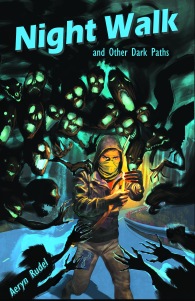
Night Walk & Other Dark Paths
Acts of War: Flashpoint

Acts of War: Aftershock

Acts of War: Stormbreak


