
Go for the Goal: 100 Submissions

This year I set a goal to send 100 short story submissions. It’s similar to the 100 rejections goal, but the focus is a bit different. Let me explain why I’m doing it and subjecting myself to all those rejections. 🙂
Why 100 submissions? Here are my top three reasons.
- Number goals motivate me. This is more about me personally than any sage advice on submissions. I’m kind of a stats nerd, and these kinds of goals, as arbitrary as they are, keep me focused and push me to keep writing, submitting, and so on. Your goal needn’t be 100 submissions if you’re not a numbers person. It could be broader. Some like submit to more pro markets, for example.
- It keeps me writing new stuff. In order to send out 100 submissions, you need a fair amount of material to send. So I’ve been writing a lot more short stories this year. Sure, a lot of it is flash, but I’ve been pretty consistent with a new story every week or so.
- It’s pushed me to diversify. I’m primarily a horror writer, but the simple fact is I run out of horror markets pretty quick. There are a lot more fantasy and sci-fi markets, generally, so I’ve been writing more in those genres, with some success. Hell, I even wrote and sold a mystery story this year. Of course, a lot of my sci-fi ends up being horror/sci-fi and my fantasy is generally dark fantasy, but, hey, it still counts.
So, how am I doing with this goal? Let’s look at some numbers.
- Submissions: 73
- Pending Submissions: 8
- Unique Stories: 26
- Acceptances: 9
- Rejections: 55
- Withdrawals: 2
I’m satisfied with those numbers, and I’m well on my way to hitting my goal (and then some). I’m also happy with my acceptance rate so far (about 14% based on completed submissions), though I’d always like it to be higher. As usual, there have been a fair number of short-listed stories that ended up getting rejected, and I feel confident those stories will find a home and increase my acceptance rate down the line. Out of my 100-plus submissions, I’d really like to hit 15 acceptances, and I feel like that’s doable (he says, jinxing himself).
Got any submission goals of your own? Tell me about them in the comments.
A Week of Writing: 7/2/18 to 7/8/18

Happy Monday. Here’s a week of writing wins and woes.
Words to Write By
Another quote from King, and one that’s especially important to me since I tend to write a lot of horror.
I try to create sympathy for my characters, then turn the monsters loose.
– Stephen King
It seems simple, but if we just look at horror movies as an example, so many fail at this basic concept. If you don’t care about the people in the story, you won’t care when horrible things happen to them. I love writing about monsters, but I sometimes have to look at them like the dessert course after I finish my character vegetables. I’m not always successful, of course, and a few stray bits of broccoli have, on occasion, been fed to the literary pooch under the table.
The Novel
Got through a couple more chapters last week. More heavy revision as I catch up the manuscript from the changes I made in chapter one. There’ll be more of that this week, as chapters five through ten need revision to conform to a slightly altered plot. But I feel good about what’s happening, and the book is taking shape.
Short Stories
Finished one new story this week called “She Has a Way with Things That Grow.” Yeah, that’s a long, clunky title, I know, and it’ll likely shorten up to something a bit less wordy. It started as flash, but I think it’ll end up somewhere around 3,000 words.
A good week for submissions in some regards and terrible for others.
- Submissions Sent: 0
- Rejections: 1
- Acceptances: 2
- Publications: 1
For the first time in a long time, I didn’t send a single submission last week. I’m not too broken up about it, though, since I’m still on track for my goal of 100 submissions for the year. Plus, I got two acceptances and a publication last week, so that’s pretty awesome. More submissions will go out this week.
The Blog
Two blog posts last week, both of the “here’s what I’ve been up to” variety. Last week was a good week for new followers, though. So if you recently started following the blog, thank you!
7/3/18: A Week of Writing: 6/25/10 to 7/1/18
The usual weekly writing update.
7/6/18: Submission Statement: June 2018
My submission endeavors for the month of June.
Goals
As usual, keep working on the first read-through/revision of the novel, and get more short stories revised or finished and out the door.
Story Spotlight
This week’s story spotlight marks a dirty dozen publications with The Molotov Cocktail. They recently published my story “Two Legs,” which you can read for free by clicking the link below.
“Two Legs”

Bonus Kitten Round
Yeah, I know it’s not exactly writing related, but we adopted this little fuzzball last week. His name is Fidget, and I look forward to many years of shooing him off my keyboard as I attempt to write stores, novels, and blog posts.

That was my week. How was yours?
Submission Statement: June 2018

June was another active month that kept me well ahead of pace for my goal of 100 submissions for the year. Here’s the down and dirty.
June 2018 Report Card
- Submissions Sent: 12
- Rejections: 10
- Acceptances: 1
- Publications: 1
- Other: 1
Twelve submissions is great, and I ended the month with 72 total for the year (and an average of exactly twelve per month). A couple of the rejections stung a bit, only because I thought I had a good shot at an acceptance on at least one of them. Still, I did get an acceptance from a market I haven’t submitted to before, so that’s always good. The publication is for a story accepted in May, and the “other” is a withdrawal letter.
Rejections
Ten rejections, which is about average for my submission output at this point. Here’s how the rejections breakdown.
- Standard Form Rejections: 5
- Upper-Tier Form Rejections: 2
- Personal Rejections: 3
Half the rejection were upper-tier form or personal rejections, and there was one short list rejection and a couple of close-but-no-cigars. I really wanted an acceptance for that short-listed story because it was for a fairly prestigious anthology, and I thought my story was a nice fit for the theme. But that’s the way these things go, and editors have to make tough decisions when they’re filling those final slots. This is one of those stories that’s gotten close a couple of times, so I think it’ll find a home in the near future.
Here’s a quick breakdown of how long it took for each market to read and reject the story.
| Rejection | Date Sent | Date Received | Days Out |
| Rejection 1 | 8-Apr-18 | 1-Jun-18 | 54 |
| Rejection 2 | 11-May-18 | 1-Jun-18 | 21 |
| Rejection 3 | 10-Jun-18 | 14-Jun-18 | 4 |
| Rejection 4 | 17-Jun-18 | 18-Jun-18 | 1 |
| Rejection 5 | 11-May-18 | 21-Jun-18 | 41 |
| Rejection 6 | 26-Apr-18 | 24-Jun-18 | 59 |
| Rejection 7 | 25-Jan-18 | 25-Jun-18 | 151 |
| Rejection 8 | 25-Jun-18 | 26-Jun-18 | 1 |
| Rejection 9 | 26-Jun-18 | 27-Jun-18 | 1 |
| Rejection 10 | 27-Jun-18 | 29-Jun-18 | 1 |
Pretty standard rejection times for these markets, though some were a bit speedier than usual. The longest wait was 151 days, and that’s because the story was short listed. In that case, the publisher sent a short list letter to inform authors the wait time could be longer than usual as they made final decisions.
Other
The “other” this month was another withdrawal letter.
Dear Editors,
I submitted my short story [story title] to [publisher] on [date]. I sent a submission status query on [date]. At this time, I would like to withdraw the story from consideration.
Best,
Aeryn Rudel
This is an example of one of my basic withdrawal letters. Like all queries and withdrawals, be professional and simply state the facts.
Acceptances
One acceptance for the month, from a market I haven’t subbed to before (but almost certainly will again).
Many thanks again for your story, we both really enjoyed it and would like to publish it at [publisher]. Attached is a copy of our standard contract for you to fill in, sign, and return.
In my experience, most acceptance letters read like a very welcome type of form letter. I think this is because they are the opening salvo in a longer communication between editor and writer. Yes, you should always respond to acceptance letters. 🙂 Additional communications of a much more individual nature always follow, revolving around the contract, any necessary edits to the story, when the story might be published, etc.
More on this acceptance as it nears publication.
Publication
One publication in June. My story “The Inside People” was published by Ellipsis Zine. You can read it by clicking the link below.
“The Inside People”

And that was my June. Tell me about yours.
A Week of Writing: 6/25/18 to 7/1/2018
I usually post these on Monday, but the fates conspired against me yesterday and kept me far away from the keyboard. Anyway, here’s the week that was.
Words to Write By
This is one of my favorite quotes because it delivers a great piece of writing advice in typical Twain fashion.
“Substitute ‘damn’ every time you’re inclined to write ‘very;’ your editor will delete it and the writing will be just as it should be.”
― Mark Twain
So, let’s give this a shot. Here are a few sentences from a recent draft of a novelette, and, as Mr. Twain suggests, I’ve replaced the verys with damns.
- “It’s a movie. And not a damn good one.”
- “Unfortunately, a fair amount.” The angel frowned. “I have a damn delicate situation on my hands and direct intervention would not be prudent at this time.”
- Adramelech’s doll jerked and then slid off the chair. Its cotton arms and legs possessed no articulation, so the demon couldn’t move it damn well.
Yep, all of those could go (with a tiny bit of revision on the last sentence), but, I have to admit, I kind of like the second sentence with the damn intact.
The Novel
Well, I wrote a new chapter one, and revised chapters two and three to match last week. The holiday is going to slow me down this week, but I’m feeling better about where I am overall with the novel. I’ve also set a hard deadline for when I need to turn the novel over to my critique partners and when I need to get it to my agent.
Short Stories
For the first time in a while, I didn’t work on any new stories. That said, there are a couple of big markets opening for submissions this week, so I’ll be sprucing up a story or two.
A good week for submissions stats.
- Submissions Sent: 4
- Rejections: 4
- Acceptances: 1
- Publications: 1
Kind of ticked all the boxes last week with submissions, rejections, an acceptance, and a publication. One of those rejections was a real heart-breaker, a story that had been shortlisted for a long time and was eventually rejected. I’m pretty inured to rejections at this point, but those sting a bit. The acceptance was with a new market, and I’ll talk more about that in the coming weeks.
The submissions for last week put me at 72 for the year.
The Blog
Only two blog posts last week (and probably two this week as well).
6/25/18: A Week of Writing: 6/18/10 to 6/24/18
The usual weekly writing update.
6/29/18: 6 Reasons for Rejections
In this post I listed six of the most common reasons stories are rejected.
Goals
Keep working on revisions of the novel is goal number one. Goal number two is prepare stories for two big markets that opened for submissions this week.
Story Spotlight
This week’s story spotlight is my second publication with Ellipsis Zine, a market that is fast becoming one of my favorites. The story is a bit of dystopian sci-fi flash called “The Inside People.” You can read it for free by clicking the link below.
“The Inside People”
That was my week. How was yours?
6 Reasons for Rejections
I’ve written at length about the myriad reasons a story might get rejected, but let’s look at six of the most common and review them. As with all things on this blog, what follows is my (somewhat informed but hardly expert) opinion based on my personal experiences out there in submission land. So, with that disclaimer out of the way, let’s get to it.
- Ignoring the guidelines. Let’s start off with the obvious one. The quickest and surest way to get a rejection is to not follow the submission guidelines. It’s the literary equivalent of shooting yourself in the foot . . . with a bazooka. Your story is not an exception to the rules. Say it with me. Follow. The. Guidelines.
- Needs work. No one wants to hear this, but sometimes we have to face facts. Our writing may not be up to snuff, and even if it is, we all write the occasional clunker. This is why it’s crucially important to work at your craft, identify the weaknesses in your work, and then strive to improve on them. The best way to do this, in my opinion, is to gather a group of critique partners who will be bluntly honest with you. It’s no fun to get a story back from a trusted reviewer filled with comments, questions, and red marks, but I think it’s the best way to improve.
- Editorial preference. Look, editors are people, and people have a wide variety of tastes and preferences. You can write a good story about superheroes, or baseball, or whatever, and if you send it to an editor that just doesn’t dig those things, you’re probably gonna get a rejection. Helpfully, some editors are up front about their preferences, and their guidelines will include a “do not send” or “hard sell” list to alert writers about subjects or tropes the editors don’t want to see. Pay attention to those.
- Bad fit. Similar to editorial taste, but more of a big picture kind of thing. Some markets, despite accepting the same genre you’re writing, might just be a bad fit for your style. If you write more commercial fiction, you might have a hard time selling to a market that leans literary or experimental. If your work tends to be downbeat and dark, a market that generally publishes more uplifting pieces is probably going to pass on your stories. You can often tell if your work might be a good fit by reading an issue or two from the magazine in question, but not always, especially of new markets that don’t have back issues for you to read.
- Bad luck. If you write an awesome story about, say, rabid space monkeys and send it to a magazine that just accepted another awesome story about rabid space monkeys, guess what? You’re probably going to get a rejection. Or if the publisher has, for whatever reason, seen a shit-ton of rabid space monkey stories lately, it’s gonna stack the odds against your rabid space monkey story. Yeah, it’s a bummer, but sometimes the editor will tell you this is why your story was rejected. I always appreciate that because it’s useful data, and I can send that story out again with some confidence.
- Lots of competition. If you’re submitting to big pro markets and anthologies, your story is going up against a lot of other stories, many from the best writers in the industry. These markets get a lot of quality submissions, but they can only publish so many stories, hence their very low acceptance rates. For more on that, read the excellent and inspiring article Nectar for Rejectomancers by C.C. Finlay, editor of The Magazine of Fantasy & Science Fiction.
Three of the reasons I listed above you can do something about. You can keep refining your craft and submit your best work, you can and absolutely should follow the guidelines to the letter, and you can do some research and sharpen your submission targeting. But, even if you do all those things, you’re still gonna get your fair share of rejections because of the three reasons beyond your control. That’s okay. It’s all part of the gig and it happens to every writer. Accept it, keep writing, and keep submitting.
Any other reasons a story might get rejected? Tell me about it in the comments.
A Week of Writing: 6/18/18 to 6/24/18
It’s Monday and time to come clean about all the writing, revisions, and submissions I finished last week.
Words to Write By
This quote perfectly sums up my week
Half my life is an act of revision.
– John Irving
I remember when I finished the first draft of Late Risers, my novel in progress. I was excited and happy, but guardedly so. That’s not because I didn’t feel like it was an accomplishment; I just knew how much work remained to be done. I knew I’d only finished the first half of the process as Mr. Irving so succinctly points out above.
The Novel
Last week I made my first real revisions. I’m not done with my initial read through, but I started working on an issue in the first part of the book. The book began a little too abruptly, so I’m adding a bit to smooth that out, fill in some details, and introduce the reader to a few characters much earlier than I originally had planned. This will necessitate a revision of the original first chapter, but I feel better about the direction of the first act now. I’d call that progress.
Short Stories
Revisions are ongoing on a number of stories, but I did polish up a new one and send it out last week. I’m managing about one new story or one new revision every week, and that’s kept me with a lot of submission material for the year.
Solid submission activity last week.
- Submissions Sent: 4
- Rejections: 3
- Acceptances: 0
- Publications: 0
- Further Consideration: 1
Last week’s submissions put me at 68 total for the year, though I did send another just this morning.
The Blog
I attended a convention last week Friday and Saturday, so I only managed two blog posts for the week.
6/18/18: A Week of Writing: 6/11/10 to 6/17/18
The usual weekly writing update.
6/20/18: Submission Protocol: When to Withdraw Part II
In this post I covered two situations where sending a withdrawal letter is a lot more cut and dry: sim-subs and defunct publishers.
Goals
Gonna continue my read through and initial revisions for Late Risers, and, as always, keep sending those submissions out.
Submission Spotlight
As another new feature on these updates, I’m going to point out some submission opportunities you might have missed. This week, it’s a big one.
Tor.com Publishing Opening to Novella Submissions on July 30
Tor.com Publishing will soon be reopening to unsolicited novella submissions! Starting July 30, 2018, Lee Harris, Carl Engle-Laird, and Ruoxi Chen will be reading and evaluating original novellas submitted by authors to https://tor.moksha.io/publication/tornovellas. You can find full guidelines here, and we highly recommend you read the guidelines before submitting. We will be open for two weeks beginning on July 30 around 9:00 AM EST (UTC-1:00) and ending on August 13 9:00 AM EST (UTC-1:00).
If you have a fantasy or sci-fi novella, click the link, and read the guidelines. I don’t need to tell you that getting your novella published by Tor is kind of a big deal.
That was my week. How was yours?
Submission Protocol: When to Withdraw Part II
Last week I discussed when and how to withdraw a story in Submission Protocol: When to Withdraw. In that post, we discussed a single situation when withdrawing a story might be the best thing to do. In this one, we’ll discuss two situations where it’s more cut and dry.
As with all things, check the submission guidelines before you send a withdrawal letter. Some publishers may have specific guidelines for withdrawing a story.
1) Simultaneous Submissions
This is one time sending a withdrawal letter is a must. If you submit a story to two publishers (that accept sim-subs) and one of them accepts the story, you should immediately inform the other publisher and withdraw the piece from consideration. It’s the professional thing to do, and, honestly, it’s usually in the guidelines for any publisher open to sim-subs (And we always follow the guidelines, right?) So what might that letter look like?
Dear Editors,
I submitted my short story [story title] to [publisher] on [date of submission]. The story has been accepted elsewhere for publication. At this time, I would like to withdraw my story from consideration.
Best,
I think you should alert the publisher in the email subject line that you are withdrawing the story. Something like: Story Withdrawal – [Story Title] – [Author Name]. A publisher that accepts sim-subs will have received this letter before, so they won’t be surprised by it, and if you’re professional and follow the guidelines, it won’t hurt you chances on future submissions.
2) Publisher Closing
This may seem like a corner case, but I’ve sent more withdrawal letters for this reason than any other (seven so far). Unfortunately, sometimes a new publisher or even an established one goes out of business. (We’ve had to say goodbye to some great ones in the last couple of years.) Often, the publisher will inform authors with stories under consideration, either on their website, through email, or via social media (or all three). The publisher will sometimes set a deadline for when they will stop accepting submissions and when/if they will respond to the submissions they currently have. In either situation, you probably won’t need to send a withdrawal letter.
Sometimes the only way you know a publisher has gone out of business is because they stop responding to submissions and/or their website and social media accounts disappear and/or they are marked as closed or defunct by Duotrope or The Submission Grinder. In that case, I generally wait a couple of weeks to see if the publisher makes an announcement. If they don’t, I’ll go ahead and send this withdrawal letter.
Dear Editors,
I submitted my short story [story title] to [publisher] on [date of submission]. At this time, I would like to withdraw the story.
Best,
I have put something like “It appears you are no longer considering submissions” into the email, but the simple letter above is probably sufficient. You likely won’t get a response, and in my experience, it’s not uncommon for the withdrawal email to bounce back because the submission address no longer exists. Still, I think sending the letter is the professional thing to do.
Any other reason you might withdraw a story? Tell me about it in the comments.
A Week of Writing: 6/11/18 to 6/17/18
Hey, it’s Monday. Here’s my weekly writer report card for your entertainment/edification/judgment.
Words to Write By
A little something new for these updates. I’m going to start each one with a favorite quote about writing. To kick us off, here’s one by Stephen King.
By the time I was fourteen the nail in my wall would no longer support the weight of the rejection slips impaled upon it. I replaced the nail with a spike and went on writing.
― Stephen King
A sterling example of even the greats were/are rejected. I also kind of love the idea of getting rejection letters in the mail. I mean, it’s really no different than getting an email rejection, other than my idea of wallpapering my office with rejection slips will never come to fruition.
The Novel
Still working on my initial read-through and making revisions. I had a little analysis paralysis last week that slowed me down. What’s difficult for me is that I’m struggling to accept that the revision process is going to take as long, if not longer than it took me to write the first draft. I just need to be okay with that because I’ll end up with a better book.
Short Stories
I finished a new flash piece I quite like, and I’ll start sending that one out this week. I also worked on a couple of longer pieces, which are getting closer to done or revised.
Not a lot of submission activity last week.
- Submissions Sent: 2
- Rejections: 1
- Acceptances: 0
- Publications: 0
All the submission activity this week revolved around the same story. I sent it out once, received a nice personal rejection, revised it a bit, then sent it out again. These two submissions put me at 64 total for the year.
The Blog
Another good week for the ol’ blog.
6/11/18: A Week of Writing: 6/4/10 to 6/10/18
The usual weekly writing update.
6/13/18: Submission Protocol: When to Withdraw
I returned to the always popular subject of withdrawing a story from consideration. This time I shared an order of operations or checklist to consider before sending a withdrawal letter.
6/15/18: Free Flash – Where They Belong
This is a piece of flash fiction I sold to Darkfuse Magazine a few years ago. Unfortunately, Darkfuse closed up shop a while back, and the story is no longer available to read online. So, since the rights to the story have returned to me, I put it up on the blog.
Goals
Keep pushing through my first read of the novel and revising. I (always) want to get more short stories written and submitted as well.
Story Spotlight
This week’s story spotlight is another I published with The Molotov Cocktail. This is a weird one I was sure no one would ever publish, but The Molotov liked it, and I’m grateful for it. Anyway, it’s called “A Man of Many Hats.”
“A Man of Many Hats”

Submission Protocol: When to Withdraw
Withdrawing a story from a publisher is an oft-discussed topic in writer circles, and there are a lot of opinions on when and if you should do it. My views have evolved on this subject over the years, so I thought it might be a good time to revisit it. It should be noted that I’m specifically talking about withdrawing a story from a publisher that has been unresponsive for a considerable amount of time. There are other times when the decision to withdraw a story is much more cut and dry (sim-subs and defunct publishers, to name two).
When should you withdraw a story? Well, again, there are a lot of opinions, but here’s a checklist or series of “if this, then that” scenarios you might consider before pulling the trigger on the withdrawal letter.
Step 1: Has the publisher exceeded their stated (1) response time by a reasonable (2) period? If yes, go to step two. If no, then wait until that time has passed, then go to step two.
Step 2: Is the publisher responding to submissions on Duotrope or the Submission Grinder (3)? If yes, consider waiting until they’ve exceeded their actual (4) response time. If no, then go to step three.
Step 3: Has the publisher indicated on their website or social media they are working through submissions? (5) If yes, and the publisher has given a deadline, consider waiting until that date has passed. If no, go to step four.
Step 4: Does the publisher allow submission status queries? (6) If yes, and all criteria from the previous steps have been met, then send a submission status query and go to step five. If the publisher does not allow them, do not send one, and go to step five.
Step 5: Has the publisher responded to the submission status query (or responded in general if they don’t allow them) and resolved the submission with a rejection, an acceptance, a further consideration letter, or an update of some kind? If yes, congrats; you’re done. If no, and a reasonable amount of time has passed, then go to step six.
Step 6: Assuming the publisher has not responded to you, have they responded to any submissions on Duotrope or The Submission Grinder or left any indication on their website or social media about submissions since the first/last time you checked? If yes, it’s reasonable to wait and not entirely unreasonable to go to step seven at this point. If no, go to step seven.
Step 7: Send a withdrawal letter.
(1) The stated response time is usually in the publisher’s guidelines. For genre, I find it’s somewhere between 30 and 90 days. If the publisher does not list a stated response time, look at Duotrope or The Submission Grinder for an average response time and use that.
(2) What’s a reasonable amount of time in this situation? That’s really a gut check thing. A month past the stated response time for a query letter is reasonable, I think. Waiting a month after the submission status query to send the withdrawal letter is also reasonable. Still, this all comes down to what you are comfortable with, so take my checklist with a grain of salt and do what works for you (while still following publisher guidelines).
(3) If you don’t use Duotrope or the Submission Grinder, I’d recommend you do. If not for tracking submissions, then as a market database, and, of course, an excellent way to gauge publisher response times.
(4) The actual response time can vary dramatically from the publisher’s stated response time. It’s often longer, but there are markets that routinely have actual response times far shorter than their stated response times. Obviously, you won’t have to worry about the latter when it comes to withdrawal letters.
(5) It’s a good habit to check a publisher’s Facebook and Twitter for updates about response times. Many publishers also post a lot of great advice about submissions and writing in general.
(6) Even if a publisher allows submission status queries, they might mention a specific period of time they want authors to wait before sending one. Always check the guidelines before you send that letter.
If you do make it to step seven, what should the withdrawal letter look like? Here’s an example of one I’ve used:
Dear Editors,
I submitted my short story [story title] to [publisher name] on [date submitted]. I sent a submission status query on [date of query]. At this time, I would like to withdraw the story from consideration.
Best,
Just give the publisher the facts: story title, when you sent it, and when you sent the submission status query (if you sent one). I also think it’s a good idea to alert the publisher you’re withdrawing the story in the subject line of the email. Something like: – Submission Withdrawal – [Story Title] – [Author Name]. If the publisher assigns any kind of tracking number to the submission, you should also include that in the subject line or body of the email.
Keep the letter short, to the point, and, above all, professional. You don’t know the situation on the other end of that email, so be polite, move on, and send the story somewhere else.
Thoughts on withdrawing a story? Tell me about it in the comments.
A Week of Writing: 6/4/18 to 6/10/18

Happy Monday. Another week down, another week of positive yardage, more or less.
The Novel
I’m still reading through the first draft of the novel, though I didn’t make much progress last week, mostly because I needed to focus on another project. This week, I’ll continue my read-through and start making some of the first big revisions to the book.
Short Stories
Last week I said I was going to ask my writing group to give a couple of short stories the once over, and I did. I received some really good feedback on two stories I like a lot that just weren’t quite there yet. I know what to do with them now, and hopefully once the revisions are done they’ll find a home.
Another slow week for submissions.
- Submissions Sent: 2
- Rejections: 0
- Acceptances: 0
- Publications: 0
- Withdrawal: 1
This is the first week in a long time where I didn’t receive any rejections. I’m okay with that. I did send out two submissions, number 61 and 62 for the year. One is a brand new story on its first submission and the other is an older story I sent to a new market. I also withdrew a story after no response for many months. I’ll send that one out again this week.
Other Projects
One of the reasons I didn’t spend as much time on the novel is I finished up the D&D adventure I was writing for Goodman Games and turned it in. It had been a while since I did any game design, so it was a lot of fun to put that particular hat on again. I’ll reveal a bit more about this project as it gets closer to publication.
The Blog
Okay, last week was a good one for the ol’ blog, and I managed three posts.
6/4/18: A Week of Writing: 5/28/18 to 6/3/18
The usual weekly writing update.
6/6/18: The Final Round Form Rejection
In this post I discussed a type of higher-tier form rejection I called the final round form rejection. It’s a heart-breaker.
6/8/18: One-Hour Flash – Road to Ruin
Another piece of flash fiction jammed out in an hour. This one ties into a novel concept I’ve had kicking around for years.
Goals
Keep reading and revising the novel is goal number one. I’d also like to revise some of the short stories I mentioned above and get them out for submission.
Story Spotlight
This week’s story spotlight is the second piece I published with The Arcanist. Like many of my published flash fiction stories, this one began life as part of a one-hour flash writing exercise (you can see one of the less successful results of those exercises in last week’s blog posts).
“Reunion”

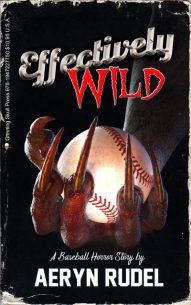
Effectively Wild – A Baseball Horror Story
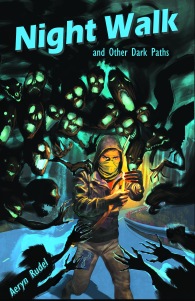
Night Walk & Other Dark Paths
Acts of War: Flashpoint

Acts of War: Aftershock

Acts of War: Stormbreak


