
Submission Top Ten: Shortest Waits

Last week I showed you my ten longest waits for submissions. This week, I’m gonna flip the script and show you the ten shortest waits. So, without further ado, here they are:
| Time Elapsed | Result | Sold | |
| 1 | 10 minutes | Rejection | |
| 2 | 17 minutes | Acceptance | Yes (2) |
| 3 | 46 minutes | Rejection | |
| 4 | 49 minutes | Rejection | Yes |
| 5 | 1 hour, 37 minutes | Rejection | |
| 6 | 1 hour, 52 minutes | Higher-Tier Rejection | |
| 7 | 2 hours, 30 minutes | Rejection | |
| 8 | 2 hours, 58 minutes | Rejection | |
| 9 | 3 hours, 22 minutes | Rejection | Yes (3) |
| 10 | 4 hours, 6 minutes | Higher-Tier Rejection | |
Instead of going through each one of these (they’re all pretty similar), I’ll just give you the highlights.
- Yep, 10 minutes is my record, and it’s one I’ll probably never break. You might be thinking, “Wow, they must really hate your work,” but that is apparently not the case, as they’ve since bought a story from me. This market is just one that rejects quickly, and they could likely tell within the first paragraph the story wasn’t going to work for them. You might also be wondering if I just really screwed up the formatting or missed some other crucial guideline. I thought the same thing, and I went back over the submission with a fine-toothed comb. As far as I can tell, the submission was formatted correctly.
- My second shortest wait was an acceptance, which is another record I doubt I’ll ever break. They bought another story from me a few weeks later, but the response took almost THREE DAYS, an eternity compared to the first submission. 🙂
- There’s ten spots here, but they only cover four markets. One of the markets has five slots, and another has three. These are both well-known for rejecting (and accepting) very quickly.
- Three of the stories here I’ve gone on to sell to other markets, sometimes multiple times as reprints. I’m only pointing that out because the speed of rejection often has a lot more to do with the market than your story.
- Most of these are form rejections, but there’s a couple of higher-tier rejections, and I’ve even gotten full-blown personal rejections with tons of feedback on next-day responses. So, just because a market responds quickly doesn’t meant they didn’t read your story or gave it due consideration.
- You might be wondering if these speedy rejections bother me. They don’t. I appreciate how quickly these markets respond, as it means I can send the story out again (or make revisions) almost right away.
That’s my top ten shortest waits. Tell me about some of yours, especially if you’ve beaten my record time for a rejection or an acceptance. 🙂
A Week of Writing: 3/18/19 to 3/24/19

Back on track with the weekly writing updates. Here’s the week that was.
Words to Write By
The quote this week comes from the incomparable Ray Bradbury.
“You have to know how to accept rejection and reject acceptance.”
– Ray Bradbury
I touched on this a bit last week, but I think it’s worth talking about again. Obviously, if you want to make it as a writer (at any level), you have to learn to accept rejection. That’s a given, but what might Mr. Bradbury mean by “rejecting acceptance?” I think what he’s not saying is don’t enjoy acceptance or success. Those little (or even big) victories are important to celebrate (though, admittedly, I suck at it). What I take away from this quote is you can’t rest on your laurels or believe an acceptance, even to a prestigious market, means you no longer need to work on your craft. I think it’s about an attitude of stopping for a moment to revel in success, but always with a mind to what’s next? What can I improve? How can I get better?
The Novel
I’ve finished with my chapter summary spreadsheet, and it has been an enlightening process. I was really able to pinpoint where I need to do the most work and how best to incorporate my agent’s feedback. This week I’m going to plot out the new material, add it into the spreadsheet, make notes of changes it’ll create downstream, and then start writing. I think my mid-April goal is still a possibility, but I don’t want to rush the process. I’d rather take a bit longer and do it right than give in to the urge to finish, finish, FINISH! 🙂
Short Stories
Not exactly burning it up this week.
- Submissions Sent: 1
- Rejections: 0
- Acceptances: 0
- Publications: 0
- Shortlist: 0
Yep, just one submission, but it’s a story I’ve been working on and revising for–I shit you not–seven years. So getting it to the point where it’s ready for submission felt like a victory. Still time in March for me to send a few more submissions and hit my numbers toward the goal of 100 submissions.
The Blog
Three blog posts last week.
3/18/19: Weeks of Writing: 2/25/19 to 3/17/19
Catching up on the weeks I missed.
3/20/19: Why I’m Not Writing: Procrastination
This post deals with the ever-present bane of deadlines and finished manuscripts: procrastination.
3/22/19: Submission Top Ten: Longest Waits
In this post I took a look at the longest I’ve had to wait for a response to a submission and how it turned out.
Goals
Broken record time: continue with revisions to Late Risers and send out more short stories.
Very Short Stories
Had a pretty good crop of microfiction last week. Here are the top three, in my humble opinion.
March 20th – Prompt: Pseudonym
He does his job under a pseudonym. Sometimes he goes by cancer, or stroke, or heart attack; other times he’s car accident, killed in action, or simply victim. No matter what he calls himself today, his true name is writ large and bold across each of our frail bodies.
A demon walked into Lucifer’s office with an idea.
“I’ve invented a way to magnify human evil so it’s easier for them to be terrible to each other,” the demon said.
“Wonderful! What’s it called?”
“That’s the best part. It sounds harmless. I call it ‘social media.'”
March 23rd – Prompt: Assassins (theme not word)
He began his career with a gun. When it got too easy, he used a knife. After that, he just strangled his hits, and we thought we’d seen the pinnacle of the hitman’s art. Then they found Jimmy Moretti, eyes wide, mouth open, not a mark on him, literally scared to death.
How was your writing week? Tell me about it in the comments.
Submission Top Ten: Longest Waits

Recently I sent a few submission status queries and even a withdrawal letter, and it got me thinking about long wait times and how they turn out. So I went back through my submissions and pulled my top ten longest waits to see how each resolved. It’s an interesting mix of results, I think.
| Days Out | Avg Wait | Status | Queried | Notes | |
| 1 | 419 | 180 | Withdrawn | Yes | Closed |
| 2 | 324 | 128 | Pending | Yes | |
| 3 | 310 | 317 | Rejection | ||
| 4 | 286 | 180 | Acceptance | Yes | Closed |
| 5 | 277 | 57 | Withdrawn | ||
| 6 | 211 | 153 | Withdrawn | Yes | Closed |
| 7 | 203 | 239 | Rejected | Closed | |
| 8 | 189 | 90 | Rejected | Yes | Closed |
| 9 | 187 | 173 | Rejected | ||
| 10 | 159 | 180 | Rejected | Closed |
Kind of a mixed bag, huh? Let’s take a look at each one, and I’ll quickly fill you in on the details.
1) 419 Days. Yep, this is the longest I’ve ever waited . . . sort of. I actually queried and withdrew this story, but the publisher didn’t respond to either email, so I started submitting the story elsewhere. Then, like a year later, they sent me a very nice close-but-no-cigar rejection. To add to the weirdness here, the only other times I submitted to this publisher they rejected the story in a single day. This market has now closed, which is a common theme on this list and may be a contributing factor to some long wait times and eventual story withdrawals.
2) 324 Days. This is an interesting one in that it’s still pending. Why have I not withdrawn it? Simple, the publisher has been incredibly communicative and promptly replied to my query letters. This length of story is not their usual fare, so it’s taking a little longer. Since they’ve been so awesome and upfront about everything, I’m totally okay with waiting.
3) 310 Days. This is an anthology submission, and you’ll notice I didn’t send a query. That’s because it was clear based on this publisher’s past anthologies (and their average wait time) that it was going to take a while. They allow simultaneous submissions, so I was fine with the long wait.
4) 286 Days. The one on the list that ended with an acceptance. One thing to note here is that I did send a query letter, and as you can see the publisher was certainly not offended by it. Don’t be afraid to send those submissions status queries if you’re following the guidelines and an appropriate amount of time has passed. I’ve yet to have a publisher respond negatively to one. Sadly, this market has also closed.
5) 277 Days. This submission was a bit earlier in my short fiction career, and I should have queried. Instead, I simply waited (too long) and finally sent a withdrawal letter. Thing is, I know this was an anomaly for this publisher. They’ve since published one of my stories and rejected two more, responding within their average wait each time. This was likely just a lost submission.
6) 211 Days. This is a standard wait, query, and withdraw with one oddity. The publisher responded to both the query and the withdrawal letter, which is unusual when I actually get to the point of withdrawing a piece. The fact they they have recently closed up shop might be an indicator of what was going on, but I don’t know for sure.
7) 203 Days. Nothing odd about this one. It’s a one-time anthology that responded well within the wait time they promised. As such, I didn’t query because I knew it was going to take a while. Like many publishers and anthologies that have long wait times, they were open to simultaneous submissions. They’re closed, but that’s just because it’s a one-shot anthology.
8) 189 Days. After waiting a reasonable amount of time on this one (around 120 days I think), I sent a submission status query. They didn’t respond, and I was about to send a withdrawal letter when the rejection came in. This market has also closed down.
9) 187 days. I knew going in this market had a long wait time. I didn’t mind because a) the story was a reprint and b) they allowed sim-subs. They rejected the story right around their average wait time.
10) 159 days. This is the same market that accepted my story after 286 days. This time, they rejected the piece right around their average wait time.
That’s my top ten longest wait times. I think the most important lesson to be learned here is don’t be afraid to query. If you follow the publisher’s guidelines on when and how to query, they’re not going to upset, and, like I said, a lot of the time they’ll get back to you with some kind of response.
Got any long wait times of your own you’d like to share? Tell me about it in the comments.
Why I’m Not Writing: Procrastination

Let’s talk about procrastination, one of the myriad demons that plague writers and keep them from achieving their goals. I believe procrastination generally stems from fear. You know, fear of failing, fear of writing badly, fear of that really difficult scene that’s out of your comfort zone, and so on, and so on. This is why I procrastinate, anyway.
Procrastination’s enabling bosom buddy is distraction, and, well, the writer’s world is chocked full of distractions (I’m sitting in front of one right now). I typically fall prey to the following distraction duo.
- Something more “important.” Instead of working on the thing that scares me, I must write this blog post, or edit this short story, or start writing this novel outline. This is a tricky one because I’m still writing and being productive, but I’m absolutely avoiding the project I should be working on (he says, kind of avoiding the next revision of his novel). Shit, I may have created an entire blog for this purpose . . .
- Internet and social media. Sometimes I tell myself my internet nonsense is actually “something more important,” you know, like, uh, marketing and stuff. Usually, though it’s more like: Yes, I know I need to start writing, but I need to watch these twelve YouTube videos about a dude restoring a one-hundred-year-old kitchen knife he found buried in his backyard. (Oddly, watching someone methodically remove rust is really soothing). Note, reading Rejectomancy posts does not count as procrastinating. I promise. 🙂
So, how do you deal with procrastination and distraction? Every writer who gets anything done has some method, but this is not a one-size-fits-all kind of thing. Here are three methods I’ve employed in the past and how well they’ve worked for me.
- Iron Will. Yes, some writers defeat procrastination and distraction by just giving them both the middle finger and getting on with it. I know writers who sit down at their desks and say to themselves, “I will now write for eight straight hours,” and then, you know, do that. Crazy, right? I mean, for God’s sake, who’s checking their Facebook and Twitter feeds?! I have nothing but mad respect for these authors, but for we mere mortals such rigorous devotion can be difficult. I’ve had some success with this method, usually because I’m under the gun with a deadline and it’s write-or-die time.
- Distraction elimination. Some folks leave their homes and write on laptops or other devices that aren’t connected to the internet, so giving in to distraction and procrastination isn’t even an option. This is similar to the Iron Will strategy, though more attainable because you can’t access the thing keeping you from writing, so you might as well write. This is certainly effective, though it does require you to have a dedicated writing machine. I’ve tried this a number of times with some success. I also find changing your writing location every once in a while–a coffee shop, a park, a library, whatever–can be good for staying on task. Thing is, I’m not a big fan of writing away from my desk, so I don’t use this tactic as often as I could.
- Giving in. A little. This is my favorite and the one I use the most. It involves giving in to those distractions a little without going too far down the rabbit hole. What I do is make a deal with myself, and that deal is, “Hey, if you write 500 words or edit 25 pages, you can screw around on the internet for 10 minutes or work on that blog post a little.” Seems childish, I know, but it totally works for me, and I can bang out 2,000-3,000 words or edit 100 pages in a day pretty reliably. Of course, screwing around on the internet might be actual work too (research, answering emails, etc.), but if I want to watch that rust removal video, I don’t have to feel guilty. Well, I don’t have to feel guilty about not writing for 10 minutes.
How do you deal with distraction and procrastination? Tell me about it in the comments.
Weeks of Writing: 2/25/19 to 3/17/19

Well, as you can see, I fell a bit behind with these weekly updates, so I’m just gonna go ahead and get caught up all at once. 🙂
Words to Write By
The quote this week comes from science-fiction and fantasy novelist Fred Saberhagen.
“I had immediate success in the sense that I sold something right off the bat. I thought it was going to be a piece of cake and it really wasn’t. I have drawers full of—or I did have—drawers full of rejection slips.”
–Fred Saberhagen
I think this an interesting quote about rejection because it highlights something important. Success does not (necessarily) put an end to rejection. Sure, it might change form, but rejection is still probably a part of a writer’s life despite all the accolades they may acquire. I’ve fallen prey to this misconception myself (on a vastly smaller scale than Fred Saberhagen, of course). When I made my first pro sale, I thought, “Okay, I’ve passed that hurdle. Things are gonna get easier now.” Well, four years and a couple hundred rejections later, I’m still waiting for it to get easier. I don’t mean to be a downer here, and things have gotten easier in the sense that I have more understanding of the process, the industry, and what to expect from it. I treasure my successes, try to revel in them, and most of all, let them serve as a buffer between me and the (still) inevitable rejections to come.
The Novel
Well, I’m back on the revision wagon for my novel Late Risers. Like I mentioned in a previous update, I’m trying to be a lot more organized and surgical with my revisions this time, and I’m taking pains to incorporate my agent’s feedback in the smartest and most efficient way. Currently, I’m reading through the book, summarizing each chapter in a spreadsheet, and making note of where I need to make the big changes (which is primarily adding material). Essentially, I have a flow chart that will help me decide where the changes and new material need to go AND how they will affect later chapters. Although there’s more preparation with this method, I think it’ll make the actual revision easier and more effective.
Short Stories
I’ve been a bit more active with short stories lately.
- Submissions Sent: 7
- Rejections: 3
- Acceptances: 1
- Publications: 2
- Shortlist: 0
This looks more impressive than it is since it covers three weeks instead of just one. Still, I’m up to 23 submissions for the year, which is a little off my pace for a goal of 100. I need to send 4 more in March to catch up, essentially, and I don’t think that’ll be an issue. The acceptance is a fun one in that it’s my first microfiction submission and acceptance.
The Blog
Six blog posts over the last few weeks, but I’ll just highlight the important ones.
3/6/19: 300 Rejections or THIS. IS. NOT FOR US!
In this post I discuss reaching the milestone of 300 rejections and what it means to me.
3/8/19: Charting the Rejection Progression
This post deals with looking at the types of rejections you’re receiving from a publisher and if they indicate any progress toward an acceptance.
3/14/19: The Rejectomantic Arts: Reading the Wait
Is there any merit to using rejectomancy on other parts of the submissions process? This posts seeks to answer that question.
Goals
It’s pretty much all revisions, all the time here, but I’d like to get a few more short stories out as well. I’d really love it if I could turn the revised novel over to my agent by mid-April, and I think that’s doable.
Very Short Stories
As I mentioned in my last update, I’ve been writing microfiction on Twitter under the #vss365 hashtag. I started on February 23rd, and I haven’t missed a day. It’s been a blast, and one of those little Twitter scribbles became my first microfiction submission and acceptance. Below are three of my favorites I’ve written in the past weeks and the ones that seemed to resonate with folks the most (based on Twitter impressions, likes, and retweets). If you’d like to read the microfiction in real time, just follow me on Twitter @Aeryn_Rudel.
I don’t watch Lucky work. It creeps me out. My job is talking, his is making people receptive to talking. He comes out of the garage, wiping blood from his knuckles, that weird satisfied look on his face.
“You’re up.”
“Can he still talk?”
Lucky shrugs. “He can listen.”
The apocalypse taught me to improvise, to use brains and instincts I never knew I had. Every tin can is a way to collect rain water, every rusted-out old car potential shelter, and every person I meet . . .
Well, let’s just say I can “improvise” the taste of chicken.
When death came for me, I refused to go. So it asked me a question. “When should I return?” Like a fool, I said never. That was a long, long time ago, and now I spend the endless stretch of years asking my own question. “Where is death?” I’ve yet to get an answer.
Publications
Two publications over the last few weeks. The first was a microfiction piece called “Treed” with 50-Word Stories. The second was a flash horror piece called “Far Shores and Ancient Graves” with NewMyths. You can read both by following the links below.
“Treed”
Published by 50-Word Stories (free to read)
“Far Shores and Ancient Graves”
Published by NewMyths (free to read)
How was your writing week(s)? Tell me about it in the comments.
The Rejectomantic Arts: Reading the Wait

As you know, rejectomancy is the practice of divining hidden meaning from rejection. This is the most commonly done with rejection letters, but rejectomancy is a broad tent sheltering many mystical writerly arts. You see, a writer looks for meaning, patterns, and validation in more than just rejection letters. They will attempt to apply other forms of literary prognostication to, well, just about everything related to the submission process. In this post we’ll examine the merits (or lack thereof) of one of these esoteric arts: reading the wait.
What is reading the wait? It is the rejectomantic practice of finding hidden meaning not in the rejections themselves but how long it takes for them to arrive. I’ve touched on this subject in past blog posts, but this time I have a sterling example of how it works (in my brain, at last).
There’s one pro publisher to whom I’ve submitted over a dozen times without an acceptance, though I’ve gotten close (and I’ll keep trying). I have enough data points on when they send rejections I think I can see patterns and then apply a little rejectomancy. Here’s what I mean. According to Duotrope, this market rejects a story on an average of sixteen days and accepts a story on an average of thirty-eight days. So, if one of my stories is held beyond sixteen days, I may begin to hope. I have other data points too. I received a higher-tier rejection after twenty-nine days, so if a story is held longer than that, I may really begin to hope. Finally, I received a close-but-no-cigar rejections after forty-three days, which means if I start getting into the the mid-thirties, I think, “Hey, maybe I have a real chance.”
But is there any real information to be gained by my literary tea leaf reading? Maybe a little, depending on the market, but you shouldn’t hang your hat on it. The publisher above is pretty consistent, and most of my form rejections have come within a few days of their average response time, but a few have come as many as eleven days after. It’s possible the longer this market (or any market) holds a story the better, but there are so many factors that could influence the wait time that have nothing to do with your story (a large glut of submissions, editors or slush readers on vacation, when you send the submission, etc.). In other words, it can be misleading to read too much into it. This is especially true with markets that send further consideration letters. A market like Apex or Pseudopod, for example, will straight up tell you they’re holding your story for further consideration or kicking it up to the editors. No rejectomancy necessary (and, yes, I think it’s okay to hope a little at that point).
In summation, it’s fun to read into wait times, but, as hard as it may be, I wouldn’t put much stock in it. I’ve had a market with an average wait time for acceptances of seventy-five days accept my story in three, and a market with a rejection wait time of four days send me a form rejection in sixty. After three-hundred-some rejections, I’ve come to the conclusion it’s likely best to look at each submission in a vacuum with it’s own set of invisible parameters and wait times unknowable to even the most skilled rejectomancer. It might not be as fun, but it’ll be easier on your sanity. 🙂
Thoughts on reading the wait? Tell me about it in the comments.
Charting the Rejection Progression
As I’ve discussed many times on the blog, there are different tiers of rejection letters that may indicate how close you might have came to an acceptance. Now, spread across multiple publishers, the differences in these rejections may not be so apparent, but when they come from the same publisher you can often see the progress you’re making. As usual, I have examples!
I’m going to show you three rejections from the same pro market, and I think you’ll see the progression I’m talking about.
Rejection 1*
Thank you for considering [publisher] for your story, [story title].
Unfortunately we have decided not to accept it. We wish you the best of luck finding a home for your story elsewhere.
A polite but unremarkable standard form rejection like you might see from a dozen different publishers. I racked up five or six more just like this, but I was undeterred. This is very tough market, and I knew I was gonna have to dial in my submission targeting to have a chance of getting through.
Rejection 2
Thank you for considering [publisher] for your story, [Story Title].
Though several of our staff members enjoyed the story, it did not receive enough votes to make it to the third and final round of voting. We wish you the best of luck finding a home for this story elsewhere and hope you will consider us for future submissions.
Well, okay, now we’re getting somewhere. As they said in this very informative rejection, the story made some progress, but ultimately it wasn’t for them. I learned some things here. This story is a bit different from what I’d been sending, so in my next original fiction submissions to this publisher I tried to choose work closer in tone and voice to this one.
Rejection 3
Thank you for considering [publisher] for your story, [story title]
Unfortunately we have decided not to accept it.
As much as we wish we could, we can’t publish every good story that comes our way. Truthfully, we’re forced to return a great many stories with merits that make them well worthy of publication, including yours.
Your story did, however, reach the final stage of our selection process–one among an elite group. Less than 5% of stories make it this far. That is no small feat.
We wish you the best of luck finding a home for your story elsewhere, feel confident of your success in doing so, and hope to receive submissions from you in the future.
Now this is a good rejection and it tells me so much. I know my story got close, so I learned a lot about the kind of stories they’re looking for. They also sent me detailed feedback, which was immensely helpful, and I’ve since revised the story based on the issues they called out. It’s a better story now, and I feel pretty confident it’ll find a home soon.
So, what conclusions can we draw from this progression? For one, don’t give up on a market, especially a tough one, just because you’re racking up rejections. This is even more important if you’re getting rejections like the last two examples. Sometimes rejections are like playing a game of Battleship– a few close misses can tell you an awful lot about where your target might be. Also, it’s important to understand when you get one of those higher-tier or close-but-no-cigar rejections from a market like this, you likely have a good and salable story on your hands. Yes, it wasn’t right for this publisher, but you can have some confidence the next one (or the one after that) might dig it.
*As I often do, I removed certain elements from these rejections that might identify the publisher or story in question. My goal, of course, is never to “call out” an editor or publication for a rejection (that’s stupid and immature) but to present informative examples like these so we can learn from them.
Thoughts on these rejections? Do you have a rejection progression of your own? Tell me about it in the comments.
Submission Statement: February 2019
And there goes February. Let’s have a look and see how I did.
February 2019 Report Card
- Submissions Sent: 7
- Rejections: 7
- Acceptances: 1
- Publications: 1
- Submission Status Queries: 2
Seven submissions is, well, not good enough. If I want to hit my goal of 100 submissions for the year, I need to step it up in March. I’m at 16 total for the year, an average of 8 per month, and I need to bump that up to an average of 9. So I’m gonna shoot for a dozen subs this month to get back on track.
You’ll notice I sent two submission status queries this month. I don’t generally have to do that, but occasionally the need arises. Don’t be afraid to send these when your submission starts getting long in the tooth, but be sure to check the publisher’s guidelines. Many will tell you when and when NOT to send a query. If you’re polite and follow the guidelines, the publisher won’t be offended. In fact, sometimes they’ll respond with an apology and a promise to read your work right away. (That happened with one I sent this month). If your curious about what a submission status query should look like, here’s the template I use:
Dear Editors,
I would like to inquire about the status of my submission [story title] submitted to [publisher name] on [month, day, year]. Thank you.
Best,
Aeryn Rudel
Rejections
Seven rejections for February.
- Standard Form Rejections: 5
- Upper-Tier Form Rejections: 1
- Personal Rejections: 1
Not a particularly impressive group of rejections, and nothing really worth sharing.
Acceptances
Got another reprint acceptance from Mystery Tribune for my story “Father of Terror.” This one was originally published by The Molotov Cocktail and took second place in their Flash Icon contest a couple of years ago. The version Mystery Tribune published is just a tad different, but it’s essentially the same story. You can check it out under publications.
Publications
One publication this month, the aforementioned “Father of Terror.” Free to read online.
“The Father of Terror”
Published by Mystery Tribune (free to read)
And that was my February. Tell me about yours.
A Week of Writing: 2/18/19 to 2/24/19

Another week in the trenches, and other week of submissions, rejections, and miscellaneous literary endeavors.
Words to Write By
This week’s quotes comes from, uh, *checks notes* Wayne Gretzky?
“You miss 100% of the shots you don’t take.”
– Wayne Gretzky
This is a quote from the greatest hockey player to put on skates (I know that, and I’m not even a hockey fan), but, damn, does it apply to just about everything, including writing. I send out a lot of submissions–one-hundred and twenty last year–and those are, well, shots I’m taking. They don’t all score, of course, but each time I send a submission I have a chance of acceptance. If I don’t submit, I have zero chance. The writing and submission gig can be a tough one. Rejections are as common as weeds, and some of them have thorns. They WILL get you down, and that’s okay, but you still gotta take those shots. Just ask Wayne Gretzky. His career shooting percentage was 17.6%, so even he missed a few, and, hey, they still call him The Great One.
The Novel
My next revisions of Late Risers is on hold while I finish a novella for Privateer Press. I wrote 8,000 words of it last week, and I’ll bust out another 8,000 to 10,000 this week.
Short Stories
It doesn’t get much slower than this, folks.
- Submissions Sent: 0
- Rejections: 1
- Acceptances: 0
- Publications: 0
- Shortlist: 0
Yep, no submissions and a single rejection last week. I’m not exactly setting the world on fire in February. I did send a submission yesterday, and I’ll send a few more in the next day or so. That’ll put me up to 10 for the month, which keeps me on pace for 100 submissions for the year.
The Blog
Two blog posts last week.
2/20/19: A Week of Writing: 2/11/18 to 2/17/18
The usual weekly writing update.
2/22/19: The Rejection Archives: Rejection #84 (Personal)
Another entry into my Rejection Archives series. This one covers a personal rejection with excellent feedback.
Goals
I’ll finish up the first draft of my novella for Privateer Press this week, and then I’d like to get some short story submission out.
Very Short Stories
So, I’ve started writing microfiction on a daily basis on Twitter under the prompted hashtag #vss365. It’s a great exercise trying to fit a story into 280 characters and a hell of a lot of fun. I’m gonna start rounding up the weekly crop of scribbles on these updates. If you want to get these tiny tales in real time, follow me on Twitter @Aeryn_Rudel.
They call me a leg breaker, but that ain’t right. Bones hurt, but soft tissue remembers. A guy hears that meaty pop when I shred his ACL, and he knows he’s gonna hobble like a lame horse forever. If that don’t remind him what he’s done wrong, he’s always got another leg.
February 23rd – Prompt: Humble
The men who come for me with crosses and holy books are sinners in pride, Daddy says. He hurts them, and I’m always hungry after. I know it’s wrong to waste the Lord’s bounty, and Daddy makes what he calls humble pie. It’s warm and red and just what a growing girl needs.
How was your writing week? Tell me about it in the comments.
The Rejection Archives: Rejection #84 (Personal)
Time to dive back into the Rejectomancy vault and fish out another rejection from my collection of nos and not for us’s. We’re gonna stick with the same theme as last week, and I’ll show you another detailed personal rejection. Here it is:
Rejection Number: 84
Story Sent: 12/20/2015
Rejection Received: 1/31/2016
Rejection Type: Personal Rejection
Thanks for letting us see [Story Title]. I regret to say that it’s just not right for [Publisher].
It’s a solid piece, with some good characters and good tension. Unfortunately, by the end, I’m afraid it just didn’t “grab” me the way it might have. I’ve been sitting here thinking why not, and it occurs to me that I never really connected with [main character]. Maybe if it had been first-person instead of third-person. That’s not a request for a rewrite (I don’t make too many of those). It’s just a thought.
In any event, I’m sorry. Best of luck with this one in other markets.
Last week I showed you a personal rejection from an editor where I largely rejected the feedback (mostly because I thought it came down to an issue of personal taste). This rejection, however, got me thinking, because the editor highlighted something that does pop up in my work–main characters that are difficult to connect with. The editor’s suggestion of making this a first-person POV instead of third-person turned out to be what the story needed. I made that change, which allowed me to dig deeper into the MC’s thoughts, motivations, and personality. Now, that wouldn’t work for every story, but this one in particular benefited from the closer POV. This is a great example of a helpful rejection, and I’m grateful to this editor for taking the time to point out what they thought needed to change in the story.
I’m still shopping this piece, but I’m confident it’s a better story than it was, and I think it’ll find a home soon.
Thoughts about this rejection? Tell me about it in the comments.
If you’d like to read the other posts in this series, check out the links below:
Effectively Wild – A Baseball Horror Story

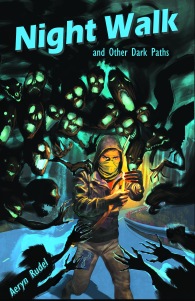
Night Walk & Other Dark Paths
Acts of War: Flashpoint

Acts of War: Aftershock

Acts of War: Stormbreak


