
Talkin’ Tags: How I Write Dialogue

If you’ve spent any time among writers, be it on social media or even in private writing groups, you will have almost certainly heard the “rule” that you should only use said when it comes to dialogue tags. I think this originated in Elmore Leonard’s 10 Rules for Good Writing (though I could be wrong there), and I’ve seen it discussed dozens of times on various blogs and social media. I was even an adherent myself at one point, though my views have changed, which you’ll see in a moment. So, with that in mind, let’s talk about how I write dialogue and which tags I tend to use, not use, and why.
Before we get further into this, a quick disclaimer. This is not an article about which dialogue tags YOU should use (or not use). That’s going to be entirely up to you, your style, your genre, and your audience. This is an article about how I write dialogue NOT how YOU should write dialogue. If what I do works for you, awesome. If not, also awesome. You be you.
Okay, with that out of the way, I honestly don’t think “only use said” is terrible advice, and I tend to agree that said is great in the sense that it’s pretty much invisible to the reader. That said (hah!), I don’t think there’s anything wrong with using other tags, and, personally, I prefer a broader tag repertoire that breaks down into five categories roughly based on how often I use them.
- Tier One – Simple Said. I use said probably 80% of the time (maybe even a bit more) when I’m writing dialogue. Most of the time, I almost always want the character’s words to do the heavy lifting and the tag is only there to remind the reader who’s speaking. Said is entirely unobtrusive, so it’s perfect for this, and it also works for my style, which tends to be pretty spare and stripped down.
- Tier Two – We’re Still Just Talking. The second tier of tags are still pretty unobtrusive in my opinion. They’re very neutral and don’t really bring any kind of baggage to the dialogue itself. I’m talking about words like asked, replied, responded, etc. Though I still try to use them sparingly, they’re great for adding variety to my dialogue when I feel like the sheer volume of saids is starting to jump off the page (and potentially at the reader).
- Tier Three – Taggage Baggage. The third tier of dialogue tags include words like yelled, shouted, whispered, and the occasional muttered or grumbled. These words are still part of normal human speech, which is kind of my litmus test for tags I’m willing to use, but they absolutely impart a tone or even an emotional state, so I’m careful with them. I generally save them for when I feel like the dialogue itself may not be hitting the tone I want. Now, there’s an argument that in those cases I should just revise the dialogue, but there are times where I feel one of these bolder tags adds something to the narrative. YMMV, of course.
- Tier Four – Call of the Wild. The next group of dialogue tags are the one I use the least, and I tend to think of them as, well, animal noises. I’m talking about words like roared, growled, hissed, hooted, screeched, and so on. Now I’ve seen authors use this fourth tier of dialogue tags very effectively, so it absolutely can be done, and I’m not judging anyone for hooting and hissing and whatnot. For me, though, these tags tend to clash with my characters’ voices. But, hey, I’m not a tag teetotaler, and you will find the occasional roared, growled, or rumbled in my work.
- Tier Five – Tag Free. The fifth tier of dialogue tags is, well, no tags at all. When I’m revising I keep an eye out for places where I can completely remove dialogue tags, especially if it’s clear who’s talking by context. This is handy when, like in tier two, I feel like I’m going a little heavy on said. A mix of tags and no tags creates a nice rhythm, and if you throw in some action beats, too, I think it makes conversations feel more natural. IMHO and all that.
But, hey, the above is just a claim without any real evidence, right? Well, I went though a couple of lengthy sections of dialogue from my current WIP and counted up all the dialogue tags I used. Let’s see how I did.
- Says- 49
- Action Beat -32
- No Tag – 6
- Asks – 4
- Mutters- 2
- Whispers – 2
- Repeats – 2
- Admits – 1
- Repeats – 1
- Replies – 1
- Rumbles – 1
- Shouts – 1
- Yells – 1
So that’s 103 lines of dialogue, and of that 103, 38 use no tag at all (tier five). Of the remaining 65, 49 use says, which is 75% and in line with the percentage I cited earlier. Looking at the rest, I’ve got 8 tags (12%) from tier two, 6 tags (9%) from tier three, and a single representative from tier four (1%).
This is raw first-draft dialogue, and in revision, there’ll be some changed. For example, I don’t think rumbles make the cut (though it may end up as something like grumbles). I’m also not thrilled with repeats and admits, which are technically tier two in my mind, though kinda on the fringe. As for my uses of yells, shouts, mutters, and whispers, I think I’ll likely lose one mutter and just pick either yell or shout and use it twice. The biggest change, though, will be removing dialogue tags entirely. In the quick readthrough I did to tally my tags, I saw a number of opportunities to cut tags or replace them with action beats.
So, there you have it. My take on dialogue tags, which I use, and when I use them. Again, this is hyper-specific to my writing, style, and voice. It is not a condemnation of any type of dialogue tag, though, I’ll admit, I’m hard-pressed to approve of something like ejaculated or pontificated, but, hey, if you can make those work, more power to ya. 🙂
One Comment on “Talkin’ Tags: How I Write Dialogue”
Leave a comment
Effectively Wild – A Baseball Horror Story

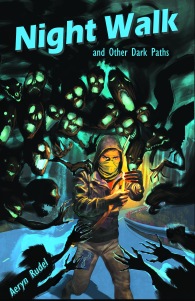
Night Walk & Other Dark Paths
Acts of War: Flashpoint

Acts of War: Aftershock

Acts of War: Stormbreak


There are so many good synonyms for said, it’s too bad we can’t use them.