
September 2015 Rejection Roundup

Some of you are probably wondering, “Where are all the rejections on this rejection blog?” It’s a fair question, and the truth is I haven’t received many lately. That’s not for lack of submissions, though. I have a bunch under consideration, but the majority of the publications doing the considering have response times in excess of 60 days. So, in other words, the rejections are coming, likely including a few for Story X (if you’re not following the gripping saga of Story X, click here).
However, I did receive a few rejections in September, and I have listed them below in all their shameful glory for your pleasure/edification/mockery.
Here’s the first one.
Thank you for the opportunity to read “XXX.” Unfortunately, your story isn’t quite what we’re looking for right now. In the past, we’ve provided detailed feedback on our rejections, but I’m afraid that due to time considerations, we’re no longer able to offer that service. I appreciate your interest in XXX and hope that you’ll keep us in mind in the future.
I’ve seen this rejection letter verbatim from this particular publisher a bunch of times, and I’ll bet a few of you will recognize it as well. They’re one of the more prestigious pro-paying genre markets, and they have one of the fastest turn-around times of any publisher I’ve encountered—usually under a week.
I’m tempted to call this one an improved form rejection letter because of the subtle invite to submit more work, but if I’m being honest with myself (which I fucking hate doing), this is a common form rejection. I could be wrong, but I think the “keep us in mind in the future” bit is just part of their basic letter, a nicer way to say no.
Okay, here’s the next one.
Thank you for submitting “XXX” for consideration. I was glad to have the opportunity to read it. Unfortunately, the story isn’t quite what we’re looking for at this time.
Thanks again for submitting “XXX”. I wish you the best of luck in finding a home for it.
What we have here is a sterling example of the common form rejection. This is about as garden-variety as it gets, so not much to see here.
Moving on.
Thank you for submitting “XXX” to us. We have given it careful review, but I am sorry to inform you that we will not be selecting it for our next issue.
I sincerely appreciate you letting me read your work, and I wish you the best of luck in finding another market for this story. I hope that you will consider submitting to us again.
This one is from a new publisher, and as such, this was the first story I’d set them. I liked a number of things about this fledgling publisher. One, they’re a paying market right out of the gate. Not pro-rates yet, but solid semi-pro. Two, they were easy to submit to, asking for a simple Word doc submitted in Shunn format via email attachment. Three, they responded quickly–under two weeks. Finally, this is a really nice rejection letter. It pulls the Band-Aid off quick, and it’s very polite and professional. But what kind of rejection letter do we have here? Common or improved form rejection? Since this is the first time I’ve submitted to this publisher, I’m gonna go ahead and say improved and submit again. Now, if I get the same letter verbatim after my next submission, I’ll downgrade this to a common form rejection.
So, that was my September of rejections. Sadly, no acceptances last month, but October looks like it’s gonna be chocked full of activity. I’ve got about a dozen submissions marinating with various publishers, and a lot of them are getting close to or have exceeded the estimated response time. In other words, I’ll probably have more rejections to talk about very soon. Stay tuned!
How was your September? Acceptances? Rejections? Tell me about it in the comments.
Leaving the Hermitage: Writing & Isolation
Let me start this one with an anecdote. About a month ago, I met some friends I used to work with at restaurant to discuss a Dungeons & Dragons game I’m going to run (yes, I’m really that nerdy).Once everyone had arrived, we started chatting, catching up on each other’s lives, work, and so on. What struck me was how completely fucking interested I was in this conversation. That’s not to say my friends aren’t interesting people, but, you know, they’re not that interesting. Then I realized what was happening. I hadn’t really spoken to other human beings besides the baristas at my local Starbucks in weeks. I’d been cloistered away working on my novel and pretty much ignoring the outside world. I was starved for human contact.
It’s one of (few) downsides of the full-time writing gig. Writers work alone, and though we might need to be alone to get the words on the page, prolonged periods without significant human contact can make you feel a little isolated. This is my second go around with writing from home. I did a two-year stint from 2008 to 2010, and three months ago, I left Privateer Press for a (small) chance at fame and glory as a novelist. As much as I like the freedom of working from home, I can get so focused it gives me a kind of tunnel vision that makes the world feel very small. I start to feel cooped up, lonely, and kind of anxious because my perception of the world has become so one-dimensional. I’ve found that when I break this cycle, it recharges my creative batteries and makes me more productive in the long run.
So, here are three things I do to force me out of the ol’ hermit cave.
- Schedule human interaction. I know, sounds weird and clinical, right? But I think it’s a necessity. I try to schedule a lunch with a friend at least once a week, more if schedules permit (or I remember to). I like the lunch date because it forces me to take a break in the middle of my writing day. That break can be refreshing, and I usually return to the keyboard feeling more motivated than when I left it.
- Write away from home. I’ve only recently started doing this, and I know it won’t work for everyone. I’ve been taking my Surface (that’s an iPad for people who refuse to fucking rent MS Word) to a coffee shop a couple of times a week to break up my routine. I’m not having conversation with people while I’m there, but just being around folks interacting with each other is enough to break the feeling of isolation.
- Schedule some off time. This is the hardest one for me. I want to work all day, every day, but I know that isn’t good for me. So, I designate certain work-free times, usually in the evening or on the weekends. I also try to schedule some kind of activity in my work-free hour that involves other people. I find if I’m engaged in conversation, games, whatever, I won’t stress about that next 2,000 words I need to write. Okay, I’ll stress a little, but not as much as I normally would.
Let me just end this by saying this is definitely a case of “do as I say and not as I absolutely fucking do.” I try to do the three things listed above on a regular basis, but I don’t always succeed, and the siren song of my warm and comfortable hermit cave can be hard to ignore.
So, what do you do to avoid feeling isolated? Or do you thrive on it? Tell me about it in the comments.
Submission Protocol: Status Query
You’ve sent your story to a publisher, you’ve read and followed all the guidelines, and now you’re just waiting for the rejection hammer to fall. (Okay, maybe that’s just me.) You watch the calendar, and at some point, you realize, “Hey, I haven’t heard from publisher X about story Y, and it’s been months.” A quick check reveals the publisher has had your story past the estimated response time. Now what? It might be time to send the publisher a query about the status of your story. However, there are some things to keep in mind before you do.
Check the guidelines. Always, always, always check the guidelines before you send a query letter. First, you need to check the publisher’s estimated response time and make sure your story has been held beyond it. I think it’s a really bad idea to send a submission status query before the estimated response time has elapsed. I mean, you knew how long they were likely to keep the story because you read all the guidelines before you submitted, right? You did read the guidelines, didn’t you?
Next, check if the publisher mentions when they would prefer you query about story status. A lot of publishers list specific time frames for query letters. You should also check the guidelines to see if the publisher wants specific information in the query letter. For example, they might ask you to write the subject of your email in a specific way or even include a submission tracking number (usually provided in an acknowledgement email). As with all submission guidelines, you should follow them to the letter.
Check Duotrope. Duotrope and other online submission trackers can give you a lot of data on a publisher’s actual response times. A publisher may state 60 days in their guidelines, but a quick look at Duotrope might tell you they’re averaging more like 75. I’ve found that publishers are closer to their estimated response times with rejections than they are with acceptances, and Duotrope’s numbers back this up. I also find that this “true” response time often coincides with a publisher’s guidelines for when they prefer you to send a query.
You could wait until that “true” response time has passed, and I sometimes do that, but if the publisher states they’ll respond within 30 days and they have no other stipulation for query letters, I don’t think there’s anything wrong with sending a polite query on day 31.
You don’t use Duotrope? Madness. Read my post about why you need it (or something like it).
The query letter. Like most communications with publishers, I think short and to the point is best. Here’s a query letter I sent a publisher a while back:
Dear Editors,
I would like to inquire about the status of my story “XXX” submitted on 9/9/99.
Thank you,
Aeryn Rudel
Yup, just the facts: my name, the story’s title, and when I sent it. I don’t think a query letter should contain more than that unless the publisher specifically asks you to include more. This particular publisher has an estimated response time of 30 days, and I sent my query letter on day 35. I received a response two days later—a form rejection. Just to be clear, I do not in any way believe my query letter affected the publisher’s decision. At most, it merely prompted the publisher (who had probably already decided on a rejection) to respond to me. In other words, it’s not rude or even unexpected to send a query letter.
So, why send a query letter instead of simply waiting for a response? Because shit happens, and you deserve to know what’s up with your story. I’m sure stories get misplaced, accidentally deleted, or they don’t reach the publisher at all. It’s also possible that a publisher has read your story and replied, but the notification email never reached you. Technical difficulties are always a possibility, and hey, editors are people too, and they sometimes make mistakes or get behind. For this very reason, many publishers encourage authors to send submission status queries if they haven’t heard anything after the estimated response time has elapsed.
What are your thoughts on submission status queries? Tell me about it in the comments.
A List of Links: Resources & Rejections
Here are more potentially useful links for the rejectomancer gathered haphazardly from across the blogosphere and beyond.
1) I recently discovered a great resource for spec-fic writers. It’s called Ralan’s SpecFic & Humor Webstravaganza, and it’s a little like Duotrope in that its a listing of markets for writers. It’s specifically focused on spec-fic writers, though, which makes finding a market a little easier. I found a couple of new markets here (well, new to me) in both the pro and semi-pro payment tiers.
2) Lewis Editorial, which is quickly becoming one of my favorite editorial blogs, posted a very useful glossary of common publishing terms and definitions. Handy if you’re starting out in self-publishing or traditional publishing.
3) Here’s a great how-to article on cover letters from the submission guidelines of the excellent speculative fiction magazine Strange Horizons. I mentioned this article in my own post on the subject, but it’s so damn succinct and useful, it deserves another shout out.
4) This post by Vicky Lorencen on her blog Frog on a Dime is one of the funniest takes on handling a rejection letter I’ve come across in a while. The post is not really aimed at the rejected writer, it’s for folks dealing with the rejected writer, and it even comes with a form you can fill out and give to friends and family.
5) Now for a shameless plug. If you’ve been following the blog, you’ve likely seen the interviews I do with various working authors under the title Ranks of the Rejected. These interviews feature some great insights on rejection from authors who know a thing or two about it. If you haven’t read them yet, here’s your chance, and I’m gonna go ahead and leave you bunch of links right here:
- Ranks of the Rejected: Orrin Grey
- Ranks of the Rejected: Rose Blackthorn
- Ranks of the Rejected: Gabrielle Harbowy
- Ranks of the Rejected: Richard Lee Byers
- Ranks of the Rejected: Chris A. Jackson
- Ranks of the Rejected: Josh Vogt
Got a useful link for writers? Put it in the comments.
The Quotable King: Go to Work
I think Stephen King is a veritable fountain of writerly wisdom, and much of that wisdom has been compiled in his excellent book On Writing. (Yes, I’m gonna plug the book every time.) He also dispenses useful advice (and criticism) in the form of quotes, many of which I find very inspirational. King’s quotes are honest, even blunt, and that’s why I dig them. Case in point, the following quote says a lot, I think, about how King views a career in writing.
He says:
“Amateurs sit and wait for inspiration, the rest of us just get up and go to work.”
– Stephen King
I think people sometimes romanticize the job of writing, and there ain’t nothin’ romantic about this quote, just King’s patented brand of truth. He’s talking about the cold, hard reality of being a working writer. If you want to be a working writer, the kind who has deadlines and obligations, the kind that gets paid for meeting those deadlines and obligations, then you have to write, and you have to do it whether you feel like it or not. You have to–you guessed it–treat it like a job.
I’ve been lucky enough to turn writing into a career, and I love what I do, but the truth is some days I don’t want to sit in front of my computer and pound out the words. I want to play video games or watch baseball or do literally anything else besides write. It’s why this particular quote resonates with me so much. On those days when inspiration is nowhere to be found, I remind myself that what I want, what I’ve always wanted, is to be part of the “rest of us” King is talking about, and to do that, I have to get off my ass and go to work.
Got a favorite quote from a favorite author? Share it in the comments.
3 Types of Writing Work Days
In general, my writing days fall into three broad categories, which are defined by how quickly and easily I can get to my 2,000-word daily goal. Each day, of course, brings its own rewards and challenges, sometimes heavy on the challenge part. I’m sure the three writing days I most commonly experience will look familiar to many of you.
1) The “Holy shit, the GODS are speaking through me!” day. (10%)
Time to completion of daily goal: 2-4 hours
These are the days when I wake up, sit down in front of the computer, and pound out my 2,000 words like some benevolent deity of literary inspiration is dictating directly into my brain. Those days are fucking awesome, and I usually blow past my goal without even noticing I’ve hit it. These are the days when writing isn’t work; it’s fun.
By the way, if you need this kind of day to get anything done, you’ll, uh, never get anything done. They are the product of some arcane mixture of caffeine, adequate rest, astral alignment, and magic fairy dust. They are beyond the ken of mortal man, so, in other words, you can’t rely on them.
2) The “Hey, this is just like a job and stuff” day. (80%)
Time to completion of daily goal: 4-8 hours
My typical writing day looks like this: I wake up, drink my coffee, and wait for the caffeine buzz to move my ass from couch to desk. Then I read what I wrote the day before and think, “Hey, this isn’t total shit,” which motivates me to pick up where I left off with something like hopeful trepidation. The first five hundred words come slowly (this totally has nothing to do with the fact that I might still be fucking around on the internet), and then I get into my groove, and the rest comes along without too much fuss.
I’d bet my typical day isn’t much different than most writers. We’ve all got a system, and these days are examples of that system working, more or less. These are the days to expect. They’re reliable and productive and get you to your deadlines on time without too much emotional trauma along the way.
3) The “Somebody please kill me so I don’t have to write these stupid words” day. (10%)
Time to completion of daily goal: Eons hence, when the sun dies, and this universe collapses into the timeless void.
These are the days where I have to pull each word kicking and screaming from my brain, wrestle them onto the page, and then hold them at gun point to make sure they don’t escape. I might sit at my computer for nine, ten, even twelve hours before I finally type that 2,000th word.
For me, these tough days are a draining mixture of self-doubt, lack of rest, and sometimes good ol’ fashioned fear at having to writer a scene that’s outside my experience or comfort zone. They suck, but, luckily, they’re just as (un)common as the first type of day, so it all balances out.
So what do these three days have in common? Just one thing, really; they almost always result in at least 2,000 words of raw material. I try not to leave my computer until I hit that mark, no matter how miserable I am. I won’t lie; I don’t succeed every time. That third type of day can be a real bastard, and it sometimes gets the better of me, but the other two put me far enough ahead of schedule I can weather the less productive days and still hit my deadlines.
What do your writing days look like? I’d love to hear about your best and worst in the comments.
A List of Links: Flash Monsters & Famous Rejections
Here’s a short list of cool writerly things from the ‘ol blogosphere. Lot’s of useful stuff here for the rejectomancer.
1) Here’s a writing contest you should definitely check out if you’re into flash fiction and monsters. (And why wouldn’t you be?) The Molotov Cocktail, a fine purveyor of frightening flash, is currently accepting submissions for their Flash Monster II contest. The rules are so very simple: write a story under 1,000 words that includes a monster by October 15th. Real cash money prizes await the top three. Shameless plug: I took third place in the first Flash Monster contest. I’ll definitely be throwing a submission in to the hat for round two. You should too.
2) Apparently, I’m not the only blogger who talks about rejection. Weird, huh? Field of Words posted a great article called the Art of Dealing with Rejection. Solid all-weather advice here, and I love the list of famous works by famous authors and how many times each was rejected.
3) Cecilia Lewis offers lots of great advice for writers on her blog Lewis Editorial. Recent gems include posts on removing filter words and proper manuscript formatting.
4) Finally, if you’re a word nerd like me, then you’ll likely get a kick out of Hannah McCall’s series of posts on misused, confused, or just generally weird words and phrases. They’re even educational and stuff. Here’s the most recent post on the proper use of i.e. and e.g.
The Quotable King: Identifying Talent
Stephen King is one of my favorite authors, and his book On Writing is, in my opinion, one of the best books on the craft you can buy. I like King’s no-bullshit approach to the subject and his blunt appraisal of what writing is and how to get better at it. He’s unpretentious and honest, and I just dig the hell out of that.
King can be pretty quotable too, and some of his quotes have really stuck with me over the years. One of my favorites has made the rounds quite a bit, but once more can’t hurt.
He says:
“If you wrote something for which someone sent you a check, if you cashed the check and it didn’t bounce, and if you then paid the light bill with the money, I consider you talented.”
– Stephen King
I love that quote. I think about it sometimes after a rejection letter or just when self-doubt comes-a-knocking. I wouldn’t call it uplifting; that doesn’t seem to be King’s style. It’s more of a reality check, and it put things in perspective when I’m wallowing in self pity. It awakens that little voice in my head that says, “Hey, dumbass, you’re getting paid to do that thing you love to do. Remember? Get your shit together, and get on with it.” The Stephen King in my head is all about the tough love.
Sure, I’ll concede that getting paid is not the only way to recognize talent, but I think it’s a pretty good indicator of baseline talent, maybe even marketable talent. So, yeah, I’m with King on this one. If someone is willing to pay hard-earned cash for something you wrote, you’ve probably done something right. The trick is figuring out what that “right” is and then repeating it and even improving on it.
I also like this quote because I have paid the light bill with money earned from writing, which, of course, means Stephen King thinks I’m talented. That is what that means, right?
Got a favorite quote from a favorite author? Share it with the class in the comments.
Understanding Point of View: Eliminating Filter Words
Great post by Cecilia Lewis on her blog Lewis Editorial. Filter words are at the top of my post-draft proofing checklist, and I end up revising a fair bit to remove them. Cecilia offers some great advice on getting rid of filter words and why you should want to do that. Check it out.
Source: Understanding Point of View: Eliminating Filter Words
Staying “Accountable” on Big Writing Projects
You gotta have a system. Every writer does. That thing you do to get from point A to point B, hit your deadlines, and hopefully decrease your stress along the way. I have a system, too, and a major part of it involves word counts, Excel spreadsheets, and a video game perception of “winning.” This is by no means a perfect system for everyone, and I know writers who think it’s way too fiddly, but I’ll share what I do, and maybe some of you will dig it.
Okay, first a little super-boring background on me. Before I started working in the tabletop game industry and really started to turn writing into a career, I worked in accounting. I did it all: accounts payable, accounts receivable, cost accounting, payroll, even collections. Exciting, huh? As much as I hated it, all that accounting experience taught me some valuable skills. It taught me to be very organized with data and how to make that data work for me. It started my love affair with Excel. I can’t lie; I fucking love me some spreadsheets. Seriously. So I found a way to take my bizarre fascination with spreadsheets and a little of my accounting knowhow and put it to use in my writing career.
Here’s what I do. When I have a big project, like a novel, I look at the deadline for completion (usually the deadline for the first draft), I break that down into weeks, then I assign a word count goal to each week, and then I divide that word count goal among five individual days. I put all this info into a simple spread sheet, then track how much I actually write on a given day compared to my target.
It looks something like this:
| Day | Date | Target | Actual |
| Monday | 8/31/2015 | 2000 | 2364 |
| Tuesday | 9/1/2015 | 2000 | 2678 |
| Wednesday | 9/2/2015 | 2000 | 2721 |
| Thursday | 9/3/2015 | 2000 | 2305 |
| Friday | 9/4/2015 | 2000 | 2056 |
| Saturday | 9/5/2015 | 0 | 0 |
| Sunday | 9/6/2015 | 0 | 0 |
| 10000 | 12124 | ||
| Monday | 9/7/2015 | 2000 | 2037 |
| Tuesday | 9/8/2015 | 2000 | 1979 |
| Wednesday | 9/9/2015 | 2000 | 0 |
| Thursday | 9/10/2015 | 2000 | 0 |
| Friday | 9/11/2015 | 2000 | 0 |
| Saturday | 9/12/2015 | 0 | 0 |
| Sunday | 9/13/2015 | 0 | 0 |
| 10000 | 4016 |
As you can see, I set my weekly target at 10,000 words and my daily target at 2,000 words. I got the 2,000-words a day thing from Stephen King. Hey, if it works for one of the most successful authors in the whole goddamn world, it might be worth a try, right? You can see what I actually wrote on a given day, and at the bottom of each week a running total tells me where I stand with the week’s goals.
You’ll notice I don’t have a target for the weekends. That’s because I try to take the weekends off. (Well, not really off; I just work on other things.) That’s not to say, of course, I won’t work on the weekends if I fall behind. I also know that my estimated date of completion is a just that, an estimate. I might end up needing another 10,000 words to complete this novel. With the schedule above, I should finish the book about two weeks before deadline and at right around 90,ooo words.
Here’s what I like about my system and why it works for me.
- It keeps me accountable. I know exactly what I need to do each day, and at the end of that day I need to enter what I’ve done into that spreadsheet. I don’t want to “fail” to do my job for the day. I need to fill in those boxes on my spreadsheet, damn it.
- It gives me a sense of accomplishment. One of the favorite parts of my day is entering how much I’ve written into the spreadsheet. If I exceeded my target by a lot, I feel pretty damn good. I feel like I’m “winning.” I’m beating the sadistic ogre making me write all these goddamn words at his own game. (Seriously, fuck that guy.)
- It helps me take a day off when I need it without feeling guilty. If you look at the spreadsheet above, you can see I did pretty well last week; I exceeded my weekly goal by over 2,000 words. That means I’m technically a full day ahead of schedule, so if I need to take a day off to run errands or whatever, I’m covered. I’m still on target for this week, even if I only write 8,000 words. That’s a really important feature for me because I have a tendency to feel super guilty on days I’m not writing, and those extra days I “earn” by exceeding my work count goal help me get over that.
So, that’s my system. What does your system look like? If it’s better than mine, can I use it?
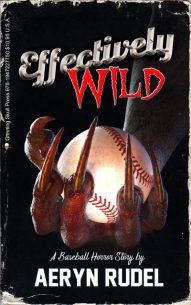
Effectively Wild – A Baseball Horror Story
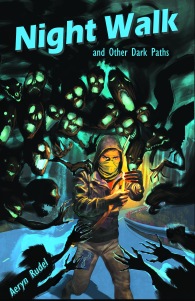
Night Walk & Other Dark Paths
Acts of War: Flashpoint

Acts of War: Aftershock

Acts of War: Stormbreak


