
A Week of Writing: 5/4/20 to 5/10/20
A day late on this past week of writing, but here’s how I did.
Words to Write By
Today’s quote comes from Kurt Vonnegut.
“We have to continually be jumping off cliffs and developing our wings on the way down.”
— Kurt Vonnegut
I have stepped off the cliff and now I’m furiously flapping my arms hoping those wings will sprout. There are a few feathers here and there, but we have not yet achieved flight. I’ve stalled a bit on the first draft of Hell to Play, and a desperate sense of falling has set in. The stall is for a very good reason–making the book better–but that feeling of plummeting to my doom remains. Like always, I’ll write through it, but Kurt Vonnegut’s quote resonates right about now.
The (New) Novel
I worked on Hell to Play last week, but I hesitate to call it progress. I wrote 5,200 words for a total of 28,500 on the manuscript. What happened this week is I realized I have a strong first act (which I’ve already completed), a strong third act, but my second act, which I’ve just begun is, well, weak as shit. All is not lost, though. While I was floundering and grappling with what to do, THE SOLUTION became clear. That should be good news because my second act is more or less saved, the book improved, and so on. The problem is, I’m a dedicated plotter, so I can’t just write the new angle in. I have to go back and revise my outline and make sure everything fits before I start writing again. This kind of thing generally awakens the ol ‘ impostor syndrome, which equates stopping writing (for any reason) with failure. That’s nonsense, of course. I’m still working on the book, and the outline is a crucial part of writing for me. So, this week, I’m going to grit my teeth, rework my outline, so when I do start writing again (probably by the end of the week), I’ll be able to push forward with more confidence.
Short Story Submissions
Two subs for the week and not much else.
- Submissions Sent: 2
- Rejections: 0
- Acceptances: 0
- Publications: 0
- Shortlist: 0
Well, two subs is better than last week’s one sub, right? No other activity, though I expect to hear back on at least four of the eight stories I have pending this week. I’m sitting at thirty-five submissions total, which is an average of seven per month. I need to get that average up to nine to stay on track for 100 subs for the year. That means ten more submissions in the next few weeks. 🙂
Microfiction
Here are two of the better microfiction pieces from my #vss365 work last week. As always, if you want to read my microfiction in real time, follow me on Twitter @Aeryn_Rudel.
The planet was thickly forested but dry save for #rainwater. Eventually we drank, ignoring the tiny wriggling things in each swallow. One by one we grew and took root. Now the few who remain wander still groves, mad with thirst, trying not to hear the voices on the wind.
“Damn, Sal,” Lucky said. “You shot him #nine fucking times.”
“Um, I thought he had a vest.” Sal said.
“But you shot him in the balls. Twice.”
“I thought he had a VEST, Lucky.”
“Uh huh. Guess he shouldn’ta called you a bad shot on Twitter.”
Sal smirked. “Guess not.”
Goals
This week, the big goal is to revise the outline for Hell to Play, which equates to roughly twenty short chapter outlines. The other goal is to send more submissions, as always. I smell rejections on the wind, so I should have plenty of stories to submit. 🙂
That was my week. How was yours?
A Week of Writing: 4/27/20 to 5/3/20

Another week of writing in the books. Let’s see how I did.
Words to Write By
Today’s quote comes from Andy Warhol.
Don’t think about making art, just get it done.
–Andy Warhol
It’s rare you find a quote that perfectly encapsulates your writing process, but this single sentence from Andy Warhol pretty much describes how I go about my first drafts. I just want to get the story on the page and not worry about making it perfect. Sure, I do occasionally go back and fill in plot holes or fix continuity errors while I’m writing the first draft, but I save most of the refining for the revision(s) after the first draft is done. The primary reason I do this is I find it overwhelming to try and make the story perfect (or at least better) while I’m writing it. It just spikes my anxiety and self-doubt to a degree that kills my productivity, so I don’t do it, and that helps me get from first word to last more-or-less painlessly.
The (New) Novel
More good progress on Hell to Play last week. I wrote just over 8,700 words for a total of 23,000 and change for the manuscript. I’m not hitting my 10,000 words a week like I usually do, but I’ve kind of made peace with that. There are just so many outside distractions right now–and one BIG one–that I’m happy to be making any decent progress at all. Maybe I’ll work back up to 10,000 a week, but at this point I’m looking at having a first draft in twelve weeks. I can absolutely live with that.
Short Story Submissions
Kind of a pathetic week for submissions.
- Submissions Sent: 1
- Rejections: 0
- Acceptances: 0
- Publications: 0
- Shortlist: 0
Exciting, huh? One submission. I haven’t even gotten a rejection in weeks. The one submission last week gives me 33 for the year, which means I need to pick up the pace in May if I want to hit 100 subs by the end of the year.
Microfiction
I missed a few days again last week, but I think what I did write came out pretty good. Here are the two best in my humble opinion. As always, if you want to read my microfiction in real time, follow me on Twitter @Aeryn_Rudel.
Dying’s not so bad, but the #resurrection is a real shit sandwich. Each time I croak and return to life, there’s a new group of mortals convinced I’m the second coming. Sorry, folks, no messiah here. I’m just an accident-prone revenant, and this is my, uh, 94th(?) coming.
The ancient #ragpicker scavenged only the choicest bits. Castoff shreds that still held some magic, some life. He worked his finds into a shape dear to him but nearly forgotten. The final scrap was his tatterdemalion soul, and when he breathed his last, the child awoke.
Goals
Same as usual. Keep plugging away at the novel and get more submission out the door.
That was my week. How was yours?
Submission Statement: April 2020

Okay, let’s get accountable again. Here’s a breakdown of my submission endeavors for April.
April 2020 Report Card
- Submissions Sent: 8
- Rejections: 9
- Acceptances: 2
- Publications: 3
Pretty good month, really. I’m a tad off my pace of 100 subs for the year, but I hope to catch up in May. A fair amount of rejections, but there are some encouraging nos from new markets that tell me I should keep trying stories with them. Two acceptances in a month is always good, and the three publications is extra good.
Rejections
Nine rejections this month.
- Standard Form Rejections: 4
- Upper-Tier Form Rejections: 1
- Personal Rejections: 4
I’ve been shopping a new short story, and it’s gotten some pretty good feedback. That’s were some of the personal rejections come from. The others are from new markets (to me), and the response was encouraging. I’ll definitely submit to these markets again. The form rejections are your typical boilerplate nos from pro markets.
Spotlight Rejection
The spotlight rejection for last month is one that again illustrates why stories get rejected, even good ones.
Thank you very much for your submission, and we’re sorry for the delayed reply.
That said, [story] is fascinating, and the end quite genius. However, and sadly, we’re already contracted several stories with a similar tone, so we’ll be passing on this at this time.
Thank you again, and we hope this finds a good home soon.
I’d call this a personal rejection, and they say some nice things about my story. The reason they give for the rejections is, I think, one that a lot of authors run into and never know about. My story was a sci-fi noir thriller type thing, which is not terribly uncommon, and it’s perfectly understandable that a market would want a diverse mix of tones and styles in an issue. Now, of course, I’m practicing a little rejectomancy here, but as usual, I think you should take editors at their word
Acceptances
Two acceptances this month. One from The Arcanist for my flash story “Liquid Courage” and one from 50-Word Stories for my micro “Dead Bugs.” My goal every month is to get at least one acceptance, and getting two is, well, uh, better than one. 🙂 I haven’t been skunked yet in 2020, and hopefully I can continue my streak into May.
Publications
The first publication is the flash story “Liquid Courage,” which you may have gleaned from the letter above took 4th place in The Arcanist’s Western Story Contest. You can read or listen to it below.
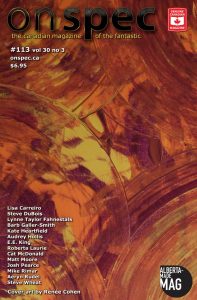
The next publication is a good old-fashioned print pub. I sold my story “The Back-Off” to On Spec Magazine back in October, and I received my contributor copies in the mail a few days ago. It’s a great looking magazine, full of excellent stories. If you’re into speculative fiction, give a thought to picking up an issue or a subscription to On Spec. Here’s the cover of the latest issue.
Finally, I finish up the month with a publication of my microfiction tale “Dead Bugs” over ay 50-Word Stories, which you can read right here.
And that was my April. Tell me about yours.
A Week of Writing: 4/20/20 to 4/26/20

Happy Monday, everybody. One more week of writing in the books, and here’s how I did.
Words to Write By
Today’s quote comes from New York Times Best Selling author Cheryl Strayed.
“Writing is always full of self-doubt, but the first book [Torch] is really full of self-doubt, and it was much more of a struggle to keep the faith. By the time I wrote Wild, I was familiar with that feeling of doubt and self-loathing, so I just thought, ‘Okay, this is how it feels to write a book.’”
—Cheryl Strayed
I’m hip-deep in the first draft of a new novel, and, oh man, the doubt and self-loathing are strong right now. Every word feels forced, every chapter worse than the last, every character poorly realized, all of that. I did not, however, let that keep me from writing because as Cheryl Strayed says “This is how it feels to write a book.” Well, this how it feels for me to write a book, and, well, if I want to write books I can’t let that self-doubt stop me. Thing is, that’s only how it feels in the moment. When I step away from the work and read it the next day, it’s not so bad. Hell, sometimes it’s even good. So, yeah, it can be a struggle sometimes, but once I learned to accept that some suffering is just part of the gig, it got easier to write my way through it.
The (New) Novel
Had a pretty good week with Hell to Play, even though I didn’t quite hit my goal of 10,000 words. I managed 8,600 on the draft, giving me a total close to 15,000 words. I’m satisfied with that. Last week I also started a new process where I review everything I wrote for the week over the weekend. That worked out well, and I caught some continuity errors and a few other things that might have given me trouble down the line and would have been more of a pain in the ass to fix in a completed draft. At my current pace I’ll have a 90,000-word draft in about ten weeks. I have a feeling it’ll be more like eight weeks as I find my footing and the writing comes easier. Still, three months for a first draft is plenty fast, and I’d be happy with that.
Short Story Submissions
A quiet week on the ol’ submissions front.
- Submissions Sent: 2
- Rejections: 0
- Acceptances: 0
- Publications: 0
- Shortlist: 0
I sent out two submissions last week, which gives me thirty-two for the year. I need to send another two subs this month to stay on pace for one-hundred subs for the year. That shouldn’t be a problem. I have one story that just needs to be proofed and submitted and another that’s close to it. No rejections last week, or really anything. Some of that has to do with my pending submission count getting a little low coupled with some publishers that take a while to respond. I expect I’ll be back on the rejection train this week or next.
Microfiction
I missed a lot of days last week with #vss365 microfiction, but here’s the best of the few I did write. As always, if you want to read my microfiction in real time, follow me on Twitter @Aeryn_Rudel.
“Hey, Mister, put on your new #mittens.”
“Aw, Mom. My old ones are fine.”
“No, the new ones.”
“They’re too tight.”
“They’re better. Two layers of Kevlar and steel plate over the fingers.”
“Fine. Happy? ”
“Now what do I always say?”
“I know, zombies eat you fingers first.”
Goals
Keep knocking out the words on the first draft of Hell to Play and send out at least two more submissions. Those are both manageable goals, and I hope to report 10,000 words next week and increased submission activity.
That was my week. How was yours?
1 Publisher, 17 Submissions, 5 Letters
When you submit stories to publishers you can expect a wide variety of letters in response. You’ve got the various flavors of rejection letter (form, higher-tier, personal, etc.), informative notices like further-consideration and shortlist letters, and, of course, the king of all responses, the acceptance letter. I’ve showcased these letters on the blog before, but today I want to show you examples of all (well, most) of them from the same publisher. Yep, there’s a market I have submitted to 17 times, and I’m pretty sure I’ve received just about every possible response from them.
The secondary point to this post is to once again state, yes, some publishers do have various tiers of rejection letters, and you’ll see that below. Okay, let’s get started.
Letter #1: Common Form Rejection
Thank you so much for thinking of [publisher]. Unfortunately [story] is not quite what we’re looking for at the moment. Best of luck placing it elsewhere.
This is a plain common form rejection. It contains all the usual verbiage and niceties, but doesn’t say anything other than “we’re not going to publish this story.” You’ll see virtually identical letters from a dozen other publishers. As usual, there’s nothing to be learned from a letter like this, so you just take it in stride and send the story somewhere else.
Letter #2: Higher-Tier Form Rejection
[Story] is a very good story, but unfortunately, it doesn’t quite match our needs for this spring and summer issues. I hope you find a good home for it elsewhere.
What sets this letter apart from the first rejection is specificity. “Very good story” and “spring and summer” issues tell me this story received more consideration than usual. When you get a letter like this, you should absolutely take the editor at their word. They did think it was a very good story, and it didn’t match the needs of their upcoming issues. That’s all they told me, so that’s all I inferred, and I promptly sent the story out again.
Letter #3: Further Consideration
[Story] has been accepted for further consideration. We will be letting you know before the end of October whether or not it has been accepted for publication.
Pretty straightforward here. One of the things I really like about this publisher is how concise and specific they are. Their letters don’t muck about; they just tell you what’s up. This further consideration letter is a great example of that.
Letter #4: Final-Round Rejection
[Story] made it through to our final round of consideration, but unfortunately it was not a good fit for us at this time. We wish you the best of luck in finding a home for it elsewhere.
Thank you for thinking of us at [publisher]. We hope you’ll consider sending us more of your stories in the future.
This rejection letter came after a further consideration letter, and though it’s a form letter, it’s a good one. You know you got close, and there’s likely nothing wrong with the story other than what they said: not a good fit at this time. The addition of “We hope you’ll consider sending us more of your stories in the future” just seals the deal that this is a better class of no.
Letter #5: Acceptance
I’m very pleased to let you know that [story] has been accepted for publication in the March issue of [publisher]. You should be receiving a contract shortly from [editor].
I’ll be reviewing each piece, so may have minor fixes for you to check. They should be ready for your review well before the issue is scheduled. You’ll also have an opportunity to review the story after upload, before it goes live.
Please let me know if you have any questions.
Ah, the good stuff. It took me eleven submissions to crack this publisher, so this was a gratifying acceptance. One thing you might notice is this is still basically a form letter. That’s not unusual, honestly. Some publishers have a boilerplate letter for acceptances because they need to impart a lot of information that really doesn’t change from author to author. For example, here they tell me when the story will be published, that I should expect a contract shorty and whom I should expect it from, plus they notify about any minor proofing that might take place. That’s all I really need from an acceptance letter. The editors expressed more personal thoughts on the story in subsequent emails.
Oh, one other thing I appreciate about this publisher is they told me in the subject line of the email the story was accepted. I always like that, and it’s nice opening up a response from a market and knowing it’s good news.
You might be thinking that I’m missing a personal rejection, and that’s true. If you squint, the higher-tier rejection might be considered a personal note, but I feel more comfortable calling it a higher-tier form letter.
So, what does this collection of letters tell us. Well, for one that some publishers do indeed send various types of rejections that hinge on how seriously they considered it for publication. Keep that in mind when you get that next rejections; it might tell you more than you think. Another thing to take away from this post is that form letters aren’t all bad. In fact, some of them convey good news and even the very best news. 🙂
A Week of Writing: 4/13/20 to 4/19/20
I’m settling in, writing more frequently, and my days now resemble something like my old routine. Time to dust off the weekly update posts.
Words to Write By
Today’s quote comes from Stephen King.
“I believe the first draft of a book — even a long one — should take no more than three months… Any longer and — for me, at least — the story begins to take on an odd foreign feel.”
— Stephen King
As you might have guessed, I’m writing the first draft of a new novel. I tend to write first drafts in the time frame King mentions here. It generally takes me between 60 and 90 days to complete a draft between 90,000 and 120,000 words. That said, the last first draft I wrote took me almost 111 days, almost four months, and that odd foreign feel King describes did begin to set in. For me, I think it’s because I start to lose the thread of the story as more time builds up between where I started and where I’m at. If I get the story out quicker, it all feels more cohesive. Now, of course, King’s prescription for first drafts isn’t going to work for everyone, but it resonates and works for me. There are no few authors who take much, much longer and produce excellent work.
The (New) Novel
Last week I wrote the first three chapters of a new novel tentatively titled Hell to Play. I wanted 10,000 words for the week, but I ended up with just over 6,000. That puts me a little behind the pace I set, but not too far, and I should be able to make up lost ground in the next couple weeks. I like what I’ve written so far, and I’m sticking pretty close to the outline. The first and third act are very clear in my mind, but the second act is still a little murky. I know what needs to happen, but how the characters navigate the middle part is still unclear. My hope is that it will come to me as I complete the first act.
Short Story Submissions
I had a pretty good week of submissions.
- Submissions Sent: 3
- Rejections: 4
- Acceptances: 1
- Publications: 2
- Shortlist: 0
I sent three submission last week, all for the same piece. That generally happens when I have a new short story I’m shopping it to all the pro markets, many of which get back to you a few day (or even a few hours). The rejections include three for the above mentioned story, all form rejections, and a nice personal rejection from a pro market for a reprint flash story. The three submissions last week give me 6 for the month and 30 for the year, which is slightly off my goal of 100. If I can knock out another four subs this month, that should put me back on track.
The acceptance and first publication was a microfiction story at 50-Word Stories, which you can read right here.
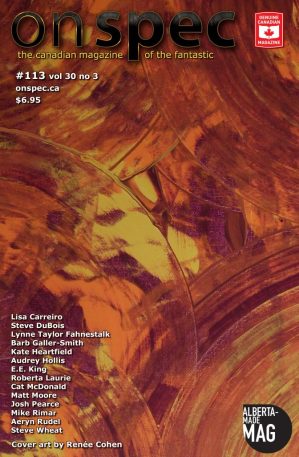
The second publication is one I’ve been waiting for. My story “The Back-Off” is in the latest issue of On Spec Magazine. You can click the link in the cover below to get more info on the issue.
Microfiction
Still writing #vss365 microfiction. I used to give you the entire week, but I think I’ll shorten that and just give you the best or at least the most popular microfiction. As always, if you want to read my microfiction in real time, follow me on Twitter @Aeryn_Rudel.
Those who survived the plague lost the ability to see color. At first it seemed a small price to avoid the fate of millions dead, but suicides spiked in the months and years after. I remember the first we investigated. His note said only: Remember #blue?
I still can’t.
Goals
The goals for this week are going to be kind of the template for the next few months. I want to get at least 10,000 words on Hell to Play and submit two or three stories. I think that’s all pretty doable. I mean, I’ve done it before, but it’s a weird and stressful new world we live in, so I need to remember it’s okay to extend myself a little grace if I need it.
That was my week. How was yours?
50 Published Stories: What Have I Learned?

I recently sold my 50th story since I started submitting through Duotrope, and because I like stats and data I went back and looked at those 50 stories to see if I could glean any rejectomantic information. Turns out, there are some interesting tidbits to discuss. Now, one caveat: this list ONLY includes stories I’ve submitted through Duotrope and were subsequently published. It does not include any of my media tie-in or gaming fiction, as that’s a completely different animal. I’ll post the entire list of publications at the end of this post, but it’s long, and, well, kind of uninteresting, so we’ll get to the good stuff first.
| Published Stories | Total Subs | Subs Before Acceptance | |
| All Subs | 50 | 232 | 4.64 |
| Flash Fiction | 36 | 130 | 3.61 |
| Short Story | 11 | 99 | 9.00 |
| Microfiction | 3 | 3 | 1.00 |
Quick explanation of the numbers above. The first column is the total number of stories published corresponding to that specific length. The second column is the total number of submissions sent for the stories in that category. The final column is how many subs it took, on average, for one of my accepted stories to, uh, well get accepted. Got it? Okay, let’s discuss.
If you look at all subs, it takes me on average about 5 submissions to get a story accepted, but those numbers are skewed because, well, the flash fiction is covering for the short stories. When I sell a piece of flash fiction, it only takes me around 4 submissions, but when I sell a short story it takes me more than twice that number. Microfiction is a small sample size and little more than an anomaly at the moment (though I do like my 1.000 batting average).
So am I just a better flash fiction writer? That’s entirely possible, but I think there may be some other reasons for the disparity in submissions between my flash fiction and longer works. Here are some theories.
- More opportunity. Many flash fiction publishers, at least the ones I submit to, publish year-round and frequently. There are quite a few publishers that put out a story a week and some even put out a story a day. In short, they need more stories, so your chances at publication are maybe a little better because of the need for material. That’s not to say these markets are publishing just any old thing, far from it (so says my pile of rejections from markets like Daily Science Fiction and Flash Fiction Online), but since they have more slots to fill, there’s maybe a tad less of the “even good stories get rejected” going on. That’s a lot different than say a short story market that published an issue three or four times a year (or less) that contains only six to ten stories per issue.
- More pro markets. All my short stories run through a gauntlet of professional markets that are tough to crack. So I tend to pile up rejections from places like The Magazine of Fantasy & Science Fiction, Clarkesworld, Asimov’s, and a bunch of others. It’s just a fact of life that when you’re submitting to the big markets. You’re gonna get rejected. A lot. Now, I am happy to report that six of my published short stories were sold to pro markets (either initially or in reprint) and the other five went to good semi-pro markets, so my perseverance paid off. But the point remains: I do seem to have to work harder to publish my shorts.
- Luck. Look, a lot of publication comes down to putting the right story in front of the right editor at the right time. Maybe I’m simply doing this more often with flash fiction. Additionally, I think I’ve identified some flash fiction publishers that dig my writing and who have published me multiple times, so chances of publication might be a little better with those markets. I haven’t found similar markets for my short stories (yet).
Of course all of the above is hardcore rejectomancy, but I’ve been doing this long enough I think there might be a few nuggets of truth here. I guess when I sell another fifty stories, I can run the numbers again and see if thing change in any meaningful way. 🙂
As promised (or threatened) here’s the entire list of my 50 published works. I’ve linked to the ones that are free to read online. One thing I should note is the number of submissions for each piece is the total number of sub before its FIRST acceptance. I’ve gone on to submit a number of these stories again as reprints with some acceptances and of course more rejections.
| Title | Type | Subs |
| A Man of Many Hats | 1 | |
| A Small Evil | 8 | |
| At the Seams | 8 | |
| Bear Necessity | 1 | |
| Beyond the Block | 1 | |
| Big Problems | 1 | |
| Burning Man | 9 | |
| Ditchers | 4 | |
| Do Me a Favor | 1 | |
| Far Shores and Ancient Graves | 3 | |
| Liquid Courage | 1 | |
| Little Sister | 3 | |
| Masks | 1 | |
| New Arrivals | 3 | |
| Night Walk | 1 | |
| Old as the Trees | 3 | |
| Reunion | 4 | |
| Scar | 7 | |
| Second Bite | 8 | |
| Shadow Can | 1 | |
| Side Effects | 1 | |
| Simulacra | 2 | |
| The Father of Terror | 1 | |
| The Food Bank | 4 | |
| The Grove | 1 | |
| The Inside People | 3 | |
| The Rarest Cut | 6 | |
| The Sitting Room | 1 | |
| The Thing that Came With the Storm | 2 | |
| Time Waits for One Man | 2 | |
| Two Legs | 6 | |
| What Kind of Hero | 11 | |
| When the Lights Go On | 11 | |
| Where They Belong | 1 | |
| An Incident on Dover Street | 6 | |
| Cowtown | 3 | |
| Dead Bugs | 1 | |
| Treed | 1 | |
| His True Name | 1 | |
| A Point of Honor | 11 | |
| Bites | 13 | |
| Caroline | 13 | |
| Luck Be a Bullet | 4 | |
| Night Games | 7 | |
| One Last Spell, My Love | 2 | |
| Paint-Eater | 9 | |
| Paper Cut | 16 | |
| Reading the Room | 6 | |
| Scare Tactics | 7 | |
| The Back-Off | 11 |
How Long Does It Take to Write a First Draft?
How long does it take to write the first draft of a novel? Well, that’s going to be pretty subjective, and I’m only going to answer as it relates to me. This post will be how long it takes me to write a first draft. It is absolutely not a judgment of how long it takes you to write a first draft. Every author has their own system, timetable, and workflow that allows them to get from point A to point B. Keep that in mind as you read on.
With that disclaimer out of the way, let’s talk about the novels I’ve written and how long it took me to knock out that first draft. First, a bit about my process. I am a dedicated plotter, and the first thing I write is a thirty chapter outline broken into three acts, ten chapters each. That document runs between five and eight thousand words. When it’s complete, I have someone look it over. In the case of the media tie-in novels at Privateer Press, that’ll be an editor and likely Matthew D. Wilson (the owner and chief creative officer of Privateer). I’ll get notes on the outline, make changes, resubmit, and at some point I’ll have an approved document I can start writing from. My own novels go through a similar process, in that I have one my critique partners look over the outline and make suggestions before I start writing.
Once I have my outline, I create a simple writing schedule. It’s just a spreadsheet where I plan out my daily word count goals, fill in how much I actually write in a given day, and add a few other numbers I like to see. Here’s what that looks like.
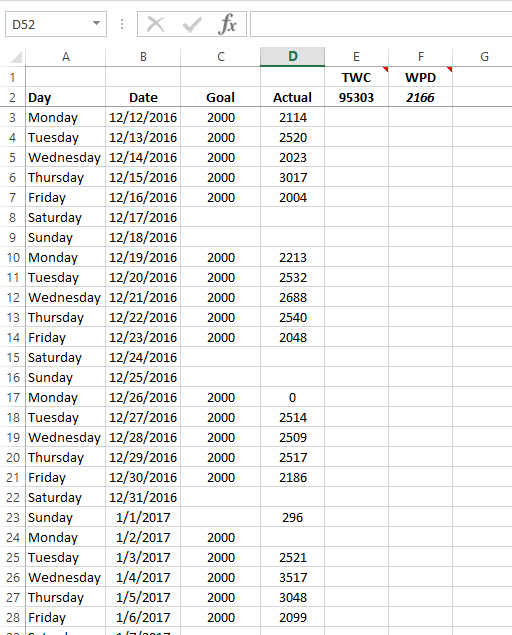
The image above is a piece of my writing spreadsheet for the novel Acts of War: Aftershock. It’s pretty straightforward. You have the day and date, the word count goal for the day (2,000 words), what I actually wrote that day, and then a running tally of total word count (TWC) and how many words I average per writing day. You’ll notice I shoot for a five-day-a-week writing schedule and 10,000 words for the week. I will write a bit on the weekend if necessary, as you see on Sunday, January 1st (and you’d see more of that further down) so I can hit my 10,000-word goal (or a bit more) for the week. I find this to be a manageable and even comfortable pace.
Okay, now let’s talk about the first drafts themselves. Since I left my full-time gig at Privateer Press in 2015, I have written five novels, three published and two unpublished. I’m only going to give you the details on four of them because one of them was written episodically and is outside my usual process. Also, because one of these novels is semi-secret, I’m just going to call it Novel X. Here are the basic numbers for the four books.
| Start Date | Finish Date | Total Days | Writing Days | Word Count | WPWD | |
| Novel X | 8/8/2015 | 11/10/2015 | 85 | 53 | 110272 | 2081 |
| Acts of War: Flashpoint | 12/7/2015 | 2/7/2016 | 63 | 39 | 79077 | 2028 |
| Acts of War: Aftershock | 12/12/2016 | 2/9/2017 | 60 | 39 | 95303 | 2444 |
| Late Risers | 1/24/2018 | 5/14/2018 | 111 | 47 | 92684 | 1972 |
Okay, so we have the start and end date for each first draft, which is pretty self-explanatory. Then we have total writing days, which is the number of days the first draft hung over my head like the sword of Damocles, even on the days I wasn’t specifically working on it. Next is writing days, the actual number of days I put words on the page. Total word count is next. No need for further explanation there. Finally, we have WPWD, which stands for Word Per Writing Day. That’s how many words I managed, on average, on the days I worked on the novel.
You’ll notice my WPWD is pretty consistent, and I will generally bang out at least 2,000 words when I’m working. Of course, some questions might arise from this chart as well. For one, why did Novel X and Late Risers take longer than the two Acts of War novels. Well, Novel X was the first big novel I wrote (and maybe over wrote), so there was a pretty steep learning curve there. It took me a little while to get me sea legs, as it were. Late Risers, which is my own IP, took longer because, well, it was harder to write, and I found myself taking breaks from the book for a couple days at a time that led to a lengthier time table. It’s currently still in revision, or well, it will be when I figure out what needs to be done with it.
You might wonder why there’s a discrepancy between total days and actual days. I mean, why am I not working on the novel every single day? The answer is simply I need to work on other projects, and sometimes I need time away from the BIG project to recharge, puzzle out plot issues, and so on. Still, I think I’m knocking out first drafts at a decent clip. At the rate I’m going, I could write two novels a year pretty comfortably. (Yeah, I know. Maybe I should do that.)
So we have a range of between two to four months for the first draft of a novel. I think, for me, that’s a pretty good sample of how long it takes me to write a first draft. The one that go smoothly can be done in a couple of months. The ones that go, uh, less smoothly, take a month or two longer. As I said at the beginning of this post, this is all specific to the way I do things. It’s not the right way or the best way, but it’s the way that works for me. If some of this works for you, please take it and use it with my blessing.
Yesterday, I started a new novel, following all the steps above. I have my outline, my writing schedule, and I managed to complete the first day of writing and hit my 2,000-word goal. How long will this one take me? Well, I’m shooting for two months, but if it takes three, that’s okay too.
Of course, nothing in this post references what happens after I finish a first draft. You know, the dreaded editing stage. That one’s a little harder to pin down, but I might talk about that process in another post. In the meantime, how do you go about writing your first drafts? I’d love to hear about it in the comments.
Aeryn’s Archives: Roll Credits

Today on Aeryn’s Archives I’m doing something a little different. Instead of looking at a single piece of work I published, we’re gonna look at, uh, all of them. Some of you may have noticed the professional credits page on the blog, but it’s honestly not something I expect folks to read. In fact, it’s mostly for me, a place where I can keep track of everything I do. Sure, it gets a few views now and then, but it’s just a boring list of I wrote this, edited that, and produced this other thing.
Anyway, I rarely talk about my writing history/career as a whole because, well, I’ve done a lot of different things that don’t fit neatly together. This seems like a decent way to approach the plurality of my professional writing experience in a way that’s somewhat succinct and hopefully not as dreadfully dull as looking at a pages-long list. 🙂
Total Writing Credits: 280
If I did my math right, I have 280 distinct writing credits. That’s 280 things my name appeared on/in alongside the word author or designer or whatever. Now, this comes with a couple caveats. Not all of this is fiction, and some of it is self-published. So anyway, let’s break this down into three categories.
Fiction Credits: 108
When I say fiction, I mean fully narrative fiction. It’s kind of a weird distinction to draw because a lot of my game design credits are fiction(ish), but they have that historical documentary vibe, which I consider a slightly different beast. Anyway, these 108 credits run the gamut between short stories, flash fiction, microfiction, and longer works like novels, novellas, and novelettes. Oh, and a handful of them are co-author credits. I’d say about half these credits are things I published with Privateer Press before and after my tenure there and fall under media tie-in. The others are all mine, the short stories and whatnot you see me talk about on this blog.
Game Design: 102
Game design is a broad term, and I use it here to describe any non-narrative writing in service to a tabletop roleplaying or miniatures game. This category includes things like Dungeons & Dragons adventures I wrote for companies like Goodman Games and Wizards of the Coast, game material for WARMACHINE and HORDES, the principal tabletop miniature games produced by Privateer Press, and, finally, a whole bunch of history-book-style articles exploring the various IPs of the games I worked on (mostly the Iron Kingdoms). Like above with fiction, a handful of these are also co-authored.
Now, as I said before, some of these credits are fiction(ish), and some folks might consider something like the voice-y Gavyn Kyle articles I wrote for No Quarter magazine as fiction. That’s cool, and I wouldn’t put up much of an argument, really, but to me they fit more comfortably under game design.
Self-Published Game Design: 70
Finally, we have the digital gaming supplements and adventures I wrote and produced under my own little RPG company Blackdirge Publishing between 2005 and 2010. All these supplements are designed for use with Dungeons & Dragons, either 3.5 or 4th edition. Running this little “company” was a good experience, and I learned a lot from it. I separated these out because they’re somewhat different than the other work I’ve done and I acted as author, producer, and publisher all at once. Most of these are micro-supplements, just a few pages long. I did produce a handful of longer ones, though rarely more than 30 pages or so.
So there you have it. My writing bona fides, such as they are. Of course, I also have a bunch of editing and production credits, but those are even less interesting than the writing credits. 🙂
That New Story Smell
I recently finished a short story, one I really like. After letting my critique partners work it over, I revised the piece, shaved off 500 words, and now I’ll start submitting it. What I want to talk about in this post is the wonderful, exhilarating experience of completing a new story and sending it out on it’s first submission. Let’s dive in.
I like lists. Maybe you’ve noticed. So here are three things I love about finishing a new story.
- The best thing I’ve ever written. This isn’t always true, of course, but often when I finish a new story I feel like I’ve grown as a writer, if only a little. It might just be the bright, shiny allure of NEW THING that makes me feel this way, or in the case of this particular story, it might be I pushed myself, tried something new, and as scary as it was, I did it (and I think it worked). That feeling of accomplishing something new is pretty sweet.
- Limitless potential. A new story has a blank slate. It hasn’t been rejected yet, and, at least for me, it’s the best I can make it without additional objective feedback. You know, the kind that comes from editors in the form of rejections. I almost always start at the top when I submit a new piece. I send it to all those dream, bucket-list publishers, and, yeah, I might even imagine how awesome it would be to place a story there. I don’t spend too long on fantasy island, though. Cracking those top markets is tough, and you have to be pragmatic about these things. Still, a new story lets you dream a little, and that’s a good thing.
- Sweet validation. One thing that makes me feel like a real, honest-to-god writer is finishing something, be it a short story, a novel or, hell, even a blog post. The knowledge that I can get an idea, execute that idea, and produce something that is (hopefully) of publishable quality is a great confidence booster. Never mind the dozen half-finished stories collecting dust on my hard drive, this time I did it. This time I overcame the fear and doubt, pushed through, and made a new thing. I’ll bask in that glow until the first rejections arrives. 🙂
So that’s a bit about how I feel when I complete a new story. How do you feel when you finish a piece? I’d love to hear about it in the comments.
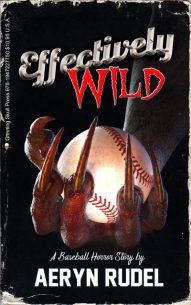
Effectively Wild – A Baseball Horror Story
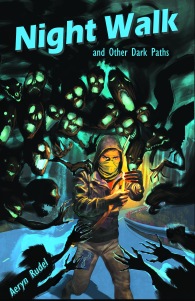
Night Walk & Other Dark Paths
Acts of War: Flashpoint

Acts of War: Aftershock

Acts of War: Stormbreak


