
Rejection Reflection: Is This Market for Me?
One of the toughest questions writers sometimes ask themselves is if a particular publisher is a good market for their work. When the form rejections pile up, you begin to wonder if maybe they just aren’t into your style, voice, tone, etc. That’s entirely possible, but make sure you’re not jumping the gun. To illustrate what I’m talking about, let’s take a look at a couple of markets I’ve sent a bunch of stories to without a single acceptance. Let’s see if it’s a case of “it’s not you, it’s me” or if I need to keep trying. I won’t use the names of these markets because this isn’t about calling out a publisher that has rejected my work (because that’s silly and counterproductive). It’s about examining my work, looking for ways to improve, and more importantly, looking for ways to be a more efficient and ultimately successful short story writer.
Market A – 20 Rejections
Market A is a well known SFF market, and I’ve submitted there a total of twenty times, each submissions ending in a rejection. Now you might look at that number and think, well, here’s one market that just doesn’t like his work at all. Based solely on the number of rejections, I might agree with you. If you look closer, though, you’d see a lot of those rejections are higher-tier, and three of them are final-round, you-almost-made-the-cut types. So, what does that tell me? Couple things.
- Keep trying. The slush readers and editors are seeing something in my work they like. I mean, they’ve said as much. That’s encouraging and more than enough reason to keep sending work.
- Use the info you have. With twenty rejections of all shapes and sizes from this market, I have a lot of useful information. If I look at the stories that got close, something jumps out. They lean more literary than my usual fare and take old tropes in new directions. That tells me a lot about what to send this market in the future and what might be successful with them.
Market B – 13 Rejections
Market B is another prestigious SFF market to which I have submitted many times, to the tune of thirteen total rejections. In contrast to Market A, however, I’ve received mostly form rejections with one hold, which was then rejected with another form letter. Let me reiterate, this post is not about trying to prove Market A is right and Market B is wrong (this isn’t a wrong or right situation to begin with). It’s about reading between the lines, taking a good hard look at your work, and possible redirecting your meager writing resources. Now, if I look deeper at the rejections from Market B, what might I learn? Three things.
- Good stories, wrong market. Of the thirteen stories I’ve sent to Market B, I’ve gone on to sell nine of them, seven at pro rates and two at semi-pro (one of those to a very good semi-pro market). Within this group of rejections is, in my opinion, the best short story I’ve written to date. I think it’s fair to say I have good evidence that the stories I sent were marketable, just not to this publisher. Again, that does NOT mean this market was wrong for rejecting my stories. It means my stories weren’t right for this publisher. This of course leads back to the initial question posed in this post. Is this market right for me? Based on the evidence I have at hand, I’m leaning toward no, but read on.
- Use the info you have. Like Market A, I have a lot of information on Market B. If I look closer at that information, I see I have largely sent them horror, which they do publish, but little else. This leads into my next point.
- Keep trying? Maybe, but based on the info I’ve gleaned from submitting here and from reading the recent works published by this market, it’s possible my style just isn’t what they’re looking for. If I do try here again, it will need to be something completely different than what I’ve previously sent.
So when the form rejections keep rolling in, it’s only natural to ask yourself, “Is this market for me?” The answer to that question could be, no, they aren’t a good fit for you, but make sure to do your research. You don’t want to give up on a Market A scenario. Remember, not all nos are created equal, and some, like the ones I’ve been getting from Market A, are what I’d call good nos. In my experience, good nos can and do sometimes lead to a yes in the end.
As usual, this post is drawn entirely from my own experience, which informs the opinions you see here. I’m sure there are folks who went on to publish at a prestigious market after many, many form rejections, and there is definitely merit to that kind of tenacity. Ultimately, every author needs to decide how best to utilize their writerly resources, and it’s never a one-size-fits-all kind of thing.
Flash Fiction or Short Stories: Which Is Rejected More?

A little over a month ago, I published a post called How Long Does It Take to Sell a Story? In that post I charted out how long it took me in days to sell some of my published flash fiction and short stories. The results were interesting, and I want to revisit that topic today. Instead of looking at the number of days before acceptance, though, I want to look at the number of rejections before acceptance. Like that first article, I’ll split my findings into flash fiction and short stories.
We’ll use mostly the same stories in that last article (one new addition) and start with short stories.
| Short Story | Rejections |
| Night Games | 6 |
| Caroline | 7 |
| Paper Cut | 16 |
| Scare Tactics | 6 |
| Paint-Eater | 7 |
| A Point of Honor | 10 |
| Bites | 12 |
| The Past, History | 8 |
| The Back-Off | 10 |
| Reading the Room | 5 |
Some big numbers there, huh? The average number of rejections for these ten stories is almost nine. But before we start trying to figure out why, let’s look at flash fiction and see how much of a difference a change in story length makes.
| Flash Story | Rejections |
| What Kind of Hero | 10 |
| When the Lights Go On | 10 |
| Do Me a Favor | 0 |
| Far Shores and Ancient Graves | 2 |
| Time Waits for One Man | 0 |
| Ditchers | 3 |
| Liquid Courage | 0 |
| His Favorite Tune | 0 |
| Outdoor Space | 1 |
| The Night, Forever, and Us | 2 |
Well, that looks a little different, doesn’t it? The average number of rejections before I sold these flash pieces is three, and as you can see, four of them sold on the first try (I’ve never done that with a short story, by the way). There are two ten spots up there, but those really are anomalies in my flash submission archive.
If you were to look at all the stories I’ve published, you’d see the numbers I’ve presented for flash fiction and short stories are not just sample sizes. The average number of rejection for all the flash fiction I’ve published is just over two, and the average number for short stories is just over seven. But why? Let me briefly reiterate my theories from the last article, which also apply here, and add one more.
- Maybe I’m Better at Flash. The numbers would seem to indicate that, but I think there are other factors at play.
- More Pro Markets. There are dozens of pro short story markets, but really only a handful of dedicated pro flash fiction markets. In other words, my short stories generally run a gauntlet of sometimes a dozen of the toughest markets in the business, resulting in more rejections.
- Demand. Flash markets generally need more material, as they tend to publish more often. That means more slots for more authors.
- Flash Fact Finding. I write a lot of flash fiction. I mean A LOT. One of the reasons is simple math. It takes a lot less time to write and polish a thousand-word story than it does a five-thousand-words story. What this translates to is way, way more flash submissions. All those submissions, whether they end in acceptance or rejections, give me information, information that lets me hone in on exactly what a publisher might want. I might not be a better flash fiction writer, but I am definitely a better flash fiction submitter. I have the editorial tastes of a number of flash markets pretty well figured out, and I can submit to them with a level of confidence I just don’t have with short story markets. That doesn’t mean that every submission to these markets ends in an acceptance. Far from it. But I’d say my chances of acceptance are higher than they are with short story markets. Add that to the other factors above, and I think the rejection discrepancy in the two lengths makes a lot more sense.
Thanks for indulging me in another bit of rejectomancy, and I hope the whys and wherefores I presented held some small bit of wisdom. Probably not, but a guy can hope. 🙂
Weeks of Writing: 7/6/20 to 7/26/20

Way, way behind on these, but here are my writing endeavors for the past three weeks.
Words to Write By
This week’s quote is from Stephen King. I’ve used this one before, but it’s one of my favorites, so I’m using it again. 🙂
“Sometimes you have to go on when you don’t feel like it, and sometimes you’re doing good work when it feels like all you’re managing is to shovel shit from a sitting position.”
-Stephen King
I’ve been feeling the quote pretty hard lately. Though I finished the first draft of the novel, I feel like I limped across the finish line rather than triumphantly sprinted over it. The last two or three chapters definitely felt like the aforementioned shoveling of shit from a sitting position. I’ve felt like this before, of course, and when that happens, the best solution is to get so some distance from whatever it is I’m working on. Invariably, when I go back and start proofing things won’t look or feel so terrible, and I’ll find at least some of that shit-shoveling was the good work Stephen King mentioned above.
The Novel
I finished the first draft of Hell to Play on July 14th, and I’ve let the manuscript “rest” for the last couple of weeks. I always need a little distance from a big project before I start revising, and two weeks is usually sufficient, though I might let this one go another week. A lot of authors do this, of course, but I do it because while I’m writing the first draft, the levels of self doubt and plain old fashioned fear of failure build up to toxic levels in my brain. In order to tackle the revision, I have to let those levels come down again, usually by not thinking about the manuscript at all for as long as necessary. I’m definitely feeling a lot less toxic this week, so I might jump in and at least read through the draft and make notes about what I need to fix.
Short Story Submissions
Three weeks and only three submissions. Not great.
- Submissions Sent: 3
- Rejections: 5
- Acceptances: 0
- Publications: 1
- Shortlist: 0
Yep, three subs in three weeks. If I want to have any hope of meeting my goal of 100 subs for the year, I’m gonna have to do a little better than a submission per week. I’m sitting on 51 submissions for the year, which averages out to like seven and change per month, putting me on pace for something in the neighborhood of 84 subs. That’s not bad, but I need to step it up. Five rejections, but only one of them was what I’d call a tough no. I thought I had a pretty good shot at one market, and they held the story for quite a while, but it was not to be. Such is the gig.
Market Spotlight
This week I want to highlight another pro SFF market returning from hiatus. I’m sure most folks who read my blog are aware that Apex Magazine is bak and open for submissions, but for those who might be unfamiliar with this market, here are the highlights from their submission guidelines.
- SFWA-certified professional market.
- Short stories up to 7,500 words.
- No reprints.
- No sim-subs.
- Payment is .08/word.
- Editors will try to respond to submissions within 30 days.*
*In my experience, with some thirteen submissions, the editors only exceeded 30 days one time. That one time was when my story was held for further consideration, so, you know, I didn’t mind. 🙂
Goals
Here are my writing goals for this week.
- Maybe start revising the novel. If I need another week, I need another week.
- Finish and submit some short stories. It’d be nice to get somewhere around seven submissions for July.
And that’s the last three weeks. How’ve you been?
Submission Journal: The Bad Year

I’ve been submitting short stories pretty regularly for the last seven years, and my acceptance percentage is usually between fifteen and twenty percent, except for one strange, terrible year. In 2017 I managed only a measly 7% acceptance rate. But why? Well, first some context. Let’s take a look at my overall submission numbers for 2016, 2017, and 2018.
| Year | Subs | Reject | Withdrawn | Accept | Acc % |
| 2016 | 53 | 43 | 2 | 10 | 20% |
| 2017 | 73 | 64 | 4 | 5 | 7% |
| 2018 | 120 | 100 | 4 | 19 | 16% |
Okay, as you can see, 2016 was a pretty good year, and I was fully expecting 2017 to be even better. Things had started to turn for me in 2016, and I’d even scored my first pro sales. So I ramped up my submission output, expecting to see a corresponding rise in the number of acceptances. That didn’t happen. Why is that? I have some theories. Let’s discuss.
- Bad luck. As you’ve heard many, many times on this blog, I believe a large part of selling a story is putting the right story, in front of the right editor, at the right time. Well, in 2017 I failed miserably to do that. Now, you might be thinking I just submitted a bunch of clunkers that year. Hey, I thought so too. Then I actually went and looked. Not counting reprint submissions, I sent out twenty-four unique stories in 2017. I sold five that year, and I’ve gone on to sell another ten, some at pro rates. So there were ten stories that year that were good enough to eventually sell but gained zero traction in 2017. Some of that is luck of the draw, and, well, some of it is other things. Read on.
- Not good enough. Of the nine stories I submitted that year that have not yet sold, most of them are never going to. They’re just not good enough. I sent out some of those stories A LOT that year, and, yeah, that explains the numbers to some extent.
- Not good enough . . . yet. Three of the ten stories I went on to sell in 2018 and 2019 were in heavy rotation in 2017 and together they accounted for something like twenty rejections. As I said, I did go on to sell those pieces, but each one received an extensive revision before I made the sale. I remember those stories receiving good feedback and even scoring a couple of shortlists in 2017, but they weren’t quite ready.
To sum up, 2017 was a tough year, but I look back on it now with some fondness. It absolutely taught me lessons that made the years to follow more successful. I’m better at recognizing when a story isn’t ready or when it needs a revision before it goes back out again, and my numbers have improved as a result. That year also toughened me up–a six month acceptance slump will do that–and I earned a bunch of Rejectomancer XP. 🙂
Hard Drive Deep Dive
The subject of unearthing forgotten stories from your hard drive came up on Twitter yesterday (Thanks, Marcus!), and it prompted me to go to my hard drive (and an external one I use as backup) and see what might be lurking there. Well, in addition to discovering a few forgotten tales, I started wondering just how many stories, either finished or unfinished, I’ve written over the years and what became of them. So I started cataloguing and spreadsheeting, and here are the results.
| Finished | Unfinished | Subbed | Published | % Pubbed | Finished Word Count | |
| Flash Fiction | 107 | 3 | 82 | 38 | 36/46 | 96,300 |
| Short Stories | 27 | 18 | 25 | 13 | 48/52 | 103,500 |
| Total | 134 | 21 | 107 | 51 | 38/48 | 199,800 |
As you can see, I’ve broken this down into flash fiction and short stories. I’ve left out microfiction (too many) and any of my writing that is media tie-in or game-related (not relevant). So this is only works that are wholly my own IP. Obviously, this does not include novels, which is a completely different beast. Okay, let me give you a little more detail on the various columns.
- Finished. I applied this term to the current form of each story. For example, in many cases I have a story that started out as flash but I later developed into a short story. In that case, I don’t count the flash version, only the finished short story. Finished is a slightly dubious term because much of the “finished” flash fiction is really a first draft and something I wrote during a one-hour flash fiction exercise. Also, a handful of flash pieces are earmarked for development into short stories, so, uh, they are finished for now. It’s also dubious in that three or four of the finished short stories were written in the early aughts when I was, well, not the writer I am today. They would need complete rewrites if I ever wanted to submit them.
- Unfinished. With short stories this is pretty self-explanatory. I have eighteen stories in progress with something like 1,500 or 2,000 words out of what would be 3,000 or 4,000. It should be noted I will never finish roughly half these pieces. Some of them are ideas I ended up using elsewhere (and finishing) or are so old and, well, terrible, they should never see the light of day. The unfinished flash pieces are basically stories I’m trying to whittle down to under 1,000 words. Of the the three, only one is really worth pursuing.
- Subbed. This is the number of finished pieces I have actually submitted to flash and short story markets. I’ll freely admit there are plenty I should never have submitted, especially among the flash fiction pieces. They weren’t ready. There’s a couple of short stories that fall into that category too, all of which are very, very early attempts at writing and are, frankly, amateurish.
- Published. This is simply the number of finished stories I have managed to sell to magazines and anthologies.
- % Pubbed. This is the percentage of finished stories in each category (flash or short) that I’ve published. The first number is the percentage of finished stories I’ve published, and the second number is the percentage of finished stories I actually bothered to submit I published. These were eye-opening numbers. I generally look at my acceptance percentage as an indicator of how well I’m doing with my work, but this is an interesting gauge too. If we look at the second number, I end up publishing roughly half the pieces I finish and submit. I also suspect my ratio in the last few years is better than this historical one, as I’ve gotten better at determining when a piece is ready for submission (or if it ever will be).
- Finished Word Count. This is a rounded ballpark number of how many words of finished stories currently lurk on my hard drive. Roughly half that number is published.
Well, if you’ve read this far, thank you for your patience with my obsession for cataloguing and organizing my writing. I fear there’s not much to learn here other than keep writing, keep submitting, and, hey, maybe dig into that hard drive every now and then. You never know what might be lurking there. 🙂
A Novel First Draft by the Numbers
A few days ago, I finished the first draft of a new novel tentatively titled Hell to Play. I’ve posted about first drafts in the past, but since this one is fresh in my mind I thought I’d break down the numbers and talk about how long it took to write and how the writing went. Here come some stats. 😉
Hell to Play First Draft Stats
- Words – 89,284
- Chapters – 30
- Manuscript Pages – 401
- Date began: 4/13/20
- Date completed: 7/14/20
- Writing days: 93
Before I get into this, I should note now that I write full-time, so the pace above is reasonable for me. It is probably not reasonable for someone who has a day job and writes in their spare time. Okay, with that disclaimer out of the way, what you see above is what I consider a solid length for a novel in the horror/urban fantasy genres (or a mash-up of the two, I guess). That number will change as I revise. It will almost certainly shrink, but there is the chance more material will be needed as well. I wrote the draft in almost exactly three months, which worked out to 14 weeks or 93 days. That’s a tad slower than I’ve written first drafts before, but I think it’s pretty good considering some big external factors, like a global pandemic.
Let’s take a deeper look into the writing on a week by week basis. I think it gives a pretty clear picture of the ebb and flow of how I write a first draft.
| Week | Start Date | End Date | Words |
| 1 | 4/13/2020 | 4/19/2020 | 6053 |
| 2 | 4/20/2020 | 4/26/2020 | 8587 |
| 3 | 4/27/2020 | 5/3/2020 | 8733 |
| 4 | 5/4/2020 | 5/10/2020 | 5200 |
| 5 | 5/11/2020 | 5/17/2020 | 0 – Outline Revision |
| 6 | 5/18/2020 | 5/24/2020 | 6083 |
| 7 | 5/25/2020 | 5/31/2020 | 8094 |
| 8 | 6/1/2020 | 6/7/2020 | 8174 |
| 9 | 6/8/2020 | 6/14/2020 | 4095 |
| 10 | 6/15/2020 | 6/21/2020 | 8196 |
| 11 | 6/22/2020 | 6/28/2020 | 6145 |
| 12 | 6/29/2020 | 7/5/2020 | 10125 |
| 13 | 7/6/2020 | 7/12/2020 | 8118 |
| 14 | 7/13/2020 | 7/14/2020 | 1681 |
My average word count per week came out to 6,377. If you drop week five where I spent the entire week revising the outline and week fourteen, which was only one day, then I managed 7,300 words per week. My usual pace is about 10,000, and I only managed that once. I set my daily word count goal at 2,000, and I generally wrote four days a week, though that slipped to three or even two days numerous times. Though it felt like I was lagging behind at times, I think this a good pace, and three months to a 90,000-word first draft is plenty fast.
So, what happens next? I’ve got 401 pages of a novel-shaped thing, but it is in no shape to be read by other humans. Here’s are the steps I’ll take to turn the first draft into something I can show my agent (and, you know, hopefully sell).
- First readthrough. After letting the manuscript sit for two weeks, I’ll read through it and make notes about what I need to fix RIGHT NOW.
- First revision. Based on the notes compiled in my readthrough, I’ll make the first revision. This will be a sizable one.
- Second readthrough. After the first revision, I’ll read the novel start to finish again and make sure the revisions make sense.
- Clean up/second(ish) revision. Not a true revision, but I’ll go through and fix typos and clunky sentences and whatnot, so that when I hand the novel off to my critique partners, they won’t be pulled out of the story because I uses form instead of from.
- Handoff to critique partners. I’ll send the revised novel to my critique partners so they can read it and find all the problems I missed (they will be legion).
- Third revision. Once I have the novel back from my critique partners and can absorb their comments, I’ll make a third revision. The hope is that I will have caught the biggest problems in my own revision, but that’s kind of a vain hope, and this third revision will probably be a BIG one.
- Clean-up/fourth revision. I’ll go through the manuscript one more time and do a deep polish on the prose. I have a list of things I always need to fix at this stage, from overused words and sentence structures to over reliance on things like filter words and adverbs.
- Handoff to agent. At this point I should have a novel that’s in pretty good shape, and it’ll go to my agent. There’s every chance he’ll ask for another revision, but, hopefully, all the steps above will make it a light revision. (Hey, a guy can hope, can’t he?)
And there you have it, the nuts and bolts of a first draft. In the next post, I’ll go over the revision process and what kinds of things I aim to fix.
Rejection Letter Roundup: The Rejectance
Yeah, I know. Rejectance isn’t a word (well not a proper one, anyway), but as you might have suspected, it’s a portmanteau of rejection and acceptance. So, how do you get a rejection and an acceptance at the same time? Let me show you.
Back in March, I received the following response to a submission. As usual, I’ve removed the name of the editor, the market, and the title of the story. I’ve also removed other information not pertinent to the point I want to make but that might identify the publisher. If you’ve been following my blog for any length of time, you know that’s just how I roll. Let’s take a look.
Many thanks for your [anthology] submission [story title]. We received an overwhelming amount of stories for our submissions call for this book, which made the selection process especially tough as [editor] was only able to choose [small number of] stories for publication.
[Your story] came very close in the selections but unfortunately didn’t make the very final cut of stories. We really liked your story though so were wondering if you would allow us to publish it in one of our other anthologies? I’m currently working on an anthology on the theme [second anthology] and think your story could work really well for that.
If you’d be happy for this story to appear in [second anthology] instead, we’d be delighted to accept your story! Please let me know as soon as you can if you’d like to go ahead, and I’ll send a license to confirm the terms.
Pretty cool, huh? Both anthologies pay pro rates, and I’m frankly thrilled to have a story included in either one. The other little piece of validation is I’d been shopping this story for a LONG time, almost two years and some twelve rejections, so this was a very welcome acceptance.
But how does a rejectance happen? Well, it has to be a situation where an editor is running multiple anthologies, like in the letter above, or is associated with multiple magazines. Basically, they have to have a another, more appropriate venue for a story they like but isn’t quite a fit for the market to which it was submitted. For example, check out this tidbit from the guidelines of Black Static, which is a sister magazine to Interzone and Crimewave.
Don’t submit a rejected story to another of our magazines, as we will already have considered that option.
Although I don’t have any actual data on this, I assume a rejectance is possible from Black Static, wherein a story is not suitable for them but might be a good fit for Crimewave or Interzone. If they go so far as to mention it in their guidelines, I’ll bet it’s happened at least once or twice (or they’ve at least seriously entertained the possibility). There are other markets that are part of a pair or trio of zines where a rejectance could happen as well. That said, if each zine has a different editors, they might just recommend you submit your story to a sister zine, which is a recommendation rejection and a slightly different beast. 🙂
The submission landscape can be a little strange at times, and the rejectance is just one of the weird (and wonderful) things you might run into if you do this long enough. If you’ve ever received a rejectance, I’d love to hear about it in the comments.
Weeks of Writing: 6/22/20 to 7/5/20
A week behind, but here are my writing endeavors for the past fortnight.
Words to Write By
This week’s quote is from Stephen King.
“Write with the door closed, rewrite with the door open.”
—Stephen King
This quote is one that I wholeheartedly agree with. I don’t want any outside input while I’m writing the first draft. I know it would seriously fuck up my rhythm, and I don’t know if I’d ever finish. After the first draft, I am more than happy to throw the manuscript to the wolves and brace for impact. You see, for me, the first draft is an an intimate and lonely process. I gotta work shit out in my own head before I grant anyone else access to the grand mess. Now, my first drafts have problems, as all first draft do, but I need that first attempt to be mine and mine alone. I think it establishes my voice and my vision for the book. Again, after that, I want and need outside input to make the book something other humans might want to read. Now, if you’re an author that does like input while you write the first draft, you’re not wrong. I’m not saying that. I wouldn’t question another writer’s process. It just does not work for me.
The Novel
I had a solid couple of weeks of writing on the first draft of Hell to Play. I managed just over 16,000 words, pushing the manuscript total just shy of 80,000. I should finish the draft this week and end up around 90,000 words, maybe a tad more. I don’t mind going over, especially for the climax of the book. There are definitely parts earlier in the novel that will get cut back, so my final total will end up closer to my 90k target. The writing has been getting a little easier, mostly because the end is in sight.
Short Story Submissions
Pretty abysmal couple weeks for submissions, with one bright spot.
- Submissions Sent: 1
- Rejections: 1
- Acceptances: 1
- Publications: 0
- Shortlist: 0
In two weeks, I sent exactly one submission. The good news is that submission was accepted. Still, I gotta get my ass in gear if I want to hit 100 subs by the end of the year. The rejection was a personal rejection from a market I’ve published with before, and the feedback was pretty spot on. That’s always nice.
Acceptance
The acceptance I received was from Love Letters to Poe, a new market that publishes original gothic stories up to 1,500 words. Gothic really isn’t my forte, but I had a story I wrote a couple of years ago that checked a number of gothic boxes, so I cleaned it up and sent it in. Well, lo and behold, the editor liked it, and I got my tenth acceptance of the year. This is definitely one of those cases where I could have easily self-rejected because I don’t generally write gothic. As authors, we really have to avoid that. Often times it’s best to just send a story in and let the editor decide if it’s what they’re looking for. Sometimes it is. 🙂
Market Spotlight
This week, I want to highlight a pro market that’s relaunching. Fantasy Magazine is part of a trio of sister magazines that includes Lightspeed and Nightmare. Obviously, Fantasy Magazine focuses on fantasy, while the other two cater to science fiction and horror respectively. Nice to see another pro market out there.
Here are some of the highlights from their submission guidelines. Fantasy Magazine is open to submissions on the first week of every month (1st to the 7th).
- Seeking original fantasy and dark fantasy stories.
- Anonymous submissions.*
- Short stories up to 7,500 words.
- Flash fiction up to 1,500 words.
- No sim-subs.
- Payment is .08/word.
*I just want to call out the anonymous submissions portion of the guidelines. This means remove all identifying information from the manuscript (that stuff is okay in the cover letter, though). If you submit a lot, like I do, you probably have a standard manuscript template, which includes all your contact info at the top. This is the kind of thing that can be easy to miss if you slip into auto-pilot mode, so always, always, always read those submission guidelines carefully.
Goals
Here are my writing goals for this week.
- Finish the novel.
Yep, that’s it. Anything else is gravy. 🙂
That how my weeks went. How were yours?
Submission Statement: June 2020

Another month come and gone. Here’s a breakdown of my short story endeavors for June.
June 2020 Report Card
- Submissions Sent: 4
- Rejections: 5
- Acceptances: 1
- Publications: 0
A lackluster month, unfortunately. I needed to get 8 submissions to stay on track for 100 subs for the year, and I got half that. This just means I’ll have to pick up the pace in July. I really need to finish some of the short stories I’ve got in various stages of completion. More stories always means more submissions . . . and rejections, of course.
Rejections
Five rejections this month.
- Standard Form Rejections: 3
- Upper-Tier Form Rejections: 1
- Personal Rejections: 1
Pretty much ran the gamut as far as rejection go. The standard form rejections were all from pro markets, while the upper-tier and personal were from a pair of semi-pro markets. The quickest rejection came in a single day, and the longest took 90 days.
Spotlight Rejection
The spotlight rejection is from a semi-pro market I’ve published with before:
I sold this particular story on the next submission. Now, this absolutely does not mean the publisher above is wrong and the one that accepted the story is right. This is a subjective business, and wrong and right are, well, dubious concepts. I bring this up only to again point out that selling a story is often about putting the right story in front of the right editor at the right time. Almost every story I’ve sold has racked up three or four rejections and sometimes A LOT more before it sold (this one scored seven). In other words, not every story, no matter how good, is going to work for every market and every editor, so you have to keep trying and keep submitting.
Acceptances
One acceptance this month, and a pretty exciting one. I sold my story “The Past, History,” to Dark Matter Magazine, a new pro-paying science-fiction market. I’d been shopping that story for a while, and it had racked up good number of rejections and a couple of revisions before Dark Matter accepted it. I was hoping to continue my streak of two acceptances per month in June, but it was not to be. I’ll just have to shoot for three in July. 🙂
And that was June. Tell me about your month.
Evolution of a Short Author Bio II
An author’s bio can change quite a bit over an author’s career. Mine sure has. The more writerly accomplishments I accumulate, the more my bio changes, and over the past couple years I’ve added some important things to my resume. Before I get into the new bio, let’s look at the old one, which I wrote back in early 2018.
Aeryn Rudel is a freelance writer from Seattle, Washington. His second novel, Aftershock, was recently published by Privateer Press. Aeryn occasionally offers dubious advice on the subjects of writing and rejection (mostly rejection) on his blog at www.rejectomancy.com.
Pretty straightforward, and I kept it short and sweet and under 50 words. My new bio is longer, but it includes the same elements it always has:
- Basic details
- Accomplishments
- Where to go/buy
Basic Details
The who, what, and where. Like I’ve said in these posts before, I think you should keep potentially sensitive data out of your bio. I’m comfortable letting folks know which city I live in, but your geographic location isn’t really a necessary detail.
Here are my basic details in 2018:
Aeryn Rudel is a freelance writer from Seattle, Washington.
And, well, that still hasn’t changed much.
Aeryn Rudel is a writer from Seattle, Washington.
I’ve been using the term freelance, but I’m going to stop. It doesn’t really add anything other than “I want to get paid,” which is, I hope, obvious. 🙂
Accomplishments
This is the section of the bio that tends to change the most for me. As my list of publications grows, there’s a lot more I can add to this section (without going crazy), as you’ll see below.
My accomplishments looked like this in 2018:
His second novel, Aftershock, was recently published by Privateer Press.
Here’s what I’ve been going with recently:
He is the author of the Acts of War novels published by Privateer Press, and his short fiction has appeared in The Arcanist, On Spec, and Pseudopod, among others.
So, yeah, I’ve changed this quite a bit. First, since I finished the third book in the Acts of War series, I just list the series name rather than individual titles. I now also include a sample of my short fiction publications. I think this is a good showing of what I’ve accomplished over the last four or five years.
In the last two years, I’ve gained active membership in writing organizations like the SFWA (Science Fiction and Fantasy Writers of America). I don’t generally include those in my bio because I figure it’s going to be read more by readers of speculative fiction rather than writers or editors of same. Don’t get me wrong; I’m not against putting these memberships in a bio. They ARE significant accomplishments. I just like to put them in places I think they’re more likely to be noticed by folks familiar with those organizations. As with everything on this blog, this another of my sometimes dubious opinions, and I’m happy to be educated by folks with other thoughts on the issue.
Where to Go/Buy
It’s important to give folks a link to click in your bio, a place to go where they can find out more about you and your work, and maybe even read or buy some. That can be a website, social media profiles, or even a direct link to Amazon. Lots of options.
In 2018, my where to go/buy looks like this:
Aeryn occasionally offers dubious advice on the subjects of writing and rejection (mostly rejection) on his blog at www.rejectomancy.com.
Here’s what it looks like now:
He occasionally offers dubious advice on writing and rejection (mostly rejection) at www.rejectomancy.com or on Twitter @Aeryn_Rudel.
The biggest change here is that I now add my Twitter handle. The reason for this is simple. I actually find Twitter pretty useful for the promotion of my writing, and I’m more active there than any other social media platform.
The Finished Bio
Okay, now the final product.
Here’s 2018:
Aeryn Rudel is a freelance writer from Seattle, Washington. His second novel, Aftershock, was recently published by Privateer Press. Aeryn occasionally offers dubious advice on the subjects of writing and rejection (mostly rejection) on his blog at www.rejectomancy.com.
And here’s 2020:
Aeryn Rudel is a writer from Seattle, Washington. He is the author of the Acts of War novels published by Privateer Press, and his short fiction has appeared in The Arcanist, On Spec, and Pseudopod, among others. He occasionally offers dubious advice on writing and rejection (mostly rejection) at www.rejectomancy.com or on Twitter @Aeryn_Rudel.
My 2018 bio is 38 words long, and my 2020 bio is 55 words. I used to keep my bios under 50 words, but I’ve changed my stance on that. Often times, when a bio is requested, the guidelines are ” a single paragraph” or “no more than three sentences” or “under 100 words.” My new bio fits all those guidelines, and it’s still pretty concise. Of course, if a publisher does want a bio under 50 words, it’s super easy to trim it down.
Increasingly, I’m getting requests for bios in the 75- to 100-word range. In that case, I like to have a little fun with it, like this:
Aeryn Rudel is a writer from Seattle, Washington. He is the author of the Acts of War novels published by Privateer Press, and his short fiction has appeared in The Arcanist, On Spec, and Pseudopod, among others. Aeryn is a notorious dinosaur nerd, a baseball fanatic, and knows far more about swords than is healthy or socially acceptable. He occasionally offers dubious advice on the subjects of writing and rejection (mostly rejection) at www.rejectomancy.com or Twitter @Aeryn_Rudel.
This bio contains all the important bits from the shorter bio, just with some embellishments. It’s a fun, and, yeah, goofy way to tell folks a little more about myself. I tinker with this version a lot, trying to find even more groan-worthy ways to call attention to my nerdery. 🙂
And there you have it. The new and improved author bio. What are your thoughts on bios? Tell me about it in the comments.
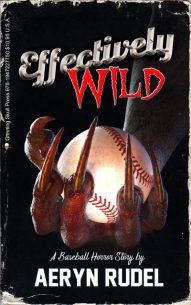
Effectively Wild – A Baseball Horror Story
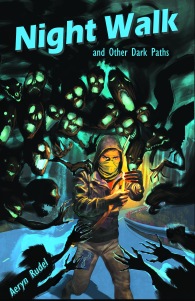
Night Walk & Other Dark Paths
Acts of War: Flashpoint

Acts of War: Aftershock

Acts of War: Stormbreak

 Aeryn Rudel's Rejectomancy