
A Week of Writing: 11/30/20 to 12/6/20

Here’s my past week of writerly endeavors. Normally, I’d try and play catch-up and cover multiple weeks since I haven’t posted one of these in a while, but the last month and change have been pretty hectic, so I’m just gonna start over. 🙂
Words to Write By
Here’s a quote from one of my faves, Elmore Leonard.
“If it sounds like writing, I rewrite it.”
—Elmore Leonard
This is one of Leonard’s famous (some might say infamous) Ten Rules for Good Writing, and as with any writing “rule” is more of a guideline to writing in a specific style than anything else. Since I also tend to write dialogue-heavy, description-light fiction, Mr. Leonard’s rules work for me. Now, this particular rule I apply mostly to dialogue. When people talk it needs to sound as natural as possible, and because my current WIP contains a TON of dialogue, I’m definitely trying to apply this rule wherever I can. How do you make dialogue sound natural? In my personal opinion, it’s half writing how people actually sound and half writing how readers expect people in a novel to sound. It’s a balancing act. Too far one way or the other and you end up with something that reads oddly or sounds broken or stilted. Of course, this is what works for me, and as usual, YMMV. 🙂
The Novel
After a couple of months away from Hell to Play, I’m back at work revising. Before I took my little hiatus, though, I wrote a detailed road map of what needed to be revised and how. I compiled this document from notes from my critique partners, had them look at it, and then made tweaks based on their feedback. I ended up with a document that is proving to be invaluable as I stare down 90,000 words of novel that need revisions and rewrites in a number of key areas. I’m not saying that task doesn’t still feel pretty daunting, but breaking it down into many separate tasks makes it easier to keep forward momentum and not get completely overwhelmed. Anyway, I’d like to be finished with this revision by the end of the month.
Short Story Submissions
A pretty good week for submissions
- Submissions Sent: 4
- Rejections: 0
- Acceptances: 0
- Publications: 1
- Shortlist: 1
- Pending: 14
Four submissions last week, which gives me a total of 86 for the year. Not too shabby. It’s unlikely I’m gonna send another 14 subs and hit my goal of 100, but that’s okay. My acceptance rate this year is the highest it’s ever been, and, even better, a good percentage of the acceptances were from pro-paying markets. I had one publication last week, which I’ll discuss below. The shortlist was with one of my favorite pro markets, and, honestly, completely unexpected. I sent them two stories, and the one they liked best was, uh, not the one I thought they would like best. In fact, I wasn’t going to send it in at all but went ahead and pulled the trigger at the last minute. It just goes to show you that you shouldn’t self-reject. Let the editors decide which story is the best fit for their publication.
Publications
One publication last week. My story “Second Bite” was published by MetaStellar. This is one of my favorite flash pieces, and it’s been shortlisted and ultimately rejected a few times. So it was very gratifying to get it published and at a pro rate to boot. You can read it by clicking the link below.
Goals
Full steam ahead on the revision of Hell to Play is the main goal. I’m doing pretty well with submissions, so I’d like to get at least two or three more out this week. Feels doable.
And that was my week. How was yours?
Submission Protocol: Ask the Editor

As I’ve stated many, many times on this blog, you should always read submission guidelines carefully and completely. Nine times out of ten, all the information you need to successfully submit a story will be there in black and white. But every once in a while, submission guidelines might not address a specific situation and leave you wondering if and how you should submit a particular story. What do you do then? Could you ask the editor directly?
I know, I know. Sending an email directly to the editor sounds terrifying, right? I mean, what if you’re bothering them? What if you offend them with your question, and they put you on the dreaded author blacklist and you never get a story accepted again?! Scary, huh? Well, let’s look at submission guidelines and see what editors actually say about this.
Email [email address] for all submission-related inquiries, or if you have any trouble using our online submission system.
That doesn’t sound too bad. Let’s look at another one.
If you have questions about submitting materials to the site, please contact us [hyperlink].
Huh, it’s almost like they want you to contact them if you have a question. Okay, one more.
If you have questions, comments, suggestions, or criticism (but not stories) send them to our staff at [email address]. We’ll do our best to get back to you within a few days.
I guess that seals it. Maybe it is okay to just ask the editor. 🙂
Okay, okay, in all seriousness, if you have a question about submissions that are not covered in the guidelines, you should absolutely ask the editor. In fact, the vast majority of submission guidelines will instruct you to do just that (as above). You shouldn’t have any fear or hesitation about it, and, in my experience, editors are often grateful that you asked a question rather than sending in a submission that might not conform to their guidelines.
Some things to keep in mind, though, before you fire off that email.
1) Make sure your question is not already covered in the guidelines. Read them carefully, then read them again. It’s easy to miss a single sentence on something like sim-subs or reprints. In fact, if I have a question about either of the two subjects, I’ll actually do a CTRL+F search for the word, just to make sure I didn’t overlook anything. I would advise against asking an editor if you can do something the guidelines expressly forbid. In other words, don’t ask if you can submit your 30,000-word novella when the publisher has clearly stated they don’t want stories more than 5,000 words in length. Instead, go find a publisher that accepts and publishes novellas.
2) Send your question to the right place. Most of the time, the submission guidelines will instruct you where to send a submission-related question, but not always. If submission questions are not directly covered in the guidelines, then look for a “Contact Us” or similar option on the publisher’s website. That’ll generally take you to the editor’s in-box or to someone who can answer your question without cluttering up the slush pile.
3) Be polite, professional, and brief. Your email should look something like a status query or withdrawal letter. Short and to the point. Make it clear you’re asking a question in the subject line. Something simple like “Reprint Question”. Address the email like you would in a cover letter (I always use Dear Editors), ask your question in a clear and concise manner, then close it out. Don’t include your manuscript and don’t talk about your publishing history (save that for the actual submission). Here’s an example of what a letter to the editors might look like:
Dear Editors,
Does Totally Awesome Professional Genre Market consider a story a reprint if it has been previously published on a blog or Patreon account?
Thank you for your time.
Best,
Aeryn Rudel
This is a question I’ve actually asked. Some markets mention where they stand on stories published on blogs and Patreon accounts and some don’t. I have a story I published years ago on the blog that I’ve since taken down and revised heavily. I’ll often ask editors if I should submit it as a reprint (or not at all if they don’t publish reprints) if that’s not spelled out in the guidelines. Each time, I’ve gotten a prompt, polite response that says, “Yeah, go ahead and send it in.” or “No, we consider that a reprint. Thanks for asking.” In the first case, I can now submit without worrying I’m breaking the rules, and in the second case, I can just move on with no harm, no foul.
4) Don’t argue with the answer. This should go without saying, but if the answer to your question is not what you hoped it would be, don’t argue. It’s a bad look because what you’re essentially getting is an addendum to the submission guidelines, and we always follow the submissions guidelines, right? Right.
So, to sum up, don’t be afraid to ask the editor if you have a question and can’t find the answer in the guidelines. Most, if not all, will be happy to answer polite queries about submissions.
Thoughts on asking the editor? Tell me about it in the comments.
Submission Statement: November 2020

November is in the books, and here’s how I did with submissions, acceptances, rejection, and all that jazz.
November 2020 Report Card
- Submissions Sent: 5
- Rejections: 6
- Acceptances: 2
- Publications: 1
- Further Consideration: 0
Well, I certainly did not get as many submissions out as I would have liked in November. Most of that was due to a particularly hellish move into a new house. The new place is definitely an upgrade, but getting there was a wee bit stressful. Still, I did manage to rally in the last week of the month and get five submissions out, giving me 82 for the year. It is extremely unlikely I’ll get another 18 subs out in December to hit my 100-submission goal, but I’m okay with that. The six rejections were mostly for stories I submitted in months prior. Two acceptances in a month is fantastic, and that gives me 16 yes’s for the year, which is two more than I managed last year. The fact that they’re both to pro-paying markets is just icing on the acceptance-cake.
Rejections
Six rejections this month.
- Standard Form Rejections: 5
- Upper-Tier Form Rejections: 1
- Personal Rejections: 0
Not much to see here. Each rejection was a form letter, and only one of them was anything but the standard “not for us” boilerplate no. Just so we’re clear, form rejections don’t bother me in the least. They’re the most efficient way for a publisher to say we’re not gonna publish your story politely and professionally.
Acceptances
Two more acceptances in November, which makes it a pretty good month. The first acceptance was to a market new to me, and, well, just new. MetaStellar accepted my flash story “Second Bite,” a story I’m quite fond of and one that has come oh-so close to publication a few times. I’m thrilled it finally has a home, and the folks at MetaStellar did a bang-up job presenting it. You can check it out in the publications section below.
The second acceptance was with Dark Matter Magazine for my reprint short story “Caroline.” It’s for their 2021 Halloween issue, and it’s the second story I’ve sold to Dark Matter. I’ve been super impressed with this market, especially with how they promote and market their authors. They also pay a pro rate, so if you write speculative fiction, definitely give them a look when they open up again for submissions.
Publications
Technically, I only had one publication in November, but MetaStellar published my horror story “Second Bite” today, so I’m gonna go ahead and include it here. The other publication was for my one and only non-genre story “Fair Pay,” which was published by Flash Fiction Magazine last week. You can read both stories by clicking the links below.
Read “Fair Pay”
Read “Second Bite”
And that was my November. Tell me about yours.
Hook Shot: Still More Fun With First Lines
One of my absolute favorite blog topics is analyzing the first lines of my short stories and trying to divine whether a good one helps you get published. This all stems from a fantastic essay written by Stephen King called “Great Hookers I Have Known” in his now sadly out-of-print collection Secret Windows. The term “hooker” in this case comes from an old bit of publishing slang that means a first line that hooks the reader. Anyway, through the years, I’ve been taking a look at the first lines of my published short stories, rating them, and trying to find evidence that supports the theory that a great first line improves your chances of publication.
So let’s look at some of my recently published stores, analyze the first line, and then I’ll explain why I think it’s a good one or not so good. Then, at the end of this we’ll see if there’s any correlation between a good first line and how quickly the story was accepted. I’ve also linked to the stories that are free to read online so you can check out the first line and compare it to the rest of the story if you like.
1) “Bites” published by Flame Tree Press in Footsteps in the Dark
“Here’s your stop,” Katelyn said, pulling the Prius up to the curb.
Super exciting, huh? Did my mention of a Prius get your blood pumping? 🙂 Yeah, this is, uh, not a great first line, which is unfortunate because I think it’s one of the better short stories I’ve written in a while. I mean, it’s functional as kind of an establishing shot, but it sure as shit ain’t exciting. The second sentence and the first paragraph improved things, and we get cooking in the second paragraph, but, yeah, not awesome. Grade: D+
2) “Reading the Room” published by The Overcast
“What do you want with this guy, boss?” Barry Fitz said as he and Jesse walked through the gaming floor of the Lucky Load.
I often start stories with dialogue, and I know some folks say you’re not supposed to do that, but, meh, it’s worked for me. Anyway, this another one of those establishing shot first lines, and it gives you some flavor and does a halfway decent job of setting up some of the premise. It’s still not fantastic, but it’s better than “Bites.” Grade: C+
3) “The Back-Off” published by On Spec Magazine
Frank Lori yanked open the door to the Lucky Duck’s camera room and a fog of cigarette smoke and old coffee fumes washed over him.
Not too bad. This introduces the man character, gives you some clue about the setting, and throws in some halfway decent description. The word yanked implies some urgency, and the cigarette and coffee stink sets a tone. Yeah, as first lines go, you could do worse (and I have). Grade: B
4) “His Favorite Tune” published in the Flame Tree Fiction Newsletter
Colton Jackson walked along a dirt road while the man ordered to kill him pressed the barrel of a gun into his back.
I like this one because it established some tension right away and gives you a few important details to boot. It doesn’t wow you, but I think it gets you interested in what happens next, which is really what you need that first sentence to do. Grade: B
5) “Stall Number Two” published by Ellipsis Zine
There’s a gateway to hell in the men’s room at Cory’s Pub & Suds.
Heh, I’m a sucker for first lines like this, and I think is a pretty good one. It’s weird, unexpected, and even a little silly. I think that’s a great combo for a first line, and I deliver the goods in the first paragraph regarding ye olde poop chute to Hades. Grade: A-
6) “Story X” to be published by Super Secret Publisher
Jared Stiles knew a lot about murder, but he’d always viewed killing someone as a permanent situation.
Since this one hasn’t been published yet, only accepted, I need to maintain some secrecy. I think this is a good first line. The whole “permanent situation” thing sets up the premise, and should get the reader asking questions. This is probably the best of the bunch. Grade: A
Okay, now let’s compare the quality of the first line in the stories above to how long it took me to sell each piece and see if there’s any kind of pattern.
| Story | First Line | Rejections |
| Bites | D+ | 12 |
| Reading the Room | C+ | 5 |
| The Back-Off | B | 10 |
| His Favorite Tune | B | 1 |
| Stall Number Two | A- | 3 |
| Story X | A | 8 |
Huh, well, I’d call that data inconclusive. “Bites” did rack up a lot of rejections, but it was shortlisted at a number of pro markets and did eventually sell to one. On the other hand, “Story X” was rejected seven times, then I revised it, which included rewriting the first paragraph, and it sold on the next submission to a pro market. The rest are kind of all over the place. I mean, “The Back-Off” and “His Favorite Tune” both have the same grade for first lines, but the number of rejections they received is night and day different.
If there’s one bit of info I can maybe take away it’s that the first line is more important in short stories than flash fiction. A top-notch first line seems to have less impact on selling a 1,000-word story than it does on a longer tale. Yeah, I know, sample size and all, but that might be an interesting comparison to run in the next blog post I write on the subject.
Thoughts on my super-scientific grading method or first lines in general? Tell me about it in the comments.
Good as New: Evaluating Fledgling Publishers
I covered this topic back in 2016, and I think it’s due for an update. In the last four years, I’ve seen a lot of genre markets come and go (one that showed up and disappeared almost overnight), and there are some things I think you should look for when considering whether to send a story to a brand new market. I’ve broken that evaluation process into six points. Let’s take a look.
- Presentation. Does the publisher have a professional-looking website that’s easy to navigate? Obviously, this is the first thing you’re likely to learn about a publisher, so I put it at the top. I’m not saying every publisher’s site needs to look like they spent a million bucks on it, but a website says a lot about how prepared a market is when they jump into publishing. A clean, easy to navigate site says I’m organized and efficient (a good sign), and a messy, clunky one says maybe I’ve bitten off more than I can chew. The former gives me some confidence my work will be handled professionally, and the latter says I might not ever hear back.
- Guidelines. Are they easy to find? Are they clear and concise? This is one of the first things I look for, and, in my opinion, is one of the biggest indicators of whether a publisher knows what they’re getting into. If I see clear, professional submission guidelines that conform to industry standards (though I don’t mind a little deviation) and answer the questions an author is likely to have, that goes a long way to making me comfortable enough to submit a story. It also tells me the publisher understands the industry and what is generally expected of publishers.
- Rights. This is usually part of the submission guidelines, but it deserves its own mention. I need to know what rights a publisher will be acquiring when they accept a story. There shouldn’t be any mystery about that, and if there is, I get twitchy. If a publisher really wants to put my mind at ease, then using something like the SFWA model contract is just aces in my book. If I see huge deviations from the norm, like say a two-year exclusivity clause or ANYTHING that looks like a rights grab, I run the other way, fast.
- Editor(s). Who are they? Do they have any experience in publishing? After guidelines and rights, this is one of the first things I look at when I’m evaluating a new market. An editor that has significant experience in publishing always makes me more comfortable. That said, I’ve found that experience in an adjacent field or one that demands super tight deadlines and a breakneck pace can be just as good (maybe even better in some ways).
- Marketing. Does the new publisher market through social media, newsletters, and so on? I like to see a new publisher drumming up interest in their magazine and actively looking for ways to promote themselves and their authors. Marketing is kind of a you scratch my back, and I’ll scratch yours situation with new markets. New publishers often depend on authors to spread news of their publication (and the new market) far and wide, and, in my opinion, it bodes well when the publisher is set up to reciprocate.
- Payment. You’ll notice I put this one at the bottom, and in the original article I had it near the top. Why? Well, payment can be an indicator of a market’s professionalism and staying power, but in the four years since I wrote that last article, I’ve found it’s maybe the least telling of all the criteria I’ve mentioned here. I’ve seen markets that pay eight cents a word come and go in a year, and I know token and for-the-love-of-it markets that have been going strong for ten-plus. I’ve also received hands-down the most unprofessional rejection of my career from a new market that paid a good semi-pro rate. So, yes, payment can indicate professionalism and staying power, but in my experience, it’s not quite the litmus test some folks may believe it to be.
Now, of course, my six points above are not a pass/fail kind of thing, and there are fantastic markets that don’t hit all of them perfectly. For me, four and five are the real deal-breakers, and I can put up with a not-so-great website or token payment if the guidelines and rights are clearly explained. I’m also willing to give an editor without much experience in publishing a go if they’re hitting all the other criteria. Everyone has a comfort level when it comes to sending a story to a new market, and I think these six points might help you find yours. 🙂
Thoughts on new or fledgling markets? Got one you’d like to recommend? Tell me about it in the comments.
Story Acceptances: 2020 vs 2019

Yesterday, I received my 15th story acceptance for 2020, which is one more than I received in 2019. That’s pretty cool, and I thought it might be fun (and even informative) to take a look at this year’s acceptances, compare them to last year’s, and see what, if anything, has changed. Okay, to the numbers!
Submissions
First, let’s just look at the raw submission numbers for the two years.
| 2020 | 2019 | |
| Submissions | 77 | 76 |
| Acceptances | 15 | 14 |
| Accpt % | 22 | 18 |
So, I’ve sent roughly the same amount of submissions to this point in 2020 as I sent all of last year. My acceptance percentage is higher this year, though I’m not currently counting the eight pending subs in 2020’s number. It could go up, but will likely go down as responses for those subs come in. Also, I’ll definitely send more submissions in the next six weeks, exceeding 2019’s number by at least ten or so, which will also affect my acceptance percentage.
Story Lengths Accepted
Now let’s see what types of stories are getting accepted: microfiction, flash fiction, and short stories.
| 2020 | 2019 | |
| Microfiction | 1 | 5 |
| Flash Fiction | 11 | 7 |
| Short Stories | 3 | 2 |
Okay, now you can start seeing some differences between the two years. I’ve simply sold more words of fiction in 2020 than I did in 2019. I’ve sold around 20,000 words this year compared to last year’s roughly 12,000 words. That’s an improvement.
Accepted Story Payment
Finally, let’s take a peek at what I’m getting paid for my work.
| 2020 | 2019 | |
| Free/Token | 4 | 9 |
| Semi-Pro | 1 | 4 |
| Pro | 10 | 1 |
And now for the biggest difference between 2020 and 2019. This year, I got paid more for my work. Ten pro sales in 2020 compared to the single pro sale in 2019 constitutes the bulk of this difference, of course. That’s very good news, and it’s a trend I hope to see continue. Oh, and I’m defining “pro-payment” based on the SFWA and HWA definitions.
No matter which way you slice it, 2020 has been far and away a better year for me than 2019, submission-wise. Not only have I gotten more stories accepted, I’ve gotten them accepted by more paying markets. So why has this year been such an improvement over last? I have some ideas.
- I got better. I’m always trying to grow and improve as a writer, and the evidence suggests I may have done that in 2020. Some of the stories I sold were ones I failed to sell in 2019, revised, and then sold in 2020. I’ve also gotten closer with some bucket list markets than I have in years prior.
- More markets. A number of new pro-paying markets opened up in 2020, and I landed publications at a couple of them. Anytime you can take a whole new set of editorial preferences for a spin, you have another chance to find an editor who digs what you do. In other words, more paying markets to submit to means more chance of getting published at, uh, paying markets.
- Plain ol’ luck. As I’ve said countless time before, selling a story is some combination of right story + right market + right editor. A couple of the stories I sold in 2020 were widely rejected in 2019. I ended up selling them unchanged this year because I managed to find the right market/editor for them. If I’d started with those markets, my 2019 numbers might look better. 🙂
That’s my 2020 acceptances thus far, and I hope I can score a few more before the end of the year. My record is 19, so I’d need the next six weeks to be VERY good to beat that.
How’re your 2020 submissions and acceptances coming along? I’d love to hear about it in the comments.
Rejection Letter Rundown: The Unspoken Rejection

It’s been a while since I posted a new Rejection Letter Rundown, mostly because I’ve covered just about every kind of rejection you can get. That said, there’s always something new in submission land. 🙂 So this time we’re discussing a rejection letter sans, uh, letter. Yep, there are times you know you’ve been rejected without any kind of formal notice from the publisher. No letter, no auto-generated response from a submission manager, just meaningful silence. Let’s call it the unspoken rejection (though implicit rejection works too). In my experience, this kind of rejection is expected in certain situations. Other times it might take some sleuthing to figure out that’s what’s happened. Anyway, let’s take a look three situations where I’ve received unspoken rejections in my career.
1) Expected
Contests are the most common scenario where I don’t expect to receive an unspoken rejection. In fact, the publisher often lets you know that’s what’s going to happen in the guidelines, like this:
Because of the volume of submissions we anticipate, there will be no rejection letters. When you submit, you’ll be given a receipt of the transaction. All winners will be contacted by October 1st. If you have a problem, feel free to reach out by email, but we won’t be giving status updates like we normally would.
In the above situation, if I don’t find my name on the winner’s list, I know to go out to Duotrope and record the submission as a rejection. I don’t mind at all when a publisher handles rejections like this. If I know up front that’s how it’s gonna be, it’s really no different than getting a form rejection. Record and move on.
2) Suspected
There are times when I’m not certain but still pretty sure no rejection will be sent if a publisher passes on my story. Most often this is an anthology with a limited, but clearly stated number of open slots. Helpfully, sometimes the publisher will keep a running count on their website of the number of spots remaining. When all spots are filled, and, you know, you haven’t filled one, you know you’ve been rejected. Most publishers come right out and say that on their website and/or on social media once they’ve selected all the stories they need. A few might not, but there’s enough information to make a decision and record that submission as a rejection.
3) Surprise!
The rarest of unspoken rejections (and I’ve only run into it once, a long time ago) is when you submit a story to an anthology that has not stated how many stories will be published nor addressed how rejections will be handled in the guidelines. You only find out you’ve been rejected (months later) because the anthology is published and, uh, your name isn’t in the table of contents.
Look, I don’t expect every story I send to be published. Hell, I don’t expect the vast majority of the stories I submit to be published. I do, however, expect a publisher to let me know, in some fashion, that my story hasn’t been accepted. Otherwise, it keeps me from submitting the story elsewhere, especially to markets that don’t accept simsubs. If an actual rejection letter isn’t possible, then all I want is a quick announcement via social media or on the publisher’s website letting folks know the anthology is full and anyone who hasn’t been contacted should consider their stories rejected. I don’t think that’s too much to ask.
Do you have any experience with the unspoken rejection? Tell me about it in the comments.
Six Speeds of Submission Response
How long does a short story market take to respond to a submission? Does the response time differ with rejections and acceptances? These are questions every author, new and old, needs to know in order to strategize where to send a new story. In my experience, markets fall into six broad types or categories with regards to submission response times, and we’ll take a look at each one in this post.
As with all my posts, what follows is based entirely on my experience, and though I’ve sent a lot of submissions in the last decade, others who have sent the same or more might come to different conclusions. Also, everything I’m about to say is specific to the genre market. I know next to nothing about lit-fic markets, and wouldn’t presume to speak about them. Finally, keep in mind that market response times are due to a host of factors, from the size of a publisher’s editorial staff and slush pile to the number of submissions they recieve on a monthly or even daily basis. I make no guesses or judgements as to why one market is faster or slower than another.
Okay, let’s take a look at those six market types.
Type One – Fast Rejections/Fast Acceptances
These publishers respond to submissions fast, sometimes within a few hours for a rejection. They take a bit longer for an acceptance, but they’re still super speedy, and you might get a yes in under a week. Publishers like this don’t generally accept sim-subs for obvious reasons–they don’t need to. I often start out a new story with markets like this. It allows me to cover a lot of ground in a short space without having to monkey around with simsubs.
Type Two – Fast Rejections/Average Acceptances
These markets are pretty quick with rejections, often responding in a few days, but sometimes it’ll take two weeks to a month. They are slower with acceptances, but usually make a decision within 60 days. Many of these markets will send you a further consideration letter if your story is being considered for publication, i.e., it made it out of the slush pile. Some do accept sim-subs but not many (around 25% in my experience). These publishers are also a good place to start with a new story too, especially if you think your piece is a particularly good fit. The rejections come quick enough that sim-subs aren’t an issue, and, hey, if you get a further consideration letter, that’s good too.
Type Three – Average Rejections/Average Acceptances
These publishers take about 45 to 60 days to respond to all submissions. I find they’re about 50/50 on further consideration letters, and roughly half accept sim-subs. I might start with a publisher like this if I think my story is a good fit. If they allow simsubs, I might submit here and to another type three or type four that also accepts simsubs.
Type Four – Average Rejections/Slower Acceptances
These markets are going to take a good 30 to 60 days for a rejection and as long as 150 days for an acceptance. They will almost always let you know via a further consideration letter if you’re story is going to be held for longer than 60 days. In my experience, most are open to simsubs. Like type three publishers, I’ll start with a type four if I have a story that is a good fit or I’ve specifically written a piece for them. Since most of are open to sim-subs, I can send the story to multiple markets without issue.
Type Five – Slower Rejections/Slower Acceptances
These markets take on average between 150 to 180 days for any response to submissions. Some send further consideration letters and some don’t. These markets are well suited to sim-sub submissions, and the vast majority accept them. Be warned, though, there are a few type fives with wait times in excess of 150 days that do NOT allow simsubs (remember, always read the guidelines). When I submit a story to these markets, I generally simsub to some type threes and fours too. There are a couple of good type five markets that have published me and tend to publish stories like mine, so I’ll sometimes start with them.
Type Six – Glacial Speed
These markets take an extraordinarily long time to respond to any submission. I’m talking up to and more than a year. There aren’t many genre markets of this type, and I can only think of two off the top of my head. One is a well-regarded publication, and the other was but has since gone out of business. I submitted once to the latter and received no response for sixteen months. Then I got a very nice rejection stating my story had been held for consideration and almost made the cut. Note, they did not send me a further consideration letter. Look, I’m not saying you shouldn’t submit to type six markets, but don’t send a story to a market like this and then start firing off query letters after thirty days. The response data is out there, so you should know what you’re getting into.
So how can you tell if a market is a type one or type three or whatever? Easy. Just head over to Duotrope or the Submission Grinder (it’s free), look up the market, and all the response data will be right there at your fingertips. It’s tougher with brand-new markets, but most publishers will state their expected response times in their guidelines.
To give you an idea of how you might use this information, here’s my submission record for a story I sold to a type five market. Note, all these markets are either pro or semipro publishers. Also, all markets to which I sent simultaneous submissions clearly stated in their guidelines they’re A-Okay with them.
| Submission | Market Type | Response | Days Out | Notes |
| Sub 1 | Type One | Rejection | 7 | |
| Sub 2 | Type One | Rejection | 1 | |
| Sub 3 | Type Two | Rejection | 29 | |
| Sub 4 | Type One | Rejection | 0 | Same-day rejection |
| Sub 5 | Type Four | Rejection | 63 | Shortlisted |
| Sub 6 | Type One | Rejection | 1 | |
| Sub 7 | Type One | Rejection | 2 | |
| Sub 8 | Type One | Rejection | 9 | |
| Sub 9 | Type Five | Acceptance | 231 | Simsub, shortlisted |
| Sub 10 | Type Two | Rejection | 15 | Simsub |
| Sub 11 | Type Three | Rejection | 67 | Simsub |
So, with my first two subs, I sent the story to markets I knew would respond quickly and give me some feedback, even with a rejection. With my third, I went with a slightly slower type two market that does not accept simsubs, but I thought the story might be a good fit. When that rejection arrived, I fired off the story to the quickest market I know. They did not disappoint. 🙂 The next sub was to a type four, which I probably should have sim-subbed since they accept them, but I didn’t for some reason. When the rejection came quicker than expected, I sent the story to three type ones, one after the other. When the last of those came back, I fired off a final volley of simsubs, a type five, a type two, and a type three. As you can see, the type five shortlisted then accepted the story after about eight months, which is right on the money for an acceptance according to their response data at Duotrope.
Knowing what I know now, I would have started with the market that accepted me (duh, and also they tend to publish the kind of stories I write) plus a handful of simsubs to type twos and threes before I might have moved on to all the speedy type ones. That said, this is fairly representative of what my short story submissions look like. I tend to sell flash quicker, so the number and kinds of markets are different.
So there you have it, the six market types based in response speed. As stated earlier, these are broad categories, and some markets might drift between two or more depending on their editorial staff, size of their slush pile, and so on. Also, word to the wise. Failing to follow submission guidelines has the potential to turn any market into the fastest type one. So, you know, follow the guidelines. 🙂
What do you think about my six categories? Tell me about it in the comments.
Submission Statement: October 2020
A little late with the October tally, but here’s how I did.
October 2020 Report Card
- Submissions Sent: 10
- Rejections: 5
- Acceptances: 2
- Publications: 2
- Further Consideration: 0
October was a legitimately good month submission-wise, and I managed a respectable number of subs plus a couple of acceptances and publications. The 10 submissions last month puts me at 77 for the year, which means I’m going to need an exceptionally good November and December to hit my goal of 100. Doable, sure, but it’ll take some, uh, doing. Anyway, the two acceptances gives me a total of 14 in 2020, which equals last year’s tally. I think I’ve got an excellent shot of exceeding 2019’s mark, and maybe an outside chance of beating my best-ever total of 19. More about October’s rejections, acceptances, and publications below.
Rejections
Five rejections this month.
- Standard Form Rejections: 4
- Upper-Tier Form Rejections: 0
- Personal Rejections: 1
Mostly garden-variety form rejections in October, but I did get one personal no that illustrates my oft-repeated mantra of even good stories get rejected.
Here’s the personal rejections.
Hey Aeryn,
We sat on your story for some time as it was an enjoyable read, but ultimately it’s not going to fit into the book.
Thanks for submitting!
This rejection was for an anthology. I knew the story I submitted was borderline for the theme of the book but close enough I thought it might be worth a shot. Well, seems like the editor’s liked it, but my initial instincts were correct. The story was likely a little too far afield to fit with the others in the anthology, which is pretty much what the editor said. 🙂
Acceptances
Two acceptances in October. The first was from Flash Fiction Magazine, a new market for me. Also, that particular acceptance was for a story called “Fair Pay,” which just so happens to be my first-ever non-genre publication. I know; I’m as surprised as you are.
The second acceptance was with my old pals at The Arcanist. My story “Childish Things” took third place in their recent Halloween Flash contest.
Publications
Two publication in October. The first is a story about, uh, a toilet that takes you to hell. That one’s called “Stall Number Two” (I’m sorry) and was published by Ellipsis Zine. The second is the aforementioned “Childish Things” published by The Arcanist. You can read both by clicking the links below.
Read “Stall Number Two”
Read “Childish Things”
And that was my October. Tell me about yours.
A Week of Writing: 10/12/20 to 10/18/20
Another week of writerly doings. Here’s how I did.
Words to Write By
This week’s quote comes, once more, from Elmore Leonard.
“My characters have to talk, or they’re out. They audition in early scenes. If they can’t talk, they’re given less to do, or thrown out.”
-Elmore Leonard
I love this one, mostly because I write the same way. I tell my stories primarily with dialogue, and characters who don’t talk–or, you know, ones I can’t figure out how to make talk–fade into the background or even disappear in revision. All of my main characters, especially in long-form fiction, are absolute motor-mouths, and since they need someone to talk to or at, my secondary characters follow suit. I always hear dialogue first when I start writing, and my characters reveal their motivations and personalities by talking, first in my head, and then on the page.
The Novel
As I mentioned in last week’s update, Hell to Play is on hold until I get moved at the end of the month. I’ve tinkered a little, but I’m not going to get into the meat of the next revision until I’m set up in my new office. I gotta admit, I’m kind of enjoying the break, and I think I’ll be recharged and rearing to go once I dive back in.
Short Story Submissions
Zilch. Nada. Bupkis.
- Submissions Sent: 0
- Rejections: 0
- Acceptances: 0
- Publications: 1
- Shortlist: 0
- Pending: 14
Yeah, I know, pretty pathetic. I didn’t send a single submission last week, mostly because I was busy packing. I’m gonna try to get at least one or two out this week, but, again, packing and moving take priority. I also did not receive a single rejection last week, which is odd because I have whooping 14 submissions pending. I expect this week will be busier, and I’d guess at least one rejection will show up in my inbox before the week is done. I did have a publication last week, and I’ll talk about that below.
Publications
My story, “Childish Things” was published last Friday at The Arcanist. It took third place in their HalloweenFlash contest. Interesting note, I have placed in every one of The Arcanist’s flash and short story contests (five so far). Of course, by writing that, I have all but guaranteed I won’t place in the next one. 🙂 Anyway, you can check out “Childish Things” by clicking the graphic below.
Goals
Again, no stated goals this week. I need to get packed, get moved, and if I can, squeeze a little writing in between.
And that was my week. How was yours?
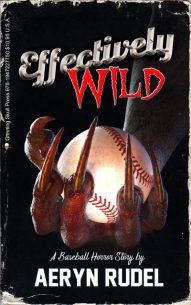
Effectively Wild – A Baseball Horror Story
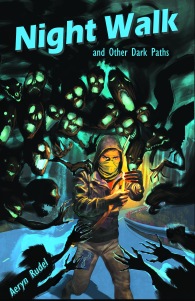
Night Walk & Other Dark Paths
Acts of War: Flashpoint

Acts of War: Aftershock

Acts of War: Stormbreak


