
Writing for Dollars: 4 Tiers of Freelance Payment

Getting published usually means getting paid for your work. Getting paid is a good thing, even if you’re “not doing it for the money.” At the very least, it’s some validation your writing is actually worth something. To further illustrate my feelings on the subject, I’ll quote one of my favorite authors again:
“If you wrote something for which someone sent you a check, if you cashed the check and it didn’t bounce, and if you then paid the light bill with the money, I consider you talented.”
— Stephen King
Note, all the info I’m going to present in this post is based on my experience publishing short stories in the genre market. It may not apply to the literary or the non-fiction markets, so if you write in either of those, this post may be of dubious value to you. Just saying.
How much you get paid when publishing short stories in the genre fiction market depends, of course, on where you publish. Some publishers pay nothing, some pay a little, and some pay all the way up to 10 cents per word and more. As you can imagine, it’s tougher to get published by the guys paying 10 cents per word.
From my experience, there are four basic tiers of payment in the genre market: exposure only, token, semi-pro, and professional. Only the first and last are clearly defined. The two in the middle are a bit of a mixed bag.
- Exposure Only: These publications pay nothing. Some might send you a print or digital contributor copy, but many don’t, so it really is nada. The vast majority of small online fiction zines fall into this category, and a quick search at Duotrope reveals that nearly 50% of the markets that publish short horror fiction, for example, are exposure-only markets.
- Token Payment: Just like it sounds, these markets pay a very small amount. In my experience, this is often not a per-word rate; it’s a flat fee somewhere between five and fifteen bucks. It’s important to note that fifteen bucks for a 1,000-word flash story works out to about 1.5 cents per word, which is semi-pro payment. In other words, some of these token markets technically pay semi-pro rates if the story is short enough.
- Semi-Pro Payment: Okay, now we’re starting to hit the money, relatively speaking. The definitions I’ve seen usually define semi-pro payment at 1 cent per word to 5 cents per word. There are quite a few semi-pro markets that pay toward the lower end of that scale, usually 1 cent per word. Pro-paying markets might also pay semi-pro rates for reprints, which is something I’ve seen from time to time.
- Pro Payment: Now we’re in the big time. This category is probably the best defined because well-respected professional writer organizations, like the SFWA (Science Fiction & Fantasy Writers of America), have set a minimum amount a publication must pay to be considered a qualifying professional market, meaning if you get published there it counts a qualifying publication for membership in the SFWA. Anyway, that minimum payment is 6 cents per word, and as you can guess, there aren’t many markets that pay that much, and those that do are tough to crack. Two pro markets I’ve been trying to break through with for some time are Daily Science Fiction and Clarkesworld, which pay 8 cents and 10 cents per word, respectively.
Now that we’ve talked about what you might get paid, let’s talk about how you might get paid. Many semi-pro and pro markets are quite happy to send you a check, but nearly all the token markets and quite a few of the semi-pro markets prefer PayPal. In fact, some will only pay you through PayPal. So, if you don’t have a PayPal account, get one. It’s free, it’s not difficult to set up, and you can often use PayPal funds like a debit card or simply transfer the money into your bank account (though it takes like five business days).
You should also keep track of how much you’re getting paid, via a spreadsheet or accounting software. If you make over $400.00 in a year as a freelance writer, you have to claim that on your taxes, so you should definitely keep track. I’m not a CPA, so you shouldn’t take anything I say about taxes as gospel (I could easily be wrong). Susan Lee, EA, CFP, on the other hand, is someone you can and should listen to. She offers a ton of useful advice for freelancers of all types on her site FreelanceTaxation.com.
Got more info on reaping the vast riches from a freelance writing career? Did I post something factually inaccurate? Tell me about either in the comments.
Ghost Story Apocalypse: My Latest Publication

Hey, all, you can read my flash fiction story “Night Walk” over at Digital Fiction Pub. This one is a reprint, and its first appearance was in the Molotov Cocktail’s Flash Future contest, where it took second place. Some of you have already read it, but for those who haven’t, it’s a spooky little piece about ghosts and the end of the world and stuff. Link below.
READ MY STORY
Check it out, and let me know what you think in the comments.
Daredevil Season Two: A Spoiler-Light Review
In the past, I’ve warned that I might occasionally use this blog as a vehicle to showcase my other interests, especially those of the nerdish variety. This is one of those times. So let’s take a little break from rejection and writing and such, indulge our inner nerds, and talk about goddamn superheroes!
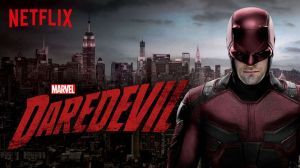
Like many of you, I just finished binge-watching the entire second season of Netflix’s Daredevil, and I generally enjoyed it. What follows will be a fairly spoiler-light review of the second season. Note, I haven’t read a single Daredevil comic (or that of any of the other characters in the show), so my review will not address how well the show sticks to the source material and whatnot; it’ll simply be based on the Netflix’s adaptation of it.
Like I said, my review is spoiler-light, but if you’d rather not know anything about the season, stop reading here.
Spoilers Below
Spoilers Below
Spoilers Below
Spoilers Below
Spoilers Below
Spoilers Below
Quick & Dirty Synopsis
The second season primarily revolves around the escalating violence in Hell’s Kitchen, due in large part to a continuing (and expanded) storyline from season one and a couple a new storyline introduced for season two. The continuing storyline deals with the Hand, the shadowy group of ninjas Daredevil encountered toward the end of the last season. Stick returns and a new character (to those who aren’t familiar with the Daredevil comic), Elektra, is introduced. The Hand is after some super weapon called the Black Sky, and there is much ninja-fightin’ shenanigans as they tear the city apart looking for it, drawing Daredevil into a whole mess of mystical ninja mojo and forcing him to deal with some of the demons of his past (see Elektra).
The new story line is Frank Castle, a.k.a., the Punisher. He’s a former special forces military badass seeking revenge against the criminal organizations responsible for the death of his wife and children. He’s a pull-no-punches, scorched-earth type dude, who basically murders the shit out of those he believes have wronged him. Obviously, Daredevil is not too keen on all the killing, even if it is a bunch of bad guys he’s hasn’t managed to get rid of himself. So he scraps with the Punisher, gets his ass handed to him a few times, and as the season progresses, we learn more about who Frank Castle really is and what is really driving him.
Foggy and Karen are back as well, aiding Matt Murdoch mostly with the Frank Castle storyline and adding more emotional turmoil to make Daredevil’s life more difficult.
The Good Stuff
This season has a lot going for it, and it’s generally quite good all the way through. Here are my three favorite things:
1) Frank Castle/The Punisher. Holy shit, what a character. The Punisher is played by veteran character actor Jon Bernthal (you might remember him from The Walking Dead), and he simply hits it out of the park. Frank Castle is brutal yet sympathetic, and his story is at times downright heartbreaking. He is the epitome of the antihero, and, honestly, this is Emmy-winning stuff right here. Bernthal gets the Punisher’s physicality down to a tee as well, and his action scenes are some of the best of the series. There’s a scene in a prison that is one of the most brutal five minutes of TV (in a good way) I’ve ever seen. Frank Castle also delivers the best lines in the season, and there’s a couple of scenes that just crackle with emotion and depth. He’s by far my favorite part of the series so far.
2) Elektra. Another complex and emotionally charged character, Elektra, who is played by actress Elodie Yung, presents an interesting complication in the life of Matt Murdoch. She’s a window into his past, and through her, we learn a lot more about his training with Stick, and, more importantly, its purpose. Like Frank Castle, she’s a bit of antihero, and there are some good scenes with her and Matt, as they are often at odds with their approach to fighting the bad guys. She kills; he doesn’t. There’s a romantic relationship here that works much better than the failed attempt to create one with Karen, which rang a bit hollow for me. Elektra’s action scenes are quite good, and seeing her and Daredevil fight as a team can be fun at times. The performance put in by Elodie Yung is solid and believable, though it doesn’t approach the majestic mayhem of Bernthal’s Frank Castle. In short, she’s a good add to the series.
3) Foggy and Karen. In season one, Foggy annoyed me to no end; his goofy demeanor just grated on me. He is much improved this season largely because they’ve given him something to do, and he is no longer simply attached at the hip to Matt Murdoch. We see Foggy developing into a character with a little more depth, especially when he’s calling Matt Murdoch/Daredevil on his bullshit, specifically for not being there for the Murdoch & Nelson law firm and generally fucking up some of the good things Foggy is working on.
I liked Karen last season, though I thought she was underused. They fixed that this time around, and she has a major part to play in the story. Her scenes with the Punisher, for example, are very good, and the connection between them is believable as she tries to keep Frank Castle from becoming the monster everyone (including himself) believes him to be.
The Not-So-Good Stuff
There were definitely some missteps this season, and I found certain elements to be either boring, irritating, or both. Here’s my top two:
1) Daredevil/Matt Murdoch. Sadly, he’s just not as interesting as the secondary characters, especially Frank Castle, who absolutely outshines him in every scene they share. He’s also irritating because of his “code,” that prevents him from actually killing anyone. There’s a scene where The Punisher accuses him of being a “half measure” because Daredevil “hits them and they get back up,” where as he “hit’s them, and they stay down.” There’s a simple and brutal truth to this, and one that is explored quite a bit in the second season. Even Karen, who is not exactly prone to violence, wonder at one point if the Punisher’s way isn’t the more effective way.
The problem is that Daredevil suffer from the Batman syndrome. His code actually impedes his ability to fight crime in Hell’s Kitchen because the super-powered bad guys always come back. In this season, for example, with all the crazy cult ninjas, just beating them up really doesn’t do much, and let’s face it, there isn’t a prison cell that could really hold them. (We also see all the bad shit that can happen when you do actually manage to put a super villain behind bars. It ain’t good). So, if you’re like me, you are put into a situation where Daredevil comes off a bit dense because he can’t see that killing these fanatical ninjas is really the only way to stop them. The showrunners must understand this too because they let Elektra and The Punisher do all the killing for Daredevil, which makes him character look weak and ineffectual if you ask me. I know the whole no-killing code can be somewhat controversial in comics, and your mileage may vary here, but I really got tired of Daredevil reminding everyone not to kill the crazy murderous ninjas trying to kill them about halfway through the season.
2) The Hand and its one million ninjas. You’d think a bunch of ninjas might be fun and interesting, but after what seemed like endless battles in dark underground places with a ton of faceless assassins, it really wasn’t. It became rote, and the bad guys never really felt like much of a threat (unlike Wilson Fisk in season one). Their leader, Nobu, also bored me in that “we’ve seen this all before” kind of way. In addition, the Hand’s shadowy mission really isn’t adequately explained, and it felt more like the showrunners were being intentionally obtuse rather than trying to build up tension for a big reveal, which never really happened (at least to my satisfaction).
Summary
In all, season two was solid, and I’d rate it a solid B or 3.5/5 stars. The best part of it for me was Frank Castle, and I really hope Netflix gives us a Punisher series. There’s so much dark, ugly emotional goodness to explore there, and the Punisher’s merciless brand of justice really does it for me. (Again, your mileage may vary here.) Bernthal’s excellent portrayal of the character only makes me more eager to see what he can do with his own show.
So, that’s my take on season two. Tell me about yours in the comments.
Dispensing Dubious Writerly Wisdom: An Interview

Fellow Seattleite, blogger, and aspiring writer Dawn Claflin recently interviewed me about writerly things for her blog. In the interview I give highly dubious advice about writing and rejection as well as recount a bit of my meandering path to fame and fortune (Hah!).
Anyway, Dawn is a great blogger and writer, so you should definitely check out the interview and then read and follow her blog. Link below.
Read the Interview
Rejection Letter Rundown: The Multi-Reader Rejection
Often times, when you submit a story to a publisher, there isn’t a single editor reading your submission. Many markets have multiple editors/readers who provide feedback on a story before a decisions is made to accept or reject. Sometimes, you, the author, never know how many folks have read your piece when you get that rejection. Other times, the market is more transparent and provides you with some of their readers’ comments. The latter can result in the multi-reader rejection, which looks like this:
Thank you for submitting to XXX. We have decided not to publish your piece, “XXX”. Some reader comments:
“Although the idea is interesting, it starts slowly and doesn’t end with any closure. I don’t see a full story here.”
“I found the first sentence ungainly. This scene gives no indication of something I can take away (other than ‘the bad thing kills people and goes away to kill more’). I needed the kind of content and context which would make these happenings important to me.”
“The story isn’t complete.”
“Didn’t hook me in, and didn’t pace quickly enough for a flash, in my opinion. I didn’t feel I really got to know these characters enough to invest in what’s going on here (they were fairly stock to me; types, not individuals). This reads more like a solid excerpt from a commercial novel more than a flash. Not really my cup of tea.”
“I’d have liked this a lot more if there were an explanation to what the “fire” is. It’s an interesting enough premise, but it feels incomplete to me.”
Best of luck, and please feel free to submit to us again in the future.
As you can see, my multi-reader rejection included five sets of feedback, ranging from short and sweet to fairly detailed. I’ve received a couple of these, but this one featured more reviewers than any of the others.
So, what is the benefit of the multi-reader rejection? Well, it’s a type of informative personal rejection that can tell you a lot about your story. You might dismiss feedback from a standard single-reader rejection as the editor’s personal taste, but if you’re getting consistent feedback from two, three, or more people in a multi-reader rejection, it can be hard to ignore. For example, you can see from the comments in my rejection that all five readers didn’t feel my story was complete. I’d be pretty foolish to ignore that kind of quorum and not take a good hard look at the piece (which I’m totally gonna do).
Though not a benefit of the rejection itself, I’ve found most of the publishers that send multi-reader rejections do so with the vast majority of rejections. For example, this particular publisher has a 90% personal rejection rate out at Duotrope. In other words, you’re very likely to get some kind of useful feedback from them when you send submit a story.
There are potential downsides to the multi-reader rejection, though. If you get the opposite of what I received, and your five reviewers present wildly different or conflicting feedback, then it’s just confusing, and the feedback is of no real value. That’s rare in my experience, but there’s always a chance of that happening with multiple reviewers. My guess is that in a case where the readers aren’t providing consistent feedback, the publisher is likely to just send a form rejection.
The other downside is that getting one of these is kind of like receiving five rejections at once, which can be a somewhat disheartening. Though, it’s a small negative compared to the very real benefit of getting good feedback on your submission.
Have you received a multi-reader rejection? Tell me about it in the comments.
Submission Protocol: Short Author Bio
As often as not, short fiction publishers may ask you to include a brief author bio along with your cover letter. It can be a tricky thing to get right, and there are a lot of opinions on what should be included. In this post, I’ll give you my opinions and show you how I constructed one of my author bios. Like my previous posts on cover letters and withdrawal letters, this post is based on my experiences and should not be taken as absolute gospel. This is what has worked for me; it might not work for you.
Let’s get to it. Author bios, like all things in submission land, demand we follow the guidelines all the way and exactly as requested. With most publishers, the only hard and fast rule is the bio’s length. Here’s a typical author bio guideline.
We also require a brief biography (50 or so words) and a list of previous publications.
Pretty straightforward, right? Don’t go over 50 words, and give them a list of previous publications (which you could probably include in the bio). I’ve found that 50 words seems to be the typical requested length, so I’ll be constructing my bio with that assumption.
The short author bio, in my opinion, should be written in third-person and have the following components:
- Basic details
- Accomplishments
- Where to go/buy
Basic details: This is the necessary who, what, and where. No need to go crazy here. You don’t need more than your name, what you do, and maybe where you’re from. Keep any potentially sensitive data as far away from your bio as possible. Don’t give your address, your phone number, or anything like that. In other words, don’t lay out the red carpet for identity thieves.
Here’s my basic details:
Aeryn Rudel is a freelance writer from Seattle, Washington.
Yep, basic. That’s my who, what, and where. Some folks might balk at listing the city they live in, and I get that. So, as an alternate, I might vague it up and say: Aeryn Rudel is a freelance writer from the Pacific Northwest. Personally, I’m okay with folks knowing which city I live in (please don’t make me regret that).
Accomplishments: Time to brag a bit and let folks know about your writerly accomplishments. Keep it short, though. I don’t think you should list more than three things. What might those things be? Notable publications (stories, novels, articles, etc.) should be top priority. Membership in professional writing organizations, like the SFWA, are good too. Applicable education, like a degree in English, literature, or creative writing, might be something to include, especially if you don’t have anything else, but I’ll admit, I don’t often see it in author bios.
What if you don’t have any accomplishments yet? Just omit this part of the bio. When you do have something, you can always go back and add it. Author bios are ever-evolving things; they grow and change as you do.
My accomplishments look like this:
His short fiction has appeared in The Devilfish Review, Evil Girlfriend Media, and The Molotov Cocktail.
I tend to list publications that can still be found and read online, in the hope someone will actually read my bio and go looking for my work. This section will almost certainly change in the near future, as my list of publications grows and diversifies.
Where to go/buy: If someone reads your story or interview or whatever, likes what they see and actually bothers to read your bio, you definitely want to give them a link to click. Your website, your blog, or your Amazon author page are all possibilities, just as long as they give an interested reader access to more of your work. Personally, I think you can include up to two links here, like your website and your blog, for example.
And my where to go/buy looks like this:
Learn more about Aeryn and his work on his blog at www.rejectomancy.com.
For the moment, I’m using my blog. It’s currently the most practical place to send folks interested in my work. Like most things in this bio, that could change, and I might add another link down the line.
Okay, let’s put it all together and see how it looks.
Aeryn Rudel is a freelance writer from Seattle, Washington. His short fiction has appeared in The Devilfish Review, Evil Girlfriend Media, and The Molotov Cocktail. Learn more about Aeryn and his work on his blog at www.rejectomancy.com.
This gives all the important info, and since it’s only 37 words, it leaves me plenty of room to change or add stuff in the future.
As I said at the beginning of this rambling post, these are just, like, my opinions, man, so if you have thoughts on author bios, I’d love to hear them in the comments.
The Unacceptance Letter by Michael Bracken
Hey, folks, we’ve got a very special guest author today, the talented and prolific Michael Bracken. Michael has graciously agreed to write a post about one of the more unusual types of rejection letters – the Unacceptance.
Though it is always disappointing to receive a rejection, regardless of whether it’s a form letter or a detailed personal one, there is one missive even more disheartening than a rejection: The Unacceptance.
You’ve written a story—on assignment, by invitation, or on spec—and it’s been accepted for publication. If you’re an early career writer, you may have told all your friends and family, and you may have noted it on your blog, Facebook, and Twitter. You’re floating on air, awaiting the story’s publication so you can show everyone.
But that never happens. One day you learn the project’s been canceled, or the editor’s been replaced, or the publication has changed direction, and your story is no longer needed.
Most often this news comes as a letter or email from the editor.
The Unacceptance may be a form letter, such as the following I received from a publisher that went out of business after accepting, but not contracting, one of my stories:
Thank you for sending us “XXX.” We appreciate the chance to read and consider it. Unfortunately, XXX will not be publishing any further books.
If you are awaiting a contract for a story, please accept this letter as our sincere apology for the delay in advising you of this turn of events. We wanted to give it a few weeks to see what would happen, and frankly did not like the results.
Any stories “accepted” but not contracted for are no longer required. Any stories already published have all been paid for in full and all terms continue to apply, with the exception of one author that required a mailed payment—and the cheque is, as they say, “in the mail.”
Thank you for your interest in this project. We wish you all the best in your future endeavors and towards all future sales of your work.
Sometimes the Unacceptance, though still obviously a form letter, is directed to a small group of contributors, such as the following, which I received from the editors of an anthology for whom I had written a story to fit a specific theme:
It’s been quite some time since we complied the XXX anthology. Unfortunately, we were not able to sell the project and feel it is time to move on.
Thank you for bearing with us during this time. Knowing the quality of the stories we received, we are confident that all of our authors will be able to sell them elsewhere.
We hope the economy is not an indication of the future of the book business. And if we should put out another call for stories some time in the future, we would welcome your submission.
Or the Unacceptance might be a more personal note, such as the following for a story I wrote after receiving a personal invitation from the editor:
I’m so sorry to keep you waiting this long. As you may have guessed, I ran into insurmountable difficulties trying to keep the magazine going.
Regrettably, it doesn’t look like I’ll be able to produce another issue.
Even more regrettably, I have to return your story, which breaks my heart. I love it. I’m sure you’ll find a good home for it, but I really wish it could have been here.
Humblest apologies for standing you up. I’ve been on the other end of it a bunch of times. I know it sucks.
As disappointing as it is to receive an Unacceptance—especially because you now need to back away from the good news you previously shared—what you do is much the same as what you would do with a rejection: Curse vociferously. Then submit the story somewhere else and keep submitting until the story finds a home.
The advantage of keeping an Unaccepted story on the market, unlike keeping a rejected story on the market, is that you know it was good enough to sell once, so it should be good enough to sell again.
Having received far more Unacceptances than the three I’ve noted above, I’ve learned one other important lesson. Even though I use my blog to share news about each of my acceptances, I don’t mention title or publication name until a story is actually published. That way I never have to back away from the good news I share.
Michael Bracken is the author of several books and more than 1,100 short stories. Learn more at www.CrimeFictionWriter.com and follow his blog at CrimeFictionWriter.blogspot.com.
Writers, Be Heard: Speculative Audio Markets
If you’re like me—and I assume you are since you read my blog—then you probably spend a lot of time submitting fiction to the multidinous array of print and digital publishers out there. But there may be a type of market of which you’re unaware, like I was until just a short time ago. What I’m talking about are the markets that publish audio versions of short stories. There are a bunch of these, actually, and I’ve been submitting to a few of them pretty regularly. So why should you add audio publishers to your list of targeted markets? Ooh, I feel a numbered list coming on.
- Media diversity. Audio books are pretty damn popular, and there are folks who even prefer them over dead-tree or digital reading. People who spend a lot of time in their cars dig ’em (commuters and such), as do many artist types who like to listen to books while they paint, sculpt, and whatnot. In fact, I don’t know a single working artist that isn’t way into audio books. Basically, it’s a chance to reach an audience with your work you might not otherwise. That sure is a big selling point for me.
- Good pay rates. In general, I’ve found the audio markets pay a little better than most print markets. It’s not uncommon to see solid semi-pro rates (around .03/word), and there are a few that pay pro rates (.06/word and above). Admittedly, my experience with audio markets has been limited to those that publish speculative fiction, primarily horror, so pay rates could be much different outside of these markets.
- Reprint friendly. This is a big one for me. Most audio markets I submit to are very receptive to reprints; in fact, I know one that even prefers them. What’s even better is some audio markets pay the same rates for reprints they do for original fiction. This openness to reprints makes sense, if you think about it. They’re publishing the work in an entirely different medium, so the existence of a print version of the story elsewhere really isn’t competition. In fact, some of these markets will even link to the story’s print version if it’s available. Getting one of your reprints published in audio is great way to revisit and reuse some of your best work, and, like I said in point one, introduce it to a new audience.
Now that I’ve told you why you should consider submitting to audio markets, let me point you at some good ones.
At the top of the list are the four Escape Artist podcasts: EscapePod, PseudoPod, PodCastle, and Cast of Wonders. These markets publish sci-fi, horror, fantasy, and YA respectively. They are awesome for a number of reasons. One, they pay pro-rates for original fiction and really solid rates for reprints. Two, they accept simultaneous submissions, and they get back to you in a reasonable amount of time, about 45 days, which, in my book, is fine for a publisher that allows sim-subs. Lastly, they are awesome because they accepted my story “Night Games” for PseudoPod, which will air in September 2016. I’m more than a little excited about it.
Next up is The Drabblecast, an award-winning market who describe themselves thusly: Strange Stories, By Strange Authors, for Strange Listeners. As you can probably guess, they’re a spec market with a pretty open definition of what constitutes speculative fiction. The Drabblecast is a semi-pro publisher that pays .03/word, and they publish short fiction, flash fiction, and micro fiction. Like the Escape Artist podcasts, they are very open to reprints, and they accept simultaneous and multiple submissions. The Drabblecast has a very fast turn rate, averaging about a week for rejections and a month for acceptances. All that adds up to a great publisher with very flexible submissions and content policies.
Know of any good audio markets? Tells us about them in the comments.
February 2016 Submission Statement
Another month, another bunch of submissions sent off into the literary wilds. This time, however, a few more managed to escape the lions, tigers, and bears and return unscathed and intact. February 2016 is the first month where my acceptances and short-list letters outnumbered my rejections. Here’s how it breaks down.
February Report Card
- Submissions Sent: 9
- Rejections: 3
- Acceptances: 3
- Other: 2
The Rejections
As usual, I’ll start with the rejections. There are just three this month.
Rejection 1: 2/5/16
Thank you for giving us the opportunity to read your story. Unfortunately, it isn’t quite what we’re looking for. We do hope you will try again.
This was the ninth rejection for “Story X.” I discussed this letter in more detail in this post.
Rejection 2: 2/14/16
Thank you for submitting your story, “XXX”, to XXX. Unfortunately, we have decided not to publish it. To date, we have reviewed many strong stories that we did not take. Either the fit was wrong or we’d just taken tales with a similar theme or any of a half dozen other reasons.
Best success selling this story elsewhere.
Man, I’ve seen the form rejection a lot. It’s from a pro-paying market I’ve been trying to crack for years. They are primarily a sci-fi publisher that dabbles in fantasy and horror. Unfortunately, I don’t write a lot of straight-up sci-fi. I’ve been sending them horror with sci-fi elements, but nothing I’ve sent so far has hit the mark.
Rejection 3: 2/24/16
Thank you for sending your story for consideration at XXX. We’ve had a chance to read through it now and I’m afraid that it’s not what we’re looking for at this time.
Thank you for letting us read through your work though, and best of luck with finding a home for it. The short story is a complex thing to compose – disproportionately so compared to the final word count – and the best advice we can offer is to persevere. Every editor responds to things differently and it’s a subjective market so there’s nothing to say someone else won’t pick up this story in the future.
This is one of the longer form rejections I’ve seen, but it’s a nice one. The editor states something I think is very true: it is a subjective market. Nearly every story I’ve published has been rejected multiple times; that means there were many editors that didn’t like the story before I found one that did. He also says to persevere, and that’s good advice for any writer.
The Acceptances
Well, February 2016 is hands down my blue-ribbon winner for acceptances. I had three of them this month: one original piece and two reprints.
Acceptance 1: 2/9/16
Thank you for sending us “XXX”. We think it is a great fit and would like to publish it.
We will be in touch shortly with a formal contract and details for your review. In the meantime please email any question or comments to XXX.
If you have not received a contract for review within two (2) weeks, then please do e-mail and give us a gentle nudge.
Thank you again for allowing us to consider your work. We look forward to working with you.
This is a reprint acceptance from a new market, one that has just started accepting flash fiction. By the way, this is absolutely a form letter, and as I recently wrote about in this post, form acceptances seem to be nearly as common as form rejections. There’s a bunch of good reason for that, one of them being the publisher has to convey a lot more information in an acceptance (as you can see here) than he does in a rejection, where he only needs to say no.
Acceptance 2: 2/10/16
Thanks for your submission, “XXX.” I’m happy to say that I’ve acquired it for XXX issue! I’ve attached your story with my edits. Once you’ve read through and addressed every suggestion to the best of your ability, send your polished version to my associate editor, XXX, and she’ll work with you to get your story ready for publication. I’ve also included XXX, XXX’s production manager, so she can send you your contract when it gets closer to our publication date.
If you have any questions or concerns, don’t hesitate to let me know.
I was pretty thrilled to get this acceptance. Who am I kidding? I’m thrilled to get any acceptance. Anyway, this one is for a story I’ve been sitting on for years. I really like the story, but it’s an odd one, and I was never sure where to send it. Then I found about this magazine and their most recent themed issue, which, wouldn’t you know, was perfect for that vault story of mine. I managed to get my story in on the very last day of their submissions window, and then, six days later, it was accepted. This is a rare one-and-done submission, and by that I mean the story was accepted by the first publisher to read it. Always awesome when that happens.
Acceptance 3: 2/15/16
Thank you for sending us “XXX”. We think it is a great fit and would like to publish it.
We will be in touch shortly with a formal contract and details for your review. In the meantime please email any question or comments to XXX.
If you have not received a contract for review within two (2) weeks, then please do e-mail and give us a gentle nudge.
Thank you again for allowing us to consider your work. We look forward to working with you.
This one looks familiar, right? Yep, I sent two submissions to the publisher from the first acceptance and both were accepted. This is another reprint, and it completes my acceptance hat trick for the month.
The Other
In addition to the three acceptances, I received two short-list letters, also known as further consideration letters.
Further Consideration/Short-List Letter 1: 2/6/16
“XXX” has been accepted into our final round of consideration. We will be letting you know before the end of April whether or not it is accepted.
A couple of good things about this short-list letter. One, this is the first story I’ve sent this market, and it’s always great to get a positive response right out of the gate. Two, this a story a recently revised quite significantly after a string of rejections, and this letter tells me I might have done at least something right with the revision. We’ll see when April rolls around.
Further Consideration/Short-List Letter 2: 2/20/16
Thank you for sending us “XXX” for XXX. We enjoyed your piece and would very much like to hold it for further consideration.
You will be hearing from us in the coming weeks as we make our decisions. We thank you in advance for your patience.
Like the publisher from the first shortlist letter, this is my first submission to this particular market. So, again, nice to get that positive response right off the bat. This is a story that’s been rejected a fair amount, but unlike the story from the first letter, I haven’t revised this one. Why? Simple, really; I think the story is good in its present form (as do a couple of my beta readers). It’s one of those cases where I think it’s a matter of right story, right editor, and maybe I’ve made that match here. Just have to wait and see.
Well, folks, that’s my February of writin’ and such. How was yours?
Rejection Letter Rundown: The No-Response Rejection

There are many types of rejections, and I’ve covered a bunch of them on this blog, but in my opinion, the most frustrating is the no-response rejection. That’s when the publisher simply never responds to your submission, and the rejection is implied rather than stated outright.
There are a few publishers that even state in their guidelines you should consider a submission rejected if you don’t hear from them in a certain amount of time. In my experience, these publishers are pretty rare, at least in the genre market, so it’s important to eliminate three of the more common reasons for the lack of response before determining if you have indeed received the no-response brushoff.
- Human error. Hey, shit happens, legit emails end up in spam, editors forget to respond, Cthulhu eats your submission (and then your soul), and so on. If you’ve submitted to a market that traditionally responds quickly and has a good track record of getting back to authors (info you can get from Duotrope), it’s probably just a case of humans being humans.
- They’re slow. Yep, some publishers just take a while to respond. Most of these publishers are aware of that fact and will warn you in the guidelines. If not, a quick look at Duotrope or The Submission Grinder should tell how long it typically takes a publisher to respond.
- They’re defunct. It’s a tough ol’ market out there for small publishers, and sometimes they disappear without warning. When this happens, you probably won’t get notification if you have a submission pending. It’s happened to me twice. Again, Duotrope is your friend here, as they post a list (updated frequently) of markets believed to be defunct.
If you suspect any of the three scenarios above and your submission has been held past the expected response date (usually stated in the publisher’s guidelines), then it’s time to send a polite status query letter and inquire about your story.
If you’ve eliminated the three scenarios above or you’ve submitted a story to a publisher that actually tells you they do no-response rejections, I think you should still send a status query letter (unless the guidelines tell you not to). It’s the polite, professional thing to do. Give the publisher a reasonable amount of time to respond, and if you’ve still heard nothing, send a polite withdrawal letter, removing your story from consideration. This way, all your bases are covered, you’ve been professional and courteous (always a good plan), and there’s no mystery regarding the status of your story.
Okay, now for the op-ed portion of this post. I think every publisher should respond to every author that sends them a story, even if that’s just a brief “not for us” form letter. Publishers expect authors to follow the letter of the law when it comes to guidelines, as well they should, be courteous and professional, and accept rejection with grace and dignity, again, as well they should. It’s a social contract, and the publisher’s part of that contract is simple: read a story (or some of it, at least) and respond to the author. In my opinion, that’s not too much to ask.
I don’t think volume of submissions is a good excuse, either. It might extend the time it takes for a publisher to get back to you, but it shouldn’t preclude them from responding to you completely. There are magazines that receive hundreds of submissions every month, yet still respond to every author. For example, Clarkesworld is one of the most prestigious (and biggest) genre markets out there, and their stories have been nominated for or won the Hugo, Nebula, World Fantasy, BSFA, Sturgeon, Locus, Shirley Jackson, Ditmar, Aurora, Aurealis, WSFA Small Press and Stoker Awards. Want to know what their “Never Responded” percentage is at Duotrope? It’s 0.16%. That’s less than two submission out of a thousand (if my math is right). I’d be willing to bet large sums of money those few submissions reported as never responded fall squarely into the human error category. And Clarkesworld is just one example. A quick bit of research shows nearly all the big genre markets have no-response rates well under one percent. That’s actually pretty awesome, and as an author who has submitted to many of these markets, I really do appreciate it.
What are your thoughts on the no-response rejection? Tell us about it in the comments.
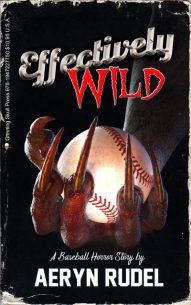
Effectively Wild – A Baseball Horror Story
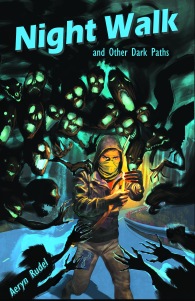
Night Walk & Other Dark Paths
Acts of War: Flashpoint

Acts of War: Aftershock

Acts of War: Stormbreak

 Aeryn Rudel's Rejectomancy