
One Hour Flash – Road to Ruin

Time for another installment of one-hour flash. For those new to these posts, these are 1,000-word stories I jammed out in an hour for a writing exercise. I go on to publish a lot of these, but the the ones that aren’t quite up to snuff for publication make excellent blog fodder.
Today’s story is a little horror tale called “Road to Ruin.”
Road to Ruin
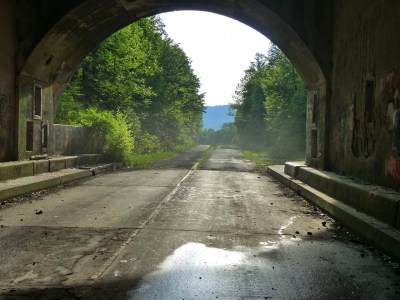
“You ever been down this way?” Howard asked and tapped the battered metal sign with his war hammer. It hung from a sagging chain link fence and read “Road Closed.” Beyond, crumbling asphalt peeked through the overgrown weeds and stretched into the distance.
“Nope,” Raphael said. He was familiar with Paradise, officially known as Plague Sector Eight, but he’d only been hunting it a few years. The abandoned, walled city was five-hundred square miles of decaying houses and buildings, weed-choked roads, and hiding places for shamblers. “But we’re close to our quota, so it might be worth a look.”
They’d bagged two shamblers in a nearby shopping mall, but they needed one more to complete their contract. Then they could book it to the west gate, get out, and get paid. Three shamblers meant nine thousand bucks. That would keep them out of the plague sectors for a good month.
Howard nodded. “Pistols or close combat weapons?” He’d been a licensed headhunter only a three weeks, but the former beat cop had a hunter’s instincts, and his size and strength were definite assets when it came to busting shambler skulls.
“Close combat.” Raphael took his flanged mace from his belt. The medieval weapon presented an odd juxtaposition against his modern body armor and other equipment, but the ancient hand weapons were best suited for the work.
They stepped over the barricade and moved down the road, passing the rusted hulks of cars, and the skeletal remains of small houses, their roofs sunken, empty doors and windows promising darkness and death. They didn’t speak as they walked in the fading sunlight. Howard would occasionally point at one of the ruined houses, and Raphael would shake his head. Bigger was the unspoken reply. Houses were death traps, and most headhunters avoided them. Larger buildings, with room to move and swing a weapon were safer.
They walked another mile and a building appeared at the end of the road, a squat cinder-block rectangle more like a fortress than any civilian structure.
“What is that?” Howard asked, keeping his voice low.
“Looks like a barracks.” Raphael was a former Army Ranger, and he knew a military building when he saw one.
“Paradise have any military presence before the outbreak,” Howard asked.
“Not that I’m aware of.”
“What’s your call?”
Raphael studied the building. If it was a barracks, there would be plenty of room inside and not many places for shamblers to hide. The door to the building was a metal slab; mostly rust beneath peeling green paint. It looked sturdy, and they might have to force it open, which meant noise and potentially waking the dead within.
Raphael looked up at the sky and grimaced. They had maybe an hour of sunlight, enough time to make a quick kill. He didn’t want to spend the night in the plague sector.
“Let’s go,” Raphael said, making his decision. “I’ll take point.”
Howard nodded and they advanced. They reached the door, and it was held shut by a rusting padlock. Raphael considered his options, then turned to Howard. “See if you can break this thing. One blow.”
At 6’10” and 270 pounds, Howard was a mountainous human being and absurdly strong. He hefted his footman’s war hammer, a four-foot length of ash topped with a spiked head, and brought the weapon whistling down on the padlock. It shattered with a hollow clang and fell to the ground in two pieces.
Raphael pushed the door open, revealing darkness and an appalling animal stench. He recoiled and an unearthly howl rose from the inside of the barracks. His blood went cold. The sound had not come from an animal, and it sure as fuck wasn’t a sound any human could make.
“Shamblers don’t make noise,” Howard said, voicing what Raphael was thinking.
“Run,” Raphael managed to say just before the barracks door burst open and a dark shape came hurtling from the blackness.
Raphael threw himself to the ground and whatever it was passed overhead. He heard the meat and metal sound of Howard’s hammer making contact and then screaming.
Raphael rolled over and pulled his Sig P226, forgetting the mace. This was no time for stealth. Something lithe and bestial crouched on top of Howard. It had knocked him to the ground and raked at his belly like an animal. Howard screamed and tried to push the thing away.
Raphael rose to his feet and brought his pistol up. He pulled the trigger twice, and the gun’s discharge was shockingly loud. The bullets tore into the creature’s body but had little effect other than to draw its attention. Its head snapped around, a head that had maybe once been human, and sulfurous yellow eyes locked on Raphael.
He took a bead on the thing’s head, and then another gunshot sounded, this one deeper and more commanding. A geyser of blood jetted from the top of the creature’s head, and it rolled limply off Howard. The former police officer had managed to get to his Ruger Super Redhawk and there wasn’t much living or dead that could survive a .44 slug at point-blank.
Raphael hurried over to Howard who tried to get up. Loops of intestine hung from the man’s savaged belly, and Raphael pushed him back down. “Don’t; stay put.”
“Raph,” Howard said, blood running down his chin. “I’m fucked.”
Another piercing howl rose from the interior of the barracks, and Raphael shook his head and held his pistol up for Howard to see.
Howard nodded. “Do it. I don’t want to come back.”
Raphael took his friend’s hand, put the barrel of his Sig against Howard’s temple, and pulled the trigger. The gun went off, Howard jerked, then lay still.
A shape appeared in the barracks doorway.
Raphael ran.
So I kind of cheated with this one. Not that I took more than an hour to write it or that it didn’t fit the prompt. It’s just this story is based on a larger idea I’ve had for a while. I’d even outlined a novel on the basic concept and written the first couple of chapters before I back-burnered it for another project (the novel I’m working on now). These characters aren’t in the outline and the location is different, but it’s the same basic setting. Anyway, this is a vignette rather than a full story, but it might be worth fleshing out into something more substantial. (I know; I always say that, but I mean it this time!)
Want to read more of my one-hour scribbles? Check out these posts.
The Final Round Form Rejection

It’s been a while since I posted about a new type of rejection letter, mostly because I’ve already written about every type of rejection under the sun. Well, as it turns out, not quite. The rejection letter I want to talk about today is a subspecies of higher-tier form rejection that gives you a little more information about where your story ended up in the publisher’s decision process. Let’s call it the final round form rejection.
Example #1
Very sorry for the delay in getting back to you, but we just made our final decisions today. We are going to have to pass on the story, however. This is the hardest part of the job, having to decline stories that we enjoyed so much, simply because didn’t have the space to include them all. It was a real struggle choosing the final stories. I appreciate your patience, and hope to see submissions from you in the future.
This is one of those rejection you might think is a personal rejection at first blush, but on further review, I think it’s a form rejection. It’s a good form rejection, as all of these final round form rejections are.
Example #2
Thanks so much for letting us consider your story [story title]. While it made it to the final round of consideration, I’m afraid that we chose not to accept it. We had a lot of submissions and there were difficult decisions to be made. Best of luck placing it elsewhere.
This is very clearly a form rejection, but, like the others, the editor lets you know you got real, real close to publication.
Example #3
Thank you again for allowing us to consider your story, but it’s not a match for [anthology].
Your story made it to the final round. It was ranked among the best of the best. We had thousands of submissions from writers all over the world. Even some of our favorites, like your story, didn’t make it through.
Most of the time we don’t move forward with a story because it’s similar to another story in a different word slot. We’re striving for a diversity of sub-genres, writing styles and plot lines, in addition to stories of different lengths.
So that’s the bad news: Your story wasn’t selected for [anthology]. The good news is that there will be many more opportunities to submit to [publisher] in the future. Even though your work was not selected, you are a talented writer. We hope you will consider submitting to our future editions.
So, I’ll admit, this one fooled me at first, and I thought it was a personal rejection. It isn’t; another writer pointed out that he had received the same rejection. Still, it is a final round form rejection.
Okay, you’ve seen the examples, now let’s talk about what makes these final round form rejections different than your typical higher tier form rejection.
- Further Consideration. Final round form rejections are usually preceded by a further consideration letter. Most publishers that use a multi-round decision process are good about letting you know your story has made it past the first round and they’re holding it until they make a decision. With anthologies, its usually a shortlist letter rather than a further consideration letter, but it amounts to the same thing.
- Longer wait. Because you’re dealing with a multi-round reading process, and often a ton of other submissions, the wait between the further consideration and the final decision can be longer than usual. In my examples, the first rejection came after 77 days against an average response time of 23 days for the publisher; the second rejection came after 81 days against and average of 10 days; and the final rejection came a 310 days against an average of 269 days.
- Closer than usual. With a standard higher-tier form rejection, it’s unclear how close your story made it to publication, and, honestly, with most markets you’d probably get a personal rejection if you got really close. That’s where the final round form rejection is a little different. Despite being a form rejection, you know your story almost made it to publication.
- Heart-Breaker. There’s no way around it. The final round form rejection is more disappointing than the typical rejection. It’s hard not to get your hopes up when you receive a further consideration letter and wait a long time for the final decision. Then, to find out you got this close to an acceptance but didn’t make the final cut, well, I won’t lie; that stings a bit. Still, it’s important to remember your story did make it to the final round and beat out hundreds, maybe thousands of other submissions. In other words, you probably have a marketable story on your hands. Case in point, two of the three stories in my examples here went on to acceptances.
Have any thoughts on the final round form rejection? Tell me about them in the comments.
A Week of Writing: 5/28/18 to 6/3/18

New month, new week, more writing and whatnot.
The Novel
I’m about 20,000 words into my first read-through of my horror novel, Late Risers. I let it sit for almost three weeks before I jumped in, and, as expected, my reactions range from “this is pretty good” to “this is objectively terrible.” That’s about par for the course, I think. It should be noted that what I’m doing in this read-through is fixing the problems that are so obvious they can be seen from space. The more nuanced issues, which I’m likely blind to at this point, will be left to skilled and gracious critique partners.
The question I ask myself a lot lately is did I write a good book? Here’s my honest answer. I think I wrote something that could become a good book after a liberal dose of literary elbow grease. I’m satisfied with that and more than willing to put in the work.
Short Stories
I finished a new flash piece this week, another one born of the one-hour flash challenge. It’s a horror/comedy mashup, and I really dig it. It’ll be going out for submission this week. I also had two short stories come back to me after a number of rejections. I really like both stories, and they received good feedback, but they’re not landing, so my writing group is giving them the once over before I send them out again.
A very, very slow week for submissions.
- Submissions Sent: 0
- Rejections: 2
- Acceptances: 0
- Publications: 0
Yep, my first goose egg in the submissions sent column in a long time. That’s due to a combination of factors that include not having any new stories to send out and a greater focus on other projects (the novel, for example). That’ll change this week, as I have one new story and a couple of reinvigorated pieces ready for submission.
The Blog
Two blog posts last week. This week, I’m again aiming for three and some actual content beyond “Hey, look at all my submissions.”
5/30/18: A Week of Writing: 5/21/18 to 5/27/18
The usual weekly writing update.
6/1/18: Submission Statement: May 2018
My submission scorecard for the month of May.
Goals
The big goal is to continue my first read-through/revision on the novel. I’d like to get another 20,000 words or so.
Story Spotlight
This week it’s not a story, but an interview. Howard Andrew Jones, editor-in-chief of Tales from the Magician’s Skull and a very accomplished editor and writer to boot, interviewed me for his website in a series called Writer Chat. Check it out below.
And that, friends, was my week. How was yours?
Submission Statement: May 2018

Well, May was certainly an active month, though not as successful as March and April. Here’s how I did.
May 2018 Report Card
- Submissions Sent: 14
- Rejections: 12
- Acceptances: 1
- Publications: 0
- Other: 1
Fourteen submissions in May. That’s solid, and I’ve got sixty for the year. The acceptance gives me six total for 2018, which puts me at an even ten percent acceptance rate. Not bad, but I’d like to get somewhere in the neighborhood of fifteen percent by the end of the year. I’ve got a few stories shortlisted I’m waiting to hear about, but those could go either way.
Rejections
I won’t lie; twelve rejections is kind of a lot, but it’s to be expected with the increased submission volume. Here’s how those rejections broke down.
- Standard Form Rejections: 6
- Upper-Tier Form Rejections: 5
- Personal Rejections: 1
Again, a fair amount of “good” rejections, but some of these stories just aren’t landing despite some encouraging notes. I’m gonna take a good hard look at them and see if I can’t put my finger on what might be missing. There’s really nothing new and exciting in these rejections, so instead of showing you yet another form rejection, I think an examination of how long these markets are taking to respond would be more useful.
| Rejection | Date Sent | Date Received | Days Out |
| Rejection 1 | 28-Feb-18 | 1-May-18 | 62 |
| Rejection 2 | 26-Mar-18 | 1-May-18 | 36 |
| Rejection 3 | 3-May-18 | 5-May-18 | 2 |
| Rejection 4 | 1-May-18 | 9-May-18 | 8 |
| Rejection 5 | 29-Mar-18 | 11-May-18 | 43 |
| Rejection 6 | 6-May-18 | 13-May-18 | 7 |
| Rejection 7 | 5-May-18 | 20-May-18 | 15 |
| Rejection 8 | 11-May-18 | 21-May-18 | 10 |
| Rejection 9 | 14-May-18 | 21-May-18 | 7 |
| Rejection 10 | 30-Apr-18 | 22-May-18 | 22 |
| Rejection 11 | 22-May-18 | 23-May-18 | 1 |
| Rejection 12 | 23-May-18 | 24-May-18 | 1 |
Not too bad. The longest wait was 60 days, and that’s well within acceptable parameters. As you can see, there’s a fair number of single digit responses here, and that’s not uncommon for a lot of pro markets.
Other
The “other” this month was a withdrawal letter. I sent this withdrawal for what is, by far, the most common reason I’ve sent them in the last few years. The market went under and is now defunct. I sent this letter more as a professional courtesy than anything else.
Dear Editors,
I would like to withdraw my stories [story title] and [story title] from consideration at [publisher].
Thank you for your time.
Best,
Aeryn Rudel
Did I have to send this letter? Maybe not. The market basically disappeared, and this email bounced back with an “address not found” note. That said, I don’t know what happened on the other end of those submissions, and closing down a publication is obviously not something anyone wants to do. So it’s important to me to stay professional, wish the publisher well, and move on.
Acceptances
One acceptance this month, which broke a minor rejection streak I had going.
Acceptance: Sent 5/22/2018; Accepted 5/25/2018
Thank you for taking the time to submit your story [story title]. I’d be delighted to publish it on [publisher].
I’ve scheduled it for publication on 29 June, if this date changes I will let you know.
Thanks again for submitting your work.
This is my second publication with this particular market. The interesting thing here is that this is a form letter. Yep, form letters aren’t just for rejections. That said, you’ll often get a personal note after the initial form acceptance with requests for things like bios and author photos and/or info about the contract.
And that was my May. Tell me about yours.
A Week of Writing: 5/21/18 to 5/27/18
Running a little behind this week with the holiday weekend and whatnot, but I’m back on track again.
Here’s what I accomplished for the week.
The Novel
So, I had hoped to be neck-deep in my first round of revisions by this point, but another project with a looming deadline pulled me away. Plus, I think I might benefit from a little more distance from the first draft. I’ll start going through the book this week or early next. I did decide one major plot point needed to change, and while that’s going to add some time to my revision, the book will be better for it.
Short Stories
I did manage to work on some short stories last week. I put down about 3,000 words on a brand new one called “The Infinite You.” It’s pure sci-fi, which is not normally my forte, but I’ve been working on expanding into other genres, and I dig the concept for this one. I should finish a first draft this week.
A very busy week for submissions.
- Submissions Sent: 4
- Rejections: 5
- Acceptances: 1
- Publications: 0
The four submissions I sent last week give me a total of 60 for the year. I did get a fair number of rejections, and three came on the same day. Those rejections were starting to pile up, and I was working on a pretty good streak, but I also got an acceptance last week. So, this week, I’m starting with a clean slate.
Other Projects
The game design project I’ve been working is a Dungeons & Dragons adventure for Goodman Games. I finished the first draft last week and playtested the module with a great group of experienced gamers. They gave me fantastic feedback, and this week I’ll be incorporating that feedback into the manuscript and preparing the final draft.
The Blog
I seem to be stuck on two blog posts a week lately. I had a pretty good run there of three per week, and I’d like to get back to that.
5/21/18: A Week of Writing: 5/14/18 to 5/20/18
Uh, the writing I did for the week before last week.
5/23/18: New Author Starter Kit – Acceptance Prep
The follow-up to my post New Author Starter Kit – Submission Prep, this one deals with the four things you should have ready to go when that first acceptance rolls into your inbox.
Goals
The goals this week is to get a final draft of the adventure for Goodman Games, finish the short story “The Infinite You,” and get cracking on the first revision pass on the novel
Story Spotlight
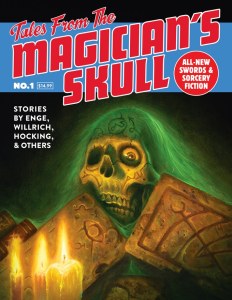
This week, it’s a story I recently published in a new sword & sorcery magazine called Tales from the Magician’s Skull published by Goodman Games. My story, “Beyond the Block,” was published in the inaugural issue, and it’s a sword & sorcery piece (naturally) with a strong horror element. You can check it out in PDF or print below.
That was my week. How was yours?
New Author Starter Kit – Acceptance Prep

Last week, I listed six things you need before you send out those first submissions in New Author Starter Kit – Submission Prep. Today, I’ve put together a few things you’ll need when one of those submissions is accepted for publication. From (much) experience I know rejections are a lot more common, but, hey, there’s no reason you shouldn’t be prepared for an acceptance. Here are four things you might need for the blessed event.
1) PayPal account. When you sell a story, one of the best parts is getting paid for that story. Many publishers prefer to pay through PayPal and some won’t pay any other way but PayPal. Often times a publisher will ask for your PayPal address in the acceptance email. So get an account. It’s free and easy to set up.
2) Author bio. Often a publisher will ask you to include a short author bio in the cover letter for your submission. If they don’t, they’ll almost certainly ask you for one upon acceptance of a story. They’ll usually give a max word count somewhere between 50 and 100 words, though the shorter end of that spectrum seems to be more common. It’s a good idea to have a short author bio of around 50 words ready to go. Here’s one of mine as an example:
Aeryn Rudel is a writer from Seattle, Washington. His second novel, Aftershock, was recently published by Privateer Press, and his short fiction has appeared in The Arcanist, Havok, and Pseudopod, among others. He occasionally offers dubious advice on writing and rejection (mostly rejection) at www.rejectomancy.com or on Twitter @Aeryn_Rudel.
Of course, if you’re just starting out, you may not have publications to list, but there are lots of different things you can put in a bio. For more info about building a short author bio, check out Submission Protocol: Short Author Bio.
3) Author photo. Not every publisher asks for this, but it’s common enough I think you should have one on hand. That said, often times publishers will give you the option of not including an author photo if you don’t want to. IN my opinion, an author photo should conform to the following guidelines:
- Format: A hi-res jpeg or TIF file. Personally, I think a head shot works best for the type of author photos that appear in magazines, but you could do a wider shot with you sitting at a desk, standing against a wall, and so on. Both color or black and white are acceptable. My preference is black and white, but that’s just me.
- Expression: Depending on what genre of fiction you write this can vary, but my rule of thumb is to try to look like someone people might want to talk to. For me that’s usually a smile, but go with whatever makes you comfortable.
- Professional: Basically, not a selfie. You don’t need to drop a bunch of cash on professional head shots if you’re just starting out, but I’ll bet you know someone who knows their way around a camera. Have that person take your photo against a neutral background or somewhere, you know, writerly.
4) Model contract. I mentioned this one in submission prep, but I’m gonna mention it again. When you get an acceptance, you should get a contract detailing what rights the publisher is acquiring to your work. Read the contract thoroughly and then compare it to something like the SFWA model contract, which is a fantastic indicator of industry standards. Don’t be afraid to ask questions about your contract if something feels wrong. This is your work; make sure it’s protected.
Like the submission prep list, this doesn’t cover everything a publisher might ask for, but these are the most common in my experience. Did I leave anything off? Let me know in the comments.
A Week of Writing: 5/14/18 to 5/20/18
Another week of writing gone by. Lots of business as usual and one fairly momentous accomplishment.
Here are the details.
The Novel
The first draft is done. The novel is an actual thing that exists somewhere other than my head. There’s still a lot of work to do before it’s fit to be read by other humans, but it’s damn nice to have the first draft in the can. Instead of telling you how much I wrote for the week, I’ll give you the final stats for the first draft:
- Total Word Count: 92,684
- Chapters: 32
- Date Started: 1/24/18
- Date Finished: 5/14/18
The first draft ended up right about where I thought it would in terms of word count. For a horror novel, between 80,000 and 90,000 words is a solid length, and my guess is that my critique partners will get something around 85,000 words after my first pass. It took me a bit under four months to write the first draft, 111 days to be exact. That’s not too bad, especially since I took two weeks off in the middle to work on another project.
Short Stories
I outlined two more short stories last week, and put about 1,000 words into a first draft on one of them. I stalled out a bit because of another project I’m working on, but I should get back to short stories in the very near future.
Submissions
A couple of submissions and a couple of rejections last week.
- Submissions Sent: 2
- Rejections: 2
- Acceptances: 0
- Publications: 0
I sent out submissions #55 and #56 for the year. Still on pace to hit my goal of 100 for 2018 (and then some). I’ve got fourteen submissions pending, and four of those have been waiting over 100 days. I hope to hear back from at least one of them this week.
Other Projects
I have a game design project due next month, and I’ve been making good progress on it. Last week I put 8,000 words into it, and I’m close to a first draft. I’m well ahead of my deadline and feeling pretty good about what I’ve got so far.
The Blog
Two blog posts last week. I’m gonna try for three again this week.
5/14/18: A Week of Writing: 5/7/18 to 5/13/18
Business as usual.
5/16/18: New Author Starter Kit – Submission Prep
In this post, I compiled a list of six things I think you should have ready to go before you send your first submission. If you’re new to the submission biz, give it a look. I’ll follow up this week with part two, Acceptance Prep.
Goals
The goals this week are to finish the first draft of my game design project and start the first pass on the first draft of the novel.
Story Spotlight
This week it’s another bit of flash I published with The Molotov Cocktail. This is one is called “Night Walk,” and it took second place in The Molotov’s FlashFuture contest a couple of years ago. It’s a slightly different spin on the undead apocalypse, and, fun fact, if/when I publish a collection of short fiction, Night Walk is one of the front runners for the title of said hypothetical collection.
That was my week. How was yours?
New Author Starter Kit – Submission Prep
If you’re a new author and you want to submit your work to magazines, literary journals, anthologies, contests, and the like, it can seem a daunting process. I mean, where do you submit? How do you submit? A lot of us simply learned by doing, and, of course, experience is often the best teacher. That said, there’s no reason to go into the wilds of submission land completely unprepared.
So, based on my experience, here’s a list of six things you need before you throw your precious word baby on the mercy of the market.
1) Duotrope or The Submission Grinder. These two online market guides and submission trackers are, in my opinion, a must for any new author. Not only do they have a vast, searchable databases of potential markets, they also keep track of your submissions so you don’t have to worry about keeping a spreadsheet (though it’s not a terrible idea to do that anyway). Duotrope is a paid service (at $5.00 a month) and The Submission Grinder is free. There are other good databases out there, and you might track those down later, but Duotrope and The Submission Grinder are, in my opinion, the best places to start.
2) Separate submission email address. I think it’s a good idea to set up a separate email address for your submissions (and then use that email when you set up submission-related accounts like Submittable). This is a do as I say and not as I do kind of thing, as my own email is, uh, kind of a legacy thing that would take a while to explain. So why a separate email? Three reasons.
- Less chance of losing publisher responses in the spam folder. If your personal email is like mine, you probably get a shit-ton of junk mail. I’m pretty diligent about checking my spam folder, but if you have a dedicated email address just for submissions, you’ll get less junk, and you can cut way, way down on the chance of missing a publisher response if your spam folder eats it.
- Professional presentation. That personal email you’ve had since college, you know, buds_and_beers@aol.com, may not be the first impression you want to make with a publisher. So you might want to set up an email address that is a little more writerly, probably just your name. If you have a very common name, try something like John_Smith_Writes or John_Smith_Author. Is a publisher gonna reject you because of an email address? Very, very unlikely unless it’s outright offensive, but, hey, best foot forward and all that.
- Mental health. So, here’s the thing, you’re gonna get rejected, like, a lot, and if those rejections show up somewhere other than your personal email you check all the damn time, those rejections might be a little easier to handle. If you can choose when to deal with rejections because they’re safely locked away in your submission email address, I think you’ll be better off, especially at first.
3) Submittable account. Not every publisher accepts submissions through email, and it’s becoming a lot more common for publishers to use submission management software. The most common is Submittable, and I would urge you to just set up an account right away. It’s free, and it’s one less thing you have to think about when you’re agonizing over which story to send to a publisher. There are a few other submission managers, but they either don’t require an author account or they’re not common enough yet to worry about right off the bat.
4) Shunn Standard Manuscript format. Most publishers are going to ask you to format your manuscript in something called standard or Shunn Standard Manuscript format (sometimes simply called standard manuscript format), and you should get familiar with it right away. In fact, if you know how to use MS Word, it wouldn’t be a terrible idea to set up a template so you don’t have to mess with all the formatting for every manuscript. Some publishers want slight variations of the format, most often with how things like italics are treated, but this is the most common format for short story submissions. In fact, if a publisher doesn’t mention manuscript format in their guidelines, I just send it in standard.
5) Cover Letter template. When you send a submission, you’ll need some kind of cover letter. It should be simple and short. Generally, the publisher wants to see the story title, the approximate word length, and any publications credits you might have. Here’s the template I use:
Dear Editors,
Please consider my short story [Story Name] for publication at [Publisher Name]. The story is approximately [# of words] words in length. My short fiction has recently appeared in [Market 1], [Market 2], and [Market 3].
Best,
Name (byline)
Address
Email
If you don’t have any publication credits yet, just leave that part off. It’s a perfectly serviceable cover letter without it. For more info on the component parts of this cover letter, check out this post: Back to Basics: The Cover Letter.
6) Know your rights. One thing you should definitely understand before you send your work to a market is what happens if they accept said work. By that I mean what rights they acquire. Many publishers put this information in their guidelines. This article, “Rights: What They Mean and Why They’re Important,” at Writing-World.com by Marg Gilks has good explanations of the rights publishers often look to acquire (and you can find a bunch more with a quick Google search). As a genre author, I think the SFWA (Science Fiction & Fantasy Writers of America) model contract is another great resource for authors of all types and experience levels. This contract is meant to be fair to both authors and publishers, and I would recommend referring to it when you need to know what is generally considered standard in the industry (and what isn’t).
I’ll also add the websites for the various writer organizations are a great source of info about the industry, and there’s one for just about every genre: HWA (Horror Writers Association), MWA (Mystery Writers of America), RWA (Romance Writers of America), and the aforementioned SFWA (Science Fiction & Fantasy Writers of America).
Of course, this list doesn’t encompass everything you might need for submissions, but like the contents of any good starter kit, these are things I think you’ll need right away and most often. In the second part of this short series, we’ll get all inspirational and stuff, and I’ll break down what you need for that first acceptance. So check back soon for New Author Starter Kit – Acceptance Prep.
Did I leave anything out of the starter kit? Let me know in the comments.
A Week of Writing: 5/7/18 to 5/13/18
And the second week of May is in the books. Less progress than I would have liked, but, in all, positive yardage.
Here’s how I did.
The Novel
The novel I’m currently working on is the fourth I’ve written in the last three years. This one is by far the most challenging, but it’s similar to the others in a lot ways. One of those ways goes like this:
- Starting a novel – Pretty easy
- Writing to the halfway point in a novel – Challenging but not too bad
- Finishing a novel, especially the last 10,000 words or so – Head meets brick wall (repeatedly, at high velocity) difficult
So, yeah, I’m currently in the third stage and beating myself bloody trying to wrap everything up. I’m pretty sure I can do it today, but the finale and epilogue of this book have certainly slowed me down. That’s not really a bad thing. I mean, I do want to stick the landing as well as I can. Still, I’m very much ready to be done with the first draft.
| Date | Day | Words Written |
| 5/7/2018 | Monday | 504 |
| 5/8/2018 | Tuesday | 2031 |
| 5/9/2018 | Wednesday | 0 |
| 5/10/2018 | Thursday | 1082 |
| 5/11/2018 | Friday | 1531 |
| 5/12/2018 | Saturday | 1023 |
| 5/13/2018 | Sunday | 0 |
So another 6,171 words added to the manuscript for a total just north of 91,000. I think I’ve got another 3,000 or so to go, for a grand total for the first draft around 95,000 words.
Short Stories
Not much to report on this front. Most of my creative energies have gone into the novel. I’ve outlined a few ideas for new stories I want to write once the first draft of the novel is done and I can set it aside for a week or so.
Submissions
What I’d call slightly above average submission volume for the week.
- Submissions Sent: 3
- Rejections: 3
- Acceptances: 0
- Publications: 0
No matter what I’m working on, I try to get at least a few submission out every week. This week I sent submissions #52, #53, and #54 for the year. Still on pace for 100 subs for 2018.
The Blog
For the first time in a while, I didn’t manage three blog posts, but I hope to get back on track this week.
5/7/18: A Week of Writing: 4/30/18 to 5/6/18
Just the usual here.
5/9/18: Submission Protocol: The Unsolicited Rewrite
This is a subject I’ve never covered on the blog, and it’s kind of an “unwritten” submission guideline. Worth a look if you’re unfamiliar with the term.
Goals
The primary goal is to finish the novel, which I hope to do today. The secondary goal is to finish up another project with an approaching (but still comfortably distant) deadline.
Story Spotlight
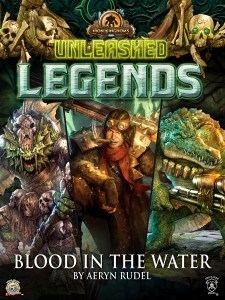
This week I’m gonna point you at a novelette I wrote for Privateer Press a while back called “Blood in the Water.” It’s a pretty good introduction to the Iron Kingdoms, the steam-powered fantasy world that serves as the setting for Privateer’s WARMACHINE and HORDES games. You can check it out on Amazon by clicking the cover below.
That was my week. How was yours?
Submission Protocol: The Unsolicited Rewrite

Here’s a scenario for you. You receive a very encouraging personal rejection from a publisher, where the editor says something like, “Hey, good story. We’re going to pass, but we think you might consider improving the story by changing X and revising Y.” If you’re new to the submission grind, you might think if you addressed X and Y and sent the story back to the publisher, you’d have a good chance of an acceptance. Unfortunately, that’s called an unsolicited rewrite, and the majority of publishers won’t consider them.
Though well known to savvy submitters, the “no unsolicited rewrites” policy is often an unwritten submission guideline. New writers may violate this policy because a) no one has told them about it, and b) they’ve only submitted to a few markets who may not mention unsolicited rewrites in their guidelines.
But how do I know most publishers don’t want unsolicited rewrites? Three reasons.
1) First, it’s not an entirely unwritten policy, and some publishers do call it out in their guidelines. When a publisher does mention the policy, it’ll look something like this.
Unsolicited Rewrites: We DO NOT accept unsolicited rewrites of stories that we’ve already rejected. (That is a nearly universal policy among short fiction markets of all genres.)
This is an excellent example, and I really appreciate this pro market looking to help folks new to the biz. The kicker is in parentheses, of course, and as far as I can tell, it is a nearly universal policy.
2) Second, if a publisher wants you to revise a story and resubmit it, they’ll straight up tell you. Basically, they will solicit you for the rewrite. That’s often called a revision request, and it’s fairly common.
3) Finally, I know folks, unaware of this policy, who have sent unsolicited rewrites. What was the result? Nothing dire, just a very polite letter stating the publisher does not accept them. In the most recent case, I think the publisher was aware the policy was not in their guidelines, so being polite, professional humans (most editors fall into this category, by the way), they recognized an innocent mistake and simply informed the author of their policy and invited the author to submit something new.
So, to sum up, when you get good feedback from a publisher, revise the story and send it somewhere else. Send the encouraging publisher something new.
Thoughts on unsolicited rewrites? Know of any publishers that accept or encourage them? Tell me about it in the comments.
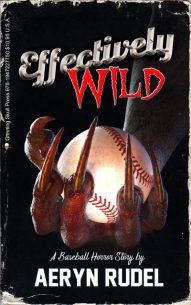
Effectively Wild – A Baseball Horror Story
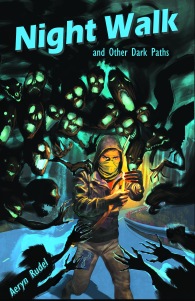
Night Walk & Other Dark Paths
Acts of War: Flashpoint

Acts of War: Aftershock

Acts of War: Stormbreak


