
A Week of Writing: 4/2/18 to 4/8/18

Another week has come and gone, and here are my writing triumphs and failures laid bare for your amusement and edification.
The Novel
So, uh, yeah, I’m like writing this horror novel with a desired goal of 15,000 words a week and a minimum goal of 10,000 words. Well, friends, I didn’t hit either of those numbers, and this week was, to put it bluntly, pretty much shit for novel production. Behold my shame.
| Date | Day | Words Written |
| 4/2/2018 | Monday | 0 |
| 4/3/2018 | Tuesday | 0 |
| 4/4/2018 | Wednesday | 0 |
| 4/5/2018 | Thursday | 2519 |
| 4/6/2018 | Friday | 0 |
| 4/7/2018 | Saturday | 0 |
| 4/8/2018 | Sunday | 577 |
Yep, I managed only 3,096 words on the novel this week. Not great, but still positive yardage, and I did figure out a few tangled plot points that’ll make the writing easier from here on out. I shall do better this week.
Short Stories
Okay, kind of got my shit together here, especially compared to my epic failure on the novel. I finished the revisions on three stories, one of which is a tale called “Teeth of the Lion Man.” I’m pretty excited about that one because I’ve been laboring on the damn thing for like four years. I spruced up a few other stories that had been hanging around, and I’m generally happy with the results.
Submissions
Last week was a very good week for submissions, both in volume and responses.
- Submissions Sent: 6
- Rejections: 2
- Acceptances: 1
I currently have fourteen submissions under consideration.
| Story | Date Sent | Days Out | Avg Response |
| Caroline1 | 6/24/2017 | 289 | 263 |
| A Small Evil | 11/9/2017 | 151 | 72 |
| The Scars You Keep | 1/7/2018 | 92 | 123 |
| When the Lights Go On2 | 1/25/2018 | 74 | 45 |
| Bites | 2/8/2018 | 60 | |
| Old as the Trees | 2/28/2018 | 40 | 24 |
| What Kind of Hero | 3/24/2018 | 16 | 105 |
| Two Legs | 3/26/2018 | 14 | 32 |
| Scar | 3/29/2018 | 11 | 40 |
| Burning Man | 4/3/2018 | 6 | |
| Red Season | 4/3/2018 | 6 | |
| Teeth of the Lion Man | 4/8/2018 | 1 | 5 |
| The Inside People | 4/8/2018 | 1 | 10 |
| A Point of Honor | 4/8/2018 | 1 | 15 |
- Reprint
- Shortlisted
I received responses on two of the stories that had been in that 45- to 75-day range: one rejection and one acceptance. I can’t talk about the acceptance just yet, but it’s a good one (I mean, they’re all good), and I’m pretty excited about it. Some of the new submissions I sent out are to markets that are generally speedy, so I would expect to heat back from them this week.
Goals
This week I aim to get back on track with the novel, but I’m not gonna set some lofty goal of 15,000 words or more to catch up. Instead, I’ll set my sights on a humble 10,000 words and get delusional about my production again on the following week. I do have one deadline looming I need to hit, an outline for a game design project. Since I never miss deadlines (true story), I’ll be knocking that out this week.
Story Spotlight
This week, I’d like you to head on out to The Arcanist, and check out my latest story, “The Food Bank,” published on on 4/6. It’s your typical post-apocalyptic horror flash fiction about giant bugs. 🙂
Read “The Food Bank“
“The Food Bank” & The Arcanist Trio

The Arcanist just published my flash fiction piece “The Food Bank,” and it’s free to read on their site. This is a post-apocalyptic horror story with a dash of sci-fi for seasoning. It’s also got giant bugs in it. Simply click the big bug below to read.
This is my third publication with The Arcanist, and if you write or read speculative flash fiction, you should definitely give them a look. If you’re so inclined, you can check out my previous two stories, “Cowtown” and “Reunion,” by clicking on the cow or the seashell below.


Submission Statement: March 2018

I often start these submission statements with a subtle (or not-so subtle) complaint about my production for the month. Well, not this time. March was a really good month, one of the best of my short story submittin’ career.
March 2018 Report Card
- Submissions Sent: 8
- Rejections: 7
- Acceptances: 3
- Publications: 0
- Withdrawal: 1
Eight submissions is good volume, and that puts me at a total of 35 submissions for the first three months of 2018. I’m also on a good pace for my goal of 100 submission for the year. Of course, the big news for the month is the three acceptances. I think that’s the most I’ve received in a single month.
Rejections
I’d say 7 rejections is about average for me, especially with how many submissions I’ve been sending out lately.
- Standard Form Rejection: 6
- Upper-Tier Form Rejection: 1
- Personal Rejections: 0
All form rejections for the month, and nothing too special. I’ll share a couple from markets that are new to me.
Highlight Rejection 1: Sent 3/13/2018; Rejected 3/25/2018
Thank you so much for sending us [story title]. This time, however, we’re saying no, but we wish you the best of luck with your piece.
This is a pretty standard form rejection, but I’m highlighting it because it is a) a new market for me and b) it’s a literary market. Yep, I’ve branched out a tad, and I’ve been submitting stories to a couple of lit-fic markets. I’ve even had some success there (more on that below).
Highlight Rejection 2: Sent 1/30/2018; Rejected 3/29/2018
Thanks for giving us the chance to read [story title]. After careful consideration, we are unfortunately going to pass at this time.
If you have other works that you think might be a good fit for [publisher], we encourage you to submit them through our Google form.
We look forward to reading more of your work in the future and hope that this piece finds a home as well.
I would call this a higher-tier rejection, and it’s from a market that has accepted three stories of mine in the past (bless them). I include it here to demonstrate simply that even with a market that really likes your stuff, not every story is a good fit.
Acceptances
Well, this was a hell of a month for acceptances. I received three in March, and they all came within the span of about seven days. That’s a pretty good week. 🙂
Acceptance 1: Sent 1/6/2018; Accepted 3/2/2018
Thanks for letting us read [story title]. We would love to publish it in [publisher]!
The first acceptance for March came form a publisher that’s published me twice before. It’s always great when you find a market and an editor that dig your work. This story will go live in a couple of days, and I’ll be sure to post a link to it then.
Acceptance 2: Sent 3/3/2018; Accepted 3/6/2018
Thank you for taking the time to submit your story [story title]. I’d be delighted to publish it on [publisher].
I’ve scheduled it for publication on 4 May. If this date changes, I will let you know.
Thanks again for submitting your work.
The second acceptance for March comes from market I’ve never submitted to before, mostly because they’re primarily a literary market. The story I sent them straddles the line between genre and literary, and they liked it enough to publish it. As you can see, the story will (most likely) be published on May 4th, and I’ll be sure to alert all of you so you can run over to the publisher’s website and read it.
Acceptance 3: Sent 12/30/2017; Accepted 3/8/2018
Loved this story. Buying for [publisher], most likely the online edition.
There’s more to this acceptance letter, but this is the important bit. The real kicker here is this represents my first sale of a mystery/crime story. That’s pretty cool, and I might have to write a few more. As much as I like being published in print, an online publication allows me to send folks directly to the story to read, which I will most certainly do when this is published.
And that’s my March. How was yours?
A Week of Writing: 3/26/18 to 4/1/18

One more week in the trenches working on various writing projects. Here’s how it all shook out, complete with word count goals, short story sundries, and submission shenanigans.
The Novel
As I said last week, my big project for the moment is a horror novel called “Late Risers.” I’m making pretty good progress, with a weekly goal of 15,000 words, which I often fall short of. Still, I have a minimum do-or-die goal of 10,000 words I can hit pretty routinely. Here’s how I did this week.
| Date | Day | Words Written |
| 3/26/2018 | Monday | 0 |
| 3/27/2018 | Tuesday | 2516 |
| 3/28/2018 | Wednesday | 0 |
| 3/29/2018 | Thursday | 0 |
| 3/30/2018 | Friday | 2553 |
| 3/31/2018 | Saturday | 2091 |
| 4/1/2018 | Sunday | 2852 |
As you can see, I struggled early in the week to get going but managed to turn it on for the weekend. I ended up with 10,012 words for the week, which put me at 53,500 words in total. That’s a bit over half-way to a first draft, so I’m pretty happy with that. If I can keep this up, I expect to have a first draft by the end of the month.
Short Stories
No new short stories this week, but I did outline an urban fantasy story tentatively called “Deep Water.” I like the idea, and we’ll see if I can get some real work done on it this week.
Submissions
An average week for submission volume.
- Submissions Sent: 2
- Rejections: 1
- Submission Status Query: 1
- Shortlist: 0
- Withdrawal: 0
I currently have eleven submissions in rotation at the moment.
| Story | Date Sent | Days Out | Avg Response |
| Caroline1 | 6/24/2017 | 282 | 261 |
| A Small Evil | 11/9/2017 | 144 | 65 |
| The Scars You Keep | 1/7/2018 | 85 | 123 |
| Scare Tactics1 | 1/18/2018 | 74 | |
| When the Lights Go On2 | 1/25/2018 | 67 | 40 |
| Bites | 2/8/2018 | 53 | |
| A Point of Honor | 2/18/2018 | 43 | 10 |
| Old as the Trees | 2/28/2018 | 33 | 24 |
| What Kind of Hero | 3/24/2018 | 9 | 119 |
| Two Legs | 3/26/2018 | 7 | 32 |
| Scar | 3/29/2018 | 4 | 40 |
- Reprint
- Shortlisted
As I said last time, a few of these stories are beyond the average response time, so I should hear back soon. I did send a submission status query to one of these publishers, mostly because the wait time is much longer than what I’ve previously experienced with the market. That could simply mean they’ve had a lot more submission than usual, or it could mean a lost submission. I sent a polite query letter basically to rule out the latter.
Goals
Again, I’d very much like to hit 15,000 words on the novel this week, but, as usual, I’ll settle for 10,000. I accepted a contract for game design project, and I need to get the outline for that going. It’s not due for a couple of weeks, but I’d like to get ahead of the deadline. As always, I have a whole bunch of short stories just crying out to be finished, revised, submitted, and so on, and I’ll try to get to a few of those as well.
Story Spotlight
This week, since baseball season is in full swing, I’ll ask you to head on over to Pseudopod and listen to my vampire baseball story “Night Games.” The narration by Rish Outfield is simply superb, and I think the story is pretty okay too. 🙂
Listen to “Night Games“
And that was my week. Tell me about yours in the comments.
A Week of Writing: 3/19/18 to 3/25/18

Starting a new feature here on the ol’ blog. Every Monday or thereabouts, I’ll update you on the writing I did for the week prior. How many words I wrote on which projects, how many stories I competed, how many I submitted, and so on. The purpose of this is partly to keep myself on track and also to explore my, uh, “process.” So, without further ado, here’s my writing week from Monday, March 19th to Sunday, March 25th.
The Novel
My big project is a horror novel I’ve been working on for a couple of months. The working title is Late Risers, and when it’s a little further along I’ll tell you all about it and maybe share a snippet or two in these updates. For now, I’ll just talk about getting the damn thing on the page.
With big projects I like to get at least 10,000 words a week. I generally set a loftier goal of 15,000 words, and if I hit that, awesome, but I feel like I’ve accomplished something if I can get my 10K. So, here’s the week:
| Date | Day | Words Written |
| 3/19/2018 | Monday | 2576 |
| 3/20/2018 | Tuesday | 2505 |
| 3/21/2018 | Wednesday | 2500 |
| 3/22/2018 | Thursday | 0 |
| 3/23/2018 | Friday | 0 |
| 3/24/2018 | Saturday | 0 |
| 3/25/2018 | Sunday | 2514 |
I had a pretty good head of steam going early in the week, knocking out 2,500 words three days in a row. Obviously, Thursday through Saturday were a little rough, mostly because of some plain ol’ life stuff that couldn’t be avoided. I got back on track Sunday and ended my week with 10,095 words. That’s not too shabby. The book now sits at 43,500 words, and I’m in the middle of the second act.
I’m gonna set my sights on 15,000 words again this week, which should put me toward the end of the second act and heading into the home stretch.
Short Stories
I’m always working on short stories, and as I sit here and write this blog post, I have seven of them open on my desktop in various stages of completion. I did finish one piece of flash fiction this week as part of a one-hour flash challenge contest. The story is called “It Makes the Trees Grow,” and it’s a neat little supernatural crime piece. It needs some spit and polish, but it’ll go out for submission this week.
Submissions
A slightly below-average week for submission volume.
- Submissions Sent: 1
- Rejections: 3
- Shortlist: 1
- Withdrawal: 1
The shortlist and withdrawal are kind of rare. For some reason, I don’t get a lot of shortlist letters. That may be because I don’t submit to anthologies much, where they’re seem to be more common. Or it might just be editors either like my story enough to accept it or dislike it enough to simply reject it. No middle ground. I sent the withdrawal letter after I sent a submission status query and didn’t hear back for quite some time. That’s usually a clear indicator it’s time to withdraw the story.
I still have ten submissions in rotation at the moment, and a few of them are getting pretty long in the tooth. Here’s the list if you’re into analyzing wait times like me.
| Story | Date Sent | Days Out | Avg Response |
| Caroline1 | 6/24/17 | 275 | 261 |
| A Small Evil | 11/9/17 | 137 | 65 |
| The Scars You Keep | 1/7/18 | 78 | 123 |
| Scare Tactics1 | 1/18/18 | 67 | |
| When the Lights Go On2 | 1/25/18 | 60 | 40 |
| Big Changes | 1/30/18 | 55 | 39 |
| Bites | 2/8/18 | 46 | |
| A Point of Honor | 2/18/18 | 36 | 10 |
| Old as the Trees | 2/28/18 | 26 | 24 |
| What Kind of Hero | 3/24/18 | 2 | 119 |
- Reprint
- Shortlisted
As you can see, I should probably hear back on a few of these soon. You always hope that the longer a story goes beyond the average response time, the more chance it has at being accepted, but, in my experience, that’s not always the case. Sometimes editors just fall behind or get more submissions than they expected for a submission window. Still, I feel pretty good about a couple of these.
Goals
This week, I’d like to ad another 15,000 words to the novel first and foremost. Then I’d like to finish revising a short story called “Teeth of the Lion Man,” which I’m pretty excited about. I think it’s one of the better shorts I’ve written in some time. If I pull those two things off, everything else–submissions, other shorts, etc.–will just be gravy.
Story Spotlight
This is the part of the post where I ask you to read a thing I wrote. This week, check out a flash fiction story I published with Evil Girlfriend Media a few years ago called “The Rarest Cut.” It’s, uh, a horror story with a culinary theme. 🙂
Read “The Rarest Cut”
And that was my week. Tell me about yours in the comments.
Even Good Stories Get Rejected

Stop me if you’ve heard this one. You finish a story, and you know it’s just the best damn thing you’ve ever written. Proud of your shiny new word baby, you send it out to a publisher you’re pretty sure will dig it. You wait with breathless anticipation for a few weeks, and then, BAM! The form rejection drops like a ten-ton weight into your inbox. Now what?
Well, sometimes I see authors want to overhaul a story based on that single rejection. A lot of the time, I think that’s a mistake. In my experience, most stories rack up at least one rejection before they sell. To illustrate this point, here are ten of my acceptances and the number of rejections they received before the blessed event.
| Story | Rejections |
| Paper Cut | 16 |
| Caroline | 7 |
| Scare Tactics | 7 |
| Night Games | 6 |
| Reunion | 3 |
| Little Sister | 2 |
| Luck Be a Bullet | 2 |
| New Arrivals | 2 |
| The Food Bank | 2 |
| Where They Belong | 0 |
This list includes my story with the most rejections before publication and one of my few stories I sold on the first try. The only story on the list I revised was “Paper Cut” after about nine rejections. It still went on to collect seven more before I sold it. The rest of these stories I kept sending out until they found an editor that liked them.
Two of the stories on this list, “Night Games” and “Scare Tactics,” I’ve sold again to audio markets. I consider “Night Games” the best story I’ve published to date (YMMV), and it still racked up six rejections before someone liked it as much I do.
What am I trying to say with all this? It’s all in the title of the post. Even good stories get rejected. One, or two, or hell, half a dozen rejections doesn’t necessarily mean you’ve written a bad story or even a story that needs (major) revision. It can mean you’ve written a story that doesn’t quite fit the market you sent it to (might be time to dial in your submission targeting). It can mean you wrote a story about ghosts and sent it to an editor who just doesn’t like ghost stories that much. It can mean you wrote a story that’s very similar to a story the market just published or is planning to publish. In other words, it can mean a lot of things that have nothing to do with the quality of your story. Some editors are even good enough to tell you these things in the rejection letter.
This all leads to the next question. How many rejections should a story receive before you revise it or even scrap it? That’s gonna come down to a gut check. Obviously, I fall into the “keep sending it out until it finds a home” camp, but I generally start thinking about revision after six or seven rejections, especially if I’m only getting form rejections. Now, all this “advice” doesn’t mean squat if you get a rejection with specific feedback that resonates with you. In that case, revise away and thank your lucky stars you received such useful feedback right off the bat.
To sum up, consider letting your submissions stretch their legs a bit before you drag them back into the shop for an overhaul. A couple of rejections probably doesn’t mean much.
How many rejection do you let a story rack up before you think about revision? Tell me about it in the comments.
Story Acceptance Prep Kit
Hey, you got an acceptance letter. Awesome. Now what? Well, the editor is likely going to ask you for a few things, and I think it’s a great idea to have these items ready to go and at your fingertips. So consider the following like a story acceptance prep kit and get busy.
1) Short Author Bio. Most markets will ask you for a short bio of around 50 words to run alongside your story. Here’s my current bio to give you an idea of what’s usually expected.
Aeryn Rudel is a freelance writer from Seattle, Washington. His second novel, Aftershock, was recently published by Privateer Press. Aeryn occasionally offers dubious advice on the subjects of writing and rejection (mostly rejection) on his blog at www.rejectomancy.com or on Twitter @Aeryn_Rudel.
That bio is right around 40 words and tells folks who I am, what I do, and where they can learn more about me and my writing. I’ve written two blog posts about creating author bios, which you can find here: Submission Protocol: Short Author Bio and Evolution of a Short Author Bio.
2) PayPal Account. One of the best parts of getting published is getting paid for getting published. The vast majority of publishers I’ve worked with prefer to pay via PayPal and some won’t pay any other way. So set up an account if you haven’t already.
3) Author Photo. This one is sometimes optional, and some publishers will also give you the option of not using one. That said, if you don’t mind having your picture appear on the web or in print, then have one ready to go. Here’s my mug shot as an example:

I like black and white, but color is usually fine too. Generally, an author photo should be a head-shot, high resolution (at least 300 dpi), and a JPEG or TIF file. If you’d like more info about creating an author photo, I wrote a blog post about that too, which you can find right here: Picture Me: Some Thoughts/Advice on Author Photos.
These are three things I find editors commonly ask for after an acceptance, and as I stated earlier, I recommend having them ready to go. This is not to say an editor won’t give you time to put these together–editors are generally reasonable folks–but if you can provide them quickly, you look like a professional and prepared author. That’s always a good look. 🙂
Anything else that should be included in the story acceptance prep kit? Let me know in the comments.
Submission Statement: February 2018
February is in the rearview, and despite a significant drop in the number of submissions sent, it was a pretty good month. I broke the longest rejections streak of my career at 27, so that alone makes February a-okay in my book.
February 2018 Report Card
- Submissions Sent: 5
- Rejections: 7
- Acceptances: 1
- Publications: 0
I sent only a quarter of the submissions I sent in January, but I’m still on pace to hit 100 submissions for the year, with an average of 12.5 per month for the first two months. The main culprits for the lower submission count are a lack of new stories and some markets taking a little longer than usual to get back to me (keeping me from submitting the story elsewhere). Both of those factors should change in March.
Rejections
A fair amount of rejections this month, mostly from older submissions sent in January.
- Standard Form Rejection: 7
- Upper-Tier Form Rejection: 0
- Personal Rejections: 0
All the rejections I received were garden-variety form rejections, but I’ll show you a couple just because I think they contain some solid advice.
Highlight Rejection 1: Sent 1/31/2017; Rejected 2/5/2018
We appreciate you taking the time to send us your story, [story title]. After careful consideration we’ve decided to pass on this story. There are many reasons a story is not accepted, most of which are subjective in nature, so don’t let our denial deter your from sending your story to other publications. We wish you the best of luck on finding a publication for this story.
This is a standard form rejection from a new pro-paying market. I like this rejection because it mentions the subjective nature of getting a story published. Good stories are rejected all the time for all kinds of reasons. The editor’s reminder not to let that deter you from sending the story elsewhere is good advice and appreciated, even in a form letter.
Highlight Rejection 2: Sent 1/25/2018; Rejected 2/9/2018
Thank you for submitting your story, [story title], to [publisher]. Unfortunately, we have decided not to publish it. To date, we have reviewed many strong stories that we did not take. Either the fit was wrong or we’d just taken tales with a similar theme or any of a half dozen other reasons.
Best success selling this story elsewhere.
You’ve certainly seen this rejection on my blog before (I’ll crack this market one of these days), but I’m including it here because of this sentence: To date, we have reviewed many strong stories that we did not take. I don’t believe this is a hollow platitude, and, as the letter says, I’m sure this publisher has turned down strong stories for fit or similar themes or many other reasons.
I’ve published four stories this market rejected, and I don’t bring that up because this market was wrong for rejecting my work (they were right to do so for the reasons they listed and probably a few they didn’t). I bring it up to demonstrate those stories were simply a better fit for another market, and continuing to submit them was the right move. So, when you get a rejection, don’t jump to “I wrote a bad story.” Instead, remember, “To date, we have reviewed many strong stories that we did not take.”
Acceptances
Stop the presses; I get to talk about an acceptance this month. 🙂
Acceptance: Sent 1/4/2018; Rejected 2/20/2018
Thanks for your submission, [story title]. I’m happy to say that I’ve acquired it for [publisher] [themed] issue!
There’s more to this letter, of course, but it’s all the usual stuff about contracts and edits and whatnot. I’ll announce the market and the story soon. This will be my second publication with this market, and I’m thrilled to add another repeat customer to my resume.
That’s it for my February. How was your month?
Ranks of the Rejected: Andrew Bourelle
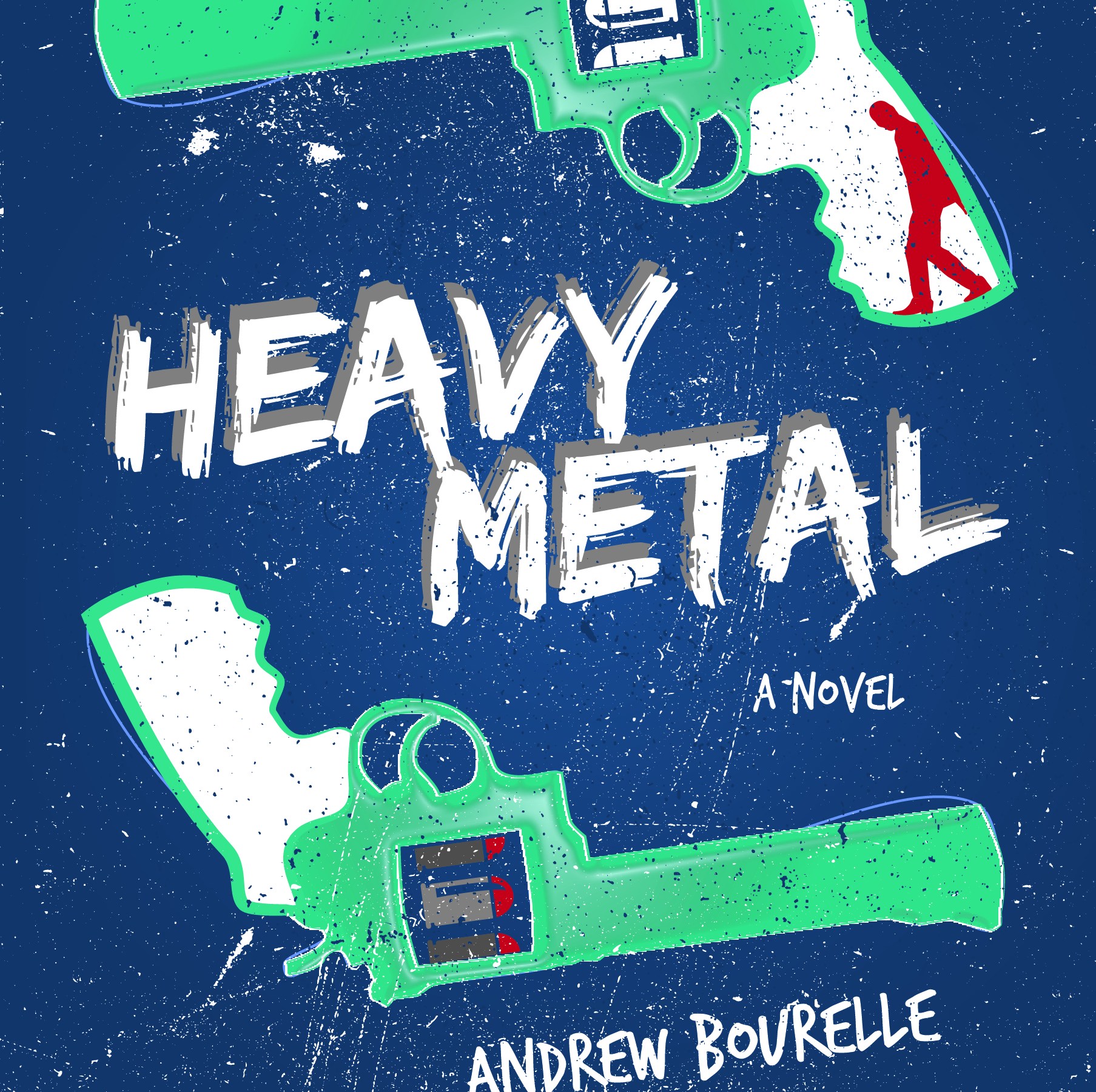
This time on Ranks of the Rejected I spoke with an author who directly inspired me to get off my ass and start submitting stories on a regular basis. I met Andrew Bourelle through his brother Ed Bourelle, a friend and colleague, and we started trading stories about six years ago. Not only did Andrew give me great feedback on my work, his dogged persistence in the face of rejection is part of what inspired me to start this blog. In fact, whenever I tell a story about a “writer friend” to demonstrate some point about not letting rejections get to you, half the time I’m talking about Andrew.
Folks, this guy is the poster child for sticking to your guns, working on your craft, and not letting rejections slow you down. His perseverance (and oodles of talent) have resulted in some well deserved success over the last couple of years, and I couldn’t be happier for him. So check out the interview below, absorb the wisdom therein, and then go read Andrew’s stuff.
1) What genres do you typically write? Do you have a favorite? If so, what about that genre draws you to it?
My writing tends to be pretty varied, I think. I’ve published stories in literary journals, and I’ve published genre stories as well: mystery, horror, science fiction, etc. I’ve never really been able to confine myself to one genre. I don’t stop myself and say, “Wait, you’re a literary writer—you can’t write a post-apocalyptic monster story.” If I have an idea, I write it. And if I think the story is halfway decent, I make some attempt to find a place to publish it.
Lately, I’ve been writing a lot of mystery/thriller fiction. I love to be surprised by what I read, and mysteries and thrillers are built to surprise readers. I like to put my foot on the gas and take readers for a fun ride. I’m working on mystery/thriller novel that’s giving me a chance to do that.
2) You recently published your first novel, Heavy Metal. Tell us a little about how that book came together and how you went about the business of getting it published.
I wrote Heavy Metal as an experiment to see if I could write a novel. It’s a coming-of-age story set in the late 1980s. The main character is contemplating suicide, and in many ways the book is a character study. But I also wanted the narrative to pull readers in and keep them engaged. The novel has been described as suspenseful, intense, heartbreaking—which are all adjectives I’m happy with.
As I wrote it, I didn’t really think about how it could be labeled or marketed. I just wrote the story that was coming out of me. However, when it came time to find an agent or publisher, no one really seemed to know what to do with it. Is it a literary novel? A Young Adult novel? I didn’t care how it was categorized. I just wanted to write a book that might resonate with readers. But I imagine most agents took one look at the query letter and said, “Eh, I don’t know how to sell this.”
After a few years of failing to find an agent to represent the book, I pretty much gave up hope of ever seeing the book in print. Then it occurred to me that literary publishers often hold contests and publish the winning manuscripts. It’s one way that story collections and literary books that don’t seem to fit into easy commercial categories find a publisher. I figured I’d give it a shot. It ended up winning one of the first contests I entered—the Autumn House Fiction Prize. I’ve read past winners of the prize and am honored and humbled to be in their company. I think my editor told me there were more than 500 submissions. Somehow, from that pool, Heavy Metal was selected to be one of a dozen or so finalists, and the final judge, William Lychack (the author of a wonderful coming-of-age novel called The Wasp Eater), picked it as the winner. I always thought if the right person would just read the book, they would want to publish it. That’s essentially what happened; it just took longer than I thought to find the right person to read it.
3) Your story “Y Is for Yangchuan Lizard” was recently chosen for inclusion in The Best American Mystery Stories 2018. This is your second go-around in the anthology, and I know your last story led to something pretty cool. Tell us a bit about that.
A story of mine called “Cowboy Justice” was picked to be in The Best American Mystery Stories 2015, which by itself is one of the highlights of my writing career. But it also opened up a really interesting door for me. James Patterson was the guest editor that year and picked the final selection of stories. Around the time the anthology was coming out, his people contacted me and said he was getting ready to launch a new series of short thrillers, called BookShots, and wanted to know if I was interested in coauthoring something with him.
We worked on a short thriller called The Pretender, which was published in 2016 in Triple Threat, a collection of three of his BookShots. The Pretender is also available as a downloadable audio book. It’s a fun story about a retired diamond thief who can’t outrun his past. It was an extraordinary experience to work with James Patterson, and I’ll forever be grateful for the opportunity.
4) Okay, this blog is called Rejectomancy, so tell us about your first rejection letter or the first one that had a significant impact on you as a writer.
I think my first rejection came in high school. My teacher knew I liked to write and passed along information about a “short short story” competition. (I wish I could remember what journal held the contest, but I’ve forgotten.) I think the stories had to be 250 words or fewer. I wrote something and sent it in, knowing 100-percent that I wouldn’t win. But the act of sending something out seemed really important to me, like I was telling the universe that I wanted to be a writer.
In some ways, receiving the form rejection was validating to me. No one laughed at me. No one said, “Are you crazy, kid? You’re out of your league!” I got the same form rejection all the other real writers got. I have no idea if they took my story all that seriously, but it at least felt like they had.
5) Got a favorite rejection? Memorable, funny, just straight-up weird?
The worst rejections are the personal ones where an editor’s critique of the story is unhelpful. I recently received a rejection where the editor said that the “tense shifts were distracting.” I thought, “Oh, there are tense shifts in there? What a rookie mistake.” I carefully reread the story and there weren’t any tense problems. I thought, “Did you copy the text from your last rejection into my rejection by mistake? Did you even read my story?”
On the other hand, there have been times where editors have made editorial suggestions that turned out to be valuable. I remember my short story “Little Healers” was rejected by Pseudopod, and the editor made a note about a problem he had with the story. I hadn’t noticed the issue before, but once it had been pointed out to me, I agreed with the assessment. I revised the story and sent it elsewhere. It was published in the anthology Swords & Steam Short Stories and was listed as an honorable mention for Ellen Datlow’s Best Horror of the Year. If it wasn’t for the rejection, I might never have seen the problem.
6) What’s the toughest part of rejection for you? Pro tips for dealing with it?
I think one of the keys to not letting rejections get to you is to have plenty of stuff out there under consideration. If you only have one or two stories that you have under consideration at one time, then a rejection can feel like a real setback. But if you’ve got 10 or 12 stories under consideration at 15 to 20 different publications, then you always have stuff in circulation. A single rejection doesn’t hurt much because you have other stories under consideration at the same time.
When I was submitting stories early on, I would only have one or two that I believed in, and I’d submit those to one publication each, even if simultaneous submissions were allowed. Then I’d wait however many months for a response and be bummed when a rejection rolled in. The key for me was writing more stories, getting more out there under consideration, and not putting too much hope in any one submission.
7) Plug away. Tells us about some of your recent projects and why we should run out and buy them.
You mentioned my story “Y Is for Yangchuan Lizard” is coming out in this year’s volume of The Best American Mystery Stories, which will be published in October. I was unbelievably excited when I got the news. The table of contents includes authors like T.C. Boyle, Lee Child, Michael Connelly, Joyce Carol Oates—writers I’ve read, admired, and learned from.
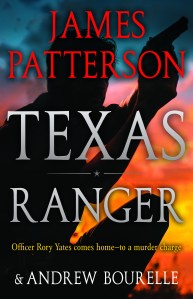
Another big publication on the horizon is a second project with James Patterson. Texas Ranger, a novel he and I coauthored, is scheduled to be released in August. It was a lot of fun to work on. I recently received an ARC, and it was a real thrill to see my name on the cover with James Patterson. I can’t wait to see the novel in bookstores!
 Andrew Bourelle is the author of the novel Heavy Metal. His short stories, poems, and comics (illustrated by his brother Ed Bourelle) have been published in journals and anthologies, including The Best American Mystery Stories, D Is for Dinosaur, Equus, Florida Review, Heavy Feather Review, Prime Number Magazine, The Molotov Cocktail, Weirdbook Magazine, and Whitefish Review. You can follow him on Twitter at @AndrewBourelle.
Evolution of a Short Author Bio

About two years ago, I wrote a blog post outlining how to write a 50-word author bio, or at least how I write one. I mentioned in that post that an author bio is a living thing and should change and grow as you change and grow as a writer. Well, let’s take a look at that bio-building process and see how my 50-word bio has transformed in the last two years (and how it might change again in the future).
Like last time, my short author bio will include the following elements:
- Basic details
- Accomplishments
- Where to go/buy
Basic Details
The who, what, and where. Like I said in the first post, keep potentially sensitive data out of your bio. No need to give all the identity thieves in the world a head start by plastering your phone number and address all over the place.
Here are my basic details in 2016:
Aeryn Rudel is a freelance writer from Seattle, Washington.
And, uh, here are my basic details now:
Aeryn Rudel is a freelance writer from Seattle, Washington.
Yep, I still live in the same place, so no changes here. I guess I could say something like novelist instead of freelance writer, but with only two novels under my belt and a lot more short story and gaming credits, writer just feels more accurate.
Also, like I said in the first post, I’ve decided to reveal the city I live in. In a big city like Seattle, I don’t feel like there’s much risk there, but I could make it more vague by saying something like the Pacific Northwest.
Accomplishments
This is where you let folks know about the cool stuff you’ve written and published. Like everything in this bio, you should keep it short and to the point. List a few of your more prominent publications, awards, and the like.
My accomplishments look like this in 2016:
His short fiction has appeared in The Devilfish Review, Evil Girlfriend Media, and The Molotov Cocktail.
Here’s what I’ve been going with recently:
His second novel, Aftershock, was recently published by Privateer Press.
Obviously, the big change from 2016 to 2018 is I’ve published a couple of novels with Privateer Press. I chose to mention the second and most recent novel because it implies I’ve written more than one without, you know, listing them both. Now, when I publish the third novel this year, I might go with something like: He is the author of the Acts of War trilogy. That would also leave me plenty of room if I wanted to list another significant publication.
Yeah, I could have listed some of my more recent short story publications, a few of which are with pro markets, but I think the novel is more significant. It also allows me to trim some words I’ll use elsewhere.
Where to Go/Buy
If folks like your work enough to actually read the bio at the end of your story, definitely give them a link to click so they can check out more of your stuff. Blogs, websites, even things like Amazon author pages are all possibilities.
In 2016, my where to go/buy looks like this:
Learn more about Aeryn and his work on his blog at www.rejectomancy.com.
Here’s what it looks like now:
Aeryn occasionally offers dubious advice on the subjects of writing and rejection (mostly rejection) on his blog at www.rejectomancy.com.
Yep, it’s essentially the same, but did you notice my oh-so-clever and self-deprecating humor? Doesn’t that make you feel sorry for me/want to check out my blog? 🙂 All kidding aside, I think injecting a little of your personality into your bio is a good thing. But a little dab’ll do ya. Like any of the sections in a 50-word bio, keep it short.
The Finished Bio
Okay, let’s looks at the final product.
Here’s 2016:
Aeryn Rudel is a freelance writer from Seattle, Washington. His short fiction has appeared in The Devilfish Review, Evil Girlfriend Media, and The Molotov Cocktail. Learn more about Aeryn and his work on his blog at www.rejectomancy.com.
And here’s 2018:
Aeryn Rudel is a freelance writer from Seattle, Washington. His second novel, Aftershock, was recently published by Privateer Press. Aeryn occasionally offers dubious advice on the subjects of writing and rejection (mostly rejection) on his blog at www.rejectomancy.com.
My 2016 bio is 37 words long, and my 2018 bio is 38. So I’m still well under the 50-word limit. That gives me plenty of room to expand in the future, and I’ve earmarked those extra words for the accomplishments section when I have something else I want to share/point folks at.
How has your author bio changed over your writing career? Tell me about it in the comments.
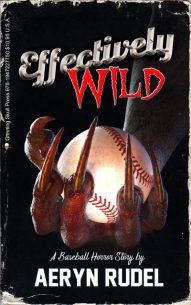
Effectively Wild – A Baseball Horror Story
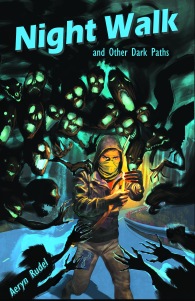
Night Walk & Other Dark Paths
Acts of War: Flashpoint

Acts of War: Aftershock

Acts of War: Stormbreak


