
A Week of Writing: 5/7/18 to 5/13/18

And the second week of May is in the books. Less progress than I would have liked, but, in all, positive yardage.
Here’s how I did.
The Novel
The novel I’m currently working on is the fourth I’ve written in the last three years. This one is by far the most challenging, but it’s similar to the others in a lot ways. One of those ways goes like this:
- Starting a novel – Pretty easy
- Writing to the halfway point in a novel – Challenging but not too bad
- Finishing a novel, especially the last 10,000 words or so – Head meets brick wall (repeatedly, at high velocity) difficult
So, yeah, I’m currently in the third stage and beating myself bloody trying to wrap everything up. I’m pretty sure I can do it today, but the finale and epilogue of this book have certainly slowed me down. That’s not really a bad thing. I mean, I do want to stick the landing as well as I can. Still, I’m very much ready to be done with the first draft.
| Date | Day | Words Written |
| 5/7/2018 | Monday | 504 |
| 5/8/2018 | Tuesday | 2031 |
| 5/9/2018 | Wednesday | 0 |
| 5/10/2018 | Thursday | 1082 |
| 5/11/2018 | Friday | 1531 |
| 5/12/2018 | Saturday | 1023 |
| 5/13/2018 | Sunday | 0 |
So another 6,171 words added to the manuscript for a total just north of 91,000. I think I’ve got another 3,000 or so to go, for a grand total for the first draft around 95,000 words.
Short Stories
Not much to report on this front. Most of my creative energies have gone into the novel. I’ve outlined a few ideas for new stories I want to write once the first draft of the novel is done and I can set it aside for a week or so.
Submissions
What I’d call slightly above average submission volume for the week.
- Submissions Sent: 3
- Rejections: 3
- Acceptances: 0
- Publications: 0
No matter what I’m working on, I try to get at least a few submission out every week. This week I sent submissions #52, #53, and #54 for the year. Still on pace for 100 subs for 2018.
The Blog
For the first time in a while, I didn’t manage three blog posts, but I hope to get back on track this week.
5/7/18: A Week of Writing: 4/30/18 to 5/6/18
Just the usual here.
5/9/18: Submission Protocol: The Unsolicited Rewrite
This is a subject I’ve never covered on the blog, and it’s kind of an “unwritten” submission guideline. Worth a look if you’re unfamiliar with the term.
Goals
The primary goal is to finish the novel, which I hope to do today. The secondary goal is to finish up another project with an approaching (but still comfortably distant) deadline.
Story Spotlight
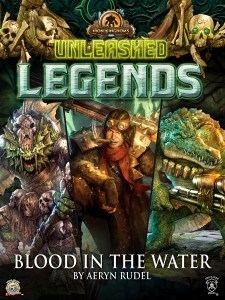
This week I’m gonna point you at a novelette I wrote for Privateer Press a while back called “Blood in the Water.” It’s a pretty good introduction to the Iron Kingdoms, the steam-powered fantasy world that serves as the setting for Privateer’s WARMACHINE and HORDES games. You can check it out on Amazon by clicking the cover below.
That was my week. How was yours?
Submission Protocol: The Unsolicited Rewrite

Here’s a scenario for you. You receive a very encouraging personal rejection from a publisher, where the editor says something like, “Hey, good story. We’re going to pass, but we think you might consider improving the story by changing X and revising Y.” If you’re new to the submission grind, you might think if you addressed X and Y and sent the story back to the publisher, you’d have a good chance of an acceptance. Unfortunately, that’s called an unsolicited rewrite, and the majority of publishers won’t consider them.
Though well known to savvy submitters, the “no unsolicited rewrites” policy is often an unwritten submission guideline. New writers may violate this policy because a) no one has told them about it, and b) they’ve only submitted to a few markets who may not mention unsolicited rewrites in their guidelines.
But how do I know most publishers don’t want unsolicited rewrites? Three reasons.
1) First, it’s not an entirely unwritten policy, and some publishers do call it out in their guidelines. When a publisher does mention the policy, it’ll look something like this.
Unsolicited Rewrites: We DO NOT accept unsolicited rewrites of stories that we’ve already rejected. (That is a nearly universal policy among short fiction markets of all genres.)
This is an excellent example, and I really appreciate this pro market looking to help folks new to the biz. The kicker is in parentheses, of course, and as far as I can tell, it is a nearly universal policy.
2) Second, if a publisher wants you to revise a story and resubmit it, they’ll straight up tell you. Basically, they will solicit you for the rewrite. That’s often called a revision request, and it’s fairly common.
3) Finally, I know folks, unaware of this policy, who have sent unsolicited rewrites. What was the result? Nothing dire, just a very polite letter stating the publisher does not accept them. In the most recent case, I think the publisher was aware the policy was not in their guidelines, so being polite, professional humans (most editors fall into this category, by the way), they recognized an innocent mistake and simply informed the author of their policy and invited the author to submit something new.
So, to sum up, when you get good feedback from a publisher, revise the story and send it somewhere else. Send the encouraging publisher something new.
Thoughts on unsolicited rewrites? Know of any publishers that accept or encourage them? Tell me about it in the comments.
A Week of Writing: 4/30/18 to 5/6/18

Another week of writing come to a close. Got some novel writin’ done, some short stories spruced up, a bunch of submission sent, a pile of rejections received, and even a publication to crow about.
Have a look.
The Novel
Well, I was hoping to have a complete first draft by this point, but instead I decided to stray from my outline for the climax of the third act, which meant I had to rework a bunch of things. That slowed me down considerably. The changes will make for a better book (I hope), but they definitely cut into my raw production.
| Date | Day | Words Written |
| 4/30/2018 | Monday | 0 |
| 5/1/2018 | Tuesday | 1018 |
| 5/2/2018 | Wednesday | 1550 |
| 5/3/2018 | Thursday | 0 |
| 5/4/2018 | Friday | 0 |
| 5/5/2018 | Saturday | 0 |
| 5/6/2018 | Sunday | 2523 |
I managed 5,091 words last week. Not bad, all things considered. I’m at just over 85,000 words for the manuscript, and I think there’s probably another 5,000 or so to go. I don’t want the book to be much longer than 90,000 if I can help it. That said, it’ll likely go over for the first draft and then edit down to 90k or just below it.
Short Stories
Like the week before, I didn’t finish any new stories, but I fixed up a bunch of old ones. Some of those I submitted, and some I’ll submit this week. I also started outlining a new sci-fi story I’m pretty excited about. I’ll start working on that soon.
Submissions
Last week was very active in the submission department.
- Submissions Sent: 6
- Rejections: 6
- Withdrawals: 2
- Acceptances: 0
- Publications: 1
A little bit of everything last week. I sent a bunch of submission, got a bunch of rejections (three in one day), and I even had to withdraw a couple of stories from a market that went under.
The Blog
Three more blog posts last week, including my monthly submission statement for April.
4/30/18: A Week of Writing: 4/23/18 to 4/29/18
Yep, the week before this one.
5/2/18: Submission Statement: April 2018
My monthly tally of submissions, rejections, acceptances, etc, including some of the rejection letters I received in all their glory.
5/4/18: One-Hour Flash Success Stories
A list of the flash fiction and short stories I’ve published that began life as one-hour flash fiction writing exercises. Also, why I think setting a clock on your writing can be a good thing.
Goals
One more time, with feeling. FINISH. THE. NOVEL.
Story Spotlight
This week’s story is my most recent publication, and it’s one of the few stories I’ve published that could be called literary . . . if you squint, from a long way away. The story is called “Simulacra” and it was published by the fine folks over at Ellipsis Zine.
Read “Simulacra“

And that was my week. How was yours?
Submission Statement: April 2018
Although not as good as March, April was a solid month that featured a little but of everything. Lots of submissions, some rejections, an acceptance, and a few other bits and pieces.
April 2018 Report Card
- Submissions Sent: 13
- Rejections: 10
- Acceptances: 3
- Publications: 2
Thirteen submissions in April, and that’s very good production. It more than keeps me on pace for my goal of one hundred submissions for the year. I’m currently at forty-eight, so almost half-way there with eight months to go.
Rejections
Ten rejections in on the high side, but I’ve been consistently sending out submissions, so more rejections just comes with that particular territory. Here’s how the rejections break down.
- Standard Form Rejections: 4
- Upper-Tier Form Rejections: 5
- Personal Rejections: 1
Mostly “good” rejections in April, and I think the stories I have out there are pretty strong and will find a home eventually. Here are some of the highlight rejections for the month.
Highlight Rejection 1: Sent 2/18/2018; Rejected 4/8/2018
Thanks for submitting [story title] but I’m going to pass on it. It’s nicely written and I enjoyed reading it, but overall it didn’t quite win me over, I’m afraid. Best of luck to you placing this one elsewhere, and thanks again for sending it my way. I look forward to seeing your next submission.
This is a higher-tier rejection from one of the premier science fiction markets. This was my first submission to this publisher, and though I would have loved an acceptance, a higher-tier rejection is not too bad right out of the gate. I’ll definitely submit to them again during their next submission window.
Highlight Rejection 2: Sent 3/24/2018; Rejected 4/30/2018
Thank you for sending us [story title]. We appreciate your taking the time to send it in for our consideration. The editors have read the story but feel that it will not be a good fit for our publication. We wish you luck with placing it elsewhere.
Please send something new when we reopen to new submissions.
Another higher-tier rejection from a new market (for me). Again, I will definitely submit here again when they reopen to submissions.
Highlight Rejection 3: Sent 6/24/2017; Rejected 4/30/2018
Thank you again for allowing us to consider your story, but it’s not a match for [anthology title].
Your story made it to the final round. It was ranked among the best of the best. We had thousands of submissions from writers all over the world. Even some of our favorites, like your story, didn’t make it through.
Most of the time we don’t move forward with a story because it’s similar to another story in a different word slot. We’re striving for a diversity of sub-genres, writing styles and plot lines, in addition to stories of different lengths.
So that’s the bad news: Your story wasn’t selected for [anthology title]. The good news is that there will be many more opportunities to submit to [publisher] in the future. Even though your work was not selected, you are a talented writer. We hope you will consider submitting to our future editions.
And the heart-breaker. This is a personal rejection from a horror anthology I submitted to last year. Now, I knew this was going to be a long wait because I checked Duotrope for their last anthology and saw it was taking somewhere in the neighborhood of 250+ days for a response. But they were open to simultaneous submissions, and I submitted a reprint, so, basically, I was fine with the long wait. That said, to wait 310 days and get so close is disappointing, but that’s part of the gig, and I certainly don’t hold that against the publisher (I knew what I was getting into). I do appreciate the very nice rejection letter the editors sent, and I will submit work to their future anthologies.
Acceptances
Thought not the record-breaking month I experienced in March, any month with an acceptance is a good month in my book.
Acceptance 1: Sent 1/18/2018; Accepted 4/22/2018
I am delighted to inform you that we would like to publish your story ’Scare Tactics’ in our Lost Souls Short Story Anthology.
Since I’ve already announced this acceptance pretty much everywhere, I’m fine naming names here. When the Lost Souls anthology is released in September, I’ll let you all know. There is more to this acceptance letter, but it’s just the contract and legal stuff standard with any publication.
Publications
Two publications this month, both repeat customers. 🙂
Publication 1: “New Arrivals” in Havok
My story “New Arrivals” was published in the April issue of Havok magazine. This is my second publication with Havok, and you can check out that story and bunch of other great flash pieces by clicking the link below.

Publication 2: “The Food Bank” in The Arcanist
My third publication with The Arcanist, “The Food Bank” is a post-apocalyptic flash piece. You can read the whole thing by clicking the praying mantis below.
And that’s April. How was yours?
A Week of Writing: 4/23/18 to 4/29/18
On more week of writing, editing, and submitting in the books.
Getting close to done(ish) on at least one big project.
The Novel
Solid production on the novel for the week, and I passed 80,000 words total. I’m at the climax of the story, and I’m looking at another 10,000 words to wrap up the first draft. I think 90,000 is a solid length for a horror novel, though it’ll likely boil down to 85,000 or so after my first pass and possibly a bit more once my beta readers are done chewing on it. Here’s how the week went.
| Date | Day | Words Written |
| 4/23/2018 | Monday | 2515 |
| 4/24/2018 | Tuesday | 2529 |
| 4/25/2018 | Wednesday | 0 |
| 4/26/2018 | Thursday | 2531 |
| 4/27/2018 | Friday | 0 |
| 4/28/2018 | Saturday | 0 |
| 4/29/2018 | Sunday | 1262 |
That’s another 8,837 words. Again, I’d have liked 10,000, but so close to the end I’m writing slower and taking more time to think certain plot points through. I hope next week’s update will be that I’ve finished the first draft.
Short Stories
Last week I tinkered with a bunch of trunk stories and outlined a sci-fi story, but I didn’t finish anything new. That’ll be apparent in my submission numbers. My focus has been on the novel and a few other projects, so less time for short stories.
Submissions
Only one submission this week, a trunk story I spruced up and sent out.
- Submissions Sent: 1
- Rejections: 1
- Acceptances: 0
- Publications: 0
Technically, I only received one rejection last week, but I got three this morning, so it feels like a lot more. Anyway, I’ll account for this morning’s rejections in next week’s update. 🙂
The Blog
I’ve been pretty steady with updating the blog three times a week, and as a result my traffic and followers have increased. Here’s last week’s trio.
4/23/18: A Week of Writing: 4/16/18 to 4/22/18
Pretty self-explanatory, right?
4/25/18: A Day in the Life of a First Draft
One of my goofier posts in a while, I relate what my typical writing day looks like, hour by hour.
4/27/18: Back to Basics: More Cover Letter Components
A follow up to my post about constructing a basic cover letter. This one details some of the additional elements publishers sometimes ask for in a cover letter.
Goals
Finish. The. Novel.
Story Spotlight
This week it’s a story from one of my favorite peddlers of flash fiction, The Molotov Cocktail. The following story, “Masks,” took third place in their FlashFear contest.
Read “Masks“

And that was my week. How was yours?
Back to Basics: More Cover Letter Components

In Back to Basics: The Cover Letter, I presented an example of a basic cover letter with all the elements a publisher usually wants to see. But what if the publisher ask for something additional that deviates from that letter? What might those somethings be? I generally see three additional cover letter elements in publisher guidelines. Let’s take a look at them.
1) Short Bio
By far the most common cover letter addition. Usually, a publisher wants fifty (50) words or less. If you don’t have a short bio, here’s one of mine as an example (47 words). You might also check out this recent post to see how I build a bio.
Aeryn Rudel is a freelance writer from Seattle, Washington. He is the author of the Acts of War series by Privateer Press, and his short fiction has appeared in The Arcanist, Havok Magazine, and Pseudopod, among others. Learn more about Aeryn’s work on his blog at www.rejectomancy.com.
When a publisher asks for a short bio, I add it right below the basic cover letter.
2) Relevant Experience
I often see publishers ask writers to include a relevant personal detail if it would be important to the story they’re submitting. For example, if you’re submitting a story about dinosaurs and you’re an honest-to-god paleontologist, they want to know that. I’ve never had to add this to a cover letter. I apparently have no skills or knowledge applicable to my writing. If I were to add this info, I’d keep this it brief. For example:
Please consider my story “Fuzzy Driver” for publication at Howling at the Moon Monthly. My story is about a werewolf who drives for Uber, and I currently work as an Uber driver.
Of course, this does require you to summarize your story a little, which is usually a big no-no unless the publisher specifically asks for that info. I think this definitely falls into that category of “specifically asking for the info.” If they want the personal detail, they’re going to be okay with a brief summary of the core concept as it relates to your experience.
3) Story Synopsis
This isn’t nearly as common, but I do see it on occasion, most recently with a market that runs themed issues. In that case, the publisher wanted to know how the story fit the theme. You should be able to get that kind of info across in just a few sentences. Here’s an example of how I summarized a story (more or less) for a recent submission:
Set in the mid-50s, “When the Lights Go On” takes place in a small town near Arco, Idaho, the first in the US to be powered by nuclear energy. The townsfolk have noticed unsettling changes in themselves whenever they turn on the lights.
Even when the publisher wants a synopsis, the story still has to do the talking. So don’t stress too much here. Just make sure the summary is short, gets the core concept across, and passes a basic readability test. I added this summary right below the basic cover letter, like I would with a bio. Remember, DO NOT include a summary of your story unless the publisher specifically asks for it.
Did I miss anything? Have you seen publishers ask for something not listed here? Tell me about it in the comments.
A Day in the Life of a First Draft
As you know, writing requires extreme dedication to the craft, unswerving discipline, and nigh-supernatural resistance to distraction. To shed some light on this magical process, I present a semi-fictionalized account of a single day in in the creation of a first draft.
8:00 a.m.
Okay, at my desk bright an early, got my coffee, and I am ready to start writing!
I should check my email, though. Might be super important stuff in there. Ooh, maybe even an acceptance for one of my short story submissions.
8:30 a.m.
Wow, twenty-seven pieces of junk mail and two rejections. That, uh, sucks.
Okay, shake it off. Gotta get those 2,500 words. If I start now, I’ll finish by like noon, and then I can work on short stories or that novella I was outlining.
Before I start, though, I gotta check social media and see if anything important needs my attention. Should only take a couple of minutes . . .
8:45 a.m.
Okay, posts and tweets liked. News assimilated. NOW it is time to write.
Let me just open the Word document for the novel . . .
You know, I could finish a blog post for Friday, just to get ahead. I mean, I still got plenty of time to knock out that word count.
9:30 a.m.
Right, blog post in the can. Look at me all working ahead and shit. Damn, I’m responsible.
Now let’s write some words!
Hey, someone just commented on my last blog post. I don’t want to be rude. I should check that out and respond.
9:45 a.m.
There we go, a nice response to that question on my blog.
Huh? I wonder how many followers I have now. I should look into that. Oh and then do a spreadsheet breaking down followers and views per month, then by day, and . . .
11:00 a.m.
Well that took longer than I thought, but look at all the super important information I have now. I’ll just save that on my hard drive and never look at it again.
Okay, here we go, words flowing from brain to fingertips. Magic is gonna happen!
12:00 p.m.
Really? I’ve only written 500 words? Fuck. Let me read this . . .
Why on Earth did it take 500 words for the main character to clear his throat and eat a sandwich? Oh, cool, it’s noon. I should eat lunch.
12:30 p.m.
Got food, ready to write again.
Gettin’ into this action scene. Wow, the words are flowing. This is great . . .
Wait. Is it actually possible to rip a person’s arm clean off their body? I’ve seen that in movies an stuff, but I better make sure. Let’s see what the interwebs has to say about it.
1:30 p.m.
Good lord, that injury is way too common! That’s horrible.
Okay, so that many pounds of force, and applied with that leverage, and some stuff . . . Okay, yeah, plausible. Back to the action.
2:00 p.m.
Man, I’ve been making awesome progress. Let me just see how many words I’ve written.
Aw, only 1,100. I need another 1,400 for the day, and I still gotta go the gym and do the dishes.
Ooh, six notifications on Twitter! I probably should check my social media again . . .
3:00 p.m.
Damn it! Why did I watch four fucking YouTube videos on people removing rust from old butcher knives? Get back to work!
Okay, this scene is going pretty good. Got some snappy dialog, the main character is lookin’ cool, and . . .
How can I NOT know how a tow truck works? I mean, seriously. I’ve been towed like a dozen times. Sigh. To the internet.
3:30 p.m.
Why are there so many different types of tow trucks?
Okay, so he hooks up that thing to that thing, and the car goes up, and the scene is done.
I should check my word count again. Gotta be getting’ close now.
Damn, 1,600 words. Maybe I should check Facebook . . .
No! Write!
4:30 p.m.
Well, that is giant plot hole right there.
Must. Not. Panic.
I can fix it if I change this, and that, and this thing. Damn, I better write all this out or I’ll forget.
Okay, hey, that’s not too bad. Crisis averted. Word count total at 2,100.
Home stretch.
5:00 p.m.
Boom! 2,737 words. Finished the chapter and wrote over my goal. Hell yeah.
No, dumb-ass, don’t go back and read what you wrote today. It’ll all read like shit. Wait until tomorrow. You KNOW this!
Document saved, closed, and backed up twice. Now I need a distraction . . .
Oh, cool, look at this guy cleaning rust off a one-hundred-year-old cleaver he found in his backyard.
Of course this is not exactly what my writing day looks like. I also watch a lot of MMA videos. 🙂
A Week of Writing: 4/16/18 to 4/22/18

Another week gone by, another week of of writing. More positive yardage and some decent progress on projects big and small.
The Novel
More production this week at a fairly respectable pace. I’m in the meat of the third act, and I’m looking at another 15,000 or so words to finish up this first draft. My best guesstimate is the draft will clock in somewhere just south of 90,000 words. Here’s how I did.
| Date | Day | Words Written |
| 4/16/2018 | Monday | 0 |
| 4/17/2018 | Tuesday | 2557 |
| 4/18/2018 | Wednesday | 2505 |
| 4/19/2018 | Thursday | 0 |
| 4/20/2018 | Friday | 508 |
| 4/21/2018 | Saturday | 1720 |
| 4/22/2018 | Sunday | 1536 |
This all adds up to another 8,826 words of writing. I’d have liked 10,000. Hell, I’d have liked 15,000, but this is what I had in me for the week.
Short Stories
I’m always working on short stories, and as much as I love writing novels, the short stuff scratches a different creative itch. Last week I polished up another couple of trunk stories, though calling them that isn’t quite fair. They’re stories that have been sitting on my hard drive in first-draft form for quite a while. I took them out, dusted them off, and found an angle I liked to complete/polish them. I submitted one (and it was rejected) and the other is back from my beta readers and should go out this week.
Submissions
Three submission for the week, which brings my total for the month to eleven.
- Submissions Sent: 3
- Rejections: 2
- Acceptances: 0
- Publications: 0
I currently have fifteen submissions under consideration. Still waiting to hear back from a short-listed story, plus one I’ve been waiting on for four months. I also have a story that’s getting close to 300 days pending, and I’m honestly not sure I’ll hear back on that one anytime soon (they just sent a 395-day rejection). The rest are (mostly) in the 20- to 30-day range.
The Blog
Three more updates on the ol’ blog last week.
4/16/18: A Week of Writing: 4/9/18 to 4/15/18
You guessed it. The week of writing before this one.
4/18/18: 200 Rejections: An Analysis
The meat and potatoes post for the blog. This post takes a look back at the 200-plus rejections I’ve received since I started logging them at Duotrope.
4/20/18: One-Hour Flash – Fuel for the Fire
Another bit of flash fiction written in one hour. Not a bad concept, but a serious case of all premise and not much story.
Goals
It’s really all about the novel in the coming weeks, and just about everything else will take a back seat. I’d like to finish that first draft by the middle of next week. I think that’s doable, and I”m hoping for that burst of frenetic energy that often comes when you’re close to finishing a big project. Well, the first major part of a big project anyway.
Story Spotlight
This week, check out the first story I published with The Arcanist. This one is called “Cowtown,” and it’s a little horror/sci-fi/humor mashup set in my own hometown of Modesto, California.
Read “Cowtown“

And that was my week. How was yours?
200 Rejections: An Analysis

I recently found myself wondering how many rejections I’ve received since I started using Duotrope (religiously) to track my submissions. So, uh, I went and looked . . .
I’ve received 218 rejections. Is that a lot? Maybe, but to me it (usually) just feels like my fair share. The inevitable result of nearly 300 submissions. It’s important to note I received rejections before Duotrope came into my life. Sadly, many of these literary fossils are lost to the ether in a now-defunct Hotmail account or were honest-to-god paper rejection letters (I really wish I’d kept some of those). So, today, I’m just going to talk about the 218 rejections I’ve logged in Duotrope. Stats ahead.
- First Rejection: I logged my first rejection (again, into Duotrope) on May 5th, 2012. Interestingly, this rejection was from a market that would go on to reject me a lot in the years ahead. They set the tone, you might say. I didn’t submit a lot of short fiction in those first couple of years. My submission (and rejection) volume really picked up in 2014.
- Last Rejection: My most recent rejection . . . Hang on, let me check my email. As I was saying, my most recent rejection came yesterday on April 17th, 2018. This was my twelfth (12) rejection from this particular market.
- Distinct Stories: I have submitted 56 distinct stories since May of 2012. That number surprised me. It feels like a lot more. Eighteen (18) of those stories are short stories of 2,000 words or more, and the remaining thirty-six (36) are flash stories of 1,000 words or fewer.
- Distinct Markets: Now the reason it might feel like I sent more distinct stories is I sent those stories to a bunch of different markets. According to Duotrope, I have submitted stories to seventy-five (75) distinct markets. Most of them are still alive and kicking, but seventeen (17) are now defunct or on indefinite hiatus.
- Most Rejections (Market): The most rejections I have received from a single market is nineteen (19). Now, let me qualify that by saying I have also received eleven (11) acceptances from the same market. Since that’s kind of unusual, there are three runners-up tied for most rejections without an acceptance at twelve (12).
- Most Rejected (Story): My most-rejected story currently sits at eighteen (18) rejections and is out for submission yet again. Why do I keep sending this one out? Well, it’s been shortlisted a number of times and the rejections are generally positive. In addition, my second most rejected story was accepted and published after sixteen (16) rejections.
What’s the point of this little trip down memory lane? Mostly this. If you submit a lot of fiction, well, you’re gonna get a lot of rejections. It sounds grim, but it’s actually not a bad thing. I am absolutely not the same writer I was on May 5th, 2012 when I logged that first Duotrope rejection. In the 200-plus rejections that followed, I learned a whole bunch about writing and submitting, and, if I may be so bold, I got a lot better at both.
So embrace your rejections. Count them up each time you submit a story. Cherish those battle scars that prove you can take a hit, learn a thing or two, and come back for more.
Let’s talk again when I hit 300. 🙂
A Week of Writing: 4/9/18 to 4/15/18
One more week in the books. One more week of progress. One more week of writing.
The Novel
After less than ideal production the week before, I accomplished something resembling a respectable pace last week. Not where I wanted to be, but not bad. The good news is I passed 60,000 words, and I’m barreling toward the third act. I figure there’s probably between 25,000 and 30,000 words left to write (maybe a bit less). A first draft at the end of the month or early next is a distinct possibility.
| Date | Day | Words Written |
| 4/9/2018 | Monday | 0 |
| 4/10/2018 | Tuesday | 2515 |
| 4/11/2018 | Wednesday | 788 |
| 4/12/2018 | Thursday | 0 |
| 4/13/2018 | Friday | 1712 |
| 4/14/2018 | Saturday | |
| 4/15/2018 | Sunday | 1074 |
Another 6,089 words added to the tally. Not the 10,000 I was hoping for, but not bad. This week, I’ll once again set my sights high and see where I end up.
Short Stories
I worked on short stories quite a bit last week, and I heavily revised two old trunk stories I think might have a shot at publication now. I also narrowed down which of my half-complete stories I want to finish next. It’s a historical fantasy piece set in Imperial Rome called (tentatively) “Wild Things.” It’s been percolating for a couple of years, and I think I know where to go with it now.
Submissions
A little light on submissions last week. I have some new stories making the rounds, though, so I expect that to pick up this week.
- Submissions Sent: 2
- Rejections: 1
- Acceptances: 0
- Publications: 1
I currently have fourteen (14) submissions under consideration. As I keep saying, a couple of these are getting very long in the tooth, so I expect to hear back soon. I also have a story shortlisted I should hear a yea or nay on soon (fingers crossed). The story I was excited about in the last update, “Teeth of the Lion Man,” has already received two rejections from two of my go-to markets, but it’ll go out again this week.
Publications
A new category this week because, well, I actually have something to put into it. My urban fantasy flash fiction story “New Arrivals” was published in the April issue of Havok. You can check out the issue below.
The Blog
Another new category, and this one is kind of an “Oh, duh.” I managed three blog posts last week on Rejectomancy, which, for me, is ideal output. If you’d like to catch up, just click the links below.
4/9/18: A Week of Writing: 4/2/18 to 4/8/18
Yep, my writing update for that week. Pretty self explanatory.
4/11/18: Back to Basics: The Cover Letter
I went back to this well traveled subject and broke down my basic cover letter into its component parts. Some dos and don’ts about cover letters and a very simple example you have my blessing to steal outright. 🙂
4/13/18: Ranks of the Rejected: Avily Jerome (Havok Magazine)
This was a good one. I interviewed Avily Jerome, the editor of Havok, and she had lots of great advice for writers and rejectomancers.
Goals
This week it’s more work on the novel, and I’d like to hit 10,000 words. I’ll send out more submissions (probably get more rejections too), as I march toward a goal of 100 submission for the year. I finished the outline for the game design project last week and turned it in. The editor liked it, and gave me the green light to start writing. The deadline is a comfortable two months away, but I’ll start in on it this week.
Story Spotlight
This week its one of my weirder stories and the first story I published with The Molotov Cocktail. It’s called “At the Seams,” and it’s about falling apart. Literally. 🙂
Read “At the Seams“

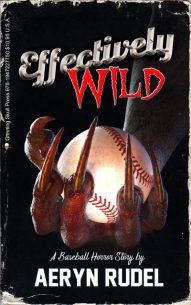
Effectively Wild – A Baseball Horror Story
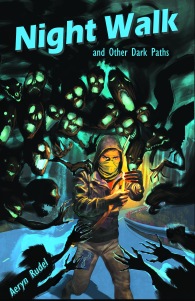
Night Walk & Other Dark Paths
Acts of War: Flashpoint

Acts of War: Aftershock

Acts of War: Stormbreak

 Aeryn Rudel's Rejectomancy