
Submissions: The Genre Wasteland

I have often lamented the lack of paying horror markets on this blog, and while I certainly wish there were more paying publishers for horror, I’ve still got it pretty good compared to writers in other genres. You see, I’ve recently been dabbling in crime (not so much mystery) and action/adventure, and, wow, the number of paying markets for those genres is, well, thin would be an understatement. Let me illustrate.
Note, all numbers are from Duotrope (because it’s the service I use), and these are markets currently accepting submissions.
First, let me give you a quick look at the horror market landscape for comparison (which I consider to be the smallest of the big three speculative genres).
- Pro Markets – 7
- Semi-Pro Markets – 10
- Token Markets – 34
This doesn’t look too bad until you compare it to sci-fi and fantasy, where the number of paying markets, especially pro-paying markets, jumps considerably. Last I checked, there were 21 pro markets for sci-fi and 20 for fantasy (though, there’s some overlap). If you get into semi-pro or token, then you have dozens and dozens of markets to choose from. Yes, you can do horror sci-fi and dark fantasy and hit some of those sci-fi and fantasy markets I mentioned, but for pure horror, pickings are still pretty slim.
So, what about those other genres I mentioned? Let’s look at mystery/crime first.
- Pro Markets – 6
- Semi-Pro Markets – 6
- Token Markets – 7
There are really just two big pro mystery/crime markets, and they take just about everything that relates to the genre (I’m sure most of you can guess which two I’m talking about). The other pro markets are either anthologies or markets for middle-grade stories. The semi-pro choices are more of the same, though on further research I’ve found many of these markets are specifically looking for mystery stories (from cozy to hard-boiled) and not so much crime.
Okay, now let’s look at action/adventure.
- Pro Markets – 5*
- Semi-Pro Markets – 1
- Token – 3
You see that asterix next to the number of pro markets? I put that there because everyone of these markets is for middle-grade and below. Yep, there isn’t a single pro-paying action/adventure market for adults. That single semi-pro is the one paying adult market that specifically asks for action/adventure. The token markets? One adult, and two for kids. Pretty depressing, huh? Makes me glad I haven’t dabbled in westerns (there is literally ONE paying market for westerns in all of Duotrope).
Those are the facts, but this isn’t just a big ol’ complaint post. There are solutions. So what can I do with my crime and action/adventure stories?
- Work with what you got. With the crime stories, specifically, there are enough markets I can take a shot at what’s out there. Like I do with other genres, I’ll submit to the top markets and work my way down.
- Phone a friend. Luckily, I know a few very good and prolific mystery/crime authors who pointed me in the direction of markets I hadn’t heard of and that aren’t listed on Duotrope. That’s been helpful and educational.
- Make a few changes. For the crime stories, if I add more of a mystery element, it’ll open up a lot of new markets for me. I could also add speculative elements that would open up that huge swath of sci-fi/fantasy markets. For the action/adventure story, a change is pretty much a necessity if I want to sell it. The easiest thing to do would be to add supernatural horror and turn my historical pirate actioner into a historical horror actioner. 🙂
Thoughts on these two genres? Something I missed? Or if you have a market recommendation for either genre, please let me know in the comments.
Weeks of Writing: 8/19/19 to 9/8/18

Way, way behind on these things. Time to catch up.
Words to Write By
This week’s quote comes from Amy Poehler.
“Most authors liken the struggle of writing to something mighty and macho, like wrestling a bear. Writing a book is nothing like that. It is a small, slow crawl to the finish line. Honestly, I have moments when I don’t even care if anyone reads this book. I just want to finish it.”
– Amy Poehler
Though I have never heard likened writing to wrestling a bear, I’ve certainly heard it described with as much hyperbole. Amy Poehler’s second and third sentence are what really resonate with me, though. The slow crawl to the finish line has definitely been my experience, and I have absolutely gotten to the point where finishing the book became an all-consuming need that eclipsed any thoughts or dreams of publishing the damn thing.
The Novel
Well, the revision is done, and the manuscript has been sent back to my agent. Hopefully, the next step is he begins shopping the book, and then, if the writing gods smile on me, some publisher will actually want to buy it. A lot of folks ask me how I feel about the book, and it’s a complicated answer. I’ll see if I can sum up with three yes or no questions.
- Is it better? Yes, undoubtedly. Notes from my agent and critique partners helped me shape the story and characters into something more compelling. It also feels more finished, like a complete product now.
- Is it done? Yes, for now. I think I’ve done what I can do with it. If a publisher decides to buy it, there will undoubtedly be further revisions, and I am a-okay with that.
- Is it good enough? No idea. As hard as it is for this impostor-syndrome-inflicted writer to admit, I think the book is “good.” I think my premise is different and my approach to a well-travelled trope is unique enough to get a reader’s attention. But is it good enough for a publisher to offer me a book contract? I just don’t know, and like any short story submission, I’m gonna have to wait and see.
Short Stories
With my focus on the novel, I haven’t sent nearly as many submissions as I should have over the last three weeks.
- Submissions Sent: 1
- Rejections: 2
- Acceptances: 1
- Publications: 2
- Shortlist: 0
Just one submissions sent in the last three weeks, though I did score an acceptance and a couple of stories were published. I’m currently sitting on 57 submissions for the year, which means I need to send out around 11 subs per month from here on out to hit 100 subs for the year. I can do it, but I’m gonna need to bust my ass and write some new material.
The Blog
Two blog posts over the last three weeks.
8/19/19: A Week of Writing: 8/12/19 to 8/18/19
The usual weekly writing update.
8/29/19: Proofing Checklist: Just Nod & Smile
Another entry in my proofing checklist, this one covers overused body language and nonverbal cues.
Publications
I had two pieces of flash fiction published in the last few weeks. Both are free to read, and you can check ’em out by clicking the links below.
“The Grove” published by The Molotov Cocktail
“Ditchers” published by Aphotic Realm
Goals
For the first time in a long time, the novel will not be one of my goals for the coming week. Instead. I need to finish a novella outline for Privateer Press, get my ass in gear with short story submissions, and work on a surprise project I’m very excited about and can’t wait to share with you all. 🙂
That was my week(s). How was/were yours?
Proofing Checklist: Just Nod & Smile
I recently finished the latest revision of my novel, and after all the heavy lifting was done–you know, adding new scenes, tweaking character motivations, all that–it was time for one more proof before it goes back to my agent. Now I have a pretty lengthy proofing checklist that includes all kinds of things, from overused words, sentence structure bugaboos, adverb annihilation, dialog tag correctification, the works. What I want to focus on today, though, is body language and nonverbal cues, and more importantly the ones I tend to overuse.
As usual for these things, what follows is how I write, revise, etc. I’m trying for a specific style with my work that won’t be a good fit for everyone. So with that disclaimer out of the way, let’s nod, smile, shake our heads, and grimace this thing to death. 🙂
As I alluded to above, the prime suspects for overused body language in my work are nod, smile, and shaking heads. The first two, especially, can get pretty egregious, and I end up removing half or more of them in a given manuscript. I also tend to overuse frown, grimace, and, oddly, shudder to a lesser degree, plus a few others.
So how and why do I fix my nods and smiles and so on? Well, here are some examples.
1) It doesn’t make sense. Sometimes I’m just writing along, making everybody nod and smile, and for some reason I pop one into sentence where it doesn’t make sense. Case in point:
When are you going after them?” Everett asked.
She nodded. “Soon, and you’re coming with us.”
So, uh, why is she nodding there? No good reason. This one just gets nuked, and the sentence and dialog are fine without it.
2) It’s redundant with the dialog. This is kind of a stylistic choice, but I prefer to let the dialog do the heavy lifting when it comes to character emotions, intent, and so on. Often as not, the body language is just redundant. Example:
Everett nodded. “Yeah, that night.” He took a risk and lied. “I spoke with Howard on the inside. He saw the same thing.”
I don’t really need the nodded here because he gives the affirmative in the dialog and I don’t think it adds anything. I might rewrite this one as:
“Yeah, that night.” Everett took a risk and lied. “I spoke with Howard on the inside. He saw the same thing.”
Now there are times where the body language, a nod in this case, does add something to the dialog. Case in point:
He didn’t sit, but he put his hands on the back of the chair and nodded. “Go on.”
I could remove the nod here, but I actually like the three little bits of nonverbal communication here followed by the dialog. Your mileage may vary, but this is one I’d keep.
3) There’s a better word. Sometimes I’ll default to one of my go-to bits of body language even when there’s a better choice. Now, this differs from point number one in that I actually want some kind of nonverbal cue in the sentence. Just, you know, a different one. Example:
He grimaced. “They could have brought you at night to spare you that.” He remembered his own troubles with the sun.
Now a grimace is usually used to denote disgust or pain, but that’s not what the character is feeling here. It’s frustration or even anger, so something different is needed. Maybe it’s:
“Goddamn it,” Everett said through clenched teeth. “They could have brought you at night to spare you that.”
In this case I think that extra bit of dialog and the nonverbal cue sells the emotion I want better than just a facial expression. I also think it works better without the last sentence.
So how many of the offending words did a remove from my 103,000-word manuscript? Here’s the score.
| Word | Start | End |
| nod/nodded/nodding | 108 | 47 |
| Smile/smiled/smiling | 89 | 47 |
| shake/shook head | 88 | 38 |
| shudder/shuddered/shuddering | 23 | 11 |
| frown/frowned/frowning | 15 | 14 |
| grimace/grimaced/grimacing | 13 | 9 |
Not bad. As you can see, I removed half or more of the prime offenders while I was more lenient with the others. It should be noted that not all those nods, smiles, and shaking of heads were simply deleted. Like the examples I included, sometimes they were replaced with a more appropriate word or action.
Well, that’s a glimpse into my proofing process, and, again, this is just how I do it. You may use more nods and smiles than me, and that’s cool. Hell, I recently looked at a best-selling novel around the same length as my book, and it had 276 instances of nod/nodded/nodding. That clearly didn’t keep it from getting published or selling in great numbers.
What types of body language and nonverbal cues do you tend to overuse? Tell me about it in the comments.
A Week of Writing: 8/12/19 to 8/18/19

Here we go. Another week of writing gone by, and here’s how I did.
Words to Write By
This week’s quote comes from Stephen King
“When your story is ready for rewrite, cut it to the bone. Get rid of every ounce of excess fat. This is going to hurt; revising a story down to the bare essentials is always a little like murdering children, but it must be done.”
— Stephen King
Yeah, that’s, uh, a little grim, but the message is a good one. Kill, kill, kill your darlings. It’s a difficult process, but one that must be done, as Mr. King says. This last week as I wrapped up what will be the penultimate revisions of my novel, I removed a lot of subplots and extraneous characters, so that the focus would be on the central events and how they move the story along. It was difficult because I liked a couple of those subplots and a few of those secondary characters, but when I took a good long look at them I realized they were largely just in the way of the story I was trying to tell. So, out they went. If I’m so lucky as to sell this novel and get to write it’s sequel, then maybe some of the characters and subplots will return. We’ll see.
The Novel
As I said above, I wrapped up the second to the last revision last week. Now, what I need to do is fairly simple. I need to clarify a few scenes with some additional information, add one new chapter at the end to tie everything up, and then just give the whole thing one last proofreading. I aim to finish that in the next ten days and hand it back to my agent. Then I’m going on vacation and I will do my best not to think about the damn book for seven days (I will almost certainly fail).
Short Stories
Slow progress, but, you know, progress.
- Submissions Sent: 3
- Rejections: 0
- Acceptances: 0
- Publications: 0
- Shortlist: 0
Three submissions is okay, but I need to get out a few more if I want to get back on pace for my goal of one-hundred. I’m at 55 for the year, and I’d like to end August with 60. That would still be off the pace, but with a good September I can catch up. Getting the novel off my plate should free me up to finish a number of short stories in various stages of completion. More new stories always means more submissions,.
The Blog
Two blog posts last week.
8/12/19: Get Your Hooks In: Even More Fun With First Lines
In this post I take another look at the first lines in some of my published works.
8/16/19: 2019 Acceptance Rate Check-In
Checking in on my acceptance rate for the year.
Goals
I’d like to be finished with the novel by the end of the week and have it back to my agent. It might take me an extra day or so, but my goal is to not begin September with an unfinished novel on my desktop.
That was my week. How was yours?
2019 Acceptance Rate Check-In

With 2019 three quarters of the way through, let’s see how I’m doing with regards to submissions and rate of acceptance. In this post I’m gonna run the numbers for the year to date and compare it with the numbers for all the years I’ve tracked my submissions through Duotrope. Before I get to the numbers, let me first tell you about my methodology. The acceptance rate is calculated with the following formula: total acceptances/(total submissions – pending subs and withdrawals). Obviously, the pending subs only applies to the current year. Additionally, these numbers only count short stories I’ve sent to various genre markets and contests. It does not count any of my contract work for Privateer Press or when I’m invited to submit a story to a market or basically anything that more or less guarantees publication.
Note, 2019 looks a little weird, mostly because of how Dutrope tracks certain things (and because a few of my submission went to publishers not in their database). In other words, the 2019 numbers are very close, but not perfect (though we’re talking fractions of a percentage when it comes to acceptance rates). When I do my end-of-year calculations, I’ll sit down and figure out where the discrepancies are and publish a final, correct 2019 accounting.
Okay, with all that out of the way, here’s eight years of submissions:
| Year | Subs | Reject | L/N/W | Accept | Acc % |
| 2012 | 6 | 5 | 1 | 0 | 0% |
| 2013 | 16 | 14 | 2 | 0 | 0% |
| 2014 | 38 | 29 | 4 | 5 | 15% |
| 2015 | 46 | 37 | 2 | 7 | 16% |
| 2016 | 53 | 43 | 2 | 8 | 16% |
| 2017 | 73 | 64 | 4 | 5 | 7% |
| 2018 | 120 | 100 | 4 | 19 | 16% |
| 2019* | 55 | 42 | 0 | 11 | 22% |
| Total | 407 | 334 | 19 | 55 | 14% |
*year to date
I always aim for a 10% acceptance rate. If I get above that, awesome. If I dip below it, as I did in 2017, then I am a sad writer. Luckily, it looks like 2017 was more anomaly than trend and things got back on track in 2018 and look pretty solid for 2019. Full disclosure here. Three of the acceptances for 2019 were part of a #vss365 Twitter anthology, and they were not submitted in the usual sense. They were chosen from microfiction I’d posted on Twitter during the “submission window.” If you remove those three acceptances, then my acceptance percentage for 2019 is 16% (which seems to be about my average).
That 15 to 20 percent mark seems to be where I live for the most part, and I’m okay with that. Of course, I’d like to crack more professional markets, as more than half of my publications in the last three years or so have been at least semi-pro (though a bit more token this year). Not that I’m complaining, mind you, just that I’d love to see my name in certain publications. I’m sure most of you can guess which ones. 😉
In short, 2019 is going okay. I’d like to have submitted more, and though I’m still hoping to hit 100 submissions, at this rate I’ll be closer to 80. That’s not terrible, of course, and if I can keep up the submission rate, maybe I’ll get close to 2018’s acceptance numbers.
How’s your 2019 submissions going so far? Tell me about it in the comments.
Get Your Hooks In: Even More Fun With First Lines
For a while now I’ve been revisiting my published stories specifically to look at the first line and determine if it’s the kind of line that immediately hooks the reader. Once again, this is because of an essay by Stephen King called “Great Hookers I Have Known” from his collection Secret Windows. It’s a great little piece where King looks at the first lines from his novels to see if they qualify as “hookers.” That’s apparently old publisher slang for a first lines that grab a reader’s attention.
So let’s look at some of my recently published stories and see if I’m getting better, worse, or just treading water with my first lines. I’ll give you a link to the story if it’s free to read online, then the first line, and an excuse, er, I mean an explanation of why it’s a good or not so good.
1. “The Thing That Came With the Storm” published by The Molotov Cocktail
I’ve burned all the furniture and every scrap of paper in the house.
Pretty good. Like a lot of interesting first lines, I think it gets the reader asking questions. In this case, that question is why is he doing that? That’s the kind of thing that usually keeps a reader reading. Grade: B+
2. “Big Problems” published by Jersey Devil Press
Gorrus crawled on his hands and knees, squeezing through the narrow halls of his house.
Meh. This is one that gets a whole lot better when paired with the second sentence. His bedroom was the only room that could accommodate a giant’s frame because he’d knocked down the walls of the adjoining rooms. There’s an argument to be made, of course, that you should focus on the first paragraph as a hook, and this is one that probably supports that argument. Grade: C+ (B with second line)
3. “Paint Eater” published by The Arcanist
Ajay tossed the empty can of black Krylon on the ground and stepped back.
Yeah, bleh. I have a good paragraph to open this story, but this first sentence is kinda boring. The black Krylon is, I guess, mildly interesting just because you don’t read those words together very often and it tells you something about the story. Still, not awesome. Grade: C-
4. “Far Shores and Ancient Graves” published by New Myths
Dr. Livingstone, I presume.” Grace smiled, hoping the stuffy looking British archaeologist had a sense of humor.
Not terrible (a little cliche maybe). This one gives you a little character note from the get-go, but it’s not exactly knock-your-socks-off. British archaeologist gives a hint at what the story might be about, but I’d say this one is just okay. Grade: B-
5. “Old as the Trees” published by Ellipsis Zine
Simon stood next to an ocean of waist-high weeds, their thin yellow stalks so densely packed you’d have to walk on top of them rather than through them.
I like this one. There’s some good imagery here, but it doesn’t tell you a whole lot. This is a horror story, and if I’d been able to inject something ominous into this first line it would really sing. As it is, it’s not bad, but not great. Grade: B
6. “Time Waits for One Man” published by Factor Four Magazine
Okay, so you’re immortal?” Nadine set her iPhone on the table and pressed record.
Here we go. This is a good one. I love starting a story with dialog when I can, and I think it works here. The question “Okay, so you’re immortal?” is pretty interesting, I think, and I believe most folks would want to keep reading (the whole point of a good first line). Grade: A
7. “Beyond the Block” published by Tales from the Magician’s Skull
My cell is not far from the executioner’s square, and the headsman is already at work.
Another solid first line. This one tells you a lot in a short space. You immediately know the narrator is in some kind of trouble and there’s the threat he’ll get his head chopped off. That’s pretty good. It’s not the best of the bunch, but well above average. Grade: A-
As usual, these grades are super subjective, and your mileage may vary. A lot. Ultimately, all these stories were published, and the question, as always, is did the first line help or hurt the story’s chances? This is not scientific or anything, but I will say the stories in this batch with better first lines were rejected fewer times or even sold on their first attempt. There are, of course, other factors at play. I’ve sold to a number of these markets more than once or even a lot, so the editor might give me the benefit of the doubt and read past a boring first line (bless them). Or, it’s entirely possible that some editors don’t really care about the first line and read every story start to finish and judge it in its entirety (also, bless them). Who knows? But it remains a fun little exercise. 🙂
Thoughts on first lines? Tell me about it in the comments and/or share some of yours.
A Week of Writing: 7/29/19 to 8/4/19

Another week, another bunch of words in roughly the shape of novels and stories and stuff.
Words to Write By
This week’s quote comes from Salvador Dali.
“Have no fear of perfection – you’ll never reach it.”
―
It’s been said that perfection is the enemy of done (or something like that), and in my experience that is very true. I find you have to give up the pursuit of perfection at some point, and you must be able to step back and say, “good enough,” and get that story submitted or put that novel in the hands of your agent. Right now I’m steaming toward done on my novel, and though I will put it back in the hands of my agent before the end of the month, I have no illusions it will be perfect. I’ll be happy with finished, and I believe (and hope a little) that it’s good.
The Novel
As I mentioned above, I’m getting close. I started what will be the last revision pass on the book. I’ve made changes and added all the new material based on notes form first readers and my agent, and now it’s just a matter of cleaning it up and making a few more small changes. It’s time. I’ve done the work. I’ve slaved over the thing for what feels like too long, and I need to get it out in the world and find out if it’s good enough. My general feeling after reading it for what has to be the 100th time is that it is a good book. Good enough? We’ll see.
Short Stories
Not fantastic, but this is an improvement over the last couple of weeks.
- Submissions Sent: 2
- Rejections: 1
- Acceptances: 0
- Publications: 0
- Shortlist: 0
Two submissions is a start, but I need a good 8 to 10 more by month’s end to catch up. I’ll submit one or two flash pieces this week to The Molotov Cocktail’s WildFlash contest and then at least one to The Arcanist’s monster contest. The rejection is from a pro market I’ve been trying to crack for years. This marks my 15th rejection from the market, and maybe I should I give up, but I’ve cracked markets after a dozen rejections, so why not fifteen? 🙂
The Blog
Just the one blog post last week. I promised I’ll have some a bit meatier than a writing update this week.
7/31/19: A Week of Writing: 7/22/19 to 7/28/19
The usual weekly writing update.
Goals
I’ve been making good progress on this last revision on the novel, and my primary goal is just to keep pushing on that. Short story submissions will also happen.
Publications
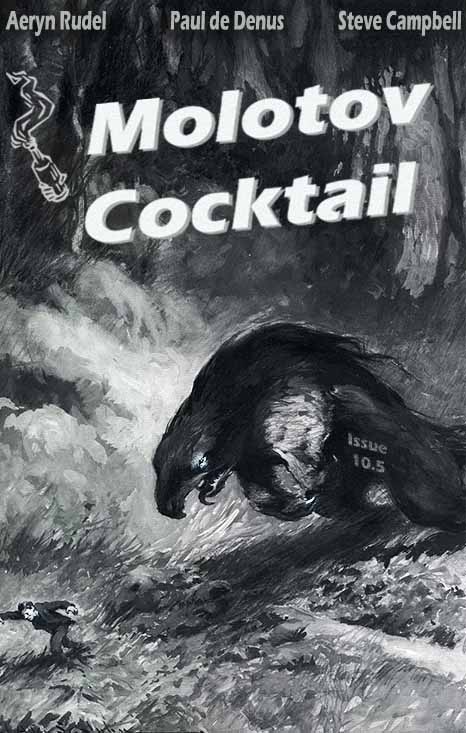
I’m a little late with this, but I did have another story published with The Molotov Cocktail. The story is called “The Thing That Came With the Storm.” You can read it for free by clicking the link below. (God, I love Molotov’s issue covers.)
“The Thing That Came With the Storm”
That was my week. How was yours?
A Week of Writing: 7/22/19 to 7/28/19
Yeesh, have I fallen behind on these things. Okay, here we go.
Words to Write By
This week’s quote comes from Truman Capote.
“Failure is the condiment that gives success its flavor.”
― Truman Capote
You ever seen someone smother their french fries in ketchup to the point where you can’t even see the fries? Or maybe someone dumps so much cream in their coffee you say something stupid like, “Hey, you want some coffee with that cream?” Anyway, that’s how I’ve been feeling about my writing lately. I swear I’m not posting this to elicit sympathy. Nope, it all about the importance and hard truth in Truman Capote’s quote. Essentially, if you are going to pursue writing, you are going to fail or at least feel like your failing a lot, and I think Mr. Capote’s right. Every time I’ve had some success at this gig it’s been more meaningful because I know how hard I’ve worked for it, and how much harder I’ll work still.
So, even when you’re feeling like you’re failing miserably, and the rejections are piling up, and the revision just keeps going and going and going, remember how fucking great those fries taste with a little ketchup.
The Novel
Still working on the novel, still revising, but getting closer. Progress on the novel for the last couple of week was slowed by a vacation and then a story I needed to write for another project. I’m back on on it this week and what I hope is the final two weeks before a completed revision and the novel is back in my agents hands. (My lips to gods ears and all that.)
Short Stories
Uh, not great.
- Submissions Sent: 0
- Rejections: 1
- Acceptances: 1
- Publications: 1
- Shortlist: 0
I have fallen of the wagon with submission in a serious way. The one bright spot here is an acceptance and a publication. There’s a submission window closing today for a market I do not want to miss, so I can guarantee at least one submission this week. Of course, I’m also off my pace for 100 submissions for the year, but I still have time to make that up.
The Blog
Fell down a little here too. Sensing a theme yet? 🙂
7/17/19: The Post-Acceptance Process
In this post I discuss what I do after an acceptance (a much less-used set of procedures).
Goals
The main goal is to get a story or two out to a market a very much like whose submission window close TODAY. Beyond that, it’s working on the novel (like a broken record).
Curious Fictions
I’ve published a couple more flash pieces over at Curious Fictions. They’re free to read, so head on out, give ’em a look, and throw me a like or two if you’re so inclined.
The first story is called “A Man of Many Hats,” and it’s one of the weirder things I’ve written. It was originally published by The Molotov Cocktail. The second story is an old, unpublished work called “A Friend for Abby.” .
“A Man of Many Hats”

“A Friend for Abby”
That was my week. How was yours?
The Post-Acceptance Process
In a recent post, I discussed my process after receiving a rejection. Well, there’s a flip side to that, and I have a post-acceptance process too. It’s just as important as the post-rejection ritual, maybe even more so. Here’s what I do (or try to do) after what I like to call “the blessed event.” 🙂
- Enjoy it. This is a do as I say and not as I do kind of thing because, well, I suck at enjoying my successes. Here’s what you should do, though. Take a moment, revel in that acceptance, bask in the warm glow of validation, and tell yourself, “See, I am good enough.” It’s good for your confidence, it’s good for your soul, and it strengthens your resolve and determination for the rejections that are always right around the corner.
- Report. Okay, now that you’ve enjoyed the moment and read all the nice things the editor said about your story at least five times, it’s time to get back to work. Like a rejection, the first thing I do is go out to Duotrope and report the result of the submission. Unlike a rejection, however, this feels fucking fantastic. For me, it’s the best part. I get to select the acceptance option when I update the submission and then watch as my acceptance rate increases. It’s a wonderful burst of validation, and for some reason, it makes the acceptance feel more official, more real. All of that aside, it’s important to record the outcomes of all your submissions, whether they be rejections, acceptances, or anything in between. That data can be invaluable later.
- Respond. Now, unlike a rejection to which you NEVER respond, you need to respond to the acceptance quickly. Maybe not right that second, but within twenty-four hours at the very least. You need to let the editor know you’ve received their email and that the story is still available for publication. I guess you don’t have to say thank you, but I think you should. It’s the polite and professional thing to do in my opinion. In addition, many acceptance letters will ask you for additional information, like a bio, or include a contract. You need to address those things right away and get them back to the editor so they can get on with actually publishing your story.
- Celebrate. This is another thing I’m not particularly good at, but I think you should celebrate your successes. That could be as simple as heading out to Twitter and announcing the acceptance (unless the publisher has asked you to keep it under wraps for the moment). Or maybe you pour yourself a glass of wine (or your libation of choice) and drink to the win, because that’s what it is, a victory.
And that’s the post-acceptance process I try to follow. What do you do? Tell me about it in the comments.
Submission Statement: May/June 2019
Playing catch-up again. Here are my submission endeavors for May and June.
May/June 2019 Report Card
- Submissions Sent: 11
- Rejections: 12
- Acceptances: 1
- Publications: 0
- Submission Withdrawal: 1
May was fairly productive with 7 submissions, but I stumbled in June and only managed 4 more. A few of the rejections were from stories submitted prior to May and June, but most were for those sent out in that two-month period. I withdrew one story and sent it out again last week.
Rejections
Twelve rejections for April.
- Standard Form Rejections: 2
- Upper-Tier Form Rejections: 5
- Personal Rejections: 5
Lots of personal rejections lately and a few of those were shortlisted rejections, and number of them had similar feedback. I have some stories that seem to be falling between the genre cracks, and I’m essentially getting “not horror enough” rejections from horror markets and “not fantasy enough” rejections from fantasy markets. I’m not one-hundred percent sure what to do about that except try and find markets looking for broadly speculative submissions. I think I may have found a few, and I did resubmit these stories there, so we’ll see what happens.
Spotlight Rejection
This is a shortlist rejection, and it’s one that highlights many of the things I talk about on this blog.
Thank you for your patience. This submissions period was perhaps the most competitive I’ve ever had here at [publisher], and my final decisions were extremely gut-wrenching. With my current production schedule, I’m only able to produce two stories a month, and must reluctantly turn down many stories that I would love to accept. Unfortunately, [story title] is one of these. Thank you for making my decision so difficult. I hope to read more of your work in the future.
This rejection illustrates that writing a good story, even one the publisher likes, is not a guarantee of acceptance. You’re often up against a lot of competition for just a few spots (two in this case), which, as this publishers says, forces them to make tough decisions. Sure, these shortlist rejections can be disappointing, but, like always, it’s important to keep things in perspective, never take a rejection personally, and look for the silver lining. If a story is getting shortlisted, that means it has potential, and you should definitely keep submitting it. Also, I think it goes without saying that a shortlist rejection means the publisher likes your writing, and you should believe them when they say something like “I hope to read more of your work in the future.” I’ll send this story out again soon, and I’ll definitely send this publisher another piece during their next submission window.
Acceptances
One flash fiction acceptance that I’ll announce soon. It’s with a new market for me, so that’s always good. That brings me to 7 acceptances for the year, which is a bit behind my total from last year at this point. Hopefully, July will be a more successful month in that department.
And that was May and June. Tell me about your month(s).
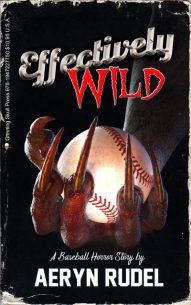
Effectively Wild – A Baseball Horror Story
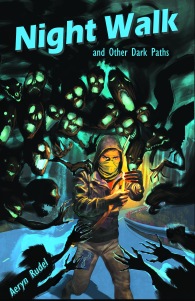
Night Walk & Other Dark Paths
Acts of War: Flashpoint

Acts of War: Aftershock

Acts of War: Stormbreak

 Aeryn Rudel's Rejectomancy