
A Week of Writing: 7/22/19 to 7/28/19

Yeesh, have I fallen behind on these things. Okay, here we go.
Words to Write By
This week’s quote comes from Truman Capote.
“Failure is the condiment that gives success its flavor.”
― Truman Capote
You ever seen someone smother their french fries in ketchup to the point where you can’t even see the fries? Or maybe someone dumps so much cream in their coffee you say something stupid like, “Hey, you want some coffee with that cream?” Anyway, that’s how I’ve been feeling about my writing lately. I swear I’m not posting this to elicit sympathy. Nope, it all about the importance and hard truth in Truman Capote’s quote. Essentially, if you are going to pursue writing, you are going to fail or at least feel like your failing a lot, and I think Mr. Capote’s right. Every time I’ve had some success at this gig it’s been more meaningful because I know how hard I’ve worked for it, and how much harder I’ll work still.
So, even when you’re feeling like you’re failing miserably, and the rejections are piling up, and the revision just keeps going and going and going, remember how fucking great those fries taste with a little ketchup.
The Novel
Still working on the novel, still revising, but getting closer. Progress on the novel for the last couple of week was slowed by a vacation and then a story I needed to write for another project. I’m back on on it this week and what I hope is the final two weeks before a completed revision and the novel is back in my agents hands. (My lips to gods ears and all that.)
Short Stories
Uh, not great.
- Submissions Sent: 0
- Rejections: 1
- Acceptances: 1
- Publications: 1
- Shortlist: 0
I have fallen of the wagon with submission in a serious way. The one bright spot here is an acceptance and a publication. There’s a submission window closing today for a market I do not want to miss, so I can guarantee at least one submission this week. Of course, I’m also off my pace for 100 submissions for the year, but I still have time to make that up.
The Blog
Fell down a little here too. Sensing a theme yet? 🙂
7/17/19: The Post-Acceptance Process
In this post I discuss what I do after an acceptance (a much less-used set of procedures).
Goals
The main goal is to get a story or two out to a market a very much like whose submission window close TODAY. Beyond that, it’s working on the novel (like a broken record).
Curious Fictions
I’ve published a couple more flash pieces over at Curious Fictions. They’re free to read, so head on out, give ’em a look, and throw me a like or two if you’re so inclined.
The first story is called “A Man of Many Hats,” and it’s one of the weirder things I’ve written. It was originally published by The Molotov Cocktail. The second story is an old, unpublished work called “A Friend for Abby.” .
“A Man of Many Hats”

“A Friend for Abby”

That was my week. How was yours?
The Post-Acceptance Process

In a recent post, I discussed my process after receiving a rejection. Well, there’s a flip side to that, and I have a post-acceptance process too. It’s just as important as the post-rejection ritual, maybe even more so. Here’s what I do (or try to do) after what I like to call “the blessed event.” 🙂
- Enjoy it. This is a do as I say and not as I do kind of thing because, well, I suck at enjoying my successes. Here’s what you should do, though. Take a moment, revel in that acceptance, bask in the warm glow of validation, and tell yourself, “See, I am good enough.” It’s good for your confidence, it’s good for your soul, and it strengthens your resolve and determination for the rejections that are always right around the corner.
- Report. Okay, now that you’ve enjoyed the moment and read all the nice things the editor said about your story at least five times, it’s time to get back to work. Like a rejection, the first thing I do is go out to Duotrope and report the result of the submission. Unlike a rejection, however, this feels fucking fantastic. For me, it’s the best part. I get to select the acceptance option when I update the submission and then watch as my acceptance rate increases. It’s a wonderful burst of validation, and for some reason, it makes the acceptance feel more official, more real. All of that aside, it’s important to record the outcomes of all your submissions, whether they be rejections, acceptances, or anything in between. That data can be invaluable later.
- Respond. Now, unlike a rejection to which you NEVER respond, you need to respond to the acceptance quickly. Maybe not right that second, but within twenty-four hours at the very least. You need to let the editor know you’ve received their email and that the story is still available for publication. I guess you don’t have to say thank you, but I think you should. It’s the polite and professional thing to do in my opinion. In addition, many acceptance letters will ask you for additional information, like a bio, or include a contract. You need to address those things right away and get them back to the editor so they can get on with actually publishing your story.
- Celebrate. This is another thing I’m not particularly good at, but I think you should celebrate your successes. That could be as simple as heading out to Twitter and announcing the acceptance (unless the publisher has asked you to keep it under wraps for the moment). Or maybe you pour yourself a glass of wine (or your libation of choice) and drink to the win, because that’s what it is, a victory.
And that’s the post-acceptance process I try to follow. What do you do? Tell me about it in the comments.
Submission Statement: May/June 2019
Playing catch-up again. Here are my submission endeavors for May and June.
May/June 2019 Report Card
- Submissions Sent: 11
- Rejections: 12
- Acceptances: 1
- Publications: 0
- Submission Withdrawal: 1
May was fairly productive with 7 submissions, but I stumbled in June and only managed 4 more. A few of the rejections were from stories submitted prior to May and June, but most were for those sent out in that two-month period. I withdrew one story and sent it out again last week.
Rejections
Twelve rejections for April.
- Standard Form Rejections: 2
- Upper-Tier Form Rejections: 5
- Personal Rejections: 5
Lots of personal rejections lately and a few of those were shortlisted rejections, and number of them had similar feedback. I have some stories that seem to be falling between the genre cracks, and I’m essentially getting “not horror enough” rejections from horror markets and “not fantasy enough” rejections from fantasy markets. I’m not one-hundred percent sure what to do about that except try and find markets looking for broadly speculative submissions. I think I may have found a few, and I did resubmit these stories there, so we’ll see what happens.
Spotlight Rejection
This is a shortlist rejection, and it’s one that highlights many of the things I talk about on this blog.
Thank you for your patience. This submissions period was perhaps the most competitive I’ve ever had here at [publisher], and my final decisions were extremely gut-wrenching. With my current production schedule, I’m only able to produce two stories a month, and must reluctantly turn down many stories that I would love to accept. Unfortunately, [story title] is one of these. Thank you for making my decision so difficult. I hope to read more of your work in the future.
This rejection illustrates that writing a good story, even one the publisher likes, is not a guarantee of acceptance. You’re often up against a lot of competition for just a few spots (two in this case), which, as this publishers says, forces them to make tough decisions. Sure, these shortlist rejections can be disappointing, but, like always, it’s important to keep things in perspective, never take a rejection personally, and look for the silver lining. If a story is getting shortlisted, that means it has potential, and you should definitely keep submitting it. Also, I think it goes without saying that a shortlist rejection means the publisher likes your writing, and you should believe them when they say something like “I hope to read more of your work in the future.” I’ll send this story out again soon, and I’ll definitely send this publisher another piece during their next submission window.
Acceptances
One flash fiction acceptance that I’ll announce soon. It’s with a new market for me, so that’s always good. That brings me to 7 acceptances for the year, which is a bit behind my total from last year at this point. Hopefully, July will be a more successful month in that department.
And that was May and June. Tell me about your month(s).
Form Rejections: What Do They Actually Mean?

As a longtime student of rejectomancy, I’ll be the first to tell you the arcane art of divining meaning from rejections only gets you so far. Sometimes a rejection just means what it says and nothing more. Attempting to read complex hidden motives into a simple “no thanks” can lead you down a dark, miserable path of self-doubt. In this post, we’ll discuss how to avoid that path with some examples of form rejections from my own collection and a little rejectomantic analysis.
Form Rejection #1
Thank you so much for thinking of [publisher]. Unfortunately [story title] is not quite what we’re looking for at the moment. We wish you the best of luck placing it elsewhere.
This is a standard form letter, using very standard language. Things like “not quite what we’re looking for” and “best of luck placing it elsewhere” are the stock in trade of form rejections. There’s no point in reading further into a letter like this, and let me give you two reasons why. One, this story sold on it’s next submission. Two, this market published the last story I sent them before this one. So, I KNOW this publisher likes my writing enough to publish it, and I KNOW this story was good enough to sell elsewhere. That data tells me this form letter meant one thing: the story wasn’t a good fit for THIS publisher. That’s all.
Form Rejection #2
Thank you for submitting [story title] to [publisher]. We appreciate the chance to read it. Unfortunately, we don’t feel it is a good fit for us and we’re going to have to pass on it at this time.
Thanks again. Best of luck with this.
Another standard form letter. “We don’t feel it’s a good fit for us,” is just another entry on a long list of boilerplate phrases that make a form letter a form letter. Again, there’s no need to read further into this. There’s no feedback here, just a polite no thanks. Move on and send the story somewhere else. That’s what I did, and this story sold a few submissions later. One more thing, this story was rejected nine times before it sold, five of those rejections being ones just like this. The point is a bunch of boilerplate nos doesn’t mean a yes isn’t right around the corner.
Form Rejection #3
Thank you for submitting your story, [story title], to [publisher]. Unfortunately, we have decided not to publish it. To date, we have reviewed many strong stories that we did not take. Either the fit was wrong or we’d just taken tales with a similar theme or any of a half dozen other reasons.
Best success selling this story elsewhere.
This is a form rejection, but I like that it breaks down some of the reasons why you might be receiving it. Wrong fit, similar theme, etc. are all perfectly valid reasons for a story to be rejected, even a good one, even one the publisher likes. In other words, they’re kind of saying what I’ve been saying all throughout this post: don’t read into form letters. Like the other stories rejected here, this story eventually sold to another publisher.
So, what did we learn from these form rejections? One, they generally don’t mean much other than no, and, two, each of the stories rejected here went on to sell somewhere else. If I had read dire meaning into any of these rejections and stopped submitting those stories, well, I’d have three fewer acceptances to my name.
Look, form letters are just a polite and efficient way for an editor to reject a story when they don’t have the time or need to offer more feedback. But, hey, I get it. If you’re new to the process, something like “don’t feel it’s a good fit” might send you down that aforementioned dark path in search of the TRUE meaning being the word “fit.” Let me turn the light on and save you some time. It doesn’t mean what you think it means. It’s just a no, nothing more, and one of dozens and probably hundreds you’re going to get if you keep sending out submissions. Move on, don’t read into it or dwell on it, and send that story out again.
Thoughts on form rejections? Tell me about it in the comments.
My Most-Rejected Story (24 & Counting)

One of my favorite things to talk about on this blog is my most-rejected story. It’s a battered and beleaguered urban fantasy tale that has endured more close-but-no-cigars, shortlists, market closures, and of course plain old form rejections than any other story I’ve ever written or submitted. Of course, it may be time to take the hint and trunk or self-publish the piece, but before we get into that, here’s the story’s report card.
- Submissions: 27
- Rejections: 24
- Withdrawals: 3
- Personal Rejections: 8
- Short Lists: 3
- First Submission: 9/20/14 (rejected 9/25/14)
- Last Submission: 3/4/19 (rejected 4/1/19)
So, yeah, this story has been around the block a time or two or, you know, twenty-seven. It’s piled up the rejections, but what’s kept me going is the fact it keeps getting good feedback and the occasional shortlist. It’s also seen a bit of bad luck. Two of the withdrawals came about because the market in question closed down. One of those markets had the story shortlisted at the time.
It may be I’m blind to the story’s faults at this point or just stubborn about them. I have listened to the feedback I’ve received, though, and said feedback comes in two stages: prior to a substantial rewrite and after. Much of the feedback before the rewrite mentions how the story feels like a prelude to something longer. I took that to heart and expanded the tale, adding a bit more world-building and character background. The second stage of feedback is the more general close-but-no-cigar stuff. Basically, praise for the story (especially the overall concept), but still a no.
I think the rewrite improved the piece, but obviously not enough to get it accepted. For score-keeping purposes, four of the personal rejections and two short lists came before the rewrite and four personal rejections and one short list came after. So, pretty even there.
The real problem here is this story has gone to twenty-seven different markets, and I’m running out of places to send it. Now, I wait for fledgling fantasy markets or anthologies to pop up on Duotrope before I send the story out again.
Back to the original premise of this post. Should I trunk, self-publish, or stick to my guns and keep firing the story out there? Let’s look closer at those options.
- Trunk/Rewrite: Some of the feedback I’ve received indicated I might have a good idea in the wrong story. Or a good idea that needs more than a short story to tell properly. So maybe not a trunk story but one that needs to be something much longer, like a novelette.
- Self-Publish: Now that I have a good venue to pursue self-publishing (Curious Fictions) this option is more attractive. In fact, I could do something like I outlined under the trunk option, turn this into a longer piece, and serialize it. That could be fun.
- Keep Submitting: I’m sure some of you are shaking your head that I would even consider this after twenty-four rejections. I hear you. I really do. Buuuuuut, I know authors who have placed a story after this many rejections and more, and I personally placed one after sixteen rejections. That’s anecdotal, sure, but it does give me hope, and, hey, one-third of the rejections on this story were of the personal variety and had nice things to say about the piece.
Ultimately, I’m still on the fence about this story. Though, if pressed, I’d say I’m leaning toward a combo of rewrite and self-publish.
What do you think? Let me know in the comments.
A Week of Writing: 6/10/19 to 6/16/2019

Another week of writing and stuff.
Words to Write By
This week’s quote is another from Mark Twain.
“The secret of getting ahead is getting started. The secret of getting started is breaking your complex overwhelming tasks into small manageable tasks, and then starting on the first one.”
― Mark Twain
I’ve been thinking a lot about productivity or more precisely the lack of it. A lot of folks call that writer’s block, but when I’m not productive it’s generally not because I can’t write, it’s because I’m terrified to start writing or editing or revising or whatever. Mark Twain’s quote describes almost exactly what I do to get out of my funk. Looking at something like a novel (or the revision of said novel) as one colossal task is completely overwhelming, so much so that I just spin my wheels and fail to get anything done. If I break down that huge task into a bunch of little ones, like Mr. Twain suggests, I can get on with it.
With a novel, those little tasks are writing an outline, then finishing the first chapter, then writing 2,000 words a day. Basically, I never let myself dwell too long on the overall task, I just complete the task(s) I assigned myself for the day. If I do that for like 90 days in a row, one day I’ll look up and have a completed first draft. For revision, it’s roughly the same process. I’ll assign myself one or two plot points to resolve and focus entirely on those, or if I’m doing a more general proof, I’ll assign myself a number of pages per day.
There’s a bit of self trickery in this process, but I’ll use every dirty trick in the book if it means I can push past the fear and doubt and get more done. 🙂
The Novel
Well, I’m back to revising Late Risers and making good progress. Last week I primarily focused on starting from page one and re-reading the first half of the novel. I did a lot of work in the first half and added a ton of new material. So I needed to reacquaint myself with all those shiny new words and figure out if they’re worth keeping. The good news is that most of them are worth keeping, and, as usual, with a little distance from the novel, it reads a lot better and more cohesively than I thought it would. This week I plan to plow through the second half of the book. I won’t need to revise as much, but there’s one huge plot point I need to rework in the third act. After that, it should be pretty smooth sailing. I hope.
Short Stories
Yes, behold my shame.
- Submissions Sent: 0
- Rejections: 1
- Acceptances: 0
- Publications: 0
- Shortlist: 0
No submissions last week, but, hey, I did get a form rejection (womp womp). I’m lagging this month with new submissions, though I am working on new short stories that will become new submissions. I hope to get one or two or three of those out this week. I was also invited to contribute a story or two to a sword & sorcery magazine, so I’ll be starting those stories this week.
The Blog
Here are the blog posts from last week.
6/12/19: Weeks of Writing: 5/20/19 to 6/9/19
Getting caught up on the weeks I missed.
6/15/19: Submissions: A Pair of Never Have I Evers
In this post I discuss two publisher responses I’ve never received.
Goals
Novel, novel, novel. Short story, short story, short story.
Curious Fictions
I’ve started posting some of my reprint flash fiction and short stories up at Curious Fictions, and I plan to do that every Monday for a while. I’ll eventually get around to posting new material, and maybe even a serialized novella. For the moment, getting some of my old reprints some fresh air has been a lot of fun.
This week’s story is “Caroline,” a zombie tale published by Red Sun Magazine a few years ago. It’s definitely one of the darker pieces I’ve written, and you can check it out by clicking the link(s) below.
“Caroline”

That was my week. How was yours?
Submissions: A Pair of Never Have I Evers
With over four hundred submissions you might think I’ve seen just about everything when it comes to editorial responses. I’ve certainly seen a lot, but there are a couple of anomalies in my submission record that stick out. Let’s talk about them.
1) Never have I ever received a revision request.
Yep, not once. I think I’ve received just about every other kind of response you can get from a publisher, but the revision request eludes me. I know authors who receive tons of them, to the point where it’s almost commonplace. So why not me? Here are two possible reasons.
- The market. Some publishers just don’t send them. It’s either a yes or a no because they don’t have the time to work with an author to develop a maybe. This is certainly anecdotal, but the authors I know who receive revision requests on the regular write more lit-fic, so maybe it’s more common in that circle.
- I’m a true outcome writer. Borrowing a term from baseball, a true outcome player is one who often generates one of three outcomes in an at bat: a home run, a walk, or a strikeout. So far, I tend to be that kind of writer. I either get an acceptance (a home run), a form rejection (a strike out), or a personal rejection (a, uh, walk, I guess). I’m not sure how much of that is what I write and how much is where I submit, probably a bit of both. It’s possible I’m a true outcome writer because my submission targeting needs work. That’s always worth reexamining.
2) Never have I ever received a rude rejection.
I hear tales of rude or mean-spirited rejections a lot, but I’ve never been on the receiving end of one. Unlike the first anomaly, I’m, uh, okay with that. I’ve received feedback I thought was wildly off base, but it wasn’t rude, just wrong for the story I wanted to tell. So, why haven’t I got one of these literary kicks to the teeth?
- I’m just lucky. Totally plausible. Maybe, I’ve just managed to avoid the editors that send rude rejections, or I’ve managed not to do anything that would bring their ire down on my head. *Knocks on wood.*
- They’re pretty rare. When I do see an author talking about a rude rejection on social media it invariably gets a whole bunch of clicks, shares, and retweets. It’s the kind of salacious tidbit folks love to read and talk about. So, when it does happen, I think it gets magnified, and that might make it seem more common than it actually is. (My personal opinion is that rude rejections are rare as hen’s teeth, but see my last point.)
- Rude is subjective. Sometimes, when I see an author talking about a rude rejection, it turns out to be what I’d consider a pretty standard form rejection. Yeah, these things can be short and to the point, and if you’re feeling salty about the rejection, it might come across as terse or dismissive. In other words, one author’s rude is another author’s shrug and move on. I’m not saying rude rejections don’t exist–I’ve seen conclusive evidence they do–but I think it’s best to get a little distance before using any rejectomancy to divine a rejection’s intent, good or bad.
Got anything to add to my submission anomalies? Or maybe you have some of your own. Tell me about them in the comments.
Weeks of Writing: 5/20/19 to 6/9/19

Yikes. Time to get caught up on these weeklies.
Words to Write By
This week’s quote is another from Jodi Picoult.
“You can always edit a bad page. You can’t edit a blank page.”
― Jodi Picoult
I love this quote because it’s such a simple truth. Essentially, writing is always better than NOT writing. I recently wrote a blog post about what I’d learned from working under deadlines, and this was one of the best lessons. I called it “fix it in post,” but it’s the same concept. Getting the words on the page, getting the broad strokes of the story down, even when it feels terrible, is a necessity, and it’ll almost never be as bad as you think it’ll be. Like Jodi Picoult says, you can always edit a bad page. You can improve it, make it better, even make it great. But you need to get those words on the page before you can do literally anything.
The Novel
I’ve spent the last three weeks or so working on a Privateer Press novella (and then entertaining family), so I haven’t worked on Late Risers at all. That changes this week, and I’m headed back to the revision salt mines. I stopped the revision at a good place, and I had added most of the new material I needed. This week I’m gonna read through all that new stuff now that I’ve head a chance to step away and gain some perspective, then I’ll head into the second and third act, and hopefully it’ll be a gentle downhill revision from there.
Short Stories
Some submissions. Not enough, but some.
- Submissions Sent: 6
- Rejections: 4
- Acceptances: 0
- Publications: 0
- Shortlist: 0
I managed a couple of submissions per week over the last month. These six put me at forty-six for the year, still mostly on pace for my one-hundred. I still have nine submissions pending, and I’m hoping one or more of those will break my acceptance-less streak dating back to April.
The Blog
Here are the blog highlights for the last three weeks.
5/29/19: Deadlines: What Can They Teach You?
In this post I discuss what I’ve learned from working under tight deadlines.
5/31/19: Submission Protocol: Further Consideration Letters
A discussion of further consideration letters and if/when you should respond to them.
6/4/19: The Post-Rejection Process
What do you do after a rejection? Well, here’s what I do.
Goals
The novel is the primary goal as I inch closer to a completed revision. As usual, I’d like to get a few submission out too.
Other Stuff
There’s one more thing I’d like to call to your attention. I’ve started putting some fiction out at Curious Fictions, mostly reprints that are free to read, though I do have plans for original, even serialized stuff. So, head on out there, read some of the free stuff I have up (and will add to each week), and if you’re so inclined, give me a follow and/or a like. 🙂 Just click on my smilin’ mug below to get to my author profile.

That was my week(s). How was yours?
The Post-Rejection Process

Rejections are inevitable. You can’t avoid them, you can’t (and absolutely shouldn’t) argue with them, and though they lose some of their sting over time, they’ll always have some bite. What you can do is control how you deal with rejections. For me, that boils down to a specific four-step process that lets me put rejections in perspective and move on. Of course, this is going to be a very different process for each writer, but here’s what I do.
- Read and feel. You can’t avoid this part, so I just lean into it. Be disappointed, be angry, be sad. There’s nothing wrong with any of that . . . as long as you set some kind of time limit. If I need it, I’ll usually give myself anywhere from ten minutes to an hour just to deal with the emotions. I remind myself none of this is personal, that selling a story is all often about putting it in front of the right editor at the right time, and all the other little adages and affirmations I talk about on the blog. What I don’t want is to let those emotions overwhelm me and keep me from being productive, i.e., sending out more submissions. This is also a time I might reach out to other authors to commiserate, normalize the experience, and, hey, get a little sympathy from folks going through the same thing.
- Observe and report. The next thing I do is all the bookkeeping. It’s a clinical process that removes me from the emotional aspect of rejection. First thing I do is move the rejection email from my inbox into a rejection folder. It’s kind of an out of sight, out of mind thing, but it’s also so I can put the rejection where it belongs. There’s something vaguely comforting in that. The next thing I do is head out to Duotrope and report the rejection there. I want to keep accurate records because I need them for my blog, and I want to make sure I don’t make stupid mistakes like sending a rejected story to the same publisher. I can’t let a disappointing rejection hurt my chances at future publication.
- Get analytical. Okay, now that I’ve let my emotions have their moment and I’ve done all the necessary accounting, I’m usually in a pretty objective place. If I’ve received a personal rejection with feedback, I’ll pull up the email and really try and absorb it. Is it useful to me? Do I need to revise the story based on the feedback? More importantly, does the feedback possibly pinpoint a larger issue in my writing? If the feedback resonates with me, then I’ll revise the story. If I’ve received a form rejection, then I generally go straight to step four.
- Fire and forget. I often send out a rejected story right away if I received a standard form rejection and the story has only been submitted a few times (or if I can’t use the feedback I received from a personal rejection). It’s another process that has, I don’t know, kind of a cleansing element, especially after I’ve done all the stuff above. Sending that story out again feels like the final step in the process, one that allows me to put a rejection behind me and move forward.
So that’s my process, my ritual if you will. It keeps me sane and keeps me sending out more submissions, and that’s all I can hope for.
What do you do post-rejection? Tell me about it in the comments.
Submission Protocol: Further Consideration Letters
A recent discussion with another author about further consideration letters (sometimes called short-list letters) prompted the question of whether or not you should respond to them. It got me thinking about how I generally handle short lists and further considerations. So let’s talk about that. First, what is a further consideration letter? Here’s an example:
Hello Aeryn,
The editorial team has read your story, [Story Title]. They have decided to put this story on the “short-list” to be considered for publication. We want to respect your time as an author, so we will make a final decision as soon as possible.
Thank you,
Should you respond to a letter like this? I don’t think it’s necessary, and here are two reasons why.
- It’s really just a status update. In my experience, a lot of further consideration letters are form letters to let you know what’s going on with your story. They’re not too dissimilar from the auto-generated notifications you get when your story is initially received (in other words, they are meant as one-way communications). Basically, no response is required. The letter is just a “Hey, here’s what’s up with your submission.”
- It’s not expected. Piggy-backing on point number one, I personally don’t think editors expect a response to further consideration letters, even if they sent a short personal note. Like responding to a rejection (or generally anything but an acceptance), it’s not necessary and is probably just clutter in an inbox already filled to bursting.
I have not responded to most further consideration letters (but see below), and it doesn’t appear to have affected my chances of publication.
Okay, so are there times you should respond to a further consideration letter? That answer is yes, when the editor asks you to. See below:
Dear Aeryn,
Thank you again for your submission. We really like this story and would like to add this on our short list, if that is okay with you. We will have the final decisions by July 1 at the latest. Let us know!
Thanks!
This is something I’ve seen a few times with further consideration letters, especially if it’s going to take the editors a while to make decisions. Like in the letter above, the editors will a) tell you how long the decisions is going to take and b) ask you if you mind letting them hold on to the story for that long. In this case, yes, absolutely respond to let the editors to let them know what you decide. I really appreciate a letter like this, as it allows me to make an informed decision about what happens to my story. I’ve never pulled a story back after a letter like this, but it’s nice to have that option.
I have kind of a funny outlier story about responding to a further consideration letter. I once sent a story to a pro market (now sadly out of business), and after not hearing back for over six months, I sent a query letter. When I received no response to the query, I sent a withdrawal letter. About a week after I sent the withdrawal I received a further consideration letter from the publisher. In a panic, I sent the editor a note explaining I’d withdrawn the story, but if he didn’t mind too much, I’d like to, uh, withdraw my withdrawal. Luckily, he was a very understanding person and added the story back into his final review. I received an acceptance about two months later. (Yay! Happy ending.)
Thoughts on responding to a further consideration letter? Tell me about it in the comments.
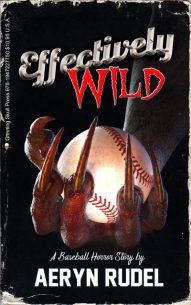
Effectively Wild – A Baseball Horror Story
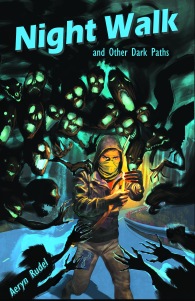
Night Walk & Other Dark Paths
Acts of War: Flashpoint

Acts of War: Aftershock

Acts of War: Stormbreak

 Aeryn Rudel's Rejectomancy