
A Week of Writing: 10/12/20 to 10/18/20

Another week of writerly doings. Here’s how I did.
Words to Write By
This week’s quote comes, once more, from Elmore Leonard.
“My characters have to talk, or they’re out. They audition in early scenes. If they can’t talk, they’re given less to do, or thrown out.”
-Elmore Leonard
I love this one, mostly because I write the same way. I tell my stories primarily with dialogue, and characters who don’t talk–or, you know, ones I can’t figure out how to make talk–fade into the background or even disappear in revision. All of my main characters, especially in long-form fiction, are absolute motor-mouths, and since they need someone to talk to or at, my secondary characters follow suit. I always hear dialogue first when I start writing, and my characters reveal their motivations and personalities by talking, first in my head, and then on the page.
The Novel
As I mentioned in last week’s update, Hell to Play is on hold until I get moved at the end of the month. I’ve tinkered a little, but I’m not going to get into the meat of the next revision until I’m set up in my new office. I gotta admit, I’m kind of enjoying the break, and I think I’ll be recharged and rearing to go once I dive back in.
Short Story Submissions
Zilch. Nada. Bupkis.
- Submissions Sent: 0
- Rejections: 0
- Acceptances: 0
- Publications: 1
- Shortlist: 0
- Pending: 14
Yeah, I know, pretty pathetic. I didn’t send a single submission last week, mostly because I was busy packing. I’m gonna try to get at least one or two out this week, but, again, packing and moving take priority. I also did not receive a single rejection last week, which is odd because I have whooping 14 submissions pending. I expect this week will be busier, and I’d guess at least one rejection will show up in my inbox before the week is done. I did have a publication last week, and I’ll talk about that below.
Publications
My story, “Childish Things” was published last Friday at The Arcanist. It took third place in their HalloweenFlash contest. Interesting note, I have placed in every one of The Arcanist’s flash and short story contests (five so far). Of course, by writing that, I have all but guaranteed I won’t place in the next one. 🙂 Anyway, you can check out “Childish Things” by clicking the graphic below.
Goals
Again, no stated goals this week. I need to get packed, get moved, and if I can, squeeze a little writing in between.
And that was my week. How was yours?
Weeks of Writing: 9/14/20 to 10/11/20
I’m a month behind, so this’ll be four weeks of writing. 🙂
Words to Write By
Here’s one from author Richard Bach.
“A professional writer is an amateur who didn’t quit.”
—Richard Bach
I really like this quote for the bit about not quitting. The rest of it isn’t incorrect or anything, but folks tend to have different definitions of words like “amateur” and “professional.” But however you define those words, the second part of the quote remains undeniably true. You can’t quit. You have to keep going, and pushing, and writing, and submitting, and failing, and sometimes succeeding to achieve your goals. It’s an exhausting, soul-crunching process, but I think that’s what makes it worthwhile. It’s cliche, sure, but if it was easy everyone would do it. The truth is it’s not easy. It’s work. Fulfilling work, yes, maybe even necessary work, but work all the same.
The Novel
Hell to Play is still in revisions and likely to stay there for the foreseeable future. We just bought a house, and all the packing and moving shenanigans have taken center stage. Should be moved in with my office set up by the end of the month, and then revisions will begin again in earnest. I have started the process, which primarily involves adding scenes to fill in plot holes or pieces missing from a character’s central motivations. The new material should take my word count north of 90,000 but probably not more than 95,000. Still feeling pretty good about it, and I think the additions will make for a better book.
Short Story Submissions
A solid four weeks of submissions.
- Submissions Sent: 11
- Rejections: 4
- Acceptances: 2
- Publications: 0
- Shortlist: 1
- Pending: 14
Eleven submissions over four weeks is good work. This bumps me up to a total of 72 submissions for the year and gives me a reasonable shot of hitting 100 for 2020. The two acceptances kept my streak of at least one acceptance per month in 2020 alive for September and October. The shortlist was a surprise, and a welcome one, from a top-tier market that’s been on my bucket list since I started submitting work seriously almost eight years ago. I have 14 submissions pending, which is more than I’ve had in a long time. That means a bunch of rejections (and hopefully an acceptance or two) are in my future.
Acceptances
The two acceptances over this four-week period came on September 17th and October 1st. The first acceptance is from Ellipsis Zine for a flash piece called “Stall Number Two”. The second acceptance is from my old pals at The Arcanist and is for another flash fiction story called “Childish Things,” which also took third place in their recent Halloween flash contest. Both stories will be published and available to read online in the next week.
This gives me a baker’s dozen worth of acceptances for the year, with two months and change to go. I managed 14 acceptances last year, so I definitely have a shot at beating 2019’s total. I’d love to break my record of 19 acceptances in a year, but seven yeses in ten weeks feels like a tall order.
Goals
No stated goals for this week (and probably the next couple) while we pack and move house. I am looking forward to a new writing space in my new office at the end of the month. I think that’ll be more conducive to goal-oriented activities. 🙂
And those were my weeks. How were yours?
The First 500 Submissions

Recently, I sent my 500th submission since I’ve been tracking them through Duotrope. It took me roughly eight years to amass this many, though the bulk of them have come in the last four years or so. Anyway, it’s a big milestone, so I thought I’d write a blog post about it and show you what 500 subs looks like, what it gets you, and what it does for you (or maybe to you).
The Numbers
Here’s the basic composition of my 500 submissions.
| Acceptances | 67 |
| Rejections | 400 |
| Withdrawn | 16 |
| Lost/Never Responded | 3 |
| Pending | 14 |
- Acceptances: What you see here translates to an acceptance rate of just over 14%. Decent, but some lean years early in my submission career and a weird blip in 2017 have kept it lower than I’d like. I’ve managed to get over 15% in the last three years, but I’d really like to push that number up over 20%.
- Rejections: Yep, 400 of them. If you’d like a more detailed look at those 400 rejections, check out this post. Anyway, I’d like fewer rejections–wouldn’t we all–but I’m certainly not ashamed of this number. I’ve learned a lot from these rejections, and that’s translated to more acceptances in recent years.
- Withdrawn: Generally, when I withdraw a story, it’s because the publisher hasn’t responded after a significant amount of time and ignored a submission status query. I don’t like pulling a story for this reason, but sometimes you don’t have much choice.
- Lost/Never Responded: All three of the submissions in this category were to markets that went under while I had stories pending.
- Pending: I currently have 14 stories pending, which is a lot, even for me. Based on my overall acceptance percentage, two of these should result in acceptances. (Yeah, we’ll see.)
The Stories
Now let’s take a closer look at the composition of the actual stories I’ve submitted.
| Unique Stories | 106 |
| Published | 56 |
| Flash Fiction | 81 |
| Microfiction | 3 |
| Short Stories | 22 |
- Unique Stories: I have subbed 106 unique stories, although I did count stories I subbed as flash and then expanded to short stories as the same story. If you counted flash and short as distinct versions, my total is 112. Is this a lot of stories? Hard to say. I do write a lot, and I also write a lot of flash, which no doubt pumps up my submission numbers. If I was focused purely on short stories, I’d expect my total to be about half of what it is.
- Published: This is my favorite number out of all the stats I’ve listed. I’ve published over half the stories I’ve submitted. Yeah, sure, some of them have taken me a while to sell, and some of that is because my submission targeting is not as good as it could be, but I think selling one out of every two stories I write is pretty solid. The discrepancy between the number of stories published and my number of acceptances is simply due to the eleven stories I’ve sold as reprints.
- Flash Fiction: As I mentioned above, I write a lot of flash, and it represents the bulk of my submissions. Most of this is due to the fact that I participate in a bi-weekly one-hour flash fiction writing contest/exercise, and the vast majority of my flash stories come from that event.
- Microfiction: I started writing microfiction in the last year and a half, mostly as part of the #vss365 hashtag on Twitter. I haven’t submitted much of it, but I’ve published all three of the micros I’ve submitted on the first try. Huh, maybe I should submit more.
- Short Stories: Even though I’ve only subbed 22 short stories, and despite publishing a a bakers dozen, they account for almost half of my 500 submissions. Why is that? Well, my completely unscientific answer is simply that, in my experience, short stories are harder to sell. Even the shorts I’ve sold to pro-paying markets often racked up double digit rejections before the sale. Of course, some of this stems from my difficulties with submission targeting, but I still contend that selling a short story to a good market takes some effort and no few amount of submissions. Or maybe it’s just me. 🙂
And there you have it, 500 submissions. It’s certainly been an eventful journey to get to this point, but all these submission, and all the rejections, acceptances, and feedback that come with them, have definitely made me a better writer. No doubt, by the time I hit 1,000 submissions, I’ll be a bestselling author and a household name. 🙂
Hit any submission milestone of your own lately? Tell me about in the comments.
A Bad Request? 400 Rejections
Today I received my 400th rejection since I started tracking my submissions through Duotrope. Yeah, I received a few pre-Duotrope, in what amounts to my literary Dark Ages, but those rejections are lost to the sands of time and ancient Hotmail accounts, so we’ll work with the numbers we can verify. Anyway, what does 400 rejection look like? Let’s find out. 🙂
Rejections by Year
| Year | Rejections |
| 2012 | 4 |
| 2013 | 14 |
| 2014 | 31 |
| 2015 | 37 |
| 2016 | 43 |
| 2017 | 63 |
| 2018 | 100 |
| 2019 | 62 |
| 2020 | 46 (year to date) |
As you can see in the table above, the number of rejections I’ve received increased steadily but has leveled off in recent years. Obviously, 2018 was a banner year, where I set personal submission, rejection, and acceptance records. I haven’t managed to reach those lofty heights again, but they’re an excellent goal to shoot for.
Unique Stories/Markets
| Total | Accepted | |
| Unique Stories | 91 | 46 |
| Unique Markets | 108 | 18 |
Yep, I have had 91 stories receive a not for us, a we’re gonna pass, or a does not suit or needs at this time. It feels like a lot, but when I look deeper into the numbers, it’s not so bad. Of the 91 stories that have been rejected, I’ve gone on to publish 46 of them, which is a skoosh over fifty percent. That’s not too shabby.
Now, unique markets paints a different picture. I’ve been rejected by 108 of them, 18 of which have gone on to publish me at some point (up 5 from when I last ran these numbers). It’s important to note that of the 108 markets that have rejected me 44 of them are now defunct or on indefinite hiatus, and a fair number of them are anthology projects, essentially one-and-done publications. Still, this is a number I’d like to improve, especially if I can add a few of my bucket-list pro markets to the accepted column.
Most Rejected Stories
| Story | Rejections | Published | Retired |
| What Kind of Hero | 10 | Y | |
| When the Lights Go On | 10 | Y | |
| A Point of Honor | 10 | Y | |
| The Back-Off | 10 | Y | |
| Teeth of the Lion Man | 11 | Y | |
| Bites | 12 | Y | |
| After Birth | 12 | Y | |
| Caroline | 15 | Y | |
| The Scars You Keep | 15 | ||
| Paper Cut | 17 | Y | |
| Set in Stone | 24 | Y |
The table above shows all my stories that have received 10 rejections or more. I’ve published 7 of the them and 3 are retired pending a complete rewrite. What you see here is sort of my overriding philosophy when it comes to submissions. Keep submitting until you get a yes or you are absolutely certain the story isn’t working. Now, you might be looking at “Set in Stone” and thinking, “Wait, you didn’t think a story with 15-plus rejections should have been retired?” I get it, but in my defense, “Paper Cut” received 15 rejections before it was published, and “Set in Stone” accumulated shortlist and personal rejections throughout its entire submission run. Still, the numbers are the numbers, and 24 rejections says it’s time to find some space in the trunk. The other stories I’ve retired are ones with good premises, but insightful beta readers have convinced me they could be better. I should note that “Caroline” and “Paper Cut” have received a few rejections as reprint submissions.
Most Rejected Markets
| Rejections | Acceptances | |
| Market 1 | 44 | 16 |
| Market 2 | 21 | |
| Market 3 | 21 | 10 |
| Market 4 | 19 | |
| Market 5 | 17 | 1 |
Yes, I haven’t named the markets, but if you’ve followed my blog for any length of time, you know that’s just how I do things. Obviously, 44 rejections from one market is a lot, but since they’ve published 16 of my stories, I don’t take issue with the rejections. 🙂 The other markets here are pro and semi-pro publications that I continue to submit to, sometimes with success. If I were to expand this list to all the markets that have rejected me 10 times or more, you’d see a veritable who’s who of professional and well-regarded genre publishers, some of which I’ve managed to crack and some of which I’m still trying to.
Wait Times
| Days | Notes | |
| Fastest | 0 | 10 minutes |
| Slowest | 419 | |
| Average | 29 |
Since I last ran these numbers–when I hit 300 rejections–not much has changed. My fastest and slowest rejections are the same, and the average wait time has ticked up a little from 27 to 29 days. I doubt I’ll ever get a quicker rejection than 10 minutes, and, to be honest, I won’t submit to markets where waiting longer than 419 days for a response is even a possibility.
And that’s a snapshot of 400 rejections. I won’t inflict any more stats on you, but I think this should give you a good idea of what my submission process looks like. We’ll talk again when I hit 500. 🙂
Reached any rejection milestones of your own lately? Tell me about it in the comments.
Submission Statement: September 2020

September is in the books, and here’s how I did.
September 2020 Report Card
- Submissions Sent: 8
- Rejections: 6
- Acceptances: 1
- Publications: 0
- Further Consideration: 1
A solid month, and almost identical to August’s tally. The 8 submissions in September give me 67 for the year, which leaves me 33 to get in October, November, and December to hit my goal of 100. Certainly doable, though I’ll need an average of 11 per month to pull it off. More rejections than last month, but still manageable. The acceptance keeps my streak of at least one acceptance per month in 2020 alive, so that’s good. Finally, I received a further consideration letter from a top-tier professional publisher. I’m not gonna get my hopes up, but it was a nice surprise. No publications in September, but I’ll have at least one in October.
Rejections
Six rejections this month.
- Standard Form Rejections: 4
- Upper-Tier Form Rejections: 0
- Personal Rejections: 2
A better crop than August with a couple of personal rejections, one from a pro market. The form rejections where your usual run-of-the-mill boilerplate no thank yous we all know and love. 🙂
Here’s one of the personal rejections.
Thank you for submitting [Story Title] to [Publisher], but I am going to pass on it. The [story detail] is nice, but overall it didn’t quite work for me. Best of luck placing this elsewhere, and thanks so much for sending it my way.
I’m seeing this kind of rejection more lately, and it’s essentially a form letter with an added bit of personalized feedback/encouragement. I can think of a couple of pro publishers that do this with every rejection (that I’ve received), and it’s certainly appreciated. Often this type of personal rejection tells you what is working in the story more than what isn’t, but that’s still incredibly useful information, and, again, appreciated.
Acceptances
The acceptance for September is from Ellipsis Zine for my story “Stall Number Two,” a quirky little Twilight Zone-esque piece I’m happy has found a home. The story will be published later this month.
And that was September. Tell me about your month.
Form Letters: More Than Just No?

I’ve covered the topic of form letters a fair bit on this blog, generally focusing on form rejections, which are by far the most common. But form letters come in all shapes and sizes and can communicate a lot more than “we’re not publishing your story.” Let’s take a look at a few from my copious supply and see what we can learn. Some of this will cover old ground, but it’s a favorite subject of mine, and, well, my perspective on rejection is ever-evolving just as my collection of rejection letters is ever-expanding. 🙂
The Basic Form Rejection
Let’s establish a baseline for our form letters with your basic, no-frills rejection.
We have read your submission and will have to pass, as it unfortunately does not meet our needs at this time.
If you’ve been submitting your work for any length of time, you’ve likely seen letters like this one a lot. There’s not much to learn here because the letter doesn’t say anything other than we’re not publishing your story. In fact, it’s purposefully designed to say nothing more than that. Move on and submit the story somewhere else.
The Higher-Tier Form Rejection
This is another one I’ve talked about a lot on the blog, but here’s an example so you can see the difference between these first two letters and those to follow.
We have read your submission and unfortunately your story isn’t quite what we’re looking for right now. While we regretfully cannot provide detailed feedback due to the volume of submissions, we thank you for your interest in our magazine and hope you continue to consider us in the future.
It can be difficult to tell a higher-tier form rejection from a basic form rejection unless you’ve received both from the same publisher. So I’ll make this easy. This higher-tier form rejection is from the same publisher as my example basic form rejection. Pretty stark contrast, huh? The higher-tier has the all-important “consider us in the future,” which is generally (but not always) an indicator of a “better” rejection.
The Further Consideration Letter
The first of the “good” form letters, the further consideration notice is often welcome news, especially when it comes from a pro market, like this one.
Thank you for submitting [story title] to [publisher]. One of our first readers has read your story and believes it deserves a closer look. We would like to hold it for further consideration. Good luck!
Even if a further consideration letter ultimately results in a rejection, as this one did, you’ve gained valuable information. You now have an idea what kind of story the publisher might accept or at least seriously consider. That info helps you fine tune your submission targeting in the future, which, hopefully, leads to more letters like this and maybe an acceptance or two.
The Final Round Form Rejection
Sometimes a form rejection has a lot to say, much of it good and encouraging. I’ve removed a few bits from this rejection to conceal the identity of the publisher, as I usually do, but the important bits are still there.
Thank you for considering [publisher] for your story, [story title].
Unfortunately we have decided not to accept it. As much as we wish we could, we can’t publish every good story that comes our way.
Truthfully, we’re forced to return a great many stories with merits that make them well worthy of publication, including yours. Your story did, however, reach the final stage of our selection process–one among an elite group. Less than 5% of stories make it this far. That is no small feat.
We wish you the best of luck finding a home for your story elsewhere, feel confident of your success in doing so, and hope to receive submissions from you in the future.
As rejections go, this one is pretty good. Sure, it’s disappointing that I didn’t make the final cut, but this is a tough market, and making it this far tells me I have a good story on my hands. In fact, I sold this story on the next submission. The information in a letter like this is incredibly useful and encouraging, and it should help you determine what type of story to send the publisher in the future. Of course, you might ask why the publisher doesn’t include any personal feedback if they liked the story so much. Likely because this publisher receives thousands of submissions a year and a form letter saves them valuable time. Honestly, if the form letter is this good, I don’t mind not getting a personal note. I should also point out that this publisher does offer curated feedback form their readers on stories that get this far.
The Form Acceptance
Yep, acceptances come in form-letter flavor too. In fact, I’m seeing more and more acceptances arrive as boilerplate letters. There’s a good reason for this, actually, which the example below clearly illustrates.
We’re pleased to announce that your story [story title] is the fourth-place winner of our [publisher contest]!
Congratulations!
Your publication date will be [date].
We process all of our payments through PayPal and fourth place is awarded [$$$] as well as an e-copy of the contest anthology containing off of the winners and the runners up.
Some legal/rights things: Your acceptance of the payment means that you have given us the right to publish your story on our site and elsewhere under [publisher] name. After we publish it, you are free to send it elsewhere. We do not retain exclusivity rights.
You also ensure that this work is yours to sell and that it is not the product of any type of copyright infringement.
We just need your PayPal email and a 3-4 sentence bio.
Let us know if that works for you and feel free to reach out with any questions. We can’t wait to publish your story!
The reason the editor went with a form letter for this acceptance is they need to impart a lot information quickly and efficiently. They need to tell me my story has been accepted, when it will be published, how I will be paid and how much, what rights they are retaining to the story (none; bless them), what additional info they need to publish the piece, and, finally, what to do if I have questions. If you had to send all that information to a dozen different authors, a boilerplate form letter is absolutely the way to go.
And there you have it, five different form letters, four of which have a lot more to say than no. Have you received a form letter not covered in this post? I’d love to hear about it in the comments.
A Week of Writing: 9/7/20 to 9/13/20
One more week of writerly doings.
Words to Write By
This week’s quote once again comes from Stephen King.
“Writers are often the worst judges of what they have written.
—Stephen King
I know, I know. I use Stephen King a lot. In my defense, the dude is a writerly quote machine. Anyway, again he clearly and concisely sums up my thoughts on an important aspect of writing. Yep, writers generally suck at judging their own work. This, uh, suckage, cuts both ways, though. Sure, we can get down on ourselves and become convinced what we’ve written is total garbage when it’s actually pretty good. Worse than that, though, is when you believe you’ve written something that’s pure gold and it’s spray-painted lead at best. For me, this is where my darlings in need of killing are often found. All of this is why you need eyes other than your own on your work, especially long-form fiction. As the author, you have blinders on (for a lot of reasons), and folks who can tell you what’s good and what needs work are invaluable.
The Novel
Another critique partner has finished with Hell to Play, and his notes are different from the first reader. This is a good thing, and I’ve chosen critique partners who will come at the story from different angles and perspectives. One might focus more on character motivation and backstory and another might drill down on the plot and world building. There’s always overlap, of course, and since they’re reading the novel in Google docs, they can respond to each other’s comments. That’s great because when they agree, I’m pretty confident whatever it is needs to be addressed. When they don’t agree and explain why, I can make an informed decision on which bit of feedback fits my vision for the story and revise (or not) accordingly. Anyway, I’ve got a number of things to work on that range from fixing trivial details that just need to be consistent throughout the novel to overhauling chapters that illustrate a character’s central motivation.
In other novel news, I’m continuing to outline the new version of my last novel Late Risers. I’ve slowed some, but I like where it’s going so far.
Short Story Submissions
Better but not great.
- Submissions Sent: 2
- Rejections: 3
- Acceptances: 0
- Publications: 0
- Shortlist: 0
Two subs last week, which puts me at 62 for the year. I need 38 more to hit my goal of 100, which might be difficult at this point, but it’s all about the attempt. If I land somewhere in the 90s with an acceptance percentage around twenty percent, I’m not gonna complain. The rejections were all standard form rejections, and the only noteworthy thing about them is they all arrived on the same day. 🙂
Market Spotlight
This week, I want to highlight Nightmare Magazine, a great market for horror and dark fantasy that is accepting submissions of short stories, flash fiction, and even poetry for the next week. Here’s some of the relevant details from their submissions guidelines.
- SFWA- and HWA-certified professional market.
- Short stories up to 7,500 words, flash and creative nonfiction up to 1,000 words.
- No reprints.
- No sim-subs.
- Payment is .08/word.
- “Most rejections will be sent out within a few business days, while stories being seriously considered may be held for up to a few weeks.”*
- Accepting submissions until 9/20/20.
*This has been my experience with the publisher with the submissions I’ve sent.
Goals
Here are my writing goals for this week.
- Continue to outline the new version of Late Risers.
- Start working on the third revision of Hell to Play
- Send. More. Submissions.
And that was my week. How was yours?
Submission Protocol: Mistakes Happen

There may be no worse feeling for an author than realizing you’ve made some boneheaded error in the submission process after you’ve sent the submission. Panic sets in, and you begin to catastrophize about the end of your career and how the editor and all their friends will gather around your mistake, point and laugh, and add you to some DO NOT PUBLISH list from whence you will never return. Uh, well, I assume that’s how other writers feel about it anyway.
But here’s the truth. We all make mistakes, and most of the time, it’s not a big deal. In this post, I’ll present three common submission mistakes, what to do when you make them, and how to avoid them in the future. In case you’re wondering, yes, I have committed each of these submission sins (and survived to tell you about it).
Mistake #1: I made on error on the cover letter.
Mistakes on cover letters are pretty common and run the gamut from typos to more egregious copy-and-paste errors where you list the wrong story title or publisher name. Have I made this mistake? I sure have. I once misspelled my own name on a cover letter. How’s that for making a first impression on an editor? 🙂
What to do. Look, editors are human beings, and human beings understand that other human beings make mistakes. I think the vast majority of publishers will overlook an error on a cover letter and judge the author on the quality of their story. A number of editors of prominent genre markets I follow on Twitter have said this very thing. So, if you discover you’ve made a mistake on a cover letter, try to relax, it’s likely not going to hurt your chances of getting published. You don’t need to alert the publisher or send a revised cover letter.
How to avoid making this mistake. Use a templated cover letter, one you’ve thoroughly proofed and know is typo free. Then, make a little checklist of the elements you need to change or add and anything from the publisher’s guidelines you need to pay special attention to. Like this:
- story title (change)
- publisher name (change)
- word count (change)
- bio (add)
- email subject line (publisher wants title – word count – last name)
- publishing credits (remove; publisher doesn’t want in cover letter)
Just check off each element as you complete it. Once your checklist is complete, check the publisher guidelines again to make sure you haven’t missed anything, then proof the cover letter (and maybe one more time after that), and you should be in good shape.
Mistake #2: I sent a story to a publisher who has already rejected it.
I have made this mistake twice (I can barely stand the shame of writing about it). I keep very good records, but a minor lapse in concentration (and a story title change) resulted in this ghastly submission sin.
What to do. As soon as you realize the mistake, send an email to the editor letting them know what happened. Be polite, be professional, and apologize. Like I said earlier, editors are human beings and often quite reasonable ones. The last time this happened, the editor responded with a very kind email, thanking me for alerting him. The first time I didn’t get a response, but the publisher did accept my next story, so I guess they didn’t hold the mistake against me.
How to avoid making this mistake. Keep thorough and accurate submission records of every story you’ve submitted and the result of that submission. The easiest way to do that is to use an online submission database and tracker like Duotrope or The Submission Grinder. They’ll keep your submission records for you, and if you want to download that data into a spreadsheet, it’s just a few button clicks away. Before you submit a story, check your records to make sure you haven’t sent it to that publisher already. You might be asking how could you not remember where you sent a story? Well, after 500 some submissions and stories with double digit rejections, things can get a little fuzzy. So check your records and check them again before you hit send.
Mistake #3: I found a typo in a manuscript I submitted.
Well, first, don’t go proofing manuscripts you’ve already submitted. 😉 Yeah, this happens, and I’m sure just about every manuscript I’ve submitted contains at least one typo or a dropped word or some other minor error.
What to do. Nothing. Editors expect a few typos and whatnot in the manuscripts they receive. This is why they edit and proof stories before they publish them. I recently sold a story where I’d used the wrong name for a character once. How was I punished for my misstep? The editor pointed out and fixed the error when they asked me to approve the changes they’d made.
Do not send an editor a corrected manuscript. That’s a bad look, and it creates more work for the editor, who is likely overworked as it is. If the error is a huge one–like you accidentally uploaded a half-finished version of the story–you might email the editor, let them know what happened, and withdraw the piece. Honesty is the best policy with mistakes, and, in my experience, editors are often very understanding about such things.
How to avoid making this mistake. You should thoroughly proof your manuscripts, and, if possible, get eyes other than your own on your work. But even with all that proofing, a few minor mistakes are going to slip through from time to time. Like I said, editors expect a few typos, but if you’re consistently making larger errors on your manuscripts and catching them AFTER you submit the story, it’s likely time to reevaluate and improve you proofing process.
Have you made any of these errors in your submissions (or others not listed here)? Tell me about it in the comments.
Submission Statement: August 2020
August has come and gone, and here’s how I did submission-wise.
August 2020 Report Card
- Submissions Sent: 8
- Rejections: 2
- Acceptances: 1
- Publications: 1
Pretty good month. Eight submissions is solid output, and though I still have some work to do to hit my goal of 100 submissions for the year, this is a step in the right direction. The lack of rejections is mostly the result of submissions pending at markets that take upwards of four months to respond and the lack of submissions in June and July. I’m sure that issue will be sorted next month, and the nos and not for us’s will start pouring in again. 🙂
Rejections
Two rejections this month.
- Standard Form Rejections: 1
- Upper-Tier Form Rejections: 1
- Personal Rejections: 0
Not much to discuss here. The rejections were both form rejections, though one was a higher-tier. I am closing in on 400 total rejections for my freelance career, which is a milestone I’ll discuss at length, with a ton of stats, in the very near future.
Acceptances
My acceptance in August was at The Molotov Cocktail. I managed to win the Flash Odyssey competition with my story “Toward the Sun.” That gives me eleven acceptances for the year and keeps my streak of at least one acceptance per month in 2020 going. My acceptance percentage this year is better than it has been in years past and currently sits at around 23%. Hopefully, I can keep that up.
Publications
The publication last month was the aforementioned “Toward the Sun” at The Molotov Cocktail. Make sure you check out the other nine stories that placed in the competition. There are some fantastic tales from a group of incredibly talented authors.
And that was my August. Tell me about your month.
Rejections from The Rejectomancy Review
Let’s have a little fun and pretend I’m the editor of a new genre magazine. We’ll call this imaginary publication The Rejectomancy Review. If I were to run this hypothetical publication, what kind of rejections letter would I send? What would they look like? What would I want them to convey to the author? Let’s talk about that.
Before we get started, I should state that I have worked as a magazine editor in the past, and I’m occasionally tempted to try running a small genre zine on my own. Then I remember how much work heading up a magazine was, and I, uh, focus my creative energies elsewhere. Anyway, if The Rejectomancy Review was real, I’d use three tiers of rejection letters that allow an author to see a progression over multiple submissions. I’ve always liked that approach. Now, of course, I’m not saying markets that do not send rejections like this are doing something wrong. Not at all. There are factors like sheer volume of submissions and the limited time a magazine staff has to review them that might prevent them from sending anything other than a standard form rejection. This is just a “if I had my druthers” scenario, and, well, if I did end up running a magazine, I might immediately change my mind on how I send rejections. 🙂
Okay, let’s write some rejection letters. Like I said, we’ll do three tiers, and the language in these letters will be gleaned from or inspired by actual rejections I’ve received.
Tier One
This would be a standard form rejection I’d send for stories that didn’t work for me. It could be the writing, the subject matter, or even failure to follow submission guidelines, but, ultimately, it would be the rejection I’d send when I don’t have much else to say besides no.
Dear [Author],
Thank you for submitting your story “Zombies Ate My Homework” to The Rejectomancy Review, but I’m going to pass on this one.
Best of luck placing this story elsewhere.
I wouldn’t want an author to read much into a letter like this, so I’d keep this one short and to the point. It should be noted that a standard form rejection does not mean the story doesn’t work. It often just means the story doesn’t work for that editor. I’ve gone on to sell stories that received this basic no many times.
Tier Two
Another form letter, but this one would be for stories featuring one or more elements I liked.
Dear [Author],
Thank you for submitting your story “The Care and Feeding of Kaiju” to The Rejectomancy Review. I read the story with interest, but the narrative developed too slowly for me.
Thank you for your interest in our magazine, and I hope to see more of your work in the future.
As you can see, there are more encouraging notes in this rejection, and I state at least one reason why I rejected the story. I’d send this rejection for a good story that wasn’t to my taste stylistically or maybe had one major flaw (which I might mention in the rejection), but I’d want an author to see definite progress from the first form rejection to this one.
Tier Three
Dear [Author],
Thank you for letting me read “Werewolf? There Wolf”. I thought your take on lycanthropy was original and fascinating and enjoyed the piece overall. Unfortunately, the story is not a good fit for The Rejectomancy Review at this time.
I wish you the best of luck placing this story elsewhere, feel confident you will do so, and hope you’ll try us again with your next story.
The biggest difference here is that I’d turn this into a personal rejection with some personal notes on the story. I’d send this rejection for a story that has no appreciable flaws other than it being the wrong fit for the magazine. The final sentence contains some verbiage I’ve seen in other “good” rejections, things that made me feel a little better about the no.
So why would I or any editor reject a story they liked? It’s a good question, and one I’ve covered in this blog before, but here are three possible reasons.
- Too long. There’s only so much space and budget in any magazine, and if your story puts the editor over either, they might have no choice but to reject it. This is especially true with longer works, like novelettes, where a market might only accept one per issue.
- Too similar. If the market just published a story about vampire plumbers and you send in a story about vampire electricians, you might get a rejection. It’s just bad luck, but it happens, and I’ve received the “we just published a story like this” rejection a few times.
- Too different. If you stray a too far from a market’s usual fare, even if the editor really likes the piece, you might still get rejected. For example, if you submit a story to a sci-fi/fantasy magazine and your piece has a strong horror element, the editor might consider it a bad fit and reject it (while still praising the story). I’ve gotten that rejection a few times too.
So that’s how I might write rejection letters if I were running a genre zine. Of course, this is just one way to do it, and I based my theoretical rejections on what I like to see as a writer. The sheer volume of submissions often dictates what kind of rejections a market sends, and I my three tiers might be overly optimistic. 🙂
Thoughts on my faux rejections? Something you like to see as a writer? Tell me about it in the comments.
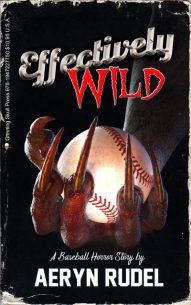
Effectively Wild – A Baseball Horror Story
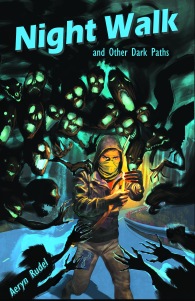
Night Walk & Other Dark Paths
Acts of War: Flashpoint

Acts of War: Aftershock

Acts of War: Stormbreak

 Aeryn Rudel's Rejectomancy