
A Week of Writing: 1/18/21 to 1/24/21

Another week of writing come and gone. Have a look.
Words to Write By
This week’s quote comes from author Jane Yolen.
“Exercise the writing muscle every day, even if it is only a letter, notes, a title list, a character sketch, a journal entry. Writers are like dancers, like athletes. Without that exercise, the muscles seize up.”
–Jane Yolen
One of the pieces of advice you’re bound to hear when you’re a writer is that you must write as often as possible, every day if you can. Now, I have some opinions on the efficacy of the every day thing, but what I like about Jane Yolen’s quote here is that she doesn’t demand narrative writing to stay in shape, just any writing. I think this is a useful bit of advice, and it’s worked well for me. On days where I’m really feeling stuck, but I want to at least get the ol’ writing muscles limbered up, I’ll work on an outline, write a blog post, even the occasional journal entry. Generally, that’s enough to get the creative energies flowing in the right direction, and often as not, I’m am able to produce some narrative fiction in the same day.
The Novel(s)
Not much work on either novel last week. I have a good reason for this . . . Okay, I have A reason for this. Whether it’s good or not is open to interpretation. I can say that what is currently holding me back should be resolved this week, and I’ll be able to get on with things.
Short Story Submissions
Pretty decent submission total last week.
- Submissions Sent: 3
- Rejections: 1
- Acceptances: 0
- Publications: 0
- Shortlist: 0
- Pending: 10
Three submission last week gives me eight for the month, and the one I sent this morning gives me nine. That’s my quota met for January, though I’m likely gonna get a few more submission out before the 31st. Only one rejection last week, and it was same-day. I keep expecting a pile of others to show up, but nothing so far. It’s looking more and more like I’m going to end January without an acceptance, which will break my twelve-month streak. Such is the gig, and I’m sure February will catch me up. 🙂
Super Secret Project
The announcement is coming very soon now. So excited to share this one with you folks.
Goals
Still keeping it simple: write, submit, revise.
And that was my week. How was yours?
A Week of Writing: 1/11/21 to 1/17/21
Another week of writing in the books. Have a look.
Words to Write By
This week, we’re going back a couple hundred years for a great quote from Jane Austen.
“I am not at all in a humor for writing; I must write on until I am.”
— Jane Austen
My take on this quote is that it’s essentially how to deal with writers block, or more specifically how I deal with it. For me, writer’s block generally manifests in an inability to get started. I sit down at my computer filled with fear and apprehension that I won’t be able to write or what I do write won’t be any good. Not the greatest way to get into a creative headspace. So I do what Jane Austen did: I write through it. It’s not foolproof, but it has allowed me to finish half a dozen novels and hundreds of short stories and flash. What usually happens is the first couple of paragraphs are garbage because I’m forcing the words, and then something will click, usually on the turn of a good sentence or bit of dialogue. Then the words come faster and better, and I can usually hit my word count goal and achieve something good or at least something with potential. So when you’re not in a humor for writing, try to remember what Jane Austen said and keep going.
The Novel
I worked a bit on the revision of Late Risers last week, though I wouldn’t say I made much progress. Part of the problem is I got distracted with another novel that’s about a third of the way done. It’s one I started writing in 2017 and then put on the back burner. That book easily has the best concept of just about anything I’ve written, but the amount of research required to finish it is, well, daunting. So I stopped at about 33,000 words and wrote two other novels instead. I will return to it–I think it’s actually pretty good–but for the moment, I shouldn’t let it distract me from the task at hand. It’s just testament to how much I hate revising, and that I’ll do just about anything, up to an including writing another novel, to avoid it. 🙂
Short Story Submissions
Little bit slow in submission land last week.
- Submissions Sent: 1
- Rejections: 0
- Acceptances: 0
- Publications: 0
- Shortlist: 0
- Pending: 7
Well, only one submission went out last week. That’s not great, but it does give me five for the month, and I only need four more to hit my quota for January. I just finished a new piece that’ll go out today, so there’s one, and I’m waiting for a couple of markets to open so I can send a few more. I do need to finish/revise more pieces so I’ll have some submission fodder. No rejections last week, though some of the pending subs are getting a little crusty, so I suspect some rejections will arrive soon.
Super Secret Project
More progress was made on this project, and I am definitely getting excited about it. Shouldn’t be long before I can talk about it . . . and then talk about it constantly. 🙂
Goals
Let’s keep it simple: write, submit, revise.
And that was my week. How was yours?
The Complete Picture Part 2: The Gaming Years

In the previous post, I discussed the last nine years of my short story submissions and presented data about the number of submissions, rejections, and so on. A friend of mine (Hi, Jared), however, wondered about the overlap between my short story submissions and my previous career in the gaming industry. It’s an interesting question because between 2012 and 2016 I was publishing in both the gaming industry and the broader speculative fiction market. So, I thought it might be fun to take a look at those years and see what they tell us.
First, lets look at where I published during these years.
| Privateer | RPG | Other | Total | |
| 2012 | 31 | 2 | 0 | 33 |
| 2013 | 12 | 2 | 0 | 14 |
| 2014 | 13 | 0 | 4 | 17 |
| 2015 | 10 | 0 | 4 | 14 |
| 2016 | 9 | 0 | 9 | 18 |
You can see the number of writing credits I had during these years, but let me elaborate on what each category means.
- Privateer: Between the years of 2010 and 2015, I worked for a tabletop gaming company called Privateer Press. From 2010 to 2013, I was the editor-in-chief of their inhouse magazine No Quarter, and from 2013 to 2015, I was the publications manager, overseeing both No Quarter and the inhouse fiction line. Though I formally left the company in 2015, I did some consulting work for them in 2016, so I’ve included that year as well. The material published under this header would be articles for No Quarter, rules material for various gaming supplements, and narrative fiction set in the Iron Kingdoms. You can see my writing credits drop off as my editing duties grew in my new position.
- RPG: This is material I wrote as a freelancer for other gaming companies, primarily Wizards of the Coast. This work was drying up in 2012 for a variety of reasons, and it disappeared completely after 2013.
- Other: These are the flash fiction and short stories I wrote and submitted to outside speculative markets. I didn’t really get serious about it until 2014, and after that it became a big part of my writing endeavors.
Clearly, 2012 was a busy year, and I can’t even recall why. The following table might shed some light on that, though, as it reveals the types of projects I was writing.
| Gaming | Flash | Short | Novella | Novel | |
| 2012 | 28 | 0 | 2 | 3 | 0 |
| 2013 | 8 | 0 | 5 | 0 | 1 |
| 2014 | 5 | 2 | 9 | 1 | 0 |
| 2015 | 4 | 3 | 4 | 3 | 0 |
| 2016 | 4 | 5 | 8 | 0 | 1 |
Like the previous chart, I’ll give you some definitions.
- Gaming: This is material, usually articles for No Quarter magazine, that focused on the gaming world of the Iron kingdoms, the primary setting for Privateer Press. Most of these articles ranged in length between 3,000 and 5,000 words. Many of them definitely had a more fiction-like tone, but they’re still not true narrative fiction. Once I handed over the reins of No Quarter to a new editor, I wrote far less of this type of thing. A few projects under this heading are adventures and articles for Dungeons & Dragons published by Wizards of the Coast.
- Flash: Flash fiction, stories under 1,000 words. You don’t see these show up until 2014, when I started to submit such stories to speculative fiction markets.
- Short: Short stories. Some of this is narrative fiction set in the Iron Kingdoms, but after 2014, they’re also pieces submitted to and published by various speculative fiction markets.
- Novellas/Novels: During this time, these longer works were all narrative fiction set in the Iron Kingdoms and published by Privateer Press.
The number of strictly gaming-related articles I was writing dropped off sharply after 2012, and after that I primarily wrote fiction for Privateer Press. Additionally, those fiction pieces became longer and longer as time went on. The novel in 2016 was my first full-length novel written as a freelance contractor for Privateer Press. Two more would follow in 2017 and 2019.
Those were certainly busy years, and I’ll admit I frequently miss them (and the people I worked with). Opportunities have arisen over the last five years to write more gaming-related material, and while I’ve taken a few of them, my focus now is my own writing. I can tell you that the years I spent with Privateer Press (and with Goodman Games before that) taught me a lot about writing, editing, and publishing, all of which has given me a firm understanding of how publishing works, from the nuts and bolts of putting a book together to marketing said book. I’m very grateful to have had those opportunities.
Obviously, I have not included the years before 2012 when I worked solely in the gaming industry. I think the overlap of what I did then and what I do now is more interesting. That said, my gaming career could be the subject of future posts.
The Complete Picture: Nine Years of Submissions
Anyone who has followed this blog for any length of time knows how much I love stats. From rejections numbers to acceptance percentages, I enjoy diving into the data to see how much I’ve progressed as a writer over the years. Now, normally, I pull these numbers from Duotrope by running Excel reports, doing a little math, and then pulling important data that I often share. Well, Duotrope has a new (I think?) feature that gives you all the basic submissions stats by year, and when I ran it, I realized some of my math has been a little off here and there. 🙂 Not by a lot, but by enough that I’d like to share my true yearly numbers in this post, so here they are.
| 2012 | 2013 | 2014 | 2015 | 2016 | 2017 | 2018 | 2019 | 2020 | |
| Submissions | 6 | 16 | 38 | 46 | 53 | 74 | 120 | 76 | 87 |
| Acceptance Percentage | 0.0% | 0.0% | 13.2% | 11.1% | 18.9% | 6.0% | 15.4% | 14.1% | 21.6% |
| Rejection Percentage | 66.7% | 85.7% | 81.6% | 84.4% | 79.2% | 89.6% | 81.3% | 83.3% | 77.3% |
| Non-Response Percentage | 33.3% | 14.3% | 5.3% | 4.4% | 1.9% | 4.5% | 3.3% | 2.6% | 1.1% |
| Accept-to-Reject Ratio | 0.0% | 0.0% | 13.9% | 11.6% | 19.2% | 6.3% | 16.0% | 14.5% | 21.8% |
First, some definitions (as I understand them). Submissions is, obviously, the number of submissions I sent in each year. The acceptance percentage is derived from the total number of all submissions, same goes for rejection percentage. Non-response percentage is the number of subs that never responded or were withdrawn. Finally, acceptance-to-rejection ratio is the acceptance percentage with the non-responses removed. The last number is usually how I figure acceptance percentage, but some folks might prefer that number be derived from every submission, even ones that were withdrawn. The only number that is likely to be a bit off here is the number of submissions. That’s because I occasionally submit to markets that are not on Duotrope. Still that accounts for maybe three or four submissions total over the last nine years.
It was really interesting to go back and look at the last nine years of submissions to see how I’ve progressed. I didn’t get serious about submitting my work until 2014, and then things more or less improved each year (either I sent more subs or I got more accepted). Except for the blip in 2017–that was a really strange year–my acceptance percentage has been over ten percent, and in the last three years it’s been closer to fifteen percent. Though I fell short of my 100-submission goal in 2020, the acceptance percentage last year was the real achievement. Twenty-one percent is a great number, and I’d certainly like to repeat it in 2021.
Now lets look at my averages over the last nine years.
| 2012-2020 | 2014-2020 | |
| Submissions | 57 | 71 |
| Acceptance Percentage | 11.1% | 14.3% |
| Rejection Percentage | 81.0% | 82.4% |
| Non-Response Percentage | 7.9% | 3.3% |
| Accept-to-Reject Ratio | 11.5% | 14.8% |
The first set of averages is my true nine-year average. It’s certainly nothing to be ashamed of, and all the numbers are respectable enough. The second set, which I consider a truer picture of my submission efforts, starts in 2014 when I got more serious about my writing and my submissions. Those numbers, I believe, are more in line with the writer I am today, but I wanted to present both sets to give as transparent a picture as possible.
So there you have it, the most accurate picture I can paint of my submissions efforts in the last decade. Interesting stuff.
If you use Duotrope and have not discovered this feature yet, here’s how you find it. From the Duotrope home page, click Your Control Panel. About a third of the way down the page, you’ll see this link: See full report of my Submission Statistics. Click it and run reports to your heart’s content. I realize this may be old news to some folks, but I sure as hell missed it for quite some time. 😉
Anyway, if you’d like to share any of your numbers, I’d love to see them in the comments.
Weeks of Writing: 1/1/21 to 1/10/21
Here’s my writing report card for the first week and change of the new year. Let’s take a look.
Words to Write By
I really like this quote from novelist and playwright William Somerset Maugham,
“There are three rules for writing the novel. Unfortunately, no one knows what they are.”
― W. Somerset Maugham
I can go on Twitter right now and find a dozen different posts telling you dozen different ways to write a novel. Some of these posts will even be quite emphatic about how you must write said novel. I too am a lowly sinner, as I have given plenty of novel-writing advice on this blog. Ultimately, if you polled fifty different authors about their novels, you’d get fifty different formulas for writing those novels. That said, I will disagree with William Somerset Maugham on one small point. There is one rule to writing a novel that must be followed. It’s one of the few things every published author has in common. Ready for it? The only rule of novel writing is that you must finish the novel. Every book you’ve ever read required its author, at some point, to push away from their desk and say “done.” Sounds simple, but in my experience, the elusive state of finished holds back more authors than anything else. So, finish what you start. After that, make your own rules.
The Novel
I’ve got two novel in revision right now. Late Risers needs a little more work to be shoppable, and Hell to Play needs, uh, more. My goal for the first month of the year is the get Late Risers finished and ready to shop and Hell to Play through its second full revision. If I pull off just the former, I’ll be happy. Both novels are supernatural thrillers and need roughly the same kind of work, which mostly revolves around pacing. Late Risers needs some of the slow bits streamlined or removed altogether, and Hell to Play actually needs some slow bits added. The first novel drags a bit in the middle chapters, the second is a little too balls to the wall right now. It’s a strange balancing act of giving the reader a breather and boring them with too much standing around and talking. I’m pretty sure I know how to fix both problems, though.
Short Story Submissions
Here are the submission for the last ten days.
- Submissions Sent: 4
- Rejections: 3
- Acceptances: 0
- Publications: 1
- Shortlist: 0
- Pending: 6
Once again, my submission goal for the year is 100 submissions. If you break that down over a year, it comes out to about eight submissions per month (8.33 if you want to get technical). I’ve sent four in January so far, and I don’t think it’ll be too arduous to send four more. Then I just have to keep up that pace for the next eleven months. 🙂 The three rejections so far this month were all form rejections, so not much to discuss. I did have one publication with The Flame Tree Fiction newsletter, and when that’s available on their site, I’ll share it on the blog. No acceptances so far in 2021, and I’m not in a fantastic position at the moment to get one. My pending submissions aren’t likely to come through in January, and, well, I just need to send more of them. That’ll happen in the next few weeks, which will hopefully make February a good month.
Super Secret Project
Super secret project continues to develop, and I hope to make an announcement in the next couple of weeks. 🙂
Goals
I’d like to get a couple more submissions out this week, but that means I’ll need to revise and/or finish some short stories. I’d also like to make some heavy progress on the final revision of Late Risers.
And that was my week(s). How were yours?
2020 Writing Review Part 4: The Novels
I thought I was done with my writing review posts, but I spoke too soon. I, uh, remembered that the bulk of my writing time in 2020 had not been spent on short stories and their submissions, but on a pair of novels. So, you know, maybe I should talk about that. 🙂
Okay, here are the basic stats on the two novels I worked on last year.
- Late Risers is a supernatural thriller and clocks in it just over 100,000 words. It’s in final revision.
- Hell to Play is also a supernatural thriller (unrelated to Late Risers) and now sits at 91,000 words. It’s in its second full revision.
I wrote Late Risers in 2019, though I did a fair amount of work on it in 2020. I thought it might end up being a trunk novel. Then I let an insightful and trusted critique partner take a look at it, and I have reconsidered. The novel is maybe better than I’d thought. Work needs to be done, but I believe it’s sellable. I wrote Hell to Play in 2020, and the bulk of this post will focus on that novel.
Let’s talk about first drafts. Here’s how Hell to Play came together. WPWD means words per writing day.
- Date Began: 4/13/20
- Date Finished: 7/14/20
- Total Words: 89,188
- WPWD Goal: 2,000
- WPWD Average: 1,897
It took me roughly three months to write the first draft of Hell to Play, and I think that’s a pretty good pace for a novel. On the days I wrote, I averaged pretty close to my goal of 2,000 words. The first draft ended up right around 90,000 words, which, in my opinion, is a solid length for a supernatural thriller. It’ll likely grow a little in revision, but I wouldn’t expect it to eclipse 100,000 words. It was a lot of fun to write, and it’s based on my short story “Scare Tactics,” most recently appeared in Lost Souls an anthology published by Flame Tree Press.
Now let’s talk about revisions. I have undertaken two revisions on Hell to Play, and I’m currently on what I hope is my final revision of Late Risers. As a refresher, here are the steps I take when revising.
- Read and Revise. The first thing I do after I finish a first draft is let it sit a couple weeks. Then I come back to it, read it from start to finish, and fix obvious problems. I also clean up the prose, thought that’s not my primary goal.
- Critique Partners. After I finish my initial revision, I send the novel to my critique partners. I currently have three, and each one of them brings a different perspective and tends to focus on different areas of the novel. Their notes are invaluable in the next steps.
- Second Revision: Based on the notes from my critique partners, I revise the novel. This can be a lengthy task, and I’m currently working on this stage for Hell to Play.
- Polish Prose. After the second revision, I’ll give the draft a fairly thorough proofread and fix up the prose. Luckily, my critique partners are awesome about helping with prose too.
- Agent Review: Once the first draft is polished up, I send the novel to my agent. He invariably has additional feedback, which kicks off another revision.
- Final Revision: Based on my agent’s notes, I revise the novel again, and, well, hopefully that’s the end of it until the novel is sold. I haven’t gotten that far with either of these books, so this is where my list ends.
I believe Late Risers will be in shoppable shape by the end of this month, and Hell to Play should be ready for my agent to review around the same time. Hopefully, March and April will be interesting months. 😉
That’s the basics on my novel-writing in 2020. Not bad, though I’d hoped I would sell one of the novels last year. Obviously, no one in the world expected 2020 to be, well, 2020, so I’m thankful I was able to produce anything at all.
Did you work on a novel in 2020? I’d love to hear about it on the comments.
2020 Writing Review Part 3: Acceptances & Publications
Today we’re getting to the good stuff, and in the third and final part of my 2020 writing review, I’ll cover the acceptances and publications I received last year.
Let’s get to it with some basic numbers.
- Submissions: 87
- Rejection: 68*
- Acceptances: 19*
- Acceptance Percentage: 19.8%/20.9%
The 19 acceptances I received in 2020 ties my yearly best. The reason the rejection and acceptance numbers are starred is because some of them (two acceptances and four rejections) came from stories submitted in 2019, which can change certain numbers, depending on how you look at things. I’ve accounted for that in my overall acceptance percentages. The first number is derived only from submissions and acceptances sent and received in 2020. The second number is derived from acceptances received in 2020 and includes those derived from submissions in 2019. Either way you slice it, I’m pretty happy with this number. Twenty percent is by far the best acceptance percentage I’ve managed in a single year, so, yeah, good stuff.
Okay, now let’s look at the types of markets that were gracious enough to accept one of my stories.
- Pro: 9
- Semi-Pro: 1
- Token: 6
- Contest Wins/Cashes: 3
Although I broke out contest wins and cashes into separate categories, what I was paid for each one would qualify as pro payment. Anyway, the bottom line is that I was paid for 13 of my 19 acceptances, and 12 of those were at a pro rate (as defined by the SFWA and HWA). That’s by far my best year for short stories, and I made enough money that I actually have to claim it on my taxes. 😉
Now the length of stories I sold in 2020
- Flash Fiction: 14
- Short Stories: 3
- Microfiction: 2
No surprises here. I write more flash fiction than anything else, and that means I submit more flash fiction than anything else. My hit rate is also higher with flash, and though I do okay with short stories, flash has been my bread and butter acceptance-wise for more than a few years. So far I have a 100% acceptance rate for microfiction, but that’s based on a grand total of four submissions. 🙂
So those are the acceptance numbers, but what about publications? Well, I had twenty publications in 2020, most of which were for stories and articles I wrote last year. A few, of course, were for stories sold the year prior. I’ll list the 2020 publications that are free to read (or listen to) below.
Flash Fiction
“Second Bite” – MetaStellar – READ
“Fair Pay” – Flash Fiction Magazine – READ
“His Favorite Tune” – Flame Tree Fiction Newsletter – READ
“Childish Things” – The Arcanist – READ
“Stall Number Two” – Ellipsis Zine – READ
“Toward the Sun” – The Molotov Cocktail – READ
“Outdoor Space” – The Arcanist – READ
“Liquid Courage” – The Arcanist – READ
Short Stories
“Reading the Room” – The Overcast – LISTEN
Microfiction
“Dead Bugs” – 50-Word Stories – READ
“Futility Defined” – 50-Word Stories – READ
Articles
“The Quest for the Perfect Publisher” – Dark Matter Magazine – READ
“First Contact: Cover Letters” – Dark Matter Magazine – READ
“Who Are You: The Shot Author Bio” – Dark Matter Magazine – READ
“The Perfect Page: No Fret Formatting” – Dark Matter Magazine – READ
And that’s my acceptances and publications for 2020. That also brings my writing review for the past year to a close. I hope some of it was educational or at least entertaining. I’d love to hear about your writerly triumphs in the past year in the comments.
2020 Writing Review Part 2: Rejections
This is part two of my year-end writing review. You can find part one here. Today, I’m going to be looking at all the rejections I received last year and try to live up to the name of this blog. 🙂
Let’s get to it. Basic rejection numbers first.
- Total Rejections: 68*
- Form Rejections: 43
- Higher-Tier Rejections: 10
- Personal Rejections: 15
- Shortlists: 7
Some quick definitions. A form rejection is simply a boilerplate no without feedback or any of the signs of a higher-tier rejection. A higher-tier rejection, which some markets use and some don’t, is still a form letter but features language that lets you know your story was considered more seriously. I find the bigger markets are more likely to use higher-tier form rejections. Personal rejections are just that. The editor adds some personal note, generally encouraging feedback about the story. Shortlists are when the publisher notifies you that your story is being held for consideration or lets you know that it made it to the final round of consideration in the rejection. The shortlist rejection is tacked on to another type of rejection, usually a personal rejection but it can be a form letter too.
These numbers aren’t too surprising. I focused primarily on pro and semi-pro markets and, well, they generally send form letters. I did get some higher-tier and personal rejections from some of the big markets I submitted to, and that’s always encouraging.
Okay, we have the basic rejection numbers, now lets look at who was rejecting me.
- Unique Markets: 34
- Pro Markets: 20
- Semi-Pro Markets: 13
- Token Markets: 1
Nothing too surprising here. I’ve been focusing my submission efforts on pro markets and some of the bigger semi-pro. The numbers certainly bear that out. I did submit to more token markets in 2020, but they were one-offs, and I was fortunate enough to publish the stories I sent them. The most rejections I received from a single market was 7, and two other markets rejected me 6 times. The good news is each of those markets also accepted at least one piece.
Now that we’ve looked at who was rejecting me, let’s look at what they were rejecting.
- Unique Stories: 35
- Flash Fiction: 25
- Short Story: 10
- Rejected Stories Sold: 12
Again, pretty much what I expected. I write and submit flash fiction at about a three to one ration to short stories. I did manage to sell a dozen stories this year that also received at least one rejection, a good number
Finally, let’s look at my three most-rejected stories and see if that tells us anything.
- What Binds Us: 8
- Story X: 8
- The Past, History: 5
Of the three stories, I did manage to sell “The Past, History” this year and to a pro-paying market. I should also note it received three rejections last year for a total of eight before it sold. “What Binds Us” is the only flash story of the three, and it did get two shortlist rejections this year. That said, it’s pretty weird, and while I do think I’ll sell it eventually, it’ll likely take some time to find the right fit. “Story X,” on the other hand, is maybe the best piece of fiction I wrote last year (if I do say so myself), and it got close a couple of times with some very good markets. I’m confident it will find a home soon. Of course, it’s not actually titled “Story X,” but I need to keep the title secret for the moment.
And that was my year in rejections for 2020. It was fun to dive back in and read each no and not for us I received last year. I know that sounds depressing, but there was a lot of encouraging stuff in those rejections, stuff I can build on in the new year.
I’d love to hear about your rejections if you’d like to share in the comments.
2020 Writing Review Part 1: Submissions
This year, I’m going to break up my year-end review into three or four posts so I can do a deeper dive into the data. I’m starting off with the raw submission numbers, and I’ll cover rejections and acceptances in their own posts, as there are separate points I want to make about them that don’t fit into this broad overview. Okay, so how did I do submission-wise in 2020?
- Submissions: 87
- Acceptances: 19*
- Rejections: 68*
- Withdrawn: 1
- Pending: 5
My goal was 100 submissions, but I’m more than happy with 87. The number of acceptances I received in 2020 ties my yearly high, and I placed more stories with pro-paying markets than any other year. But let’s look a little deeper at the make-up of the submissions. First, how many distinct stories did I send and how many were written in 2020.
- Distinct Stories: 40
- New Stories: 20
I submitted 40 unique stories in 2020, and 20 of those were written this year. That’s about par for the course, honestly. Most of that has to do with how much flash fiction I write. I generally have a new and submittable flash piece every couple weeks. Now lets look at the length of stories I sent in 2020.
- Flash Fiction: 27
- Short Story: 10
- Microfiction: 2
- Novelette: 1
Well, none of this is surprising, save for the fact I actually submitted a novelette. The three to one ratio of flash to shorts is similar to previous years. Now let’s look at the genres of the stories I submitted.
- Crime: 2
- Fantasy: 9
- General: 2
- Horror: 18
- Sci-Fi: 9
I’d say the biggest change of 2020 came in the genres of stories I wrote and submitted. In years past, I wrote mostly horror, and I still produced a fair amount of it in 2020. I also experimented, with some success, with other genres, namely sci-fi and fantasy. To clarify, with a few exceptions, my fantasy is strictly of the urban variety, and some of it does feature horror elements. Same goes with sci-fi. Still, I’m glad I stretched my legs genre-wise in 2020, and I plan on continuing to do so in 2021. Now let’s look at the markets I sent my stories to.
- Distinct Markets: 45
- Pro: 26
- Semi-Pro: 15
- Token/Free: 4
I sent stories to 45 different markets in 2020. I counted markets that ran contests and have regular magazines submissions as one market. Same goes for markets that have a newsletter and anthologies and so on. As you can see, I focused primarily on pro-paying markets, though I did submit to a bunch of semi-pro markets too. I cut down on the number of token/free markets I sent to, choosing those with a broad reach and a large audience that will read my work (one of those netted me big spikes in blog traffic). This trend will definitely continue in 2021, and I’m hoping to crack some of the big pro markets in the new year.
That’s it for submissions. I’ll do a deep dive into rejections next and then acceptances. I’d love to hear about your submissions in 2020, so tell me all about it in the comments.
A Week of Writing: 12/14/20 to 12/20/20
One more week of writerly endeavors. Here’s how I did.
Words to Write By
Here’s a great quote from novelist Nora Roberts
“[As a writer] you have to have the three D’s: drive, discipline and desire. If you’re missing any one of those three, you can have all the talent in the world, but it’s going to be really hard to get anything done.”
― Nora Roberts
I believe talent is a necessary element in the makeup of a successful writer, but is it the most necessary? Some very successful authors like Nora Roberts and Stephen King seem to think not so much, or at least the level of talent doesn’t need to be off the charts for a writer to publish and make a living. I’ve seen successful authors along the entire spectrum of talent, from those whose prose just leaves me in open-mouthed awe and those whose prose is simply workmanlike (though they’re storytelling ability is often quite good). What I’ve found, though, regardless of the level of talent, is the authors who get published are the authors who finish things. And that, friends, is where I think Nora Roberts three Ds come in. To finish a novel, brave the feedback of your critique partners, revise the book within an inch of its life, and then submit yourself to the grueling process of querying and agent-finding and all that other stuff requires more than simple talent. It requires a whole bunch of drive, discipline, and desire.
The Novel
A little more progress on the novel, but it won’t be until the new year that I really get going again on the revision. Mostly what I’m doing now is finishing up some new material and working on my revision notes, clarifying things that need to be revised, and figuring our how I want to tackle them. My deadline for finishing the revision in January 25th, but I think I’ll likely knock it out in the first couple of weeks of the new year.
Short Story Submissions
Just one submission last week.
- Submissions Sent: 1
- Rejections: 1
- Acceptances: 0
- Publications: 0
- Shortlist: 0
- Pending: 7
Yeah, I only sent one submission last week, but there’s actually kind of a good reason for that. I was all set to fire off three stories and found there were no markets to send them to. When I went through my list of usual suspects, I found I’d already summitted the story and been rejected, the market had closed to submissions until the new year, or I had already had a story pending there. In other words, pickings are slims right now for markets accepting the genre and length of story I have to submit. Things will open up again in the new year, but I might just have to be content with 87 submissions and 18 acceptances for 2020.
The only submission activity of real note last week was the single rejection, but how that rejection happened is important. I had a story pending with a publisher with whom I’ve published before, and the story had been held for much longer than usual. Finally, feeling something was off, I sent a submission status query. Well, turns out, they’d rejected the story a couple of months ago but their system glitched and the rejection email never went out. I’m absolutely fine with this, because, you know, shit happens, but I bring it up because it’s a prime example of why you should send submission status queries when a story has been held longer than usual. Sometimes the editors are just running behind and sometimes an actual mistake has been made. You’ll never know unless you ask. So, ask. 🙂
Super Secret Project
Last week, I signed the contract for a project I am very excited about that must remain a secret for the moment. I hope to announce this project early in the new year and then bombard everyone with constant posts and updates about it. 🙂
Goals
No goals this week. I think I’m just gonna take it easy for the last week and change of 2020. Yeah, I might tinker with the book a little or send a submission or two, but if I don’t, I’m gonna cut myself some slack and just be okay with it.
And that was my week. How was yours?
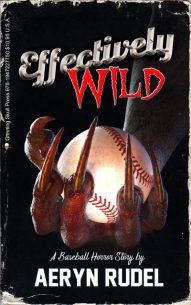
Effectively Wild – A Baseball Horror Story
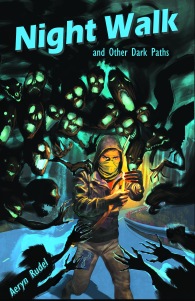
Night Walk & Other Dark Paths
Acts of War: Flashpoint

Acts of War: Aftershock

Acts of War: Stormbreak

 Aeryn Rudel's Rejectomancy