
Query/Submission Statement: November 2023
I was fairly active in November, but, overall, it was a disappointing month for both short story submissions and agent queries. It was a month of cleansing, and I cleared out a lot of stale agent queries with the goal of heading into 2024 with a clean slate. Anyway, let’s have a look at the numbers.
November 2023 Short Story Submissions
- Submissions Sent: 5
- Rejections: 3
- No Response: 0
- Acceptances: 0
- Further Consideration/Shortlist: 0
- Withdrawals: 0
Another five submissions in November, though they didn’t amount to much. My short story numbers for 2023 are, to put it bluntly, abysmal. Much of this has to do with the fact that I haven’t written much new material, which means I haven’t sent many submissions. Getting an acceptance is a numbers game, and I generally hover around a 15% acceptance rate, but this year I’m at about 10%. That wouldn’t be so bad if I’d sent more submissions. I’ve sent a grand total of 37 in 2023, the fewest in a decade. In other words, 10% of say, 75 or 80, which is where I’m usually at, would sit a lot better than 10% of less than 40. I still have some subs pending, so it’s possible another acceptance or two will come in. I also plan to fire off a few more subs in December, and I’ll probably end the year with somewhere between 40 and 50.
November 2023 Agent Queries
- Queries Sent: 3
- Rejections: 4
- CNR: 9
- Full/Partial Request: 0
- Withdrawn: 0
- Nudges: 2
I sent three more queries for my novel SECOND DAWN in November, and they are the last three I’ll send on the project in it’s current state. I received four rejections, one of which was a rejection on a full manuscript request. That last one hurt, especially since it didn’t come with any feedback, but them’s the brakes. I CNR’d nine stale queries in November, and I’ve CNR’s another two this month. That leaves me with six outstanding queries and two outstanding full manuscript requests.
I sent nudges to the two agents who are still reviewing my full manuscript. I’ll nudge them again this month, and if I get no response, I’ll CNR both. It’s certainly disappointing to think about getting no response on an FMR, but, unfortunately, it’s not uncommon.
By the end of the December, I expect all outstanding queries and FMRs to be resolved one way or another. That one way will likely be rejections and CNRs. If/when that happens, I’ll pull SECOND DAWN and start querying my other novel HELL TO PLAY in 2024. I think I might fare better with HELL TO PLAY. It, too, is a supernatural thriller, but comps are easier to find, and it’s not part of a so-called dead genre (vampires). I’ve learned a lot querying SECOND DAWN, and I’ll put the knowledge to good use in the new year.
And that was November. My goals for December are fairly sedate. I want to finish a short story or two, send out a few short story submissions, and then finish the revision of HELL TO PLAY so I can start querying it in 2024.
How was your month of querying/submitting/writing?
Writing Challenges: The Four Brain Weasels of the Apocalypse
It goes without saying that writing and publishing is a tough gig. To make matters worse, the writerly brain is beset by a myriad of doubts, insecurities, and plain old fears that make it even tougher. Speaking from my own experience, there are four primary fears and doubts I battle on a regular basis. I like to call them the Four Brain Weasels of the Apocalypse. So let’s talk about them, and, more importantly, how to fight them.
1) The Brain Weasel of I’m Not Good Enough
Often the first of the four to appear, this brain weasel lurks on blank pages and in the space between outlines and first draft. It says, why even bother to start that story or novel? You’re not good enough to get it published. This brain weasel seeks to keep you from writing at all, and its main weapon is procrastination. It will lure you away with minor household chores and video games and working on other projects that feel safer or aren’t as important.
Battling the Brain Weasel of I’m Not Good Enough: For me, there’s only one way to defeat this brain weasel, and that’s to simply start writing. No matter how awful it feels, no matter how much my brain screams TERRIBLE with each labored sentence, I do it anyway. After the first couple hundred words, things get easier, the words start flowing, and the the Brain Weasel of I’m Not Good Enough slinks away in defeat. In almost every case, when I come back and look at my “terrible” writing the next day, it’s nothing of the sort, which just proves that brain weasels are full of shit. 🙂
2) The Brain Weasel of Why Not Me
This brain weasel often rears its misshapen head when its siblings are having a good chew on your confidence. When another author posts some wonderful news about a story acceptance or landing an agent or getting a book deal, this brain weasel likes to scream IT’S NOT FAIR. You’re as good as that other author. Why aren’t YOU getting that book deal or acceptance?
Battling the Brain Weasel of Why Not Me: We all compare our work to the work of others, and that’s a normal and healthy thing to do, especially when you’re looking for ways to improve. BUT the second you start thinking you deserve something more than someone else, you have to shut that brain weasel down before it leads you down a path of bitterness and misery. The absolute best way to defeat the Brain Weasel of Why Not Me is to charge in and congratulate authors who posts good news. Be the first person to say CONGRATS! Be the first person to tell that author how much they deserve that accolade after all the hard work they’ve put in (because they do and they have). Revel in the success of others, learn from it, and most of all, take inspiration from it. Do that, and I guarantee you’ll shut down the Brain Weasel of Why Not Me long before it can sink its teeth in.
3) The Brain Weasel of I Used to be Better
This brain weasel often accompanies I’m Not Good Enough and tends to plague authors with some publishing experience. It insists that your older work is much better, and you’re not the same writer you used to be. In fact, you might have actually gotten worse and MAYBE you’ve lost the ability to write publishable fiction entirely.
Battling the Brain Weasel of I Used to be Better: Like all brain weasels, this one’s a liar. Its primary goal is to keep you from writing, to keep you from even starting that next project, story, or novel. It can be defeated by simply barreling through and writing, but I also find it can be sent packing with a little positive reinforcement. I like to go back and look at acceptance letters, especially recent ones, and even read the odd positive review. You still have to buckle down and write, but reviewing the hard evidence that you haven’t “lost it” can help you put that first word on the page, which leads to the first sentence, which leads to the first paragraph, and soon enough the Brain Weasel of I Used to be Better turns tail.
4) The Brain Weasel of Phantom Feedback
Perhaps the sneakiest of all brain weasels, this one slips into your mind every time you get a rejection letter. With a form rejection, it tells you there’s some hidden meaning behind that boilerplate not for us or not the right fit. That hidden meaning is, of course, that you’re writing is terrible. Worse, it whispers lies into your brain when you get a good review or a nice personal rejection or when anyone says something positive about your work. This brain weasel insists they’re “just being nice,” and that, in truth, they don’t like your work because, of course, your work is terrible.
Battling the Brain Weasel of Phantom Feedback: This is a tough one to fight because it’s so insidious. How do you prove someone doesn’t mean what they haven’t said? The best thing to do is simply take folks at their word, because, for the most part, editors and agents and readers are going to be honest. If that form letter says it’s not a good fit, than that’s what it is, and you should send out that story or query letter to someone else. If someone says they like your work, it’s because they do, and it’s okay to take them at their word, too. The Brain Weasel of Phantom Feedback wants you to chase figments of your imagination, so tell it to go fuck itself and focus on the things you have actual evidence for.
There are of course many other species of brain weasel that plague the writerly brain, but these are the four that inhabit my gray matter. Whatever brain weasel you deal with on the regular, just remember that brain weasels, by their very nature, are liars and should never be believed. I know that’s easier said than done, but it’s possible; I promise. 🙂
Which brain weasels do you wrestle with? How do you deal with them? I’d love to hear about it in the comments.
The Regularly Rejected Story: Give Up or Keep Submitting?

Although most of my recent submission efforts have been focused on querying my novel, I have sent out the occasional short story submission. Admittedly, I haven’t written much new material over 1,000 words in a while, so I’ve been grinding away at the stories I haven’t managed to sell yet. In today’s post, I want to discuss three of those stories, which have, by far, accumulated the most submissions and rejections. Is it time to give up on these three? Let’s discuss.
First, let me give you the submission numbers on these pieces. I won’t be mentioning the titles since two of the stories are currently out on submission. I’ll just call them A, B, and C.
| Submissions | Pending | Shortlists | |
| Story A | 19 | 2 | 3 |
| Story B | 15 | 2 | 3 |
| Story C | 13 | 0 | 0 |
Okay, now it’s time for some high-level rejectomancy to see if I can figure out why I’m struggling to sell these stories. What follows is pure speculation on my part, so don’t take it too seriously. 🙂
*puts on High Rejectomancer hat*
Story A: If I had to pick the best of the bunch, I’d say it’s this one. It’s straight-up sci-fi, which tends to have a slightly broader appeal (there are certainly more markets for it), and, if I may be so bold, I think it’s one of the better examples of my writing. It’s been shortlisted by three high-profile pro markets, and the feedback has been very positive. This is where you ask, if it’s so good, why haven’t you sold it? Good question, and I can only speculate. First, it’s about time travel, and though I think I have a unique spin, it’s still an overused trope that you often see in do-not-send lists. Two, it’s an epistolary, which is a format not to everyone’s taste. If I had to guess, it’s more the time travel bit that’s hurting me than the format. I’m not ready to give up on this one, though I am running out of places to send it. That said, I feel like I’ve got a decent shot with the two markets it’s currently on submission with, one of which has published a couple of my hard-to-place stories before.
Story B: Like Story A, this one has gotten close to publication at some very good pro markets, but hasn’t crossed the finish line. Unlike Story A, which received a fair amount of feedback, some of which I actually used, Story B has collected a whole bunch of generic not the right fits and we’re going to passes, even on its shortlist rejections. So what’s the problem with this one? Again, I can only speculate, but this story is similar to a number of my hard-to-place stories in that it doesn’t fit neatly into one genre. It has elements of sci-fi and horror, but it would be a stretch to call it either or to call it a true hybrid. It’s simply speculative. I tend to write those stories a lot, and I tend to have a hell of a time selling them. I almost always do sell them, but it’s often to a market that is specifically looking for, well, unspecific speculative stories. Anyway, I think I will sell this one. It has a unique premise and the fact that it has gotten so close to publication before tells me the piece has some merit. It, too, is currently subbed to two markets, so fingers crossed.
Story C: As you can tell, I’ve had ZERO luck with this story. It’s received nothing but form rejections and well, I think that says a lot after thirteen submission. So, what’s the problem here? Speculation time, but I think this story faces a number of challenges. First, it’s set during the height of the Covid pandemic, and while it’s not putting forth any kind of agenda on that topic, it does feel like publishers are somewhat leery of the subject. Second, it contains one of the big three. Those three being the monsters most often seen on do not send lists: vampires, zombies, and werewolves. In this case it’s vampires, and, well, if you want to submit a story on hard mode, just stick a vampire in it. Lastly, the story is kind of a bummer, and while stories that end on a very dark note aren’t unsellable, I do think when you layer touch sell after tough sell on a story, you’re definitely facing an uphill battle. If I want to have a better chance with this one, I think a heavy revision is in order that removes one or maybe two of the tough sell elements. So, for the moment, this one is a trunk story.
Of course, I have engaged in ridiculous amounts of rejectomancy in this post, and while I have enough experience to make some educated guesses about why I’m struggling to sell these pieces, my speculation could be completely off base. This is one of the reasons I keep submitting a story even after double-digit rejections. An acceptance still comes down to putting the right story in front of the right editor at the right time, and I’ve sold plenty of stories with the tough-sell elements I mentioned above. This is not to say that if you are truly getting nowhere with a piece, you shouldn’t reassess (like I’ve done with Story C), but make sure you’re giving the story a fair shake before you do.
Thoughts on the rampant rejectomancy in this post? Tell me about it in the comments.
Query/Submission Statement: October 2023
October was another busy month, and I sent a fair number of queries and submissions. That said, queries are winding down as I wait for replies to those still outstanding. Anyway, here’s how I did in the tenth month of the year of our lord 2023.
October 2023 Short Story Submissions
- Submissions Sent: 5
- Rejections: 3
- No Response: 0
- Acceptances: 0
- Further Consideration/Shortlist: 0
- Withdrawals: 0
Five submission is the most I’ve sent in a single month in 2023, which is kinda sad. In years past, that would be a very slow month. I’ve managed a paltry 32 submissions this year and only three acceptances. I’d like to hit 50 submissions in 2023, but I’d need to send 9 subs in November and December. We’ll see if I can pull it off.
October 2023 Agent Queries
- Queries Sent: 9
- Rejections: 8
- CNR: 2
- Full/Partial Request: 0
- Withdrawn: 0
Nine more queries in October, which brings my total up to fifty. At this point, I’m content to wait for the queries I have outstanding to resolve before I send any more. That said, if an agent who seems a particularly good fit opens to queries in the near future, I’ll definitely fire one off. The rejections and CNRs have been rolling in, and October saw record highs in both. I expect November to also be a month of rejections and CNRs.
I’m still waiting on responses for the three full manuscript requests I received in July and August, and I’ll send status queries on two of them in the next few weeks. The third agent asked for three to six months to review a manuscript, so I think it pays to be patient there.
I admit I’m a little worried about the fact that I received three manuscript requests in short order when I started querying, and I’ve gotten nothing but rejections and crickets since. It might be that just through sheer blind luck I queried the three agents most likely to be interested in my book from the get-go. Hard to say, but best not to read too much into it.
And that was October. My goals for November primarily to send more short story submissions. I’m also working on another novel I’d like to have ready to go if/when SECOND DAWN doesn’t pan out.
How was your month of querying/submitting/writing?
Query Quest: Who Should I Query? (Redux)

Recently, someone asked me what my process is for vetting agents before I query them. Since the question was asked on a social media platform (Bluesky), I could only answer briefly, but I think a longer, more in-depth explanation could be educational. I’ve previously covered this topic on my blog, but that was earlier in my querying journey, and I’ve since refined my process. Now, nothing I do is revolutionary, unique, or even uncommon, but if you’re getting ready to query agents for the first time, you might not know about all the resources available to you. I didn’t. So, let’s dive in.
I should note that my process, such as it is, relies on paid subscriptions to two different services, QueryTracker and Publisher’s Marketplace. Both can be used for free, but the way I use them requires a paid subscription. The total for the two is about fifty bucks a month, which, admittedly, is pretty steep. I don’t think they are completely necessary when you’re vetting agents, but they do make the process a little easier.
Okay, the process.
1) QueryTracker. I start with QueryTracker and search for agents who represent my genre (horror), are based in the US, and possibly also rep an adjacent genre like thrillers or mystery. Currently, these search criteria produce a list of 55 agents currently accepting queries. If I just search for agents who rep horror, I get 77 matches. The only thing to do from this point is to click on each agent and dig a little bit further to see if the agent might be a good fit for my work. Luckily, QueryTracker makes that a little easier by providing links to the agent’s website (or their agency’s website), their Publisher’s Marketplace member page, their Manuscript Wish List page, plus their Twitter account, and a few other possibly helpful links. QueryTracker also gives you a list of known clients, which links you to the author’s Amazon page. Additionally, QueryTracker lets you look at comments left by other querying authors about the agent. Most authors simply note when they queried, what they queried (genre and length), and when they were rejected or received a manuscript request. I find the client list to be a tad more helpful than the author comments, which can take a while to slog through to really glean anything useful. Just my opinion, though.
2) Manuscript Wish List/Bio. From QueryTracker, I usually go straight to Manuscript Wish List to see if the agent has posted a list of what they’d like to see in queried manuscripts. It’s important to note that this will not always match up with the genres listed for the agent on QueryTracker. Most agents, in my experience, list far more genres than a) they want to see currently and b) have worked with on a regular basis. So, I might find an agent that lists horror in the genres they rep on QT, but when I go to their MWL, I’ll find they’re really looking for something else entirely, and it’s clearly not the time to query them with my horror novel. Next, I’ll got to the agent’s website or their agency’s website to read their bio. Often, they’ll list the kinds of manuscripts they want to see here as well. Again, this can differ from what you find on QT, so it’s always a good idea to look at both the bio and the MWL.
What I also look for in the MWL and bio are the peripherals, the stuff that goes beyond genre that will tell me if the agent is a good fit for my book and my writing style. For example, an agent who reps horror and lists some of my comps as favorite books is definitely an agent I want to query. Conversely, an agent who reps horror and wants to see lyrical prose and weird horror is probably not going to dig my Spartan line-level style in a vampire thriller. I’m not salty about any of this, of course. Finding an agent is all about matching your project, writing style, and voice with the right agent. The last thing I want to do is waste my time and the agent’s by querying a novel I’m fairly certain they’re not going to like.
3) Publisher’s Marketplace. If an agent reps my genre on QT and their MWL and/or bio states that they want to see horror manuscripts, the next place I’ll go is Publisher’s Marketplace. What I’m looking for here are the agent’s recent deals, the books they’ve sold, and if those books are in my genre. If I see recent horror sales, that’s definitely a plus, but if an agent has not sold a horror novel, it’s not necessarily a deal breaker, especially if they’ve sold novels in adjacent genres and have expressed a willingness to read horror manuscripts. Agents sometimes expand the genres they represent, and I’m more than willing to query a good agent looking to expand their client list with different types of authors.
One of the things Publishers Marketplace will definitely tell you is how experienced an agent is. It lists all the deals they’ve made past and present, how lucrative those deals were, and where they were made. This brings up a conundrum. Querying an established and experienced agent is appealing because, hey, they’ve got a proven track record, BUT these agents already have a lot of clients and tend to receive a TON of queries. So your chances of getting representation are, well, probably slimmer than usual. On the other hand, a newer agent, with a few good sales under their belt and actively looking to build out their client list is appealing because you might have a better chance of getting your manuscript read and obtaining representation. I’ve queried a little bit of both, though, oddly, I’ve had more luck with the established agents (full manuscript requests), so take my talk of “chances” with a big ol’ grain of salt.
So that’s my process. As I said earlier, you’ll need a subscription to QueryTracker and Publisher’s Marketplace to search like I do and see some of the data I’ve mentioned above, but you can tell a lot about what an agent wants from their Manuscript Wish List and bio, both of which are one-hundred-percent free. Of course, there are other ways to research agents, likely with resources I’m unaware of, so don’t take this as anything even approaching the right or best way to vet agents. These are just the techniques and resources that I’ve stumbled on over the last 50-some queries. If you know of another resource useful for vetting agents, please share it in the comments below.
Happy writing and happy querying. 🙂
Short Story Subs vs. Agent Queries: Two Big Differences
In the last four months, I’ve been querying my novel SECOND DAWN, and while querying a novel is a new to me, submitting my work to publishers is definitely not. I have sent well over 700 short story submissions, so it’s fair to say I’m familiar with sending my work out to be judged. Even so, I was still somewhat surprised by some huge differences between querying novels and submitting short stories (yes, I’m just that naïve) , so I thought I’d go over a few of those here. It should be noted that what follows is not an admonition of how agents or short story publishers handle their business. It goes without saying that novels and short stories require vastly different approaches, but, if you’re like me and coming from a background in short fiction, you might find what I have to say interesting, maybe even educational. 🙂
A couple of quick notes before we get started. One, when I talk about the short fiction market, I am talking exclusively about the genre short fiction market. I have zero experience with lit-fic, but I know things work a little differently on that side of the fence. Two, most of my data on agent queries comes from QueryTracker, which seems to be a pretty reliable source, but it’s not perfect, especially for those agents that still accept queries through email, other online forms, or even snail mail. Okay, with that out of the way, here are two major differences between submitting short stories and querying agents and my theories on why these difference exist.
Reply Rate: If you submit a short story to a magazine or journal, you can expect a response of some kind about 99 percent of the time. It might take a while, but there are only a few markets I can think of that state outright they may NOT reply. On the contrary, many of the agents I’ve queried or researched state outright in their guidelines that they won’t respond unless they’re interested in the project, and I’ve seen query response percentages on QueryTracker as low as 2 percent.
Let me give you some numbers to back this up. I have, to date, submitted 728 short stories over the past decade, and I have withdrawn a grand total of nine due to nonresponse. That’s a paltry 1.2%, and to be fair, half of these nonresponses are because the journal went out of business. Conversely, I’ve sent 44 agent queries since the beginning of June, and I’ve already CNR’d three of them, and I’m getting ready to CNR three more. Sample size, sure, but it’s 7% out of 44 (double that soon) in four months compared to 1% out of 700 in ten years.
So why the difference? Volume appears to be the biggest factor. It seems that many agents are essentially one-person operations, and the number of queries they receive in a year can sometimes be measured in the thousands. Here are some more numbers. One agent that recently rejected my query has received 2,600 queries in the last twelve months (according to QueryTracker). That’s roughly 215 queries every month. This agent asks for a query letter, a synopsis, and the first ten pages in the query package. What I sent her totals around 5,000 words, a word count that exceeds the maximum for many short story markets. So, if the agent is actually going to read all that material (we all want that more than anything, right?) and also focus on all their existing clients, well, then, yeah, I kind of understand why reply rates can be so low. Again, I’d like to point out that this agent did respond to me, which is much appreciated.
Look, do I wish every agent would at least send a boilerplate form letter response for every query? Of course, but in my experience this just isn’t how the industry works, so I’ve just gotten used to it. That said, most agents are very up front about the fact they’re not going to reply unless they’re interested in the project, so it’s hardly a surprise when they don’t respond. Most will also give you an expected time frame for a response. If there’s no response within that time frame, you can close the query out and move on mostly confident the agent has passed on the project.
Sim-Subs: Simultaneous submissions are a hot topic in short story circles because so many publishers forbid them. You won’t find that when querying agents. In fact, it’s just kind of understood that you’ll be sending your book to multiple agents at the same time. That’s a refreshing change, and with response rates so low, and chances of representation so slim, it’s a necessary one, in my opinion.
For agent queries, the attitude toward sim-subs balances out the low reply rate in my opinion. See, for short stories, a lot of markets do not allow simultaneous submissions and will hold your story for 120 days or more until they make a decision. Agents seem to understand this is simply not a tenable position with novels, and from what I’ve seen, it’s not uncommon for authors to query dozens of agents at the same time. Additionally, if an agent does offer you representation, there’s an understanding that you will notify other agents currently reviewing your query/manuscript and give them a chance to respond. This, too, is completely different from the short story market where the expected procedure is to immediately withdraw the story from any other publishers considering it.
The difference here is pretty easy to understand. Novels and short stories are completely different beasts, and the time it takes for an agent to review a query package or entire manuscript, especially one they’re interested in, can be months. For example, one of the agents who has requested my full manuscript for SECOND DAWN states in her guidelines that it could be up to six months before she responds to the submission. When you factor in the time it took for her to respond to the query, I could be looking at most of a year before I find out the ultimate fate of my manuscript. Obviously, the agent understands this and expects that I will continue to query other agents, which I am.
As with all my posts on querying my novel, this is based on my still somewhat limited experience, but I feel like I’m getting a pretty good sense of how things work. One thing I did take away from my experience in the short fiction market is how to dig into the numbers, and, luckily, the numbers are far more accessible and in depth for agents queries than they are for short story submissions. So, take this post with a grain of salt if your experience differs, and if it does, please tell me about it in the comments. I can always use more data. 🙂
Query Response Round-Up: Week of 10/6/23
Another three weeks of querying gone by, so it’s time for a another response round-up. After a few weeks of crickets, the responses have started coming in more regularly. All rejections, but what are ya gonna do? Anyway, there are a couple of interesting rejections I thought I’d share. Let’s jump in.
First, here’s my overall query stats as of today.
- Total Queries: 44
- Rejections: 17
- Full Requests: 3
- CNR: 3
- Pending Queries: 21
- Pending Requests: 3
Rejections
I received six more rejections since I last posted one of these updates, and I want share two with you, mostly to illustrate how different agents handle form rejections.
Rejection #1 – 9/19/23
Thank you for thinking of me for SECOND DAWN. Unfortunately your project does not sound like a fit for me at this time, and so I will have to pass. Best of luck with your future queries, and I hope you’ll soon find the perfect advocate for your work.
This is a very standard form rejection. One paragraph, a simple no, well wishes, and out. Of the seventeen rejections I’ve received thus far, most look like this. But let’s look at the other end of the spectrum for form rejections.
Rejection #2 – 10/5/23
Thank you so much for your query. I appreciate the opportunity to consider your work, but unfortunately, after careful consideration, I have decided to bow out. I am truly sorry not to be able to offer you representation, and I wish you the very best of publishing luck as you move forward.
At [agency], we understand that writing is a passion, an intensely personal calling, a long-time dream for many, and frequently a lonely endeavor. We have great respect for authors, and we share the writer’s passion—that is why we are literary agents.
Unfortunately, publishing is a business that necessarily involves a lot of rejection, at every stage. One of the most difficult things for us as agents is to have to say no. Yet, we can take on only a small fraction of all the work we see, and this is simply a business reality.
We say no for many reasons—because of changing trends in the market; because we already have something similar on our list; because we know of similar published or forthcoming titles; because something isn’t right for us; because although something may be strong, well-written and even publishable, we didn’t fall in love with it.
Please do try to keep this one “no” in perspective. This is a highly subjective business and another agent may adore your work. All it takes is one “Yes.” We wish you success in finding that “Yes,” whether with us or another agent and publisher.
Thank you for thinking of us and giving us this opportunity to consider your work.
Vive la difference, huh? There is a lot of info in this form rejection (and I am fairly certain this is form rejection), and my initial reaction to that information was “I don’t need all this.” Then I thought about it, and, yeah, as a fairly seasoned pro, maybe I don’t need it, but there are folks who might. There are folks who are just beginning their publishing journey, and the information and words of encouragement in this rejection could go a long way. I mean, if you haven’t been submitting fiction for that last decade-plus, then you might not know that rejection is just part of the gig and a no doesn’t mean you’re a bad writer. You might need to hear that, even in a form letter. So, kudos to this agent for their kind, informative rejection letter. I apologize that my crusty, jaded ass didn’t see its benefits right away. 🙂
The other four form rejections I received were very much like the first one I posted here, so no need to share those.
I still have three full manuscript requests pending, but they’re getting a little long in the tooth. According to the stats on QueryTracker, that’s pretty normal for one of the agents, but I might have to chalk up at least one of the subs as a CNR. Bleh.
Thoughts or questions about queries or these responses? Tell me about it in the comments.
Query/Submission Statement: September 2023
September was another busy month, as I fired off more agent queries for my novel SECOND DAWN. I even, somehow, managed to find time to send a few short story submissions. (I know!). It was a productive month, but not necessarily a fruitful one. That’s just how it goes in the query/submission trenches. Anyway, here’s how I did.
September 2023 Short Story Submissions
- Submissions Sent: 3
- Rejections: 1
- No Response: 0
- Acceptances: 0
- Further Consideration/Shortlist: 0
- Withdrawals: 0
Still not exactly lighting the world on fire with my short story output, but, hey, three subs is three times as many as I sent last month. 🙂 I have actually written a bunch of new stories; I just haven’t done anything with them yet. That’ll change this month. I’d like to send out at least half a dozen subs if possible.
September 2023 Agent Queries
- Queries Sent: 10
- Rejections: 5
- CNR: 1
- Full/Partial Request: 0
- Withdrawn: 1
I only sent ten queries last month because, well, I’m running out of agents to query. There simply aren’t as many agents that rep horror as say sci-fi or mystery/thriller, so I find myself checking QueryTracker’s New & Updated Agent list everyday to see if any potential agents have opened to queries. The five rejections last month were run-of-the-mill form rejections with no feedback, and the withdrawal was just a brain fart on my part. I queried an agent at an agency where I already had a query pending with another agent at that same agency. That’s a no-no, so I withdrew the query with a polite and very apologetic note.
In other query news, I’m still waiting on responses for the three full manuscript requests I received in July and August. I fear at least one of those is going to be a CNR, but that’s just the reality of querying.
Anyway, if you’d like to follow my querying journey and get my thoughts and insights on the process, I’ve been documenting the whole mess on the blog. Links to those posts below:
- Query Quest: A New Rejection Frontier
- Query Quest: Baby’s First Query Rejection
- Query Quest: Agent Query Checklist Part 1
- Query Quest: Rejection #2
- Query Quest: What Are My Chances?
- Query Quest: Full Manuscript Request
- Query Quest: Who Should I Query?
- Query Response Round-Up: Week of 8/18/23
- Query Response Round-Up: Week of 8/25/23
- Query Response Round-Up: Week of 9/15/23
- Query Quest: What Are My Chances Part II
And that was September. My goals for this month are more agent queries and a lot more short story submissions. I’ve already got a jump on the queries, so it’s time to get busy on the submissions. I’d also LOVE to report another full manuscript request or, dream of dreams, and offer of representation in October. I wouldn’t hold your breath on that last thing, though. 🙂
How was your month of querying/submitting/writing?
Query Quest: What Are My Chances Part II
I started querying my novel SECOND DAWN in earnest back in early June, and since then I’ve sent a total of 40 queries, netted some full manuscript requests, and racked up a fair amount of rejections and CNRs. In July, I posted some stats from QueryTracker, detailing the chances the agents I’d queried would respond to my queries, how often they asked for full manuscripts, and so on. Well, I’ve got more data points now (and I’ve learned a thing or two about the process), so it seems like a good time to revisit this topic. So let’s dive in.
As I said, I’ve queried 40 agents so far, and here are my general query stats.
- Total Queries: 40 (20 pending)
- Rejections: 15
- CNR: 2
- FMR: 3
Percentage-wise, I’m looking at a 42.5% rejection/CNR rate (this is sure to rise) and a 7.5% manuscript request rate (this is sure to fall), but what does that mean in comparison to other querying authors? Well, QueryTracker gives you that information. According to QT, the average querying author sends 44 queries, has an 87.8% rejection/CNR rate and a 5.9% request rate. So my numbers are in line and even a tad better than average, but I’m still waiting on a A LOT of replies, so those numbers could improve (less likely) or get worse (more likely). Still, for a first-time querying author, I’m happy with how things have been going.
But what about the agents I’ve been querying? What do their stats look like? How many queries do they get? What percentage of those queries do they actually reply to? Let’s find out.
Here are the average query response stats of the 40 agents I’ve queried.
- Queries received in past 12 months: 1598
- Query Reply Rate: 58%
- Manuscript request rate (full or partial): 2.4%
- Average Response Time (Positive): 21 days
- Average Response Time (Negative): 38 days
Positive replies are full or partial manuscript requests and negative replies are rejections and CNRs. These numbers are very ballpark, and averages might not be the best way to look at them, but they give you a general sense of what to expect. Let’s look at things in a slightly different way, though.
- # of agents that respond to 20% or fewer queries: 8 (8/45)
- # of agents that respond to 80% or more queries: 13 (18/15)
Interestingly, the agents that respond to queries more often actually receive FAR more queries than the ones who respond at an under 20% clip. It’s not even close, actually. The 20-percenters receive an average of 500 queries per year, while the 80-percenters receive over 2500. Now, if you look a little deeper into these numbers, you quickly realize that the 80-percenters are generally more established agents who work at or even run large literary agencies and, most importantly, probably have assistants that help them answer queries. Most (but not all) of the 20-percenters are less established and often working on their own. The numbers in parentheses are the average days it takes the agent to respond (if they respond). The first numbers is a positive response, the second a negative one. Again, the data is interesting. The 20-percenters respond quicker with requests and the 80 percenters respond quicker with rejections.
Okay, now the numbers that give me nightmares. Let’s look at some response numbers for manuscript requests.
Here are the submission response numbers for the three agents where I have FMRs pending.
| Agent | Subs | Positive Replies | Negative Replies | Response Rate |
| 1 | 106 | 2 | 12 | 11.3% |
| 2 | 50 | 0 | 31 | 62.0% |
| 3 | 59 | 4 | 20 | 32.2% |
Subs is the number of manuscript submissions the agent has received over the last twelve months. Positive replies are when the agent responds with an offer of representation, a revise and resubmit, or a request for more pages. Negative replies are, well, rejections. Finally, the response rate is how often the agent responds to a submission of a full or partial manuscript. That last number is what worries me. It is absolutely possible and even likely that my FMRs are going to become CNRs. That’s a bummer, but it’s just reality, and I have to roll with it. I just have to believe that my full manuscript is compelling enough to at least elicit a response, but we’ll see.
Unfortunately, you kind of have to dig for submissions response numbers on QueryTracker, so I’m not gonna give you the stats for all 40 agents I’ve queried, though I might do that in a future post.
Data is interesting, but I think we should take all these numbers with a grain of salt. It’s important to keep in mind that querying for an agent isn’t a lottery. Getting an agent has more to do, in my opinion, with having a book that’s ready to query and then putting it in front of the right agent at the right time. The numbers can give you a general idea of what querying agents is probably going to look like, but we’ve all heard about folks getting agents after a single query or getting one after three hundred. Right book, right agent, right time. Those three things are like tumblers in a lock–you have to trigger all three at the same time for the door to swing wide no matter what the numbers say. 🙂
Thoughts on these numbers? Tell me about it in the comments.
Query Response Round-Up: Week of 9/15/23
It’s been another twenty days or so of sending queries and waiting for responses. Things have slowed down a bit–I’m kinda running out of agents to query–but let’s take a look and see how the last three weeks have panned out.
First, here’s my overall query stats as of today.
- Total Queries: 34
- Rejections: 11
- Full Requests: 3
- CNR: 3
- Pending Queries: 17
- Pending Requests: 3
As I said earlier, I’m running out of agents to query. There are some good reasons for this, and those reasons are almost worthy of blog posts of their own, but let me give you a quick rundown.
- I write horror. The simple fact is that there are fewer agents that represent horror than any other (major) genre besides westerns. When I last ran the numbers on QueryTracker, there were 93 agents who repped horror and were currently open to queries. So why haven’t I repped 93 agents? Well, see below.
- One agent per agency. Many agents work at a literary agency that can include dozens of agents. Most of those agencies do not want you to simultaneously query two or more of their agents with the same project. So, for example, there might be five agents at ABC Literary Agency that rep horror, but I can only query one at a time, and the others are basically off-limits until that first agent passes. BUT some agencies operate under the assumption that an agent who passes on your manuscript shared it with all the other agents they work with who might be a good fit, and those agents passed as well, so they ask you not to query any of their agents with that project. Whether or not that actually happens, I have no idea, but since I follow submission guidelines to the letter, that’s more agents are off limits for my current novel.
- Do you really want horror? Sometimes, I’ll find an agent on QueryTracker that lists horror as one of the genres they rep, but when I do a little more research at MWL or Publishers Marketplace, turns out they aren’t looking for horror at all. They want memoirs or YA fantasy or something that is absolutely not horror. So, you know, I don’t query those agents. 🙂
As you can see above, there’s a pretty good reason I’ve only queried 34 agents out of that 93. I do keep an eye on QT’s New & Updated Agents list to see if any agents have recently opened to queries or if a promising new agents has opened up shop.
Rejections
I received two more rejections since last I posted one of these updates. Let’s take a look at them.
Rejection #1 – 9/9/23
This is not right for me, but thank you for the look.
They don’t get much shorter and more-to-the-point than that. I honestly have no problems with rejections like this. Boilerplate platitudes are nice, but I don’t really need them, and a simple no is perfectly fine in my book. This agents only asked for a query letter via email and responded in four days.
Rejection #2 – 9/12/23
I’m sorry, but your project does not sound like a fit for me at this time, and so I will have to pass. Thank you for considering me and best of luck with your future queries.
This is a typical form rejection, and it took 36 days to arrive. Other than that, there’s not much to talk about. Here’s what the agent wanted in the query package.
- Query letter
- Synopsis
- First three chapters of the novel
- Pitch
- Separate bio
- Target audience
- Similar books
That’s a pretty complete query package, and though it’s a small sample size, I’ve done better with agents that ask for more materials rather then less. Not this time, though.
I did CNR two more queries, but other than that, the two rejections I covered above are all the activity I’ve seen in the last three weeks. I’m hoping I’ll hear back on one of the full manuscript requests soon, but it could still be a while. Of course, I’ll let you all know as soon as the blessed news/crushing rejection arrives. 🙂
Thoughts or questions about queries or these responses? Tell me about it in the comments.
Effectively Wild – A Baseball Horror Story

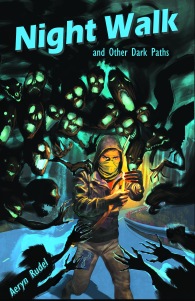
Night Walk & Other Dark Paths
Acts of War: Flashpoint

Acts of War: Aftershock

Acts of War: Stormbreak

 Aeryn Rudel's Rejectomancy