
Path to Publication: ACTS OF WAR: AFTERSHOCK or the Novel I Wrote in Public

Back in 2017, I got this bonkers idea to blog the entire process of writing and publishing my second novel from Privateer Press (with their blessing, of course). I ended up with 21 weekly updates plus a handful of other posts related to the novel, like excerpts, dramatis personae, and so on. Why did I do this ? Let’s talk about it.
First, a little background on the book. Aftershock is the second in a trilogy of novels I wrote for Privateer Press in their Iron Kingdoms setting, which is the setting for their tabletop miniature games WARMACHINE and HORDES and the Iron Kingdoms Roleplaying Game. The Iron Kingdoms is steampunk-esque in terms of technology, but the setting is more sci-fantasy than steampunk. The novels revolve around a war between two of the great nations of the Iron Kingdoms, Khador and Cygnar–think 18th-century Russia and England with clockwork and occult elements–and the war leaders of these respective countries. Click the cover below for more info.

So, why did I decide to add to my already insane workload of writing this novel by live-blogging the whole damn thing? For one, I thought it would be good marketing, and the run of updates for the book did bring in the highest blog traffic I’ve seen before or since. Also, it was, for lack of a better word, fun. I enjoyed the meta breakdowns after each week of writing, and it was definitely cool to see the enthusiasm the posts generated among the Privateer fanbase as I teased new characters and models or showcased a favorite model in a battle scene. Finally, I thought it would be cool to have a detailed record written in real time of what it looks like to write a novel, how long it takes, the challenges, and how writing a media tie-in novel differs from working on your own IP. I think it ticks all those boxes.
So what was in these updates? I came up with four elements I thought would interest folks who wanted to learn about my process and/or just wanted teasers for the book.
- Progress: This was primarily how many words I wrote per week while drafting, but in later updates it became how many pages I made it through in editing. My goal was 10,000 words a week, and I achieved or surpassed that goal most of the time.
- The Best Part: Here I would relate one aspect of the writing process for the week that I really enjoyed. Usually, that would be a scene or bit of dialogue that turned out well.
- The Worst Part: Conversely, I would also relate something I really struggled with that week. Uh, usually this would be a scene or a bit of dialogue that didn’t turn out well. 🙂
- Mini-excerpt: Finally, I’d top everything off with a very short excerpt from what I’d written that week. Privateer also let me use some of their vast library of art for these excerpts, which was awesome.
Anyway, if you’d like to take a spin through my novel-writing experiment, here’s a link to all 21 of the weekly updates.
Query Response Round-Up: Week of 8/25/23

Another week in the querying salt mines. Let’s see how I did and what kind of responses I reeled in.
My overall query stats as of today.
- Total Queries: 30
- Rejections: 9
- Full Requests: 3
- CNR: 1
- Pending Queries: 17
- Pending Requests: 3
I sent seven new queries this last week, and I think I’m done for the time being. I’m gonna set back and wait for responses to roll in before I send any more. I feel like I’ve hit all the agents that might be a good fit and are currently accepting subs. There are a few likely candidates opening in September I’ll probably query, but until then, I think I’m at a good place to pause.
Rejections
Two more form rejections last week.
Rejection #1 – 8/21/23
Thanks so much for sharing SECOND DAWN with me. Unfortunately, I don’t think I’m the right agent for this project, so I will have to pass.
Please keep in mind that this is a subjective business and mine is only one opinion. I wish you all the best in your search for representation and in your writing career.
Not much to talk about here. This is your typical boilerplate query rejection. The agent did respond very quickly, though. I sent this query on 8/17, and they responded on 8/21. According to QueryTracker, this agent responds to over 98% of queries. That’s impressive. Here’s what the agent wanted in the query package other than the general details like name, email, etc.. (I’m going to start including this for all responses).
- Separate bio
- Query letter
- Synopsis
- First 10 pages of manuscript
- One-sentence pitch
- Potential target audience
- Similar books
Rejection #2 – 8/25/23
Many thanks for reaching out. You have an interesting story to tell and there’s a lot to like about your approach. But, in the end, I’m afraid I didn’t come away fully convinced this was something I could represent successfully for you. I’m sorry not to be more enthusiastic, and best of luck in placing it elsewhere.
Another standard form rejection. The agent does say interesting story and likes the approach, but its hard to tell if that’s indicative of something more than the standard form rejection or not. In the short story world, it’s not uncommon for publishers to have multiple form rejections, some indicating that a story was closer to what they were looking for than others. Do agents do this, too? Maybe, and that could be useful information if I were to query this agent again with another project. Here’s what the agent wanted in the query package.
- Query letter
- First few pages of the manuscript (I sent four).
You’ll notice this agent wanted a lot less info in the query package than the first agent. I find that agents who want queries by email, as this one did, rather than an online form such as QueryTracker’s Query Management tend to ask for fewer materials. Some of that may have to do with the risk associated with attachments and the hassle of pasting huge chunks of text into an email, and some of it might have to do with what the agent believes they need to decide if they want to see more. In this case, I feel like it was the latter. This agent responded to my query in a single day. Love that.
And that’s it for the last week of querying. I was getting about one full request a week there for a bit, so it was only a matter of time until the rejections started rolling in.
Thoughts or questions about queries or these responses? Tell me about it in the comments.
Query Response Round-Up: Week of 8/18/23
I’ve been querying my novel SECOND DAWN a lot, and the responses have been trickling in. I thought I’d collect the ones I’ve received in the last week or so, share them with you here, and maybe indulge in a little bit if query rejectomancy. 🙂
First, here are my overall stats thus far.
- Total Queries: 23
- Rejections: 7
- Full Requests: 3
- Pending Queries: 13
- Pending Requests: 3
I’m quite pleased with these numbers. A 13% request rate is certainly validating. I did have one CNR, but the agent got back me to this morning with a rejection. That said, at least one of those pending queries will likely turn into a CNR by early next week.
Rejections
I received two rejections over the last week, both form rejections, and here they are.
Rejection #1 – 8/12/23
Thanks for writing me and letting me take a look at SECOND DAWN. I apologize for the form letter, but the volume of query letters I receive makes it impossible to send personal responses to every writer.
Unfortunately, I must pass on your material. I realize it is difficult to judge your potential from a query and first five pages alone, but please know that I give serious attention to every letter and writing sample I receive.
Best of luck with your agent search,
Pretty standard form rejection here. The one thing that jumps out at me is the mention of five pages. In my experience thus far, the number of pages an agent asks for seems to fall into three broad categories: 5 pages, 10 pages, and three(ish) chapters. Yeah, I’ve run into one 50-pager and a few that wanted no pages, but these three are the most common. Currently, I have three full requests: two from agents who wanted three chapters and one from an agent who wanted five pages. I think the strengths of my book is more apparent after about 15 pages, but that’s just conjecture at this point.
Rejection #2 – 8/18/23
Thanks for sharing your query with me. I regret to inform you that I won’t be requesting additional materials or offering representation. While I was intrigued by your concept, I’m not the best fit for fantasy.
Please know I can only responsibly take on a few new clients each year, and my decision to pass does not mean another agent won’t be a passionate and energetic advocate for your project.
Please accept my very best wishes for your writing success.
Another standard form rejection and another “liked your concept, but . . ” rejections. I think those are gonna be pretty common.
Full Requests
Okay, now on to the good stuff. I had two full manuscript requests in the last seven to ten days. Let’s take a look at those.
Full Request #1 – 8/10/23
Thank you so much for querying me. I really enjoyed the first few chapters of SECOND DAWN and would love to read the rest! Please follow the instructions to submit the full MS at your earliest convenience.
This is the kind of response you want to find in your inbox, right? This agent, like my first full request, asked for three full chapters with the query package. Other than that, not much to dissect here. The agent liked what they saw and wants to see more. Of course, I sent the manuscript right away. Unfortunately, this agent is listed under an agency on QueryTracker, and for some reason the software can’t track specific numbers on entire agencies. That said, with the number of clients the agency represents, I’d guess the query numbers were on par with the agent in the second full request below.
Full Request #2 – 8/14/23
Thank you for sending me sample pages of SECOND DAWN for consideration. I would like to take a look at the entire manuscript.
Please upload your submission as a Word document, preceded by your bio and a two-page synopsis (ALL IN ONE DOCUMENT). Make sure your manuscript is in Times New Roman font size 12, double space, with 1″ margin all around, your last name/title appearing on the upper left corner of each page and the page number on the upper right corner.
Kindly allow me at least 12 weeks for a reply before contacting me to inquire about your manuscript’s status (although I will try to respond sooner).
I look forward to reading.
Obviously, this manuscript request is a little more involved. It should go without saying that you should follow an agent’s formatting guidelines when they request our manuscript. In this case, my manuscript was already in this format, so that part was pretty easy. I like that the agent gives me a time frame for a response, and looking at their numbers on QueryTracker, they routinely response far sooner than 12 weeks. The other thing of note with this full request is that I sent five pages with the query. My first two full requests were from agents who wanted three full chapters.
According to QueryTracker, this agent has received over 5,000 queries in the last twelve months and requested full manuscripts from 109, or about 2.2%. Out of those 109 full requests, 98 manuscripts were sent, and the agent offered representation to one author. Those are daunting numbers but, I feel pretty good about making it through the first stage.
So, that’s my last week in the query trenches. Not too shabby. 🙂
Are you querying a novel? I’d love to hear about your query journey in the comments.
Query/Submission Statement: July 2023
Been a while since I’ve done one of these, mostly because I haven’t been submitting a lot of short stores. What I have been doing, though, is sending out agent queries for my novel SECOND DAWN. Those are submissions, too, right? 🙂
Okay, first up let’s do short story submissions.
July 2023 Submission Report Card
- Submissions Sent: 6
- Rejections: 5
- No Response: 0
- Acceptances: 0
- Further Consideration/Shortlist: 0
- Withdrawals: 0
I’m not exactly killing it on the short story front in 2023. I’ve sent only 24 total submissions, which has netted me a grand total of 3 acceptances. I’m okay with that, though, as my focus has shifted from short story submissions to query submissions. I’m sure I’ll send more short story subs this year, and if I can get to fifty total subs, that would be fine by me.
July 2023 Query Report Card
- Queries Sent: 11
- Rejections: 2
- CNR: 1
- Full/Partial Request: 1
This total includes June and July, and as you can see, I’ve been a bit busier here. I’ve sent out eleven queries so far and received a pair of form rejections and closed one query for nonresponse. The big news is I received a full manuscript request from a very good agent, and that’s still pending. However that turns out, though, it was a great boost to my confidence to get an FMR right out of the gate. If you’d like more details on my rejections and other query-related stuff, I’ve been posting about it in a new series called Query Quest. Links below.
- Query Quest: A New Rejection Frontier
- Query Quest: Baby’s First Query Rejection
- Query Quest: Agent Query Checklist Part 1
- Query Quest: Rejection #2
- Query Quest: What Are My Chances?
- Query Quest: Full Manuscript Request
Anyway, that was my July. How was yours?
Query Quest: Full Manuscript Request
I started querying my novel SECOND DAWN back in early June, and I expected to rack up a bunch of rejections and change my query and synopsis half a dozen times before I even sniffed a full manuscript request. Well, I’m delighted to be wrong. Early last week, I received a full manuscript request from a great agent. Let’s discuss that.
Remember, these posts are observations based on my admittedly limited experience with querying. In other words, this ain’t gospel, just me recounting my own experiences. Also, as usual, I won’t be identifying the agent in question, just like I don’t identify the publisher in my posts about short story submissions. With the declaimer out of the way, let’s look at that manuscript request.
Dear Aeryn,
I would love to see the rest of this! Please follow the instructions below to upload your full manuscript. I’m looking forward to reading.
The request for a full manuscript came 47 days after the query, which included the first three chapters of the novel (about 7,000 words total). If I were to compare this letter to something from the short story submission world, I’d say it’s like making a short list. It tells you the project is not without merit, and that even if the agent ultimately passes, it makes sense to keep querying. (And to try that agent with another project if the current one doesn’t pan out.)
So what happens now? Well, the first thing I did was upload the entire manuscript shortly after receiving the letter. Now I’ll wait for the agent to review it and make a decision. Based on the numbers I see on QueryTracker, that could be a couple of weeks to a month. Seems reasonable to me for a 90,000-word novel. From what I’ve seen and heard from other authors, an agent will likely respond with one of three responses. One, a rejection. That would certainly be disappointing, but I’d hopefully get some feedback that would help me improve my manuscript. Two, a revise and resubmit. If the agent likes some of the manuscript but thinks other parts need big (but doable) improvements, I might get this response, which would be encouraging to say the least. Finally, THE DREAM–the agent thinks the book is strong enough to offer representation. I should note that even if an agent offers representation, they’re still likely to want edits on the manuscript before they start shopping it to publishers.
One more thing. See how the letter asks for a “full manuscript”? Yeah, that’s why it’s imperative you have a complete manuscript before you start querying. You don’t want to get one of these letters and then have to explain to the agent that you haven’t finished the book yet. That’s not a good look.
This is obviously good news, and though there are no guarantees it’ll go further than this, getting the full request this early is validating and tells me the book might not be complete garbage. Of course, I’ll let you all know the outcome of this full request, and even if I don’t get an offer of representation, the outcome should be educational.
Thoughts on this letter or the querying process? I’d love to hear it in the comments.
Query Quest: What Are My Chances?
I’ve been using a marvelous database called QueryTracker (highly, highly recommended) to find agents and keep track of my queries. In addition to these vital services, the site provides TONS of data on each agent, and you know me, I fucking love me some data. So, I thought it might be fun(?), educational, and a little terrifying to look at query and submission data for the ten agents I’ve queried so far. I won’t be identifying these agents because this is just about the numbers and what we poor query monkeys can learn from it. This is certainly a sample size, but, in my opinion, it’s a decent snapshot of what you can expect.
| Agent | Queries Sent | Requests | Request Percent | Subs Sent | Positive Responses |
| 1 | 981 | 13 | 1.3% | 12 | 4 |
| 2 | 2975 | 64 | 2.2% | 55 | 1 |
| 3 | 2371 | 46 | 1.9% | 46 | 1 |
| 4 | 3056 | 53 | 1.7% | 52 | 4 |
| 5 | 2495 | 237 | 9.5% | 100 | 4 |
| 6 | 730 | 34 | 4.7% | 31 | 2 |
| 7 | 921 | 30 | 3.3% | 22 | 0 |
| 8 | 3084 | 16 | 0.5% | 14 | 3 |
| 9 | 2201 | 6 | 0.3% | 5 | 1 |
| 10 | 238 | 3 | 1.3% | 3 | 1 |
Some quick explanations. I’ve changed some of the headers so it’ll make more sense to folks who don’t use QueryTracker, but this is all directly from their data.
- Queries Sent: The number of queries the agent has received in the last 12 months.
- Requests: The number of times the agent has requested more pages from a querying author, either a full or partial manuscript request.
- Request Percentage: The percentage of queries that yielded a manuscript request.
- Subs Sent: The number of manuscript submissions has received (after a full or partial request).
- Positive Replies: The number of times an agent has offered representation or asked for a revise and resubmit after a full manuscript submission.
Of course, the most daunting number here is the number of requests verses the number of queries. Most of these agents are hovering around one or two percent. Remember, though, QueryTracker can only report the queries of authors who use the service, so individual numbers probably are higher or lower in some cases. Still, those are small numbers, and when you look at the number of authors actually offered representation, it gets even more daunting, but as hard as it may be, I don’t think you should look at this like some kind of lottery. A have to believe that a good, well-written book accompanied with a strong query letter and synopsis has a far, far better chance of snagging an agent’s interest than these numbers suggest. In addition, proper research into an agent’s manuscript wish list and other books and authors they represent can only increase your chances of a good outcome, right?. That’s not to say it isn’t an uphill battle, but I believe you CAN be more prepared than the average querying author, and I think that increases your chances a lot.
What about the status of my queries to these ten agents? So far, I’ve received two rejections and one full manuscript request (more about that in a future post), and there are a couple of queries I’m likely to close for nonresponse. Obviously, getting a full request so soon is really encouraging, but I’m not gonna get my hopes up too much. I’ll keep querying, keep writing, and keep my fingers crossed. 🙂
Thoughts on these numbers? Tell me about it in the comments.
Query Quest: Rejection #2
Recently, I received another rejection from an agent I’ve queried with my novel SECOND DAWN. It’s the second since I started this process earlier in the month. Now, if this was a rejection for a short story, it wouldn’t be post-worthy, but since I’m new to this querying thing, I’m finding all aspects of it interesting, even the rejections, so I’ll share it with you.
Here’s that second rejection.
Dear Aeryn,
Thank you for your email. While SECOND DAWN sounds interesting, I don’t think it is right for my list at this time.
I appreciate your querying us and wish you good luck in finding the right agent who can successfully champion your work.
This is clearly a form letter, and not too dissimilar from a form letter I’ve received from a dozen short story publishers. What’s interesting about this rejections is that it came the same day that I queried and the agent asked for only a query letter and a bio. No synopsis or sample pages. I gotta say, I’m a fan. Took very little time to send the query and very little time to get a response. That is a winning combo in my book. From what I saw on QueryTracker, it looks like this agent is equally quick with full requests as they are with rejections. I would absolutely query again with another project.
Now, this is not to say that an agent who wants more materials or takes longer to get back to an author is doing anything wrong. Every agent has a process that helps them decide which projects are the best fit, but after years in the short story trenches, I can’t help but appreciate a rapid response. 🙂
Thoughts on this rejection? Got one of your own to share? I’d love to see it in the comments.
Query Quest: Agent Query Checklist Part 1
I recently started querying literary agents for my novel SECOND DAWN, and I’m going to start posting about that experience. Now, for those of you who have followed my blog for a while, I should make it clear that unlike submitting short stories to lit magazines and anthologies, I am NOT an expert in this arena. So this post is less advice and more me recounting my experience (which may or may not be useful to you). In other words, don’t judge me too harshly if my experience differs from your own.
In this post, I want to talk about three things I think you should have ready to go before you start querying agents. The first two are absolutes, in my mind, but there’s some wiggle room on the third. Let’s dive in.
1) Finished manuscript. Finished. Complete. Ready to go. Don’t query agents unless you are ready to turn over a complete manuscript. Why? Well, here’s generally how the query process works. You send a query letter and a portion of the manuscript, anywhere from five pages to three whole chapters. If the agent likes what they see, they are going to ask you for MORE of the manuscript, maybe the whole thing. See the problem? Don’t put yourself in a situation where you have to tell an agent who likes your first three chapters that you don’t have a finished manuscript to send them.
Now, what does finished actually mean? Well, it doesn’t mean perfect. In my opinion, it means as close as you can get it to publishable, which is, honestly, not that close for most folks (me included). An agent is certainly going to ask for revisions based on their experience of what sells, and then the publisher is definitely going to ask for further revisions based on their needs and what they think will sell. Ultimately, it needs to be your best effort, but I’m not stressing about typos and dropped words and whatnot. Not that I’m not trying to fix those, just that I think an agent is less worried about that stuff than the story as a whole, my writing style, and whether both are a good fit.
2) Query letter. I’ve yet to see an agent that doesn’t want a query letter. The construction of the query letter is one of those things you’re gonna see a lot of differing advice on, and it seems to vary a little by genre. I’m on the second iteration of my query letter, and the one I’m going with now consists of the following: an introduction with the project details (genre, length, and comps), a short description of the book (this is not a synopsis, but it describes the plot, characters, and themes), and a bio with a little personal info and relevant publication credits. I feel more confident with this one than my first one, which may have been a little short on details. But, again, I’ve seen successful query letters that are similar to both my current one and the one I’ve abandoned.
3) Synopsis. Not every agent asks for a synopsis, but I’ve found more than half of the agents I researched (around 50 at this point) DO ask for one. Like the query letter, there are a lot of opinions on how to write a synopsis, but in general, most folks tend to agree on a few things. It should be in the 500- to 1000-word range (though I’ve seen some folks say as long as two pages) and summarize the whole story, from beginning to end. It’s not back cover text trying to hook a reader with mysterious details; it’s more like Cliffs notes. You want the agent to read about the big twist at the end and that surprise romantic relationship between two of your characters or whatever.
I’m not gonna lie; these are not easy to write, and I struggled with mine. I’m still not in love with it, but I think it works. Mine is a little over 500 words and fits on one page. I think the brevity helps rather than hinders me in this case, but check back in a month. My synopsis will probably have doubled in size. 🙂
You can start querying without a synopsis, as there are a fair amount of agents that don’t ask for one, but you might find yourself having to skip a potentially good agent because you don’t have all the necessary materials. By the time you get back to them, their submission window may have closed. So, yes, you can query without a synopsis, but you close off some of your options if you do.
Now this short list is only the things I think you absolutely need to start querying. It’s NOT the only things an agent might ask for. You might be asked for a one-paragraph pitch or more comps or a separate bio. I’ve even seen agents ask for fairly unique things like why you believe you’re the right person to tell the story. I’ll cover some of these other materials in later posts, as they come up in my own querying journey.
Thoughts on my must-haves? Tell me about it in the comments.
Path to Publication: Hell to Pay – Installment Plans Available!

Time for another installment of Paths to Publication, wherein I recount a story’s arduous submission journey, complete with all the gory details and eventual publication triumph. This time, the story is “Hell to Pay – Installment Plans Available!”, which was recently published by Tales to Terrify.
First, let me tell you a little about the story. Years ago, I took a temp job as a collection agent. It was, hands down, the worst job I’ve ever had. I lasted two weeks before turning in my notice. The experience of that awful job has stuck with me, and a few years ago I started wondering what a job in actual hell might look like, and, well, here we are. The concept here is pretty simple. Certain folks consigned to the bad place are chosen for a special assignment, to work forever in an endless call center, collecting on those who have made Faustian deals. The story centers on one brave soul who attempts to subvert the system and offer debt relief to the damned. (I just realized that “Debt Relief for the Damned” might be a better title.)
Okay, now let’s look at the submission data for the story. Below is a table featuring the date, market tier, time on submission, and result for each submission of “Hell to Pay – Installment Plans Available!”
| Submission | Sub Tier | Date Sent | Days Out | Result |
| Pro | 3/19/2021 | 69 | Form Rejection | |
| Pro | 5/27/2021 | 4 | Form Rejection | |
| Pro | 5/31/2021 | 15 | Form Rejection | |
| Semi Pro | 6/15/2021 | 43 | Form Rejection | |
| Semi Pro | 6/21/2021 | 358 | Final Round Personal Rejection | |
| Pro | 9/1/2021 | 2 | Form Rejection | |
| Semi Pro | 1/23/2022 | 62 | Final Round Personal Rejection | |
| Semi Pro | 6/15/2022 | 65 | Short List Personal Rejection | |
| Pro | 8/19/2022 | 0 | Form Rejection | |
| Semi Pro | 8/27/2022 | 9 | Form Rejection | |
| Semi Pro | 9/17/2022 | 3 | Form Rejection | |
| Semi Pro | 9/23/2022 | 0 | Form Rejection | |
| Semi Pro | 9/26/2022 | 62 | Acceptance | |
| Semi Pro | 11/1/2022 | 27 | Withdrawn |
The submission journey for “Hell to Pay – Installment Plans Available!” was a long one, with a lot of ups and downs. I started by sending the story to pro markets that accept horror and, well, I got four form rejections in a row. Then I sent the story to a good semi-pro zine, and after waiting almost a year, got a close-but-no-cigar rejection. That one stung a bit. After that, I fired the story off to mostly semi-pro markets, landed more almost rejections, and then, finally, sold the story to Tales to Terrify in November of last year. The story was sim-subbed at the time, so the withdrawal is simply me informing the other publisher that the story had sold elsewhere.
This story, like a lot of my short fiction, racked up a fair number of close-but-no-cigar rejections. Those rejections are disappointing, but they do let you know that the story is very likely publishable, and that’s why I pushed on. Here’s one of those rejections.
Hello, Aeryn;
We thank you for very much for your submission. This piece did make it through to our final round of reviews, however, competition is especially tight for the larger word count spots. After the final review & rating by our full panel of six readers, it has been decided to pass on this story.
We wish you all the best in finding a suitable home for this piece, and look forward to reading further submissions from you in the future.
This is pretty typical of the close-but-no-cigar rejections I receive. Essentially, there’s no real issue with the story, there were just other stories they liked better. That’s how it goes with these rejections. Many times there’s little feedback, and what feedback there is often praises the story. You have to look at these rejections as a net positive, though. They are generally proof positive that the story is sellable, and only once have I failed to sell a story that received one of these. One thing you should always, always, always do is continue to submit to a market that comes this close to accepting you. Kind of a no-brainer, right? 🙂
So, what can we learn from the submission journey of “Hell to Pay – Installment Plans Available!” Well, it’s my usual advice. One, it’s all about timing and fit. Two, good stories get rejected, too. Three, keep going, keep submitting, especially if you’re getting those close-but-no-cigar rejections. It might take you thirteen submissions, but you’ll get there in the end.
If you’d like to listen to “Hell to Pay – Installment Plans Available!” out at Tales to Terrify, just click the image below.
Query Quest: Baby’s First Query Rejection

Recently, I started querying agents with my supernatural thriller novel SECOND DAWN. Though I’ve published novels before, as well as a ton of short stories, the querying process is completely new to me. It does, however, fit neatly under the umbrella of rejectomancy, so I’ll be talking about the ups and downs of the process here like I do with short story submissions. Well, after sending a bunch of agent queries, I received my first inevitable rejection, and I’m gonna share that with you now.
Note, like I do with short story rejections, I’ll be removing all of the identifying info about the agent and agency. This is all about sharing my experiences with you folks so we can all learn from it. It’s not about calling out agents that passed on my book (that would be childish and unprofessional). This is a super subjective business, and rejections are just part of the process.
Here’s the rejection.
Dear Aeryn,
I hate to say this is going to be a pass as SECOND DAWN does not sound like a fit for me at this time.
Thank you for considering [Literary Agency], and please do stay the querying course as this industry is highly subjective. After all, Marlon James’s JOHN CROW’S DEVIL was rejected 78 times before being published, and now Marlon has a Man Booker Prize for A BRIEF HISTORY OF SEVEN KILLINGS.
Best of luck with your future queries.
So, my only real frame of reference here is short story rejections, and this has a lot in common with them. It’s a form letter, and it gets right to the point, which I appreciate. The agent is passing on the book because it’s not a good fit. Pretty standard language there for a rejection. After that, it’s more boilerplate stuff, but I dig it. The example the agent cites is both encouraging and puts things into perspective. Like any form letter, there’s not much rejectomantic magic you can work on this. It’s simply a no.
In all, this is a nice, professional rejection that arrived in a very reasonable amount of time. I’d definitely query this agent again with another project if I can’t land an agent with the current one.
It’s great to get that first rejection out of the way. It didn’t sting much–I mean, I’ve built up a bit of a tolerance with over 500 short story rejections–but I might not feel the same way after five or ten or fifty. 🙂 Still, I’m excited and encouraged to be at the start of this journey and to see where it leads.
Questions or comments about this rejection? Tell me about it in the comments.
Effectively Wild – A Baseball Horror Story

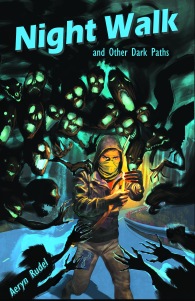
Night Walk & Other Dark Paths
Acts of War: Flashpoint

Acts of War: Aftershock

Acts of War: Stormbreak


