
Sacrilege & Skorne – My Latest Privateer Press Publication


What follows is a short excerpt from my e-novelette “Sacred Charge,” now available from Skull Island eXpeditions and Privateer Press. The story is set in Privateer Press’ Iron Kingdoms setting, “A place where steam power and gunpowder meet sword and sorcery.” For those unfamiliar with the Iron Kingdoms, Privateer Press has posted a wonderful, in-depth introduction to the world on their website.
Here’s the “back cover” text for “Sacred Charge.”
Among the skorne, death and glory are often the same thing.
At the command of Archdomina Makeda, the great Army of the Western Reaches pushes further into the uncharted lands in the west. The skorne who fight for the archdomina face enemies stranger than any they’ve seen, but with each foe comes a chance at glory and exaltation.
When three warriors are cut off from the main army after an ambush by a new and deadly enemy, they become the sole protectors of a most precious cargo: soul stones containing the vital essence of skorne who died bravely in combat. These survivors must overcome their differences in rank and the rigid skorne caste system, band together, and fight their way back to safety. But one among them harbors a terrible secret, one that may cost them their honor, their lives, and even their very souls.
You can download “Sacred Charge” at the following sites:
Many thanks to Skull Island eXpeditions and Privateer Press for graciously allowing me to post this excerpt on my humble little blog.
608 AR, South of Scarleforth Lake
The enemy came in a wave of pale shadows, flickering silhouettes rushing through an alien forest on a tide of steel and death.
Senior Beast Handler Zoaxa cracked her whip, its barbed tip scoring the flesh of the basilisk drake in front of her. The reptilian creature hissed and snapped at the air, but the pain had the intended effect: it turned its scaly head toward a charging line of pale elves armed with long slashing swords. The basilisk’s eyes blazed crimson, and the air in front of it shimmered. Ten yards away, the elves, the toksaa, were struck by the creature’s gaze. Zoaxa smiled behind her mask as the enemy warriors’ bodies disintegrated, their flesh sloughing off their bones in a liquid tide.
“Cetrati! Battle line!” Tyrant Verthak’s voice rose over the din of battle, powerful and commanding. His Cataphract Cetrati, heavily armored warriors wielding long spears and stout shields, formed a line of armored flesh in front of the skorne scouting force.
“Venators! Cut them down!” came another command, this time from Dakar Isket. A dozen lightly armored skorne obeyed their commander and aimed their reivers, gas-powered rifles that hurled a shower of deadly needles, over the shoulders of the heavy infantry in front of them.
Zoaxa stood behind the Venators along with another paingiver beast handler. It was their task to manage the warbeasts, a basilisk drake and its mate, called a krea.
Tyrant Verthak was an imposing figure, a veteran Cataphract who had attained much glory fighting in the west. An ancestral guardian stood beside the tyrant, its obsidian body festooned with sacral stones to catch the fleeing souls of worthy skorne, saving them from the Void and ensuring their experience could be called on in the centuries to come. The guardian was a mighty combatant in its own right; the spirit animating it had once been a skorne warrior of rare skill and valor.
The buzzing whine of the Venators’ reivers sounded, and white-skinned elves fell beneath a hail of needles. More enemies streamed from the forest.
The blighted elves were known to be in the area, and there were reports that Master Naaresh had engaged a large force of them to the north of the Scarleforth. Lord Hexeris had sent Tyrant Verthak to seek out the enemy and determine their strength and numbers in the immediate vicinity. Neither Herxeris nor Verthak had expected to encounter a force of this size.
They were outnumbered; this much was clear. The ambushers were initially comprised of dozens of unarmored warriors wielding twin swords. Many of these had fallen, but now a group of hunched, leather-clad archers was emerging from the trees. Zoaxa had understood the elves to be blighted, warped by the fell energy of a dragon, but these archers confirmed it. Spines and horny growths jutted from their bodies, their legs bent backward at the knees, and their feet were clawed talons.
“S’ket!” Tyrant Verthak shouted, his voice thundering over the noise of combat. “Bring the krea to my position.” Nearby, the skorne the tyrant had called out to hurried to obey. S’ket was a mortitheurge willbreaker and could use her mystical skills to motivate a warbeast and tap into its power. She pointed at Tyrant Verthak’s position, and the krea loosed an irritated screech, but it moved. The beast’s latent magic ability could be harnessed to create an energy barrier that robbed the strength from missile attacks. The krea lumbered in Tyrant Verthak’s direction with S’ket behind it, silently driving it forward.
Zoaxa turned her attention back to the drake. She ran a hand along its leathery flank, making sure its pain hooks were in place. The creature’s rage was palpable, an aura of chaotic power that could be harnessed by a skilled mortitheurge such as S’ket. But left unchecked, the beast would lose control and attack both friend and foe. Zoaxa tugged lightly on a pain hook sunk into a nerve bundle at the base of the drake’s skull; its manipulation had a calming effect on the beast. There were no targets for its destructive gaze at the moment, and it would be needed when the enemy closed. The drake quieted, and Zoaxa looked to Tyrant Verthak. The krea had reached his position, and she could see the slight shimmer in the air that indicated S’ket had driven the beast to use its power.
Arrows fell like black rain.
The enemy archers were skilled and crafty. They did not target the Cataphracts, whose armor was thick enough to repel even the most powerful bows. Instead, their arrows fell among the Venators and the beast handlers.
Zoaxa ducked and rolled beneath the drake, using its body to shield her from the rain of missiles. She heard screams as the Venators were struck down, their light armor insufficient to turn aside the arrows. Beside her, the other beast handler, Kress, fell to the ground, an arrow protruding from his left eye. The drake writhed above Zoaxa as arrows thudded into its scaly hide, and she twisted its pain hooks to keep it calm and to accelerate its healing ability.
“Cataphracts, forward!” she heard Tyrant Verthak shout. She rolled out from beneath the drake and saw most of the Venators had fallen, including Dakar Isket. One of them was crawling toward her, possibly wounded, away from the battle.
“Coward,” she said and would have dispatched the Venator with her short sword had there been time. Instead she pushed the drake forward into a slow jog and ran beside it, keeping pace with the Cataphracts. She saw that the krea and S’ket still lived and were moving behind Tyrant Verthak.
More enemies were emerging from the trees, blighted elves in heavy, ornamented armor and armed with great two-handed swords. They formed a battle line, their discipline apparent in the speed and efficacy of their movements. The archers moved behind them and again filled the air with black-fletched arrows.
“Charge!” Tyrant Verthak cried, and the Cataphracts surged forward. They met the enemy swordsmen with a deafening crash of steel on steel. Blood plumed as Cataphract spears penetrated pale flesh.
The Cataphracts were now held in place by the enemy’s heavy infantry, but there were more unarmored swordsmen moving around the right flank of the Cataphract line. Zoaxa saw them; she whipped the basilisk drake forward, enraging the beast and spiking its physical strength with a surge of adrenaline. It charged eagerly, barreling into the elven warriors with tooth and fang. She left it to fight without her guidance; it would hold the right flank for a time.
More arrows fell, dropping the remaining Venators and a single Cataphract. The heavy infantry closed ranks around their fallen comrade, shortening their line. Zoaxa raced forward, unfurling her whip and drawing her short sword with the other hand. The krea’s animus had kept Tyrant Verthak and S’ket safe from the enemy’s arrows, but more swordsmen were moving toward them. The tyrant was shouting orders and hacking down any enemy that ventured within reach of his halberd. The ancestral guardian stood grim and still beside Verthak, the sacral stones on its body occasionally flashing red as they absorbed a worthy skorne soul.
More Cataphracts fell, and Zoaxa had nearly reached Verthak. The swordsmen approaching the tyrant were led by a tall female armed with a single blade. Her gait was predatory, and Zoaxa saw this was because she had the same bestial deformities as the blighted archers. The female warrior and her swordsmen fell on Verthak, separating him and the ancestral guardian from the Cataphracts. The tyrant cut down two swordsmen with his halberd, and the others streamed around him, slashing at the krea and S’ket. The krea shrieked as enemy blades cut into it. S’ket bravely urged the beast to fight, and it snapped its jaws closed on a swordsman, nearly biting him in two.
Zoaxa reached S’ket just as the krea went down, slashed to pieces by a dozen swords. She had begun her tutelage in the paingiver caste as a bloodrunner, a mortitheurgical assassin, and she was no stranger to battle. Her whip snapped out, slashing open the throat of the nearest swordsman, then she leapt forward and buried her short sword in the spine of another.
S’ket was doing her best to hold the enemy at bay with a sword snatched from a fallen Venator, but she had little martial training. A swordsman nimbly dodged S’ket’s first clumsy strike, stepped inside her reach, and removed the willbreaker’s head with a single stroke.
Two more swordsmen threatened Zoaxa, and she gave ground. Tyrant Verthak had engaged the tall female elf and was fending off a flurry of sword strikes with his shield. To the tyrant’s left, the Cataphract line had collapsed. Only four remained. They had taken a toll on the enemy, though. Dozens of pale bodies were heaped around them.
Zoaxa turned back to the immediate threat. The two swordsmen charged. She snapped her whip at the first, causing him to jerk back. The other raced forward, both blades slashing. She knew she wouldn’t be able to fend off both swords, and so she drew her arm back and hurled her short sword at the charging enemy. It was a clumsy weapon for such an attack, but she was lucky. The blade pierced the elf’s chest, stopping him in his tracks. He toppled, folding over the mortal wound.
A bright flash of red light drew Zoaxa’s attention to Tyrant Verthak. The great skorne warrior stood limply, the female elf’s blade transfixing his skull. She had thrust the weapon up under the tyrant’s helm, the precision of the strike denoting superlative skill. The flash of light was Verthak’s soul filling one of the ancestral guardian’s sacral stones. The massive stone construct was nearby, fending off more enemies with its glaive.
Verthak crumpled to the ground, his limp body falling among the mounting skorne dead. Zoaxa knew his death signified the end of any hope they might survive. Without his leadership and martial skill they stood little chance. At least his soul had been preserved, that he might fight once again for the archdomina in the stone body of an immortal.
Pounding footsteps broke Zoaxa’s attention back to the immediate threat. The remaining swordsman had taken advantage of her lapse in concentration to close the distance. She stumbled backward, knocking aside the enemy’s first sword stroke with the butt of her whip. But she was not fast enough to turn the second. The blade smashed into her mask just above her jaw line. The world went dark, and she was falling . . .
©2015 Privateer Press, Inc. All Rights Reserved.
Using Real People as #Fictional #Characters – #ArtisticLicense and #TBT
Great post by author Alana Siegel on her blog Optimist Superheroes about using real (historical) people as fictional characters. Check it out.

Throwback Thursday to John F. Kennedy’s Presidency! More on him a little later.
Artistic License
There is a fine line between real people as fictional characters adding an intriguing aspect to a novel versus causing it to crash and burn. Artistic license needs to be applied with caution so readers do not expect a biography, but instead a fact-checked, interesting twist on the person.
My latest book is about a girl who can see spirits, and the school she attends has a faculty of famous dead people. On the one hand, the spirit version of the celebrity may be totally different than the living version of the person. I could make Abraham Lincoln an outgoing, busybody, but where’s the fun in that? Instead, I attempted to write each character in the voice everyone knows, but I then add an exaggeration here and there. [insert coy devil smiley]
John F. Kennedy as a Teacher…
View original post 417 more words
Rejection Letter Rundown: The Further Consideration Letter

In previous posts in this series, I’ve covered common types of rejection letters (at least the ones that are common to me), but there are others letters out there a writer might receive, strange hybrids that are neither all rejection nor all acceptance. These crossbreeds come in a variety of flavors, but the one I’m most familiar with is the further consideration letter. It looks like this:
Dear Aeryn,
Just a quick note to let you know that we’re holding [XXX] for further consideration. We should have a final decision for you by March 31.
Getting a letter like this is exciting—it kind of feels like an acceptance letter because there’s a definite sense of validation. The editors liked the story, at least a little. Why else would they hold it for further consideration, right? That said, the further consideration letter can be anxiety-inducing. You know you have a real shot at publication, so waiting for the publisher to get back to you with a decision can be somewhat nerve-wracking.
Be patient, the publisher will get back to you (you have their attention). Hopefully, they get back to you with an acceptance letter. If not an acceptance, then it’ll be something like this:
Dear Aeryn,
Thanks for giving us the opportunity to consider this one. After reading and discussing it, and then holding it over for several rounds of further consideration, we’ve finally decided to pass on it. We like it a lot, but don’t have the space and budget to publish everything we like, and in the final cut must pass on some stories we might otherwise buy.
Good luck placing this one elsewhere. And in the meantime: you got really close this time. Not this one, but maybe your next one. Send us another story, please.
Sure, I was disappointed because I got so close (the editor even said as much), but I also felt pretty damn good about this letter. They did like the story, they almost published it, and they truly wanted to see more of my work. That’s a lot of unambiguously good stuff wrapped up in a rejection letter. Why did they ultimately pass? The editor mentioned space and budget, and I have no reason not to take him at his word. I certainly understand the magazine business, and the words space and budget are always looming concerns.
So, if you get a letter like this, I think you should do exactly what they ask—send them another story. You want to get them something else while your name is still fresh in their minds. That’s not to say you should just fire of any old thing. One of the benefits of getting close is it should give you some indication of the type of story the publisher wants, allowing you to zero in for your next submission.
I did finally publish the story that generated the letters in this post. I fired it off immediately after getting the very nice rejection letter you see here. I was confident I had something good on my hands. The story was rejected twice more before it was finally published, but I never lost faith in it (like I’ve done with a few other stories), and I credit some of that stick-to-itiveness and the eventual publication to this near miss.
Have a near miss of your own you’d like to share? Tell me about it in the comments.
Ranks of the Rejected: Richard Lee Byers
This time on Ranks of the Rejected, I spoke with veteran fantasy and horror author Richard Lee Byers. I was lucky enough to work with Richard on a number of projects when I was acquisitions editor at Skull Island eXpeditions, and it was a great experience. He’s a true professional, astonishingly easy to work with, hits deadlines with laser-like precision, and turns in some of the cleanest first drafts I have ever seen. Richard was gracious enough to share some of his own tales of rejection, gathered over a long and successful career. Of course, Richard is more than just a well known and successful author. He is also a mighty 20th level Rejectomancer, whose reality-warping literary powers include Orson’s Instant Outline and Flawless First Draft.
Here’s a bit more about Richard:
Richard Lee Byers is the author of over forty fantasy and horror books including Blind God’s Bluff: A Billy Fox Novel (Night Shade Books), Murder in Corvis (Skull Island eXpeditions/Privateer Press), and the forthcoming “Black River Irregulars” trilogy (Skull Island eXpeditions/Privateer Press.) His short fiction appears in numerous anthologies, and he has collected some of the best of it in the eBooks The Q Word and Other Stories, Zombies in Paradise, and The Plague Knight and Other Stories. When the mood takes him, he writes an opinion column for the SF news site Airlock Alpha, and he invites everyone to connect with him on Facebook, Google+, Ello, and/or Twitter.
1) For many writers, that first rejection letter is pretty memorable. What do you remember about your first?
Honestly, I’ve been at this so long (since the mid-eighties) that I don’t remember the first. I can tell you my first novel was rejected by every genre publisher you’ve ever heard of and some you probably haven’t before finally being accepted by the most obscure market imaginable. I was overjoyed and accordingly crushed later when the novel came out and that publisher went bankrupt simultaneously. This meant nobody ever saw the book. Devastating for me, less so for the world, because when I looked at it again years later, it wasn’t a very good book. Anyway, right from the start, I had my nose rubbed in the randomness and bad luck that often afflicts a writing career, and the experience probably served me well. It may have kept me from being quite so crushed when other disappointments came along.
2) What do you hope to see in a rejection letter? What is useful to you as a writer?
Perhaps I’m arrogant, but there are only two things that strike me as useful to the writer. One is the editor saying that if I change X to Y, he would like to see the story again. The other is the editor encouraging me to send something else.
As far as criticism goes, I don’t pay much attention to it if the editor is definitely passing. This attitude stems from when I was shopping my first novel around. I mostly got personal rejection letters, and there was no consistency to the various editors’ reasons for turning down the book. This made me think that reworking a story on the basis of one editor’s reaction is foolish (unless, as I mentioned previously, he’s saying he’ll look at it again if I do.) Now, if ten editors made the same criticism, I might consider tinkering, but that hasn’t happened to me yet, and I wonder how often it happens to anyone.
3) Got a favorite rejection? Funny, mean, just straight-up weird?
One editor at a major house rejected a novel on the grounds that it was very much like a book they had recently published. I wasn’t familiar with that book, so I took a look at it. The story was nothing like mine. The title, however, was quite similar. As you can imagine, this left me wondering just how diligently the editor in question actually does his job.
4) What’s the toughest part of rejection for you? Pro tips for dealing with it?
Rejection hurts, no question. It feels like the editor is telling me something I poured my heart and soul into is no good and that I have no talent. That’s not a rational, useful way to look at the situation, and on a good day, I can shake off my initial reaction pretty quickly. Still, there’s often that gut-punch moment.
I have two tips for handling rejection. One is to already be working on another story when the rejection arrives. If you’re already focused on something new, the rejection of the old piece won’t sting as much, and if you’re going to have a professional writing career, you need to work steadily anyway.
The other tip is to get the rejected story back into submission immediately. Then it’s not a failure anymore. It’s a project that’s in play.
5) Tell us about your latest acceptance letter. How long did it take the sting out of the rejections that followed?
My most recent acceptance letter turned up in my email right before I started answering these questions, so no rejections have followed it yet. They undoubtedly will.
I can tell you that when a story finds a home, that obliterates any lingering pain from the rejections that preceded the acceptance. Fortunately, in recent years, most of mine find a home eventually, so I’m not too traumatized.
6) Okay, plug away. Tells us about your latest project or book and why we should run out and buy it.
You’ve caught me between novels. My last came out a while back, and the next, the first in my Black River Irregulars/Iron Kingdoms trilogy from Privateer Press, won’t be along for a while. But I have had stories in a number of anthologies that either came out recently or will be out in the near future. People who enjoy my sword-and-sorcery tales may want to check out Blackguards: Tales of Assassins, Mercenaries, and Rogues, The Bard’s Tale, and Champions of Aetaltis. Lovecraft fans may like my contributions to The Fall of Cthulhu, Cthulhu Fhtagn!, Resonator: New Lovecraftian Tales from Beyond, and Legacy of the Reanimator. People can get a taste of my non-Mythos horror in Blood Sushi and see how I handle science fantasy in a modern setting by reading my novelette “The Gold Bugs Affair.” Last but not least, I’ll have a story in License Expired: the Unauthorized James Bond. That book, however, will only be available in Canada and other places where the copyrights on the original Ian Fleming novels have expired, so interested parties living elsewhere (like in the US) may need to find a friendly Canadian to purchase it for them.
Duck Snorts & Worm Burners

I’m going to take a little break from rejection today (we’ll hit the hard stuff again first thing Monday morning) and talk about two of my favorite subjects: baseball and weird slang. Happily, the two go together.
Baseball is one of the oldest organized professional sports in the Unites States, and the first professional game was played way back in 1869. In nearly 150 years, baseball has picked up a bunch of strange slang terms to describe various elements of the game. I love these things, so I thought I’d share a few of my favorites with you. Hopefully, these will be of interest to both my fellow word nerds and baseball aficionados.
- Can of Corn. You hear this one a lot, and at first blush it makes absolutely no sense because what it means is a high, lazy, medium-depth fly ball that gives the outfielder plenty of time to settle underneath it. It’s an easy catch. But why call it a can of corn? Remember, baseball is an old game, so some of its lingo originated over a century ago and was drawn from things that make little sense to the modern fan. The origins of this one are debatable and probably lost to time, but this article over at Baseball-Lingo presents one of the more plausible explanations I’ve read.
- Cup of Coffee. Another one you hear all the time, a cup of coffee is when a minor league player comes up to the majors for a temporary stint, sometimes just a single game. The idea being the player is up only long enough to have a cup of coffee. Some players, however, seem to never get anything more than that, repeatedly bouncing from the minors to the majors over the course of many seasons, treating the show like some sad version of an MLB Starbucks. Apparently, even professional baseball players have opportunities to earn Rejectomancy points.
- Duck Snort. Yeah, I swear, this is a real, honest-to-god baseball term. Anyway, a duck snort is a shallow pop up that manages to elude both outfielders and infielders, often landing between them as they race toward one another to catch it. The duck snort is often the culprit when outfielders and infielders collide with one another chasing down the ball. Apparently the duck snort was originally called the duck fart, which is even stranger (and funnier). I have no idea what duck snorts and farts have to do with softly hit fly balls, but such is the enigma of baseball slang. The duck snort is known by many other names, including but not limited to, the bloop, the dying quail, the flare, and even the Rick Flare (yes, in reference to the wrestler).
- Frozen Rope. One of my favorites, the frozen rope is a hard-hit line drive with very little “hump” in it. The idea behind this one, I guess, is that a real frozen rope would be pretty damn straight, just like this type of line drive. This term is sometimes also used to describe a particularly strong throw from an outfielder.
- Seeing-Eye Single. The seeing-eye single is usually a softly hit ground ball that, through blind luck or the grace of the baseball gods, manages to avoid every infielder, often by bare millimeters, and find its way into the outfield. It’s one of those weak, almost embarrassing hits that prompts baseball announcers to use the oft-repeated phrase, “Well, it’ll look like a line drive in the box scores tomorrow.” The seeing-eye single is a close cousin to the excuse-me single, which is one of the more humorous ways a hitter can add to his batting average. It usually occurs on a check swing, where the ball hits the batter’s bat by accident, resulting in a swinging bunt that catches the infielders entirely off guard and allows the batter to leg out an infield hit. The excuse me part comes from the invariable expression on the batter’s face when he makes accidental contact with the ball, a strange mixture of embarrassment and horror.
- Worm Burner. This one cracks me up every time I hear it. A worm burner is a hard-hit ball that hugs the ground, theoretically torching any hapless worms in its path. Not to be confused with the dreaded worm killer, which is a pitch, usually a breaking ball of some kind, that hits the dirt before reaching home plate, possibly slaying the unsuspecting worms there who showed up to watch the game.
I hope you enjoyed this little sojourn into the weird world of baseball slang. I really just scratched the surface, and there are dozens and dozens of even stranger terms that can be found with a simple Google search.
Are you a baseball fan? Got any favorite bits of baseball slang? Tell me about them in the comments.
Real-Time Rejection: The Third Rejection of “Story X”
The hits just keep on coming! “Story X” has received its third rejection letter, and here it is:
Thanks for submitting “Story X,” but I’m going to pass on it. It didn’t quite work for me, I’m afraid. Best of luck to you placing this one elsewhere, and thanks again for sending it my way.
Like the two rejections before it, this is a standard common form rejection with all the usual trimmings. Polite? Check. An unambiguous “no.” Check. General niceties? Check.
This is the last submission to the quick-turnaround publishers. Next were heading into the deep, dark wilds of simultaneous submissions. What’s a simultaneous submission? Well, it’s really a topic for another blog post, but in short, a simultaneous submission is when you send the same story to multiple publishers at the same time. Some publishers allow it; others don’t. Pro-tip: Don’t send simultaneous submission to publishers that don’t go in for that kind of thing. It can put you in a very bad position.
“Story X” will be sent to three publishers, all of whom accept simultaneous submissions. (Yes, I checked.) The turnaround times for these three markets are in the 30- to 60-day range, which is pretty typical for most genre magazines. That said, many publishers are quicker than their stated turn times with rejections. Acceptances usually take longer, as these stories are often under consideration for some time before the decision is made to publish.
So, three shots fired. Let’s see if any of them find the mark.
Previous Real-Time Rejection Posts
Intro: Real-Time Rejection: The Journey of “Story X”
Part 1: Real-Time Rejection: The First Rejection of “Story X”
Part 2: Real-Time Rejection: The Second Rejection of “Story X”
Rejection Letter Rundown: The Acceptance Letter
Rejectomancy Points + 10 (What’s this?)
Imagine, if you will, a writer of dubious talent opening his email and finding a subject line that looks something like this: RE [Awesome Stories of Awesomeness] Aeryn’s Awesome Story. The author sees this email and thinks, “Great, another rejection letter. That’s the eighth one this week.” He opens the email, girding himself for yet another “does not meet our current needs” or “we’ll have to pass” or “go fuck yourself, you worthless hack.” Instead, he sees strange words in the first sentence that combine to make weird, alluring phrases like, “we loved it” and “publish in our next issue.” Then it hits him. He pees a little, thrusts his fist into the air, looses what he thinks is a manly roar of triumph, and scares the shit out of his wife who thinks he’s having a stroke (he kind of is).
Yup, kiddies, let’s talk about that rarest of rare birds, the glorious, treasured acceptance letter.
Here’s one of mine, removed just this morning from its hermetically sealed display case so you might marvel at its loveliness:
Dear Aeryn,
Thank you for sending us “XXX”. We love it and would like to publish it in the next issue of XXX. Your contract is included in this email. Please accept the contract by following the link at the bottom of this email and include your 100 word bio in the Requested Information box. We’ll send an email with editorial suggestions two to three weeks before the issue publication date.
Thank you for your submission and we look forward to working with you!
I won’t lie; finding one of these little gems in your inbox can make your whole day. Previous rejections are forgotten, and the future seems a bright, welcoming place filled with adoring fans and phrases like “award-winning” and “best seller.” But, hold your horses there, champ; you’ve still got work to do. Because, even though a publisher likes your story enough to publish it, there are still plenty of opportunities to fuck this up. How do you fuck this up? By falling prey to SSD (special snowflake disorder) or FTFFD (failure to follow fucking directions).
You’ll notice along with the nice things they said about my story and the fact they’re willing to publish it, they’ve also given me some instructions. Every acceptance letter will do that. Publications need certain things beside your story to publish your piece. What this one asks for is very standard. They want me to sign a contract, and they want me to send them a short bio (we’ll discuss those things in later posts). When should you get these things to the publisher? As soon as humanly possible. Trust me, editors don’t like waiting on authors whom they’ve graciously agreed to publish to follow simple instructions. So get on it, and get them what they need.
Got a recent acceptance letter you’d like to share with the class? I’d love to see it in the comments.
Ranks of the Rejected: Gabrielle Harbowy
In this episode of the Ranks of the Rejected, we’re going to turn the tables and—Gasp!—talk to an editor. Gabrielle Harbowy is the managing editor at Dragon Moon Press, submissions editor for Apex Magazine, and copyeditor for Pyr, Circlet Press, and other publishers of novel-length genre fiction. She has graciously agreed to be interviewed and provide some insight on rejectomancy from the other side of the coin.
As an editor, Gabrielle has many strange and wondrous powers, one of which is removing rejectomancy points from foolish Rejectomancers who fall prey to SSD (special snowflake disorder) or FTFFD (failure to follow fucking directions). But her powers are not always used for evil, and her suite of extraordinary abilities includes many that are beneficial to the Rejectomancer. Follow all the submission guidelines, proofread and revise your story, and she may bestow such boons as Read to the End or Create Constructive Criticism or that most potent of editorial blessings, Aura of Acceptance. But writers beware, she also has access to the dreaded Random Reject Table.

Here’s a bit more about Gabrielle.
Gabrielle Harbowy is a writer, editor and award-nominated anthologist. She has been reading and acquiring novel- and short-fiction submissions since 2008 and hasn’t poured bleach in her eyes yet, but she *has* learned not to say “Now I’ve seen everything.” She is passionate about helping authors navigate and understand the slush pile. Her short fiction appears in several anthologies including Carbide Tipped Pens from Tor. Anthology-wise, her latest project is Women in Practical Armor, co-edited with fantasy legend Ed Greenwood. This is their fourth anthology collaboration, and its crowd-funding effort is live on Kickstarter right now!
1) Okay, since this a blog about rejection, let’s get right to the meat. What are the top three things you see in a story or manuscript that result in an auto-reject? Please, be blunt. We writers rarely understand nuance or subtlety.
I only get three? Hmm…
Okay. Since you’re asking me about auto-rejections, I’ll focus on the things that are so rejection-assured that I would have to reject on the basis of these flaws even if I like the story.
a) Failure to address the theme/genre of the market. This tops my list. Even if a story is well-written and I love it, if it doesn’t fit the theme of the anthology, or the genre of the publisher, I can’t buy it even if I want to.
That sort of situation is rare, but it happens. Ed and I got a great story for When the Hero Comes Home 2 in which the fantastical element the story would have needed to fit the genre of the book, would have killed the story. It ONLY worked in a mundane world. It was a great story…for another book.
More often, a lack of attention to the market is correlated with a lack of attention to one’s own writing, and the things that aren’t a fit also aren’t very good. If it’s a good story that just isn’t right for us, at least I’ve had the pleasure of reading a good story (even if it comes with the heartache of rejecting something awesome). If it’s a “meh” story that isn’t remotely a fit for us, and is just the result of someone throwing their story at every market they have an address for to see if it sticks, reading and processing it has been nothing but a waste of my time.
b) Lack of plot. A premise is not a plot. A premise is the set-up and the plot is the conflict and resolution that happens to one person within that set-up.
Many, many short stories go something like this: “I have this awesome idea, so I’m going to flesh out a world around this idea. Right at the end, I’m going to introduce a new fact about the world that you didn’t see coming. It’s a plot twist!”
Except, no. It isn’t a plot twist. It’s just a reveal of withheld information. “Guy looks in mirror and studies his hair” isn’t a plot, so when it turns out he’s actually a dog, that’s not a plot twist. In a plot, there is a protagonist (a character who wants something concrete/has something at stake), and something between that character and their goal. If no one has a goal, there’s no conflict or resolution. It can be a perfectly good vignette, but it’s not a story. Okay, he’s a dog. So? What conflicts arise from the guy being a dog, and what does he do about them? THAT’s the plot.
c) Someone else’s intellectual property. Unless I’m specifically licensing tie-in fiction, or unless you’ve specifically received permission from an author or their publisher or their literary estate, I can’t publish your steampunk reimagining of a modern bestseller (with the same characters and the same plot) or your crossover mashup of two other authors’ work, until that thing you’re making use of for your own purposes is in the public domain…and you’ll probably be a disembodied consciousness in a jar before that time comes.
2) When you send a form rejection letter, can it mean something in addition to “no?” Do you have multiple tiers of form rejections? For example, a simple “no, thank you,” a “no, thank you, but send us more work,” and so on.
It gets tricky when some publishers are so genial in their form letters that you can’t tell whether they’re a form or not. (I’ve taken to writing “dear author:” in my form letters, so that authors know without a doubt that they’re getting a form.)
It also gets tricky when publishers use those ambiguous phrases that some people mean, but that other people only say to be polite.
“Not quite” a fit doesn’t mean “change it a little and try again.” If a market wants you to revise and resubmit, they’ll be specific enough that you won’t have any doubt over whether they mean it.
Not a fit “at this time” doesn’t mean “our needs may change, so try again in a couple of months.”
I never say “please submit work to us again” unless I mean it, and then I let the author know that it’s a personal letter. But I do know other editors who have told me that they make it part of their form. They don’t really mean it as more than an encouraging pleasantry. That said, if you send them more stuff, they will look at it.
But, to stop rambling and actually answer your question, a form rejection could mean “No. Also you made my eyes bleed. Please get therapy.” It could mean “This was really, really close.” It could mean “This story doesn’t fit the feel of the anthology.” It could mean “This was good but it’s too similar to something we’ve acquired already, but since it hasn’t been announced there’s no way you could have known that.” It could mean “This looks like a fourth-grader typed it in the dark. We really wish you hadn’t told us in your cover letter that you’re a university literature professor, because now we despair for the future of humanity.”
The form letter can mean any of those things, but all of those things mean this:
“This market has decided not to buy this story. It’s strictly a business decision and not a personal one, but we’re not going to discuss it further with you for any or all of the following reasons:
- we’re too busy to respond to each author individually
- we’re not open to negotiation about it
- we don’t want to deal with the fallout of honestly telling you it was awful
- we don’t want to deal with the fallout of honestly telling you we loved it and had to say no anyway
- it’s our managing editor’s rule that we’re just not allowed to
3) Is there ever a situation when a writer should respond to a rejection letter? If so, what’s the protocol?
Please don’t respond to a rejection letter, even a really encouraging personal one, even just to say “thank you for your time.”
The only situation in which it’s okay to respond to a rejection letter is if it asks you a question to which the sender would genuinely like an answer. For instance, “This wasn’t a fit for us, but do you have any other finished manuscripts we might consider?” (Pro tip: Reply to that one.)
4) I know editors are not all heartless monsters, and there are real people behind those rejection letters who aren’t out to destroy hope and crush dreams. Are there rejection letters that are difficult for the editor to send out?
The “really close” ones that almost made it. The ones that are to people you know personally. The ones that are to people whose work you’ve acquired before, but not this time. I’ve also delayed sending a rejection letter because I learned it was the author’s birthday.
5) Rejection is just part of the business, but do you have any pro tips for writers on how best to deal with it?
Here’s the plain truth: You’ll probably never know why your story was rejected. You’ve been conditioned to expect closure in life, and here in your career where it most matters to you, you’re probably never going to get it. Which sucks.
And somehow, you’re expected to roll a crit on your Will save every time or something, to keep that from bothering you. Failing that, all you can do is develop whatever coping mechanism works for you.
Maybe you have to invent a narrative you can accept and believe (They didn’t take it because it’s got sex in it; They didn’t take it because it doesn’t have sex in it; They rolled low on the Random Effects table).
Maybe you’ve got to turn around and send it right back out to another market, have a lot of ice cream, and distract yourself with B movies or with outlining your next manuscript. Maybe meditation or retail-therapy are involved.
There’s no one answer. Find something that works for you, preferably something that isn’t destructive. Keep writing. Keep submitting. Make peace with the lack of closure, and move on.
Editors don’t set out to crush dreams (even though, as my partner always points out, broken dreams have no calories). We open every story and manuscript wanting it to be amazing and perfect and brilliant.
All you have to do is send us stuff that lives up to those expectations. No pressure!
Previous Ranks of the Rejected Interviews
Ranks of the Rejected: Rose Blackthorn
Welcome to the next installment of Ranks of the Rejected, where I interview working authors and ask them to bare their literary wounds for your amusement and edification. Make sure and check out the links to these writers’ works and websites. I guarantee you won’t be disappointed.
Today’s victim . . . er, subject is Rose Blackthorn. I’ve worked with Rose in my role as acquisitions editor through Skull Island eXpeditions, and I’ve gone head to head with her as a writer on numerous occasions at a bi-weekly flash fiction contest out at the Shock Totem forums, where she routinely trounced me and a dozen other writers. Rose is one of those writers whose talent is so great and seemingly effortless, she makes you feel kind of worthless in comparison when you read her stuff. (Gee, thanks, Rose.) She is also a mighty 17th level Rejectomancer who commands the advanced powers Eschew Guidelines and Dispel Writer’s Block.
Here’s a bit more about Rose:
Rose Blackthorn lives in the high mountain desert with her boyfriend and two dogs, Boo and Shadow. She spends her free time writing, reading, being crafty, and photographing the surrounding wilderness.
She is a member of the HWA and her short fiction and poetry has appeared online and in print with a varied list of anthologies and magazines. Her first poetry collection Thorns, Hearts and Thistles was published in February 2015, and is available through Amazon.
More information can be found at the following links:
Twitter: https://twitter.com/rose_blackthorn
Blog: http://roseblackthorn.wordpress.com/
Facebook: http://www.facebook.com/RoseBlackthorn.Author
Amazon: http://amazon.com/author/roseblackthorn
Goodreads: https://www.goodreads.com/author/show/5758684.Rose_Blackthorn

1. That first rejection is pretty memorable (i.e., it is burned into your cerebral cortex for all eternity). What do you remember about your first?
My first, huh? Well, that requires traveling back in time, way back into pre-history… When I first started submitting for publication, it was a novel. This was back before the internet and email, back when submitting a manuscript meant spending time at the local Xerox shop making copies to send out. Back at that time I didn’t have any friends who were writers, and the only advice I could find was gleaned from copies of the Writer’s Digest checked out from the local library. (Am I dating myself? I think I’m dating myself…) I had sent my manuscript (all 300+ pages of it) to several agents and publishers, and just waited for the offers to roll in. What I got were, as you can guess, waves of rejections. I also got a “We might be interested, if you’re willing to do some editing…” I was thrilled! So, being the naïve little newbie that I was, I forwarded my masterpiece to the ‘book doctor’ they referred me to.
*sigh* Can you see where this is going? Anyway, long story short, I forked out a lot of money for a service that should have been included with a legitimate publishing house or agency, and after all was said and done, they “changed their mind” and didn’t want it, after all. I learned a hard lesson, and good or bad, put my publishing aspirations on hold for a very long time. I didn’t stop writing, but I didn’t submit either. It wasn’t until 2009 that I started writing short stories. That’s when I began submitting again, and I’m happy to say I’ve had a lot better luck this time around! I’ve also been fortunate enough to meet (virtually) other writers, editors and publishers who have taught me so much about being a published author.
2. What do you hope to see in a rejection letter? You know, beyond the soul-crushing doubt and disappointment. What’s useful to you as a writer?
No one likes rejection. But the best kind of rejection to get, is something that gives you specific points as to why you were rejected. The “we liked your story, but it doesn’t fit” may be the absolute truth, but I usually tend to regard that as a “I don’t have time to tell you what was wrong with it”. I realize that editors are busy, and many of them simply don’t have time to write a detailed critique of an author’s submission. But as much as a rejection might sting, having a specific reason that I can look at and possibly rectify is worth more than I can say.
3. Got a favorite rejection? Funny, mean, just straight-up weird?
I don’t even have to think about this one. I received a rejection (for an anthology that I really wanted to be in) that was honestly more wonderful than some of the acceptances I’ve received! Check it out:
Dear Rose,
Unfortunately, your submission, [XXX] has not been accepted to be included in the anthology, [XXX]. I really would like to thank you, however, for your consideration to be a part of this project.
I appreciate the amount of time and work that you invested in this story and I am certain that you will be able to find a publisher for this elsewhere.
Technically you have written a nice story and I enjoyed reading it. Please know that I am not rejecting this work due to any flaw of your own ability.
Rose, I loved this story a lot. Your opening description of Shannon waking up and surfacing through the water is really beautiful – just poetic descriptions. Great idea and well-executed. You have a talent for descriptive and emotional prose.
I hate to have to pass on this. Yours is one of those stories that, if I had more room in the book, would definitely be in. I simply received a number of other stories which also held positive attributes of their own. Due to the sheer volume of submissions, I am only able to select a small amount which most closely matches the overall character of the anthology. I received about 350 submissions for this anthology. The final Table of Contents, though not yet finished, will probably number about 26 – 29 stories.
Keep writing – You have gained a fan in me, and I look forward to reading more material from you in the future.
Warm regards,
P.S. I anticipate a great story from you in the “Ghost IS the Machine” anthology!
4. What’s the toughest part of rejection for you? Pro tips for dealing with it?
There was a time when every rejection was a cause for tears. I tend to be rather emotional, anyway. I could show you the trunk full of pin-stuck voodoo dolls… just kidding! But really, it’s not so bad any more. Occasionally one will still come along that really stings – and that’s usually when it’s one of those “bucket list” markets that you want in so bad you can taste it. Then, if they hold it for a long time, and you end up with a rejection… Well, those still suck pretty bad.
For the most part though, the best thing to do in my opinion, is just find another market and send the story back out again. If the rejection comes with some critique, you might go through and make some edits or revisions. But sometimes it just comes down to the editor – not everyone likes the same things. If one editor doesn’t like your story, the next one very well might. I know some awesome writers, and I’ve read extensively – but I don’t like everything written by the same author, and I don’t always like the things my friends like. So just take the rejection, make a note of it, and find the next place to submit.
5. Okay, tell us about your first or latest acceptance letter.
I’ve had a couple wonderful acceptances in the last month. One was from Pedestal Magazine for a poem, and it really made my day because the guest editors for this particular issue were Marge Simon and Bruce Boston. These two people are amazing writers, and well known poets. For them to accept something I’d written was one of those dancing-around-the-house-while-squealing moments that still come along from time to time.
The other was actually an acceptance for a reprint. I wrote a story for a submission call, and the story was accepted. Unfortunately, the press putting out the anthology had all kinds of issues. There was never any publicity for the book, and it was only in print for a short time. Add to that the fact that no one made any money on it, and it was just a sad deal all the way around. But I really liked that story. I sent it out to a few different places that accept reprints, but wasn’t having much luck – it’s fairly long for a short story at just over 7400 words. So I found another market and sent it out, and waited, and waited. At about four months I finally sent a query. I got a reply back shortly after that they had set the story aside to respond to me, and my query reminded them – and they wanted to accept my manuscript. So now this story will be published again, with a company who has a history of publicizing their magazine, and I’ll get a bit of a paycheck along the way. That’s always a plus!
6) Okay, plug away. Tells us about your latest project or book and why we should run out and buy it.
My latest releases include a short story “A Thing of Beauty” released September 1st in Disturbed Digest #10. This is a sort of post-apocalyptic/dark fantasy that involves mutated monsters, the struggle to survive, and the odd paths love can take.
Another short story, “Obsidian Heart,” was released June 4th in Morpheus Tales #26. This is another dark fantasy/horror involving love and its loss, but it makes me smile… evilly. Take that as you will!
My poetry collection Thorns, Hearts and Thistles was released in February of this year and is available from Amazon.
There are a few other things in the pipeline, but I don’t have finalized release dates for them. My story “Only a Matter of Time” will be included in Not Your Average Monster: A Bestiary of Horrors, coming from Bloodshot Books before the end of the year. This may be the goriest story I have written to date, so if that’s your thing, you won’t want to miss it. A novelette titled “Worthy Vessel” will be released from Privateer Press, tentatively scheduled to come out before Halloween. That’s another new thing for me; it was fun to write, but scary, too. I’m hoping fans of the Iron Kingdoms will enjoy it. I also have poetry appearing in Chiral Mad 3 from Written Backwards and the HWA Horror Poetry Showcase Volume 2.
Thanks for letting me share a little of what’s going on with me right now!
General Nerdery: Jurassic World Wish List
Although this blog is primarily about writing and the business of writing, it also belongs to a giant nerd, and giant nerds like nothing more than to pontificate about their favorite nerdy subjects. So, from time to time, expect to see me blathering on, very specifically, about things like medieval weapons, martial arts, and, sigh, dinosaurs.
Yep, one of my particular areas of nerd expertise is paleontology. I’ve been fascinated with dinosaurs and other prehistoric critters since I was wee tyke. So, as you might guess, the most recent entry into the Jurassic Park franchise, Jurassic World, sent me into paroxysms of nerd rage. Don’t worry; I’m not gonna bore the shit out of you with a tedious rant about dinosaurs with feathers. Instead, I’m going to be positive and talk about a few prehistoric monsters I’d like to see in a JP movie.
The five critters I’m going to talk about don’t get a lot of press, and you’ve probably never heard of most of them. The other thing to keep in mind is that none of the animals I’m going to talk about are dinosaurs. I feel justified in that decision based on the fact the JP franchise has recently introduced prehistoric critters that aren’t dinos, specifically, pterosaurs and mosasaurs. That said, the following five prehistoric animals check all the usual boxes for inclusion in a JP movie. They’re all predators, they’re all the biggest in their particular group, and they’re all really cool.
So let’s get started:
1) Sarcosuchus imperator
This one is a no-brainer for me, and it’s the only one on the list I think might have an actual shot at making it into a JP movie. Sarcosuchus is the largest crocodilian that ever lived. It’s a 40-foot, 8-ton crocodile that, no shit, probably ate dinosaurs. Let me repeat that. It fucking ate dinosaurs. Pretty cool, huh?
The other thing Sarcosuchus has going for it is it lived 112 million years ago, right in the Cretaceous period, and since the Jurassic Park franchise has a serious hard-on for the Cretaceous (not the Jurassic, oddly), ol’ Sarchy should fit right in. In all seriousness, though, crocs make for great drama. They’re some of the best ambush predators around, and, well, you can probably imagine a scene in the next JP movie (Jurassic Galaxy: The Feathering). A lone Velociraptor (Can I just call it a Utahraptor? Please?) comes to a tropical lake, bends down for a quick drink, and BAM! Eight tons of scales and teeth explode from the water, and not even the nimble raptor can avoid the jaws of death. The Sarcosuchus clamps down, pulls the raptor into the water, and both disappear, leaving only a crimson stain on the lake’s surface. Later in the movie, Chris Pratt can saddle up and ride the giant croc into battle against the evil geneticist Dr. Henry Wu and his army of cloned flying raptor piranhas.
2) Andrewsarchus mongoliensis
As I said earlier, a running theme in the JP franchise is new critters need to be the biggest and the baddest. Well, Andrewsarchus is both. The largest mammalian carnivore in the books, Andrewsarchus is big, mean, and really, really weird. Some estimates put this vaguely wolf-shaped critter at 15 feet long and nearly 2 tons. That’s like twice the size of the largest grizzly bear. On top of that, Andrewsarchus had a massive skull with jaws that could produce some of the greatest bite force of any mammal, so it could crack bone with the best of them.
Andrewsarchus hails from the Eocene period, about 40 million years ago. It was one of those times when evolution took a couple of strange turns. For example, Andrewsarchus is a contender for the largest mammalian predator of all time, but here’s the weird part, it’s only living relatives are ungulates. In fact, it’s thought Andrewsarchus had hooves. That’s right, the largest mammalian predator of all time had hooves and is related to fucking sheep. Cool, huh?
I think a giant wolf monster with hooves is just too cool to pass up, and I can easily see them in a JP movie as part of the petting zoo or something.
3) Phorusrhacos longissimus
Yeah, I know that’s a mouthful, so let me simplify it for you. You can just call this critter and its relatives by the totally metal moniker “terror birds.” What’s a terror bird? Well, take an ostrich, cross it with a giant eagle, sprinkle in a liberal dash of baddassitude, and then crank that fucker up to eleven. That’s a terror bird, and Phorusrhacos was one of the biggest. I’m talking about an 8-foot-tall, 300-pound flightless bird armed with a beak sharper than a goddamn samurai sword and talons that’d put holes in Kevlar.
One of the other things that makes terror birds really cool is how long they were around. They showed up in the early Paleocene, like 62 million years ago, right after the extinction that wiped out the dinosaurs. In fact, they were likely some of the first large predators to evolve after the dinosaurs (although, to be technical, terror birds are dinosaurs). They stuck around until as recently as a couple million years ago, which means actual human beings just missed being bird food by a few hundred thousand years.
Phorusrhacos is great for the JP franchise because it’s an actual bird, not one of those silly non-avian dinosaurs, so, you know, you could put feathers on it and not have to worry about the public actually learning something.
4) Dunkleosteus terrelli
What do you get when you cross a giant shark, a tank, and a jumbo–sized staple remover together? You get one of the most badass monsters ever to swim the oceans. Now, I know I could have hit the easy button and chosen Carcharodon megalodon, the massive 50-foot shark you’ve all likely heard about, but I’m gonna get all hipster and shit and talk about a monster that was awesome way before giant sharks were cool.
Dunkleosteus lived a long, long time ago, in the Devonian period. We’re talking like 400 million years ago, in a time where most critters lived in the sea and animals had just begun to colonize the land. Dunkloesteus was the largest member of a group of weird armored fish called placoderms, and it was designed to be a cannibal. Its massive jaws were like a pair of industrial shears, designed to cut through the armored plates of its fellows.
In my opinion, Dunkleosteus is perfect for the JP franchise. It’s huge (30 feet long and 4 tons), looks like a nightmare concocted by a coke-addled Pokémon designer, and they could make up all kinds of shit about the strength of its jaws. I mean, by the time JP is done with it, the government will be cloning them to chew through enemy submarines to get at the tasty meat filling inside.
5) Jaekelopterus rhenania
For my final choice, I’m gonna stay with aquatic horrors and go with a creature that is the largest member of a group of terrifying monsters called sea scorpions. These arthropod nightmares swam the oceans, lakes, and rivers of the world as early as the Ordovician period (460 million years ago) and as late as the Permian period (250 million years ago). That’s a span of some 200 million years, which means sea scorpions are one of the most successful organisms in the history of organisms. I mean, shit, humans have only been around for like 200 thousand years. We’re barely a blip on the geological time scale.
Sea scorpions generally look like someone crossed a lobster with a crab during a really bad acid trip. The biggest, Jaekelopterus, was over 8 feet long with pincers that extended another 3 feet or so. I’d rather face down an entire school of sharks than deal with just one of these things. A shark would at least give you a nice, clean death. One chomp, and you’re done. A sea scorpion would tear you into bite-sized nuggets, giving you the distinct pleasure of drowning and getting eaten alive.
Jaekelopterus and the rest of the sea scorpions would fit right into JP. They could serve the little ones up like lobsters in the overpriced park restaurants, and then feed irritating secondary characters to the big ones to up the stakes and let all the moviegoers know shit just got real.
Anyway, thanks for taking a trip with me down Nerdery Lane. If you share my enthusiasm for weird prehistoric critters, tell me about one of your favorites in the comments.
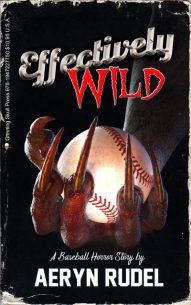
Effectively Wild – A Baseball Horror Story
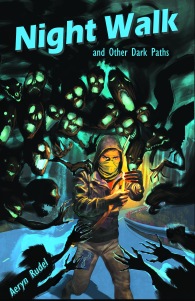
Night Walk & Other Dark Paths
Acts of War: Flashpoint

Acts of War: Aftershock

Acts of War: Stormbreak

 Aeryn Rudel's Rejectomancy