
Hook, Line & Sinker: Fine-Tuning the First Sentence

Last year, I wrote a blog post inspired by one of my favorite essays by Stephen King, “Great Hookers I Have Known,” from his collection Secret Windows. The title of the essay is, of course, not what it sounds like. It’s about crafting a first sentence for a novel (or short story) that grabs the reader, the “hooker,” as it was apparently called by publishers back in the day.
In the blog post from last year, I looked at the “hookers” in six of my published stories and tried to ascertain if a good one resulted in the story being published quicker (fewer rejections). Well, I’ve published some new stories since that last post, so let’s look at the first lines from six of them, count the rejections, and see if I’ve improved my skills.
1) Let’s start with the mediocre first. This is from a short story called “Paper Cut.”
“I got no outs this time, Jimmy,” Ronald said.
Not exactly a knock-your-socks-off opening line, huh? I like opening a story with dialogue, but this is just too vague and too bland to grab the reader. Now, the opening paragraph is stronger, but the first line could use some work. Did the opening line affect this story’s publication chances? Well, it was rejected sixteen times before publication. I don’t think the first line is the only reason for all those rejection, but it probably didn’t help.
2) This one is from a sci-fi flash story called “An Incident on Dover Street.”
“What is it, Vince?” Dale said. “A wormhole or something?”
I think this is better than the opener of “Paper Cut,” but it doesn’t do much. The question and the mention of a wormhole is sort of interesting, but it’s still a little flat. The opening paragraphs are better, so I’m grateful the editors read a bit further. This one racked up five rejections before I sold it.
3) This next one is a bit better, and it’s from a flash fiction story called “Masks.”
He has worked for Finco Novelties for as long as anyone can remember, a gaunt man with a slack, forgettable face and mud-brown eyes.
I give you a fair amount of detail here with the description of the protagonist, and I think it sets the tone for the story pretty well. Still, it’s not that “Holy shit what happens NEXT?!” line that can help a story sell. But, hey, what do I know? This one sold on its first submission, though it has picked up one rejection as a reprint.
4) Up next is a line that is pretty solid, I think. It’s from a flash piece called “Reunion.”
“Does it hurt them, Daddy?” Evelyn asked.
So this is pretty simple, but I think the question posed in this first line and the fact that it’s obviously coming from a child makes for a fairly intriguing opening. I also think it’s kind of creepy, which is appropriate for this Lovecraftian horror story. This story was rejected three times before I sold it, and that’s not bad.
5) Moving on, this one is from a story called “Where they Belong.”
Daddy always says to put things where they belong. Toys have to go back in the chest. Milk has to go back in the fridge. Dead people have to go in the ground.
Okay, I’m cheating here, I know. This is not the first line; it’s the first paragraph. It’s still really short, and I think it’s one of the better openers I’ve written. I think it gets the reader asking questions, which, in my opinion, is the best thing an opening line can do. I sold this one on the first submission to a pro market (sadly, now defunct). Like “Masks,” the story has since picked up a rejection as a reprint.
6) Last one, and this is my favorite of the bunch. This is from a story called “Cowtown.”
“Dude, again, chupacabras eat goats not cows,” Miguel said and stepped over the barbed-wire fence, being careful not to snag his crotch.
I love that opening bit of dialogue here, and it still makes me giggle when I read it. I think it creates a solid image in the reader’s mind and kind of a funny one. It also tells you the story might be horror and might be humorous (it’s both). Though I think this is the best opening line of the bunch, this story picked up two rejections before I published it. Still, that’s not too shabby.
So what’s the verdict? Does a good opening line help sell a story? If we look at the last time I posted about this subject, I listed opening lines to six published stories, and only one of them sold on the first attempt. Here I hit two out of six on the first attempt. The first six stories amassed 31 total rejections, for an average of about 5.2 each. This batch of six received 28 rejections, for an average of 4.6. Of course, you have to take into account that “Paper Cut” received 16 all by itself, and I wrote that one before I started working on my opening sentence game. If you remove the rejections from “Paper Cut,” then the other five stories averaged only 2.4 rejections before they sold. Yeah, yeah, this is rejectomancy at its finest, but I do think I’ve gotten better at writing opening lines (I’ve actively worked on it).
Look, I know a good opening line is not the only thing that sells a story. The rest of it has to be good too, and my quicker sales in this batch could be the result of a whole bunch of other factors. Still, I’m a firm believer that a good opening line can only help your chances.
If you’d like to read some of these stories, you can find links to most them in my Short Fiction Page.
What are your thoughts on writing opening lines? Tell me about it in the comments or share one you’re proud of.
Two New Publications & Two New Markets

The first part of this month has been pretty damn decent. I’ve received one acceptance and I’ve published two pieces, both of which you can read for free online. I’m gonna talk about the publications first, and then I’ll give you some information that might actually be useful. 🙂
Publication #1:
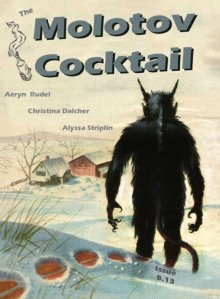
Yesterday, The Molotov Cocktail published my flash story “Little Sister.” This another story that began life in a one-hour flash contest. It’s seen some minor revisions and polish, but the published versions is pretty close to what I jammed out in an hour four years ago. Anyway, you can read the story, plus more excellent pieces of flash by clicking the image below.
Publication #2:
The second publication is another flash horror story called “Reunion.” It was published by The Arcanist on December 1st. This is yet another story that started out as a one-hour flash exercise, and the published version is also very similar to the original mad-dash scribble. You can read this one by clicking on the image below.

Okay, now that my shameless self promotion is over, how about some useful info? Here are two new pro-paying speculative markets that have recently begun taking submissions for their first issues.
New Market 1: Factor Four Magazine
Here’s what they want:
We publish flash fiction in the genres of speculative fiction, specifically science fiction, fantasy, supernatural, super hero, or any combination of these. We are looking for stories that are engaging to our readers in such a short word count. Please take note of these factors (pun intended) when submitting stories to us.
They’re accepting submissions up to 2,000 words but list a probable “sweet spot” of 500-1,500 words. They pay an impressive .08/word, and look like a very professional outfit, with a nice website and clear and thorough guidelines. Check out their submission guidelines.
New Market 2: Spectacle
Here’s what they want:
Welcome to Spectacle! We’re a brand new magazine (yes, print) that covers the exciting world of speculative fiction, which is any story, saga, or tome that has some fantastic element. These genres include (but are not limited to) sci-fi, fantasy, alternate history, horror, apocalyptic, and weird fiction. We’re exploring limitless worlds with infinite possibilities.
This market accepts flash fiction up to 1,000 words and short stories up to 7,500 words. They also have a professional pay rate of $100.00 for flash fiction and $500.00 for short stories. That translates to around .10/word for most pieces, which is at the very top end of the pay scale for speculative markets. They also have a professional website and clear and simple submission guidelines. Here’s those submission guidelines.
Got any new publications of your own you’d like to share? Tell me about them in the comments.
Acceptance Rates: What are the Chances?
We all know that top-tier short story markets receive tons of submissions, likely hundreds every submission period, but how many of those submissions are actually accepted? Excellent question, and we have some data that can at least get us in the ballpark.
Since I’m primarily a horror writer, I’m going to give you stats on five markets (three pro and two semi-pro) that accept horror: Apex Magazine, Black Static, The Dark Magazine, Pseudopod, and Red Room Magazine. I’ve listed the acceptance rates for these markets below, pulling the data from Duotrope and The Submission Grinder and then taking an average. The numbers are fairly close between the two submission tracking services, but not always. Check out the disparity between the two for The Dark.
| Market | Tier | Duotrope Acceptance % | Submission Grinder Acceptance % | Average |
| Apex Magazine | Pro | 0.22% | 0.28% | 0.25% |
| Black Static | Pro | 1.36% | 1.88% | 1.62% |
| Pseudopod | Pro | 3.23% | 3.42% | 3.33% |
| The Dark | Semi-Pro | 0.90% | 2.52% | 1.71% |
| Red Room Magazine | Semi-Pro | 1.52% |
*Please note these are ballpark figures based on the data at hand. Each market’s actual acceptance rate may be (and probably is) a bit higher or a bit lower than what I have here.
Apex Magazine is by far the toughest market to crack, with an acceptance rate somewhere in the neighborhood of 1 out of every 400 submissions. The others aren’t exactly a walk in the park, though your chances are slightly better. One other thing to consider is that Duotrope states the acceptance rates may actually be lower than what they have listed. That’s because folks are very good about reporting acceptances and, uh, less good about reporting rejections.
The only complete data I have is for Red Room Magazine. They actually published how many submissions they received (and accepted) during their last submission window (four months). The numbers look like this: 575 submissions received, 8 submissions accepted. That works out to a 1.52% acceptance rate, which puts Red Room Magazine in line with most pro and semi-pro markets. Other markets on my list, like Apex Magazine and The Dark Magazine, must receive at least this many submissions in the same period, and if I were a betting man, I’d wager they get a lot more. I have no data to back that up, just gut instinct based on their longevity and prestige in the spec-fic marketplace.
Of course, you can’t look at this as only a numbers game. If you had all the time in the world, you could send 400 submissions to Apex Magazine and still not get that one acceptance the numbers indicate. At the end of the day, this is still about putting a good story in front of the right editor at the right time.
But what can the numbers tell us? Well, it’s not all bad news. With acceptance rates this low, these magazines are certainly turning away some good stories, stories that might go on to publication elsewhere, even another pro market. The reasons for this are many: bad fit for the market, they just published a similar story, not quite up to snuff in the craft department, and so on. In other words, a rejection from one of these markets doesn’t necessarily mean you’ve written a bad story. Case in point, my story “Night Games” was rejected by three top-tier markets (one on this list) and eventually published by Pseudopod. So, when it comes to the low, low acceptance rates of these top-tier publishers, I’d offer you the same advice I tell myself: keep writing, keep working on your craft, and keep submitting.
[Edit] Just a quick note. I originally had only Duotrope statistics in this post, primarily because that’s the service I use. But a lot of folks use The Submission Grinder, and it was pointed out to me by a top-tier science fiction and fantasy magazine that there can be quite a disparity between the two services (their own numbers were very different). So I’ve gone back and added The Submission Grinder stats to the chart and taken an average. It’s not perfect, but it’s likely a bit closer than what I had.
Thoughts on acceptance rates? Experience with any of the markets I listed here? Tell me about it in the comments.
Submission Statement: November 2017

November was my most productive month of the year for short stories, maybe my most productive month ever. The reason? I finished some new stories and started sending them out, which led to a record number of submissions and a fair number of rejections. Let’s have a look.
November 2017 Report Card
- Submissions Sent: 13
- Rejections: 7
- Other: 0
- Acceptances: 0
- Publications: 0
In 2018 I’d like to get closer to this month’s submission numbers on a regular basis. Thirteen submissions is a lot, but a monthly total of eight to ten seems doable. I’d also, you know, like a few more acceptances in 2018, but, hey, while I’m wishing for stuff, I’d like a pony, and a Red Ryder BB gun, and a million dollars. 🙂
Rejections
Seven rejections this month, three of which are for the same story.
Rejection 1: Submitted 10/15/17; Rejected 11/3/17
Thanks for considering XXX for your Reprint submission, “XXX.”
Unfortunately we have decided not to accept it.
We wish you the best of luck with your writing career and hope to see your name often (new stories, too!) in our slush pile.
A higher-tier rejection from a pro flash fiction market. I’ve sent them eight pieces, both new works and reprints, but no dice yet. They’re one of the few markets open to reprints, and they also accept multiple submissions. That’s a winning combo, and I’ll definitely send them more stories in the future.
Rejection 2: Submitted 11/1/17; Rejected 11/7/17
Thank you for giving me a chance to read “XXX.” Unfortunately, this story didn’t quite grab me and I’m going to pass on it for XXX. I wish you best of luck finding the right market for it and hope that you’ll keep us in mind in the future.
This was my first ever submission to one of the biggest science fiction and fantasy markets on the planet. I think this is a higher-tier rejection, but I’m not one-hundred-percent on that. The “keep us in mind in the future” or language like it is usually an indicator of a higher-tier for big markets, but some publishers include something like that in every rejection. Either way, it’s a nice form rejection.
Rejection 3: Submitted 10/30/17; Rejected 11/15/17
Thank you for submitting your story, “XXX”, to XXX. Unfortunately, we have decided not to publish it. To date, we have reviewed many strong stories that we did not take. Either the fit was wrong or we’d just taken tales with a similar theme or any of a half dozen other reasons.
If you’ve followed this blog for any length of time, you’ve seen this rejection plenty. This is from a top-tier sci-fi market, and my lack of success here might have something to do with the type of stories I send them. Sure, I follow the guidelines and send what can be considered science fiction, but it’s usually horror/sci-fi, and the sci-fi elements are often secondary to the horror. This is, of course, rejectomancy at it’s finest, and like their letter states, my stories might have been (and probably were) rejected for “half a dozen other reasons.” I currently have a story under consideration here that is absolutely more sci-fi than horror, so we’ll see if I fare better with this submission. Tune in next month to find out.
Rejection 4: Submitted 11/17/17; Rejected 11/18/17
We have read your submission and unfortunately your story isn’t quite what we’re looking for right now. While we regretfully cannot provide detailed feedback due to the volume of submissions, we thank you for your interest in our magazine and hope you continue to consider us in the future.
This is the first rejection for a brand new story from one of the more prestigious horror markets. I’ve sent this market a lot of my work, and they’re definitely one of my bucket-list publishers. I am somewhat heartened by the fact that my last three submissions, including this one, have resulted in higher-tier rejections. So, I might be getting closer. Have to keep trying to find out.
Rejection 5: Submitted 11/18/17; Rejected 11/20/17
Many thanks for sending “XXX”, but I’m sorry to say that it isn’t right for XXX. I wish you luck placing it elsewhere, and hope that you’ll send me something new soon.
The second rejection for that new story I mentioned in the last rejection. I have a short list of top-tier horror markets I send every new story (if appropriate), and this is one of the publishers on that list. Despite the “hope you’ll send me something new” line, this is not a higher-tier rejection; it’s their standard form rejection. That’s not to say they don’t mean what they say, just that in this case, that language is not an indicator of a higher-tier rejection.
Rejection 6: Submitted 11/19/17; Rejected 11/24/17
Thank you for considering XXX for your story, “XXX.”
Unfortunately, we have decided not to accept it. We wish you the best of luck finding a home for your story elsewhere.
This is the standard form rejection for the publisher in rejection two (that one was a higher-tier). This is the first rejection for another new story, a flash piece. It’s currently under consideration with the publisher from rejection four.
Rejection 7: Submitted 11/20/17; Rejected 11/29/17
Thank you for submitting “XXX” to XXX. We appreciate the chance to read it. Unfortunately, we don’t feel it is a good fit for us and we’re going to have to pass on it at this time.
This is the third rejection for that new story I mentioned in rejections four and five. This is another of my go-to publishers for new stories, and this is their standard form rejection. The story is out again for consideration with another market.
And that’s all I’ve got for November. How was your month?
Rejection Records Update
You may recall a recent post where I listed some of my favorite rejection achievements and records. These dubious accomplishments, however, are subject to change as I trudge ever forward in my quest for rejectomantic greatness. So, without further ado, here are two records that have recently fallen to new challengers.
Most Rejections before Publication: 18 and counting (old record: 17)
Yep, the old story has fallen to a new challenger, the much beleaguered “Story R,” whose plight is further detailed in this post. This story has received 18 rejections (and likely counting), but after a lengthy revision, I still have faith in the old boy. It’s currently out for submission. I’ll let you know when and if rejection #19 comes in.
Most Rejections by a Single Publication: 9 (old record: 3 tied at 8)
I’ve been sending out a lot of submissions lately, which means I’ve racked up a fair amount of rejections. One of my favorite top-tier horror magazines has recently pulled away from the pack with 9 total rejections (and another pulled into a three-way tie for second at 8). The silver lining here, though, is the last three rejections I’ve received from this market have been higher-tier, so maybe I’m getting closer. Fingers crossed.
Got any rejection records of your own? Tell me about them in comments.
The Standard Form Rejection Revisited

One of the first posts on this blog was about the standard form rejection. In the intervening years, my thoughts have changed some, and I find I have more to say about what they mean or might mean.
First, as a refresher, what is a standard form rejection? Well, it’s the basic, boilerplate communication you’re likely to get from most publishers when they decide not to publish your story. They come in all shapes and sizes but tend to use similar language. Here are some examples from the hundreds I’ve received:
Standard Form Rejection 1:
Thank you for submitting [story] to [publisher]. Unfortunately, I have decided not to accept it for publication.
Sometimes form rejection are short and to the point. I appreciate that. This letter says all that it needs to say. They read the story and they’re not going to publish it. It’s important to note that brief is not the same as rude, and I don’t mind a rejection letter that gets straight to it. Interestingly, extremely brief rejection letters like this are not particularly common in my experience. Most editors will add a few softening touches, as you’ll see in the next letter.
Standard Form Rejection 2:
Thank you for submitting [story] to [publisher]. We very much appreciate the chance to read your work, but we are regretfully saying no to this submission. We wish you luck with placing it elsewhere and hope you will continue to consider us in future.
This standard form letter is very representative of the type, and the language here is pretty universal. It’s polite, lightly encouraging, but like any standard form rejection, it doesn’t include any real information other than we’re not publishing the story. The last line resembles a higher-tier rejection because of the “consider us in the future” bit, but in this case, I don’t believe it is. There are a few publishers who use that language in their standard letters and change it up to something like “we look forward to your next submission” for a higher-tier rejection.
Standard Form Rejection 3:
Thank you for sending us [story]. While we appreciated the chance to read it, unfortunately we’ve decided not to accept it for publication. This doesn’t mean that your story isn’t good; it’s simply not quite right for us right now.
Please don’t be discouraged by the form letter. Because we work hard to reply in a timely manner, we’re unable to provide specific feedback for the vast majority of submissions we receive.
Thanks again, and best of luck placing this story elsewhere.
This is a great standard form rejection because the editor goes out of their way to actually explain why you might be receiving this rejection and that it may have nothing to do with the quality of your story. It’s an appreciated and encouraging peek behind the editorial curtain.
The rejection above leads me to my point with all this. Getting a form rejection or even a couple of them doesn’t mean the story is without merit. How do I know this? Well, just about every story I’ve sold received one or a dozen letters like the ones above before I sold it. That doesn’t mean the rejecting editors were wrong (far from it and not my point at all). It does mean exactly what the last rejection letter said: those stories weren’t quite right for those editors.
So. when you get a standard form rejection, don’t read too much into it and don’t immediately jump to “bad story” as the reason for the rejection. Bad fit? Maybe. Probably, even. Send that story out again because it might be a perfect fit for the next market.
What are your thoughts on the standard form rejection? Tell me about them in the comments.
Close Encounters: The Shortlist Letter Revisited

There has been a definite theme to my submission endeavors in 2017. I’ve received more shortlist letters this year than I have in years prior. So, it got me thinking, how close am I actually getting when one of my stories is shortlisted? Well, a market that recently sent me a shortlist letter answered this question.
First, here’s the shortlist letter I mentioned above:
Thank you again for your submission. We really like this story and would like to add it to our short list, if that is okay with you. We will have the final decisions by July 1 at the latest. Let us know!
Nice, huh? They liked the story, which is always a good thing. The downside to a shortlist letter, of course, is it does get your hopes up, so if a rejection follows, it can sting more than usual. That’s because you know you got really close. Again, the questions is: how close? Well, this market told me in plain black and white because they actually published the stats for their last submission window. Take a look.
- Total number of submissions: 575
- Total shortlisted (fiction): 15
- Total accepted (fiction): 8
Mine was one of the 15 stories shortlisted. My story was also one of the 7 stories ultimately rejected. That’s pretty damn close. Now, this is one market and one set of stats. It’s the very definition of sample size, but I think it’s probably ballpark for a decent-sized semi-pro market. In other words, I feel pretty good that my story was one of the 2.6% of submissions they seriously considered.
Yeah, shortlist rejections can be a little frustrating, because you KNOW you got close to publication. But there’s a silver lining. You also KNOW at least one editor had a positive reaction to your work. Since I’ve received more shortlist letters this year than in years past, I’ll hope that whole positive reaction thing is a general trend. 🙂
What’s your experience with the shortlist letter? Tell me about it in the comments.
Submission Statement: October 2017
October was a slightly more productive month. I sent out more submissions than what I’ve been averaging, and I finished some new stories that’ll be going out soon. I also expanded into a new genre, mystery/crime, which will certainly be reflected on these monthly tallies in the near future. 🙂
October 2017 Report Card
- Submissions Sent: 6
- Rejections: 6
- Other: 0
- Acceptances: 2
- Publications: 0
I can live with this, especially with a couple of acceptances. I’d still like to bump up my average number of monthly submissions to around ten, though.
Rejections
Six rejections this month. Let’s have a look.
Rejection 1, 2, and 3: Submitted 9/28/17; Rejected 10/16/17
Thank you for submitting “XXX”, “XXX”, and “XXX” to XXX. They weren’t quite right for us, but we appreciate your interest in XXX and we hope you’ll keep us in mind in the future.
I love a market that allows multiple submissions, but there is a downside. Sending three stories at once creates the very real possibility of getting three rejections at once, like you see here. Still, this is a nice form letter from a market that is new to me, and I’ll definitely submit to them again.
Rejection 4: Submitted 10/15/17; Rejected 10/26/17
Thank you for submitting “XXX” to XXX. We appreciate the chance to read it. Unfortunately, we don’t feel it is a good fit for us and we’re going to have to pass on it at this time.
A standard form rejection from a top-tier market. Not much to see here. I’m gonna crack these guys, eventually. 🙂
Rejection 5: Submitted 10/9/17; Rejected 10/30/17
Thanks so much for entering our Flash Monster contest.
Unfortunately, “XXX” did not make it into our Top 10. However, we are happy to report that the piece did make it through several rounds of cuts and was still in consideration until the later stages of judging. As a result, we’ve given you a “Close But No Cigar” shout-out on the site, which can be found on our Flash Monster results page (https://themolotovcocktail.com/).
Though it didn’t place in the contest, we’d be happy to consider this piece for inclusion in one of our regular issues. Feel free to resubmit through our regular submissions portal (no submission fee, of course) on Submittable. We’ve published a good number of short-listed entries that way in the past.
Thanks again for your participation, and for sending us such great work.
A higher-tier form rejection from my favorite purveyors of fine flash fiction, The Molotov Cocktail. Yes, The Molotov is pretty much the only market I’ll actually identify in these rejection tallies. They’ve published me a bunch, and I know the editors don’t mind (because I asked). Anyway, this is for their Flash Monster 2017 contest, and as soon as you finish reading this post, you should go read the top ten stories for the contest. They’re great.
You should also check out the Ranks of the Rejected interview I did with Molotov editor Josh Goller. Lots of good insight into submissions, rejections, and publishing in general.
Rejection 6: Submitted 10/19/17; Rejected 10/30/17
Thank you for submitting work to the Flash Monster 2017 contest. As always, we had a high number of quality submissions.
Unfortunately, “XXX” was not selected for our Top 10, but we very much enjoyed the chance to read it.
Thanks so much for your participation
Another rejection from The Molotov Cocktail for the Flash Monster 2017. Again, you should really head out to their site and read the winning stories; they’re awesome. I’m looking forward to entering their next contest and hopefully getting back into the winning circle.
Acceptances
Two acceptances this month. Well, one and a half. I’ll explain below.
Acceptance 1: Submitted 7/24/17; Rejected 10/4/17
Thanks for letting us read “Reunion.” We would love to publish it in The Arcanist!
There’s more to this acceptance letter, but this is the important bit. This is my second acceptance from The Arcanist, a market that is quickly becoming one of my new favorites, and not just because they’ve published my work. They’ve been putting out some great speculative flash fiction on a weekly basis, so do yourself a favor and head on over and check ’em out. “Reunion” is one of my few Lovecraftian stories, and I’m excited you’ll get to read it soon.
If you write speculative flash fiction, you should definitely submit to The Arcanist. If you’d like some pointers in that arena, check out my Ranks of the Rejected interview with editor Josh Hrala.
Acceptance 2
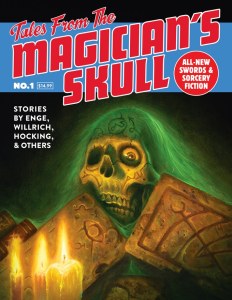
Okay, this one is not a true acceptance since I was asked to contribute a story to a new sword-and-sorcery magazine called Tales from the Magician’s Skull, but, hey, it gives me another chance to talk about the magazine and my old friends at Goodman Games who are putting it out. Although the Kickstarter to support the magazine has ended (it funded like a boss), the campaign site will tell you all you need to know about Tales from the Magician’s Skull. My story, “Beyond the Block,” is a huge expansion on a flash piece I wrote a few years ago. It was a blast to write, and I hope you’ll check it out along with a whole bunch of other fantastic stories when the magazine drops.
And that’s October. Tell me about your October in the comments.
Branching out with a Bullet
When it comes to short stories, I primarily write horror with occasional forays into dark urban fantasy. Those two will likely always be my jam, so to speak, but there’s another genre that has long intrigued me, one that is a close cousin to both horror and urban fantasy. Yep, I’m talking about mystery and its many sub-genres (crime, thriller, noir, hard-boiled, suspense, etc.).
Many of my stories feature elements that would be right at home in the mystery/suspense genre, but the speculative nature of my work is usually a non-starter for these markets. So I got to thinking, why not write a story that has all those elements except the speculative part? I took the plunge and wrote a short story that would, I think, fall into the noir or thriller sub-genre (I’m still a little iffy on the sub-genres here). It’s called “Luck Be a Bullet,” and I honestly had a blast writing it.
Anyway, I’ve already submitted “Luck Be a Bullet,” and I’m excited to explore a new genre and the new (to me) markets publishing that genre. At the very least, it’s a currently untapped source of new rejections. 🙂
Do you write mystery/crime/thriller? If so, I’d love recommendations for short story markets, especially those that accept flash fiction.
The Oft-Rejected Story: A Rejectomantic* Analysis

*Adj. 1. rejectomantic – relating to or associated with the dubious practice of rejectomancy; “a desperate rejectomantic analysis”
My current record-holder for most rejections is a story called “Paper Cut,” which was published after a whopping 16 no-thank-yous, though it’s picked up another as a reprint, bringing the total to 17. Since that one was eventually published, it’s not a good example for this post, so I’ll turn to the runner-up—we’ll call it “Story R”—which currently sits at 16 rejections and has a very good chance to tie and even break the record.
Here are the raw numbers for “Story R.”
- Submissions: 19
- Form Rejections: 8
- Higher-Tier Form Rejections: 1
- Personal Rejections: 5
- Short-Listed: 2
- Withdrawals: 2
- Pending: 1
To date, this story has received just about every response possible for a story except an acceptance. Admittedly, it’s had some bad luck. Two of the markets considering it went under, and one of them had short-listed the story. It’s had a number of “final round” rejections, where the editors have let me know they were strongly considering it but finally passed on it (one of those was a form rejection, by the way). It’s also had a fair number of personal rejections, where the editor told me they thought it was a good story just not a good fit.
The feedback the story has received has generally been positive. The editors have told me what they like but have given me little indication of what’s not working. That’s not uncommon, though, but it does make you pine for something to hang you revision hat on, even a simple, “Hey, you’re ending is kind of weak.”
So what’s going on here? Why is this story failing to find a home? Is it just a mediocre story? That’s certainly possible, but my gut and my beta readers tell me otherwise (both could be wrong, of course). Bad luck? Sure, a bit, with markets closing while the story was short-listed and whatnot. My submission targeting? Always a culprit and difficult to dial in. It might be the story is a weird genre: dark urban fantasy that leans more horror than fantasy. That could make it little too light for horror markets and perhaps too dark for fantasy markets. I’ve actually received that criticism on another, similar story.
With all that in mind, what are my options? I see three possible courses of action.
- Keep sending it out. I have a number of author friends who do this until a story finds a home, somewhere, rejections be damned. There’s nothing wrong with that strategy, but I feel like I’ve banged that drum already.
- Retire it. Maybe it’s just not up to snuff, and it’s time to put it back in the trunk. I do think this is a good’un, and my beta readers, who have yet to steer me wrong, agree.
- Revise it. There’s clearly something that’s not landing with editors, even thought it’s gotten close a couple of times. So a revision may be in order to make it a stronger story.
Well, I went with option three and heavily revised the story. In fact, I overhauled it completely, adding another 1,500 words, considerably more backstory, and a punchier ending. It was a little on the short side at around 2,000 words, which limited the markets I could send it to (a number of fantasy markets have a minimum word count of 2,500 or higher). After I revised it, I kicked it to my betas again, who gave me some additional feedback. Then I polished it up and sent out the new and improved version.
If the story keeps picking up rejections even after this major revision–say, it hits 20 or more–I may be forced to face facts and concede it’s just not up to snuff. Until then, it should be fun to see if “Story R” dethrones “Paper Cut” as my most rejected story. 🙂
Tell me about one of your oft-rejected stories. What did you end up doing with it?
Effectively Wild – A Baseball Horror Story
Night Walk & Other Dark Paths
Acts of War: Flashpoint

Acts of War: Aftershock

Acts of War: Stormbreak

 Aeryn Rudel's Rejectomancy