
Surviving 700 Rejections

Last week, I hit another significant submission milestone. I received my 700th rejection since I started tracking them on Duotrope back in 2012. If you’ve been following my blog for any length of time, you know that when I hit a big round number like this, I like to take a deep dive into the stats and see what they can tell me. So, let’s do that. 🙂
First and Last
First up, let’s establish exactly how long I’ve been tracking all these no’s, not for us’s, and we’re gonna pass’s.
The first rejection I entered into Duotrope came on May 5th, 2012. The rejected story was “Feeding Time” and the rejecting market was Daily Science Fiction. The story was okay, and I did shop it around a bit after that, but I never found a home for it, and it now resides in the digital trunk where just-okay stories go to die. The market, Daily Science Fiction, is now sadly on indefinite hiatus, and was a market I tried unsuccessfully to crack for over a decade.
The last rejection, number 700, I received on March 16th, 2025. The story is a new one called “Love in the Time of Giardia” and it was rejected on it’s maiden submission by The Colored Lens. It’s a weird little story that I might struggle to place, but The Colored Lens had some good feedback, so I’ll look to revise this piece and keep trying.
Stories and Markets
Now let’s look at how many distinct stories I’ve had rejected and from how many markets.
Stories: I’ve had 159 distinct stories rejected. Of those 159, I’ve gone on to sell 76 of them, so roughly half. Additionally, fifteen of the rejected stories are out on currently out on submission, and five of them are currently being held for further consideration. So, I like my chances for finding homes for some of these oft-rejected stories. Currently, my most rejected stories, each with twenty-five total, are “Set in Stone” and “Time Has No Memory”. I’ve retired “Set in Stone” but “Time Has No Memory” has received half-a-dozen close-but-no-cigar rejections, and I believe I’ll eventually find it a home (I hope). Just for funsies here are my top ten most-rejected stories.
| Story | Rejections | Published? |
| Hell to Pay – Installment Plans Available! | 12 | Yes |
| Coffin Shopping | 13 | |
| Caroline | 15 | Yes |
| The Downer | 16 | Yes |
| The Scars You Keep | 16 | Yes |
| Trapping Disaster | 17 | |
| Paper Cut | 18 | Yes |
| Signs and Wonders | 18 | |
| Set in Stone | 25 | |
| Time Has No Memory | 25 |
As you can see, I’ve managed to sell five of my ten most-rejected pieces, and by the number of hold letters and close-but-no-cigar rejections received by “Trapping Disaster”, “Signs and Wonders”, and “Time Has No Memory”, I think I’ll eventually sell them as well. “Coffin Shopping” is a maybe. It’s a good story, but it’s setting and subject make it a hard sell. “Set in Stone” is a piece of what you might call juvenilia (I wrote it a long time ago), and it’s just not good enough for prime time; it’ll stay in the trunk where it belongs.
Markets: I have had the pleasure, nay the privilege, of getting rejected by 180 distinct markets. Many of these markets have since published my work, but I’m still knocking at the door of many more, especially some of the most vaunted pro outfits. Of my nineteen currently pending submissions, thirteen of them are with markets I’ve yet to publish with. Five of those thirteen submissions have been held for further consideration, so, you know, fingers crossed. Again, for shits and giggles, here are the ten markets that have rejected me the most.
| Publisher | Rejections | Acceptances |
| The Magazine of Fantasy & Science Fiction (F&SF) | 17 | 0 |
| Flame Tree Press | 20 | 5 |
| Factor Four Magazine | 21 | 4 |
| The Dark Magazine | 21 | 0 |
| Daily Science Fiction | 24 | 0 |
| NewMyths.com | 24 | 1 |
| Apex Magazine | 26 | 0 |
| The Arcanist | 31 | 16 |
| Flash Fiction Online | 38 | 0 |
| The Molotov Cocktail | 52 | 17 |
For simplicity’s sake, I’ve combined all of a publisher’s individual journals, contests, anthologies, and other projects under a single listing. So, for example, Flame Tree Press includes the Flame Tree Fiction Newsletter and all their various anthologies. Like my most-rejected stories, I’ve managed to crack five of my most-rejected markets. I’ve gotten very close with Flash Fiction Online, making it to their final round of deliberation a handful of times. I’ve made it out of the slush pile with Apex, but not much further. I like my chances of eventually cracking those two, and I’ll keep trying. Of course, my chances of appearing in the pages (digital or print) of The Magazine of Fantasy & Science Fiction or Daily Science Fiction are pretty much zero at this point because both are on hiatus. Sadly, The Arcanist, which used to be my go-to for slightly humorous spec-fic stories, is also on indefinite hiatus.
Types of Rejections
I used to keep careful track of the type of rejections I received, even going so far as to separate form rejection into standard and higher-tier, but I’ve stopped doing that. It’s not that I don’t believe that higher-tier form rejections exist–they do–it’s just often difficult to tell which is which, and, in the grand scheme of things, I’m not sure it matters that much. Now, I only pay attention to personal rejections with some kind of feedback or shortlist/close-but-no-cigar rejections, as they can actually help me crack a market on my next submission. But, here’s the general breakdown of all 705 rejections.
- Form Rejections: 556
- Personal Rejections: 134
- Shortlist Rejections: 37
You’ll notice the math doesn’t quite add up here, and it looks like I have 727 rejections instead of 705. That’s because some of the form and personal rejections are also shortlist rejections. In truth, I think I might actually have more shortlist rejections than the 37 I have listed here, but there wasn’t an option to mark submissions as shortlisted Duotrope until fairly recently. If I had to guess, I’d say that maybe a third or a bit more of the form rejections are higher-tier form rejections, but, again, it doesn’t really matter that much.
Lessons and What’s Next
So, what has 700+ rejections taught me over the past decade and change? Quite a lot, actually, and I think there are two primary lessons every writer should take away from rejection. Here they are.
One, rejections are inevitable. No matter how good you are, not matter how perfect a match your story seems to be for a particular market, you WILL get rejected, and the more you submit, the more rejections you’ll receive. You have to accept the reality of rejections in the same way you accept the reality of bad weather. It’s gonna happen and there’s not much you can do about it. But, like any force of nature, rejections aren’t personal (though they might feel like they are), and though it’s okay to get upset when you receive a tough rejection, the more you get, the less you feel them.
Two, even good stories get rejected. If you take anything away from the mess of stats I posted, it should be that. Out of 100-plus stories I’ve sold, a good ninety percent of them were rejected at least once, and most were rejected quite a bit more. In fact, I’ve done the math, and every story I’ve sold receives four rejections on average before an acceptance. It’s even worse when you look at short stories (as opposed to flash fiction) where I average almost EIGHT rejections per acceptance. In other words, don’t get discouraged by one rejection, or hell, fifteen. An acceptance happens when you put the right story in front of the right editor at the right time. Miss any one of those, and no matter how good the story is, it’s gonna get rejected. Keep. Trying.
As for what’s next, well, I’ve renewed my focus on submitting short stories this year and set some lofty goals for myself. First, I’m aiming to write one new story per week. Then, I want to send 150 submissions, and receive twenty-four acceptances, twelve of them with pro markets. So far, I’m on track, and I’m already racking up the rejections. If things progress like they have been, you should see an 800-rejections post around this time next year.
Happy writing. 🙂
Submission Statement: February 2025
February has come and gone, and it was a pretty solid month for submissions. I’m still on pace to hit all my goals for the year, from the number of submissions sent to the number of new stories written. Let’s dive in and take a closer look at the numbers.
February 2025 Short Story Stats
- Submissions Sent: 11
- Rejections: 8
- No Response: 0
- Acceptances: 0
- Further Consideration/Shortlist: 1
- Withdrawals: 0
- Pending: 20
- New Stories: 7
I sent eleven submissions last month, four fewer than I sent in January. Strangely, this had little to do with not having enough stories to send, and much more to do with there not being enough open markets to send them to. I’m only submitting stories to markets that pay at least semi-pro rates, and I’m prioritizing those that pay a pro rate. What that means, especially when you have 20 pending submissions, is that you can quickly run out of desirable markets. This is particularly true with horror, where there are just fewer markets in general. So, toward the end of the month, I found myself with a handful of new stories and nowhere to send them. Thankfully, a bunch of markets opened up on March 1st, and I sent a flurry of submissions right away.
Sadly, no acceptances in February either, though I did receive another further consideration letter from a pro market, which brings my total to three. All of those held submissions are getting pretty long in the tooth, and I expect a decision this month on at least two of them.
My goal of writing one new story per week is still on track, and in February I completed five new stories, three shorts and two flashes. That gives me nine for the year, five of which are out on submissions, and I actually sold one in January. Not too bad.
Rejections
Eight rejections in February.
- Form Rejections: 8
- Personal Rejections: 0
- Close-But-No-Cigar Rejections: 0
A lot more rejections in February than January (all of the form variety), which is a trend I expect to continue. I’m sending out A LOT of submissions, and sim-subbing wherever I can. In addition, I’m submitting primarily to pro markets and tougher semi-pro zines. All this means the rejections are gonna start piling up, and I don’t think I’ll struggle to hit my goal of 100 no’s by the end of the year.
2025 Writing Goals Bingo
If you’ve been following my progress this year, then you know I have a new and fun way to track my writing goals. The bingo card below breaks up my primary goals into 25 bite-size mini goals, and this month I get to mark the first one complete.
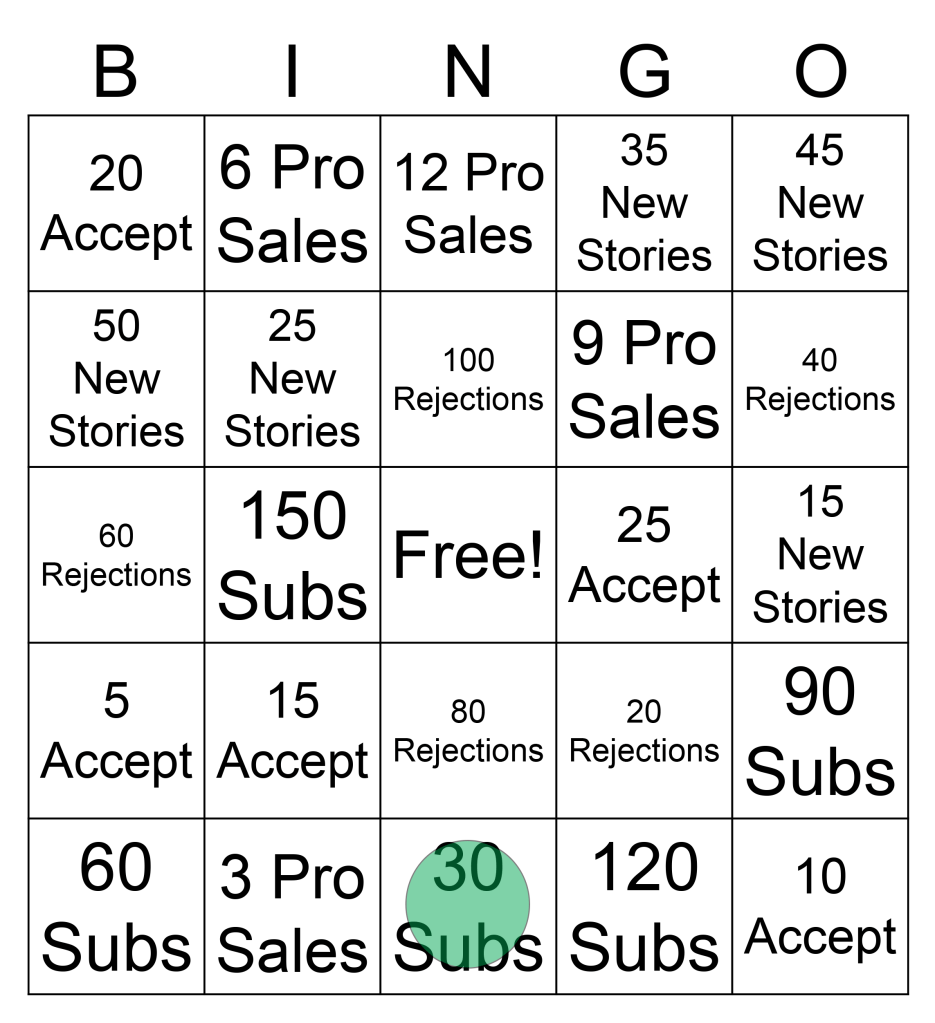
Now, technically, I hit the 30 subs on March 1st, but I’m gonna go ahead an mark it complete here because, well, it feels good, damn it. Hopefully, when I update you on my March progress, I’ll have filled in a couple more squares.
And that was February. My goals for March are pretty much the same as last month: write one new story per week, send roughly 15 submissions, and, hopefully, net a couple of acceptances in the process.
That was my month. How was yours?
Submission Statement: January 2025
The first month of 2025 is in the books, and here’s my first submission statement for the new year. These updates will be a little different this year because my goals for 2025 are fairly ambitious. I’m also tracking them in a fun new way (more on that at the end of the post). For this first post, let me go ahead and quickly list my goals for 2025.
- Write one new story per week.
- Send 150 submissions.
- Receive 24 acceptances.
- Make 12 pro sales.
- Receive 100 rejections.
With the goals out of the way, here’s my monthly report card.
January 2025 Short Story Submissions
- Submissions Sent: 15
- Rejections: 3
- No Response: 0
- Acceptances: 2 (1 pro sale)
- Further Consideration/Shortlist: 2
- Withdrawals: 0
- Pending: 14
- New Stories: 6
January was a very good month, and I’m on pace for all my yearly goals, except maybe rejections, but that’s more of a booby prize than an actual goal, so I can live with it. I need to average about 14 to 15 submissions every month to hit that goal of 150. If I keep writing new stories, that shouldn’t be too difficult, though. I wrote six new pieces last month, three short stories and three flash fiction stories, and those accounted for the bulk of my January submissions. I’m sim-subbing more this year, too, which should also help me hit my submission goals. The two acceptances were good ones, and one of them is up there with the biggest sales of my short story career. More on those when I sign the contracts.
Rejections
Three rejections in January.
- Form Rejections: 3
- Personal Rejections: 0
- Close-But-No-Cigar Rejections: 0
Not much to talk about here. The three rejections I received were all boilerplate form rejections. Two of them might have been higher-tier rejections, but I’ve honestly stopped keeping track of those, so I’m just gonna call the form rejections and move on.
Writing Goals Bingo!
This is the new way I’m going to be tracking my writing goals for the year. Check it out. 🙂  Yep, writing goals bingo. I don’t get to mark any of the boxes as complete for January, but I really didn’t expect to. I think I’ve got a pretty good shot at checking off a couple boxes in February, but we’ll see. If you’d like more info on writer goals bingo and how I made my bingo card, check out this post.
And that was January. My goals for the coming month are pretty straightforward. I want to write 4 new stories, send 15 submissions, and get 2 acceptances (1 pro sale). I won’t set a goal for rejections, but I’d need like a dozen to be on pace for a hundred for the year. lol
That was my month. How was yours?
Pro or Not Pro, That Is the Question

Recently, I outlined my writing goals for 2025, which you can see here. One of those goals is to make at least 12 pro sales, but that leads me to the following question. What exactly IS a pro sale? It’s not as cut and dry as you might think, so, in this post, I’m going to go over some of the ways folks determine if a sale is pro or not. I’m also going to cover some of the gray areas, and then give you my thoughts on how I’m personally going to determine pro or not pro for my own story sales.
First, a few caveats. I’m a genre writer who writes primarily sci-fi, fantasy, horror, and crime, so the definitions of professional payment I’ll be using pertain only to works sold to markets that publish those genres. I have neither the knowledge nor experience necessary to make that determination for lit-fic. Also, I write short fiction and flash fiction, so I won’t be covering pro sales for poetry or drabbles because, again, it’s just not what I do.
To kick things off, let’s cover what I consider no-brainers when it comes to determining a professional sale.
- SFWA qualifying markets. The SFWA has compiled a list of markets that offer professional payment. Though the SFWA has recently removed the list from their website while they make improvements to it, their monthly market report operates in much the same way. So, if you receive an acceptance for an original piece o a reprint (more on that later) from one of these markets, I think it is unequivocally a pro sale.
- SFWA and HWA minimum pro payments. Both the SFWA and HWA have minimum qualifying per-word rate for a market to be considered professional. For the SFWA, that’s 8 cents per word (USD), and for the HWA, it’s 5 cents per word (USD). So, if you’re paid 8 cents for a SFF story or 5 cents for a horror story, I think it’s fair to call it a pro sale.
Now, let’s get into the less obvious stuff, the gray areas that some folks might consider a pro sale and some might not. Below, I’ll briefly describe a situation where pro or not pro is not entirety clear and then tell you how I’m going to treat each one.
- Flat rate. Some markets don’t pay a per-word rate and instead pay a flat dollar amount for stories. So how do you determine if such a payment is a pro payment? The easiest thing to do is to divide that dollar amount by the number of words in your story, and see if your per-word rate matches up with the SFWA or HWA qualifying rates. For example, Uncharted Magazine pays $200.00 (USD) for all stories between 1,000 and 5,000 words. So, if I sell them a 3,000 words sci-fi story, that 200 bucks works out to about 6.5 cents per word, which technically isn’t a pro rate for SFF, but since they’re on the SFWA list of qualifying markets, I’d say it is. Confused yet? Here’s how I’m gonna treat flat rates. If the market is on the SFWA qualifying market list, then I’m treating it as a pro sale no matter what. For stories not on that list, both SFF and horror, I’ll consider the sale pro if the per word rate works out to 8 cents or 5 cents respectively.
- Reprints sold to pro markets. Reprints are almost always paid at a lesser rate than original stories. For example, PodCastle, a market that both pays 8 cents per word for original fiction AND is on the SFWA list of qualifying markets pays a $100.00 flat rate for reprints. Now, no matter how long your story is, 100 bucks is not likely to work out to a pro payment when you calculate the per word rate. My verdict on this is pretty simple. If you sell a reprint to an obviously pro market, it’s a pro sale even if you’re paid less than the SFWA or HWA qualifying rate.
- Foreign currencies. I submit to markets all over the world, and I’ve been paid per word rates in Canadian dollars (CAD), Australian dollars (AUD), British pounds (GBP), and a few others. Well, if you know your exchange rates, then this can make determining a pro sale kind of tricky. Here’s a good example. I’ve been published by a couple of Canadian markets, one of which pays 5 cents (CAD) per word. Now, if I sell them a horror story, I’m technically getting 5 cents per word and that technically means it’s a pro sale. Of course, when you look at exchange rates, that 5 cents CAD equates to about 3.5 cents per word (USD), which would be a semi-pro sale. It can go the other way, too. If I sell a horror story to a market that pays 4 cents a word (GBP), I’m actually making 5 cents per word (USD). My verdict? For SFF markets, I’m gonna go by the SFWA qualifying markets list. The Canadian market I mentioned above is not on that list, so I’d consider them a semi-pro sale (though one I am quite happy to have). For a horror or crime story, I think if the payment works out to 5 cents a word (USD), I might consider it a pro sale, but I’m still kinda iffy on it.
- Cross-genre works. I tend to mash up genres a lot, most often mixing sci-fi/horror, sci-fi/crime, and horror/crime. This can present an interesting conundrum when I’m trying to determine a pro sale. If I sell my sci-fi/horror piece to a horror market and receive 5 cents per word, I’ve made a pro sale, right? But if I sell that same story to a sci-fi market and receive the same 5 cents per word, I have not made a pro sale (unless the market is on the SFWA qualifying list). It’s weird and uneven, but I do think it’s pretty straightforward, and in this case you have to go by the market and not the story. So, in my above example, the sale to a horror story is pro, the sale to the sci-fi market is semi-pro.
- Mystery/Crime stories. Unlike the SFWA and the HWA, the Mystery Writers of America (MWA) has not set a minimum per word rate for a pro sale. They have a list of approved publishers and markets and have stated that a minimum payment of at least $25.00 is required for a sale to be considered toward active membership, but no clearly defined pro rate. From what I’ve gathered from talking with folks who are far more accomplished in the genre than I am, this is because the short mystery/crime market is quite a bit smaller than the SFF/horror markets, so the distinction between pro and semi/pro is not as useful. That said, there are a couple mystery/crime publishers that I think anyone would consider professional markets by any definition of the word. These are Ellery Queen Mystery Magazine and Alfred Hitchcock Mystery Magazine, and they both pay 5 cents per word or more. My gut instinct is to set the pro bar for my own purposes at 5 cents per word for crime/mystery markets. Still, truth be told, I’m not entirely sure how I’m gonna judge my crime story sales that aren’t to no-brainer markets. I’m just gonna have to take it on a case-by-case basis.
Okay, so there you have it, most of the ways you might judge a story as pro or not. There are some scenarios and corner cases I likely haven’t considered, but what I’ve got here should cover a good 95% of the scenarios a writer might find themselves in. To recap, for my own personal goals, here’s how I’m going to determine pro sales. A sale is pro if . . .
- The market is on the SFWA qualifying market list.
- If the market pays at least 8 cents per word for SFF and 5 cents per word for horror.
- If the market Pays a flat rates that works out to a per word rate of 8 cents or 5 cents.
- If the story is a reprints sold to obviously pro market.
Please remember that all of my opinions above are simply how I’m going to determine pro sales for MY work. This is not a guide for how you should determine pro sales for YOUR work. I like to define and codify things, and this is just an attempt to do that so I can feel good about a silly little goal I’ve set for myself. 🙂
Thoughts on what makes a sale pro or not pro? Any scenarios I missed you’d like to talk about? I’d love to here from you in the comments.
2025 Writing Goals Bingo

This post is a little late in the month, but I thought I’d share my writing goals for the coming year, which are admittedly ambitious, and then show you a fun way to track writing goals in general. The main thrust of those goals is putting a greater emphasis on both writing and submitting short stories. This doesn’t mean I’ll stop working on or querying long-form fiction, but in the last couple of years, that’s been almost my entire focus (along with a lot of freelance work), and I want to get back to what is, honestly, my first literary love. So what does a greater emphasis on short stories look like? Let me show you!
As I said, my goals are ambitious, so let me outline them here along with a brief explanation for each.
- Write one new story per week. I know what you’re thinking. Sounds nuts, right? Well, it is ambitious, but I’ve got a about 1,500 story seeds just chilling on my hard drive in the form of microfiction, not to mention a dozen stories I’ve started but yet to finish (yeah, I’m counting those), so all the ingredients for this bonkers literary confection are there. Not to mention, I already participate in a bi-weekly flash-fiction writing exercise, which’ll net me an easy 20 stories. I’m gonna write a lot of flash, like I always do, but I want to concentrate on longer pieces as well. So far, I’m doing pretty well, and I’ve managed four stories in four weeks. Three of them were full-fledged short stories, with word counts of 3,500, 7,200, and 5,200. The fourth is a flash piece, but I feel pretty damn good about banging out 17,000 words of new stories in my first month. Two of the new ones are already out on submission, too, which brings me to my next goal.
- Send 150 story submissions. Another ambitious goal, but not quite as ambitious as 52 new stories. I have, in the past, submitted as many as 119 subs in a single year, so this isn’t a gigantic stretch, especially if I throw 50+ new stories into the mix. I do plan to sim-sub more to pump those numbers up a little, but since I’m a bit of a Boy Scout when it comes to following submission guidelines, I’m gonna have to rely more on just having a fuck-ton of new stories to submit. This works out to about 14 submissions a month. So far, in January I’ve sent ten, but I’m gonna do another round of subs this weekend that should put me over the hump.
- Get 24 acceptances. Now we’re getting into goals that are not completely within my control. My record for acceptances in a single year is 19, and an increase to 24 is certainly possible, especially if I can hit my submissions goal. My overall acceptance percentage is about 14%, so if I send 150 submissions, I’d end up with 21 acceptances (theoretically). That means I’m gonna need to hit a 16% acceptance rate for the year. This also isn’t as wild as it might seem. The year I send those 119 submissions, I did indeed achieve a 16% acceptance rate, and I’ve been as high as 21% in a year. Again, much of this is out of my hands, but I can always improve things like submission targeting to increase my chances a bit. All these things considered, I need to get two acceptances per month. I’ve got one for January so far, but this month I’m kind of laying the ground work for what will hopefully be a productive spring and summer.
- Make 12 pro sales. Another goal that’s largely out of my hands, but doable, I think. There are a handful of markets that pay pro rates that I generally do well with, so I might be able to net as many as half a dozen pro sales from them. That still means I’m gonna need to crack some new markets, too. Luckily, I’ve already done that, and my first sale of the year was to a big pro market I’ve never published with before, so I’m off to a good start.
- Get 100 rejections. If I hit my submission goal, this one is all but guaranteed, as more than 50 acceptances is, well, to put it bluntly, ridiculous. If I hit that aforementioned 16% acceptance rate, then I’m looking at around 126 rejections.
Okay, so there are my goals, and where and why I’ve set them, but how am I gonna track them? That’s the fun part. I’m gonna play Writing Goal Bingo! Check it out.
Yep, there are all my goals broken down into 25 incremental steps, then mixed up so I can play a silly game with my ambitions. What I plan to do is update you every month on my progress and hopefully start filling in squares on the bingo card. Again, I know these goals are VERY ambitious, but I figure even if I only get halfway there, it’s still a pretty good year.
A quick shout out to Lex Chamberlin, one of my fellow Radon Journal authors, who came up with the writing goals bingo card in the first place and shared it with all of us on the Radon Discord server. I have yoinked it for my own uses with their permission. 🙂
So there you have it; my writing goals for 2025. What are your writing goals for the year? Tell me about in the comments, and if you want to play along, go ahead create your own writing goal bingo card. If you don’t have any graphic design skillz, don’t worry. I used an easy-peasy free bingo card generator you can find right here.
Submission Statement: November 2024
November 2024 Short Story Submissions
- Submissions Sent: 7
- Rejections: 3
- No Response: 0
- Acceptances: 1
- Further Consideration/Shortlist: 0
- Withdrawals: 0
- Pending: 8
Rejections
Just three rejections in November.- Form Rejections: 3
- Personal Rejections: 0
- Close-But-No-Cigar Rejections: 0
Acceptances
The one acceptance in November came from Black Cat Weekly, and this is my fourth sale to them. The story is called “Rijal’s Run” and I’ve been describing it as Blade Runner meets a ThighMaster commercial. Kind of a futuristic fitness caper. As I said earlier, this is the longest short story I’ve sold to date. A lot of that has to do with the simple fact that once you get over 4,000 words, the number of markets, and especially the number of paying markets, dwindle quickly. That said, sometimes a story needs to be as long as it needs to be, and I’m glad I found a home for this one.And that’s how my November went. Goals for next month are pretty straightforward. I’d like to send out at least eight submissions so I can hit seventy for 2024, and I’d like to finally wrap edits on my novel so I can start querying the damn thing in the new year. Wish me luck. 🙂 That was my month. How was yours?
Micromanagement: 7 Reasons You Should Write Microfiction
I’ve been writing microfiction almost daily for the past five years under the prompted #vss365 hashtag on all the social media sites I currently inhabit, and I’ve blogged about the benefits of tiny tales before, but it’s been a while, and, well, the social media landscape and some of my thoughts on the subject have changed (drastically in some cases). Anyway, I’ve gathered up these old ideas, updated them a tad, and stuck them in a new blog post. So, here are seven reasons I think writers should try their hand at microfiction.
- Savage self-editing. One of the best parts of writing microfiction, at least for me, is how it forces you to be utterly brutal and precise with word choice and sentence structure. What I mean is it’s largely an exercise of stripping an idea down to its bare bones so that that only the most vital words remain, and when you do it right, there’s a beautiful simplicity to the piece. Depending on the kind of fiction you write (and how you write it), that’s a skill that translates to longer works, from flash fiction to novels. I tend to have a fairly Spartan style anyway, and I find writing microfiction still forces me to knuckle down and make those hard choices (almost always for the better).
- Stretching your literary legs. If you’re writing microfiction based on a prompt like I’m doing, I think you’ll find yourself writing outside your comfort zone a lot. I often find myself dipping a toe into other genres and even subjects approaching lit-fic (hell, I’ve even written a few limericks). That’s maybe not something I would attempt with a longer piece, but with micro I feel like I can experiment a little. That said, I still write a lot about vampires, zombies, demons, and hitmen, but I might try out different premises and setting for my favorite monsters and madmen that I might not in a longer piece.
- Story seed generator. Look, it’s pretty difficult to write a complete story around 50 words (it is possible, though), but even if you don’t end up with a perfect micro, you might end up with a pretty solid idea that can be expanded into a longer piece. I’ve written something like 1500 micros at this point, and I’ve developed a number of them into longer pieces. If I actually went back and looked at all those micros—a daunting task—I’m sure I’d find dozens of ideas just ripe for development into flash fiction, short stories, or, hell, full-blown novels.
- Easy to share. Obviously, I’m writing microfiction on social media, so every piece is getting shared to the folks who follow me. That’s a big benefit because it’s an opportunity to potentially let a lot of people see my work in easy bite-sized chunks. It has also introduced me to a fantastic group of writers and THEIR awesome work. Let me tell you, there are some supremely talented folks writing microfiction under the #vss365 hashtag (and others), and I strongly urge you to follow those tags and take a look.
- New Markets. Believe it or not, there are (many) places to submit your tiny tales. I’ve published three microfictions at these markets (and I really need to submit more). If you expand a bit into drabbles (exactly 100-word stories) and other short forms, there are even MORE markets. Getting published in these markets is pretty great too because most of them share your easily digestible story far and wide, which can bring folks to your blog, get you social media followers, and generally get more folks reading your work. It’s certainly worked that way for me.
- Warm Up. Often the very first thing I write every day is my #vss365 microfiction. It’s challenging enough to get the ol’ creative juices flowing and get me nice and warmed up for the day’s writing. It’s like a good long stretch, really, useful on its own and as a complement to writing other things.
- Distraction/Validation. Really important at the moment. I’m finding microfiction to be a welcome distraction. It’s a moment I can focus without all the stress, doubt, and worry that comes along with writing longer works, like a novel. Sometimes it’s even cathartic, and I might spin out a microfiction as a way of exorcising the demons to some extent.. Additionally, when I complete and post a micro, I get a nice little boost of confidence. Yeah, it’s a small thing, but I wrote it, finished it, and shared it. That’s not a bad way to begin your day.
So, there you go; seven solid reasons to write tiny. I can honestly say that microfiction has been a fantastic addition to my writing repertoire and has helped me overcome writer’s block, meet an awesome community of fellow writers, and provided me with some excellent story ideas. Well worth the ten minutes (or half an hour in some cases) it takes me to bang out another fifty-word epic about vampires or demons or hitmen or whatever. 🙂
Thoughts on microfiction? Let’s discuss in the comments.
Three Things I Learned as a Staff Writer/Editor

Working as a freelance writer certainly has it’s challenges, but what’s made me an expert at hitting deadlines and producing work to order was the years I worked as an in-house staff writer and editor for a couple of gaming companies. My first gig in that arena was with Goodman Games in 2008, and I worked on tons of RPG material compatible with 4E D&D and got my first taste of editing a magazine, the short-lived but still awesome Level Up. After that, in 2010, I took a job as the editor-in-chief of No Quarter, the in-house magazine of tabletop miniature company Privateer Press. I produced twenty issues of No Quarter, and then, in 2013, I was promoted to publications manager and oversaw both No Quarter magazine and Privateer Press’s new fiction imprint, Skull Island eXpeditions.
So there are my bona fides, but what did I learn from working as a staff writer/editor? How did it shape me and influence the writer I am today? Well, let’s take a look. Here are three things I learned as a staff writer/editor.
- Break up the chaos. The Privateer Press offices were extremely busy, with folks coming and going and having conversations and meetings all day long. Not to mention, my duties as the EIC of No Quarter magazine and then publications manager had people visiting my office all the time with questions or updates on projects that often demanded my immediate attention. For me, the biggest takeaway from writing in a busy office, and something I still do today, is writing piecemeal. What I mean is that there was no way I would be able to sit down and bang out 3,000 words in a single go at the office. What I could do was find fifteen or thirty minutes to knock out 250 or 500 words at various times throughout the day. I could do that and stay on task with everything else, and, before I knew it, I’d have my complete article or story. I still do that today, writing in fifteen to thirty minute bursts and tackling other projects in between. I can easily hit 2,000 words or more in a day doing that and still get other things (like blog posts) done as well without feeling overwhelmed.
- Don’t hold up the line. When you’re a staff writer or editor, your work is part of a larger whole. Whether that’s a bit of fiction in a core rulebook or an article in the in-house magazine, someone is always waiting on you to do your job so they can do theirs. This makes hitting your deadlines and returning revisions promptly essential. If you don’t, you could delay publishing schedules that at a minimum create stress for your coworkers in editorial and graphic design and layout, and, at worst, actually delay the publication or release of the product. As a freelancer, I have the same mindset, because the rules still apply. That magazine I sold a story to needs those revisions so they that can move forward assembling the issue. Privateer Press/Steamforged Games needs me to hit my deadline on the novella I’m writing (as a freelancer) because they’re going to time it’s release with the release of a new model. If I fail to make those revisions promptly or hit my deadline, there are real consequences for the editor or publisher, and, well, it’s not cool and definitely not professional to put folks in that position. Beyond it being unprofessional, freelancers who don’t hit deadlines, don’t get more work.
- You can’t wait for inspiration. If there’s a more fickle force in the universe than creative inspiration, I don’t know what it is. In my experience, there’s nothing more unreliable, and if you wait to be inspired to write, you’re probably not gonna write much. Worse, if your J-O-B is writer, you have to write whether you’re feeling inspired or not. So, that’s something I definitely learned to do in the years I spent as a staff writer/editor. I can usually put my ass in a chair and start writing no matter how awful I’m feeling about the project or my skills as a writer, or, hell, if in the throes of an existential crisis. More often than not, inspiration will show up after I start pounding the keys. Sometimes it takes a couple of sentences, sometimes a whole page, but in the end, when I turn on the inspiration bat-signal, it’ll eventually skulk out of the shadows to do it’s fucking job. This is a very useful skill borne out of the sheer terror of failure and letting people down, and it’s one I’ve relied on to complete just about every writing project I’ve undertaken. 🙂
So, there you have it, three things I learned from my days as a staff writer/editor. My time in the staff trenches was honestly a blast and incredibly rewarding, and the skills I picked up from the various projects I worked on and the excellent creative folks I worked with have proven invaluable to my journey as a writer.
Do you have any experience as creative staff? If so, tell me what you learned about the craft in the comments.
For more things I’ve learned in my writing career, check out these other “three things” posts.
Three Things I Learned from 500 Rejections
Three Things I Learned Writing Media Tie-In
Climbing the Impostor Syndrome Ladder

Hey, follow writers, let’s talk about impostor syndrome. You know, that particularly pernicious brain weasel that constantly reminds you you’re not good enough, chewing your confidence and discipline down to the nub until you can barely string a sentence together. It’s a real son-of-a-bitch, and like all of you, I struggle with impostor syndrome on a daily, hell, an hourly basis. But what can you do about it? Sure, can keep writing and try to tune out impostor syndrome as best you can, but I came up with a little exercise that might make it a tad more manageable. It’s called the impostor syndrome ladder. Here’s how it works. One of the worst things impostor syndrome does to me is invalidate my achievements, never letting me revel in any accomplishment because all it wants me to focus on are the things I haven’t achieved. The lie it tells me is if I could just accomplish the next thing, then I’d finally feel good about my writing. So, I’m gonna give it what it wants and list some of the milestones in my career and describe how imposter syndrome told me they weren’t good enough. Follow along; this’ll all make sense at the end. I promise. 🙂
Rung One: If I could just get published.
It’s 2004, and I’m posting short stories and creations from my D&D campaign on a popular message board. I’m getting noticed by publishers, and one of them offers me an actual paying gig to write for them. I’m gonna get published! Like legit published!
Ooh, look at the author over here, impostor syndrome says. Dude, one publication? That doesn’t mean squat. You need to get published regularly if you want to be taken seriously as a writer.
Well, damn.
Rung Two: If I could just get published regularly.
it’s 2007, I have dozens of writing and editing credits in the TTRPG industry. I’m even making a decent supplemental income off those publications. Pretty good, right?
Well, not so fast, my guy, impostor syndrome says. We both know those publications don’t mean much unless they get you an actual full-time gig as a writer or editor.
Aw, man. Really?
Rung Three: If I could just get a full-time writing/editing gig.
It’s 2008, and I have a full-time gig as a staff writer and editor for Goodman Games. I’m living the dream. I’m earning my living writing and editing. That’s great, right?
Hold your horses there, champ, says impostor syndrome. All those publication credits and that fulltime writing/editing job don’t mean a thing if you haven’t been published by the biggest publisher in the industry. Who’s gonna take you seriously?
Goddamn it.
Rung Four: If I could just get published by the biggest publisher in the industry
It’s 2011, and not only am I the editor-in-chief for Privateer Press’s inhouse magazine No Quarter and working for one of the biggest publishers of fantasy miniature games, I’ve also published a dozen adventures and articles with Wizards of the Coast, the biggest publisher of RPG content on the planet. I’m a legit, widely published writer and editor who works fulltime for a fantastic company with fantastic people. Awesome, right?
Sorry, bud, says impostor syndrome. All that game stuff is okay, but you’re not a real writer until you publish more fiction.
Seriously?
Rung Five: If I could just publish more fiction.
It’s 2014, and I’ve sold multiple short stories to various genre magazines, and even better, I’ve published a lot of media tie-in fiction with Privateer Press as well. So, not only has my game design and editing resume grown more impressive, now I have a bunch of fiction credits to add to it!
Nice job, sport, says impostor syndrome, but we both know you’ve only published short stories with semi-pro markets. Until you actually sell a story to a professional market, what are we even doing?
Sigh.
Rung Six: If I could just publish fiction with a pro market.
It’s 2015, and I’ve sold a dozen short stories to various markets, including a couple of professional markets. My sale of a baseball vampire story called “Night Games” to PseudoPod is the crowning achievement in my pursuit of professional publication. I’m also now the managing editor of Privateer Press’s fiction line, Skull Island eXpeditions. I’m kinda killing it.
Wow, good going, bro, says impostor syndrome, but, come on; short fiction? Everyone knows real writers write novels, so let’s get busy.
Ugh, fine!
Rung Seven: If I could just publish a novel.
It’s 2019, and I’ve published multiple novels with Privateer Press, and I’m working on a novel with my own IP. Holy shit, I’m a novelist! I’m also continuing to sell dozens of short stories to both semi-pro and professional magazines AND publish media tie-in articles and short stories. I’ve got hundreds of writing and editing credits. At this point, I am definitely a legitimate professional author, right?
Ooh, I don’t know, pal, says imposter syndrome. I mean, from what I hear, legitimate professional authors have published novels based on their own IP. Have you done that yet?
Fuck.
Rung Eight: If I could just publish a novel with my own IP.
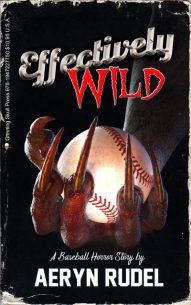
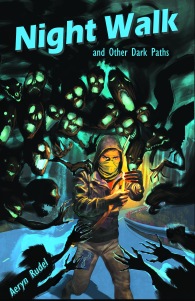
It’s 2024, and I have over five hundred writing and editing credits. I’ve written and published a dozen media tie-in novels and novellas with Privateer Press, over a hundred short stories with various sci-fi, fantasy, and horror magazines, and another hundred and fifty more media tie-in stories. I’ve also published a collection of short fiction called Night Walk and a fun little horror novella called Effectively Wild. I’ve written two novels based on my own IP, one of which I queried and received multiple full manuscript requests, and the other, which I know is a better novel, I’m about to query. I’ve run a blog called Rejectomancy for almost a decade with a loyal following, where I talk honestly and openly about the trails and tribulations of writing and rejection. Dozens of writers have told me how much reading my blog has helped them deal with their own challenges, and I find that immensely satisfying. By anyone’s measure, I am an accomplished professional writer.
Now hang one there, buckeroo, says impostor syndrome. You still need to–
Shut the fuck up.
Damn, that felt good. Now, the reason I wrote out my impostor syndrome ladder is not so that I could wallow in all the things I haven’t done (though the temptation is strong). It’s so that I can see, right there in black and white, all the things I have accomplished and how absolutely wrong impostor syndrome is when it tells me I’m not good enough. At any rung on this ladder, it would have been perfectly okay to stop and say to myself, you know what, I AM a good writer. Of course, some might think that little voice pushing you to achieve more and to grow as an artist is the same thing as impostor syndrome. In my opinion, it isn’t. Those voices are very different. At least in my head. The former feels good, motivating in a positive way, the latter just makes me feel like shit, and I actually can’t write when impostor syndrome is yammering in my ear.
So, if impostor syndrome has you down, try writing out your own ladder (you don’t have to do the impostor syndrome voice). I’d bet real cash money that when you’re done, you’ll have a list of accomplishments you can be legitimately proud of. 🙂
Three Things I Learned from 500 Rejections
Back in 2023, I received my 500th rejection since I started tracking submissions through Duotrope. I’m closing in on 700 now, but that first five hundred was an important milestone. Despite the mountain of no’s, it felt like a real achievement, a rite of passage almost. You see, I wholeheartedly believe that rejections are an unavoidable and even necessary part of the process that make you a better writer and, maybe just as important, toughen you up, so the slings and arrows of this brutal industry don’t slow you down (much). So, let’s take a deeper look at those 500 rejections and see what lessons I learned, or at least the ones that stand out the most. If you’ve followed my blog for any length of time, you’ll have heard some of this before, but a little rejectomancy refresher never hurts, right? 🙂
- Rejections aren’t personal. In my experience, this is true most of the time. This is not to say there aren’t terrible editors our there who send awful, insulting rejections to writers, but more often than not, though the language can sure as hell feel personal, it’s usually just boilerplate stuff. I’m not saying that reading those form rejections doesn’t hurt (it does, especially when you first start out), but it’s important to normalize rejection and get to a place where rejection maybe isn’t expected but it certainly isn’t a surprise. I tend to look at rejections like scars. Yeah, they might make you ugly, but they also make you tougher.
- Good stories get rejected. A lot. A mistake I see from a fair number of new authors is giving up on a story after a handful of rejections. Maybe there are writers out there who sell all their stories on the first couple of tries, but that isn’t me, and it probably isn’t you either. A few or, hell, a dozen, rejections doesn’t mean a story isn’t good. In fact, the vast majority of my short stories sales took me double-digit submissions to place. Why? Who knows? There are so many factors that go into a rejection. Editorial taste, bad fit for the magazine, the market recently published a similar story, and on and on and on. Of course, sometimes you do need to pull a story back a revise it if it’s getting nothing but form rejections, but if you’re getting personal rejections and close-but-no-cigar rejections, keep firing that story out there (but see my last point). I’d be willing to bet an acceptance is just around the corner.
- The awful agony of almost. This last lesson(?) is more specific to me and my personal journey as a writer, but it’ll surely resonate with some of you as well. After hundreds of rejections, I honestly don’t even notice the form letters anymore. I no longer look for deeper meaning in them or try to tell which are standard form rejections and which might be higher tier. It just doesn’t matter. What gets me, though, and what I’ve been receiving a lot of over the last few years are the final-round, close-but-no-cigar rejections. Those are tough for a couple of reasons. One, unlike a form rejection that’ll show up in under a week, when you start getting further consideration letters that turn into near-miss rejections, you’re waiting months (sometimes up to a year) for a reply. That long, long wait just ratchets up the disappointment when the no finally comes in. Two, there’s often little feedback on these rejections, other than something akin to “good story, but we’re gonna pass.” Not much you can do with that, and don’t get me wrong; I’m not angry at editors or anything silly like that. No, it’s just me wrestling with the pervasive feeling that I’m so very close to the next level of publishing, where I might start cracking some of those dream markets, but I just can’t quite get there. It’s frustrating, but, it, too, is part of the process, and when I’m feeling more charitable toward myself and not feeding the ever-hungry brain weasel of impostor syndrome, I recognize that all those close-but-no-cigar rejections from top-tier markets are exactly what they appear to be. Progress.
So, there you have it. Three important lessons I’ve learned from half-a-thousand rejections. I wonder what wisdom the next five hundred will impart. 🙂
What lessons have you learned from rejection? Tell me about it in the comments.
For more things I’ve learned in my writing career, check out these other “three things” posts.
Three Things I Learned Bout Writing Media Tie-In
Three Things I Learned as a Magazine Editor
Three Things I Learned from Writing RPG Adventures
Effectively Wild – A Baseball Horror Story
Night Walk & Other Dark Paths
Acts of War: Flashpoint

Acts of War: Aftershock

Acts of War: Stormbreak

 Aeryn Rudel's Rejectomancy