
Weeks of Writing: 6/22/20 to 7/5/20

A week behind, but here are my writing endeavors for the past fortnight.
Words to Write By
This week’s quote is from Stephen King.
“Write with the door closed, rewrite with the door open.”
—Stephen King
This quote is one that I wholeheartedly agree with. I don’t want any outside input while I’m writing the first draft. I know it would seriously fuck up my rhythm, and I don’t know if I’d ever finish. After the first draft, I am more than happy to throw the manuscript to the wolves and brace for impact. You see, for me, the first draft is an an intimate and lonely process. I gotta work shit out in my own head before I grant anyone else access to the grand mess. Now, my first drafts have problems, as all first draft do, but I need that first attempt to be mine and mine alone. I think it establishes my voice and my vision for the book. Again, after that, I want and need outside input to make the book something other humans might want to read. Now, if you’re an author that does like input while you write the first draft, you’re not wrong. I’m not saying that. I wouldn’t question another writer’s process. It just does not work for me.
The Novel
I had a solid couple of weeks of writing on the first draft of Hell to Play. I managed just over 16,000 words, pushing the manuscript total just shy of 80,000. I should finish the draft this week and end up around 90,000 words, maybe a tad more. I don’t mind going over, especially for the climax of the book. There are definitely parts earlier in the novel that will get cut back, so my final total will end up closer to my 90k target. The writing has been getting a little easier, mostly because the end is in sight.
Short Story Submissions
Pretty abysmal couple weeks for submissions, with one bright spot.
- Submissions Sent: 1
- Rejections: 1
- Acceptances: 1
- Publications: 0
- Shortlist: 0
In two weeks, I sent exactly one submission. The good news is that submission was accepted. Still, I gotta get my ass in gear if I want to hit 100 subs by the end of the year. The rejection was a personal rejection from a market I’ve published with before, and the feedback was pretty spot on. That’s always nice.
Acceptance
The acceptance I received was from Love Letters to Poe, a new market that publishes original gothic stories up to 1,500 words. Gothic really isn’t my forte, but I had a story I wrote a couple of years ago that checked a number of gothic boxes, so I cleaned it up and sent it in. Well, lo and behold, the editor liked it, and I got my tenth acceptance of the year. This is definitely one of those cases where I could have easily self-rejected because I don’t generally write gothic. As authors, we really have to avoid that. Often times it’s best to just send a story in and let the editor decide if it’s what they’re looking for. Sometimes it is. 🙂
Market Spotlight
This week, I want to highlight a pro market that’s relaunching. Fantasy Magazine is part of a trio of sister magazines that includes Lightspeed and Nightmare. Obviously, Fantasy Magazine focuses on fantasy, while the other two cater to science fiction and horror respectively. Nice to see another pro market out there.
Here are some of the highlights from their submission guidelines. Fantasy Magazine is open to submissions on the first week of every month (1st to the 7th).
- Seeking original fantasy and dark fantasy stories.
- Anonymous submissions.*
- Short stories up to 7,500 words.
- Flash fiction up to 1,500 words.
- No sim-subs.
- Payment is .08/word.
*I just want to call out the anonymous submissions portion of the guidelines. This means remove all identifying information from the manuscript (that stuff is okay in the cover letter, though). If you submit a lot, like I do, you probably have a standard manuscript template, which includes all your contact info at the top. This is the kind of thing that can be easy to miss if you slip into auto-pilot mode, so always, always, always read those submission guidelines carefully.
Goals
Here are my writing goals for this week.
- Finish the novel.
Yep, that’s it. Anything else is gravy. 🙂
That how my weeks went. How were yours?
Submission Statement: June 2020

Another month come and gone. Here’s a breakdown of my short story endeavors for June.
June 2020 Report Card
- Submissions Sent: 4
- Rejections: 5
- Acceptances: 1
- Publications: 0
A lackluster month, unfortunately. I needed to get 8 submissions to stay on track for 100 subs for the year, and I got half that. This just means I’ll have to pick up the pace in July. I really need to finish some of the short stories I’ve got in various stages of completion. More stories always means more submissions . . . and rejections, of course.
Rejections
Five rejections this month.
- Standard Form Rejections: 3
- Upper-Tier Form Rejections: 1
- Personal Rejections: 1
Pretty much ran the gamut as far as rejection go. The standard form rejections were all from pro markets, while the upper-tier and personal were from a pair of semi-pro markets. The quickest rejection came in a single day, and the longest took 90 days.
Spotlight Rejection
The spotlight rejection is from a semi-pro market I’ve published with before:
I sold this particular story on the next submission. Now, this absolutely does not mean the publisher above is wrong and the one that accepted the story is right. This is a subjective business, and wrong and right are, well, dubious concepts. I bring this up only to again point out that selling a story is often about putting the right story in front of the right editor at the right time. Almost every story I’ve sold has racked up three or four rejections and sometimes A LOT more before it sold (this one scored seven). In other words, not every story, no matter how good, is going to work for every market and every editor, so you have to keep trying and keep submitting.
Acceptances
One acceptance this month, and a pretty exciting one. I sold my story “The Past, History,” to Dark Matter Magazine, a new pro-paying science-fiction market. I’d been shopping that story for a while, and it had racked up good number of rejections and a couple of revisions before Dark Matter accepted it. I was hoping to continue my streak of two acceptances per month in June, but it was not to be. I’ll just have to shoot for three in July. 🙂
And that was June. Tell me about your month.
Evolution of a Short Author Bio II
An author’s bio can change quite a bit over an author’s career. Mine sure has. The more writerly accomplishments I accumulate, the more my bio changes, and over the past couple years I’ve added some important things to my resume. Before I get into the new bio, let’s look at the old one, which I wrote back in early 2018.
Aeryn Rudel is a freelance writer from Seattle, Washington. His second novel, Aftershock, was recently published by Privateer Press. Aeryn occasionally offers dubious advice on the subjects of writing and rejection (mostly rejection) on his blog at www.rejectomancy.com.
Pretty straightforward, and I kept it short and sweet and under 50 words. My new bio is longer, but it includes the same elements it always has:
- Basic details
- Accomplishments
- Where to go/buy
Basic Details
The who, what, and where. Like I’ve said in these posts before, I think you should keep potentially sensitive data out of your bio. I’m comfortable letting folks know which city I live in, but your geographic location isn’t really a necessary detail.
Here are my basic details in 2018:
Aeryn Rudel is a freelance writer from Seattle, Washington.
And, well, that still hasn’t changed much.
Aeryn Rudel is a writer from Seattle, Washington.
I’ve been using the term freelance, but I’m going to stop. It doesn’t really add anything other than “I want to get paid,” which is, I hope, obvious. 🙂
Accomplishments
This is the section of the bio that tends to change the most for me. As my list of publications grows, there’s a lot more I can add to this section (without going crazy), as you’ll see below.
My accomplishments looked like this in 2018:
His second novel, Aftershock, was recently published by Privateer Press.
Here’s what I’ve been going with recently:
He is the author of the Acts of War novels published by Privateer Press, and his short fiction has appeared in The Arcanist, On Spec, and Pseudopod, among others.
So, yeah, I’ve changed this quite a bit. First, since I finished the third book in the Acts of War series, I just list the series name rather than individual titles. I now also include a sample of my short fiction publications. I think this is a good showing of what I’ve accomplished over the last four or five years.
In the last two years, I’ve gained active membership in writing organizations like the SFWA (Science Fiction and Fantasy Writers of America). I don’t generally include those in my bio because I figure it’s going to be read more by readers of speculative fiction rather than writers or editors of same. Don’t get me wrong; I’m not against putting these memberships in a bio. They ARE significant accomplishments. I just like to put them in places I think they’re more likely to be noticed by folks familiar with those organizations. As with everything on this blog, this another of my sometimes dubious opinions, and I’m happy to be educated by folks with other thoughts on the issue.
Where to Go/Buy
It’s important to give folks a link to click in your bio, a place to go where they can find out more about you and your work, and maybe even read or buy some. That can be a website, social media profiles, or even a direct link to Amazon. Lots of options.
In 2018, my where to go/buy looks like this:
Aeryn occasionally offers dubious advice on the subjects of writing and rejection (mostly rejection) on his blog at www.rejectomancy.com.
Here’s what it looks like now:
He occasionally offers dubious advice on writing and rejection (mostly rejection) at www.rejectomancy.com or on Twitter @Aeryn_Rudel.
The biggest change here is that I now add my Twitter handle. The reason for this is simple. I actually find Twitter pretty useful for the promotion of my writing, and I’m more active there than any other social media platform.
The Finished Bio
Okay, now the final product.
Here’s 2018:
Aeryn Rudel is a freelance writer from Seattle, Washington. His second novel, Aftershock, was recently published by Privateer Press. Aeryn occasionally offers dubious advice on the subjects of writing and rejection (mostly rejection) on his blog at www.rejectomancy.com.
And here’s 2020:
Aeryn Rudel is a writer from Seattle, Washington. He is the author of the Acts of War novels published by Privateer Press, and his short fiction has appeared in The Arcanist, On Spec, and Pseudopod, among others. He occasionally offers dubious advice on writing and rejection (mostly rejection) at www.rejectomancy.com or on Twitter @Aeryn_Rudel.
My 2018 bio is 38 words long, and my 2020 bio is 55 words. I used to keep my bios under 50 words, but I’ve changed my stance on that. Often times, when a bio is requested, the guidelines are ” a single paragraph” or “no more than three sentences” or “under 100 words.” My new bio fits all those guidelines, and it’s still pretty concise. Of course, if a publisher does want a bio under 50 words, it’s super easy to trim it down.
Increasingly, I’m getting requests for bios in the 75- to 100-word range. In that case, I like to have a little fun with it, like this:
Aeryn Rudel is a writer from Seattle, Washington. He is the author of the Acts of War novels published by Privateer Press, and his short fiction has appeared in The Arcanist, On Spec, and Pseudopod, among others. Aeryn is a notorious dinosaur nerd, a baseball fanatic, and knows far more about swords than is healthy or socially acceptable. He occasionally offers dubious advice on the subjects of writing and rejection (mostly rejection) at www.rejectomancy.com or Twitter @Aeryn_Rudel.
This bio contains all the important bits from the shorter bio, just with some embellishments. It’s a fun, and, yeah, goofy way to tell folks a little more about myself. I tinker with this version a lot, trying to find even more groan-worthy ways to call attention to my nerdery. 🙂
And there you have it. The new and improved author bio. What are your thoughts on bios? Tell me about it in the comments.
A Week of Writing: 6/15/20 to 6/21/20
Hey, all, here’s my weekly writing report card.
Words to Write By
This week’s quote is from Julie Andrews.
“Perseverance is failing 19 times and succeeding the 20th.”
—Julie Andrews
Julie Andrews may not have been talking about writing, but the sentiment certainly applies. Writing, especially publishing, is a long string of failures broken by occasional successes. I don’t mean to sound pessimistic. I’m generally upbeat about the trials and tribulations involved with writing, but the fact remains if you want to write (and publish), you need get well acquainted with failure and more importantly, perseverance. I’ve had stories rejected fifteen times and then published on the sixteenth. I have completed one trunk novel, and for all I know I may be working on another. The point is that if it takes me twenty tries to publish a story or two trunk novels before I sell the third one, I’ll keep going. Because, yeah, you might fail the first nineteen times, but if you’re doing it right, each of those nineteen tries taught you something that improves your chances of succeeding on the twentieth.
The Novel
I made good progress, writing just under 8,200 words and pushing the manuscript up to over 63,000 words. I think I may have done some of the best writing in the book last week. I had three really good days, where the words flowed, and I was happy with what I ended up with. It was all emotionally charged character stuff, and I think the pain, regret, and loss I was trying to convey came through loud and clear. I’m heading into the middle of the third act, and things are likely going to develop quickly. I’m still targeting 90,000 words total, and as I get closer to the end of the story that feels less like an arbitrary number and more like the book’s natural length.
Short Story Submissions
Not a stellar week for submissions but certainly better than the week before.
- Submissions Sent: 2
- Rejections: 0
- Acceptances: 0
- Publications: 0
- Shortlist: 0
Just two submissions last week, which gives me forty-six for the year. I want to hit fifty by the end of the month. Other than the two submissions, things were pretty quiet. No rejections, no acceptances, no publications. I expect news on some of my pending submissions soon. Some of those will certainly be rejections, and the silver lining there is it’ll give me more stories to submit. 🙂
Market Spotlight
This week, I want to talk about a new pro sci-fi market called Dark Matter Magazine. Sure, I’m a little biased since they recently accepted one of my stories, but they really are an exciting new addition to the industry, and everything I’ve seen thus far says they’re gonna be around for the long haul.
Here are some of the highlights from their submission guidelines. They are currently open to submissions, by the way.
- Science fiction only, but they accept a wide range of sub-genres.
- Stories between 1,000 and 5,000 words.
- Simultaneous submissions okay.
- No reprints.
- Payment is .08/word.
Having received and signed the contract for my story, I can say Dark Matter’s contract is exactly what you want to see as an author, and it conforms to accepted industry standards as outlined in places like the SFWA model magazine contract. I’m also a big fan of the way they’ve been marketing on their social media platforms. It’s the kind of thing that’s immensely helpful to author and publisher.
Goals
Here are my writing goals for this week.
- Write another 8,000 to 10,000 words on the novel.
- Send at least two short story submissions.
- Finish a new story I started last week.
That was my week. How was yours?
Submission Protocol: Lengthwise

I’ve been writing this blog since 2015. In that time I’ve dispensed a lot of advice on how to handle the various aspects of submitting a story, usually in a series called Submission Protocol. In the last five years, however, my understanding of the submission process has grown, and as I look back at some of the old Submission Protocol posts, I realize that a) my stance on certain things have changed, and b) I’m just, well, more knowledgeable. Therefore, it’s time to revisit and update some of these topics, and we’re gonna start with something easy: story length.
Every single set of submission guidelines you read is going to tell you what length of story the market publishes. This should be one of the first things you check in the guidelines It’ll usually be listed as minimum and a maximum, like so:
Word Limit: 1000-5000 words, no exceptions
Pretty straightforward, right? The publisher will consider stories as short as 1,000 words and as long as 5,000 words. They will probably auto-reject any story that drops below the minimum or exceeds the maximum. Most publishers calculate word count by excluding the title, byline, and any contact information in the manuscript and count only the words of the story itself. So there’s no excuse not to count them yourself before you submit. It is NOT okay to submit a story even a little over the maximum or under the minimum, thinking the publisher won’t mind. They will, you’ll get a rejection, and you’ll end up looking unprofessional. So don’t do it.
Often times a publisher will list a word count range they will consider, but might have preferred story length. That looks something like this:
We want short stories between about 1,500 and 6,000 words. The sweet spot is around 4,500 words which is close to 30 minutes of story.
You’ll see guidelines like this fairly often. In this case, the publisher is an audio podcast and the preferred length of story has a lot to do with the preferred length of the podcast. It’s not that you shouldn’t submit a story that’s longer or shorter (as long as it’s within the range they publish), but it’s important to understand it might affect your chances. It could be a better idea to try and find a market that caters to your story length or even prefers it.
Flash Fiction, Novelettes, & Novellas
These three story lengths special cases, and there are things to consider even when a market will accept them.
Flash Fiction
These are stories under 1,000 words (though some publishers might set the limit at 750), and there are a number of markets that publish this length exclusively. There are also markets that technically publish flash, but it’s not their bread and butter. In my experience, selling flash to markets that don’t publish it exclusively is more challenging. It can be done, and I’ve done it, but I think markets that publish primarily short stories look at flash fiction as a novelty or even something to fill space or round at an issue. As such, they might only publish one flash piece per issue, reducing your chances of getting the story accepted.
Novelettes & Novellas
A novelette is a story between 7,500 and 15,000 words (generally), while a novella is usually between 15,000 and 40,000 (again, generally). The definitions of these two lengths vary from publisher to publisher, but there are a fair number of markets, especially in sci-fi and fantasy, that consider stories of these lengths. But, like with flash, these are generally outside of the typical story a market publishes, and they may only publish one per issue (or less). A lot of publishers are very upfront about this, though. For example:
While we try to have one longer work of 15-20,000 words in every issue, that is only one story out of a dozen.
So, like with flash, your chances of selling a novelette or novella are simply reduced because even markets that accept them might only publish one per issue. Unlike flash, however, which benefits from markets that publish sub-1000-word stories exclusively, there are no markets to my knowledge that do this for novelettes or novellas. So if you’re going to write longer stories, this is something to keep in mind. That said, some traditional book publishers will consider novellas, usually around 30,000 to 40,000 words, so that does give you another avenue to sell works at that length.
To sum up, one of the first things you should check in the submission guidelines is the length of story the market accepts. Your story should conform to those guidelines without exception because the first rule of submissions is we ALWAYS follow the submission guidelines. Right? Right.
A Week of Writing: 6/8/20 to 6/14/20
Way late, but here’s another quick look at the writing week that was.
Words to Write By
This week’s quote comes from author Anne Lamott.
“Get it all down. Let it pour out of you and onto the page. Write an incredibly shitty, self-indulgent, whiny, mewling first draft. Then take out as many of the excesses as you can.”
— Anne Lamott
As you may have guessed, and as you’ll certainly learn as you read more of this post, I’m still in the middle of a first draft of a novel. I think Anne Lamott’s adjectives above pretty much describe what I’ve got. Shitty: Yep, there is some clunky-ass prose in this thing as well the usual repetition, plot holes, and other ugliness. Self-indulgent: Absolutely. Way too much dialogue in places because I love dialogue and find it easier to write. Whiny: The emotional core of the story is coming along, but the characters might be a little too introspective in spots, and that can (and does) sound a little whiny. Mewling: See, whiny. Now, I ‘m also doing the rest of the things in the quote. I’m getting it all down, letting the writing just fall onto the page unfiltered and raw, and making careful note of the excesses so I can address them in the next draft(s). I think the point is that’s it’s okay to have a shitty, self-indulgent, whiny, mewling first draft. It’s okay to be honest about the imperfection of that initial attempt, cognizant of its flaws, and resolute about making it better.
The Novel
I made progress on Hell to Play, but last week was not my most productive. I managed just under 4,100 words for a manuscript total of around 55,000. Even though my production was a little lacking, I did write a pivotal scene that breaks us into the third act. It’s a huge moment in the book, and I’m actually pretty happy with how it came out. I’m starting to get that “downhill” feeling as I move into the third act and the characters move (or are maybe shoved) toward the climax. My goal is to be done in the next four weeks with a first draft that should be in the 90,000-word range.
Short Story Submissions
Not a great week for submission (with one shining exception).
- Submissions Sent: 0
- Rejections: 1
- Acceptances: 1
- Publications: 0
- Shortlist: 0
Yep, I didn’t send a single submission. I mean, what the fuck was I even doing last week, right? I did get one form rejection, but what made last week not a total loss was an acceptance from Dark Matter Magazine for my sci-fi thriller story “The Past, History.” The Dark Matter acceptance is my 9th of the year, which keep me on pace for somewhere in the neighborhood of 20 acceptances for 2020. What’s even better is six of the nine acceptances were paid at pro rates. That’s a much better ratio than I’ve managed in years prior.
Market Spotlight
This is a new feature on the Week of Writing posts, but I figure it’s maybe more useful to folks than more of my microfiction. 🙂
This week, I want to highlight NIGHTLIGHT, a fantastic audio podcast featuring horror written by Black authors and performed by Black actors.
Here are some of the highlights from their submission guidelines.
- Stories up to 10,000 words.
- Simsubs okay.
- Reprints okay if they have not been published in audio format previously.
- Payment is $75.00 for original stories over 3,000 words and $35.00 for stories under 3,000 words and reprints.
- They’re also looking for narrators (check the guidelines for details).
Also, please consider supporting NIGHTLIGHT through their Patreon account and help them with their goal of uplifting Black creators.
Goals
The usual broken-record statement here. Keep working on the novel–I’d like to get 10,000 words this week–and send out more submissions. I need to send out at least five more subs in June to stay on track for 100 submissions for the year.
That was my writing week. How was yours?
How Long Does It Take to Sell a Story?

From first submission to glorious acceptance, how long, on average, does it take to sell a short story? The answer, of course, is dependent on a lot of factors, not the least of which is the author submitting the story. Since the only author I have hard data on is, uh, this one, let’s take a look at my submission records and see how long it takes me to sell a story.
Below are two tables with ten stories each. The first ten are short stories I’ve sold, which are generally 3,000 words or more. The second table are flash fiction stories I’ve sold, which are always under 1,000 words (mine tend to be right at that limit). A quick explanation of the table. The data points are when the story was first subbed, when it was accepted, and then how many days it spent under consideration with the various publishers I sent it to. Okay, let’s look at short stories first.
| Short Story | First Subbed | Accepted | Days Subbed |
| Night Games | 2/2/2013 | 5/1/2014 | 387 |
| Caroline | 5/17/2014 | 4/26/2017 | 278 |
| Paper Cut | 9/28/2014 | 5/28/2016 | 347 |
| Scare Tactics | 11/2/2014 | 11/7/2015 | 177 |
| Paint-Eater | 11/9/2016 | 3/24/2019 | 143 |
| A Point of Honor | 12/17/2017 | 11/20/2018 | 264 |
| Bites | 1/10/2018 | 3/18/2020 | 690 |
| The Past, History | 8/28/2018 | 6/10/2020 | 261 |
| The Back-Off | 9/28/2018 | 10/14/2019 | 343 |
| Reading the Room | 6/6/2019 | 3/4/2020 | 146 |
As you can see, it takes me a while to sell a short story, an average of 303 submission days. Note the actual days differ from the submission days because I may not submit a story for a bit while I revise it, lick my wounds, weep in despair, etc. All the stories above received at least five rejections before acceptance, and four of them hit double digits. That said, every one of these stories eventually sold at semi-pro or pro rates rates in its initial acceptance or as a reprint. “Paper Cut” has the most rejections before an acceptance at 16, but “Bites” took me a lot longer to sell because it was shortlisted twice and held over six months both times, then rejected.
A few of these stories represent how a revision can make all the difference. Take “Paint Eater,” for example. I submitted it pretty steadily in the first year and it racked up eight rejections in that time. Then, I got some good feedback and let it set for another year and half before making a lengthy revision. I sold it on the first try after the revision.
Okay now let’s look at flash fiction and see how I do there.
| Flash Story | First Subbed | Accepted | Days Subbed |
| A Small Evil | 5/19/2017 | 9/30/2019 | 343 |
| What Kind of Hero | 11/19/2017 | 7/13/2018 | 171 |
| When the Lights Go On | 12/6/2017 | 9/29/2018 | 294 |
| Do Me a Favor | 6/8/2018 | 7/6/2018 | 28 |
| Far Shores and Ancient Graves | 6/24/2018 | 8/29/2018 | 55 |
| Time Waits for One Man | 8/23/2018 | 4/19/2020 | 90 |
| Ditchers | 12/3/2018 | 6/28/2019 | 132 |
| Liquid Courage | 3/7/2020 | 4/1/2020 | 25 |
| His Favorite Tune | 3/24/2020 | 5/12/2020 | 28 |
| Outdoor Space | 5/4/2020 | 5/25/2020 | 21 |
As you can see, I sell flash fiction quicker than short stories, and all but two of these sold for semi-pro or professional rates. The average number of days these stories spent under consideration is 118 days. Now, that comes with a caveat. I initially tried selling “Small Evil” as a 2,000-word short story. It racked up eight rejections at that length. Then, for a contest, I cut it down to flash length and sold it on the first try in eleven days. So, if we only look at my attempts to sell “Small Evil” as flash, my average drops down to 85 days.
“When the Lights Go On” is a bit of an anomaly because I subbed it to a lot of pro markets that generally publish short stories and only a small amount of flash. I actually think it’s one of the best flash pieces I’ve written, and one of the reasons it took so long to sell is that, like “Bites,” it was shortlisted and held twice and held over five months before receiving a rejection.
So, why the disparity between how long it takes me to sell short stories versus flash fiction? Well, I have some rejecotmantic theories. 🙂
- Maybe I’m better at flash. I mean, it’s certainly possible, and I’ve sold four times as many flash fiction stories as short stories. I do enjoy writing flash, and, yeah, I think I’ve got the format down pretty well. So it could be that my success rate with flash is simply a product of a story length that’s more in line with my style, voice, etc.
- More pro markets. Running a quick search on Duotrope for pro markets in science fiction, I find 16 pro markets that accept short stories and 16 pro markets that accept flash fiction. Now that’s a little misleading. While many of the markets that accept short stories also accept flash fiction, flash is a more difficult sell to these publishers in my experience. There are really only a handful of true flash fiction markets that pay a pro rate. So, since I start with pro markets and work my way down, my short stories run a slightly more difficult gamut of tough pro markets, which are harder to crack and often take a bit longer to get back to you.
- More demand. Many flash fiction markets publish on a weekly or even a daily basis, so they often need more material than a publisher of short stories who might only publish six to eight stories per issue (which is often bi-monthly or even quarterly). In other words, your chances of publication are often better with flash. Not because flash publishers are just taking any old thing, but because, for example, they might take two good stories with a similar theme because they can put ten or twenty or even fifty stories between them, whereas a short story publisher might choose one or the other to ensure they have a broader range of stories within the small number they publish. In other words, some of the reasons good stories get rejected might not apply as much to flash fiction markets.
In conclusion, selling a story isn’t generally a fast process, and for me, selling a short story is downright snail-paced. I’m fine with that, but as I continue to write, submit, and develop my craft, I hope to sell short stories before they rack of ten-plus rejections and two years in submission. 🙂
Thoughts on how long it takes to sell a story? Tell me about it in the comments.
Weeks of Writing: 5/25/20 to 6/7/2020

This post covers a couple of weeks of writing endeavors. Here’s how I did.
New Look
Instead of the usual quote I put here, I figured I’d talk about the obvious. You certainly noticed the new logo and new look for the site. I’ve been wanting to change things up for a while, so I started working with a graphic designer (Erik Nowak, an old friend and colleague of mine) and, well, this is the result. Okay, so why the change? Two reasons:
- Promotion. I started this blog with a two-fold mission. The first was to relate my experiences in the publishing industry and by doing so help other writers navigate submissions, rejections, and all that jazz. The second was to, well, have an author site and promote my own writing. In short, the old site was a bit better at the former than the latter, and I’d like them to be on equal footing. Hence the rebranding to “Aeryn Rudel’s Rejectomancy.” I know, crazy to put your actual name on your own author site, huh? Anyway, this doesn’t mean the content of the blog is going to change much. I’ll still do all the rejectomancy stuff I’ve always done (it’ll just look snazzier), but the new site says “Hey, folks, let me share my writing and submitting experiences with you” AND ” Hey, folks, look I’m an author with stuff you can read.”
- Five years. Next month marks five years since I started the blog, and I figured it was time for a new look. Not that I didn’t like the old look, but in addition to the reasons in my first point, it was time to shake things up. I also have a better handle on what my blog is about, and the new look and logo reflect that.
The Novel
I had a productive couple of weeks with Hell to Play, and I added over 16,000 words to the first draft. That puts my over the 50,000-word mark and past the halfway mark (I expect the first draft to be in the 90,000-word range). If I continue at this pace, I should have a first draft in a month and change. I like where the book is going, and I have a clear path through the second and third acts. As I write, the things I’m noting that need to be addressed in subsequent drafts are little but very important details of my world and its mythology, character motivations, and working character backstory into the novel in an organic and believable way. You know, easy stuff! 😉 I’m averaging about 8,000 words per week. My usual pace is 10,000, but that’s just not how it’s working out right now for a lot of reasons, and I’m okay with that.
Short Story Submissions
Two decent weeks on the submission front.
- Submissions Sent: 4
- Rejections: 5
- Acceptances: 1
- Publications: 0
- Shortlist: 0
I sent two subs per week over the last two weeks, which gives me 44 for the year. I’ll need to send out another 5 o 6 submissions in June to keep pace for 100, but I don’t think that’ll be difficult. The rejections were mostly form rejection, though two were higher-tier. The acceptance is from The Arcanist. I sold my story “Outdoor Space” to them, which will be published next month. That gives me 8 acceptances for the year. A good pace, and hopefully one I can continue.
Microfiction
Trying to get back on the ol. microfiction train, and I did write some last week. Here they are. The micro from June 2nd is probably the best of the three, but I got a giggle out of June 1st, mostly because I’ve been looking at a lot of property listings lately.
6/1/20
For sale: Seaside cottage near Innsmouth, MA. Enjoy panoramic views of newly risen R’lyeh from your living room. Open the windows for the ocean breeze and the croaking supplication of the master’s spawn. Leave your sanity behind at this #littoral getaway! Cthulhu Fhtagn!
6/2/20
Mrs. Hubbard grew #hydrangeas and gave them as gifts. White flowers for weddings, blue for birthdays, yellow for funerals. She gave red ones too, but not often. Pete Dawson got red ones after his wife, Beth, went to the hospital. Again. She got yellow ones a week later.
6/3/20
Dan was a mean son of a bitch, but he had to get good and drunk to fight. He called six slugs of cheap whiskey his #potvalor, whatever that means. All I know is once he had a belly full of rotgut his Colt Navies filled enough pine boxes to make the undertaker a rich man.
Goals
Keep chugging away on the novel at the same pace. Also, as always, send more submissions, and maybe finish a new story to facilitate the more submissions.
That was my writing week(s). How was/were yours?
Submission Statement: May 2020
Another month of submissions. Here’s a breakdown of my short story endeavors for May.
April 2020 Report Card
- Submissions Sent: 11
- Rejections: 4
- Acceptances: 2
- Publications: 2
Very good month. Eleven submissions in May gives me forty-three for the year and puts me back on track for my goal of one-hundred. Only four rejections, all form rejections. Two more acceptances, both flash, and both to pro-paying markets. I’ll talk about the two publications below.
Rejections
Four rejections this month.
- Standard Form Rejections: 1
- Upper-Tier Form Rejections: 3
- Personal Rejections: 0
Not much to report here. All the rejections were form letters, though three of them were upper-tier. The shortest took only seven days, the longest 135 days.
Acceptances
Two acceptances this month. I sold my flash fiction story “His Favorite Tune” to the Flame Tree Fiction newsletter, which is my third publication with Flame Tree, the first in the newsletter. I also sold my flash fiction story “Outdoor Space” to The Arcanist. Not counting contests, this is my fifth sale to The Arcanist.
Publications
The first publication is my noirish supernatural crime short story “Reading the Room,” which was published at The Overcast, an audio market hosted by J. S. Arquin. You can listen to the story by clicking the link below.

The second publication is my flash story “His Favorite Tune,” which was published in the Flame Tree Fiction newsletter. For now you have to be a subscriber to read the story, but they’ll post it on the main website soon, and I’ll be sure to point folks in that direction.
And that was May. Tell me about your month.
A Week of Writing: 5/18/20 to 5/24/20

One more week has come and gone. Here’s how I did.
Words to Write By
Today’s quote is from Jodi Picoult.
“You can always edit a bad page. You can’t edit a blank page”
– Jodi Picoult
This, this right here, is what keeps me writing the first draft even though every fiber of my being screams THIS IS TERRIBLE. Because, like Jodi Picoult says, I can always edit a bad page. I can fix it in post. This is the only way I can write. If I try to make the first draft perfect–an impossible task anyway–I’ll never get anything done. I’ll be stuck in a kind perfectionist paralysis inimical to the creation of a first draft. So I chant to myself as I write: I can edit, I can fix it in post, I can make it better. JUST GET IT DOWN. That’s worked so far.
The Novel
Armed with a revised outline I got back on track with the Hell to Play last week. I wrote about 6,100 words total, and the manuscript now clocks in at nearly 35,000 words. I even like some of those words. I’m in the beginning of act two, and the last couple of chapters have been very dialogue heavy and maybe a tad too expositional. The dialogue, and especially the interplay between the two POV characters is kind of the heart of the book, but I may have gone overboard, as I am wont to do with dialogue. Still, that’s a second draft problem, and the stage is set this week to get into the meat of plot. I’m shooting, as always, for 10,000 words, but I’m letting this one breathe a bit (as hard as that may be), so if it’s 6,000 or 8,000 words and some reorganization and editing and whatnot, I’m a-okay with that.
Short Story Submissions
Another good week on the submission front.
- Submissions Sent: 3
- Rejections: 1
- Acceptances: 0
- Publications: 1
- Shortlist: 0
Three more subs last week brings me to 41 for the year and pretty much back on track for my goal of 100. I’ll probably add one or two more subs this week to really seal that particular deal. No acceptances this week, though I did get one yesterday, but I can’t talk about that until next week. The one rejection was a 135-day form letter, which are always a bit of a bummer, but such is the gig. The publication is a good one, and I’ll discuss that below.
Microfiction
I did write some vss365 microfiction last week. Exactly one. 🙂 Here it is.
5/21/20
For years we marveled at the planet’s rings from afar, a beautiful #silver halo around our future home. When the last remnants of humanity made it to the ringed planet, they found not ice or rock, but a graveyard of derelict ships encircling a dead but still hungry world.
Publications
Earlier this year, I sold a story to The Overcast, a supernatural noirish gangster piece called “Reading the Room.” If you’re unfamiliar with The Overcast, they’re a great audio market, and host and narrator J. S. Arquin does a simply stupendous job with the voices and narration. Anyway, click the link below if you’d like to listen to “Reading the Room”. If you stick around after the story is over, you get to hear me read a halting afterword about Texas Hold ‘Em poker and my writing process and stuff. 🙂
Goals
Back on track with the novel, I’m aiming for more solid progress this week. Like I said above, something around 8,000 to 10,000 words would be great. I’d like to get a few more subs out this week as well. All that seems doable. 🙂
That was my week. How was yours?
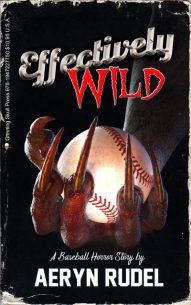
Effectively Wild – A Baseball Horror Story
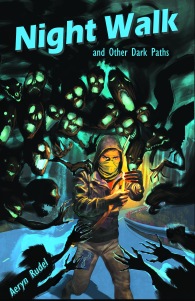
Night Walk & Other Dark Paths
Acts of War: Flashpoint

Acts of War: Aftershock

Acts of War: Stormbreak

 Aeryn Rudel's Rejectomancy