
600 Submissions: By the Numbers
Yesterday, I sent my 600th submission since I’ve been tracking them through Duotrope, a period of roughly nine and a half years. I always take a deep dive into the numbers when I hit these little milestones, so that’s what we’re doing today. Here’s what 600 submissions looks like.
Submissions by Year
I’ve been submitting regularly for almost ten years, and I’ve tracked each and every submission through Duotrope. Here’s how many subs I sent year by year.
- 2012: 6
- 2013: 16
- 2014: 38
- 2015: 46
- 2016: 54
- 2017: 74
- 2018: 120
- 2019: 76
- 2020: 87
- 2021: 83
Yeah, I started out a little tentatively, but by 2015 I was sending out a respectable number of submissions. In the last five years, I’ve averaged about 88 submissions per year, which is pretty good. My goal is always 100, and I’ll likely hit that for the second time this year.
Results
So, how did all those submissions end up? How many acceptances? How many rejections? Let’s have a look.
- Acceptances: 79
- Rejections: 484
- Withdrawn/Lost/Never responded: 21
- Pending: 16
This works out to an acceptance percentage of just over 14%. Unfortunately, 2021 has been kind of a rotten year and has tanked my percentage a bit. To put that in perspective last year I sent 87 submissions and had 19 acceptances. My best year ever in terms of acceptance percentage. This year I’ve sent 83 submissions so far, and I have . . . 5 acceptances. Ugh; I know. Anyway, such is life, and I’m hoping to turn things around here in the third quarter and salvage at least a halfway decent year, but we’ll see.
The other categories are pretty self-explanatory. I should point out that many of the withdrawals are because the publisher went out of business. Some announced it publicly and others just never responded to queries.
Stories
Another thing thing to look at is what types of stories I sent. How many were flash? How many were short stories? And so on. Here’s how that broke out.
- Total Unique Stories: 132
- Flash Fiction: 101
- Short Stories: 26
- Microfiction: 3
- Novellas: 1
- Novels: 1
As you can see, I write a lot of flash, and the bulk of my submissions are of that length. I write fewer short stories than I should, honestly, and I’d like to change up that ratio a bit in 2022. The other categories are more anomalies than anything. I rarely submit microfiction, and even though I’m shopping a novella, I don’t plan to make it habit because they’re tough to sell. The novel is the real fluke. Not that I don’t write them; it’s just unusual that the market I’m currently shopping this novel with is also on Duotrope, but, hey, a submission is a submission, right?
Here are some other interesting numbers. Of the 132 unique stories, I’ve sold 65 of them. So almost half of everything I’ve written and submitted. Not bad, and I hope to improve on that. Ballpark math puts the total number of words submitted at just over 310,000, but it’s important to note that a good 120,000 of those words come from the novella and novel.
And that’s 600 submissions. I’m also closing in on 500 rejections, which I imagine I’ll hit by the end of the year. I’ll break down those numbers in a blog post as well.
Hit any submission milestones of your own lately? Tell me about it in the comments.
A Week of Writing: 9/13/21 to 9/19/21

September is shaping up to be halfway decent month. Here’s week three.
Words to Write By
Another quote about revision. This one is from author Henry Green
“The more you leave out, the more you highlight what you leave in.”
―
I’m at the place in the revision of Hell to Play where I’m gonna leave out a lot. As I’ve said before, I tend to get really talky and redundant in the middle of my novels, and I desperately need to fix that in the current one. I expect to lose five, maybe ten thousand words of extraneous conversations and scenes that go nowhere. I’m hoping this will allow the reader to a) enjoy a much improved pacing and b) focus on the important things in these chapters, like world-building and character development. In other words, I want to highlight these attributes of the book, like Henry Green says.
Short Story Submissions
A good and productive week in submission land.
- Submissions Sent: 3
- Rejections: 2
- Acceptances: 1
- Publications: 0
- Shortlist: 0
- Pending: 15
- 2021 Total Subs: 81
I sent three submissions last week, giving me a total of 81 for the year. Unless I just stop sending out subs, I’ll hit my goal of 100 for the year easily. The good news from last week, though, is the acceptance. It snapped a streak of 23 rejections, and the story I sold had racked up 16 rejections all by itself. A nice sale that vaulted my acceptance year from worst ever to merely terrible. I’m hoping for tolerably bad by the end of the 2021. The two rejections were of the form variety, and they stand out only because they’re from markets I’ve never submitted to before. One was a higher-tier, so I might try them again.
The Novel
I made more progress on the revision of Hell to Play last week, revising through chapter nine and writing half of one of the new chapters I’ll be adding. These new chapters are from the villain’s POV, a millennia-old demon, and they’re gonna be fun. They’ll accomplish a couple of things. One, they’ll add depth and clearer motivations for my antagonist, and two, they’ll add important world-building details, especially in how magic and demons operate in my world (important stuff). As I said in another post, the first 100 pages were pretty solid, so the revisions weren’t too tough. Now we’re getting to the middle and the hard work, which will be primarily cutting extraneous scenes to improve the pacing. I’m not looking forward to it because I know it’ll be difficult, but, I’m gonna dive in and do my best. It’s never as bad as I think it’s gonna be. (I hope.)
Commission Work
I signed another contract with Privateer Press to write more fiction in their new Warcaster: Neo-Mechanika setting, and I’ll be starting the necessary reading and outlining this week. It’s another very comfortable deadline that I’ll undoubtedly bring in early. Looking forward to this writing and working with my old pals at Privateer again.
Goals
Busy week. I need to get going on the commission work, keep revising the novel, and get more submissions out. In that order of priority.
That was my week. How was yours?
A Week of Writing: 9/6/21 to 9/12/21
Two weeks into September, and here’s my weekly writerly report card.
Words to Write By
A great quote about revision from author
“I think the hard work of writing is just how long a book is terrible before it’s good.”
―
Since I’m currently in the revision trenches on my latest book, quotes like this resonate with me. Like last week’s quote, this one illustrates what’s so difficult about the revision process for me, and I’m sure for a lot of folks. The act of writing a first draft is such a monumental task, such an effort of pure creation it can be hard to accept that despite all that work, you’ve ended up with something flawed. For me, it’s a matter of shifting my perspective from viewing the first draft as a complete thing to viewing it as thing with potential. I have to look at the first draft as one step (even if a big step) toward the ultimate goal of a publishable novel. I have to give myself the necessary time to do the job properly, and more importantly, get into the right frame of mind. Last week, I started that process, and I’m slowly but surely altering my perception and a flawed book, well, less flawed.
Short Story Submissions
An excellent week for submissions.
- Submissions Sent: 5
- Rejections: 2
- Acceptances: 0
- Publications: 0
- Shortlist: 0
- Pending: 16
- 2021 Total Subs: 78
I did not sit idle last week as far as submissions are concerned. I sent out five, four of which were stories that were recently rejected, two with encouraging close-but-no-cigar rejections. The fifth story is a brand new one, and it is unlike anything I’ve written before. It’s fiction, and speculative fiction at that, but it also features an intensely personal element I’ve never explored in my writing. It doesn’t approach anything like creative non-fiction, but there’s more of me in this piece than any of my other works. if it gets published, it’ll likely warrant further discussion, but you can never be sure something like this will resonate. Anyway, I’ve already sent seven submissions in September, which is a great pace. Now, let’s get a few acceptances so I don’t have to wince every time I do the math on my 2021 acceptance percentage. 🙂
The Novel
Last week, I started a big revision on my novel Hell to Play. This is the revision before I start shopping it around. I made good progress, and revised the first five chapters. I’m most pleased with how the first chapter (kind of an important one) has changed. It was in need of trimming, reorganizing, and, most importantly, a better overall hook into the plot. So, yeah. much improved. Still lots of work to do, but I feel pretty good about what I’ve done so far. The heavy lifting will come in the middle chapters, as usual, but I have a good plan on how to make that as painless as possible (while, you know, doing it right).
What I have to keep in mind here is I don’t have to put a clock on this revision. That’s difficult for me. A lot of it comes from my background in the TTRPG and media tie-in world, where I was always operating under tight deadlines. I don’t have to do that here. Now, I don’t want to take six months to revise this book, but I’m also not going to set some arbitrary deadline that might force me to go too fast. I want to get this right. I want this book to be my best effort. I need to to give myself adequate time to do those things.
Goals
The main goal for the week is to revise at least another five chapters of the novel. Then, as usual, more submissions.
That was my week. How was yours?
Write to Revise: My WIP Checklist
This week, I started the second revision of my WIP novel Hell to Play. This is the big revision/rewrite before I start shopping it around, and it will be driven by the comments and notes from my three excellent critique partners (bless you, you wonderful people). Anyway, I thought I’d talk a bit about what this revision will focus on because I suspect my issues are issues for a lot of folks. Let’s dive in.
- Pacing. The consensus of my critique partners is that the first 100 pages of the novel are well-paced, exciting, and suspenseful, and then the middle drags. Now, middles are always a pain in the ass, and for me that usually come down to one thing. I get real fucking talky in the second act. I generally tell my stories with lots of dialogue, but I can overdo it, and I definitely did here. There are conversations that go on too long or are just not needed, and they kill the pacing. So I’ll be cutting and shortening those sections, I expect to cut a good 5,000 to 10,000 words here (I’ll make it up later, though).
- Character arc/background. My novel features two principal characters and two POVs. The general consensus is one character is fun, well-developed, and features an intriguing backstory. His arc is also clear and satisfying. The second character? Well, uh, she needs some work. Right now, she’s kinda one note, and her background is not as strong as it should be, nor is her arc. The fixes for this are to add more of her backstory into the plot and adjust her relationships and dialogue with other characters. I can see in my head how her backstory and arc are supposed to be, but I dropped the ball in the execution.
- Villain motivations. They could use some development to make my bad guy a more complete character. The main remedy for this is to add some chapters from his POV. I’m actually looking forward to that, as he’s a millennia-old demon, and that’s some fun shit to write about. His chapters will also help the pacing in the middle of the book, give us some much-needed changes of location (another, smaller issue in the novel) and move the plot along in interesting ways.
- World-building. The magic system in Hell to Play is based on real-world occult and demonology, and I glossed over how a few things work, leaving my readers with some questions. This is probably the easiest of the four big issues I need to tackle because it doesn’t take too much to add this kind of detail to a story. The trick, as always, will be to avoid heavy handed exposition, but there are plenty of opportunities to show how things work in action.
- Tightening and polishing . Of course, I’m also tightening the prose as I go along and, good lord, removing so much redundancy. There are times where it’s obvious I’m worried a reader won’t get what I’m trying to say, and I’ll repeat the same damn thing over and over. Nuking those from orbit (it’s the only way to be sure).
I’m four chapters in at the moment, and things are going well. I’ve cut about 1,000 words of extraneous, redundant nonsense, and I feel pretty good about novel’s opening act. Now to make the middle and end match up. 🙂
Working on a revisions? Tell me how it’s going in the comments. I’d love to hear how you’re tackling your own trouble spots/
Weeks of Writing: 8/23/21 to 9/5/21
A couple of fairly productive weeks. Here’s the score.
Words to Write By
This week’s quote comes from Michael Crichton.
“Books aren’t written- they’re rewritten. Including your own. It is one of the hardest things to accept, especially after the seventh rewrite hasn’t quite done it.”
–Michael Crichton
I feel this in my soul. Revision is the hardest part of the process for me. As Michael Crichton said, it can be a hard thing to accept–that you’ve worked your ass off on the first draft (and those that come after) and it’s not good enough. Can’t be good enough. For me, revision often feels overwhelming in the sense of making a bad situation worse. This is just fear and doubt and all the other writerly bullshit we all deal with, but it’s my specific bugbear. Thing is, like anything else in this business that scares you, you have to grit your teeth and get it done, and I will. I’ve done it before. I can do it again. Right? Right.
Short Story Submissions
Solid submission numbers for the past few weeks.
- Submissions Sent: 5
- Rejections: 9
- Acceptances: 0
- Publications: 0
- Shortlist: 0
- Pending: 15
- 2021 Total Subs: 73 (75)
I sent out 5 more submissions in the last couple of weeks, and I sent two more yesterday (that’s the 75 in parentheses). My volume of submissions for the year continues to be quite good, while my results continue to be, uh, not. Case in point, I got another shortlist, close-but-no-cigar rejection last week. The word almost seems to be the theme of the year. The rejection was a good one, encouraging, and with a few bits of useful feedback. I think I’ll crack this particular pro market eventually, but seeing how this year has been a bit of a kick in the junk, I wanted that acceptance just a little more this time. I revised the story (using some of the feedback in the rejection) and sent it out again. That’s all you can do. Keep writing, keep submitting, and trust that your luck will turn around. It always does.
I did finish a new short story I’m quote proud of, and that went out the door yesterday. Hoping it’ll lead the charge that turns my acceptance luck around.
The Novella
Effectively Wild was among the 9 rejections mentioned earlier. A 23,000-word supernatural baseball story is a tough sell to any market, but I had to try the one prominent magazine that would actually consider it. That done, I’ve shifted to small book publishers that also publish standalone novellas. There are a fair number of good publishers in this group (I should really do a blog post about them). I’ll need to add some words to the novella and get it up to 30,000, as that’s the minimum for many of the publishers I’ll be targeting. That shouldn’t be difficult; there’s at least one subplot that could use a little more development.
The Novel
The time has come, friends. I can no longer let my latest novel, Hell to Play, sit idle. I have copious notes from my critique partners, all of whom pronounce the book good, better than my last, and a perfect vehicle for querying. I have put off revising the book for too long, and I need to get it done. So, starting today, that work begins. I figure it’s gonna take me a bit longer than a month to do it right, and I need to do it right. So, you’ll see me whining about the revision process in these little updates for the next five or six weeks I gather. 🙂
Goals
The big goal going forward id revise hell to Play, but, as usual, I want to keep my submission volume up too.
Those were my last couple of weeks. How were yours?
Not Good Enough: When to Trunk a Story
Recently, I went through my WIP folder and realized it was overflowing with stories, some of which had been languishing there for decades. I took a good, long look at these derelict shorts and flashes, and, well, I then created a trunk folder, which was long overdue. I moved some forty stories into this trunk, and I thought I’d talk about why I banished these pieces to literary purgatory. The reasons primarily fall into three broad categories. Here comes a numbered list!
- Juvenilia. These were the the easiest to excise from my working folder. They’re old stories, some as old as twenty years, and represent a stage in my literary growth and skill I have long since surpassed (I hope). They’re just not good enough, and many were written in a style I have thankfully abandoned. (I’m not longer trying to sound like H.P. Lovecraft with a thesaurus.) There might be one or two decent ideas here, but I’m not sure they’re worth the time and effort it would take to disentangle them from the dreck.
- Good concept/meh execution. This is an interesting group because many of the stories here are intriguing from a conceptual standpoint. The problem is the execution is lacking. Some of that has to do with writing a story I didn’t quite have the chops to attempt yet. That happens, I think, to every writer. You come up with a great concept, but you just can’t write a worthy story around it. It might be just that the idea hasn’t fully formed or that you might have bitten off more than you can chew at this stage in your writerly development. For me, there’s a little of both here.
- Meh concept/solid execution. There are more recent stories, and they are competently written, but, holy shit are they well-travelled ground. There are, uh, a lot of gangster/vampire/zombie stories in this group, and though I think it’s just fine to write these kinds of stories, you better have an original take if you want to publish. There are not that. Predictable, cliché, or just, you know, meh. So into the trunk they go.
So what happens to these stories? Will they stay in the trunk folder forever? Some of them definitely will, especially those in the first category, which are a mix of bad writing, bad concept, and bad execution. However, stories from that second group may yet see the light of day. There are good ideas in there, and when I’m ready I think I can rescue a few. They’ll probably need complete rewrites, but it may be worth doing that at some later date. In the meantime, I’m going to focus on new pieces, the ones I feel are good enough right now. Moving all those other stores to the trunk has cleared space both in my WIP folder and in my head. Feels good.
Do you have a trunk folder? If so, when do you move a story from WIP to trunk? Tell me about it in the comments.
Submission Statement: August 2021

And there goes August. A better month than July, but just barely.
August 2021 Report Card
- Submissions Sent: 11
- Rejections: 9
- Acceptances: 0
- Publications: 1
- Further Consideration: 1
I did manage a solid number of submissions in August, and 11 more gives me a total of 71 for the year. I’m still on pace for 100. I also managed a bunch of rejections, most within the last week of the month. I knew those birds were overdue to come home and roost. No acceptances again, but a further consideration letter has me daring to hope (foolish man; I know). One publication, which I’ll talk about below.
The big picture here is that my dismal year for acceptances continues. I could go on about why that’s happening, but it would be just conjecture and theory. The truth is that it just happens. It’s happened before, and, as always, when I least expect it, the acceptances will start rolling in again. Just gotta be patient and keep doing what I’m doing: writing and submitting.
Rejections
A whopping nine rejections in August.
- Standard Form Rejections: 4
- Upper-Tier Form Rejections: 4
- Personal Rejections: 1
Yeah, lots of rejections last month, and most of the form variety. I did get a personal rejection, which is maybe the nicest one I’ve received. It’s below.
Dear Aeryn,
We appreciate the opportunity to read [story] and we appreciate the time and effort you spent crafting it. Unfortunately, we have chosen to not accept this story for publication.
This doesn’t mean the story was necessarily bad. It might have been accepted had the magazine been able to publish stories more frequently. Sadly, we can only currently publish one story a month, and we receive hundreds of excellent submissions per month. This means we must reject many stories we enjoy and appreciate. We do not accept revised stories at [publisher], but we hope you have success finding a home for this story, and we encourage you to submit another story to this magazine.
We really loved this worthy and thoughtful story. It reached the final round of submissions. This is rarified air that the vast majority of submissions to [publisher] do not reach. I hope this news provides some measure of consolation, even though I know this rejection letter must be disappointing.
Personal note: This is such an intriguing, devastating piece. You recognize that so much of what makes the best stories (especially speculative stories) work is ambiguity, that which transcends rational comprehension. The mysterious dialogue between the two figures at the center of the story is great, and the idea of the protagonist having to make a choice they don’t quite understand is a striking, unsettling one that denies the audience simple catharsis. This is a fantastic piece, and I really do hope you’re able to get it published.
I like how this publisher does their rejections. They give you the form bit up front, which is good as such things go, and then they tell you how far you got in their submission process, and finally they leave a thoughtful bit of personal feedback. I don’t expect every publisher to send rejections like this, but I appreciate it mightily when they do.
Publications
Just one publications in August. The final Rejectomancy article over at Dark Matter Magazine. I’ll be penning a new article series for Dark Matter starting in October, so keep an eye out for that.
“Acceptance Rates: What Are the Odds” at Dark Matter Magazine
And that was my month. How was yours?
Hold, Please: Further Considering the Short-List Letter

I’ve discussed the hold or further consideration letter a few times on the blog, but since I’ve received a bunch of them this year, I thought it was time to revisit. We’ll look at a couple of examples, what they may tell us, and then try and determine how common they are. I’ll be focusing on pro genre markets in this article because, in my experience, they send more hold/further consideration letters.
Some definitions first. You will often see the terms further consideration, hold, and short list used to describe essentially the same thing: a story that has made it through one or more rounds of review. The term short list can have slightly different connotations in large contests, but for our purposes it means the same as hold or further consideration.
Okay, let’s dive in with an example.
Thank you for submitting [story] to [publisher]. One of our first readers has read your story and believes it deserves a closer look. We would like to hold it for further consideration. Good luck!
Many publishers use first readers to weed through the slush pile for stories that might be a good fit for the market. The above is an example I received earlier in the year. If I understand the process correctly, a first reader flags the story as one with potential, and it goes to the editors for review. The story then likely goes through additional rounds of review before it is chosen for publication (or rejected). This particular hold letter did end up as a rejection, which looked like this.
Thank you for submitting [story] to [publisher]. We appreciate the chance to read it. Unfortunately, the story does not meet our needs at this time. We’re going to pass.
I wish you the best of luck finding a home for [story] and I hope to read something new from you soon.
This is a form rejection, but a good one. This publisher does not generally include the “I hope to read something new from you soon” line in their rejections (I should know). So, if you get a letter like this, take the publisher at their word. They would like to see something else from you. Now, how close to publication did I get here? No idea. The final rounds of review are rarely revealed to the author. That said, I suspect I would have received a personal rejection if I’d gotten real close, but that’s entirely conjecture.
Now let’s look at a hold letter with a more successful ending.
The editorial team has read your story, [story]. They have decided to put this story on the “short-list” to be considered for publication. We want to respect your time as an author, so we will make a final decision as soon as possible.
You’ll notice this further-consideration letter states it is the editorial team and not a first reader who decided to short-list the story. This was a smaller market, though it still offered a pro rate, and maybe did not use a team of first readers to whittle down the slush pile (though editorial team could encompass first readers). You’ll notice they used the term short-list here instead of further consideration, and as I stated earlier, they are essentially the same thing. You could infer this one holds a tad more weight since it is a short list complied by the editors, but that’s probably a bit of a stretch. Anyway, as promised, this further consideration letter had a happy ending.
We are pleased to inform you that we’ve decided to select [story] for publication in an upcoming issue of [publisher].
Contract details will be sent next however please be patient as we will not send these out until all stories have been selected for the issue.
In the meantime, if you have any questions please feel free to email me.
I got this one through. Always nice when that happens, because many of my hold letters end up as rejections.
What can we take away from a further consideration letter? What does it tell us about our story?
- It was good enough to make it through at least one round of cuts. In other words, somebody liked it. Whether it was a first reader or the editors who flagged it for further consideration, the story probably has some merit. Even if the story is ultimately rejected by the short-listing publisher, I think you can safely resubmit the story elsewhere without further revision. It’s important to remember that pro markets are going to turn away stories they like A LOT simply because they don’t have the room (more on that in a bit).
- You’ve written something that fits the style and tastes of the market, at least a little. Even if you don’t end up with an acceptance, a short-list letter says you’ve at least gotten in the ballpark of what the market publishes. Send them more stories like that.
- You’ve hit somewhat rarified air. Getting a hold letter from a big market is an achievement all by itself, and for once, I have the numbers to back that up. (more below).
Okay, what are the chances of a) getting a further consideration letter and b) getting an acceptance once you do? Normally, I have to simply guess at these kinds of things, but one publisher, Diabolical Plots, makes their submission data public (bless them, seriously) and openly discusses it on social media. Here are the numbers they released from their last submission window.
Diabolical Plots received 1,074 submissions, held 96 for further consideration, and they’ve stated they’ll publish 10 of those held stories. So ballpark math says you have a 10% chance of having a story held, and then about a 10% chance of getting a held story accepted. Now, is that typical of most pro-paying markets? Hard to say, but its a good hard data and not a bad place to start. (Again, many thanks to the editorial team at Diabolical Plots for making this information available. It’s incredibly helpful.) Of course, your “chances” of getting a hold or an acceptance are not random. These markets aren’t pulling names out of a hat; they’re carefully weighing a story’s literary merits and how it fits the style and needs of the publication. Basically, the right story has a 100% chance of acceptance, while the wrong story has a 0% chance.
So instead of looking at these numbers as rolling the dice, it’s better to look at them from the viewpoint of the publisher. Any publisher receiving a deluge of submissions for a handful of spots is going to reject many stories they like because they don’t quite fit the magazine’s style, or there’s another story with a similar theme they like a bit better, or a dozen other perfectly valid reasons. They can’t publish all the good stories they receive. They don’t have the room or the resources. So, if you get a further-consideration letter from a publisher like this and it’s ultimately rejected, I think you’ve still likely written a sellable story. (I’ve gone on to sell the majority of stories that received further consideration letters.) Submit it somewhere else right away. Chances are there’s a publisher out there where you and the story are a 100% lock.
A Week of Writing: 8/16/21 to 8/22/21
One more week in the books. Here’s how I did.
Words to Write By
Another good one from Ray Bradbury.
“Write a short story every week. It’s not possible to write 52 bad short stories in a row.”
― Ray Bradbury
I don’t know if I agree that it’s not possible to write 52 bad stories in a row, but, then again, who am I to argue with the great Ray Bradbury? I do like the idea of a story per week, and if you write a lot of flash fiction like I do, then it doesn’t seem too impossible. I did a quick, ballpark calculation of how many stories I’ve written this year, and I came up with 31. I have more coming with commission work, so I have a pretty good shot at 52 for the year. Not counting commission work, I’ll probably end up with 30 or so stories of my own IP. That’s the number I’d like to push up to a story-a-week. I might give that a try in 2022.
Short Story Submissions
Another not-so-stellar week in submission land
- Submissions Sent: 1
- Rejections: 0
- Acceptances: 0
- Publications: 0
- Shortlist: 0
- Pending: 16
- 2021 Total Subs: 68
I only managed one submission again last week, but it was a big one. I sent my novella Effectively Wild out on it’s first submission. It’s gonna be a long shot no matter where I send it because magazines that publish novellas are not common and those that do might publish one every two or three issues. So I’ve got an uphill battle if I continue to focus on spec-fic magazines. A better approach will likely be to shop it to small book publishers that publish standalone novellas. No rejections last week and no publisher responses of any kind, actually. The deluge has got to be right around the corner.
Commission Work
I’ve been commissioned to write another gaggle of media tie-in short stories, and work on those will commence soon. I’m also in talks to write a 5E D&D adventure, and I’m looking forward to that. It’s been a minute since I dipped a toe into that particular pool, but I love 5E and the world this adventure will be set in is also one I’m intimately familiar with. It’s been a damn good year for commission work, and I forgot how much I enjoy doing it. I might start actively seeking it out more in the future.
Goals
I came up with a really good idea for a short story, and I’d like to bang out the first draft. I also need to write a flash piece for an upcoming competition. I’d love to accomplish both this week.
That was my week. How was yours?
A Week of Writing: 8/9/21 to 8/15/21
Another week gone by. Here’s how I did.
Words to Write By
This week’s quote comes from one my favorite sci-fi writers Joe Haldeman.
“I think any writer keeps going back to some basic theme. Sometimes it’s autobiographical. I guess it usually is.”
—Joe Haldeman
I agree with Joe here, and moreover, I think when you figure out what that basic theme is, it’s a big step in your development of a personal style. I have an inkling what my basic theme is, and there are definitely some character types that seem to pop up in my work as protagonists. Most are folks with personal demons of some kind, sometimes self-inflicted or at least self-sustaining, that colors both their place in the world and the decisions they make. My characters tend to start at the bottom of a hole and must dig their way out, while also trying to understand what got them into trouble in the first place. Is that autobiographical? Maybe. Probably. I’m still figuring it out, but I think I might be on the right track.
Short Story Submissions
After last week, I came to a screeching halt in submission land.
- Submissions Sent: 1
- Rejections: 1
- Acceptances: 0
- Publications: 0
- Shortlist: 1
- Pending: 15
- 2021 Total Subs: 67
A very quiet week for submissions, and I only managed one new one. Still, I’m at 67 for the year, and making good progress toward 100. I’d like to get 5 more subs out by the end of the month to maintain that comfortable pace. That said, that one new submission meant I had to finish an old story (one I started over seven years ago), which is great since I haven’t completed a short story in a while. I got one form rejection and one shortlist notification and that’s it for the week. I seem to be in a bit of a lull with submission responses, but I expect a bunch to come through in the next couple of weeks.
The Novella
Effectively Wild is through my critique partners, and with a few minor tweaks, they have pronounced it good. The revisions will be simple on this one, and my readers both agreed I was writing in my element here. That element being classis monsters and baseball. I expect to have a draft ready to to submit this week, but where to submit? There are a handful of pro markets that will take novellas, and I’ll try them first, but that’s a long shot. I think a better option for me is to submit Effectively Wild to some of the small presses that publish standalone novellas. Think I might get more traction there. In any case, I’m about to find out.
Goals
Finish up the revisions of Effectively Wild and get it out the door for submission. Then, as always, write more and submit more.
That was my week. How was yours?
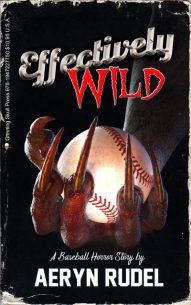
Effectively Wild – A Baseball Horror Story
Night Walk & Other Dark Paths
Acts of War: Flashpoint

Acts of War: Aftershock

Acts of War: Stormbreak


