
Three Things I Learned from 100 Story Sales

Since I started submitting work seriously in 2013, I’ve sold* 120 short stories. Like the piles of rejections I’ve racked up in that same time, my much smaller heap of acceptances has taught me some valuable lessons about writing and the often arcane process of trying to get other people to publish your work. Let’s talk about three of them.
- Short Sells. In my experience, the shorter the story, the easier it is to sell. I even have stats to back it up. To date, I have sold 85 flash fiction stories and 29 short stories. I’ve also sold a novella and a handful of micros, but, you know, sample size. It generally takes me about three submissions to sell a flash piece, while it takes an average of eight to sell a short story. Part of this might simply be because I’m better at writing flash fiction than I am at writing longer works, but there are definitely other factors at play. One, flash fiction markets tend to publish more often, sometimes once per week, hell, sometimes daily, so they tend to be open to subs more often and they need more subs than other journals. So, basically, your chances of selling a flash piece are just better because there are more open slots. Now, this is not to say you shouldn’t write and submit shorts–I mean, I do–but you should expect it to take a little longer to get stories over 1,000 words accepted. Of course, this could just be a me problem, and the rest of you are selling 5,000-word shorts on the first sub. 🙂
- Dance With the Ones That Brung Ya. Look, I definitely try to sell as many stories to as many markets as possible, but when I find a publisher that likes my work enough to publish it multiple times and pays a pro rate, I’m going back to that well. A LOT. You see, I am convinced that selling a story comes down to right editor, right time, right place, and when I sell multiple pieces to the same market, then I feel I’ve got two of those things in my favor. It’s even better when these markets that get me are pro rate publishers. So, yes, I’m gonna keep chasing acceptances at Flash Fiction Online, Small Wonders, Nightmare, and Apex, but I’m also gonna keep sending stories to Factor Four Magazine, MetaStellar, and The Flame Tree Flash Fiction Newsletter, all of which have published me three or more times. It’s good for my acceptance numbers, good for my confidence, and it puts more of my stories at respected markets for folks to read.
- It’s Okay to Ignore Editorial Feedback. Getting feedback on a rejection is great, and I have nothing but gratitude for editors that take the time to leave a personal note. For one, it tells you a lot about what the editor wants out of a story, and it can tell you when it’s time to revise. That said, a lot of feedback is simply editorial preference, and it’s perfectly okay to ignore it if it doesn’t fit your vision of the story. I’ve received feedback on stories that were rejected, decided not to action that feedback, and then sold the story to a pro market on the next submission. Conversely, I have taken editorial feedback to heart when it resonated with me, made the revisions, and then sold the story likely because of those revisions. This is not to say that the editorial feedback I ignore is wrong. It’s 100% right for that editor and that market, but ultimately not right for my story. It can be tricky to tell which is which of course, and it comes down to a gut feeling borne out of experience and a deep understanding of your specific goals with each story.
So, there you have it. Three lessons learned from 100-plus story sales. Now, admittedly, these are fairly specific to my personal experiences, but I think there’s some universal truths here that are applicable to anyone heading into the submission trenches.
What have you learned from your own story sales? I’d love to hear about it in the comments.
*The vast majority of my short story publications are of the paid variety, but for the sake of transparency, there are some “for the love of it” publications in the mix.
2 Comments on “Three Things I Learned from 100 Story Sales”
Leave a comment
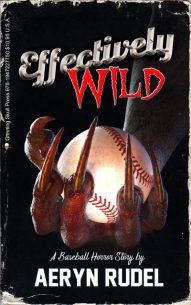
Effectively Wild – A Baseball Horror Story
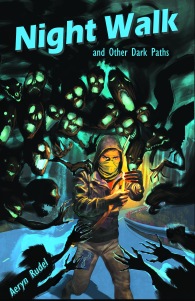
Night Walk & Other Dark Paths
Acts of War: Flashpoint

Acts of War: Aftershock

Acts of War: Stormbreak

 Aeryn Rudel's Rejectomancy
Great post! I especially agree with your third lesson. From my experience submitting (craft articles in my case—I’m an editor). It hasn’t been easy to stand up for my vision when it feels like I risk losing the acceptance. But what I try to remember is, the editor isn’t me, which means they have to make assumptions about my meaning. If the editor’s feedback is changing the meaning of what I’ve written into something you don’t mean to say, I have to tell them. And usually, by correcting their assumption, we come together to best express what I intend. And if not, they’re not the fit I’m looking for.
I look forward to reading about more of your experiences!
Thanks for writing this blog. It’s been working for me and allowed me to fulfill a lifelong dream of being a published fiction writer. That ain’t nothin’. Good work!