
Query Quest: Baby’s First Query Rejection

Recently, I started querying agents with my supernatural thriller novel SECOND DAWN. Though I’ve published novels before, as well as a ton of short stories, the querying process is completely new to me. It does, however, fit neatly under the umbrella of rejectomancy, so I’ll be talking about the ups and downs of the process here like I do with short story submissions. Well, after sending a bunch of agent queries, I received my first inevitable rejection, and I’m gonna share that with you now.
Note, like I do with short story rejections, I’ll be removing all of the identifying info about the agent and agency. This is all about sharing my experiences with you folks so we can all learn from it. It’s not about calling out agents that passed on my book (that would be childish and unprofessional). This is a super subjective business, and rejections are just part of the process.
Here’s the rejection.
Dear Aeryn,
I hate to say this is going to be a pass as SECOND DAWN does not sound like a fit for me at this time.
Thank you for considering [Literary Agency], and please do stay the querying course as this industry is highly subjective. After all, Marlon James’s JOHN CROW’S DEVIL was rejected 78 times before being published, and now Marlon has a Man Booker Prize for A BRIEF HISTORY OF SEVEN KILLINGS.
Best of luck with your future queries.
So, my only real frame of reference here is short story rejections, and this has a lot in common with them. It’s a form letter, and it gets right to the point, which I appreciate. The agent is passing on the book because it’s not a good fit. Pretty standard language there for a rejection. After that, it’s more boilerplate stuff, but I dig it. The example the agent cites is both encouraging and puts things into perspective. Like any form letter, there’s not much rejectomantic magic you can work on this. It’s simply a no.
In all, this is a nice, professional rejection that arrived in a very reasonable amount of time. I’d definitely query this agent again with another project if I can’t land an agent with the current one.
It’s great to get that first rejection out of the way. It didn’t sting much–I mean, I’ve built up a bit of a tolerance with over 500 short story rejections–but I might not feel the same way after five or ten or fifty. 🙂 Still, I’m excited and encouraged to be at the start of this journey and to see where it leads.
Questions or comments about this rejection? Tell me about it in the comments.
Yes! Yes! One Hundred Times Yes!

Yesterday, I celebrated a significant short story milestone. I received my 100th acceptance since I started tracking them through Duotrope. To further celebrate this momentous occasion, I thought I might take a deep dive into the numbers on those one hundred acceptances and see what we can see. Let’s go!
Years Gone By
I recorded my first acceptance on May 1st, 2014. Acceptance number one hundred was recorded yesterday, June 27th, 2023. So, a little over nine years to hit triple digits, but let’s take a look at the number of acceptances each year.
- 2012 – 0
- 2013 – 0
- 2014 – 5
- 2015 – 7
- 2016 – 9
- 2017 – 5
- 2018 – 18
- 2019 – 13
- 2020 – 17
- 2021 – 12
- 2022 – 11
- 2023 – 3
It took me a bit to get my first acceptance, though, to be fair, I only sent 22 total submission in 2012 and 2013. After that, I saw a pretty steady increase in both subs and acceptances until the anomalous year of 2017, where I sent the most subs I’d ever sent to that point but couldn’t BUY an acceptance. After that, it’s been double digit yeses every year, though I’m in danger of losing the streak in 2023 to a woeful lack of submissions. I’ve still got time, though. I can get seven acceptances in five months, right? Right?
Lengthwise
I write and submit just about every length of story, but what length am I most likely to sell? Let’s take a look.
- Microfiction – 4
- Flash Fiction – 74
- Short Story – 21
- Novella – 1
Well, it’s flash fiction by a mile. I’d say I write five flash pieces for every short story, and I generally find flash much, much easier to sell than longer works. I write a ton of microfiction through the #vss365 tag on Twitter, but I rarely submit it (though I’ve had good luck when I do). I have written exactly one novella, and sold it, so I’m batting .1000 right there. 😉
Top Tier
If you’ve been submitting sort stories for long, then you know there are essentially three levels or tiers of paying publishers. Pro publishers pay between 5 and 8 cents a word depending on genre, semi-pro publisher pay at least 1 cent per word, and token/for the love of it publishers pay less than 1 cent per word or pay nothing at all. So, what tiers do my acceptances fit into?
- Pro – 33
- Semi-Pro – 36
- Token – 31
A fairly even distribution here, though the majority of token acceptances came before 2019. Now, I generally focus on pro and semi-pro. It should be said that five of 31 token submissions are paying contest wins that would be more than 8 cents per word, so you could look at this as 38 pro acceptances. I’m not, but you could. 🙂
The Next 100?
My submissions have waned considerably this year as I turn my attention to other writing endeavors, i.e., novels. I still love writing short stories and flash fiction, but it might be time for a break. That doesn’t mean I’ll stop submitting, just that I might not submit as much. I have a feeling this is a temporary state of affairs, and I’ll get the short story submission bug in the near future. Until then, I’m gonna focus on agent queries, novel revisions, novel/novella writing, and a fair amount of freelance work. Don’t worry, though; I’ll be blogging about the trials and tribulations of all those things (especially the queries), so there’ll be plenty of rejectomancy in the future.
Hit any major acceptance milestones of your own? I’d love to hear about it in the comments.
Query Quest: A New Rejection Frontier

For the last eight years, I’ve been regaling you (inflicting on you?) tales of rejection woe. Up until now, all of these rejection have had a single source–short story submissions to various genre and literary magazines and anthologies. Friends, that changes today. Not more than a few hours ago, I sent the first query to agents for my novel SECOND DAWN and opened up a whole new world of potential rejections. I’m using QueryTracker to find and record my queries, so I’ll have plenty of data to share with you. That is, of course, unless I manage to land an agent quickly (hah!). Anyway, I promise to share with you my arduous journey toward representation and hopefully publication, but for now, let me just give you the basics on WHAT I’m querying.
Back in 2017, I started a novel titled LATE RISERS that takes the vampire genre, flips it on its head, and then mashes it together with mystery/thriller. Many revisions later, it’s now called SECOND DAWN, and it’s ready to be judged by literary agents. Here are the basic stats.
- Title: Second Dawn
- Genre: Supernatural thriller (vampire)
- Word Count: 89,000
- Logline: Daybreakers meets Donnie Brasco
So, that’s the basics, and as I send out queries, I expect the rejections to come rolling in, and I’ll share them with you (with certain details removed to protect the innocent). Hopefully, I’ll be sharing with you some more positive things, too, like partial and full manuscript requests and the like. I’m still going to keep sending short stories out, but I expect my submission rate there will slow (it already has) while I focus on this newer, bigger endeavor.
Anyway, wish me luck and stay tuned! 🙂
Path To Publication: When Gods Walk
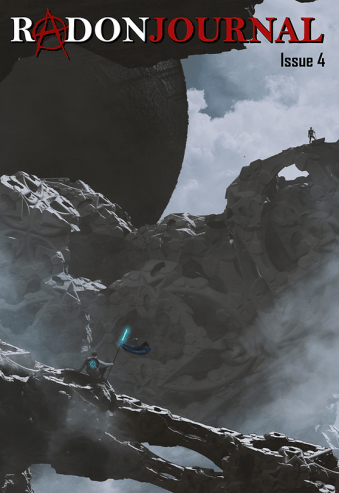
I recently had a story published with Radon Journal called “When Gods Walk”, and I thought it might be interesting to detail this story’s journey toward publication. It’s one of those pieces that’s been all over the place and, I think, it’s submission record illustrates the unpredictable nature of the publishing industry and one of the most important concepts for new authors to embrace: good stories get rejected, too.
Let’s start with the raw numbers. Below is a table featuring the date, market tier, time on submission, and result for each submission of “When Gods Walk.”
| Submission | Sub Date | Market Tier | Days Out | Result | |
| 1 | 2/19/2021 | Pro | 22 | Final-Round Personal Rejection | |
| 2 | 3/14/2021 | Pro | 18 | Form Rejection | |
| 3 | 4/1/2021 | Pro | 61 | Form Rejection | |
| 4 | 6/1/2021 | Pro | 4 | Personal Rejection | |
| 5 | 6/4/2021 | Pro | 3 | Form Rejection | |
| 6 | 6/12/2021 | Pro | 101 | Form Rejection | |
| 7 | 9/22/2021 | Semi-Pro | 101 | Withdrawal | |
| 8 | 1/1/2022 | Semi-Pro | 17 | Form Rejection | |
| 9 | 1/18/2022 | Semi-Pro | 43 | Form Rejection | |
| 10 | 3/4/2022 | Pro | 46 | Form Rejection | |
| 11 | 4/20/2022 | Semi-Pro | 4 | Form Rejection | |
| 12 | 5/17/2022 | Semi-Pro | 11 | Personal Rejection | |
| 13 | 1/17/2023 | Semi-Pro | 44 | Acceptance | |
The submission journey for “When Gods Walk” started out with a bang. That first rejection was from Flash Fiction Online, and though it didn’t make the final cut, getting that far gave me the confidence to keep sending the story out. I mean, every time that’s happened with FFO, I went on to sell the story elsewhere in short order. This time, well, that wasn’t the case.
Riding high on my almost from FFO, my next five submissions were all to pro markets. The personal rejection was another close-but-no-cigar, so that convinced me to keep submitting. Unfortunately, none of these submission panned out, and I sent the story to its first semi-pro market soon after . . . which folded after holding my submission for over three months. After that, I let the story sit for a while before sending it to two more semi-pro markets, where it was rejected, and then to another pro market where it was also rejected. I tried one more pro market roughly a year ago, got close, got rejected, and then took it as a sign that the story was probably not gonna sell.
Fast forward to eight months later when I was thinking about stories I could send to Radon Journal that might fit their dystopian/transhumanist/anarchist themes. I dug “When Gods Walk” out of the trunk, found that it’s subject matter might be a good fit, and fired it off. They liked it, and it was lucky number submission thirteen for the win!
So, what can we learn from the submission journey of “When Gods Walk”?
- It’s all about the right fit. As you can see, there were pro markets that liked the story enough to seriously consider it for publication and semi-pro markets that rejected it in a couple of days. That right fit can come down to editorial taste, what the market has recently published, and a dozen other things you have zero control over.
- Even good stories get rejected. Good is, of course, subjective, but I think “When Gods Walk” qualifies. Your mileage my vary, of course, but it got good feedback, almost rejections, and then, finally, a publication, which is enough for me to say it’s probably a decent story. So, why do good stories get rejected? See point number one.
- Keep Going. If you have a story that’s getting those close-but-no-cigar rejections (but without any actionable feedback), keep sending it out. It’s likely a matter of fit, and the right market is probably out there.
If you’d like to read “When Gods Walk” along with a whole bunch of other excellent stories and poems, check out Radon Journal #4, which is free to read online.
Tracking the Yes: Submission Records Deep Dive

Recently, as I was looking at submissions at Duotrope, it struck me how some of my submission records for various markets paint an interesting picture of how submissions and publications tend to work. Primarily, these records show how important it is to match up the right story with the right editor/market. Not every story, no matter how good, is going to be a good fit for every publisher. I pulled my submission records for one of my favorite flash fiction markets, Factor Four Magazine, to illustrate this point. Below, you can see the 18 submissions I’ve sent to Factor Four, the outcome of each, and if the story was subsequently published elsewhere and with who.
Note, that Factor Four or any publisher is not wrong for rejecting a story, even one that sells elsewhere. That’s extremely common, even with stories rejected and bought by the biggest pro markets. As I said above, publishing a story is about finding the right market for it, and I think the submission record below is clear evidence of that.
| Pieces of Heaven | Factor Four Response | Published |
| Coffee Fiend | Factor Four | |
| Pieces of Heaven | ||
| Reporting for Duty | Flash Point SF | |
| When Gods Walk | Radon Journal | |
| Hail to the King | ||
| Mixed Signals | Flash Point SF | |
| What You Pay For | The Arcanist | |
| Fertilizer | Radon Journal | |
| Another Path | ||
| Big Changes | ||
| Time Waits for One Man | Factor Four | |
| Far Shores and Ancient Graves | NewMyths | |
| Burning Man | Havok | |
| The Inside People | The Molotov Cocktail | |
| Scar | Horror Tree | |
| What Kind of Hero | Ellipsis Zine | |
| Your Donation is Greatly Appreciated | ||
| When the Lights Go On | The Arcanist |
Okay, let’s dive into this and see if there’s anything we can learn. In my experience, one of the best ways to learn what kind of story a publisher likes is to, well, send them stories. Reading the magazine is definitely a good place to start, but after that, paying close attention to your rejections and acceptances can be absolute gold.
So, is there anything similar about the two stories and one close-but-no cigar rejection from Factor Four? There is. One, each of the stories deals with some aspect of Christian/biblical mythology: “Time Waits for One Man” is about well-known biblical figure, “What You Pay For” is about a Faustian deal (with a little Greek mythology thrown in), and “Coffee Fiend” is an urban fantasy piece about angels and demons. Two, each story has a fair amount of dialogue. Three, each is written with a sense of grim humor. And, four, each has kind of a twist ending. Now, it should be noted that writing a supernatural story with lots of dialogue, a little humor, a twist ending, and with Christian mythological themes is not a recipe for instant success with Factor Four. In fact, they rejected my story “Another Path”, which features all those elements. It is entirely possible that these elements are simply coincidental, and the editor just liked each story regardless of their similarities. Keep that in mind before you start writing that grimly hilarious, dialogue-laden story about Moses the vampire. 🙂
As for the stories that Factor Four rejected and were published elsewhere, there’s something to learn there as well. The biggest thing, again, is that a story that doesn’t fit for one market might be a great fit for another. Once more, for the folks in back, this is not about an editor being wrong when they reject a story. It’s about editorial taste and market fit. Interestingly, before The Arcanist sadly went on indefinite hiatus, they published a lot of my supernatural/humorous stories, so it’s not too surprising they picked up “What You Pay For.” The two stories accepted by Radon Journal are fairly bleak dystopian pieces that comment on religion and the value of human life. They’re similar in tone, and I felt like they might be a good fit based on Radon’s guidelines and want list (it’s nice to be right every now and then). The two stories I sold to Flash Point SF are both near future sci-fi pieces, and although somewhat bleak, they have what I’d call hopeful or even uplifting endings. The other sold stories here run the gamut of themes and genres, and I wouldn’t say they give me any strong indication of the publisher’s tastes. Those that haven’t sold yet, well, all but one have been retired after close to or more than double digit rejections.
To sum up, pay close attention to your submission track record with a publisher, even if you haven’t cracked them yet. If you’re getting close-but-no-cigar rejections or if you’re actually getting accepted with the same kinds of stories, you’ve likely hit on the market’s individual tastes, and that, my friend, is damn fine information to have.
Have you identified the specific tastes of any of your favorite markets? I’d love to hear about in the comments.
Submission Protocol: Failure to Launch

There are a lot of valid reasons to withdraw a submission, and I’ve covered most of them on this blog. Generally, a submission is withdrawn because the publisher fails to respond in a timely manner or at all or, more commonly, the submission is accepted elsewhere in the process of a sim-sub. You can have a look at my thoughts on those withdrawal situations like those here and here. But, is there ever a time an author might consider pulling a story after it’s been accepted? Unfortunately, there is. Let’s talk about that.
The Rights Reversion Clause
When a publisher accepts a story, they have you sign a contract, and, most of the time, they’ll give you a publication date for your work. That date might be tentative, but in my experience, most publishers get in the ballpark of when they say they’re going to publish. But what if that date comes and goes, and the story is not published? Well, then everything hinges on one important clause in the contract called a rights reversion clause or sometimes a drop dead date.
Here’s what that clause might look like (from the SFWA model contract)
If the Publisher fails to publish the Work by [the date by which first publication must be made], all rights granted hereunder shall immediately revert to the Author. In such event, the Author shall retain any payments made under this Agreement prior to such reversion.
The SFWA model contract suggests a maximum period of one year before rights revert to the author. So, if a publisher has this clause in their contract, and they fail to publish the story within the stated time, the rights immediately return to you, and you can start submitting the story elsewhere. But should you? Let me answer this by saying only once in all my publications has a publisher even gotten close to activating this clause. When they did, I reached out with a status query and got an immediate update and a new publication date. Since they’d already paid me, and they were prompt and professional with the reply, I was happy to wait. I’ve been a magazine editor, and I know shit happens. Stories can fall through the cracks, things get shuffled around, and you’re just trying to do your best to keep the trains running on time. So, if a publisher communicates with me openly and honestly, as the one above did, I’m not gonna pull the story. Your mileage may vary, but I’d give the editor a chance to respond, give me a new date, and proceed from there. If they don’t respond or keep stringing you along, well, then, it might be time to move on.
If you do decide to pull a story in this situation, I think you should do the professional thing and notify the publisher that the rights reversion clause has been activated and you’re moving on. How a publisher might respond to this is anyone’s guess, but, at this point, you’ve been patient, and it’s not fair for a publisher to lock up your story for a year or more without any kind of publication date in sight.
No Rights Reversion Clause
Let me start all this by saying that I am not an attorney, and what follows is simply my layman’s interpretations of publisher contract language based on personal experience. So, this is not legal advice or anything of the sort.
So, what happens if all the things mentioned above come to pass but the publisher does NOT have a rights reversion clause in their contract? Well, then things get more complicated. First, I don’t think it’s unreasonable to ask a publisher to amend a contract and add a rights reversion clause before you sign it. Some might do it, some might not, but at least you can then make the determination to sign the contract or not and avoid any issues with an accepted story languishing in publication limbo. But let’s say you signed a contract that doesn’t include a rights reversion clause and the months start to pass, no publication date is forthcoming, or the one you were originally given comes and goes without publication. What do you do then? As always, I believe communication is key. Send the publisher a status query asking for a new publication date. If you get one, then I’d say give the publisher a chance to make good. If you get crickets or a nebulous response, then you’re kind of in a tough spot.
As far as I understand it, without the rights reversion clause, there isn’t a simple way for you to pull your story if a publisher fails to publish it in a timely manner. The best you can do is contact the publisher and request that they let you out of the contract. That said and again, as I understand it, the publisher is under no obligation to release the story back to you. If you go ahead and publish it elsewhere anyway, you’re might be in breach of contract. Anyone with a background in contract law, please correct me in the comments if I’m off-base here.
Failure to Publish Best Practices
- Before you sign a contract, check for a rights reversion clause in the contract. If the publisher doesn’t have one, request that they add it. The SFWA model contract is a good example.
- With or without the clause, keep open communication with the publisher. Ask for updates on the publication of your story.
- If the publisher is responsive and gives you a new publication date, consider giving them the benefit of the doubt. Lots of things beyond the publisher’s control can happen in the course of putting a magazine together, and, as a former magazine editor myself, I’m inclined to be gracious.
- If you do decide to pull your story because the rights reversion clause is activated, notify the publisher of your intentions.
- If there is no rights reversion clause in the contract and you want to pull the story, email the editor and request you be released from the contract. If you don’t and just start sending the story elsewhere, you may be in breach of contract.
In short, this is a shitty situation no author wants to find themselves in. Luckily, out of some 700 submissions, I’ve only run into a situation like this once, so I don’t think it’s particularly common, especially with publishers who have a rights reversion clause in their contracts. The best thing you can do to avoid situations like the ones above is make sure you cover your bases with a rights reversion clause before you sign on the dotted line. Then, if you are forced to pull a story, you’re covered from a legal standpoint, which makes the whole shitty process a little less shitty. 🙂
Thoughts on rights reversion clauses and failure to launch? If you have any legal insight into this situation, I’d definitely love to hear about it in the comments.
One Author, Three Styles
I’ve done a pretty exhaustive series of posts on my writing style and how it developed, but as I was working on a freelance piece recently, it occurred to me that I have three different styles I use on a regular basis. I thought it might be fun to take a look at those styles, give you some examples, and then see what kind of readability scores each one produces.
I’ll be using the Flesch-Kincaid readability scores to get a statistical idea of how the styles differ. As a refresher, Flesch-Kincaid gives the text a grade-level equivalent and then a reading ease score from one to one hundred (higher is easier).
Style One – My Fiction
When I write fiction derived from my own IP, i.e., not media tie-in, my style tends to be pretty spare. I’m not flowery, I use a lot of dialogue, and I’m a straight-to-the-point writer. Here’s an example from a recently published work.
From Effectively Wild published by Grinning Skull Press.
They grabbed a booth near the back of the restaurant, ordered a pitcher of beer, then attempted small talk for a bit. Their former intimacy and the hard line recently drawn in the relationship sand made things increasingly awkward. Martin gave up before he finished his first beer and launched into why he’d asked Steph to meet him in the first place.
“I’ve done two bullpen sessions with Dinescu,” Martin said.
Steph sipped her beer and peered over the glass at him. “Tell me what happened.”
“Well, you’ve seen the kid,” he said. “He makes Yang look like fucking Hercules. Not much physique or anything I’d call athletic. He barely registered on the radar gun in our first side session. I’m talking mid-seventies.”
“Right,” she said. “And the second one?” That question came across loaded. He had a feeling she knew exactly what that second bullpen had been like.
“Today, the kid comes in, looked rested, and I shit you not, he looked bigger,” Martin said.
“Threw harder too, right?”
“Ten miles per hour harder,” Martin said. “Who does that?”
“Nobody I know,” she said and sighed. “Okay, I guess you showed me yours.”
This passage is pretty typical of my work. Spare descriptions and conversational dialogue. According to Flesch-Kincaid, the numbers for this passage are a 4.8 grade level and 80.3 reading ease score. That’s pretty much right in line with most of what I’ve published. It can change a bit on genre. The above is horror and my science fiction tends to score higher on grade level and lower on reading ease, but not by a ton.
Style Two – Media Tie-In
When I wrote media tie-in fiction for Privateer Press, my style changes a bit. Some of this is due to the house style of the publisher and some it is due to the nature of the material itself. The primary setting of Privateer Press is the Iron Kingdoms, a steampunk-esque fantasy setting. That’s a lot different than a washed-up catcher drinking beer in a bar in Tacoma. 😊 Let’s have a look at some of my recent Iron Kingdoms fiction.
From Dark Rising published by Privateer Press
“Close combat formation!” Ilari shouted. The Winter Korps drew short-hafted axes and curved blades. Ilari left his own sword sheathed at his hip and continued to pick off enemies with his magelock. They’d killed dozens, but it hadn’t made a dent in the swarming enemy.
The Orgoth fell upon them in a screaming horde of blades. Up close, their savagery was even more apparent. Their bodies were covered in bizarre tattoos and their armor, though impressively constructed, gave them a hellish, inhuman appearance. Ilari sent his warjacks forward, and the sweep of Hammer’s axe cut down two Orgoth. Nail’s flamethrower engulfed three more. Feral joy at dealing death surged through their connection with Ilari. No practice warjack had ever projected more than reluctant compliance.
The battle quickly became chaos. Ilari found himself face-to-face with a hulking Orgoth warrior wielding a shield and a massive axe that glowed with blue fire. He ducked the woman’s first swipe, knelt, and fired his rifle with one hand, bracing its butt against the ground. The armor-piercing rune shot hit the Orgoth in the chest, blasted through her armor, and sent her stumbling backward. Ilari surged to his feet and put another bullet in her skull.
Although I don’t think this looks like someone wrote it, there’s a pretty sharp difference between this and the excerpt from Effectively Wild. There’s more action in my Iron Kingdoms work, less dialogue, and more descriptions. Much of this is simply because that’s what the fiction and the genre requires. That doesn’t make this better or worse than what I write on my own, just different.
Speaking of different, let’s take a look at the Flesch-Kincaid readability scores for this passage. It scores a grade level of 6.2 and a reading ease score of 71.8. Those scores are very typical of my media tie-in stuff and I’d say of fantasy fiction in general. One of the things that Flesch-Kincaid takes into account is vocabulary, and when you’re throwing around words like necromechanikal and voltaic compactor on the regular, it’s gonna bump up those scores.
Style Three – Gaming Lore
To those unfamiliar with tabletop RPGs and miniature wargames, the games are full of a detailed descriptions of people, places, and things within the game setting. These entries live somewhere between narrative fiction and something akin to encyclopedia entry. They’re detailed, filled with descriptions, and often focus on the nuts and bolts of things like character abilities, historical events, geographic locations, religions and culture, or all of the above. Here’s a bit from one I published recently.
From “Heroes & Villains: Kapitan Ilari Borisyuk” published by Privateer Press
Kapitan Ilari Borisyuk is one of a new breed of Khadoran warcasters cut from the frozen bedrock of the Motherland but tempered by the urgent fire of an increasingly desperate nation. Tough, skilled, and highly adaptable, Kapitan Borisyuk makes up for his unconventional training in the magical arts with sheer grit and hard-won battlefield experience.
A peerless sniper, Borisyuk can reach out across any battlefield with uncanny precision. His magelock rifle Shadow of Death fires an array of rune shots that can inflict horrendous wounds on soft targets or blast through warjack armor with appalling ease. He transfers many of his sniper skills to the warjacks and troops he commands, creating a fast-moving kill squad that can cover any terrain, strike without warning, and fade away before an enemy can mount an effective counterattack.
As a leader, Borisyuk is well-loved by the rank and file. The warcaster understands the plight of the common soldier, relates to it, and his orders are both sensible and relayed in a fashion even the most hard-bitten career sergeant can appreciate.
This is the lead-in to an article about the character Kapitan Ilari Borisyuk that gives you his entire backstory, a narrative-style look at his abilities, and his place within the overall faction of Khador. As you can see, the style is more about relating facts in a creative way than writing fiction, and since it requires an author to impart fairly complicated concepts and ideas to a reader, the writing itself can be more complex. Again, the Flesch-Kincaid scores bear this out. The three paragraphs above scored a 7.6 grade level and 64.4 readability score. That’s still not college textbook level or anything, and there are popular fiction authors whose narrative work scores around this level, but for me, it’s on the high side.
It should be noted that I can score even higher (or lower?) with these articles depending on the faction and character. Old Ilari here and the Khadoran faction in general are a little more straightforward than say the character profiles I’m writing for the more demon-worshipping Orgoth. I hit double digits in grade level on a couple of those. 😊
What Does It All Mean?
Simply put, different genres and types of writing require different styles, and I don’t tend to measure quality of writing based on readability scores. What this does tell me is that I can be a flexible writer when I need to be, changing up my style to fit other genres or even types of writing. I think that’s a good thing, especially for a freelancer. I don’t feel like there’s a genre I can’t write. I would definitely put my own voice and style into the mix, but I think I can also meet genre expectations as far as prose complexity goes without going overboard.
Does your writing style change based on genre or anything else? I’d love to hear about it in the comments.
Hot Topic: Dialogue Tags
In this series of posts, I’m going to cover writing topics that are often hotly debated and tell you where I stand on that particular issue. The goal here is not to try and persuade you that my view is correct, and more to tell you why I do the things I do and why they work for me. In general, I don’t believe these issues have a single right answer, so if you’re looking for me to espouse the one true way, you might be disappointed. Still, these topics are always fun to discuss, so let’s get started.
Let’s talk about dialogue tags. You can go to Twitter right now, search on dialogue tags, and you’ll find a hundred different posts where folks will tell how you should or shouldn’t use them. If we boil the arguments down, there are basically two primary debates when it comes to dialogue tags. The first is how often you should use them, if at all, and the second is if you should use any tag other than said. People have opinions across the spectrum on both issues, but here’s what I stand.
To Tag or Not To Tag: I fall somewhere in the middle of the pack as far as how often I use dialogue tags. There are times I leave them off and times I use action beats instead. In addition, I often find I can delete more than a few dialogue tags in revision. That said, I think it’s useful to remind the reader who is speaking on a fairly regular basis to avoid confusion. As a reader, I like this approach as well, and that preference has made it into my writing. Again, this really is a style and preference thing. I know published, successful writers who use startlingly few dialogue tags and writers who use them for just about every piece of dialogue. Neither is wrong if it fits the author’s style and voice and the reader can follow the conversation.
He Said/She Said: I am generally a writer who adheres to the school of thought that the dialogue tag said is really all you need. It’s the one I’m gonna use most of the time. This has a lot to do with the stripped down, straightforward style of writing I employ, where a more grandiose tag might stick out and pull the reader out of the story. I might use the occasional asked or replied to vary things up a tad, but, to me, those aren’t too different from said.
Now, when I write genres like fantasy or something more stylized like noir, I’ll loosen up a little with the dialogue tags and add things like whispered and shouted into the mix. I’m still more likely to use said than any other tag, but, to me, the these genres and settings allow for a bit more latitude in dialogue tags.
I’m generally not a fan of dialogue tags that aren’t directly tied to the way humans actually communicate. So, for example, humans definitely whisper or shout, but they don’t often hiss, roar, or howl. Again, this comes down to preference and writing style, and there are plenty of writers doing very well using dialogue tags like those above. They just don’t work for me . . . usually. Like any writer, I break my own rules all the damn time, so I’m sure someone has roared or hissed in something I’ve written somewhere. 😊
So that’s where I stand on this issue. How do you feel about dialogue tags? How often do you use them? Do you stick to said or are you more liberal with your tags? I’d love to hear about it in the comments.
Submission Statement: January 2023
Well, the first year of 2023 is in the books, and it wasn’t exactly a barn-burner. More on that in a bit.
January 2023 Report Card
- Submissions Sent: 6
- Rejections: 5
- No Response: 0
- Acceptances: 0
- Publications: 3
- Further Consideration/Shortlist: 0
- Withdrawals: 0
I didn’t exactly hit the ground running in 2023, and six submissions is somewhat disappointing. I need around nine per month to reach my annual goal of one-hundred submissions. To tell you the truth, I took a bit of a break in January, and I needed it. Burnout is a real thing, and sometimes you gotta step back and take a breath. With that done, I’m feeling better and ready to get back to work in February. Interesting thing about these submissions is that all six are for two stories. Quick rejections and resubs plus sim-subs can boost your numbers quickly. 🙂
Rejections
Five rejections in January.
- Standard Form Rejections: 4
- Upper-Tier Form Rejections: 0
- Personal Rejections: 1
So, four of the five rejections were just standard form letters. The wait on a few of those was mildly irritating, but that’s part of the gig. The one personal rejection, though, is a tough one. You see, it’s not for a short story; it’s for a novel.
Dear Aeryn,
Thank you so much for letting me read your manuscript, [title], and please excuse the regrettable delay in getting back to you.
It’s an interesting manuscript, and there’s a lot to like in it, including some fine writing. You have a very good style. Unfortunately, due to the high volume of submissions that [publisher] receives, I’m forced to be extremely selective when it comes to acquisitions. And so I won’t be able to make an offer for your work.
I’m sorry I don’t have better news for you, but I wish you the best of luck in placing your work with the right house.
If you write something else in the future, I’d be glad to see it. In the meantime, thanks again for thinking of [publisher].
It’s a nice, thoughtful rejection, but needless to say, there’s a difference between getting a rejection for a 1,000-word flash piece and a 90,000-word novel. One you barely notice, and the other can be a bit of gut punch. Still, like any rejection, you have to roll up your sleeves and get back to work. In this case, I’ll be reading through the novel again to see of there’s anything I want or need to change, and then I’ll send it out again.
Publications
January was a pretty good month for publications, and I published two piece of flash and one bit of freelance fiction. The two flash pieces are some of my favorite I’ve written, and I think “Coffee Fiend”, published at Factor Four Magazine, is up there with my best. Anyway, you can check out both flash pieces by clicking the links below.

“Coffee Fiend” published by Factor Four Magazine

“Reporting for Duty” published by Flash Point SF
And that was January. How was your month?
2022 Writing Rearview Review

Well, 2022 is in the books, and, as usual, I’ve put together a quick roundup of my writing endeavors and results for the past year.
Submissions
- Sent: 83
- Accepted: 14
- Rejected: 61
- Withdrawn: 6
- No Response: 2
- Accept %: 15.2/17.1
My goal is always 100 submissions per year, and I clearly fell short of that. I just kind of ran out of steam in late November. I also ran out of good stories to submit, which is something I need to address very soon. Still, overall, I’m satisfied with my numbers. My acceptance percentage is solid at over 15% (the second, higher number is the percentage if you don’t count the withdrawals and no responses). I wish I’d sent more subs, of course, and if you just go by the numbers, I might have netted another acceptance or two if I had.
Output
- Words published: 56,184
- Words To Be Published: 37,532
- Total Words Written: 150,000*
So, I had a total of 93,716 words published or accepted to be published in 2022. That’s a novel’s-worth of words, so not too shabby. The Total Words Written is really a guess, as it includes things like blog posts, microfiction, unfinished projects, and finished but unaccepted/unpublished projects. It’s probably a bit more than that 150k, but I’m being conservative. I’m a little disappointed with this output, as I think I should have published a bit more. There are lots of reasons why that didn’t happen, and ones I hope to rectify in the new year.
Notable Publications
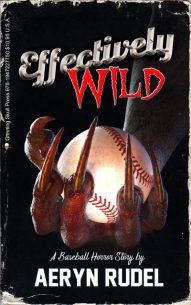
I had some good publications in 2023, but the best of the bunch is my baseball horror novella Effectively Wild. You can be a pal, click the cover below, and get yourself a copy. 🙂

In addition to the novella, I published a fair amount of flash fiction, much of it free to read on the interwebs. Here are three of my favorites and the links to check them out.
- “The Death of Me” published by The Arcanist
- “Hunting Snowmen” published by Radon Journal
- “Fertilizer” published by Radon Journal
Goals for 2023
Well, you can’t have a year-end writing review without talking about goals for the coming year, but I’ll be brief. Here are a few of the things I’d like to get done in 2023.
- Send 100 submissions
- Finish revising the novel that’s been sitting on my hard drive for two years.
- Write more freelance material, be it media tie-in or nonfiction articles
- Continue my monster baseball series. I’m writing the second novella now
- Release a collection of my short fiction
Those last two WILL happen, and the other three are certainly doable. Of course, there are other things I’d like to get done, but most of that is marketing related and, frankly, pretty boring, so I’ll end here and say I’m optimistic about 2023. 🙂
And that, friends, was my 2022. I’d love to here how your writing year went. Tell me all about it in the comments.
Effectively Wild – A Baseball Horror Story
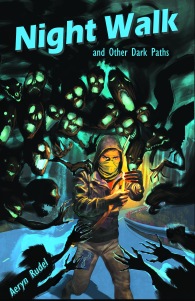
Night Walk & Other Dark Paths
Acts of War: Flashpoint

Acts of War: Aftershock

Acts of War: Stormbreak

 Aeryn Rudel's Rejectomancy