
Understanding Point of View: Eliminating Filter Words
Great post by Cecilia Lewis on her blog Lewis Editorial. Filter words are at the top of my post-draft proofing checklist, and I end up revising a fair bit to remove them. Cecilia offers some great advice on getting rid of filter words and why you should want to do that. Check it out.
Source: Understanding Point of View: Eliminating Filter Words
Staying “Accountable” on Big Writing Projects

You gotta have a system. Every writer does. That thing you do to get from point A to point B, hit your deadlines, and hopefully decrease your stress along the way. I have a system, too, and a major part of it involves word counts, Excel spreadsheets, and a video game perception of “winning.” This is by no means a perfect system for everyone, and I know writers who think it’s way too fiddly, but I’ll share what I do, and maybe some of you will dig it.
Okay, first a little super-boring background on me. Before I started working in the tabletop game industry and really started to turn writing into a career, I worked in accounting. I did it all: accounts payable, accounts receivable, cost accounting, payroll, even collections. Exciting, huh? As much as I hated it, all that accounting experience taught me some valuable skills. It taught me to be very organized with data and how to make that data work for me. It started my love affair with Excel. I can’t lie; I fucking love me some spreadsheets. Seriously. So I found a way to take my bizarre fascination with spreadsheets and a little of my accounting knowhow and put it to use in my writing career.
Here’s what I do. When I have a big project, like a novel, I look at the deadline for completion (usually the deadline for the first draft), I break that down into weeks, then I assign a word count goal to each week, and then I divide that word count goal among five individual days. I put all this info into a simple spread sheet, then track how much I actually write on a given day compared to my target.
It looks something like this:
| Day | Date | Target | Actual |
| Monday | 8/31/2015 | 2000 | 2364 |
| Tuesday | 9/1/2015 | 2000 | 2678 |
| Wednesday | 9/2/2015 | 2000 | 2721 |
| Thursday | 9/3/2015 | 2000 | 2305 |
| Friday | 9/4/2015 | 2000 | 2056 |
| Saturday | 9/5/2015 | 0 | 0 |
| Sunday | 9/6/2015 | 0 | 0 |
| 10000 | 12124 | ||
| Monday | 9/7/2015 | 2000 | 2037 |
| Tuesday | 9/8/2015 | 2000 | 1979 |
| Wednesday | 9/9/2015 | 2000 | 0 |
| Thursday | 9/10/2015 | 2000 | 0 |
| Friday | 9/11/2015 | 2000 | 0 |
| Saturday | 9/12/2015 | 0 | 0 |
| Sunday | 9/13/2015 | 0 | 0 |
| 10000 | 4016 |
As you can see, I set my weekly target at 10,000 words and my daily target at 2,000 words. I got the 2,000-words a day thing from Stephen King. Hey, if it works for one of the most successful authors in the whole goddamn world, it might be worth a try, right? You can see what I actually wrote on a given day, and at the bottom of each week a running total tells me where I stand with the week’s goals.
You’ll notice I don’t have a target for the weekends. That’s because I try to take the weekends off. (Well, not really off; I just work on other things.) That’s not to say, of course, I won’t work on the weekends if I fall behind. I also know that my estimated date of completion is a just that, an estimate. I might end up needing another 10,000 words to complete this novel. With the schedule above, I should finish the book about two weeks before deadline and at right around 90,ooo words.
Here’s what I like about my system and why it works for me.
- It keeps me accountable. I know exactly what I need to do each day, and at the end of that day I need to enter what I’ve done into that spreadsheet. I don’t want to “fail” to do my job for the day. I need to fill in those boxes on my spreadsheet, damn it.
- It gives me a sense of accomplishment. One of the favorite parts of my day is entering how much I’ve written into the spreadsheet. If I exceeded my target by a lot, I feel pretty damn good. I feel like I’m “winning.” I’m beating the sadistic ogre making me write all these goddamn words at his own game. (Seriously, fuck that guy.)
- It helps me take a day off when I need it without feeling guilty. If you look at the spreadsheet above, you can see I did pretty well last week; I exceeded my weekly goal by over 2,000 words. That means I’m technically a full day ahead of schedule, so if I need to take a day off to run errands or whatever, I’m covered. I’m still on target for this week, even if I only write 8,000 words. That’s a really important feature for me because I have a tendency to feel super guilty on days I’m not writing, and those extra days I “earn” by exceeding my work count goal help me get over that.
So, that’s my system. What does your system look like? If it’s better than mine, can I use it?
Ranks of the Rejected: Josh Vogt
Time for another Ranks of the Rejected. This time, talented fantasy and sci-fi author Josh Vogt has agreed to give us the lowdown on his rejection experiences. Josh is another writer I met through Skull Island eXpeditions when I was heading up that imprint. He was interested in writing some Iron Kingdoms fiction and sent me some samples of his work. The samples were great, but I also saw that he’d published short stories with Orson Scott Card’s Intergalactic Medicine Show and Shimmer Magazine, two very tough markets to crack. I was impressed, but I wasn’t sure if I should publish him or lose his email in a fit of jealous spite. Thankfully, I chose the former, and it was definitely the right call.
Josh is a potent 12th-level rejectomancer undoubtedly destined for rejecto-mastery. He commands many strange and wondrous literary powers including Prestigious Publication and Create Captivating Concept.
Here’s a little more about Josh:
Josh Vogt’s work ranges across numerous genres and formats, including writing for a wide variety of RPG developers. His debut fantasy novel, Forge of Ashes, is a tie-in to the Pathfinder roleplaying game. WordFire Press has also launched his urban fantasy series, The Cleaners, with Enter the Janitor and The Maids of Wrath. He’s a member of SFWA, the International Association of Media Tie-In Writers, and a Scribe Award finalist. Find him at JRVogt.com.
1) What do you remember about your first rejection letter?
That it didn’t surprise me at all. It acted like a milestone in my fledgling writing career because it meant I was actually doing what I needed to do: write stories and submit them to publications. It meant I was trying; so long as I kept trying, I believed those rejections would eventually turn into acceptances.
2) In your opinion, what can writers learn from rejection letters? What have you learned?
Well, once you become a writer and get your rejection letter decoder ring, you can tap into all the secret messages industry pros hide in them…
You don’t have your decoder ring? Oh, well, forget I mentioned that.
Anyways, writers can learn a lot from rejection letters. Through rejection, we can learn just how subjective writing is, and how one editor’s tastes can be in stark contrast to another’s. You can also use rejection letters to track, in a way, your progress as a writer. Did you use to get only form rejections but now are getting personal rejection letters? Are you getting specific feedback, being told your story made it to higher review tiers, or being asked to send in more of your work even though your last submission “wasn’t the right fit?” If so, those are signs of growth and should be encouraging, even within the sting of the denial.
I’ve also learned to not take rejection so personally. Rejection isn’t an attack on me, even though it may feel like it at first. The story I submitted just didn’t hit the target…this time. It’s not a sign that I should give up being a writer. Instead, it’s an opportunity to submit the story elsewhere and keep trying until it finds a home.
3) Got a favorite rejection? Memorable, funny, mean, just straight-up weird?
Here’s a favorite from all the way back in 2007:
Hi Josh!
Thanks for your patience while we slogged through our slush pile.
Your work is not right for us at this time. Please understand that this doesn’t mean your work isn’t right, it simply means it’s not right for US.
There are any number of reasons we as editors felt this way:
Maybe the hook didn’t catch us. Maybe you ignored the formatting guidelines. Maybe your story didn’t jibe with the theme of the magazine for a given issue. Maybe the editors were in a bad mood. Maybe the editors were drunk.
You get the idea. The important thing is that you wrote something. Please keep doing that.
Many authors have papered their walls with rejection slips before going on to extraordinary success. Let this letter help wallpaper you to the stars. (Boy does that sound cheesy.)
Sincerely,
The Editors
4) What’s the toughest part of rejection for you? Pro tips for dealing with it?
Actually, it’s less about the pain of the rejection itself and more about determining why the story got rejected. It’s easy to get wrapped up in wondering and worrying, “Was it not a good fit or does the story just suck? Is it broken and I’m fooling myself thinking it’s worth submitting for publication, or will the next place I send it to absolutely love it?”
This can be paralyzing and counter-productive. On the one hand, yes, you want the confidence to keep submitting your work. On the other, you need to learn to recognize when a story could use some revising or has flaws that are holding it back. This is why having a critique group or beta readers is so helpful, because you can have them take a look at the piece and give you direct feedback—rather than trying to perform rejectomancy and driving yourself insane with doubt and second-guessing.
5) Tell us about your latest acceptance letter. How long did it take the sting out of the rejection letters that followed?
My latest story acceptance was based on an anthology invite, so I had the odds tipped in may favor from the get-go. I got asked to fill in as a pinch-hitter writer, adding a short story to an upcoming holiday anthology, Naughty or Nice, being edited by Jennifer Brozek and coming out from Evil Girlfriend Media . I got to write a story based in my Cleaners reality—a new series about a supernatural sanitation company—and had a lot of fun doing so! Of course, if I’d done a piss-poor job of it, it could’ve been rejected just as easily. Fortunately, Jennifer enjoyed what I turned in, and I’m now excited for future chances to write more Cleaners shorts.
6) Okay, plug away. Tells us about your latest project or book and why we should run out and buy it.
This year saw the debut of my urban fantasy series, The Cleaners, with the first book, Enter the Janitor, kicking it off! It’s about a grumpy old janitor working for a supernatural sanitation company who gets a germaphobic young woman as an apprentice. It has more of a humorous edge to it, with a nice dose of absurdity added into the mix. The second in the series, The Maids of Wrath, is scheduled to come out this November if all goes well!
So if the thought of magically empowered janitors, maids, plumbers, and other sanitation workers makes you grin or chuckle, give it a whirl!
Dealing with the Dreaded Multi-Rejection Day
You’ve been at this writing thing for a while now, and you’ve started to develop a fairly thick skin. The odd form rejection doesn’t really faze you anymore, and, hey, you’ve even had a couple of acceptances recently. I mean, you’re really starting to rack up those Rejectomancer XPs. You’re feeling good, feeling confident, so you fire off a whole bunch of submissions, half-a-dozen, maybe more, all at once. Then, feeling accomplished, you sit back and wait. You’re no fool, you know the game, you know some and maybe all those submissions could get rejected. You’re ready for and expecting rejection letters. What you’re not ready for is all those rejection letters arriving on the same goddamn day.
I’m not gonna lie, and there is no way to sugar-coat this; the multi-rejection day stings like a motherfucker. The real bitch of it is you can’t avoid it. It’s not common (I hope), but it’s gonna happen. It’s the unfortunate byproduct of what is essentiality a good thing—feeling confident enough to send out a lot of your work.
My personal record is three in one day. I know writers who have received four or more. Opening your email to one rejection letter is no fun, opening it to three will make you think there’s a vast editorial conspiracy with the sole purpose of grinding your hopes and dreams to paste beneath a mountain of “Not right for us” and “We’ll have to pass.” Of course, that’s not true, and I’ll bet there are even kind-hearted editors who would hold a rejection letter for a day if they could somehow know a writer just received one.
When you do find yourself the victim of a multi-reject day, it can definitely mess with your head a little. You’re only human, and worse, you’re a writer, and our psyches tend to be more Swiss cheese than solid granite when it comes to keeping out shit like self-doubt. The best way to deal with the multi-rejection day is to see it for what it is: an unlikely outcome, a bad roll of the dice. Try to keep in mind, as hard as it may be, that three rejection letters at the same time doesn’t mean anything more than three rejection letters spaced out over a week. It’s just bad timing, that’s all.
In my opinion, another good way to deal with the multi-rejection day is to reach out to and talk to other writers. That can really help. A writer pal of mine just experienced one and received a totally genuine outpouring of sympathy from other writers (me included). We all know how bad it hurts, and if I can ease that hurt a little for another writer, I’m gonna do it. I’ll probably need that sympathy reciprocated in the very near future.
Have you ever had a multi-rejection day? Tell us about it in the comments. And if you’ve ever had a multi-acceptance day, please, please, please tell us about that, just so we know it’s not the writer’s equivalent of Sasquatch or something.
A Short List of Writerly Woes
I was thinking about things writers do to make themselves miserable (well, things that have made me miserable, anyway). So, I came up with a short list of things I have done (or, regrettably, still do) that can be counterproductive to my writing and what I do to avoid them. Anyway, I thought I’d share. Maybe you can relate.
- Overanalyze rejection. Obviously, I think you should analyze rejection because you can learn from it, but there is a good (productive) way to do it and a bad (counterproductive) way to do it. Good, constructive analysis is when an editor sends you a personal rejection and says, “Hey, this story would be great if not for X,” and you spend some time doing a little critical thinking about X, even if you don’t ultimately agree with the editor. Bad, counterproductive analysis is when you receive a personal rejection letter from an editor who praises your work but doesn’t ask you to send more, and you come to the conclusion, after obsessing over the letter for hours, that the editor hates your story, your work, and probably your face. When you overanalyze rejection, you’re usually getting aboard the catastrophic-thinking rollercoaster, which only goes in one direction—down. Really far and really fast. The way I decided to combat this issue was to—you guessed it—create a whole goddamn blog about rejection. I get that that’s a little extreme, but one of the reasons I started this blog is because I’ve often taken comfort reading about other authors’ experiences with rejection. It helped me to know (and stop overanalyzing) that everybody gets rejected. So, when you start to overanalyze a rejection letter, my advice is to look for that shared experience with other writers, on a blog, on social media, or even in person. It can really help put rejection into perspective.
- Review surf. Oh, man, this is a tough one. I mean, they’re right there, just a Google search away. This is definitely a do as I suggest and not as I absolutely fucking do. There’s a time and a place to review surf, and I think it’s a bad idea to take a “break” from writing and start plugging your name into Goodreads or compulsively checking reviews on Amazon, Barnes & Noble, or wherever. That’s taken a bite out of my ass more than once. Invariably, I will find a bad review, I will read it, and I will sabotage my productivity for the day obsessing about it. I try not to look at reviews until after I hit my word count quota, then if I hit bad one, I’ve got twenty-four hours to shake it off. When I can’t control myself and my browser starts drifting Amazon-ward, I try and only look at the average review score. If my book or story or whatever has a good average score, I don’t need to read that one- or two-star review bringing down my average. I probably will, but I don’t need to.
- Compare your success to another author’s. I’m not talking about the bullshit line of thinking that says another author doesn’t deserve his or her success, which, in my opinion, is a really destructive path to go down. I’m talking about falling victim to self-doubt, getting down on yourself because some of your author friends and acquaintances are having more success than you. I think it’s natural to ask “What am I doing wrong?” when you’re working your ass off trying to make it as a writer, things aren’t going exactly the way you hoped, and it seems like your friends’ careers are blowing up. Here’s my personal cure for that. I lean right the fuck in to my friends’ successes, sincerely congratulate them when they announce their achievements, which I know they’ve worked super hard to get, and, yeah, maybe live a little vicariously through them. When I do that, I feel reenergized, and I feel positive and optimistic about my own work again. Why? Because I haven’t let myself stew in self-doubt. I’ve shared in someone’s totally legit happiness, and as it turns out, happiness can be contagious. Who knew?
Do you have habits that can be counterproductive to your writing? Let’s talk about them in the comments.
Ranks of the Rejected: Chris A. Jackson
Hey, folks, meet accomplished fantasy and sci-fi author Chris A. Jackson, who has graciously agreed to bare his soul for another Ranks of the Rejected. I met Chris at Gen Con in 2013 when I was wandering author’s alley looking for writers for the then new Skull Island eXpeditions fiction imprint for Privateer Press. I was looking for a writer who could do believable nautical stuff because I had pirate project in mind. Chris was displaying his most recent book, a book called, wouldn’t you know it, Pirate’s Honor. We got to talking, and it turned out that not only did this guy write pirate novels, he was also a goddamn sailor to boot, who lived on a boat most of the year. Talk about a perfect match. Anyway, I commissioned Chris to write the pirate book I had in mind, Blood & Iron, and the rest is, as they say, history. I’ve had the extreme fortune of working with Chris on a number of fiction of projects from the editorial side, and he’s as professional as it gets, super talented, and can pick up a new IP in weeks and look like he’s been writing for it years.
Now that we’ve got the introduction out of the way, the important question is: What’s his Rejectomancer level?! Here, too, Chris excels, and he has attained a lofty 18th level as a Rejectomancer. Chris’ unfathomable powers include Comprehend IP and Nevin’s Nautical Knowhow.
Here’s a little more about Chris:
Long, long ago, Chris A. Jackson fell in love with the sea. It tried to kill him, as women sometimes do, and he still loved her. He went to school with dreams of becoming a marine biologist and sailing the seas doing cool science. He read a lot of SF and Fantasy, played a lot of RPG’s, and when he finished school, he realized that marine biologists didn’t really sail the seas doing cool science; they sat in offices writing grants. They also didn’t make a lot of money. Next best thing, he married a marine biologist, who also happened to like Fantasy and RPG’s, and spent twenty years in a career, writing a little, sailing a little, and playing RPG’s a lot. He self-published some novels (back when self-publishing was the death knell for any writer’s career), went to a lot of conventions, and made a lot of friends and connections. He made his first professional sale to a small press. The Scimitar Seas series paying quite a few bills), and has three new novels coming out soon. Life is pretty good.
1) What do you remember about your first rejection letter?
I remember that it was tacked to about forty pounds of 25% cotton bond paper that had been mailed to a publisher with return postage (those were the days when hard copy was the only way to submit a manuscript). The letter was polite, brief, and succinct: No, thank you. I remember feeling crushed because it was my first real novel-length work, and I didn’t have any other publisher in mind. It was kind of a one-trick pony, or so I thought. What it taught me: I could write a book (and looking back it was waaay too long, kind of clunky, and targeted poorly), and get rejected, and still continue writing.
2) In your opinion, what can writers learn from rejection letters? What have you learned?
That depends greatly on the rejection letter, actually. The informative ones can teach you a lot about what is lacking or problematic in your writing, if you read them and pay attention. More often than not, it’s just “No, thank you.” Kind of like asking the wrong girl (or boy) to dance. You realize it’s not gonna happen and don’t let it crush you. That’s what simple “No” answers teach you. You have to grow a thick skin. The rejection letters that give you a little feedback are like a breath of air. They give you hope. They are the girl that dances with you but never looks at you, then just walks away afterward. Hey, you got a dance, right? She didn’t just say, “No, thank you.” I must be making progress! The second thing you learn is perseverance. Asking that second girl to dance, and the third, and the fourth. Trust an old wall-flower; if you don’t ask, you’ll never get a dance.
3) Got a favorite rejection? Memorable, funny, mean, just straight-up weird?
Okay, not my “favorite” really, but the one that really sticks in my mind, and honestly, hurt worse than any conventional rejection letter I’ve ever received. I had the opportunity to attend a well-respected writer’s workshop a while ago and spend quite a lot of face-to-face time with some really awesome writers and editors. I learned a lot, had a great time, and got to show some people what I could do. Cool. I also had the chance to pitch, in person, to an editor. Very cool. So I pitched. I pitched two separate works. The editor looked honestly intrigued and asked me to send him the manuscripts via e-mail. I did. I waited a respectable amount of time (three months) and sent a polite reminder that I had sent the manuscripts at his request. I got no answer. I waited a respectable time again and sent another polite reminder. No answer. Not a word. I continued this for some time, not really knowing what to think. I didn’t ever get an answer of any kind, not even a one word reply email or a notice that my manuscript wasn’t fit to line the cage of a rabid mongoose. I got absolutely nothing. By that stage of my writing career, I could take rejection. I could take being called a fool in public by a New York Times best-selling author (no kidding, that happened), but I found out that I had a very hard time accepting…nothing.
So, if you are an editor, please have the decency to take twenty seconds and say, “No, thank you,” to that manuscript you asked for but didn’t like. It is a kinder death than the death of silence.
4) What’s the toughest part of rejection for you? Pro tips for dealing with it?
The toughest part of rejection, for me, was learning to deal with it. If you have any hint of depression or self-loathing in your makeup, and most writers do, having someone else tell you that your work, your blood sweat and tears, are not good enough is a sure-fire way to put you into a spiral down the toilet. How do you deal with it? You crawl the hell out of the goddamn toilet, dry yourself off, walk over to the computer and start writing again. That is, in my experience, the only solution to rejection. Move on. Never throw anything away. Send it out again to some different publisher. Target your publisher differently. And while it’s out there, write the next book, story, article, or even fan-fic. Write.
Oh, and if I really get depressed, I read my favorite novels. I keep really old, dog-eared paperbacks I have read dozens of times for exactly that purpose. Books are better than drugs and cheaper than alcohol.
5) Tell us about your latest acceptance letter.
My latest acceptance letter wasn’t really a letter. I’d like to explain something: I haven’t sent out a cold pitch in more than two years. Why? I’ve been too freaking busy. My last real acceptance letter came as a complete shock because I hadn’t even sent a manuscript yet! I had sent a short story for web fiction (paid web fiction, mind you) and got the lucky break of hitting a market with exactly what the editor wanted, exactly when the editor needed it. An author dropped out of his schedule, so he asked me if I could hand him a 100K-word novel in five months. I screamed “YES” so loud that our neighbors must have thought I was having a religious experience. I have, since then, sent out quite a few pitches to agents, and I still have not gotten a positive response from one that I would want to represent me. Those don’t hurt much anymore. Not when I have editors coming to me at conventions asking me to write for them. That, above all other things, made me feel like I had arrived on the scene. It gave me the confidence to cold e-mail or message other editors, and I have gotten some of the best feedback I’ve ever received. I’ve even had to turn down offers that I would have jumped at only a few years ago. Makes you feel good to have too much work.
One more thing I’d like to mention: I have approached the publishing thing totally sideways. Every advancement I’ve had in my career, every single one, has been from a connection I’ve made at a convention with a writer, editor, publisher, or fan. (Yes, fans can get you work!) Those connections were the foot in the door, the next rung on the ladder that put me up there and gave me the confidence and the experience to take the next step. So put yourself out there. Take a chance. Ask the prettiest girl (or guy) at the party to dance. If you get shot down, no big deal. There are plenty more fish in the sea.
6) Okay, plug away. Tells us about your latest project or book and why we should run out and buy it.
I just released the next in my successful self-published Weapon of Flesh series. Weapon of Fear is the first book in the second trilogy. I have quite a few fans who’ve been waiting for this one, so now it’s out for DragonCon, and I’m psyched!I also have the number-two slot in the new Ed Greenwood Group sessorium (because it’s much more than just novels) publishing debut. Ed has created a conglomeration of fifteen worlds, dozens of writers, musicians, artists, chefs, artisans, and industry professionals to kick off this project. The first story in the contemporary fantasy world of Hellmaw will be release on Halloween by Ed himself and will be titled “Your World is Doomed.” I will have the next release in November, with Dragon Dreams, a novel based in modern-day Boston, with demons, and…dragons.I will also have my third Pathfinder Tales novel with Paizo Publishing coming out in January or February; it’s the fourth novel in Paizo’s new partnership with Tor. Pirate’s Prophecy is available for pre-order already here.
I also have short fiction coming out from Privateer Press, in the Iron Kingdoms world, a short story, “Sweating Bullets,” in the newly released Shadowrun anthology World of Shadows, and a story, “First Command,” in the much anticipated Women in Practical Armor anthology, edited by Gabrielle Harbowy and Ed Greenwood.
And much more on the horizon! Drop by www.jaxbooks.com for updates and sign up for our mailing list!
On Writing – Book Review
A good review of one of my favorite books for writers, Stephen King’s On Writing: A Memoir of the Craft.
Check it out.

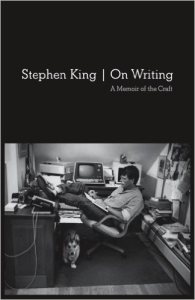
I recently finished reading, well actually listening to, Stephen King’s On Writing: A Memoir of the Craft.
Highly recommended for all writers!
There’s a lot of conflicting advice about craft books for writers—some think you can’t learn from them, or that the best way to improve your writing is just by more writing. And I agree with the latter point. I also believe that books on writing can help you improve if you already are writing.
View original post 615 more words
Rejection Letter Rundown: The Revision Request Letter (with Rose Blackthorn)
As I mentioned in the previous installment of Rejection Letter Rundown, an author might, from time to time, come across a letter that is neither rejection nor acceptance but some strange hybrid of both. I covered the further consideration letter last time, and this time I’ll be covering its distant cousin, the revision request letter.
Okay, full disclosure. I have never received a revision request letter. Luckily, I have access to the exceedingly talented and prolific Rose Blackthorn, who has sent out more submissions than can easily be counted and has received just about every type of letter a writer can receive. You might remember rose from her Ranks of the Rejected interview. Anyway, Rose was kind enough to let me borrow one of her letters, so I could discuss it on my blog. Thanks, Rose; I’ll try not get anything on this while it’s in my possession.
Now that my conscience is clear, let’s have a look at the letter:
Dear Ms. Blackthorn:
Good morning, and thanks for submitting [XXX] for consideration in [XXX]. I read your story and liked it, but was a bit dissatisfied with the ending. I had some thoughts on this matter and was wondering if you would be open to a minor re-write.
Please understand that this is not a guarantee of acceptance or rejection from the anthology, but I feel that [XXX] has promise and would like to explore the story a bit more. However, as a writer myself, I also understand that you have to be proud of what bears your name when it ultimately appears in print and don’t want to remove your original vision of the story.
Please let me know your thoughts on the matter as soon as you are able.
Best,
This is pretty nice letter. Not only does the editor say nice things about Rose’s story (always welcome), she calls out an area she thinks needs work, and then, hold the fucking phone, she gives Rose the opportunity to fix the problem. I’d be thrilled to get a letter like this (I’m sure Rose was too). I mean, a second chance to a) improve my story, and b) vastly improve my chances at publication. Yes, please.
Rose: Honestly, at this point I was completely blown away. This was the first time I had received any kind of revision request, and I was at least open to what the editor had to suggest. As was stated, they weren’t requiring a revision, but were offering to consider the story again if I was willing to make some changes. This was like opening up a whole new world to me.
Now, as Rose said, the editor isn’t requiring a revision nor is she promising to accept the story once it’s revised. She’s very upfront about that. She’s also admitting that revising the story based on her suggestion what Rose has envisioned for the story. That’s a nice, honest way of doing things, and it makes sure both parties are going into this with all the cards on the table.
If you get a letter like this, the question becomes should you do the revisions? I think you have to take that on a case by case basis. If the suggested revisions seem like they’ll make the story stronger—you know, a “why the fuck didn’t I think of that” moment—then, yeah, go ahead and do it and thank your lucky stars you sent the story to an editor that could show you the light. If, however, the revisions seem like they’re sending the story in a direction you’d rather not go or removing something you believe is an essential element, then I think it’s perfectly acceptable to send a polite “no, thank you” to the editor. I don’t think declining the revisions—again, politely—hurts your chances at publishing with the editor again.
Rose: As you stated above, the changes (or in this case, one specific important change) the editor suggested was a “Why didn’t I see that myself?” moment. It can be hard to be objective about a story you’ve been living in for however long, and this particular revision had never occurred to me. When it was suggested, I immediately saw the possibilities, and what led to (I believe) a stronger ending.
The suggested revisions made sense to Rose, so she went ahead and revised and resubmitted the story. A short while later, she received this letter:
Good afternoon. I’m pleased to let you know that after reading the revisions, I would like to offer you a place in the anthology. I think the new ending is much stronger and offers the reader a sense of surprise for how things will turn out.
Attached, please find an edited version of the article. There were a few places that required additions, and I wanted to make sure the new text and changes were OK with you before going to print. Most of the cuts that I made were done so for readability or details that were repeated and/or slowed the plot.
Please let me know if you’re not familiar with the editing tools in WORD. Otherwise, I look forward to hearing from you soon.
Hot damn! An acceptance. For me, this kind of acceptance would hold special significance because I would be establishing a relationship with the editor, a mutually beneficial collaboration that would, hopefully, lead to more acceptances in the future. I mean, it’s rare to get this kind of insight into an editor’s mind and really get an understanding of what he or she is looking for in a story. Good stuff.
Rose: I have to laugh. I have an ongoing online friendship with this editor—but this was a guest editing, one-off kind of project. So, while I appreciate making it into this particular anthology, and even more enjoy my friendship with this erstwhile editor, it hasn’t necessarily helped me get published again. Except, of course, to value a good second set of eyes for my work!
Have you received a revision request letter? How’d it go? Tell us about in the comments.
Submission Protocol: Stay in Formation
Rejectomancy points deducted for FTFFD or SSD: -5 (What’s this?)
Something you will see in just about every set of submission guidelines is a request for a specific manuscript format. In my experience, many genre publishers will ask you to submit your manuscript in standard manuscript format (SMF from here on out), sometimes proper manuscript format or Shunn manuscript format. What they’re usually asking for is the format described in this fantastic and widely read and referenced post/article by author William Shunn: Proper Manuscript Format. (Many publishers will actually link to this article in their guidelines.) If you’re going to be submitting your work, you should get well acquainted with this format. Read it now. Right now. Seriously.
Although many publishers ask for SMF, many of them also ask for slight modifications to it. In most cases, when a publisher deviates from SMF, they’ll request a specific font, ask you to actually use italics for italicized words rather than underline them, or ask you to use a single space after a period. Whatever changes they want to SMF, make sure you make them.
So why do many publishers want to see manuscripts in this format? First, SMF’s fonts, margins, line spacing, and so on do improve readability. Second, these elements come together to create an unobtrusive format that is pretty much invisible to the reader. That’s why crazy fonts are always, always a bad idea. Even if a publication doesn’t ask for SMF, a weird font is going to jump right off the page in an irritating way—that’s not exactly a good introduction to your story. Another thing SMF has going for it is familiarity. From what I’ve encountered, this is the format many editors are used to seeing, which, of course, ties back into the whole being unobtrusive thing. This is not an area where you want to stand out; let your story do that. Finally, some editors still print out manuscripts and redline the hardcopy, and SMF leaves plenty of room on the page to make notes, leave proofreader’s marks, and so on.
Now, if you’re like me, you are going to get all cozy and familiar with SMF, and then you are going to encounter a publisher who asks for something else. That can throw you for a loop. For example, you might see something in the submission guidelines that asks you to format your manuscript thusly.
- Times New Roman or Arial, 12pt
- Double Spaced
- ONLY one space after a period
- Do NOT manually add a space between paragraphs
If you’re used to sending manuscripts in SMF, and you run across this, it might leave you with some questions. How do they want italics handled? Do they want my contact info and word count on the front page? Page numbers?
My advice here is to do what they ask you and then leave whatever is unspecified in SMF. In the above case, unless the guidelines ask me not to put any identifying marks on the story (and some do), I’d go ahead and follow SMF for the header, contact info, and word count. I’d also use the SMF margins and indent. You might leave italics underlined or you might not; that one is a bit of a toss-up. My gut tells me not to underline here, since even publishers that do use SMF often request no underlining, but that’s just my opinion. In short, I don’t think an editor is going to ding you for including elements of SMF. It’s only going to make your manuscript easier to read.
You might also run across submission guidelines that handle manuscript format a bit more loosely:
We aren’t sticklers when it comes to manuscript format, but please use some common sense regarding fonts, spacing, formatting, and the like.
In this case, since they’ve given no specific instructions on how they want the manuscript formatted, I’d go ahead and send them the manuscript in SMF. It hits all their criteria. It’s easy to read, and its fonts, spacing, formatting, and the like are the pinnacle of common sense. I don’t think the editors of this magazine would mind one bit if they received a manuscript in SMF.
To sum up, get well acquainted with SMF, and don’t deviate from the guidelines when it comes to format (actually, don’t deviate from the guidelines on anything, ever). Even if a publisher is inclined to be lenient about that kind of thing, you can’t know that going in, so toe the line and follow the rules.
Do you have a thought on manuscript formatting I haven’t covered here? Tell me about it in the comments.
Praise & Skorne at Privateer Press

Hey, Privateer Press just posted an article I wrote about writing non-human characters in a fantasy setting, specifically the militant skorne from their Iron Kingdoms IP. It’s kind of a companion piece to the novelette they released last Friday “Sacred Charge” (also authored by yours truly). Check out the article or the novelette in the links above.
I promise I’ll stop all this self-promotional nonsense very soon and return you to my regularly scheduled rejections.
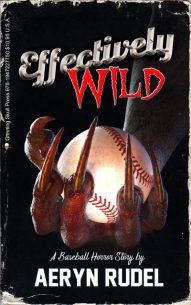
Effectively Wild – A Baseball Horror Story
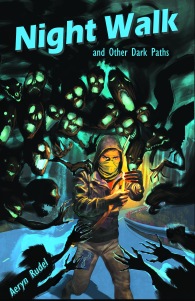
Night Walk & Other Dark Paths
Acts of War: Flashpoint

Acts of War: Aftershock

Acts of War: Stormbreak

 Aeryn Rudel's Rejectomancy