
Form Letters: Not Just for Rejections
If you live in the land of rejectomancy like I do, then you’re pretty damn familiar with the form rejection letter. It comes in a variety of different flavors, but they all essentially say the same thing: No. Recently, I have ventured into the golden sunlit lands of acceptance on a more frequent basis (I’d get a condo there, but the rent is ridiculous), and I have found this wondrous place has more in common with the blighted nether-realm of rejection than I would have believed.
One of those similarities is the form letter. Yep, form acceptance letters are actually kind of common, as I have recently discovered. Let’s look at a couple from my own collection:
Thank you for sending us “XXX”. We think it is a great fit and would like to publish it.
We will be in touch shortly with a formal contract and details for your review. In the meantime please email any question or comments to [publisher’s email address]. If you have not received a contract for review within two (2) weeks, then please do e-mail and give us a gentle nudge.
Thank you again for allowing us to consider your work. We look forward to working with you.
Yep, that is absolutely a form letter. I know because I’ve received two from this publisher. Let’s look at another one.
Thank you for sending us “XXX”. We love it and would like to publish it in the next issue of XXX.
Your contract is included in this email. Please accept the contract by following the link at the bottom of this email and include your 100 word bio and mailing address, or PayPal email address if you’d prefer, in the Requested Information box. We’ll send an email with editorial suggestions two to three weeks before the issue publication date.
Thank you for your submission and we look forward to working with you!
Again, I know this is a form letter because I’ve been published previously by this market and received the same letter.
Why would a publisher send a form letter for an acceptance? Well, if you think about it, it makes even more sense than a form rejection. A rejection letter only needs to convey one thing: we’re not publishing your story. The rest is all welcome but unnecessary niceties. An acceptance letter, on the other hand, needs to get across quite a bit of important information, as you can see in my two examples. The publisher needs to tell you about the contract, about the edits, who to contact if you have questions, how to get paid, and so on. That’s a lot of information, and I certainly wouldn’t want to write that from scratch every time I accepted a story. A boilerplate letter with all the info an author needs makes a lot more sense, don’t you think?
Just like form rejections, you shouldn’t read anything into form acceptances other than what’s actually been said. For instance, if you look at my first example, you might think, “Hey, they didn’t say a bunch of nice things about Aeryn’s story.” Well, they didn’t need to because they said the nicest thing possible: We’re gonna publish your story. In my experience, you’ll find more specific and personalized praise in the manuscript the publisher send over for edits, often as a note at the end of the story. It’s the cherry on top of the acceptance sundae.
Are there publishers that send personalized acceptance letters? Of course, just like there are publishers who send personalized rejection letters. That said, I’ll take the short, bland form acceptance letter over a novel-length personalized rejection every day of the week.
Characters: They Walk Among Us

I live in downtown Seattle, a place populated with all kinds of characters: bearded hipsters, posh business-folk, foreign tourists of all nationalities, goth millennials, and random weirdos, just for starters. As such, I do a lot of people watching to get ideas for characters in my stories and novels. Usually, I grab a facial feature there, a nervous tick here, or a quirky hairstyle over there. In other words, most folks have one or maybe two interesting features I might use. But every now and then, the planets align, the heavens open, and the gods of literature send a fully formed character to stroll through my little reality for a brief moment.
About a week ago, I was shopping at Metropolitan Market here in Seattle (Metro is like a slightly less pretentious Whole Foods with name brands). I’m cruising the aisles, getting my smoothie makings, coffee, Perrier (I drink that shit by the gallon), and whatnot. I look up, and coming toward me down the coffee and tea aisle is a character straight out of a a classic Tarantino movie.
Let me see if I can capture this guy’s sheer fucking majesty. He was a bit over six feet tall, on the lean side (I’d put him at a buck seventy), with black hair done in a kind of fifties breaker haircut, and a face that looked like a cross between a youngish Clint Eastwood and a current Michael Madsen. He could have been anywhere from 40 to 50, and he had one of those faces that said “Yes, I have absolutely seen and done some shit.” He looked like he hadn’t shaved in maybe three days, but the stubble was perfect, and he was one of those lucky assholes whose beards seem to grow like they were drawn by a graphic designer. He wasn’t quite what you’d call handsome; he was honestly too cool for that.
It gets better. He was wearing a tailored navy blue suit (obviously designer) with a white button-up shirt under the jacket. The shirt was open to mid-chest so you could see what looked like a full-body tattoo that traveled up onto his neck in little spidery lines. He had the sleeves of his jacket pushed up just below the elbow, with the white shirt rolled over the cuffs, and he had full-sleeve tattoos on both arms that ended at his wrists. His shoes were black leather, expensive, and recently polished. He had no piercings I could see; they would have been slightly too much, if you ask me.
Now you might be thinking this combination of clothing, body art, and style would be super douchey on any normal human being. Not this guy. He may have been the coolest motherfucker I’ve ever laid eyes on. If you’d have come up to me in the Metro Market, standing there like a dumbass staring at this poor man, and said, “Yeah, that guy? He’s the deadliest hit man in the Russian and the Italian mob, and he moonlights for the Yakuza,” I would not have questioned it. If you’d said, “That dude? He’s a fallen angel taking a break from hell to fetch some whole wheat Triscuits for Satan,” I would have believe it. Fuck, if you told me, “Hey, you know those books you like by Stephen King? The Dark Tower ones with that totally awesome character Roland Deschain? Yep, this is the guy he’s based on, except this dude is actually more badass,” I would have nodded and mumbled, “Of course he is.”
I fought the urge to take out my phone and snap a picture, and it was a struggle, let me tell you, but I wasn’t about to stalk and photograph a gun-slinging fallen angel hit man, mostly because I didn’t want to look like a creep. Sure, my memory of the guy has probably grown a bit, and a few details might be slightly exaggerated by now, but, I swear, ninety-five percent of what I’ve written here is gospel.
So, what am I trying to say here? Basically, the world is full of characters, and if you pay attention, one might walk right out of Metro Market and into your next story.
Encountered an interesting character of your own? Share it in the comments.
January 2016 Submission Statement

These posts used to be called Rejection Roundup, but seeing that it’s a new year, and, shockingly, I occasionally receive something other than a rejection from publishers, I think a name change is in order. So, let’s try “Submission Statement” (damn, I love me some alliteration).
January Report Card
- Submissions Sent: 7
- Rejections: 7
- Acceptances: 1
- Other: 1
The Rejections
Yep, let’s support the brand first and get to those tasty, tasty rejections. I mean, I didn’t call the blog Rejectomancy for nothing, right?
Rejection 1: 1/17/16
I had a chance to read the story. The conceit is interesting, however it’s not really suited for [XXX]. Thank you for the submission and best of luck in future writing.
This was the first rejection of 2016, and I covered it in detail in this post.
Rejection 2: 1/24/16
Thank you for letting [XXX] consider your story. Unfortunately it didn’t quite grab us. We wish you the best in finding its home.
This was yet another (form) rejection for one of my most beleaguered stories. It’s amassed thirteen rejections and counting and may soon become my most rejected tale. The thing is I really, really like it, and I think I just need to get it in front of the right editor. I’ve sold one story after thirteen rejections, so I’m sticking to my guns here. I’ve already sent the story out again. Check with me after twenty rejections, and we’ll see if my faith in the story still holds.
Rejection 3: 1/25/16
We have read your submission and will have to pass, as it unfortunately does not meet our needs at this time.
This is the first rejection for an old story I recently revised quite significantly. It’s the standard form rejection from a pro-paying market that turns and burns stories within a single day, though I’ve heard tales about rejections measured in hours from this publication. Anyway, I love the fact they’re so quick. It lets me get that story out to another publisher pronto.
Rejection 4: 1/30/16
Thank you for your submission. We have reviewed your story, and, regretfully, we have decided against using it. Unfortunately, we receive too many submissions to publish them all. We appreciate your interest in our podcast.
This form rejection is for the same story turned down in Rejection #3, but it was to an audio market. I’m seeing more and more of those, and I really like them because they’re usually not picky about reprints. I’ve submitted to this market a few times, but I’ve yet to crack them.
Rejection 5: 1/31/16
Thanks for letting us see “Story X.” I regret to say that it’s just not right for [XXX]. It’s a solid piece, with some good characters and good tension. Unfortunately, by the end, I’m afraid it just didn’t “grab” me the way it might have. I’ve been sitting here thinking why not, and it occurs to me that I never really connected with [the protagonist]. Maybe if it had been first-person instead of third-person. That’s not a request for a rewrite (I don’t make too many of those). It’s just a thought. In any event, I’m sorry. Best of luck with this one in other markets.
This is a nice informative personal rejection for “Story X.” I cover the letter in more detail in this post.
Rejection 6 & 7: 1/31/16
Thanks for participating in our Flash Phenom contest. The stories this time around were tremendous and made for some stiff competition. Unfortunately, [your stories] did not finish in our Top 10 finalists.
We always encourage folks to try submitting their entries for consideration in a regular issue of The Molotov Cocktail (free to submit), especially if you were a close-but-no-cigar in the contest. Thanks again for your participation.
We literally couldn’t do these contests without you.
So, I’ve broken my rules here and named the magazine to which these rejections belong. I don’t plant to make a habit of this, but one of my stories placed in the contest, and I want to talk about and link to it in this post. Also, the folks at The Molotov Cocktail are super rad, and they gave me the go-ahead. Anyway, I submitted three stories to the Flash Phenom contest, and two of them didn’t make the cut. The rejections letters were identical, save for the name of the story.
By the way, you should check out my Ranks of the Rejected interview with Josh Goller, the editor over at The Molotov Cocktail. It’s a good one, with tons of useful info for aspiring writers.
The Acceptance
I caught just a whiff of the sweet, sweet smell of acceptance in January, and it was with one of my favorite publications to boot.
Acceptance 1: 1/31/16
Thanks for participating in our Flash Phenom contest. The stories this time around were tremendous and made for some stiff competition. We’re happy to report that your entry, “A Man of Many Hats,” has been selected as an Honorable Mention. Congratulations!
We will be publishing “A Man of Many Hats” in our upcoming Flash Phenom mega-issue, and it will be included in our Prize Winners Anthology print issue, due out in the fall.
Thanks again for your participation. We literally couldn’t do these contests without you.
Again, I broke my rules here, but this is the same publisher, The Molotov Cocktail, as the final two rejections. You can check out my honorable mention story, “A Man of Many Hats,” on their site by following the link. You should also check out the Flash Phenom mega-issue, which features the very worthy winners and all the honorable mentions.
Anyway, nice to get an acceptance to close out the month.
The Other
I rarely get letters outside of rejections or the occasional acceptance, but this month I did, and what I got was pretty encouraging.
Further Consideration/Shortlist Letter 1: 1/22/16
Just a quick update to let you know that your story has made it to the final round of reviews for publication in [XXX] magazine and anthology series. We expect to have our final choices turned in 30 days from now and will let everyone know if their stories have been accepted or not.
Thanks for your patience!
Fairly stoked about this letter. This is a pro-paying market I’d very much like to crack. It’s certainly encouraging that my story has made it to the final round of reviews. Hopefully, that’ll mean an acceptance and a publication, but it’s a tough ol’ market out there, so I won’t get my hopes up too high.
Well, that was my January. How was yours?
My Latest Publication – “Scare Tactics”

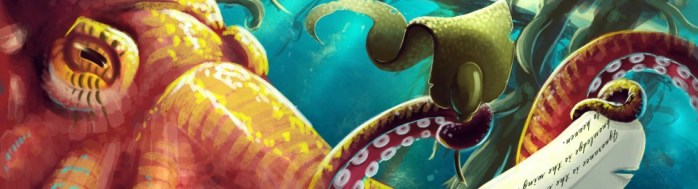
Hey, folks, The Devilfish Review has just published my short story “Scare Tactics.” It’s a quaint little story about a girl, her pet demon, and a budding parapsychology career.
I had a lot of fun writing this one, and I hope you have as much fun reading it. You can read the entire story online by following the link below. So, you know, do that, and then say nice things about it. 😉
“Scare Tactics” by Aeryn Rudel
Rejectomancer Resources: The Emotion Thesaurus
You’d think, being a human being, I would be passing familiar with human being body language. Yeah, not so much. When I’m writing and trying to convey emotion through character body language, I end up in this endless nod, head shake, smile, frown loop. Often times, I break this loop by flipping through the pages of one of my favorite reference books: The Emotion Thesaurus: A Writer’s Guide To Character Expression.
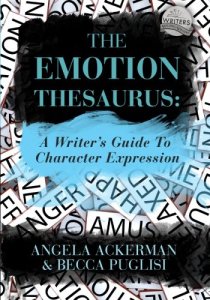
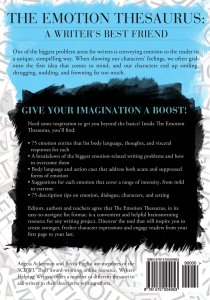
Written by angels of literary mercy Angela Ackerman and Becca Puglisi, the Emotion Thesaurus is described thusly:
One of the biggest problem areas for writers is conveying a character’s emotions to the reader in a unique, compelling way. This book comes to the rescue by highlighting 75 emotions and listing the possible body language cues, thoughts, and visceral responses for each. Using its easy-to-navigate list format, readers can draw inspiration from character cues that range in intensity to match any emotional moment. The Emotion Thesaurus also tackles common emotion-related writing problems and provides methods to overcome them. This writing tool encourages writers to show, not tell emotion and is a creative brainstorming resource for any fiction project.
Of course, it’s generally best to go with your instincts when writing emotional responses for your characters, but a reference like the Emotional Thesaurus is handy when you get stuck. I tend to use it when I’m proofing a first draft, and I notice my characters’ responses are getting repetitive. I spend a lot of time in the anger, fear, and disgust chapters (which says a lot about the stories I write), but, trust me, the book is also useful for authors whose characters dwell in happier environments.
Anyway, highly recommended for the sometimes emotionally challenged author.
Proofing Hit List Part One: Definitely Overused
When I finish the first draft of a story or novel, I let it sit for a few days, then I go back through it like a literary hit man, ruthlessly pounding my delete key like the trigger on a suppressed .45. Notice I didn’t use a sniping metaphor. Nope, I need to get up-close-and-personal with the draft; I need to see the terror in that adverb’s eyes before I send it to the great delete bin in the sky. I have a short hit list of targets that crop up in all my drafts, so I thought I’d share some of them with you.
Keep one thing in mind, this is how I proof my drafts, and the things I adjust or remove and the reasons I do it is not one-size-fits-all. There’s a lot of debate on things like the use of adverbs and dialog tags (two targets on my hit list), and the way I use them or don’t use them is an attempt to achieve a style and voice I prefer. You may be going for something different, and that’s okay too.
Today, let’s talk about the first two things on my list: unnecessary adverbs and overused/repeated words.
1) Unnecessary Adverbs. Remember when I said there was some debate on a few of the things on my list? Well, this is one of them. Some folks like adverbs and others think you should expunge them from your manuscript. As a fan of writers like Stephen King and Elmore Leonard, I lean toward the latter, and I try to nuke as many adverbs from my manuscript as possible. That said, I’m not going to get into all the whys and wherefores of adverb editing—there are articles aplenty on the interwebs if you’re looking for that discussion. Instead, I want to focus on the almost-always useless adverbs that tend to pop up in my manuscripts. These adverbs are: absolutely, actually, certainly, definitely, particularly, simply, and suddenly. In most cases, I find these words add nothing to the sentence and just sit there, bloating my manuscript like literary lard. Here’s are three examples from my own work:
- Lilly smiles, her perfect lips parting to reveal short, pointed fangs (one of the few things that’s actually kind of scary about her).
- There were definitely more bones than he liked; he could see their whitish outline just beneath the slightly translucent flesh.
- A shape suddenly appeared beneath the raft, a shadow, massive and sinuous.
I’ve highlighted the offending adverb in the three examples. In all cases, I don’t think they add anything to either sentence nor do the sentences lose anything when the adverbs are removed.
Now, if you go and read anything I’ve published, you’ll find some of these adverbs, especially in my older works. Despite my checklist, I still miss things, and sometimes my editors have a different opinion on the use of adverbs, and, hell, I do like the occasional adverb (as you can see in example two). The goal here is to strive for my version of perfection with the understanding I’ll never attain it.
2) Overused/Repeated Words. This one falls squarely in the writer’s personal foibles category. We all have favorite descriptive words, and if you’re like me, you tend to use the fuck out of those words because they’re the first goddamn thing that pops into your brain. Case in point, whenever I have to describe something that is big, like, really big, I need to use the word massive (see example two in the unnecessary adverbs). It’s a fine word and all, but when you use it fourteen times in a 4,000-word short story, it becomes a little noticeable. It’s so bad that one of the first things I do when I finish a draft is run a “massive” search, then delete or change ninety-five percent of the ones I find. I think it’s a good idea for writers to identify their pet words and keep a list of them. I have a short and growing list I search for when I’m proofing.
What are some of the targets on your own proofing hit list? Tell me about it in the comments.
On the Board: First Rejection of 2016
And we’re off! The first rejection of 2016 has come in, setting, I think, the proper tone for the coming Rejectomancy year. Here it is.
Hi Aeryn,
I had a chance to read the story. The conceit is interesting, however it’s not really suited for XXX. Thank you for the submission and best of luck in future writing
What we have here is a short and sweet personal rejection. This is a new market, and this was the first submission I’ve sent them. I thought my story was in the ballpark for the type of fiction they’re publishing—gritty, pulpy adventure stories—but it looks I was not as close as I thought. That’s the tough thing about new markets, if you’re submitting for their first issue, as I was here, there are no published stories to compare for subject matter, theme, etc. I’ll definitely submit here again, but I’ll likely wait until they put out that first issue so I can get a better handle on the types of stories they want.
How is your writing new year going? Rejections? Acceptances? Tell me about it in the comments.
Iron Kingdoms Freebie: On a Black Tide
I wrote a novelette or a short novella a while back called “On a Black Tide” set in Privateer Press’ Iron Kingdoms universe. Privateer released the story as a special free preview to the collection Rites of Passage. The story is a pretty solid intro to the Iron Kingdoms setting, though it focuses on the bad guys rather than the heroes. Anyway, you can download a digital version of “On a Black Tide” for the low, low price of nada, zip, zero at DriveThruRPG. If you dig “On a Black Tide,” I’d definitely recommend the anthology to which it belongs, Rites of Passage, which features five more Iron Kingdoms coming-of-age stories by some of Privateer Press’ very talented in-house writers.
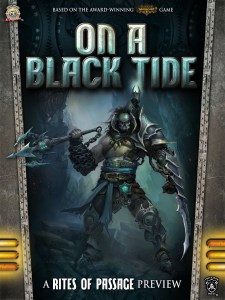
They say the waters of Cryx run black with ancient evil . . .
In the port city of Blackwater, deep in the heart of the Nightmare Empire, life is short and brutal. Murderous gangs rule the streets and surviving to adulthood means being more vicious and uncompromising than those around you. The only hope of escaping the gang-infested streets is to join one of the many pirate vessels that launch raids from Cryx against the mainland.
For Aiakos, a strong yet undisciplined street thug, the opportunity to join the pirate ship Scythe in a trial by combat is the chance of a lifetime. But as he soon discovers, fighting his way onto a Cryxian pirate vessel is only the beginning of the bloodshed.
When the Scythe is drawn into the schemes of the powerful Satyxis Admiral Axiara Wraithbane, Aiakos once again has a chance to improve his station . . . or die trying.
The short story “On a Black Tide” is a free preview of Rites of Passage, a novel-length collection featuring five additional tales about the grueling trials of novice warcasters in the Iron Kingdoms.
Ranks of the Rejected: Michael Bracken
When someone asks me what I do for a living these days, I tell them I’m a writer. I even believe it sometimes. I mean, it is my sole source of income, and I do it everyday, so, with some trepidation, I put forth the notion that calling myself a “professional” is not completely out of the question. But there are pros and there are PROS. The prodigiously prolific author Michael Bracken is of the latter variety. He’s written everything under the sun, but I’ll focus on short fiction, so, as the prosecutor requested of Rooster Cogburn when asking about how many men the notorious marshal had killed, we may have a manageable figure. Michael has published (not just written, mind you) 1,100 short stories. That’s not a typo; he’s that prolific and that good.
It’s safe to say that in thirty-plus years of writing, Michael knows a lot about the publishing world, and he’s often been gracious enough to share some of his accumulated knowhow in the comments section of this blog. So, naturally, I was thrilled when he agreed to consolidate some of that writerly wisdom in an interview, the entertaining and educational results of which you’ll find below.
1) What does your typical writing work day look like? Do you have daily goals? Word count targets?
I’m in my home office first thing most mornings, writing fiction for 30-45 minutes. The rest of my morning and some part of my afternoon is devoted to my part-time job as marketing director for a local performing arts organization, freelance editing for regional publications, and the occasional advertising, promotional, or non-fiction writing opportunities I pick up. I return to writing fiction late afternoon or early evening. Weekends are similar, but more time is devoted to writing fiction than to other projects.
I recently married, so I’m trying to balance my life a bit better than I did when I was single, and we try to set aside two evenings a week as preplanned date nights. The only way we let writing or editing projects interfere with our date nights is if I have a deadline for a paying project, as opposed to a cool idea I just have to get down on paper.
Unlike many writers, I don’t set daily word-count or page-count goals. Instead, I set finished project goals, and my goal each year is to complete 52 submission-ready short stories. That’s an average of one story per week, but the reality is that some weeks I may not complete anything and other weeks I may complete two or three stories.
While my yearly finished-projects goal doesn’t change from year-to-year, my ability to meet that goal does. Some years I meet or exceed 52 submission-ready short stories. Other years, such as 2015 when I only completed 41 short stories, I fall short.
2) With over 1,400 shorter works published, you’ve obviously sent A LOT of submissions. Give us your top three pieces of advice for the fledgling writer just beginning to send his or her work out.
Understand your role. You have no control over the editorial decision-making process, but you can control your productivity. So, write often, submit often, and keep every manuscript on the market until it sells or you run out of places to submit it.
Produce clean, error-free manuscripts. That means you must learn how to spell, punctuate, and use grammar properly, and then you must demonstrate that knowledge with every submission.
Master your tools. Learn how to use your word processing software, including both formatting and typographical symbols. For example, there are at least three different ways to indent a paragraph using Microsoft Word. Pick one and stick to it; don’t mix two or all three methods in the same manuscript. Understand and properly use such symbols as the en dash and the em dash. Understand various file formats so that you can submit .doc, .docx, .rtf, .pdf, or whatever other electronic format an editor may prefer to receive.
3) Tell us about your first rejection letter or the first one that had a significant impact on you as a writer.
I was still in high school when I received my first rejection from a professional publication. The Magazine of Fantasy and Science Fiction rejected “Days of Future Past,” a story I never did sell, in September 1974. By 1976 I was receiving handwritten notes at the bottom of rejection slips as well as actual handwritten and typewritten rejection letters.
To answer this question, though, I spent more than an hour rereading my old rejection letters, and what I realized is how many editors took the time to write detailed letters, commenting on everything from plotting to character motivation to my failure to use transitions.
I have no idea if these editors took as much time with other writers and other rejected stories, but they were my teachers, and those detailed rejection letters cumulatively had a significant impact on me as a writer. Without them, I might never have figured things out, might never have improved, and might never have become a professional writer.
However, one rejection had an immediate impact. In July 1982 Ted Newsom at Gentleman’s Companion returned an erotic science fiction story I had submitted. He had rewritten and retyped the entire manuscript but noted that it was being returned because the publisher didn’t want science fiction stories. Did I have anything else?
At that point I was writing only SF/F, but—after studying what Ted had done to my rejected story—I wrote and submitted a mystery. He bought it and a few months later he bought my second mystery.
This was significant for several reasons: 1. I started writing and selling stories in genres other than the one in which I started my career. 2. The $300 I received for that first mystery was more than I had been paid for any single piece of writing prior to that, and I would not have written it without Ted’s rejection of the SF story. 3. A few years later Gentleman’s Companion was sold to another publisher. I submitted to the new editor the science fiction story Ted had revised and rejected. He bought it for $500.
4) In your opinion, what is the most important lesson writers can learn from rejection?
Stop writing. Stop submitting.
If you don’t learn that lesson, then you might have a shot at becoming a writer. The most successful writers are those who keep going despite repeated rejection.
5) Got a favorite rejection? Memorable, funny, mean, just straight-up weird?
In mid-April 1984 I received a page-long typewritten rejection letter from the fiction editor at an up-scale men’s magazine detailing everything that was wrong with an erotic horror story I had submitted, and the letter ended with:
“I’m sorry that I can’t give you much more advice, but I am leaving [MAGAZINE TITLE] in a few days to go be the editor of those god-awful little digest books* that have no semblance of story or rationale but which pay a lot more money than I’m making.”
That one sentence reminds me that sometimes the best paying markets—for editors as well as for writers—aren’t always the most prestigious.
6) You’ve had a long and successful career and published, frankly, a mind-boggling amount of stories, novels, and other works. With all that success, does rejection still bother you? Pro tips for dealing with it?
One of the best ways to deal with rejection is to have so many manuscripts floating around at one time that you can’t even remember writing the story that was rejected. Then it’s easy to log the rejection, repackage the story, and ship it off to the next editor.
Alas, there are always favorites among the stories under submission, stories that I am particularly proud of for one reason or another, and when those are rejected I thrash around a bit, use a few expletives, and then log the rejection, repackage the story, and ship it off to the next editor.
Many years ago I had a friend who was, like me at the time, an early career writer. He was a much better writer than I was, but if he had a story rejected, he stuck it in his filing cabinet and never sent it out again. I didn’t. I kept my stories circulating through all the publications, working down from the top paying until I was scraping the bottom of publishing barrel. I don’t know where he is now, but I’m getting published on a regular basis, and it’s been a long time since I scraped any barrel bottoms with my submissions.
So my tip is this: Suck it up and resubmit.
7) Okay, plug away. Tells us about your latest project or book.
With something being published every month, it’s tough to keep track of what’s upcoming, so how about a few things published this past year that I particularly like: “Quarryville, Texas,” a private eye story published in The Private Eye Writers of America Presents: Fifty Shades of Grey Fedora (Riverdale Ave. Books); “Beneath Still Waters,” a mystery published in And All Our Yesterdays (Darkhouse Books); “Attack of the Nazi Snow Warriors,” a throwback to the weird menace pulps, published in Weird Menace Volume 2 (Rough Edges Press); and “Saga of the Sailmaker’s Widow,” an erotic Viking story published in A Slice of Sin (A Two Dame Production).
* The “god-awful little digest books” to which the editor refers were digest-sized periodicals containing “letters” from “readers” (most often written by professional writers) discussing their sexual exploits. Penthouse Letters, though more upscale and not a digest, is probably the most well known example of this type of publication. While a few of these digest magazine still exist, the Internet has killed many of them.
Although he is the author of several books, including the private eye novel All White Girls, two-time Derringer Award-winning writer Michael Bracken is better known as the author of more than 1,100 short stories. His fiction has appeared or is forthcoming in Alfred Hitchcock’s Mystery Magazine, Crime Square, Ellery Queen’s Mystery Magazine, Espionage Magazine, Fantastic, Fifty Shades of Grey Fedora, Flesh & Blood: Guilty as Sin, The Mammoth Book of Best New Erotica 4, Mike Shayne Mystery Magazine, True Confessions, True Story, and in many other anthologies and periodicals. At the time of this interview, Michael has had one or more short stories published each and every month for 151 consecutive months.
Learn more at www.CrimeFictionWriter.com and CrimeFictionWriter.blogspot.com, or visit his Amazon page to order his books and anthologies to which he has contributed.
Rejectomancer Resources: The Writer’s Guide to Weapons
If you write, then you research. You just can’t do one without the other. You simply can’t know all the little details that add that touch of realism and verisimilitude to your fiction. But there are some aspects of the real world that often get stretched or outright broken on a regular basis in popular fiction. One of the big ones is weapons: guns, knives, swords, and so on. It’s pretty easy to understand why. Most writers (and most people) these days just don’t have much practical experience with weapons, and the majority of their exposure to them comes from movies and TV, which are almost always wrong.
So, what is a beleaguered writer to do when he or she needs to arm her protagonist and make it sound halfway believable the character (and the writer) knows which part of the gun is the dangerous end? Well, you could spend hours on Google, looking through the hundreds and thousands of websites on the subject, never certain you’re getting correct information, or you could buy this book: The Writer’s Guide to Weapons.
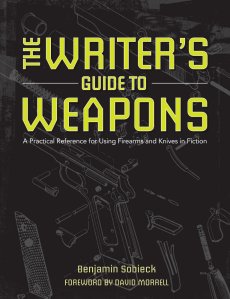

I stumbled upon this little gem at Barnes & Noble a few days ago, and it was an instant purchases. Now, I know a fair amount about historical weapons, primarily knives, swords, and other melee-type implements from years of writing fantasy fiction (and the research that goes with it), plus two decades of SCA and other full-contact medieval recreation sports, but there are still big gaps in my knowledge, especially when it comes to firearms. This book fills in some of those gaps nicely.
So, what’s in the book? Well, it’s broken up into three parts: firearms, knives, and general info and debunking myths about weapons. One of my favorite parts of the book is the fictionalized examples of right and wrong use for each weapon. It really helps to visualize how the weapon works. There’s also a very handy guide on matching the right weapon to your character based on information like the character’s physical attributes and role in the story. Admittedly, this book has a heavy focus on firearms, though it does include some good info on modern knives. It does not cover swords, axes, maces, and other medieval weapons, so it might be of limited use to the fantasy author, but for the horror, thriller, and mystery writer, it’s definitely worth a look.
Here are some examples of questions–which invariably pop up when writing about weapons–the book handily answers.
- What is the difference between a clip and a magazine?
- Why would you “saw-off” a shotgun, and how does that alter its effectiveness?
- Do silencers really “silence” a gun?
- How easy is to kill someone with a firearm under different circumstances (range, body armor, type of weapon, etc.). Hint: it’s a lot harder than you think.
- Can a machete chop through a car roof? (I mean, who doesn’t need to know this?)
This book is not a comprehensive encyclopedia of firearms and knives, and if you’re writing the kind of book that details each and every weapon in exhaustive detail, this likely isn’t the book for you. But if you’re a writer who has only a vague grasp of pistol, rifles, and other things that go boom, The Writer’s Guide to Weapons is a fantastic reference that can help you add just enough detail to make your gunslingers, knife-wielding thugs, and mafia hit men a little more believable.
Do you know of another good resource on this subject? If so, please share it in the comments.
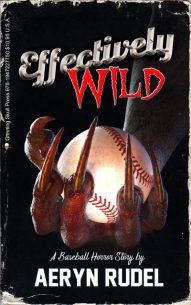
Effectively Wild – A Baseball Horror Story
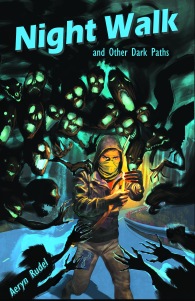
Night Walk & Other Dark Paths
Acts of War: Flashpoint

Acts of War: Aftershock

Acts of War: Stormbreak

 Aeryn Rudel's Rejectomancy