
Proofing Hit List Part Two: Over-Filtration

Since I’ve been in the middle of a big fat novel revision, I thought it might be time to talk about more items on my proofing hit list. These are the little (and biggish) things I try to fix and/or eliminate from my drafts before calling them done/final/ready for editing. If you’d like to see part one of this list, you can find it right here.
Let’s get to it:
1) Filter words. I overuse them, especially when I’m writing in third-person limited, which I do a lot. What’s a filter word? I think Michael R Emmert answered this question nicely in his article “An Introduction to Filtering” over at Scribophile. He says, “In writing, filters are unnecessary words that separate the reader from the story’s action. They come between the reader’s experience and the character’s point of view.” I agree, and you should definitely check out his article on the subject; it’s great.
For me, the filter words that crop up the most are feel, felt, saw, know, and knew. In the current draft of my novel, I nuked many instances of each one. There are other common filter words you might encounter in your drafts, stuff like believed, thought, heard, and watched. This is not to say that you should never use a filter word; sometimes they are absolutely appropriate. Again, I’ll refer you to Michael R Emmet’s article; he gives some great examples of when you probably should use a filter word.
Like many of the things on my proofing hit list, this point should not be taken as absolute gospel. It’s just the way I do things.
2) Sound-alike character names. It’s easy to do this without realizing it, especially when you’re making up names on the fly, but it can be confusing for the reader if two character’s names are too much alike. Case in point, the main character in my upcoming novel Flashpoint is Coleman Stryker, and at some point in the book, I added a secondary character name Sykes. They appear in a few scenes together, and it was (rightly) pointed out by my editors that it might get a little confusing, especially in dialog. Easy fix, though. I changed Sykes to Adkins with a global find/replace. Done.
It can help to keep a list of character names in your book to cut down sound-alikes. I have a little spreadsheet that lists all my secondary characters with a little background on each. It’s pretty helpful not just for removing sound-alike names but for keeping all the characters straight in your head so you don’t mix them up (which I’ve done, repeatedly).
3) Consistent spelling and styling. This one comes up a lot for me since I frequently write in a rich and well established IP not my own: the Iron Kingdoms owned by Privateer Press. The Iron Kingdoms are chocked full of specific names of people, places, and things, and it’s my job as a writer to make sure they are a) spelled correctly and b) properly styled (capitalized, italicized, etc.).
Let me give you an example. In my novel Flashpoint, I frequently mention storm knights (lower case), which is a catchall phrase to describe a number of knightly orders, including the Stormblades (capped) and the Stormguard (capped). As you can guess, I’ll often screw up with the capitalization or, frequently, use two words when it should be one, e.g., Storm Blade instead of Stormblade. Sure, the Privateer Press editors would probably catch this stuff, but I try to get it as close as I can. As a former editor, I certainly see value in making the editor’s job easier.
What items appear on your proofing hit list? Tell me about them in the comments.
My Meandering Path to Writerly “Fame and Fortune”

One of things people ask me on a fairly regular basis, more so lately, is how did you get started with writing and editing, and how did it end up being your “job?” Well, my career trajectory has been kind of all over the damn place, and there really isn’t a straight line between Point A (non-writer) to Point B (writer). So, I’ll try and sum it up here. Despite the title of this post (which is most definitely tongue firmly lodged in cheek), I am NOT trying to tell you I’m some kind of hot-shit famous writer, because I certainly am not that.
Okay, here goes. (FYI, this is gonna be long, and it’ll really test your endurance for my particular brand of “wit.”)
Let’s get the cliché stuff out of the way first. Yes, I’ve always wanted to write, ever since I was a wee lad. My first memories of trying to write are from when I was five or six. I would grab these big reference books on marine biology or dinosaurs (my two favorite subjects at the time), open them up to a random page, and then start copying the text onto a piece of notebook paper. I’d usually get a couple of paragraphs done in my huge, shaky five-year-old handwriting, not having clue one what the fuck I was actually writing, then run off to display my authorial prowess to my mother. Mom did not think she had a marine paleontological prodigy on her hands, but she did get what I was doing, and encouraged my interest in writing from early on.
Okay, jumping forward a lot. I started dabbling with poetry in my teens, writing angsty rhyming verse about dragons and demons and vampires throughout my junior and senior years in high school. This evolved into something a bit more marketable (i.e., not total shit) in a few years, and I sent out my first poetry submissions in my early twenties. I promptly collected my first rejections letters, but I kept at it, and I eventually got some of my poems published in a few zines here and there. Sadly, those publications are lost to history—I lost my contributor copies and every single magazine that published me folded a long time ago. I know that kinda sounds like, “Yeah, I totally published all the poems in magazine, but they’re all in Canada, and you probably haven’t heard of them.” Sorry.
The poetry muse left me in my mid-twenties—I still don’t now why—and I really didn’t start writing again until I was nearly thirty. I started writing again because I had become enamored of the newest edition of the Dungeons & Dragons game (3E for my fellow gamers out there). The new rules set allowed for a lot of customization, and better yet, the publisher of D&D, Wizards of the Coast, had created something called the Open Gaming License. I won’t bore you with the details, but the OGL basically allowed third-party publishers (and individuals) to create and sell material for the game.
Anyway, I really liked making monsters, and I especially liked taking existing monsters and making them unique in some way (again, for my fellow nerds, I was really into the templates that 3E introduced). I started adding little stories to my monstrous creations and then posting the whole thing on the forums of a popular D&D website called EN World. This eventually grew into full blown short stories and even novel-length creations, and I gained a bit of a following there.
Turns out, it wasn’t just fellow gamers reading my stuff on the EN World forums; a couple of publishers had taken an interest in my stuff too. These publishers included Skeleton Key Games and Goodman Games. I was offered some writing and editing gigs, working on various D&D-related projects. That started my career as a freelance game designer/editor/writer in the tabletop gaming industry, and I did that for a couple of years. My biggest publications during that time were with Wizards of the Coast in Dragon and Dungeon magazines, and it was pretty damn cool (and kind of a dream of mine) to get published by the folks that created the “official” version of the Dungeons & Dragons game.
Eventually, I parlayed my freelance gigs into a fulltime writing and editing position with Goodman Games, a company I’d done a lot of freelance work for. While with Goodman Games, my duties included running an in-house gaming magazine called Level Up, where I learned a lot of valuable skills. As luck would have it, my experience with Level Up prepared me for the next big step in my career.
In early 2009, I was laid off from Goodman Games as a fulltime employee (the RPG market had taken a real nosedive at that point), and I went back to freelance writing and editing. Those were lean times, let me tell you, and sometimes I wonder how the hell I survived. But one of the great things about the tabletop gaming industry is that it’s close-knit, and if you have some skill and experience and conduct yourself like something resembling a professional, one of your pro friends might think of you when a job opens up somewhere.
In early 2010, I got a call from Ed Bourelle, a guy I’d worked with off and on for years, and we’d grown pretty chummy. The year before he’d taken a position with Privateer Press, a tabletop miniature company that produced the award-winning games WARMACHINE and HORDES. Turns out, they had an in-house magazine called No Quarter that was in need of an editor-in-chief. Ed knew I’d done a similar gig with Goodman Games, although on a smaller scale.
Ed asked me if a) I would be interested in the position, and b) could I come out to Seattle to interview. I think my answer to both questions was something like “Are you fucking kidding?! Please, say you’re not kidding.” The wife and I were living in my home town of Modesto at the time, and we were not exactly loving it. The prospect of an exciting new job in an exciting new city was just what the doctor ordered. Anyway, I flew out to Seattle, interviewed, and was offered the position, which I immediately accepted.
I served as the editor-in-chief for No Quarter magazine for three years, and I learned A LOT about editing and writing from the fantastic editors and writers at Privateer Press, folks like Darla Kennerud, Douglas Seacat, and Privateer Press owner and CCO Matt Wilson. That was a cool fucking job. Running a magazine is challenging, but it is never, ever boring. Every issue brings new obstacles to overcome and new accomplishments to achieve. You learn to think outside the box and get things done FAST. The Deadline is your unforgiving deity, and you must do all in your power to appease this hungry god.
In 2013, I became the publications manager for Privateer Press’ new fiction imprint, Skull Island eXpeditions, serving in a capacity that combined managing editor and acquisitions editor. Heading up Skull Island eXpeditions was a fantastic experience, and I had the amazing opportunity to work with some of the fantastic writers, as well as hone my own editorial skills.
Throughout my time at Privateer Press, I was writing a lot. I contributed fiction to No Quarter magazine and to the various core books for Privateer’s premier miniatures games WARMACHINE and HORDES. In addition, I was working hard on my own stuff, writing and submitting short stories to various horror and fantasy magazines. As much as I loved working at Privateer Press and running Skull Island eXpeditions, I really wanted to make writing my full time gig, so, in 2015, I took my shot and resigned from Privateer Press. Of course, my relationship with Privateer Press and owner/chief creative officer Matt Wilson didn’t end there. Privateer Press signed me to write a bunch of novels for them in their Iron Kingdoms universe, a setting with which I had become intimately familiar over the last five years. To say I was thrilled for that opportunity is the understatement of the century, and I’m super excited about the release of my first novel Acts of War: Flashpoint in June.
So, that takes me up to the present. Writing is now my fulltime occupation, and I’m working on novels for Privateer Press, writing horror short stories to submit to the many online zines and even a few print magazines, and I still do the occasional RPG and gaming project. If you’d like to see some of the stuff I’ve written over the years, there’s a fairly complete list of my writing and editorial credits on this blog.
There you have it, a stumbling, fumbling, meandering, sometimes ass-backwards path to the glories of writing for a living. Maybe you’ll find something of use here, but please note, I sure as shit don’t mean this to be a roadmap to a career in writing.
If you’d like to share your own tales of wonder and woe in the writing world, have at it. I’d love to hear about them in the comments.
April 2016 Submission Statement

April has come and gone, and it was a pretty decent month as far as the ol’ writing gig goes. I wasn’t as productive as I would have liked, and I sent out only five submissions, but since I was working on some big writing projects like this one, I don’t feel too bad about it.
March Report Card
- Submissions Sent: 5
- Rejections: 5
- Acceptances: 1
- Other: 0
- Publications: 2
The Rejections
First, the usual slew of rejections. Five this month.
Rejection 1: 4/2/16
Thank you for submitting your story “XXX” to XXX, but we’re going to take a pass on this one.
Not quite enough horror in this, I’m afraid, but I’m betting the folks at XXX will really like it: [website]. You might try this story with them.
By the way, I’m super stoked about “XXX.” Keep sending stuff our way!
If you have to get rejected, this is the way to do it. It’s a personal rejection, and the editor tells me why, specifically, the story was rejected, he recommends another market I should send it to (affiliated with this market), he tells me how excited he is for the story they DID accept a while back, and, finally, he asks me to keep sending them work. Next to an acceptance, this is about as it good as it gets.
Oh, and, yes, I immediately fired the story off to the recommended market.
Rejection 2: 4/3/16
Thank you for letting us read your story. Unfortunately, at this time, it’s not a good fit for our magazine, so we are unable to accept it. We wish you good luck placing it with a different market.
What have we here? Looks like a fine specimen of rejectus familiaris, otherwise known as the common form rejection. Nothing to see here. Moving on.
Rejection 3: 4/9/16
Thank you for submitting your story, “XXX,” to XXX. I am afraid I have decided to pass on it at this time.
In the end, the story just didn’t work for me. While XXX is currently closed to submissions, I do hope you will keep the zine in mind again in the future, and I thank you again for your interest.
The language in this letter makes me wonder if its a personal rejection or a form rejection, and I’m not completely sure which one it is. It uses enough form rejection phrases that I’m inclined to call it one, but it could be a personal rejection with a more formal tone. In the end, it’s a rejection, and whether personal or form, time to move on.
Rejection 4: 4/20/16
Thanks so much for letting us consider your story “XXX.” While it made it to the final round of consideration, I’m afraid that we chose not to accept it. We had a lot of submissions and there were difficult decisions to be made. Best of luck placing it elsewhere.
I’ve developed a pretty thick skin over the years, and I can honestly say that rejections don’t bother me much anymore. This one, though? This one took a bite out of me. I’m sure you can guess why. I’d received a further consideration letter about the story a while back, and I waited with bated breath for months. I really liked the story I sent them (a new one), and, as you can imagine, I felt like my chances were good for an acceptance. Alas, it was not to be. But, hey, this is all part of the gig, right?
The silver lining is I feel pretty confident about this new story. It had a positive first run, so I think it has legs. I sent it out to another market the next day.
Rejection 5: 4/25/16
Thank you for giving us the opportunity to read your story. Unfortunately, it isn’t quite what we’re looking for. We do hope you will try again.
I’ve submitted to this market a number of times, and I’ve gotten this letter each time. It’s a tough market to crack, with a tiny acceptance ratio, but I’ll keep trying.
The Acceptances
Just one acceptance in April, but it was a good one.
Acceptance 1: 4/1/16
Thanks for sending “XXX” to XXX. I have finished my review and have decided to accept it and offer you a contract. Please look for a contract to be issued shortly.
This is a pro market with an acceptance ratio around one percent. I am thrilled they accepted the first story I sent them. What’s better, this was a new story, and it scored big right off the bat. Not much more to say, other than I’m looking forward to the story’s publication.
The Publications
Two of my stories were published in April. They were:
“Shadow Can” published by Digital Fiction Publishing. This one is a reprint, but it’s one of my favorites. You can read it by clicking the link.
“Big Problems” published in Havok magazine’s Fairytales: Unfettered edition. I’d been sitting on this story for years. I’d always liked it, but I could never figure out where to send it. It’s a weird little retelling of a classic fairy tale, and when I saw Havok was doing a weird fairytales issue, I had a feeling this story might be a good fit. Looks like, for once, I was right.
Well, that was my April. How was yours?
First Shots Fired: An Author Interview at Privateer Press

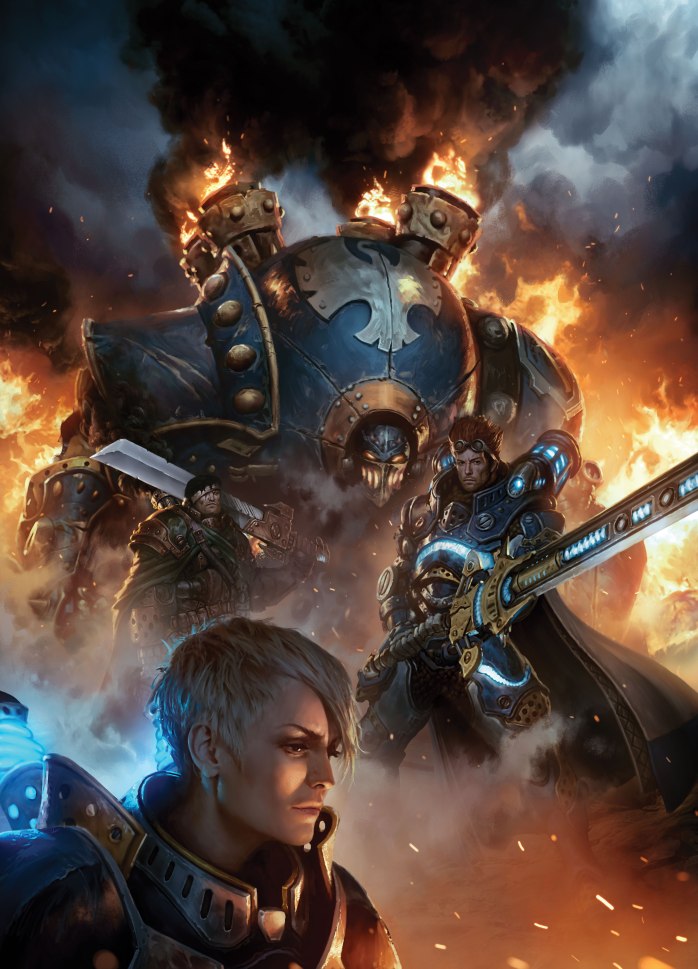
My first Iron Kingdoms novel, Acts of War: Flashpoint, drops in June, and the fine folks over at Privateer Press have gone and plastered my smiling mug on their website along with an interview about the book. If you have a sec, hop on over and read it, and, if you’re unfamiliar, learn a bit more about the steam-powered fantasy setting of the Iron Kingdoms.
Click on the badass cover art below for the interview.
Rejection Letter Rundown: The Shortlist Rejection
Sometimes you have to wait a while for a publisher to get back to you about a submission, which can be hard, but it’s just one of those things you have to accept as part of the whole being a writer thing. That said, when you have good reason to hope your story will be accepted, the waiting can become rather nail-biting and the possible rejection all the more disappointing. Today’s rejection letter du jour is the shortlist rejection, which is a whole process that begins with an encouraging note like this.
“XXX” has been accepted into our final round of consideration. We will be letting you know before the end of April whether or not it is accepted.
What we have here is a further consideration letter, which is always a good thing. It says the publisher liked your story, and you’ve got at least a fifty-fifty shot at an acceptance. I appreciate these largely because they often come from markets that can take a while to get back to you, so it’s nice to get some notification that a decision is in the works. Now, of course, getting a letter like this is no guarantee of publication, because it might eventually result in a letter like the following.
Thanks so much for letting us consider your story “XXX.” While it made it to the final round of consideration, I’m afraid that we chose not to accept it. We had a lot of submissions and there were difficult decisions to be made. Best of luck placing it elsewhere.
Ouch. Bummer, right? So my story was under consideration for about three months before they decided to pass on it. I’m not angry or anything—this is all part of the writing gig—and I have no doubt my story was up against some stiff competition. So, what’s the takeaway from a rejection letter like this? It’s pretty simply really. I got close. The story got close. To my mind, it means the story is pretty good the way it is, and that I should send it out to another publisher right away, which is exactly what I did. If this publisher liked it enough to strongly consider it for publication, the next one might like it even more and publish it right off the bat. We’ll just have to see.
Have you had any experiences with the short list rejection? Tell me about it in the comments.
Take a Quiz, Get a Free Story from Privateer Press

Some of you might recall that I’m writing a series of novels for my former employer, Privateer Press, set in their Iron Kingdoms universe. Why am I reminding you? Well, Privateer Press has announced new editions of their award-winning tabletop miniature games WARMACHINE and HORDES, which means it’s a great time to get acquainted with the games or the steam-powered fantasy setting they inhabit. On top of that, the novels I’m currently writing form a large part of the new narrative for the games, telling the story of some of the Iron Kingdoms greatest heroes and villains as they adapt to a dangerous new world.
So here’s what I’d like you to do. Go to the Privateer Press presentation website for the new editions of WARMACHINE and HORDES, click “Find out More,” scroll through some awesome illustrations and photos of the game until you get to a screen that says “Take the Quiz.” Click “Take the Quiz,” and at the end of the quiz, sign up to receive a free short story from Privateer Press every Thursday. Tomorrow, you’ll get a story from yours truly (plus two more from me in the coming weeks).
Here’s the link to the presentation site: ALL NEW WAR
Or, if you want to skip all that jazz and go right to the quiz, click this link: TAKE THE QUIZ
Thanks for playing along, and I hope you dig the story.
Good Hookers are Hard to Find
There’s some click bait for you, huh? Did I get you? Well, unfortunately, like most click bait, this post is not what you think it is. Let me explain.
A while back, a friend gave me a great book by Stephen King called Secret Windows, a collection of essays and fiction about writing (sadly, it’s now out of print). I think my favorite essay in the book (and there are a bunch of good ones) is called “Great Hookers I have Known.” The essay is about writing a truly gripping first sentence in a novel or short story, which were apparently called “hookers” by publishers back in the day. It’s the sentence that grabs the reader and tells him or her, “Hey, this story might actually be worth reading.”
Anyway, in the essay, King goes to his own published works and discovers he’s not particularly good at writing hookers (Totally tanked his career, right?), then cites some sterling examples of the art, no few of which come from Elmore Leonard. He also points out that hookers are more important in short stories, and I couldn’t agree more. I mean, you’ve got to get that editor’s attention fast, and a top-rate, attention-grabbing first line is a good way to do it.
So, like King, I went to my (much, much smaller and far, far less prestigious) collection of published works to see if I had come up with any good hookers. Well, it’s a bit of a mixed bag, a few good ones and a few not so good. Let’s look at the bad first.
Here’s one from a story I recently published called “Scare Tactics,” a story I really like. It’s a wonder it sold at all with this yawn-inducing first line.
Lindsey pulled up to the curb, killed the Accord’s engine, and glanced out the passenger-side window.
Wow, boring, right? Curbs and Hondas and passenger-side windows. Bleh. It’s not a bad sentence, I guess, but it sure as fuck ain’t an exciting one. I think its biggest sin is that it tells you absolutely nothing about the story that comes after it. This could be any genre, and it could be set just about anywhere. I swear, the story gets a lot better from here, but I got a bunch of rejections on this one before it sold.
This one is from a flash story called “The Rarest Cut.” I don’t think it’s as bad as my first example, but it’s not gonna win any prizes.
Vincent cut into the meat on his plate, sliced off a small portion, then lifted the morsel to his nose and sniffed.
Sure, you get the idea that this story is gonna have some eating in it, but that first sentence is just kind of sitting there being unexciting. This story also racked up a bunch of rejections before I finally placed it. Seeing a trend here yet?
Finally, this one is from a flash piece called “At the Seams.” This is one of my favorite pieces, but, man, I didn’t do it any favors with this first sentence.
It’s getting harder to maintain focus.
Maintain focus on what? The problem here is it’s just too damn vague. It’s also uninteresting. This sentence is in desperate need of some spice, something that says to the reader, “Hey, fucking NOTICE me!” This story holds my personal record for rejections, racking up thirteen before I placed it.
Let me state for the record I think all three of these stories are good ones, and I did manage to get them published. That said, they were rejected a lot. Was that because of a bad hooker? Hard to say, but if I was running into editors who were bored by the first sentence, maybe they lost interest in the story and didn’t read much of it before hitting the ol’ reject button. The wonderful, kind, and gracious folks who did publish these stories might have pushed past my weak opening line to find something they liked further in. Again, this is all conjecture, but let’s see if I can’t find more evidence for “good hookers are a must” with some other stories.
Okay, here are some of the “best” hookers from my published works. I put best in quotes because this is a pretty subjective exercise.
This first hooker is from “Night Games,” which I personally think is the best story I’ve published to date (your mileage may vary).
Randall Simmons only plays night games.
Hey, that’s not too bad, right? I mean, I hope it has you asking, “Who is this Randall Simmons guy, and why does he only play night games?” I think that’s the key to a good hooker; it gets the reader asking questions. This line also says you’re in for a sports story (even if you’re only passing familiar with such things) and this Randall dude might be up to something. I hope all that adds up to you wanting to read more. This story was rejected a couple of times, but it was also short listed once and it received almost entirely personal notes from editors, usually citing the baseball stuff as a little to sporty for their market. I also managed to sell it as a reprint to a pro-paying market on the first try. Not too bad.
This next one is from a flash piece called “Side Effects.”
Harold approached the final electrical outlet in the living room, a roll of duct tape in one hand, his bottle of Clozaril in the other.
Yeah, I dig this one. It tells you some shit right off the bat, and I think it would get most readers asking questions. I think phrases like “final electrical outlet” and “roll of duct tape” come together to paint an interesting image. But, in my opinion, what keeps this from being a really great hooker is most folks won’t know that Clorazil is an antipsychotic medication. If I could have found some way to make that more clear, I might have had a real winner on my hands. Still, I placed this story with the first publisher who read it.
Okay, this last hooker is probably my best. It’s from a story called “One Last Spell, My Love,” which you can read right here on this blog.
How do you break up with a demon?
There’s a lot of flavor packed into that little bastard, huh? I mean, I just told you you’re gonna read a story with a demon, someone in a romantic relationship with said demon, and, holy fuck, someone who’s gonna kick that demon to the curb. That’s a story I would want to read. Again, I think what makes this a good hooker is that it gets the reader asking questions, probably just one, “How DO you break up with a demon?” This story also sold quickly. In its first submission run, I sim-subbed it to two publishers, and one of those publishers bought it.
So, have I proved you need a good hooker to sell a short story? Nope; in fact, I may have provided evidence that if you’re patient, you can have a crap first line and still sell a story. I think, however, I may have delivered a little anecdotal evidence that a good hooker helps you sell a story quicker, maybe. Again, this is all conjecture and opinion, and I invite you to draw your own conclusions.
Got any good hookers of your own? I’d love to read them in the comments.
Rejection Letter Rundown: The Referral Rejection
In the hierarchy of “good” rejections, the referral rejection has got to be near the top. What is it? It’s a personal note from an editor often telling you why they didn’t accept your story and then referring you to another market that might. Pretty cool, right? Here’s one I recently received.
Thank you for submitting your story “XXX” to XXX, but we’re going to take a pass on this one.
Not quite enough horror in this, I’m afraid, but I’m betting the folks at XXX will really like it: [link to referred site]. You might try this story with them.
By the way, I’m super stoked about “XXX.” Keep sending stuff our way!
A quick note before I break this down. This market recently accepted a story of mine (you can probably tell that much from the letter).
Okay, here are some good things about this rejection. One, they tell my straight up why they didn’t take it. “Not enough horror” are three words that tell me A LOT. My story had horror elements, but is likely closer to dark urban fantasy than straight horror. It really gives me a good idea what to send them in the future, especially now that I can compare the story they accepted with this rejection. Two, it’s fair to say they liked the story, and the referral is to a fantasy market affiliated with them. Three, the last sentence is a legit invite to send them more stuff; that always great.
As you can guess, I fired this story off to the suggested market immediately. I feel pretty confident about it, but, you know, there’s no guarantees in publishing. Still, I like my chances with this submission a bit better than most.
If you’ve received a referral rejection, I’d love to hear about it in the comments.
March 2016 Submission Statement
I was unable to follow up on February’s success in March, and all my stats are down. That said, my flagging production was for a good cause. I spent most of March finishing and revising my first novel for Privateer Press, due out this summer. Anyway, here’s how the month broke down.
March Report Card
- Submissions Sent: 3
- Rejections: 2
- Acceptances: 0
- Other: 0
- Publications: 1
The Rejections
Rejection’s first. There’s only two this time.
Rejection 1: 3/12/16
Thank you for submitting to XXX. We have decided not to publish your piece, “XXX”. Some reader comments:
“Although the idea is interesting, it starts slowly and doesn’t end with any closure. I don’t see a full story here.”
“I found the first sentence ungainly. This scene gives no indication of something I can take away (other than ‘the bad thing kills people and goes away to kill more’). I needed the kind of content and context which would make these happenings important to me.”
“The story isn’t complete.”
“Didn’t hook me in, and didn’t pace quickly enough for a flash, in my opinion. I didn’t feel I really got to know these characters enough to invest in what’s going on here (they were fairly stock to me; types, not individuals). This reads more like a solid excerpt from a commercial novel more than a flash. Not really my cup of tea.”
“I’d have liked this a lot more if there were an explanation to what the “fire” is. It’s an interesting enough premise, but it feels incomplete to me.”
Best of luck, and please feel free to submit to us again in the future.
That’s a long one, eh? It’s a type of rejection I call the multi-reader rejection, and there’s some pretty good feedback in here. I covered this rejection and the multi-reader rejection letter earlier this month in this post.
Rejection 2: 3/30/16
Thank you for submitting “XXX.” Unfortunately, this didn’t quite work for me, so I’m going to pass this time.
This is your common, garden-variety form letter. It’s from a market I’ve submitted to once before (with the same result). I think it bears repeating that you should not read anything into a letter like this because it doesn’t tell you anything (other than no). There’s no point in overanalyzing phrases like “didn’t quite work for me” because they are essentially meaningless without further details. So, this is a letter you let roll off your back while you fire that story off to another publisher.
The Publications
So, only one other thing of note this month. I had a reprint story published with Digital Fiction Pub called “Night Walk.” You can read it by clicking the link below.
And that, folks, was my March 2016. What did yours look like?
My Merciless Masters at No Quarter Magazine

As some of you may know, I do a lot of work for Privateer Press, a tabletop gaming company responsible for the award-winning fantasy miniature games WARMACHINE and HORDES. Privateer is also my former employer, and one my positions there was editor-in-chief of their in-house magazine No Quarter. The magazine is now in the very able hands of my former colleague Lyle Lowery, and, since he’s such a nice guy, he lets me write for the magazine on a pretty regular basis.
The most recent issue of No Quarter features an article of mine called “Guts & Gears: Blind Walker.” The Guts & Gears series is kind of like an encyclopedia entry for the strange and terrible monsters and machines that inhabit the Iron Kingdoms, the setting for the WARMACHINE and HORDES games. The one I wrote for this issue is about a giant, bipedal gator monster augmented by terrible necromantic rituals to serve its reptilian masters. Here are the covers of the last two issues I worked on (including the most recent).
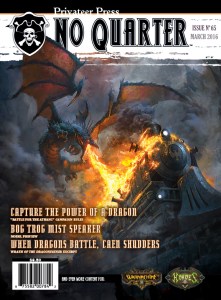
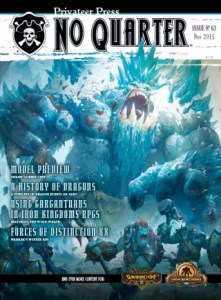
For over ten years No Quarter magazine has provided the Privateer Press community with a wealth of informative articles, top-notch fiction, and sneak previews into upcoming developments in Privateer’s many award-winning games. The magazine, of course, holds special significance for me since I guided its course for three years. It was one of the most rewarding and challenging jobs I’ve held. One of these days I’ll write about my experiences running No Quarter. The uncompromising schedule of a magazine is a terrifying but educational experience for anyone who wants to work in a creative field.
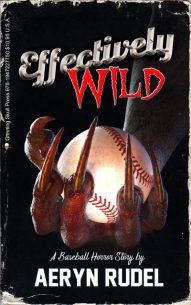
Effectively Wild – A Baseball Horror Story
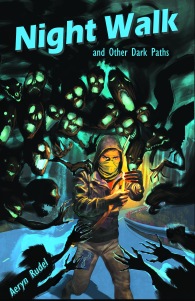
Night Walk & Other Dark Paths
Acts of War: Flashpoint

Acts of War: Aftershock

Acts of War: Stormbreak

 Aeryn Rudel's Rejectomancy