
Rejection Whys: Not Ready For Primetime

The reasons for a rejection are myriad and seemingly endless, but the more rejections you get, the better you become at reading the literary tea leaves and divining why the “not for us’s” and “we’re gonna pass’s” are clogging your inbox. In this series, I’ll go over some of the most common reasons, using my own work and rejections as examples, and maybe, just maybe, we can figure out why these editors aren’t blown away by my generational brilliance. 😊 Of course, all of this will be conjecture. You never really know why a story gets rejected unless the editor comes right out and tells you, but that’s so vanishingly rare that it might as well be mythological. (Well, except in this case, but it’s still pretty damn rare.)
Okay, first up is the one nobody wants to hear, least of all me, but it’s absolutely possible that you’re getting rejected because your work is simply not ready for publication. That doesn’t mean it will NEVER be ready, but you might need to work on your craft, or you might need to get some truly objective eyes on your work to bring it up to a publishable level.
But how can you tell through a rejection that your work’s not ready? Kind of a tough one because most editors are just going to send you the same form rejection they send everyone else, pros and amateurs alike. And as much as we might try, you can’t tell much from a form letter. That said, there’s a few ways, you might be able to tell. Let’s look at three of them.
- You’re only getting form letters. If a story is getting nothing but form letters after ten or fifteen tries, it’s not inconceivable that at least the story needs to be pulled and reworked before you send it out again. Zero feedback doesn’t always mean the story or your writing needs more polish, especially if you’re submitting to pro markets that generally only send form letters for anything but an acceptance. Still, if you hit double digit boilerplate rejects, it might be time to take a closer look at the story.
- You’re getting feedback in your rejections, but it’s a very specific type. What I mean is the editor is calling out nuts-and-bolts writing problems, like a lack of conflict, poor pacing, overwriting, clunky sentence structure, and so on. Now, there is a bit of nuance to these issues, and, for example, what one editor thinks is terrible pacing another might love, so take individual comments like this with a grain of salt. If you’re getting them consistently, though, there may be a problem to address.
- The editor just comes out and tells you. Like I said, this is rare, but it does happen, and, well, it hurts when it does. That said, blunt isn’t always cruel, and sometimes an honest appraisal of your work is exactly what you need to progress to the next level. See below. 🙂
So, what does one of those you’re not ready for publication rejections look like? I’ll show you. Here’s one I got for a story called “Rearview” back in 2005. The story had a solid premise, but my writing was, to be blunt, pretty amateurish at the time, and there was no way in hell that story was going to get published. Still, the editor took the time to tell me what was wrong with my story, and as much as it stung, it was very educational. Let’s take a look.
Dear Mr. Rudel,
I’m going to decline “Rearview” It’s not ready for publication.
1) You’ve used words incorrectly, and in redundance.
On the first page, Jacob is not “struggling to discern the distance.” He’s trying to estimate or gauge it. The result would not be a judgment, but an estimate or guess.
Stygian is capitalized. Refers to the River Styx. A monocular glow likely comes from a “single” headlight. Therefore, “single” is redundant.
“object” is vague…be more specific, in all instances in the story. Remember, the reader is going to fixate on this as the source of danger. He needs some details to hang onto.
“he might run afoul of” is unnecessary by implication.
2) The storyline is incomplete. Jacob flees Donna, reminisces of their relationship, is chased by a demon on PCP, and dies. There’s no story here. In a story, by definition, the protagonist changes in some way as a direct result of having experienced the events of the story…and this does not mean being consumed, unless the reason is clear, explicit, and serves a purpose.
In summary: do not overwrite your story. And adjust the storyline. Also, read more. There are lots of good horror short stories out there [we publish them in XXX, XXX, and XXX]. See what other writers are writing, and how they develop their stories.
Hope this helps.
As you can see, the editor pulled no punches here (I mean, that first line is about as brutal as it gets), but for the most part, they were spot on with their criticism. I was using words incorrectly and in redundance, though, to be fair, I might quibble with a few of the suggestions. For example, I think “struggling to discern the distance” is fine. Not great, but fine. The editor’s second point about the storyline, is, again, right on the money, and while I might disagree that a character MUST change in a significant way in EVERY story (especially in shorter pieces), what I had was a long vignette without much of throughline or a satisfying conclusion.
The editor’s last paragraph has maybe the best advice in the entire rejection. I was absolutely overwriting at this point, trying to sound like some half-assed H.P. Lovecraft and generally failing at it. I also needed to read more current fiction instead of just pulp authors from the twenties and thirties, whose styles are perfectly fine for yesteryear but don’t play well with modern fiction (even twenty years ago). As it would turn out, part of my growth as a writer was finding my own voice instead of trying to ape my favorite authors as I was doing here.
Now, some folks are going to read the rejection above as simply rude, and I get that. No one wants to hear these kinds of things about their work, but speaking for myself, this rejection, along with another very blunt, in-person conversation with a pro writer around the same time were painful watershed moments that propelled my writing forward. As an editor myself, I probably would have just sent a form rejection in response to a story like this. That’s not to say this editor was wrong in sending me this rejection, and as much as it hurt, I am thankful they did.
Have you ever got a “not ready for primetime” rejection? If so, and you feel like sharing, tell me about it in the comments.
Aeryn’s Archives: Tomb of the Blind God

I’m in a reflective mood, so let’s look back at my twenty-plus-year writing career and talk about one of my favorite projects. This is another D&D adventure, and while I wrote a fair number of those while I was working in the gaming industry, only one gave me the opportunity to meet an absolute legend of Dungeons & Dragons. So, yeah, let’s go back to a time when I was known as Aeryn “Blackdirge” Rudel (it’s a long story) and talk about Tomb of the Blind God and that time I got to meet and work with (in a small way) the great Erol Otus.
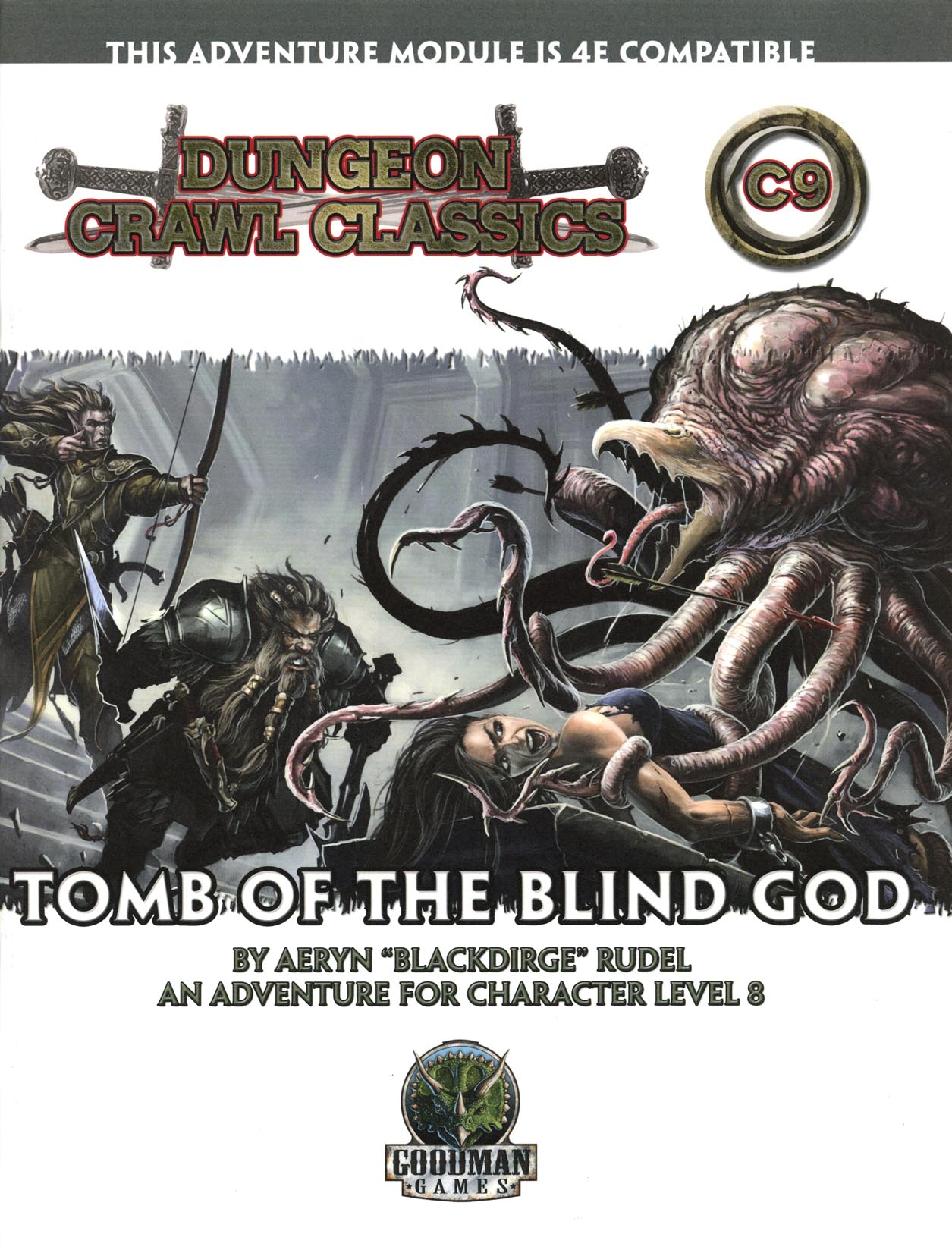
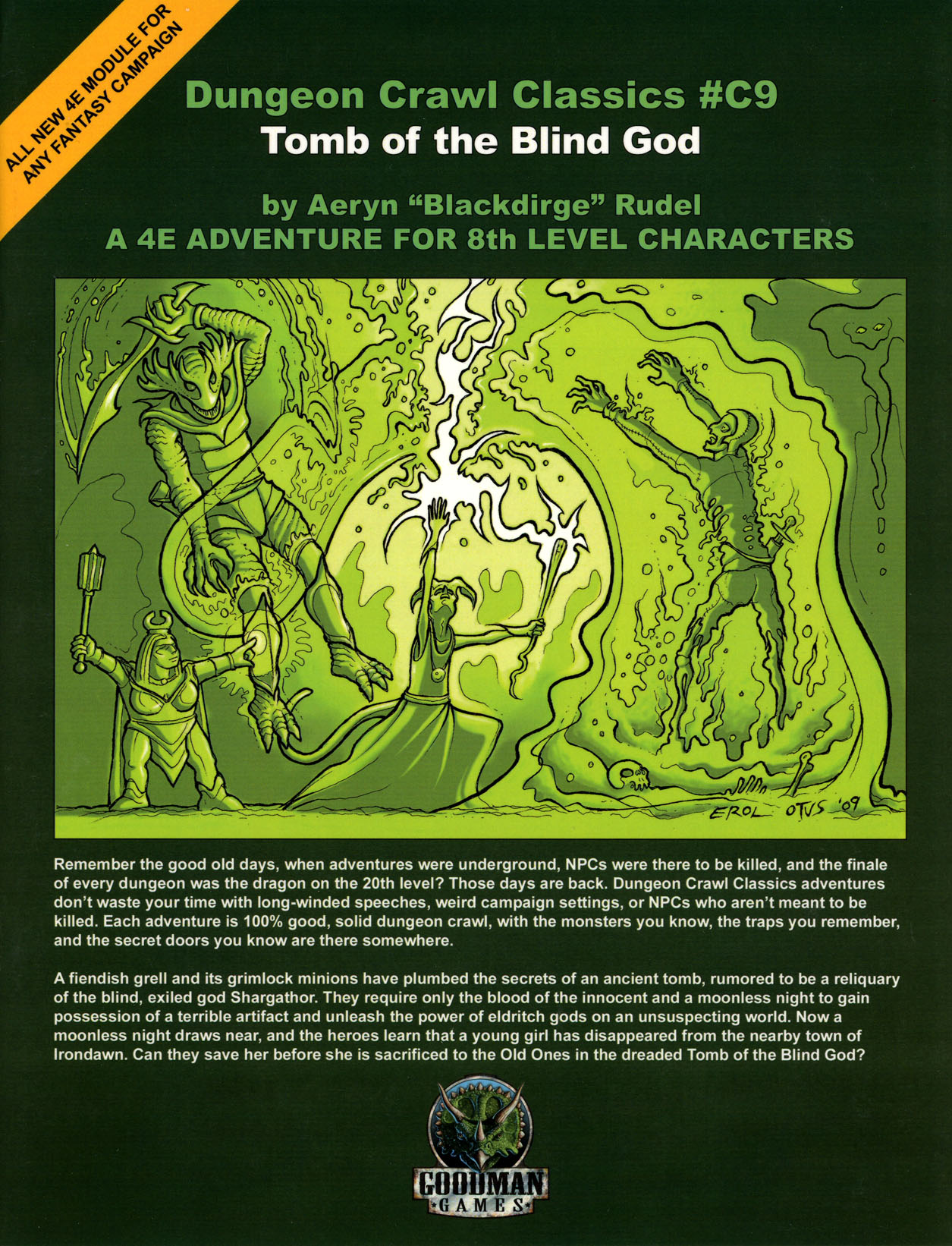
Back in the dim, misty past of 2009, while I was working for Goodman Games as a staff writer and editor, I was handed a truly awesome assignment. I was tasked with writing one of the special convention adventures that Goodman produced on the regular (and still do as far as I know). This was to be the first 4E D&D compatible convention special, and to say I was excited for the opportunity is a massive understatement. You see, not only was I getting to write a cool adventure that a ton of folks would play at conventions, that adventure would also get two awesome covers. One by the extremely talented illustrator Ben Wootten and another, special edition cover by the man, the myth, the legend, Erol freakin’ Otus. You can see the two covers above. They are, of course, hugely different in style, but I love ’em both. If you don’t know who Erol Otus is, Google it, and you’ll see his work gracing the covers and interiors of dozens of classic D&D books and adventures, like The Fiend Folio, Deities & Demigods, The D&D Basic Set, and many more.
Anyway, since I’ve always been a horror writer at heart, I knew the adventure would be inspired by my love of all things creepy and macabre, and the title popped into my head long before the plot of the adventure was even the barest hint of an idea. Tomb of the Blind God had a real old-school feel to it, which I thought was perfect for the cover treatment the adventure would receive. The adventure itself features a grell (floating tentacle monster) and it’s grimlock servants (think morlocks from The Time Machine) who are trying to wake an elder deity, the titular blind god, from it’s eons-long slumber and, as it would happen, only a band of doughty adventurers stand in their way. Clearly, the adventure draws on a lot of Lovecraftian themes, but it’s primary gimmick is darkness, or more specifically, blindness. The tomb forces the PCs to essentially fight in the dark, nullifying their light sources while enhancing the “eyeless sight” of their enemies. Yeah, kind of a dick move, but fun to write and a blast to play. 🙂
When the adventure was released, most conventions received the Ben Wootten cover, but two specific conventions, KublaCon and DunDraCon, received the special Erol Otus edition. Even better, since both conventions were in California, and not far from where I was living at the time, I was sent to run the adventure at DunDraCon (it might have been KublaCon, but my memory is a little fuzzy). Even, uh, more better, was that Erol Otus and I would sign copies of the adventure at the Goodman Games booth at the convention. Now, I have ZERO illusions that anyone that showed up at the booth for our signatures was even remotely interested in mine, but I don’t care, I got to spend an hour or so talking with Erol Otus about the early days of D&D and working at TSR and all that jazz. It remains one of my fondest memories from my time as game designer. (I also scored a couple of signed copies of the adventure for myself.)
One other thing of note, Tomb of the Blind God, along with the the D&D Dark Sun gameday adventure The Lost Cistern of Aravek, remain the only two things I’ve written that have any kind of collector value. I’ve seen Tomb of the Blind God with the Erol Otus cover go for a couple hundred bucks on Ebay, you know, because it’s such an awesome adventure, not because it’s a limited edition special signed by a D&D legend. 😉
Since the adventure was a convention special for a system that’s not well-supported, Tomb of the Blind God is essentially out of print. That said, you can still find print copies with the Ben Wootten cover at tons of online retailers for under twenty bucks. The Erol Otus cover is out there, too, though its considerably more expensive, especially if it’s been signed by Erol.
My sincere apologies to Goodman Games if I’ve misremembered any of the details here, but I think I got most of it, uh, mostly right.
Submission Statement: October 2024
Another month in the books; let’s see how I did with submissions, acceptances, and, of course, rejections.
October 2024 Short Story Submissions
- Submissions Sent: 6
- Rejections: 7
- No Response: 0
- Acceptances: 0
- Further Consideration/Shortlist: 1
- Withdrawals: 0
- Pending: 9
I only managed 6 submissions in October, partly because I’ve been so focused on revising my novel and partly because I’m trying to take a bit of a hiatus from writing to let my creative batteries recharge. Turns out, you can’t go 24-7, seven days a week for years without running smack-dab into a big ol’ wall of burnout. I mean, who knew? 😉
Anyway, six subs isn’t too bad, and it brings me up to 55 for the year. Of course, I always want to hit 100, but unless I suddenly become three times as productive as I’ve been for the entire year, I’m probably gonna end up a bit south of seventy. I’m fine with that, and if I can land another three or four acceptances, I’d call it a good year.
Rejections
Seven rejections in October.
- Form Rejections: 7
- Personal Rejections: 0
- Close-But-No-Cigar Rejections: 2
Although all seven rejections in October were of the form variety, two of them were close-but-no-cigar, final-round rejections. One of them was a real heartbreaker, as it was for a long-suffering story that has racked up more not-quite rejections than any story I’ve written. And, of course, that story is currently pending at another market after yet another further consideration letter. 🙂
The other final-round rejection is interesting enough that’ll show it to you below. It’s a good example of how you might think you know what a market prefers and can be 100% wrong. Here’s the rejection.
Dear Aeryn Rudel,
Thank you very much for taking the time to submit to [market] and for your patience as we review our submissions. We appreciated the opportunity to experience your stories. We wanted to let you know that your story, ‘Care and Fiending’ made it to our final round of considerations. Unfortunately, it wasn’t the right fit for us this time.
We received over 250 submissions and we had a difficult time selecting the pieces we chose to publish. We wish you best of luck in your writing and we hope you will submit to us during a future submission period.
I left out parts of this rejection that don’t really pertain to anything important, but this one is interesting in that I sent them two stories (bless them for taking multi-subs), “Care and Fiending”, which, as you can see, made it to the final round of consideration, and another story called “The Other Side of Empty”, which, uh, didn’t. Now, when I sent those stories I would have bet real cash money that if either of them got accepted or were seriously considered for publication, it would have been “The Other Side of Empty.” Shows you what I know, huh? That’s an important lesson, I think. You can study up on a market and read pieces they’ve published to get a sense of what kinds of stories they like, but at the end of the day, you have to roll the dice and just send the story in. Don’t self-reject, and, well, don’t self-accept either. Editorial tastes are wide and varied, and you never know what’s going to click with an editor or what isn’t.
And that was October. No real goals in November other than resting up a bit and coming back strong in the second half of the month to finish revising my novel and get it out the door for querying. I’m sure I’ll sneak a story submission or two in there as well, but I’m not setting any real deadlines or goals for the month. That’s a first, and I have no idea what I’m going to do with myself without the ever-present deadline doom hanging over me. 🙂
That was my month. How was yours?
Submission Statement: September 2024
Another month has come and gone, so let’s take a look at my submission report card for September.
September 2024 Short Story Submissions
- Submissions Sent: 5
- Rejections: 4
- No Response: 0
- Acceptances: 1
- Further Consideration/Shortlist: 0
- Withdrawals: 0
- Pending: 9
Only five submissions in September, half of what I sent in August. A lot of that stems from running out of open markets for the stories I currently have. I expect October to be a much more productive month because a bunch of markets I usually submit to have opened up. Still, five submission brings me to 49 for the year, and I think I can hit seventy subs or thereabouts when it’s all said and done for 2024. Overall, September was a decent month, and the one acceptance I received was a good one at a pro market.
Rejections
Four rejections in September.
- Form Rejections: 4
- Personal Rejections: 0
- Close-But-No-Cigar Rejections: 0
All four rejections in September were garden variety form letters and not really worth sharing. They each features the standard “not for us” and “keep us in mind for the future” that could possibly be viewed as a higher-tier rejection, but it’s unclear and ultimately unimportant. 😉
Acceptances
One acceptance in September from Factor Four Magazine, one of my favorite flash fiction markets. This is my fourth sale to Factor Four, and I seem to be producing work of late the editors like. I’m gonna try to keep doing that. Anyway, the acceptance letter is not particularly exciting, as it’s just a form letter. That’s not uncommon with acceptance letters, though; the editor needs to impart a lot of information to an author and there’s no sense writing that from scratch every single time. The story was published yesterday, so I’ll share that one and the three others I’ve sold to Factor Four.
“Removal Day” – Issue #40 (October 2024)
“Brave New Apocalypse” – Issue #24 (June 2023)
“Coffee Fiend” – Issue #19 (January 2023)
“Time Waits For One Man” – Issue #3 (October 2018)
Check out the four stories above if you feel so inclined (they’re short), and tell me which one you like best in the comments. 🙂
And that was September. In October, I’d like to hit double-digit submissions again, and I think that’s doable with all the horror markets opening up for subs. I need to write some new material, too, but I’ve got a half dozen half-finished pieces I should be able to polish off in the next week or so.
So that was my month. How was yours?
Current Pending Submissions: What Are My Chances?
One thing I spend far too much time doing is poring over my pending submissions on Duotrope and trying to divine my chances of publications by studying the market in question, my past history with said market, how long the story has been under consideration, and a myriad of other rejectomantic factors. I thought I’d share that process with you in more detail (inflict it on you might be a better way to say it), show you my current pending roster, and tell you what I think my chances of publication might be for each story.
To kick things off, here are the nine stories I currently have pending on Duotrope.

The pending roster above includes a mix of short stories and flash fiction, originals and reprints, pro and semi-pro markets, and even a sim-sub and a multi-sub. It really covers just about all the common submissions scenarios, which is why I thought it would be a good one to share and talk about. Below, I’m going to go over each submissions, tell you a bit about the story and the market, and employ a little rejectomancy to determine my chances of publication. At the end of each entry, I’ll predict my chances of an acceptance with a percentage based on the markets average acceptance rate (per the Duotrope or The Submission Grinder). Now, this is all in fun, and there are, of course, far too many factors and nuances to a story getting accepted to do something as silly as putting an actual number on it. Additionally, as usual, my rejectomantic analysis should be taken with a large grain of salt. It’s fun, but it’s best not to get too caught up in such things. Mostly, I just want to show you a little slice of my submission life and how I tend to think about my stories and the markets I send them to.
Okay, let’s dive in. Just an FYI, the listed acceptance rates for each market are taken from either Duotrope or The Submission Grinder and are only ballpark figures, but they’re a good reference point to start with.
1) “Time Has No Memory” to Utopia Science Fiction (8 cents per word/2.5% accpt. rate)
The only sim-sub this time around (both markets accept them, of course), “Time Has No Memory” is a short story that has definitely been around the block. It’s one of my most rejected pieces, though it frequently makes it onto short lists and has accumulated an impressive number of close-but-no-cigar rejections. You might have noticed the three lines next to the red P on under Status on my Duotrope pending roster. That means the story has been held for further consideration, which is always good, though nothing new for this poor oft-rejected story. That said, this is my first submission to Utopia Science Fiction Magazine, so other than what info I can glean from Duotrope and the Submission Grinder, I don’t really know what to expect. The story seems like a good fit for them, and they liked it enough to pull it out of the slush pile for a closer look, but with this story and all its heart-breaking rejections, it’s hard to get my hopes up too high. Still, one must try to be optimistic, so I’ll put my chances of an acceptance at 7.5%, roughly three times their listed acceptance rate on The Submission Grinder.
2) “Time Has No Memory” to Intergalactic Rejects Anthology (8 cents per word/NA)
The other market this much beleaguered story is currently on submission to is a neat little anthology for stories that have been rejected at least three times (love that). Well, “Time Has No Memory” certainly qualifies, and since I believe it’s a solid story, this felt like a good fit. Now, because this is a one-and-done anthology, there’s not much data. So, that leaves me with nothing more than my rejectomantic instincts to divine my chances of publication. The only real piece of info I have to go on is that the market rejected a bunch of stories about about a month ago and has been silent since. Because my story has been under review for 96 days, I think it’s somewhat reasonable to surmise it made it through the first round of review. That feels right(ish), but I have no hard evidence to go on. So, based on that scant information, I’d put my acceptance chances at, I don’t know, 5%? Sure, let’s go with that. 🙂
3) “Care and Fiending” and “The Other Side of Empty” to The Sprawl Mag (2 cents per word/4.44% accpt. rate)
Another new-to-me market, The Sprawl Mag is also just a new market in general. They’ve put out two issues so far, and since they publish speculative flash fiction, they appear to be a possible fit for my work. You’ll notice that I have two entries in my pending roster for this publisher, and that’s because they allow up to two stories per submission. Not many markets do that, and I’m always appreciative when I can fire off a multi-sub. The stories I sent them are wildly different in style and tone, so I’ve cast a bit of a wide net, and hopefully, even if both get rejected, I’ll learn which type of story they prefer (through a personal rejection or the like) and be better prepared for my next subs. I’m at 93 days out, which is well past their average response time for both acceptances and rejections, but because they’ve only put out two issues, it’s a very small sample size, and it’s likely the number of subs they’ve received (as authors find about a new paying market) has increased, as have their response times (understandably). As for my acceptance chances, I’ll go ahead and put it at their standard acceptance rate of 4.44%.
4) “Trapping Disaster” to Uncanny (10 cents per word/1.12% accpt. rate)
Well, every round of submissions should include one Hail Mary, right? Calling my chances of getting accepted at Uncanny slim would be quite the understatement, but, hey, to crib a boxing term, everyone’s got a puncher’s chance. The story I sent them is another of my frequently final-round-rejected pieces, and it’s been held at some other top-tier magazines. So, who knows? I will say that 46 days is the longest Uncanny has held one of my pieces, but seeing as their editor posted on social media they they received over 3,000 submission in their last submission window, I’m putting next to no stock in that particular bit of data. My chances here? I’ll be optimistic and go with the Submission Grinder’s listed 1.12% for this market. 🙂
5) “The Smile Price” to Pseudopod (8 cents per word/1.14% accpt. rate)
Pseudopod is the only market in this current roster of pending subs that’s actually published me before. Way back in 2016, they published my vampire baseball story “Night Games,” and though I’ve made it out of the slush pile a handful of times after that, I’ve yet to place another story with them. “The Smile Price” is a reprint, which audio markets like Pseudopod tend to welcome more than print markets. I sold this story to Black Cat Mystery Magazine last year, and it’s a crime/supernatural horror mashup. I think it’s one of the better stories I’ve written in the last couple of years, and it might be something Pseudopod would be interested in. Now, normally, with a market that’s published me before, I’d say my chances were better than the average bear, but it’s been so long I think I’m pretty much back to par. At 42 days out, I’m still well within their average response time for a rejection, and I know from past experience that if the story does make it to the next round, they’ll send me a further consideration letter. So, I’d put my acceptance chances at Pseudopod’s standard rate of 1.14%.
6) “On the Stairs” to Apex Magazine (10 cents per word/1.61% accpt. rate)
I’ve sent a lot of stories to Apex (including FOUR of the stories currently on this list), and though I’ve managed to climb out of the slush pile a few times and advance to the next round of consideration, I’m still 0 for 24. The monthly flash fiction contest is a relatively new thing, and this is only my second submission there. Each contest is themed, and this time, it just so happened that I had a flash piece that fit the theme perfectly, so I sent it off. Interestingly, this is a story I wrote years ago and promptly forgot about, and I only recently discovered it again while I was going through some files on my hard drive. It’s one of those pieces that I think I dismissed as just okay initially, but with a fresh read some four years later, I liked it quite a bit. Let’s hope the editorial staff at Apex likes it, too. Like Uncanny and Pseudopod, I’d put my chances dead even with everyone else, so 1.61%.
7) “Signs and Wonders” to Translunar Travelers Lounge (3 cents per word/3.8% accpt. rate)
This is my second submission to Translunar Travelers Lounge, and the last time I submitted, I received a further consideration letter followed by a final-round rejection. Interestingly, that story is the story currently under consideration at Uncanny, “Trapping Disaster.” Anyway, since I got so close with my last submission, when Translunar opened up again for submissions, I jumped at the chance to send them another. This time, the story is “Signs and Wonders”, which is similar in style and tone to “Trapping Disaster”, so I like my chances here a little more than maybe any submission on this list. That might be overly optimistic, but I have a good feeling. Yeah, I know; cue the form rejection the very second after this post goes live. So, in the spirit of unbridled positivity, I’m gonna go ahead and put my chances at an even 7%, double their average acceptance rate.
8) “What Hope’s Worth” to Small Wonders (8 cents per word/3.97% accpt. rate)
Small Wonders is an awesome speculative flash fiction market that’s relatively new but is consistently publishing excellent stories. I’ve submitted to them I handful of times, and my first submission, a very morose, even downright grim story called “Mr. Myth Killer” ended up with a final-round, close-but-no-cigar rejection. Galvanized by that near miss, I’ve sent them five more submissions, a mix of reprints and original, all with that same dark tone. The story they’re currently reviewing, “What Hope’s Worth”, is also pretty damn dark, and if this one doesn’t make the cut, then it might be time to change it up and send them something a tad more positive next time. Anyway, despite the near miss with my first submission, I’d put my chances here at dead average. Oh, what the hell, I’ll round up to 4%.
So there you have it, a look behind the curtain of my submission process and roster. Again, don’t put too much stock in my rejectomantic evaluations. They really are more for fun (and to maintain my sanity) than anything else. That said, you should keep an eye on your history with a publisher in order to fine tune your submission targeting. If a story with a particular style and tone gets close with a market, sending them another like that makes a lot of sense. Just remember; the data you can see about a market’s acceptance decisions is just the tip of the iceberg. There’s a lot going on behind the scenes that probably guides those decisions more than anything. So, write the best story you can, match it with a market to the best of your ability, fire it off, and cross your fingers. 🙂
Submission Statement: August 2024
It’s been a while since I’ve done one of these, mostly because I just haven’t been as active with short story submissions as I used to be. Well, that’s changed in recent months, so it’s time to return to my monthly updates and share the trials, tribulations, and occasional triumphs of throwing yourself to the mercy of the publishing industry. 🙂
August 2024 Short Story Submissions
- Submissions Sent: 10
- Rejections: 8
- No Response: 0
- Acceptances: 1
- Further Consideration/Shortlist: 1
- Withdrawals: 0
Ten submissions last month is the most I’ve sent in quite a while. Those ten bring my submissions for the year up to 45, which is well off my traditional target pace of 100 per year, but I’m okay with that. At my current pace, I should get somewhere around 65 to 70. That’s pretty solid.
Rejections
Eight rejections in February.
- Form Rejections: 3
- Personal Rejections: 2
- Close-But-No-Cigar Rejections: 3
Kind of a heartbreaker of a month, to be honest. Three CBNC rejections is tough, though somewhat encouraging (I’ll share a couple of these with you below). The personal rejections are from markets that always give you some level of feedback, some of which is useful and some of which is, uh, not. The form rejections were, well, typical and uninteresting.
Okay, as promised here are two of the CBNC rejections.
Dear Aeryn,
Thank you for giving us the opportunity to read [story]. Unfortunately, it does not meet our needs at this time. This submission did, however, reach our final round of review and was close to an acceptance. We are huge fans of your writing and this story featured a lot of what we love most with your stories, with the opening really grabbing us. Ultimately, we found that we wanted a bit more from the ending.
We’re sorry it’s not the right fit for us, but we wish you luck placing it elsewhere. We also appreciate your interest in [market] and very much hope you’ll keep us in mind in the future.
Regards,
Obviously, this market has published me before and tends to like my work (bless them). The feedback here is minimal (hey, they mostly liked the story), but it’s worth taking a look and seeing if I can’t add more impact to the ending and stay under 1,000 words. I think I’ll end up selling this piece eventually.
Dear Aeryn,
Thank you for your latest submission and continued interest in [market]. Our editors are always honored to read and discuss your submissions. Unfortunately, we have decided not to publish this particular piece.
Please know it was a difficult decision, and your story reached the very final discussion.
We note that you remain a master of flash fiction which possesses devastating (in a good way) pathos and emotionally dark endings that linger with a reader.
This draft of the story we felt had slight pacing issues in the middle which brought down your excellent opening and ending. While Kevin dismantles and rebuilds his home the story movement feels slow, with one of the few excitments of this section the main character running someone over with their Humvee. The middle section reminded some of us of a sequence from The Walking Dead/Fallout as we watched the characters complete a task.
Your story’s title and ending remain a creative highlight in our readings, and we are truly happy to have read your story. We are glad to have a submission from you at any time.
Best regards,
Another market that has published me a fair amount and who also tends to like what I send them (seriously, bless these folks). One of my favorite things about this market is the excellent feedback they tend to give on rejections. Now, in this case, I was actually going for a Walking Dead/Fallout kind of thing in the middle, as I tend to enjoy those task-oriented sequences in postapocalyptic shows and games. That said, I might have gotten a little self-indulgent and let the scene drag on too long, which, as the editors astutely pointed out, hurt the pacing of the story. I’ll definitely see if I can’t shorten or summarize more of that middle section and maybe add another event with more emotional resonance.
Also, I should point out, it’s hard to get too mad at a rejection that calls you a master at anything (even if I humbly disagree). 🙂
Acceptances
One acceptance in August, which ended a four month drought. I’m really pleased to see this one get picked up, as it might have my favorite title for one of my short stories ever. Here’s the acceptance letter.
Hi Aeryn,
Thank you for submitting “The Last Labor of Larry Lizard” for consideration. We are happy to let you know that your story has been accepted, and will be tentatively scheduled on [date].
Please complete the contributor agreement located here:
Please also forward a short 3rd person bio and photo to accompany your story if you have not published with Shotgun Honey or you wish to update this information.
Thank you for your contribution and we hope to work with you again soon.
All the best.
This’ll be my second publication with Shotgun Honey. I’d submit more often to them (they’re a great market for crime fiction), but they have a hard 700-word limit, and I struggle to write flash under about 900 words. Both stories I’ve sold to them started out at over 900 words, which I then cut down to 700, so it’s certainly possible for me to produce saleable flash fiction at that length, but whoo boy, is it hard.
Anyway, I’m thrilled to have placed another story with Shotgun Honey, and I’ll be sure to share the piece with you when it publishes in a month or so.
And that was August. My goals for September are to send at least six submissions, finish up a bunch of freelance work, and keep plugging away at the revisions on a novel (which, god willing, I’ll be done with by the end of the month).
How was your month of submitting/writing?
Overanalyzing Story Acceptance Rates Part 271 – Rates By Market Tier
One of my favorite rejectomantic topics is acceptance rates. I’ve picked apart my own for nearly a decade, overanalyzing them in an attempt to understand the whims and vagaries of the publishing industry. What have I learned? Not much, honestly, but, fuck it, let’s take an even deeper dive into my acceptance percentages and look at them by market payment tier! I mean, that’ll teach us something, right? RIGHT? 🙂
Okay, so if you’re new to this whole story submission nonsense, what do I mean by market payment tier? Simply put, in genre fiction, markets are broken into broad categories based on how much they pay. The three categories are pro, semi-pro, and token. There are also markets that pay nothing, the so-called for-the-love-of-it markets, but I tend to lump them in with token. YMMV there. Now, as to what constitutes pro payment, it varies by genre and is set by the various genre writing organizations like the SFWA, HWA, and MWA. For sci-fi and fantasy, the pro rate is generally considered to be at least 8 cents per word. For horror it’s 5 cents per word. I think it might be 5 cents per word for mystery and crime, too, but don’t quote me on that. Semi-pro markets pay a wide range that works out to just under pro rates to a bottom floor of one cent per word. Finally, token markets pay under one cent a word (usually flat fee).
So, how have I fared in each market tier? First, let’s get some baseline numbers.
Not including pending responses, withdrawals, non-responses, and submissions of things that are not short stories (novels), I have sent 739 submissions since I started tracking them on Duotrope way back in 2012. Of those 739 submissions, 105 have come back as acceptances. That works out to an overall acceptance rate of 14%. That’s not too shabby, but now lets break it out by market tier.
Pro Markets
To date, I have sent 379 submissions to pro markets, and I have received 32 acceptances from those markets. That’s an 8% acceptance rate. I knew it was gonna be not great, but ouch. Letting the single-digit sting wear off a bit and looking at the numbers closer, turns out that 8% isn’t that bad when you look at the acceptance rates of the markets I’m submitting to. They generally hover in the 1% or LESS range, so it could be a lot worse. Of course, I’d like to do better, but competition is fierce at pro markets, so lots of rejections is just part of the game.
Semi-Pro Markets
As of today, i have sent 296 submissions to semi-pro markets, but I’ve been A LOT more successful with them than I have with pro markets. Twice as successful, in fact. I have, currently, 49 acceptances from semi-pro journals and zines, which works out to a 17% acceptance rate. That’s solid. Hell, that’s good. Now, of course, the question is why am I so much more successful at these markets than the pro markets? Well, with a few exceptions, there’s just not as much competition. Though semi-pro markets can and do receive a lot of submissions, they’re generally not getting the absolute bonkers numbers that a market like Clarkesworld is pulling down. So, if you write a good story, you have a better shot at standing out, and therefore a better shot of getting published. That same story might get a close-but-no-cigar rejection at a pro market (or even a form rejection). It’s honestly just a numbers games. If you’ve been writing successfully for a while, i.e., you’re what some folks might consider good, you’re chances are just better at a semi-pro zine. I want to point out, however, that this absolutely does not mean that semi-pro markets don’t have high standards when it comes to the stories they publish. They definitely do, and most have standards as high as any pro market.
Token and Free Markets*
Though I sent a fair number of submissions to token and free markets when I first started out, I don’t generally submit to them anymore. This is not because there aren’t some very good markets in this tier. I just want to get paid something for my work. So, I’ve only sent a total of 64 submissions to token and free markets, and of those 64 submissions, a whopping 24 were accepted. That’s a 38% acceptance rate. Pretty damn good. Now, in my case, this inflated rate is mostly due to the fact that early on, I found a wonderful market that really liked my work, and they’ve published me a lot. I’d guess even without that market, my acceptance rate at this tier would be pretty solid, but not, you know, 38%.
*You might have noticed the asterisk in this section header. Well, that’s because one of the token markets I submitted to a lot also runs contests that offer cash prizes. I made the command decision to lump those contests in with semi-pro markets (because they technically pay), but I would understand if some folks considered that dirty pool. So, my revised acceptance rates if you count the contests as token are 14% at semi-pro markets and 43% at token markets. Not a massive change, but significant enough that I thought I should point it out.
Conclusion
Not that it’s any great surprise, but the more a market pays, the tougher it is to get published by them. That said, I don’t think we should chalk that up to quality necessarily. I’ve seen markets that pay nothing that are incredibly professional and publish only high quality work. On the flip side, I’ve seen markets that pay a pro rate, are run in a, uh, less than professional manner, and then fold after a couple of issues. I think my personal acceptance rates at each tier comes down to simple math. The more submissions a market receives, the tougher it is to get published, and, in general, pro markets receive the most submissions, then semi-pro, then token/free. But, you know, I also have to face facts. It’s entirely possible (even probable) that I’m simply not writing the kind of fiction some of the big markets want to publish. I’ve gotten close, of course, but I’ve never managed to cross the threshold at a lot of the big names. Don’t get me wrong; I see that entirely as a me problem, not a them problem, and all I can do is keep writing the kind of fiction I love and hope that some day I can stick the landing at one of my dream markets. 🙂
To sum up, here are my quick and dirty numbers at each tier.
- Pro – 379 subs, 32 acceptances, 8% acceptance rate
- Semi-Pro – 296 subs, 49 acceptances, 17% acceptance rate
- Token/Free – 64 subs, 24 acceptances, 38% acceptance rate
- Total – 739 subs, 105 acceptances, 14% acceptance rate
Thoughts on these acceptance rates? Care to share your own? I’d love to hear it in the comments.
Rejection Feedback – Inspiring, Informative, or Insensitive?
Editorial feedback on a rejection is as varied as editorial tastes, and how an editor chooses to relate something like “close-but-no-cigar” to an author can be radically different from market to market. A recent discussion about a comment I received a while back got me thinking about this and how we, as authors, might react to different styles of feedback, even when feedback from different editors essentially says the same thing. So, let’s look at three comments I received on three rejections and see how each one lands.
All three of the comments I’m going to show you are from close-but-no-cigar rejections. Publisher names and story titles have been removed to protect the innocent. 🙂
Comment 1
An 8, while we’re looking for 9s and 10s.
The comment above is the one that got me thinking about this issue, and when I shared it with writer friends and on social media, the response was pretty varied. Some folks found the comment insulting, blunt, and didn’t like the idea of having their work reduced to a numerical value. My opinion? I’m fine with it. Yeah, this is not generally how editors handle feedback on a story, but when I take a step back and think about it, there’s nothing insulting here. The commenter is saying what a lot of editors say, i.e., this is good, but not quite good enough. Honestly, it’s hard for me to get upset at someone who thinks my story is an 8 out of 10, and I like the unambiguous directness of it. YMMV, of course.
Comment 2
Thank you for your patience. Your story [title] made it to the second round for consideration, but ultimately, our editorial team decided against accepting it. This reading period was very competitive, so I hope you won’t be too discouraged. We look forward to future stories from you next time we’re open for submissions.
This is a pretty standard response when your story makes it to late rounds or final round of consideration. The editor doesn’t make any kind of value judgment on the work nor do they give any actionable feedback (not uncommon), but they’re saying the same thing as the editor in the first comment – good, but not good enough. Now, they do hint at why it wasn’t good enough – a very competitive environment – but that’s gonna be true of any submission to any market. The comment tells me I should try again, and I definitely will. So, nothing to get upset about here other than garden-variety disappointment at getting this close and not making the cut. I’d guess most authors would have no real issues receiving this response from an editor.
Comment 3
We really loved this worthy and thoughtful story. It reached the final round of submissions. This is rarified air that the vast majority of submissions to [market] do not reach. I hope this news provides some measure of consolation, even though I know this rejection letter must be disappointing.
Personal note: Congrats on reaching the final round of submissions! I dearly hope you’re able to find a beautiful and appropriate home for such a daring and thoughtful story. This is such an elegantly written and surprisingly sweet story—it’s concise but not terse, and it conveys a real sense of cross-cultural intimacy and connection. It’s romantic but not cheesy or sentimentalist; the speculative conceit is metaphorical, to an extent, but it’s above all an avenue for closeness and connection. It reminded me a little of Kimi no na Wa, one of my favorite films.
Well, rejections letters don’t get much nicer than this, folks. The editor says a lot of wonderful things about my story, which I appreciate, and assures me that even getting to this point is a feat in and of itself. Knowing how few stories this market actually publishes, I believe it. That said, at the end of the day, the editor isn’t saying anything different than the editor in the first comment. Good, but not good enough comes in a much nicer package, but it’s the same message. Now, I’d guess most authors would prefer a close-but-no-cigar rejection to be delivered in this fashion, and I get it, but, if I really think about it, my reaction to this comment and the first one are the same: initial disappointment, some feeling of validation, and a commitment to try the publisher again.
So, thoughts on these three comments? Do you find any of them inspiring, informative, or insensitive? I’d love to hear about it in the comments.
On This Day in Submission Land: June 21st

Time for another installment of On This Day in Submission Land. Slight change in format going forward. I’ll show you the submissions I sent on the fateful day, including my cover letter if it’s interesting, as well as responses I received. So, let’s take a look at June 21st.
Submissions Sent
1. 6/21/15 – “Manny” to EGM Shorts
Dear Fiction Editors,
Please consider my flash fiction piece “Manny” for publication at Evil Girlfriend Media. The story is approximately 1,000 words in length.
Bio: I currently work as the publications manager for Privateer Press, Inc., and my short fiction has recently been published by Allegory, Devilfish Review, and The Molotov Cocktail.
Thank you for reading.
Sincerely,
Aeryn Rudel
Back in 2015, I was fairly new to sending submissions, and my cover letter, thought not terrible, shows some of my inexperience. There are a few things in here I don’t do anymore, such as the closing phrase “Thank you for reading” and the opening “Dear Fiction Editors.” Now I just address the letter to Dear Editor, and I don’t use thanks for reading at all. I was also including a bio even if the submission guidelines didn’t call for it. Though, in truth, that “bio” was really just a list of my writing bona fides and a few credits. I don’t do that anymore, as it’s not necessary, and if the guidelines don’t ask for a bio, it’s probably best not to include one.
The story, “Manny,” I never sold, and it has been relegated to the trunk dimension. I did, however, eventually sell a story to EGM Shorts, a saucy little take of autophagia called “The Rarest Cut.” Sadly, EGM Shorts closed down years ago.
2. 6/21/17 – “Small Evil” to The Spectral Book of Horror Stories 5
Dear Editors,
Please consider my short story “A Small Evil” for publication in The Spectral Book of Horror Stories 5. The story is approximately 2,100 words in length. My short fiction has recently appeared in DarkFuse Magazine, Pseudopod, and Havok magazine.
Thank you,
Aeryn Rudel (byline)
The story here, “A Small Evil” I eventually sold to The Arcanist as a flash fiction piece. I had less luck with the longer version I sent to this anthology. As far as I can tell, The Spectral Book of Horror Stories 5 was the last in this series.
3. 6/21/18 – “The Last Scar” to Trembling With Fear
Dear Editor,
Please consider my short story “The Last Scar” for publication at Trembling With Fear. The story is approximately 1,000 words in length.
Bio: Aeryn Rudel is a writer from Seattle, Washington. His second novel, Aftershock, was recently published by Privateer Press, and his short fiction has appeared in The Arcanist, Havok, and Pseudopod, among others. He occasionally offers dubious advice on writing and rejection (mostly rejection) at www.rejectomancy.com or on Twitter @Aeryn_Rudel.
Best,
Aeryn Rudel
Publisher Responses
1. 6/21/17 – Rejection from Black Static for “A Small Evil”
Many thanks for sending “A Small Evil”, but I’m sorry to say that it isn’t right for Black Static. I wish you luck placing it elsewhere, and hope that you’ll send me something new soon.
This is a standard form rejection from Black Static, a pro market I’ve been trying to crack for years. Not much else to say here other than you might notice I submitted this story on the same day this rejection arrived. That’s not unusual for me. If I get a form rejection with no feedback, and I still feel confident about the story, I’ll generally send it out again the same day.
1. 6/21/17 – Rejection from Arsenika for “The Last Scar”
Thank you for sending “The Last Scar” to Arsenika. Unfortunately, it’s not quite what we’re looking for at the moment. Best of luck placing it elsewhere, and thanks again for trying us.
Noticing a pattern here yet? 🙂 This rejection from Arsenika for “The Last Scar” was turned around immediately into a submission to Trembling With Fear, which I detailed earlier in this post. Arsenika was a speculative flash fiction and poetry market that ran from 2016 to 2021. The were a pro market, paying $60.00 for flash fiction up to 1,000 words. I only submitted to them twice, both times in May of 2018. Both stories were rejected. I definitely would have kept trying, as they were a quality market and, looking back, I think they might have been a good fit for some of the stories I was writing in 2020 and 2021.
And that is June 21st in submission land. Thoughts on these submissions and responses? I’d love to hear about it in the comments.
On This Day in Submission Land: June 12th

It’s time for another installment of On This Day in Submission Land. Today, we cast our gaze back to the dim, misty past, to the ancient before times of 2015 and 2020, and a pair of rejections for two of my most-rejected stories. Let’s have a look.
June 10th, 2016 – Rejection
We have read your submission and will have to pass, as it unfortunately does not meet our needs at this time.
This was a form rejection from The Dark for my story “Paper Cut.” As per usual with The Dark, the rejection was speedy and succinct. I submitted the story at 12:32 p.m., and it was rejected at 1:21 p.m., a span of 49 minutes. That’s fast, even for The Dark, but not fast enough to be an outlier. Tales abound of authors who’ve been rejected quicker, some as fast as ten minutes or less. Personally, I love that The Dark is so quick. They’re usually the first market I submit to if I have an appropriate story. I know I’ll hear back quickly, and, hey, there’s always a chance I’ll break through and get to add this fantastic market to my publishing credits.
As I alluded to in my opening, this story, “Paper Cut,” was rejected a lot before I finally sold it to Red Sun Magazine in May of 2016. It accrued 15 rejections before the sale, and it has since picked up another three as a reprint sub. Just another example of why you have to keep trying and keep submitting when you believe in a story. The right publisher is out there; it can just take a while to find them.
June 10th, 2020 – Rejection
Thank you for giving us the opportunity to read your story. We regret that we are not able to make a personal reply or give criticism on returned manuscripts. The large number of submissions we receive makes it impossible to do so. We can assure you, however, that your work has been given careful consideration. Unfortunately, it does not meet our present needs.
We wish you the best of luck in placing your work with another magazine.
This form rejection is from Ellery Queen Mystery Magazine for my story “The Scars You Keep.” I’ll admit, this was a bit of a long shot. The story is nominally a crime story, but the supernatural element is overt and drives the narrative. This is not to say that Ellery Queen won’t publish the odd speculative piece, but, from what I’ve seen, it’s not their usual fare. That said, after 16 rejections, I was running out of places to send the story, so I took a chance. I eventually sold “The Scars You Keep” to Wyldblood Magazine in September of 2021 on it’s 19th submission. This is one of those weird stories that racks up short-lists and close-but-no-cigar rejections but just never quite breaks through. I’m glad it finally found a home, but, damn, it was a SIX-YEAR odyssey getting there.
One last thing about this rejection that I think is interesting is how different it is to the rejection from The Dark, while being essentially the exact same thing–a common, boilerplate form letter. Personally, I’m fine with either style of form letter, and view this kind of thing as simply an expression of editorial style.
And that’s my submission track record for June 12th. Care to share one of your own “on this day” rejections? I’d love to see it in the comments.
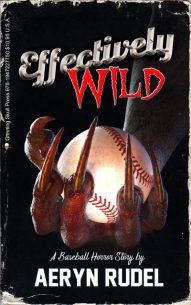
Effectively Wild – A Baseball Horror Story
Night Walk & Other Dark Paths
Acts of War: Flashpoint

Acts of War: Aftershock

Acts of War: Stormbreak

 Aeryn Rudel's Rejectomancy