
Ranks of the Rejected: Andrew Bourelle
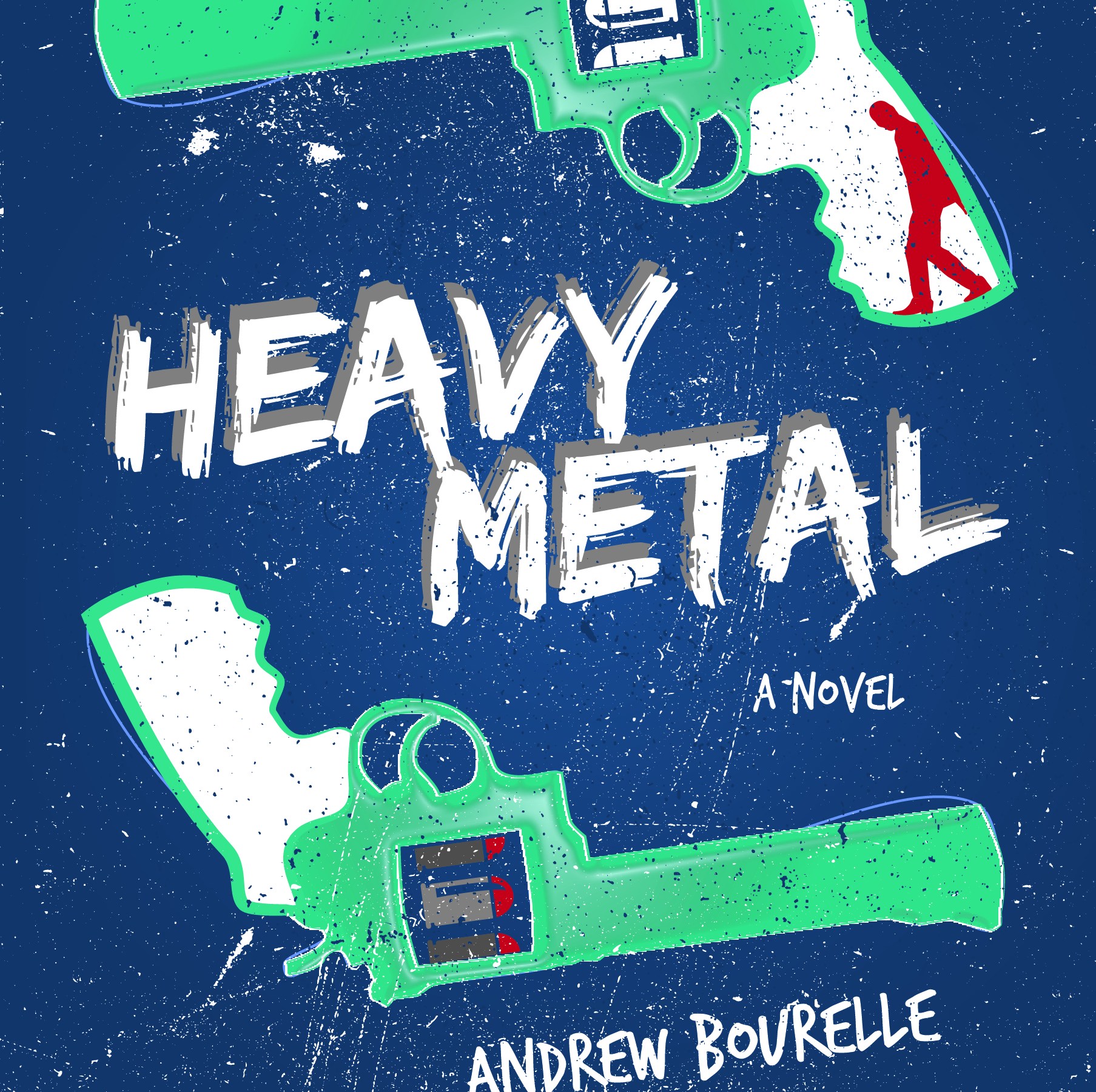
This time on Ranks of the Rejected I spoke with an author who directly inspired me to get off my ass and start submitting stories on a regular basis. I met Andrew Bourelle through his brother Ed Bourelle, a friend and colleague, and we started trading stories about six years ago. Not only did Andrew give me great feedback on my work, his dogged persistence in the face of rejection is part of what inspired me to start this blog. In fact, whenever I tell a story about a “writer friend” to demonstrate some point about not letting rejections get to you, half the time I’m talking about Andrew.
Folks, this guy is the poster child for sticking to your guns, working on your craft, and not letting rejections slow you down. His perseverance (and oodles of talent) have resulted in some well deserved success over the last couple of years, and I couldn’t be happier for him. So check out the interview below, absorb the wisdom therein, and then go read Andrew’s stuff.
1) What genres do you typically write? Do you have a favorite? If so, what about that genre draws you to it?
My writing tends to be pretty varied, I think. I’ve published stories in literary journals, and I’ve published genre stories as well: mystery, horror, science fiction, etc. I’ve never really been able to confine myself to one genre. I don’t stop myself and say, “Wait, you’re a literary writer—you can’t write a post-apocalyptic monster story.” If I have an idea, I write it. And if I think the story is halfway decent, I make some attempt to find a place to publish it.
Lately, I’ve been writing a lot of mystery/thriller fiction. I love to be surprised by what I read, and mysteries and thrillers are built to surprise readers. I like to put my foot on the gas and take readers for a fun ride. I’m working on mystery/thriller novel that’s giving me a chance to do that.
2) You recently published your first novel, Heavy Metal. Tell us a little about how that book came together and how you went about the business of getting it published.
I wrote Heavy Metal as an experiment to see if I could write a novel. It’s a coming-of-age story set in the late 1980s. The main character is contemplating suicide, and in many ways the book is a character study. But I also wanted the narrative to pull readers in and keep them engaged. The novel has been described as suspenseful, intense, heartbreaking—which are all adjectives I’m happy with.
As I wrote it, I didn’t really think about how it could be labeled or marketed. I just wrote the story that was coming out of me. However, when it came time to find an agent or publisher, no one really seemed to know what to do with it. Is it a literary novel? A Young Adult novel? I didn’t care how it was categorized. I just wanted to write a book that might resonate with readers. But I imagine most agents took one look at the query letter and said, “Eh, I don’t know how to sell this.”
After a few years of failing to find an agent to represent the book, I pretty much gave up hope of ever seeing the book in print. Then it occurred to me that literary publishers often hold contests and publish the winning manuscripts. It’s one way that story collections and literary books that don’t seem to fit into easy commercial categories find a publisher. I figured I’d give it a shot. It ended up winning one of the first contests I entered—the Autumn House Fiction Prize. I’ve read past winners of the prize and am honored and humbled to be in their company. I think my editor told me there were more than 500 submissions. Somehow, from that pool, Heavy Metal was selected to be one of a dozen or so finalists, and the final judge, William Lychack (the author of a wonderful coming-of-age novel called The Wasp Eater), picked it as the winner. I always thought if the right person would just read the book, they would want to publish it. That’s essentially what happened; it just took longer than I thought to find the right person to read it.
3) Your story “Y Is for Yangchuan Lizard” was recently chosen for inclusion in The Best American Mystery Stories 2018. This is your second go-around in the anthology, and I know your last story led to something pretty cool. Tell us a bit about that.
A story of mine called “Cowboy Justice” was picked to be in The Best American Mystery Stories 2015, which by itself is one of the highlights of my writing career. But it also opened up a really interesting door for me. James Patterson was the guest editor that year and picked the final selection of stories. Around the time the anthology was coming out, his people contacted me and said he was getting ready to launch a new series of short thrillers, called BookShots, and wanted to know if I was interested in coauthoring something with him.
We worked on a short thriller called The Pretender, which was published in 2016 in Triple Threat, a collection of three of his BookShots. The Pretender is also available as a downloadable audio book. It’s a fun story about a retired diamond thief who can’t outrun his past. It was an extraordinary experience to work with James Patterson, and I’ll forever be grateful for the opportunity.
4) Okay, this blog is called Rejectomancy, so tell us about your first rejection letter or the first one that had a significant impact on you as a writer.
I think my first rejection came in high school. My teacher knew I liked to write and passed along information about a “short short story” competition. (I wish I could remember what journal held the contest, but I’ve forgotten.) I think the stories had to be 250 words or fewer. I wrote something and sent it in, knowing 100-percent that I wouldn’t win. But the act of sending something out seemed really important to me, like I was telling the universe that I wanted to be a writer.
In some ways, receiving the form rejection was validating to me. No one laughed at me. No one said, “Are you crazy, kid? You’re out of your league!” I got the same form rejection all the other real writers got. I have no idea if they took my story all that seriously, but it at least felt like they had.
5) Got a favorite rejection? Memorable, funny, just straight-up weird?
The worst rejections are the personal ones where an editor’s critique of the story is unhelpful. I recently received a rejection where the editor said that the “tense shifts were distracting.” I thought, “Oh, there are tense shifts in there? What a rookie mistake.” I carefully reread the story and there weren’t any tense problems. I thought, “Did you copy the text from your last rejection into my rejection by mistake? Did you even read my story?”
On the other hand, there have been times where editors have made editorial suggestions that turned out to be valuable. I remember my short story “Little Healers” was rejected by Pseudopod, and the editor made a note about a problem he had with the story. I hadn’t noticed the issue before, but once it had been pointed out to me, I agreed with the assessment. I revised the story and sent it elsewhere. It was published in the anthology Swords & Steam Short Stories and was listed as an honorable mention for Ellen Datlow’s Best Horror of the Year. If it wasn’t for the rejection, I might never have seen the problem.
6) What’s the toughest part of rejection for you? Pro tips for dealing with it?
I think one of the keys to not letting rejections get to you is to have plenty of stuff out there under consideration. If you only have one or two stories that you have under consideration at one time, then a rejection can feel like a real setback. But if you’ve got 10 or 12 stories under consideration at 15 to 20 different publications, then you always have stuff in circulation. A single rejection doesn’t hurt much because you have other stories under consideration at the same time.
When I was submitting stories early on, I would only have one or two that I believed in, and I’d submit those to one publication each, even if simultaneous submissions were allowed. Then I’d wait however many months for a response and be bummed when a rejection rolled in. The key for me was writing more stories, getting more out there under consideration, and not putting too much hope in any one submission.
7) Plug away. Tells us about some of your recent projects and why we should run out and buy them.
You mentioned my story “Y Is for Yangchuan Lizard” is coming out in this year’s volume of The Best American Mystery Stories, which will be published in October. I was unbelievably excited when I got the news. The table of contents includes authors like T.C. Boyle, Lee Child, Michael Connelly, Joyce Carol Oates—writers I’ve read, admired, and learned from.
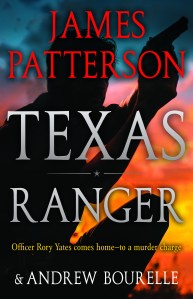
Another big publication on the horizon is a second project with James Patterson. Texas Ranger, a novel he and I coauthored, is scheduled to be released in August. It was a lot of fun to work on. I recently received an ARC, and it was a real thrill to see my name on the cover with James Patterson. I can’t wait to see the novel in bookstores!
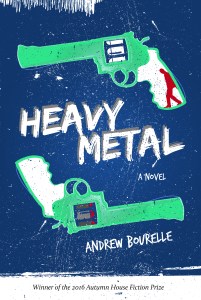
 Andrew Bourelle is the author of the novel Heavy Metal. His short stories, poems, and comics (illustrated by his brother Ed Bourelle) have been published in journals and anthologies, including The Best American Mystery Stories, D Is for Dinosaur, Equus, Florida Review, Heavy Feather Review, Prime Number Magazine, The Molotov Cocktail, Weirdbook Magazine, and Whitefish Review. You can follow him on Twitter at @AndrewBourelle.
Evolution of a Short Author Bio

About two years ago, I wrote a blog post outlining how to write a 50-word author bio, or at least how I write one. I mentioned in that post that an author bio is a living thing and should change and grow as you change and grow as a writer. Well, let’s take a look at that bio-building process and see how my 50-word bio has transformed in the last two years (and how it might change again in the future).
Like last time, my short author bio will include the following elements:
- Basic details
- Accomplishments
- Where to go/buy
Basic Details
The who, what, and where. Like I said in the first post, keep potentially sensitive data out of your bio. No need to give all the identity thieves in the world a head start by plastering your phone number and address all over the place.
Here are my basic details in 2016:
Aeryn Rudel is a freelance writer from Seattle, Washington.
And, uh, here are my basic details now:
Aeryn Rudel is a freelance writer from Seattle, Washington.
Yep, I still live in the same place, so no changes here. I guess I could say something like novelist instead of freelance writer, but with only two novels under my belt and a lot more short story and gaming credits, writer just feels more accurate.
Also, like I said in the first post, I’ve decided to reveal the city I live in. In a big city like Seattle, I don’t feel like there’s much risk there, but I could make it more vague by saying something like the Pacific Northwest.
Accomplishments
This is where you let folks know about the cool stuff you’ve written and published. Like everything in this bio, you should keep it short and to the point. List a few of your more prominent publications, awards, and the like.
My accomplishments look like this in 2016:
His short fiction has appeared in The Devilfish Review, Evil Girlfriend Media, and The Molotov Cocktail.
Here’s what I’ve been going with recently:
His second novel, Aftershock, was recently published by Privateer Press.
Obviously, the big change from 2016 to 2018 is I’ve published a couple of novels with Privateer Press. I chose to mention the second and most recent novel because it implies I’ve written more than one without, you know, listing them both. Now, when I publish the third novel this year, I might go with something like: He is the author of the Acts of War trilogy. That would also leave me plenty of room if I wanted to list another significant publication.
Yeah, I could have listed some of my more recent short story publications, a few of which are with pro markets, but I think the novel is more significant. It also allows me to trim some words I’ll use elsewhere.
Where to Go/Buy
If folks like your work enough to actually read the bio at the end of your story, definitely give them a link to click so they can check out more of your stuff. Blogs, websites, even things like Amazon author pages are all possibilities.
In 2016, my where to go/buy looks like this:
Learn more about Aeryn and his work on his blog at www.rejectomancy.com.
Here’s what it looks like now:
Aeryn occasionally offers dubious advice on the subjects of writing and rejection (mostly rejection) on his blog at www.rejectomancy.com.
Yep, it’s essentially the same, but did you notice my oh-so-clever and self-deprecating humor? Doesn’t that make you feel sorry for me/want to check out my blog? 🙂 All kidding aside, I think injecting a little of your personality into your bio is a good thing. But a little dab’ll do ya. Like any of the sections in a 50-word bio, keep it short.
The Finished Bio
Okay, let’s looks at the final product.
Here’s 2016:
Aeryn Rudel is a freelance writer from Seattle, Washington. His short fiction has appeared in The Devilfish Review, Evil Girlfriend Media, and The Molotov Cocktail. Learn more about Aeryn and his work on his blog at www.rejectomancy.com.
And here’s 2018:
Aeryn Rudel is a freelance writer from Seattle, Washington. His second novel, Aftershock, was recently published by Privateer Press. Aeryn occasionally offers dubious advice on the subjects of writing and rejection (mostly rejection) on his blog at www.rejectomancy.com.
My 2016 bio is 37 words long, and my 2018 bio is 38. So I’m still well under the 50-word limit. That gives me plenty of room to expand in the future, and I’ve earmarked those extra words for the accomplishments section when I have something else I want to share/point folks at.
How has your author bio changed over your writing career? Tell me about it in the comments.
Swings & Misses II: The Rejection Streak

If you’ve followed this blog for any length of time, you know rejections don’t generally bother me. I accept them as just part and parcel with the whole writing gig, a necessary aspect of improving at the craft. One writer friend even described my apparent immunity to the rejection blues as my writerly super power. (Why can’t it be some kind of spidey sense about which markets will accept my stories?) Well, damn it if I didn’t go and find my kryptonite. It’s not any one rejection or any specific type of rejection. It’s, uh, 27 rejections in a row.
Yes, friends, I have hit the longest rejection streak in my writing career. It doesn’t cover a large stretch of time, only a couple of months, but goddamn if it doesn’t feel like years. Despite the temptation to turn this post in to a woe-is-me affair, that’s not my style (or my brand), so I’m gonna engage my aforementioned anti-rejection super power and do these things instead.
- Send more submissions. I’m a firm believe in ABS. No, not anti-lock breaking systems (though, those are good too). I mean Always Be Submitting. Yep, I find one of the best cures for the rejection blues is to get those stories right back out there, especially if they’re getting “good” rejections, which leads me to my next point.
- Apply rejectomancy. As you know, rejectomancy is the arcane practice of trying to divine what a rejection means. It’s also the practice of staying objective about rejections. They’re not personal, they don’t (always) mean you’ve written a bad story, and sometimes they can tell you if a story has legs but just needs a different market. So, even though 27 is a lot of rejections, it includes a lot of good rejections: personal rejections and higher tier rejections from pro markets. In other words, it doesn’t hurt to look for the silver lining.
- Write more stuff. If your current batch of stories isn’t landing (for whatever reason), then get started on the next batch, hopefully after you’ve learned a few things from all the rejections you’ve received. Even if you feel like your current stories are fine and their forever homes are just around the corner, working on, and more importantly, finishing new material can be a nice confidence booster. Continuing to create when you’re dealing with a little adversity is a good skill to develop and maintain.
- Get a little help from my friends. Writing can be a lonely business, and it’s easy to feel isolated and alone when you’re dealing with a rough patch. That’s why I think it’s really important to surround yourself with supportive writer pals. There’s a couple of reasons for this. One, it’s always nice to get a little pep talk (or a much-needed kick in the ass) here and there from people who know you and your work. Two, it’s vitally important, in my opinion, to see that other writers are going through the same things you are. Now, I’m not talking about schadenfreude (being happy about someone else’s setbacks is a dick move). It’s about solidarity and understanding that rejection and maybe even the dreaded rejection streak is not unique to YOU. Lots of writers suffers through these things at some point.
That’s how I deal with the rejection blues: submit more, write more, apply rejectomancy, and get a little help from my friends. I have no doubt these practices will see me through to my next acceptance, at which point I’ll wonder why I was being such a whiner in the first place. 🙂
Until next time, stay positive and happy writing.
Submission Statement: January 2018

January has come and gone, and here’s my first submission statement for 2018. A very productive month, and since this level of production will likely be the norm this year (I hope), I’m changing the format of these posts so you don’t have read the same rejections over and over again. 🙂
Okay, first, here are the raw stats:
January 2018 Report Card
- Submissions Sent: 20
- Rejections: 15
- Acceptances: 0
- Publications: 0
I sent, to put it mildly, a fuck-ton of submissions in December. (Yes, that the proper industry term.) That’s mostly because I finished a bunch of new stories. Though productive, it was a disappointing month in one obvious way. I was hoping for at least one acceptance out of the pile of submissions I sent, but it was not to be. Hopefully, my efforts will bear fruit in February.
Rejections
Yep, a whole bunch of these. It’s not all bad news, though. I’m focused primarily on pro markets now, and though they are tough to crack, some of the rejections I’ve received tell me I’m at least getting in the ballpark. Here’s a breakdown on the types of rejections I received in January.
- Standard Form Rejection: 5
- Upper-Tier Form Rejection: 5
- Personal Rejections: 5
Like I said earlier, I’m not going to show you every rejection. Hell, you’ve probably seen most of the form rejections anyway. Instead, I’ll just show you a few highlights from the month. Oh, and you’ll notice I’ve stopped using XXX to hide the story title and the name of the publication. That’s because the combo of “submission” and “XXX” come up pretty frequently in Google searches that, uh, have nothing to do with writing. I can’t imagine how disappointed those folks must be when they end up on my blog.
Highlight Rejection 1: Sent 12/27/2017; Rejected 1/25/2018
Thank you for considering [publication] for your story [story title].
Though several of our staff members enjoyed the story, it did not receive enough votes to make it to the third and final round of voting. We wish you the best of luck finding a home for this story elsewhere and hope you will consider us for future submissions.
This is a higher-tier form rejection and a good one. Here’s why. I’ve been trying to crack this pro market for a while, and this is the closest I’ve gotten to an acceptance. Sure, close-but-no-cigar rejections can be disappointing, but this gives me some indication of the type of story they are more likely to publish (in addition to reading the stories they offer on their site). It’s good data, and armed with that info, I feel like I can better dial in the type of submissions I send to this market.
Highlight Rejection 2: Sent 1/8/2018; Rejected 1/17/2018
Thank you for sending [story title] to [publication]. We enjoyed this story, but unfortunately, it’s not quite right for us. We have to reject many good stories for a variety of reasons unrelated to their quality. We wish you the best in finding this a good home and look forward to your next submission.
We loved this story’s core concept, but we felt it lost steam once things fell back on [ending plot point].
This is a type of personal rejection I’ve seen with some regularity with pro markets. It’s a standard or upper-tier form rejection with an added note from the editor. As you can see, they liked the central concept of the story but weren’t crazy about the ending. This is good feedback (always appreciated), and I’ll file it away for a possible revision.
Highlight Rejection 3: Sent 1/12/2018; Rejected 1/22/2018
Thank you for giving me a chance to read [story title]. I thought this was a clever premise and had some really fun moments in it, even if overall the story didn’t quite win me over as a good fit for the magazine. Although I’m going to have to pass on it for [publication], I wish you best of luck finding the right market for it and hope that you’ll try us again with your next story.
Okay, the best of the bunch. This is a rejection with an editor’s note from one of my bucket-list publishers. If I apply a little rejectomancy (can’t help it), part of the reason for the rejection (the not a good fit part) might be that I sent a story with strong horror undertones to a magazine that primarily publishes fantasy and sci-fi. The story has some sci-fi elements and a liberal dose of dark humor, but if I’m honest with myself, that’s just the crunchy candy shell on what is essentially a light horror story. Anyway, this tells me (along with two other rejections in the same vein) that the story might have legs if I can find the right market for it. Oh, and I will absolutely send my next (more appropriate) story to this publisher.
And that’s January. How was your month?
Reprint Submissions: Old Stories, New Markets
Looking to expand the ol’ publications list and get some of your best work to a wider audience? A reprint submission may be the way to go. If the term reprint is unfamiliar to you, it’s simply a story you’ve already published. (It’s also a story where certain rights have reverted back to you. More on that in a sec.) When you send that story to another market who accepts previously published works, it’s a reprint submission.
I’ve sent a fair amount of reprint submissions over the last couple of years (even published a few), so I thought I’d talk about some of the basic info I’ve learned along the way, plus a few pointers on how and where to publish them. Let’s get to it.
The Right to Reprint
One thing you must know before you send a reprint submission is if you currently have the rights to republish the story. You might be thinking, “Hey, this is my story. How could I not have the rights to it?” Well, when you sold the story initially, you signed a contract that granted the publisher certain rights to the work. Some of those rights were likely exclusive, and you can’t publish the story again until that period of exclusivity ends (usually six months to a year).
Your contract should include language that addresses the rights the publishers is looking to obtain (print, electronic, audio, etc.) and how long they’re looking to hold onto them. If you’d like to see examples of the language I’m referring to, the SFWA model contract (a good standard by which to judge such contracts) is an excellent place to start. Keep in mind I’m not an attorney, and my understanding of contract law is, well, embryonic, so do your research and read your contract carefully. Make sure you understand the terms you’ve agreed to and make doubly sure you have the right to republish a story before you send it out as a reprint.
Finding a Reprint Market
If you have the rights to republish your story, you need to find a market that accepts reprints. The good news is almost every publisher addresses reprints in their submission guidelines with a pretty straightforward yes, we take ’em or a no, we don’t. If a market does accept reprints, the guidelines will look something like this:
We don’t mind if your story has been previously published online or in print (though we do need to know publication and date).
Now the bad news. In my experience, a lot of standard genre markets don’t accept reprints. For example, according to Duotrope, there are currently 58 pro or semi-pro science fiction markets open to short story submissions. Of those 58 markets, 15 accept reprints. With fantasy, it’s 56 and 17. Horror, 31 and 8. There’s a ton of crossover here. It’s not 40 markets accepting reprints, it’s more like 17 that accept some combo of fantasy, horror, and sci-fi. Note, I left a certain type of publisher out of the numbers above; you’ll see why in a sec.
If you’re looking to submit a reprint, certainly look at your favorite markets to see if they accept them. You might have more luck, however, if you focus on a specific type of publisher:
Audio Markets: Podcasts and other audio markets are one of your best bet for reprints. They generally love ’em because they’re not really reprints to them. If a story has never appeared in audio, an entirely different media format, most audio markets don’t care one way or the other. Some might pay you a bit less for a story that’s been published elsewhere; others don’t even make that distinction. Here are some of my favorite pro and semi-pro audio genre markets (all take reprints):
- Pseudopod – Horror (open to submissions in March 2018)
- Escape Pod – Sci-Fi
- PodCastle – Fantasy (open to submissions in February 2018)
- The NoSleep Podcast – Horror
- The Overcast – Fantasy, Horror, and Sci-Fi
Preparing the Reprint Submission
A reprint submission is often just like a standard submission with a few minor changes (always read the guidelines carefully). The publisher might ask you to alert them in the subject line of the email that the submission is a reprint and may ask you to tell them where and when the story was initially published in the cover letter. That cover letter might look something like this:
Dear Editors,
Please consider my short story “Night Games” for publication at Pseudopod. The story is approximately 4,300 words in length. This story was original published by The Devilfish Review on June 27th, 2014. It is available to read on their site at this link: [link to story].
Regards,
Aeryn Rudel
Some publisher may also ask you to provide a link to where the story was originally published if it’s available to read online. This publisher, for instance, even added that link to the podcast.
That’s the basics on reprints, so dust off those old published stories and get them out there again. There may be a whole new audience waiting to read them. 🙂
Have any thoughts on reprints? Maybe a hot tip on a market that accepts them? Tell me about it in the comments.
Bring the Pain: The March to 100 Rejections

Today I’m excited to present a guest post from my writer pal Sarah Beaudette, who has recently completed a harrowing yearlong journey to 100 rejections. You might ask why someone would aim to compile 100 rejections in a single year, and I’ll let Sarah answer that in a moment. I’ll just say that such an endeavor is absolutely legit and takes both perseverance and real dedication to the craft. I mean, hell, I run a blog called Rejectomancy, and I didn’t even come close to 100 rejections this year. In addition to possessing the submission bravery of a screaming berserker, Sarah is a hell of a writer whose stories run the gamut between literary and genre, and I strongly urge you to check out some of her work at the end of this post. So without further delay, here’s Sarah and her tale of rejection mastery.
Bring the Pain: The March to 100 Rejections
by Sarah Beaudette
Why Aim for 100 Rejections?
To tell you the unflattering truth, I wanted to aim for 100 rejections in a year because I’d heard of other authors doing it and snagging a bunch of acceptances. To a tenderfoot like myself, it sounded great. Surely if I attacked writing with the battering ram of volume, I would splinter a few holes in the door? Snag a few prestigious acceptances for myself?
Looking back, I pat my past self on the head. What an adorable thought! Now I know 100 rejections is no guarantee of acceptance. As it turned out, aiming for 100 rejections did jump-start my writing career–just for different reasons than I thought.
Here are some vague goals of mine from the beginning of 2017. I’d been lucky enough to sell a couple of short stories in 2016, and I wanted to sell more in 2017. I wanted to build a bibliography I could send to agents when I actually had a novel to pitch. I thought it would be, you know, cool, to get paid.
Aiming for 100 rejections in a year was one way to map these vague goals to a concrete measurement. If I racked up 100 rejections, it would mean I’d written a lot of new stuff. It would mean I’d learned about Duotrope, about payment tiers, acceptance rates, “good” and “bad” rejections. In short, it would give me a place to start–find out what I was good at and who, if anyone, liked what I wrote. To find out what I wasn’t as good at, and who, if anyone, would be kind enough to tell me.
Primary Benefits of 100 Rejections
A rejection goal is more rigorous in terms of volume than a straight submission goal. It inures a novice writer to the inevitable rejections, those stones heaped one by one onto your sugary pink unicorn soul until your heart grows a black crust and your lungs flatten into paper cutouts that draw no air. Actually meeting this 100 rejection goal convinced me I had definite areas in need of improvement. I also learned I have a high tolerance for ego-pulverization. I will happily eat up rejections for as long as I live, if it means I’m writing every day.
A rejection goal of 100 requires you produce new material on a fairly regular basis. It requires you to familiarize yourself with scores of markets. Don’t get me wrong, if I have a story I’m really excited about, I’m still submitting first to places like F&SF and Apex, magazines that I read, love, and have admired for a long time. While those giant markets are on my bucket list, I’d been remiss not to submit to the plethora of other great markets out there. The big markets not only have a style and tone they’re looking for, but they turn down enough good stories to fill volumes. There are markets who will love what you have to say and how you say it. You’ve got to take the time to find them, and a rejection goal will incentivize you to take that time. Publishing a story exorcises it from my psyche, neatly ties it into a bow and lets me move on–to improve.
Other Benefits of 100 Rejections
Personal and upper-tier rejections: If you’re aiming for 100 rejections and are tracking your personal feedback, trends start to appear. Out of the 40 pieces of personalized feedback I received from editors, it became clear my prose is at or near the level it needs to be, but that I could work on structure and pacing. This is hands down the best reason, for me, to aim for 100 rejections in a year. This is as close as it gets to objective, professional feedback at little or no cost.
Not to mention, if your publication stats aren’t improving but your upper tier rejections are, it’s a balm. A few kind editors took a moment to check you out, chuck you on the chin, and tell you to try again next time.
Best rejection: “Your story generated some conversation, so I thought I’d include it here. [two paragraphs of thoughtful feedback follow]” That generous feedback from a pro-market helped me fix a story I’d been working on for two years and get it accepted somewhere else.
Worst rejection: “Your ending was a flop.” The silver lining here is the rejection also taught me the importance of trusting your gut about feedback. I read the story two more times and still felt the ending was the best fit for the story. The story was accepted without edits by another goal market of mine.
A Few Things I Learned
- There aren’t as many dark fiction and horror publishers as literary fiction, SF, and fantasy. If that’s what you write, don’t feel too bad about low acceptance rates. You might not be doing anything wrong.
- In general, editors and first readers are kind. They really don’t want to crush your soul, and many put a lot of time into crafting a form letter that encourages rather than discourages. The worst rejection above was preceded by compliments about other aspects of the story.
Overall Stats
General
- Submissions in 2017: 116
- Rejections in 2017: 111
- Acceptances: 5
- Acceptance rate: 4.3%
- Paid acceptances: 3
- No pay bibliography builders: 1
Acceptances by Genre
- Lit-fic: 2
- Genre: 3
- Poetry: 0
Rejection Types by Percentage
- Overall upper tier rejections: 36.5%
- Lit-fic upper tier: 15%
- Genre upper tier: 26%
- Poetry upper tier: 9%
Production
- Unique stories: 34
- Lit-fic subs: 39
- Genre subs: 61
- Poetry subs: 11
Will I try it again?
In 2018, my goal is five acceptances from markets on my goal list. I’d love to tally 100 rejections in 2018, but if 2017 was about getting my feet wet and gathering the data, 2018 is about putting it to use. I’ll aim to get those five acceptances in 50 submissions instead of 100. My list of goal markets is more definite. My areas of improvement (vs. refinement) are clear. This profane, battle-scarred unicorn now understands the kinds of stories she wants to write and the markets who might be persuaded to publish them. All that’s left now is to scrape 2017’s crusty buildup from my soul and spend 2018 amassing the rejection and growth again.
Sarah Beaudette is a nomadic writer living in Mexico. When she’s not writing or reading dark fiction, she’s drinking high-octane coffee, side-eyeing the cats who follow her in the alleys, and trying to raise two charmingly weird kids. Her short fiction is published and forthcoming in places like NewMyths.com, The Masters Review Micro Fiction Contest Series, and Monkeybicycle. You can find her bibliography at http://theluxpats.com/about/ or sporadic tweets on @sarahbeaudette on Twitter.
A Better No: The Higher-Tier Form Rejection
I’ve covered higher-tier form rejections on my blog a few times, but it’s a subject I see in writing circles a fair amount, so I thought I’d dip back into my generous supply of rejection letters and show off some recent examples. Let’s look at a couple common form rejections and higher-tier form rejections from the same markets and see if we can spot the differences.
Publisher #1
Common Form Rejection:
We have read your submission and will have to pass, as it unfortunately does not meet our needs at this time.
Like many common form rejections from big markets this is short and to-the-point. It can be difficult not to read into these letters, but avoid it if you can. Trying to decipher what the editor means when he or she sends a letter like this is an exercise in futility and not a good use of your rejectomantic resources. It’s a no, simple as that. Move on.
Higher-Tier Form Rejection:
We have read your submission and unfortunately your story isn’t quite what we’re looking for right now. While we regretfully cannot provide detailed feedback due to the volume of submissions, we thank you for your interest in our magazine and hope you continue to consider us in the future.
A bit different, right? The bright spot here is “consider us in the future.” That usually (but not always) means a higher-tier rejection. It’s not as informative as a personal rejection, sure, but the editor probably liked something about the story. Like the common form rejection, you shouldn’t read too much into these letters, but I think you can take the editor at their word. This story was not a good fit and you should send them something else.
Publisher #2
Common Form Rejection:
Thanks for submitting “XXX” but I’m going to pass on it. It didn’t quite work for me, I’m afraid. Best of luck to you placing this one elsewhere, and thanks again for sending it my way.
This common form rejection is pretty similar to the first one. It’s a bit longer, but it says the same thing: this market is not going to publish this story. Again, that’s really the only thing you can take away, so don’t over-analyze. File the rejection away and send the story out again.
Higher-Tier Form Rejection:
Thanks for submitting “XXX,” but I’m going to pass on it. It’s nicely written and I enjoyed reading it, but overall it didn’t quite win me over, I’m afraid. Best of luck to you placing this one elsewhere, and thanks again for sending it my way. I look forward to seeing your next submission.
It’s a little easier to spot the higher-tier form rejection with this publisher. They include the bit about the next submission, but they also mention the quality of the writing. Additionally, the phrase “didn’t quite win me over” as opposed to “didn’t work for me” is, in my experience, more common in higher-tier rejections. (How’s that for some Rejectomancy?) Despite the fact this letter tells you more than the first one, don’t spend any time trying to figure out why the story was rejected. You’ll never know, and that’s okay. The editor liked something about the story, and that should be enough reason to send that story somewhere else.
If you’d like more info on higher-tier rejection letters, then I strong recommend checking out The Rejection Wiki, “a wiki for recording literary rejections to help in determining whether you have a standard, tiered or personalized rejection.” It’s an invaluable recourse, and if you look real hard, you’ll find the four rejection letters I posted here. 🙂
Do you have any thoughts on higher-tier rejections? Examples from your own collection? Share them in the comments.
2017: A Writing Rearview Review

Another year come and gone, and it’s time to wrap up my writing endeavors for 2017. I set some writing goals at the end of last year, and as these things usually go, I accomplished some and fell short with others. Still, 2017 was mostly positive yardage, but I’ll get to that at the end of the post.
And now . . . STATS!
Fantasy/Horror/Sci-Fi Submissions
Total Submissions Sent: 75
I really improved my overall submission output this year, beating last year’s number by 21 submissions. I’m pleased with that, and it works out to about 6 submission per month. I’ll try to improve on it 2018, and I’d like to hit the 100-mark.
Acceptances: 5
Even with more submissions, the number of acceptances and my overall acceptance rate dropped in 2017. I certainly don’t feel the quality of my submissions fell off; in fact, I think they improved. But, as always, acceptances are often about right time, right market, right editor.
Form Rejections: 32
With more submissions invariably comes more rejections. I received 32 garden-variety form rejections. More than last year, but again, the more you submit, the more you get rejected.
Higher-Tier Form Rejections: 13
I received more higher-tier form rejections this year than last, and most of these were from top genre markets. I only counted the ones I was fairly sure were higher-tier, using the criteria I covered about in this post.
Personal Rejections: 6
Fewer personal rejections than last year, but a number of these were the heart-breaking short-list personal rejections (two for the same story).
Privateer Press
I didn’t write quite as much for Privateer Press in 2017, though I did finish another novel and a novella for them.
Novel – Acts of War: Aftershock
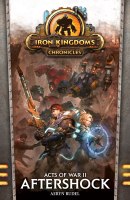
My big project in 2017 was the sequel to last year’s Acts of War: Flashpoint. I blogged about the writing process for Acts of War: Aftershock on a weekly basis, and you can see those blog posts right here.
Novella – “Shadows over Elsinberg”

My novella “Shadows over Elsinberg” was published in the collection Wicked Ways, alongside the works of many of my old pals from Privateer Press.
Short Story – “Confirmed Kill”
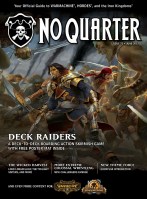
I wrote a story called “Confirmed Kill” based on characters from the Acts of War series. It was published in No Quarter magazine #72.
Rejectomancy
Even though I wrote fewer posts than I did in 2016, my number of visitors and views almost doubled. I wanted to hit two posts a week in 2017, but I fell a little short of that goal. I think two per week is reasonable for 2018, though. Much of the increased viewership came from blogging about writing my second novel for Privateer Press, Aftershock. I’ll likely do something like that again this year.
Here are the raw stats for the blog.
- Total Posts: 79
- Total Visitors: 13,148
- Total Views: 23,000
Total Output
Here’s what my total output for 2017 looked like in general words written. Even though I published more in 2016, I wrote more in 2017. I’d like to increase both numbers in 2018. These numbers include part of a new novel I’m working on and a completed novelette that will likely be part of my initial foray into self publishing (I’ve wanted to dip my toe in that pool for a while).
- Words Written: 201,916
- Word Published: 143,840
2018 Goals
Like last year, my goals basically amount to write and publish more. This year it’s more of the same, with a few specific goals.
- Increase short story submission total to 100.
- Finish at least two novels: one for Privateer Press and one (or more) based on my own IP.
- Self publish at least the first novelette/novella in a series of three or more. If I do this, I’ll likely blog about this whole process.
- Blog more. Two blog posts a week.
2017 Free-to-Read Published Stuff
Here are the links to the free-to-read (or listen to) short stories I published in 2017.
1) “Scare Tactics” – Published by Dunesteef (audio)
This is a quaint tale about a woman, her pet demon, and her budding parapsychology career. It’s a prequel of sorts to a series of novelettes/novellas I hope to self publish this year.
2) “An Incident on Dover Street” – Published by The Molotov Cocktail
A flash disaster story with dinosaurs!
3) “Cowtown” – Published by The Arcanist
A horror/sci-fi/comedy mashup set in my hometown of Modesto, California.
4) “Reunion” – Published by The Arcanist
A Lovecraftian horror story about a touching family reunion.
5) “Little Sister” – Published by The Molotov Cocktail
A flash horror story about a little girl and her lab-grown sibling.
In Summation
Looking back over the year, I’m relatively happy with what I accomplished. There are always ups and downs and all the things you wanted to do but didn’t, but here’s my take away from the year. In 2017, I got better. I worked hard on my writing, taking to heart the good feedback I received from beta readers and editors, and I strove to improve in areas I sometimes fall short. I’m still very much a work in progress, but I feel it in my bones that I took a step forward this year. I hope that’ll pay dividends down the road.
And that, my friends, was 2017. How was yours? Tell me about it in the comments.
Submission Guidelines: Check ’em Twice
If you’ve followed my blog for any length of time, you’ve no doubt heard me go on and on about the process of submitting a story. Well, most of that has to do with one very important factor: following the submission guidelines. I’ve written a bunch of posts on the subject, but I thought I’d put all that basic info together as a checklist. This is essentially the checklist I use when considering if my story will be a good fit for a particular publisher.
Here’s the list:
- General Info
- Story Length
- Sex, Profanity, and Gore
- Rights
- Payment
- Response Time
- Multiple and Simultaneous Submissions
- Manuscript Format & Submission Method
- Other considerations
The content and order of this list is specific to me and how I research markets before I submit a story. Other authors might place more or less importance an any of these factors (or include some I haven’t). My list breaks down into three tiers, loosely based on how important they are in my research process.
- The first tier (1-3) tells me if my story is something the market would even publish. Is it the right genre? Is it the right length? Is the content appropriate for the audience? If my answer is no to any of these questions, I move on.
- The second tier (4-6) are things I consider if the story passes the first tier. That’s not to say the second tier is less important. Not at all. In fact, things like rights and payment are incredibly important, but I probably won’t bother reading about them in a market’s guidelines if my story is off genre or too long.
- The last tier (7-9) are conditional considerations or considerations that aren’t likely to factor strongly into my decisions to send a story.
Okay, let’s get into the specifics with some examples.
1) General Info
Most publication have offer a general statement about the type of stories they want, and it’ll often tell you if your story is a good fit. Here’s an example:
We publish flash fiction in the genres of speculative fiction, specifically science fiction, fantasy, supernatural, super hero, or any combination of these. We are looking for stories that are engaging to our readers in such a short word count. Please take note of these factors (pun intended) when submitting stories to us.
This is a really thorough general want last, and it tells me a lot. We get general story length (flash), genres (sci-fi and fantasy), and even some sub-genres they’re interested in. This short statement tells me, for example, a 3,000-word horror story is not going to work here. That saves me a lot of time, and I’m sure it cuts down on the number of inappropriate submissions the publisher receives.
2) Story Length
Some publishers put their story length requirements in the general submission info. Others call it out elsewhere, so always look for that extra detail. Here’s an example:
Maximum word length is a firm 7,500 words. Anything more will be auto-rejected.
I find that most genre markets have maximum word lengths of between 5,000 and 7,500 words. Plenty of words for most short stories. Obviously, don’t send stories that are over the market’s maximum word length. This market even tells you what happens if you do. You’ll get auto-rejected, as you should. Don’t screw yourself right out of the gate by not following simple instructions. If you write short-form fiction, like flash or micro, you should check the minimum word length in the guidelines too. Not all markets publish the short stuff, and word count minimums between 1,000 and 2,000 words are not uncommon.
3) Sex, Profanity, and Gore
This one is higher on my list than it may be on yours, largely because I’m a horror writer and profanity and gore often appear in my stories. Sex rarely does, but that’s more personal style than anything else. If your stories tend to contain this kind of material, it’s a good idea to see if the market in question mentions their tolerance levels in the guidelines (most do). In other words, don’t send your F-bomb-laced slasher story to a market like this:
Please note: [publisher] does not publish explicit sex or violence. We are a little quirky about language as well: obscenity is fine in moderation, but profanity is not. (In short: We will not publish the f-word, and if your story invokes divinity, we ask that it actually be invoking divinity…)
Don’t waste their time and yours by sending the aforementioned slasher story to this market. It’s not cool. You’re just gonna get an auto-reject and make the editor question your reading comprehension skills. There’s no reason to do that when the vast majority of genre markets have guidelines that look like this:
Sexual Content & Language: We are okay with foul language and sexual activity within a story, provided it fits the story well. We do not publish erotica.
You’ll see the same kind of guidelines for gore, with “fits the story” being the key phrase. Sure, this is a little vague, mostly because when these elements are overused, it’s just something you feel and it can be hard to quantify. That said, my stories feature a fair amount of profanity and gore, and I’ve been published by markets whose guidelines read like the example above.
4) Rights
Now that you’ve determined the market publishes both the genre and length of story you’re submitting, and they’ll tolerate all your F-bombs, what happens if they do publish your story? Well, they’re going to acquire certain rights to the work that will look something like this:
We require first print and electronic rights for your story. We require exclusive rights for one year from the date of publication.
This is a pretty standard, in that I’ve seen these specific rights requested quite a bit in guidelines. I’m not going to give you any legal advice here, mostly because I’m woefully unqualified to do so. I’ll just say it is very important you understand what these terms mean, so do your research. There are a lot of reputable sites that can break down all the rights a market might request. To get you started, here’s a great article on the subject by Marg Gilks called Rights: What They Mean and Why They’re Important.
Most publishers put the rights they’re acquiring in the submission guidelines, but not all. Sometimes you’ll only find that out after the story has been accepted. In my experience, those publishers will ask for something pretty similar to my example, but it’s important you understand what you’re giving away before you sign on the dotted line.
It’s rare, but I have passed on a market because the rights they wanted to acquire were not ones I wanted to give up.
5) Payment
I’ve yet to encounter a publisher that doesn’t list the monetary compensation they’re offering in the submission guidelines, even if they’re offering nothing. Here’s an example:
Fiction is paid at a rate of eight (8) U.S. cents per word based on our word processor’s word count and excludes title, author information, etc. The minimum payment for a story is sixty (60) U.S. dollars. Payment is made no later than the date of publication via PayPal.
This market is offering a (very good) professional rate of 8 cents per word. They also give you helpful info about how they calculate word count, the minimum you can make for a story, and how they want to pay you. If you don’t have a PayPal account, get one. A lot of publishers prefer to pay this way.
Payment is generally broken down into four tiers. I’m using Duotrope’s definitions here, which seem to be pretty standard across the industry.
- No Payment: Sometimes called “for the love of it” publishers, these markets do not offer any monetary payment. They might pay you with a subscription to their publication or author copies of the issue in which your story appears.
- Token: These markets pay under 1 cent per word, and that’s usually a flat fee of some kind. For example, they might offer a flat payment of $10.00 for stories up to 5,000 words, which will work out to less than 1 cent per word in most cases.
- Semi-Pro: These markets offer at least 1 cent per word, and that minimum of 1 cent is pretty common in my experience. The bigger, more established markets at this tier are usually around 3 cents per word. These markets sometimes offer a flat payment too, something like $100.00 for short stories up to 5,000 words. When you do the math, it’ll usually work out to somewhere between 1 cent and 5 cents per word (usually on the lower end of that scale).
- Pro: These markets offer 6 cents per word and up. I have seen flat payments offered at this tier but not often.
I do consider payment when I send out a story, but it’s important to understand that payment isn’t always commensurate with a market’s prestige or reach. For example, in the genre market there are semi-pro magazines that are as well-regarded as the pro magazines and a few brand new markets that offer professional pay. On the other end of that spectrum, my lit-fic friends tell me that some of the most prestigious markets in that space sometimes offer no payment.
6) Response Time
How quickly a market responds is a fairly important consideration for me, and, I admit, I tend to shy away from those that take six months to send a form rejection. It may not be as big a consideration for you. Most publishers will list their expected response times in their guidelines, like this:
Response times will vary depending on volume, but may average twenty-four hours (or less!). Query after one month (include title and date submitted). Please do not respond to rejection letters, for any reason, otherwise.
This is from one of my favorite markets, and they mean what they say. They are fast. According to Duotrope, they average 1.7 days for a rejection and 8.3 days for an acceptance. They also tell you when it’s appropriate to query, which is very useful info. Lastly, they ask that you not respond to rejection letters. There’s really no reason to respond to a rejection letter anyway, and that goes double for a market that specifically asks you not to do it.
7) Multiple & Simultaneous Submissions
This is an important one if you’re a writer who likes the shotgun approach to submissions. Some quick definitions. Simultaneous submissions are when you send one story to multiple publishers. Multiple submissions are when you send two or more stories to the same publisher. Generally, a publisher will address both in their guidelines:
We will not consider multiple submissions. Submit once and wait for a response before sending anything else. We will not consider simultaneous submissions.
Pretty straightforward, right? In my experience, there aren’t many genre publishers that accept multiple submissions, and the ones that do are generally markets for flash fiction. Simultaneous submissions are more common, especially if it’s a market that takes a little longer to get back to you (usually 60 days or more). The market in this example is super-fast, so no sim-subs is a perfectly reasonable position.
8) Manuscript Format & Submission Method
Almost every publisher will tell you how they want you to format your manuscript and which file types they prefer, and that’ll look something like this:
Submittable is our preferred method of submission. We accept most file types as well. Please use standard manuscript format for your story (although headers and footers are not needed).
In my experience, most publishers want manuscripts prepared in standard manuscript format, sometimes called Shunn standard format. If you’re not familiar with this format, get familiar with it. Occasionally, a publisher will ask for standard manuscript format with some slight alterations. This market, for example, says you can omit the standard header and footer. Other markets might ask for a different font or ask that you not underline words meant to be in italics and simply use italics.
The majority of publishers ask for the most common file types, with .doc, .docx, and .rtf being the most popular. If a publisher asks you for a specific file type, I recommend you send them that file type.
Like I said, most publishers want something resembling standard manuscript formatting, but not all. Some will ask you to paste the story directly into an email or a submission form through one of the submission management programs, like Submittable or Moksha. (It’s not a terrible idea to create a (free) author’s account for these two services. I’m seeing them a lot more in submission guidelines.)
Should the requested manuscript format and file type be a consideration when you send out a story? In my opinion, no, unless you simply cannot comply for technical reasons. I’ll admit, some manuscript formatting guidelines can be a little, uh, unique, and that can be time consuming, but it’s never kept me from sending a story to a market I thought might publish it.
9) Other Considerations
This is kind of a grab-bag of miscellaneous considerations that are largely conditional. Here are some I might look for.
- Reprints: I do on occasion submit reprints, which are stories I’ve sold and the rights have reverted back to me. Not all publishers accept them, and if they do, I generally start at the top of my checklist and see if everything else is a fit.
- Publication format: Are they publishing in print or digital? Will the story be available to read on their site for free? Most of the time this is a marketing consideration for me. If the story is online and available as a free read, I can use my blog and social media to send folks directly to it. This doesn’t always appear in submission guidelines, and I’ve yet to come across anything that would keep me from submitting a story.
- Submission method: The overwhelming majority of publishers want work submitted through email or through a submission manager (Submittable, Moksha, etc.). I might balk a little at a publisher that only accepts snail-mail submissions, but, honestly, I can’t think of one that does that.
That’s my general submission guidelines checklist. Did I leave something off that you always take into consideration? Let me know in the comments.
Submission Statement: December 2017
December was another good month for submissions. I didn’t think I’d match November’s output, but I did, and I had more than just rejections to tally in the final month of the year.
December 2017 Report Card
- Submissions Sent: 13
- Rejections: 8
- Other: 0
- Acceptances: 1
- Publications: 2
I sent a lot of submissions in December because I finished three new stories, which are currently running the submission gamut. Like I said last month, 13 is a lot of submissions and that pace might be difficult to sustain, but I’d like do somewhere between 8 and 10 a month in 2018 (more on that in my 2017 wrap-up post). As you can see, a lot of submissions last month and this month (26 total) resulted in more rejections, which I expected, but there’s some good news too with an acceptance and two publications.
Rejections
Eight rejections this month for four stories. You’ll likely recognize a lot of these.
Rejection 1: Submitted 11/29/17; Rejected 12/2/17
Thank you for allowing me to consider XXX but I’m going to pass on this one. This is not necessarily a reflection of your writing ability. The story just didn’t fit the anthology as it’s beginning to take shape. Due to an overwhelming response for this anthology, I’m unable to provide feedback. I wish you luck in finding a home for the story elsewhere.
This is a rejection from the fifth volume of a popular horror anthology. I submitted to the fourth volume last year and was short-listed but eventually rejected. I entered pretty late in the submission window this time, and that may have been a factor in the story’s rejection, as the editor indicated. I really dig this particular anthology, and I’m sure I’ll submit to the eventual sixth volume in 2018.
Rejection 2: Submitted 11/24/17; Rejected 12/9/17
Thank you for submitting your story, XXX, to XXX. Unfortunately, we have decided not to publish it. To date, we have reviewed many strong stories that we did not take. Either the fit was wrong or we’d just taken tales with a similar theme or any of a half dozen other reasons.
Best success selling this story elsewhere.
PS Nice surprise at the end.
This is a form rejection with an editor’s note attached, which I guess makes it a personal rejection. Anyway, it’s from a top-tier market I’ve been trying to crack for a long time with little success. They’re primarily a sci-fi and fantasy market, and I tend to send them stuff that is either sci-fi/horror or fantasy/horror. Well, this submission was pretty much pure sci-fi (with a darker tone, natch), and it looks like I may have gotten closer to an acceptance than I have before. That’s not to say I got close, just closer than usual. I need to write more sci-fi.
Rejection 3: Submitted 11/14/17; Rejected 12/18/17
Thanks for sending this my way. I’m sorry I won’t be using it for XXX.
This is a rejection for my one and only mystery short story. It’s brief and to the point, and there ain’t nothin’ wrong with that. If I were to write more mystery, I’d submit here again.
Rejection 4: Submitted 12/6/17; Rejected 12/19/17
We appreciate you taking the time to send us your story, XXX. After careful consideration we’ve decided to pass on this story. There are many reasons a story is not accepted, most of which are subjective in nature, so don’t let our denial deter your from sending your story to other publications. We wish you the best of luck on finding a publication for this story.
This is a rejection from a brand new pro-paying fantasy and sci-fi market. I was so thrilled to see a new pro market in this space that I immediately sent them a story. Luckily, I happened to have something that was appropriate (one of the new ones I finished this month). This is a nice form rejection. It might be higher tier, but it’s hard to tell with a new market. I always like it when a publisher reminds authors that this is a subjective business. It’s something every author needs to take to heart. Anyway, I’ve already sent them another piece.
Rejection 5: Submitted 12/17/17; Rejected 12/20/17
Thank you for giving me a chance to read “XXX.” Unfortunately, this story didn’t quite win me over and I’m going to pass on it for XXX. I wish you best of luck finding the right market for it and hope that you’ll keep us in mind in the future.
So, normally, when I say a form rejection is higher-tier, I’m applying a bit of rejectomancy because there’s no way to know for certain. Well, that’s true for every publisher but this one. The editor of this top-tier pro market has said in blog posts and Twitter posts what his various form templates actually mean. So I know this one is a higher-tier rejection. That is handy info to have, for sure. This was the first submission of a new story I think is one of the better pieces I’ve written, so even though this is a rejection, it’s nice to know I might be on the right track.
Rejection 6: Submitted 12/20/17; Rejected 12/21/17
We have read your submission and unfortunately your story isn’t quite what we’re looking for right now. While we regretfully cannot provide detailed feedback due to the volume of submissions, we thank you for your interest in our magazine and hope you continue to consider us in the future.
This is a higher-tier rejection from one of my bucket-list horror markets. My last four submissions have gotten higher tier rejections, so maybe I’m getting somewhere. I will definitely keep trying.
Rejection 7: Submitted 12/19/17; Rejected 12/27/17
Thank you for submitting your story, XXX, to XXX. Unfortunately, we have decided not to publish it. To date, we have reviewed many strong stories that we did not take. Either the fit was wrong or we’d just taken tales with a similar theme or any of a half dozen other reasons.
Best success selling this story elsewhere.
You’ll notice this is the same form rejection from rejection #2, sans editor note. I tried this market again with a story I thought was more sci-fi, but the horror element is also quite strong. I’m not saying that’s why it was rejected, though. Like the rejections says, there are lots of reasons stories get rejected.
Rejection 8: Submitted 12/19/17; Rejected 12/27/17
Many thanks for sending “XXX”, but I’m sorry to say that it isn’t quite right for XXX. I wish you luck placing it elsewhere, and hope that you’ll send me something new soon.
A standard form rejection from another of my bucket-list horror markets. Like some of the other rejections here, you’ve likely seen this one a lot in my posts. Still, gotta keep trying.
Acceptances
One acceptance this month. It comes from one of my favorite purveyors of flash fiction.
Acceptance 1: Submitted 11/15/17; Accepted 12/5/17
Thanks for submitting work to The Molotov Cocktail. Great to see this one again, as it was actually the last piece to miss the cut in the Flash Monster contest. Weird premise, which resonates with us, and vividly written. We’d like to run “Little Sister” in our upcoming issue (to be published within the week). Nice work.
Thanks again for allowing us to feature your story.
The Molotov Cocktail is one of the few markets I’ll name in these lists because I know they don’t mind (I asked). Anyway, this is a cool acceptance because of how close the story got to publication in one of their contests. They always state in those rejections to resubmit the “close-but-no-cigar” stories because they sometimes publish them in the regular issues. Well, this is The Molotov putting their money where their mouth is (not that I ever doubted), and I’m thrilled to have placed another story with them.
Publications
Two publications this month, and you can read both stories by clicking the links below.
Publication 1: “Reunion” published by The Arcanist on 12/1/2017.
Publication 2: “Little Sister” published by The Molotov Cocktail on 12/11/2017.
Though these stories were written years apart, they both feature two somewhat similar characters (and kind of similar themes). I think that’s largely because they both originate from one-hour flash challenge writing exercises with very similar prompts. It’s kind of neat they were published so close together.
And that was my very busy December. How was yours?
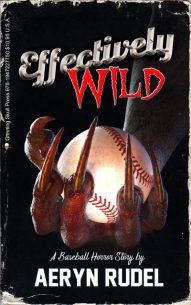
Effectively Wild – A Baseball Horror Story
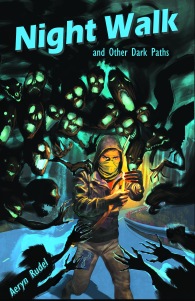
Night Walk & Other Dark Paths
Acts of War: Flashpoint

Acts of War: Aftershock

Acts of War: Stormbreak

 Aeryn Rudel's Rejectomancy