
Multiple Rejections in a Single Day?! Why & What To Do

Well, here’s a topic I haven’t discussed in over five years, which is weird because I certainly have had occasion to discuss it many times. Recently, in fact. I’m talking about the multi-rejection day. That moment when the stars align and rejections rain down from the heavens to crush your meager writing dreams to flaming wreckage. I’m being dramatic, but getting two, three, or even more rejections on the same day can be pretty disheartening. So let’s talk about why it happens and what to do when it happens.
It might seem like all the editors in the world are out to get you when you receive multiple rejections on the same day, but I promise that’s not the case. In my experience, the multi-rejection day arises from three things, all of which are fine on their own but occasionally work together in unfortuitous ways.
- You send out a lot of submissions. The simple truth is the more submissions you send, the more rejection you’ll get (more acceptances too). If you’re like me, and you always have eight or more submissions pending, rejections are pretty constant, and it’s not exactly surprising that some might show up on the same day.
- You submit to tough markets. If you’re sending stories to the top-rated, pro markets–I’m talking about the places with sub-one-percent acceptance rates–then, you my friend, are going to get a lot of rejections. Of course, breaking through with one of these markets is the sweetest of the sweet, but it can take a while. So if you’re sending a lot of submissions AND sending them to tough markets, you’re greatly increasing the chances of getting two or more rejection on the same day. It’s just a fact.
- Dumb luck. As I said, it might seem like all the editors got together and decided to send rejections on the same day, but, of course, that’s not a thing. Editors send responses to submissions on their own timelines. Sometimes, one editor or three might coincidentally share the same timeline. It happens, especially when markets have similar submission windows. To sum up here, when you send a lot of submissions to tough markets and sprinkle in a little adverse luck, well, the multi-rejection day is inevitable.
Okay, so that’s how the multi-rejection day happens, now what should you do about it? I have some thoughts. Some are do as I say and not as I sometimes do, of course, but they are what I try to do.
- Don’t read into it. Getting three rejections in a day is no different than getting those same rejections over the course of a week or a month. They mean the exact same thing. Our fumbling human brains will attempt to see meaning and patterns where there aren’t any, and such is the case here. I’m not saying it’s easy to get a bunch of rejections on the same day–it most certainly isn’t–but one of the best things you can do is maintain some perspective. Like one rejection, three rejections don’t necessarily mean bad story or bad writer. It generally means bad fit and/or bad timing. Just, you know, times two or three or four or whatever. 🙂
- A little help from your friends. No one understands the trials and tribulations that writers go through more than other writers. Reach out to your writing friends, commiserate, get a little sympathy. It helps. It really does. We all need the occasional life preserver on the stormy literary seas. Let someone throw you one, and be there when they need one in return.
- Take a break (or don’t). This goes for dealing with any setback in submission land, but sometimes it helps to do something unrelated to writing, as difficult as that may be. For me, exercise usually does the trick. That combination of endorphins and “accomplishing” something is often the cocktail of positive input I need. Of course, sometimes it’s best to get back on that horse and send those stories out the door right away. I do that a lot too. Recently, I did both, and the hybrid approach was effective.
So there you go; the why’s and what to do’s for the multi-rejection day. How do you deal with the event, and if you feel like sharing, what’s the most rejections you’ve received in a single day?
Night Walk Wednesday: The Rarest Cut

Welcome to Night Walk Wednesday, where I talk about the submission journey of a story from my flash fiction anthology Night Walk & Other Dark Paths. This week’s tale is “The Rarest Cut.”
How it Started
This is yet another one-hour flash fiction success story, and the “Rarest Cut” is one of my earlier attempts in the one-hour blitz that has defined my flash fiction career. Word tells me this story was originally written in 2013, but I think it might be a tad older. The prompt is now lost to time, but I know it got me thinking about cannibalism and then, well, even darker stuff.
What’s It About?
“The Rarest Cut” is another that follows my patented flash fiction formula in that it features only two characters, takes place in a single location, and starts right near the, uh, meat of the story. It’s a simple setup with a man trying out a new dish at a restaurant that is decidedly off the beaten path. It’s one of those stories with a twist, so I won’t spoil it here, but I was proud of it when I finished. Fun anecdote. I have a friend who likes to share my work with other folks, especially those that don’t read much horror. This is his go-to story when he introduces someone to my writing because he gets a kick out of their (often disgusted) reactions. I mean, can you ask for a better compliment than that? Anyway, here’s a little taste. 🙂
Vincent cut into the meat, grimacing at the effort needed to saw through the stringy, pink flesh. He sliced off a portion, speared the chunk with his fork, and skated it through the fatty au jus pooling on his plate. He lifted the morsel to his nose and sniffed. The coppery tang told him the meat was quite rare, as he’d ordered it, but beneath that pleasant smell was a gamey odor that, of all things, reminded him of dirty laundry. He shrugged and popped the piece into his mouth.
How’d It Do?
It took me a bit longer than usual to sell “The Rarest Cut”, though it did receive some nice personal rejections. I ended up selling it to Evil Girlfriend Media in 2015 and then it was reprinted by Ellipsis Zine in 2018. I suspect it struggled a bit at first because, well, it’s gross, and that really isn’t everyone’s cup of tea. I don’t know if I’d call it gory, but it’s definitely icky.
The Numbers
- First Submission: 3/2/14
- Final Submissions: 11/24/18
- Accepted On: 7/28/15
- Accepted On: 11/26/18
- Total Submissions: 7
- Total Rejections: 5
- Shortlists: 0
- Personal Rejections: 2
As I said, five rejections is more than usual for a flash fiction story I sell, but not anywhere near my record. “The Rarest Cut:, was good enough to place twice, but it’s definitely been edited a few times between acceptances. The version in Night Walk is, I think, the definitive version of the story–lean, mean, and icky.
If you enjoyed the submission journey of “The Rarest Cut”, check out its 39 siblings in Night Walk & Other Dark Paths, which you can order in print and eBook by clicking the cover below.

A Week of Writing: 5/17/21 to 5/23/21

Another week gone by. Here’s how I did.
Words to Write By
This week’s quote comes from W.H. Auden.
“Some writers confuse authenticity, which they ought always to aim at, with originality, which they should never bother about.”
– W.H. Auden
I often see writers worrying about their work being original, as in something no one has ever written before. The truth is someone almost certainly has, and to come up with something completely original is nigh impossible. That’s not to say it doesn’t happen, but most of the novels I’ve enjoyed trod well-travelled paths in terms of premise, tropes, plot, and so on. What makes them stand out is that authenticity W.H. Auden is talking about. The author’s voice, their style, their approach is the secret sauce that makes or breaks a book in my opinion. Often times that’s simply adding a small twist to an old trope, especially one that highlights the author’s passions and point of view (authenticity again). So, original is great if you can pull it off, but authenticity, IMO, is what makes great stories.
Short Story Submissions
Again, only one submission last week.
- Submissions Sent: 1
- Rejections: 2
- Acceptances: 0
- Publications: 1
- Shortlist: 0
- Pending: 9
- 2021 Total Subs: 39
One submission per week is not gonna get me to 100 subs for the year, but here we are. I did send one this morning, so this week is off to a good start. Looks like a miscounted somewhere, and I actually have one more submission that I thought for 2021. Anyway, the one this morning gives me 40 for the year and I need to be at 45 for the month to stay on pace. Possible, sure, but I need to get my shit together. Two form rejections last week, both of which are so run-of-the-mill they don’t bear any discussion. The publication was another article with Dark Matter Magazine. More on that below.
Media Tie-In
Work continues on short stories for Privateer Press in their new Warcaster: Neo-Mechanika setting. Last week, I finished the fourth story and it’s currently under review. There’ll be some revisions, but as with the other pieces, it won’t be anything too difficult. I’ll start and finish the fifth and final short story this week. I’m also under contract for five 1,000-word vignettes, which I should be able to knock out next week. Writing 1,000-word stories is something I’m pretty good at. 🙂 I’m well ahead of the deadline, which is always a good place to be.
Publications
Another installment of my monthly Rejectomancy column at Dark Matter Magazine went up last week. This one is about rejections, so, you know, it’s a subject on which I have a fair amount to say. You can read it by clicking the link below.
“Normalizing the No: Rejection Letters”
Night Walk
My flash fiction anthology Night Walk & Other Dark Paths has been out for over a month now and it’s getting some nice reviews. You can pick up a copy of your very own in print or eBook by clicking the cover below. If you do grab a copy, please leave a rating or review and help me out with those Amazon algorithms.
For an inside peek into the anthology and its stories, check out the Night Walk Wednesday feature right here on the blog. I’ll give you all the juicy rejectomancy stats on individual stories from the collection.
- NWW: The Big Picture
- NWW: Things That Grow
- NWW: Do Me a Favor
- NWW: When the Lights Go On
- NWW: Where They Belong
- NWW: The Night, Forever, and Us
- NWW: Time Waits for One Man
- NWW: Small Evil
- NWW: Far Shores and Ancient Graves
Goals
More submissions and more commission work for Privateer Press.
That was my week. How was yours?
My New & Improved Flash Fiction Formula
I write a lot of flash fiction, and I’ve been lucky enough to publish a good amount of it. In fact, I recently published and entire anthology. The Molotov Cocktail collected 40 of my best flashes in a collection titled Night Walk & Other Dark Paths. But how do I write flash fiction? And more importantly, how do I write flash fiction that folks occasionally want to publish? Well, I have a formula, and it used to be three rules (which I covered a couple of years ago), but has now expanded to four. So let me tell you about my new and improved flash fiction formula.
What follows are four rules I (mostly) follow when writing stories under 1,000 words. It is not, of course, the only way to write flash fiction or even the best way to write flash fiction. It’s just my way. What the rules do is allow me to write very short stories with a recognizable plot, clear conflict, and a beginning, middle, and end. In my experience, that’s a successful formula for selling flash fiction. It should also be noted that I’m a genre fiction writer, and that literary fiction often operates under different rules. So, keep that in mind if you primarily write literary fiction.
Okay, let’s get to it. Here are my four flash fiction rules.
- Start near the end. What I mean is begin your story as close to the inciting action or event as you can. This is pretty good advice for fiction of all lengths, but it’s crucial for flash. With 1,000 words or less, you simply don’t have the space for a lot of setup. You gotta get to the meat right away. I notice in a lot of my flash, at least the ones I’ve managed to publish, the inciting event generally happens in the first paragraph, leaving me a lot of space to resolve the conflict I’ve set up.
- Keep your character count low. I like a lot of dialogue in my stories, and in flash that means I have to watch how many characters are taking up my precious word count with all that talking. As such, I try not to feature more than two primary characters in my flash fiction (speaking characters, anyway). That way, they can have lots of dialogue, which is how I prefer to tell a story, and I don’t eat up too much space. Having only a few characters also lets me spend time developing them, again, usually through dialogue.
- Limited locations. Same idea as keeping the cast of characters small. I tend to limit the locations of my flash fiction to one or maybe two spots. That way, I don’t have to worry about transitions from one spot to another, and I don’t need to spend a lot of time describing places. If you read any of my flash, you’ll probably notice a lot of it takes place in a single spot, usually somewhere small and cozy, like a bar, a bedroom, a house, a church, and so on.
- View from the Heavens. This is the newest addition to my formula, and in many ways it allows me to ignore the other three rules when I do it right. Basically, these stories take an omniscient POV or sometimes a limited one that relates a story like someone, well, telling a story. It’s a narrative device that allows you to pull back, jump around, and even cover many years of events in a small space. You can have a bunch of characters or a bunch of different locations because you’re not really spending much time with them. The drawback to this style is that the story can feel distant or that it lacks detail or action. It’s also a style some folks just don’t like, including editors.
That’s my basic formula, and, again, it is not the end-all-be-all of writing flash fiction. It works for me, and I’ve been successful with it. I’ve also found if I follow two of the first three rules, I sometimes have room to ignore one. For example, if I start near the end, and I have only two characters, I can probably fit in a couple of locations. Or, if I keep my character count low and limit my locations, I might be able to start a little further from the end and get in a bit more backstory and setup.
To further illustrate my formula, here are some flash fiction pieces I’ve published where you can see those guidelines in effect (more or less).
- “Fair Pay” published by Flash Fiction Magazine
This one is a poster child for the first three rules. It features only two characters, in one location, and starts right at the inciting event. This is also one of the very few non-genre pieces I’ve written, so, you know, my formula doesn’t just work for vampires and aliens and stuff. 🙂
- “Childish Things” published by The Arcanist
This a story where I break one of my rules, but I pull it off because I follow two others. The rule I broke is that the story features three characters, and all of them have dialogue. I made up for it by keeping to one location, starting the story right away, and letting the backstory unfold organically (and efficiently) as the story progressed.
- “News From Home” published by Wyldblood Press
This is an example of my new fourth rule. It’s a sci-fi story told from the POV of the leader of an off-world colony. He’s relating a series of events that take place over a decade, ending with a recent event. The story is punctuated with recorded messages from Earth, which have the feel of a news story. The piece mentions hundreds of colonists, and though it’s technically set in one location, it’s kind of a whole planet, so there’s a lot going on. If I’d tried to tell this story with a closer POV, it wouldn’t have worked as flash.
- “Outdoor Space” published by The Arcanist
You might be wondering if I always follow my own rules. Nope. I don’t, and sometimes it even works. This story has four characters, all with dialogue, changes location, and has a fair bit of setup and backstory. Now, I like to think I was pretty efficient with how I related all that stuff, but, still, it breaks my rules. I don’t do this often because it’s tough to pull off, but, hey, when it works, it works.
So that’s my new and improved flash fiction formula. How do you do write flash? Tell me about it in the comments.
Night Walk Wednesday: Far Shores and Ancient Graves

Welcome to Night Walk Wednesday, where I talk about the submission journey of a story from my flash fiction anthology Night Walk & Other Dark Paths. This week’s tale is “Far Shores and Ancient Graves.”
How it Started
Another one-hour flash fiction success story, “Far Shores and Ancient Graves” is maybe one my favorite flash pieces. I remember the prompt for this one because, well, I posted it. Here it is:

Pretty simple and pretty grim, but boy did it get the ol’ imagination fired up. My mind immediately went to the remains from ancient battle sites like Visby and, uh, zombies, because, well, I’m me. 🙂 This is kind of an odd one for flash because the narrative device I used is tough to do in a short space and more suited to a short story or even a novella. That said, sometimes when you try something you maybe shouldn’t with a new story, you end up with a piece that works BECAUSE you took that risk.
What’s It About?
Some folks say you can’t sell zombie stories anymore (or vampires or werewolves or any overused trope). While there are certainly markets that don’t want to see zombie stores, there are plenty of markets that will consider them. Thing is, what you can’t sell are zombie stories that are retreads of The Walking Dead or Night of the Living Dead. You have to come at zombies from a new angle, something that slaps a fresh coat of paint on a well-worn trope. My secret sauce in “Far Shores & Ancient Graves” is Vikings and the question of how long a zombified corpse stays lively or un-lively. The story jumps back and forth between an 8th-century Viking raid that goes horrifically wrong and a pair of archeologists in the modern day examining some curious remains. The story never uses the term zombie, which is something that, oddly, seems to help when you’re shopping a zombie story (or vampire or werewolf).
How’d It Do?
When I finished “Far Shores and Ancient Graves” and cleaned it up, I thought I had a pretty saleable piece on my hands. I submitted it to two of the better flash fiction markets, and it was promptly rejected. Then I took a shot with NewMyths, a market that had rejected me ten times previously. I honestly didn’t expect anything other than rejection number eleven, but to my delight and surprise, they liked the story and bought it. So, the moral of this submission story is a) don’t be afraid to write zombies stories as long as you give them a twist and b) don’t give up on a publisher even if they’ve rejected you (a lot) previously.
The Numbers
- First Submission: 6/24/18
- Final Submissions: 7/28/18
- Accepted On: 8/28/18
- Total Submissions: 3
- Total Rejections: 2
- Shortlists: 0
- Personal Rejections: 0
I subbed this story three times, and as you can see, I received all three decisions (two no’s and a yes) within the span of just three months. That’s much quicker than usual in terms of the time the story spent under consideration. The number of submissions is about average for a flash fiction story I end up selling.
If you enjoyed the submission journey of “Far Shores and Ancient Graves”, check out its 39 siblings in Night Walk & Other Dark Paths, which you can order in print and eBook by clicking the cover below.
A Week of Writing: 5/10/21 to 5/16/21
Another week in the books. Here’s how I did.
Words to Write By
This week’s quote is one I’ve used before, but it’s a fun one, so I’m going to use it again.
“Substitute ‘damn’ every time you’re inclined to write ‘very;’ your editor will delete it and the writing will be just as it should be.”
— Mark Twain
You’d be surprised at how effective this is. Here are some examples pulled from one of my works in progress where I’ve done the very/damn swap.
- The expertise to operate a ship of that kind must have been damn difficult to come by.
- An image appeared behind him, a damn modern org chart for an incredibly old idea.
- They were giving the unvarnished truth about the damn real dangers they would all face.
I chose these sentences because they represent three issues this exercise reveals. In the first example, very could simply be removed and the sentence would work fine, but I think a stronger word might be better. In this case, damn is actually a good replacement that fits the character’s voice. I’m also a sucker for alliteration. The second example is more what Twain is getting at in his quote, I think. The very can just go because it’s not doing anything except cluttering up the sentence. Now, in the third example, I’d leave the very. It’s doing real work, and I dig the way it sounds when combined with real. Very is often a weak word that is unneeded or should be replaced with a better word, except, you know, when it isn’t. 🙂
Short Story Submissions
Just one submission last week.
- Submissions Sent: 1
- Rejections: 2
- Acceptances: 0
- Publications: 0
- Shortlist: 0
- Pending: 9
- 2021 Total Subs: 37
Pretty quiet on the submission front last week, though I did manage to get one new story finished and subbed. I received two rejections, and one was a personal rejection from a new market. Personal rejections can tell you a lot, and this one told me my work is likely not a good fit for this publisher. This is not to say the rejection was rude or scathing. In fact, it was polite and even encouraging, but it was also clear my particular style in the genre they publish is going to be a hard sell. The second rejection was the formiest of form letters, so not much to report there.
Media Tie-In
I continue to work on short stories for Privateer Press in their new Warcaster: Neo-Mechanika setting. Last week, I finished revisions on the third story and began writing the fourth. I’ll finish the first draft of the fourth story early this week and get to work on the fifth. What’s fun about this particular project is each short story is based on specific group or faction within the game world. Each of these factions have vastly different personalities and motivations, and some of them are not human or, well, inhuman. In other words, I’m getting the chance to explore a wide range of styles and voices with each piece. That’s both a challenge and a lot of fun.
Night Walk
My flash fiction anthology Night Walk & Other Dark Paths has been out for nearly a month now and it’s starting to get some nice reviews. You can pick up a copy of your very own in print or eBook by clicking on the link below.
For an inside peek into the anthology and its stories, check out the Night Walk Wednesday feature right here on the blog. I’ll give you all the juicy rejectomancy stats on individual stories from the collection.
- NWW: The Big Picture
- NWW: Things That Grow
- NWW: Do Me a Favor
- NWW: When the Lights Go On
- NWW: Where They Belong
- NWW: The Night, Forever, and Us
- NWW: Time Waits for One Man
- NWW: Small Evil
Goals
More submissions and keep going on my commission work for Privateer Press.
That was my week. How was yours?
Night Walk Wednesday: Small Evil
Welcome to Night Walk Wednesday, where I talk about the submission journey of a story from my flash fiction anthology Night Walk & Other Dark Paths. This week’s tale is “Small Evil.”
How it Started
If you’ve read previous installments in this series, you can probably guess where this story came from. Yep, a one-hour flash fiction writing exercise. The prompt for this one was a little different, though. Usually, the prompts are photos, but this time it was a short phrase, “One upon a time I was someone else.” That got me thinking about demonic possession, well, because I think about demonic possession a lot. 🙂 The story I came up with is, honestly, not exactly in the spirit of the prompt, but I liked how it turned out.
What’s It About?
So I have a formula I stick to when I write flash fiction that helps me write pieces that feel complete. One of the rules in that process is you can have more than two characters OR multiple locations, not both. “Small Evil” is a more-than-two-characters story, so the whole thing takes place in a dingy basement. The set-up is three dudes summon a demon to do their bidding and exact revenge on someone who absolutely does not deserve it. Unfortunately, the would be sorcerers didn’t exactly pay attention in demonology class, and things don’t go well for them. The story is told from the demon’s POV, which is a little goofy, but that’s juxtaposed with some fairly dark subject matter that I think, for the most part, works pretty well.
How’d It Do?
“Small Evil” is an interesting piece in that it started life as a flash fiction story, and then I immediately expanded it to short story length. I subbed it at that length to the tune of six rejections, then I kind of back-burnered it. A few months later, The Arcanist held a flash fiction contest called Monster Flash. I thought, well demons are monsters, right? And, in this story, so are the humans (maybe more so than the demon). So I whittled the story down to flash length, and it took second place in the contest. The moral of this story is that sometimes you get it right out of the gate, and you don’t need to tinker or expand. In other words, I probably could have saved myself six rejections if I’d just subbed the story as flash from the get-go.
The Numbers
- First Submission: 5/19/17
- Final Submissions: 9/19/19
- Accepted On: 9/30/19
- Total Submissions: 8
- Total Rejections: 6
- Shortlists: 0
- Personal Rejections: 0
So I subbed this story eight times and received one acceptance and six rejections. The remaining submission I ended up withdrawing after a whopping 211 days and after my status queries went unanswered. Not surprisingly, the market folded a few months later.
If you enjoyed the submission journey of “Small Evil”, check out its 39 siblings in Night Walk & Other Dark Paths, which you can order in print and eBook by clicking the cover below.
Weeks of Writing: 4/26/21 to 5/9/21
Catching up the last two weeks of winterly endeavors. Here’s how I did.
Words to Write By
This week’s quote comes from Ray Bradbury.
“Just write every day of your life. Read intensely. Then see what happens. Most of my friends who are put on that diet have very pleasant careers.”
~ Ray Bradbury
I like this one because it gives me a goal to shoot for. I try to write every day, and for the most part, I’m successful. Now, to me, writing isn’t just writing narrative fiction. I do that a lot, but keeping something like this blog is flexing that same muscle in a lot of ways. Also, I don’t fret too much about how much I’m writing, though I do shoot for 2,000 words a day when I’m drafting a novel. If I can get 1,000 or even just 500 words done each day, I feel like I’m making headway. Where I sometimes struggle is the reading part. I do read a lot, but it’s not always fiction. Lately, I’ve been expanding my literary horizons and trying to read authors whose literary styles are COMPLETELY different to my own. It turns out that’s both rewarding and educational. 🙂
Short Story Submissions
A fair amount of submissions in the last couple weeks.
- Submissions Sent: 5
- Rejections: 2
- Acceptances: 1
- Publications: 0
- Shortlist: 0
- Pending: 9
- 2021 Total Subs: 36
Five subs is decent for two weeks, but I gotta get that number up. By the end of May, I need to be somewhere around 45 subs to stay on pace for 100. Doable, and I have some new stories ready to go that’ll pump those numbers up. Only two rejections in the last couple weeks (though I did get a third this morning). That said, I have some submissions that have been pending for a while, and I can smell rejections on the wind. 🙂 I did manage an acceptance a few days ago, so that gets me on the board for May and puts that first quarter rejection streak further in the rearview.
Media Tie-In
As some of you may know, I got my start in writing in the tabletop gaming industry. The first fiction I ever published was media tie-in related to RPGs and tabletop miniature games. If you were to take a gander at the Professional Credits page on this blog, you’d see hundreds of game related entries. Anyway, I’ve taken on a gig with my old pals and former employers at Privateer Press to write five short stories in their new Warcaster: Neo-Mechanika setting. It’s an exciting sci-fi world with a connection to the steampunk setting of the Iron Kingdoms (a setting I’ve written in extensively). I just finished the first draft of the third story, and I’m having a real blast with the material.
I’m planning a series of blog posts on writing media tie-in for gaming companies. It’s an interesting subject, I think, and I have a lot of experience and insight in that area. Keep an eye out for that in the near future.
Night Walk
My flash fiction anthology Night Walk & Other Dark Paths has been out for a couple of weeks. You can pick up a copy of your very own in print or eBook by clicking on the link below. If you were so kind as to purchase a copy, please leave a review or a rating. Those are always helpful to authors.
For an inside peek into the anthology and its stories, check out Night Walk Wednesday right her on the blog. I’ll give you all the juicy rejectomancy stats on individual stories from the collection.
- NWW: The Big Picture
- NWW: Things That Grow
- NWW: Do Me a Favor
- NWW: When the Lights Go On
- NWW: Where They Belong
- NWW: The Night, Forever, and Us
- NWW: Time Waits for One Man
Goals
More submissions and keep going on my commission work for Privateer Press.
Those were my weeks. How was yours?
My Ever-Elusive Muse or Writing When I Don’t Want To
A topic I see come up a fair bit in writerly circles is the question of whether you should write only when you’re in the mood, i.e., feeling inspired, creative, and so on. Some writers do only write when their muses are sitting on their shoulders and whispering into their ears. I think that’s a perfectly reasonable approach, and it clearly works for a lot of people. It’s not for me, though. The reason is simple. If I waited for the right writing mood, I’d never write. Getting started is the most difficult part of the process for me, mostly because of the usual cocktail of fear and self doubt (couple of assholes, those two). That said, I’ve learned to fight through that so I can be productive, and this post is about how I go about it. Let me reiterate, though, I am not saying writers who wait for inspiration to strike are “doing it wrong.” They’re doing what works for them, as they should. It’s just that my muse is one elusive motherfucker, and I often have to chase it down with a butterfly net and a bottle of chloroform. So, if you’re like me, maybe this post will be helpful.
Okay, here are three things that get me started writing and keep me going.
1) Clearly defined goals. The most effective writing tool for me is a word count goal. I don’t know why, but aiming at a set number of words on a daily basis just works for me. For novels, that number is generally 2,000 words per day broken up in to 500-word chunks. I write 500 words, then I take a break and pat myself on the back for hitting the mini-goal. Then I do it again, and again, and again. By the end of my writing day I have a respectable 2,000 words, and I feel accomplished and satisfied. Those feelings turn out to be motivating fuel for the next day of writing. The downside is that if I don’t complete my goal, I feel like the day is unfinished, sort of an unsettling “shit, I left the stove on” feeling.
Now, as an occasional media tie-in author, I often have real, honest-to-god deadlines. Those are pretty motivating. In fact, I started using daily word count goals as a way to stay on target and meet those deadlines. Then I started using the word count goals as artificial deadlines and found they still had the same effect. I got more written with them than without.
2) Grit your teeth and go. The first 500 words are always the hardest. Every time I sit down to write, that first page is a hell of a struggle. Not surprisingly, the first 500 can take me longer than the next 1,500. Once I break through that weird mental block I have about beginnings, the words always flow more easily. So it’s a bit of a gut check for me to get started, and I might procrastinate a little, but eventually I’ll force myself to sit down and get on with it. I know it sounds arduous, but I’ve written hundreds of short stories and like ten novels this way, so, you know, you do what you gotta do.
3) It’s not as bad as you think. One of my favorite quotes from Stephen King reads: “Sometimes you have to go on when you don’t feel like it, and sometimes you’re doing good work when it feels like all you’re managing is to shovel shit from a sitting position.” God, I love that quote because it pretty much sums up my entire existence as a writer. I often feel like I’m shoveling shit when I write, especially when I’m gutting out those first 500 words. You know what, though? Most of the time, when I go back and look at what I’ve written the next day, it’s usually pretty solid, even good. In other words, that ugly feeling is mostly bullshit, just the ever-present demons of fear and doubt doing their best to derail me. It’s nice to hear everyone, even Stephen King, has those same demons. One of these days I’ll learn how to shut them up. 🙂
So that’s how I write even when I’m not in the mood. How do you do it? Tell me about it in the comments.
Night Walk Wednesday: Time Waits for One Man
Welcome to another installment of Night Walk Wednesday, where I’ll talk about the submission journey of a story from my flash fiction anthology Night Walk & Other Dark Paths. This week’s story is “Time Waits for One Man.”
How it Started
This is yet another story crafted in an hour during a flash-fiction writing exercise. I remember the prompt for this one too. It was a shattered clock. That got me thinking about stopped clocks, and then stopped time, and then immortality. The story that eventually came out of all that was “Time Waits for One Man.” I write a lot of stories with biblical themes or characters, and this is one of those. Note, these aren’t really religious stories, just ones that use a Biblical character or tale with a speculative twist.
What’s It About?
“Time Waits for One Man” is another of my patented two-people-talking stories. I love dialogue, and that’s all this story is. The setup is simple. A freelance journalist is interviewing a man who somehow survived an accident that should have killed him. In fact, he survived it without a scratch. He tells her he survived because of who he is or more importantly what he is. She’s incredulous, but as his tale unfolds, she begins to believe.
How’d It Do?
I sold this story in its first submission to Factor Four Magazine, a pro flash market that had rejected me seven times previously. I was thrilled at that acceptance and publication, and the only rain cloud on this sunny situation is that Factor Four shut down not too long after. That’s just a sad reality of publishing, and when I look back at my submissions over the years, it’s rather alarming just how many of the markets I’ve submitted to have closed their doors.
The Numbers
- First Submission: 8/23/18
- Final Submissions: 1/29/20
- Accepted On: 8/26/18
- Total Submissions: 3
- Total Rejections: 2
- Shortlists: 0
- Personal Rejections: 1
Though “Time Waits for One Man” sold on its first submission, I sent it out as soon as I had the rights back. One of those reprint submissions was to Msyterion, a market that deals with Christian-themed speculative stories. I thought the story might have a pretty good shot there. It was ultimately rejected, but I did get a nice personal note from the editor and an invitation to submit more work.
If you enjoyed the submission journey of “Time Waits for One Man”, check out its 39 siblings in Night Walk & Other Dark Paths, which you can order in print and eBook by clicking the cover below.
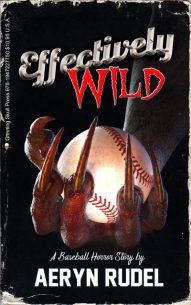
Effectively Wild – A Baseball Horror Story
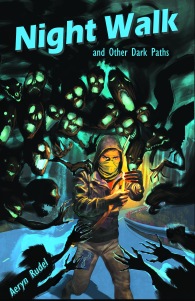
Night Walk & Other Dark Paths
Acts of War: Flashpoint

Acts of War: Aftershock

Acts of War: Stormbreak

 Aeryn Rudel's Rejectomancy