
A Week of Writing: 1/10/22 to 1/16/22

There goes another week where I was supposed to be writing and submitting stories. Let’s see how I did.
Words to Write By
This week’s quote comes from science fiction novelist Joe Haldeman
I think any writer keeps going back to some basic theme. Sometimes it’s autobiographical. I guess it usually is.
–Joe Haldeman
Saw this quote a few days ago, and I’ve been thinking about it a lot. There are definitely themes I return to in my writing, and at first blush, they don’t appear to be autobiographical. However, when I think about them in detail, that’s not completely true. I keep returning to subjects that frighten me in one way or another. Writing about these fears, even when I’m not fully aware of them, might be a way to tame them, even exorcise them. If I can put my fears into a story, I’m controlling them in some sense. This is not to say that my work never features overt autobiographical themes, and I’ve certainly written a few of those lately. The difference with these stories is the intent. I set out to be autobiographical. The other stories seem to happen without that same level of intent. It’s like my subconscious bubbles up and on to the page, and it’s only when I’m finished and rereading the story that I realize I’ve delved into something fairly personal.
Short Story Submissions
A slow week for submissions.
- Submissions Sent: 1
- Rejections: 1
- Acceptances: 0
- Publications: 0
- Shortlist: 0
- Withdrawn: 0
- Pending: 14
- 2022 Total Subs: 6
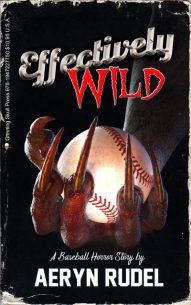
Just one submission last week. That said, it was for my novella Effectively Wild, which, as it would so happen, was also the lone rejection. Unlike short stories and flash fiction, where there are often dozens of possible markets, novellas are a different story. There are few magazines that take stories of that length, and once you exhaust those options, you have to start researching small book publishers, which is what I’ve been doing. Unfortunately, there aren’t a lot of publishers currently open to novella submissions or markets where my paranormal sports story would be a good fit. I did find one publisher that could be a match based on the novellas they’ve previously published, so I sent Effectively Wild there. Now it’s just wait and see.
The one submission last week gives me six for January, and I need nine to stay on pace for 100 submissions for the year. That shouldn’t be a problem. I’ve been working on a couple of flash pieces that’ll go out this week or next.
Novel
I made good progress on the revision of Hell to Play last week, and I revised about 75 pages, right through chapter six. The first act is in pretty good shape, so the bulk of my revisions was cutting out extraneous words, sentences, and paragraphs to sharpen the writing and improve the pacing. I also needed to make some minor character adjustments, though the bulk of those will happen in act two. I should finish act one this week, and then things get more difficult. Acts two and three will require full-on rewrites in some areas and the addition of new material in others. Challenging, but I have a clear idea of what I need to do. I just have to buckle down and execute.
Goals
Same goal as last week: keep revising the novel and send out more submissions.
That was my week. How was yours?
A Week of Writing: 1/1/22 to 1/9/22
The first week (and a bit more) of the new year has come and gone, so it’s time to start documenting my writing endeavors for 2022. Here we go.
Words to Write By
This week’s quote comes from playwright and novelist Larry L. King
“Write. Rewrite. When not writing or rewriting, read. I know of no shortcuts.”
—Larry L. King
This quote pretty much sums up my goals for 2022. I have a novel to revise, and I’ve jumped back into the the thick of it. My goal is to write and rewrite it until it becomes something I feel confident sending to agents and publishers. That might take a month or three, but I want to do it right. My reading fell off in a major way in 2021, and that’s something I need to address in 2022. I want to read more. I want to discover new writers with new and different perspectives. In short, I want to immerse myself in fiction because I know I’m a better writer when I’m plowing through novel after novel. So, yeah, write, rewrite, read are my guiding literary principles for this new year.
Short Story Submissions
I’ve been pretty active in submission land in the new year.
- Submissions Sent: 5
- Rejections: 3
- Acceptances: 1
- Publications: 0
- Shortlist: 1
- Withdrawn: 0
- Pending: 14
- 2022 Total Subs: 5
The last ten days or so have been pretty busy in terms of submissions. I sent five new subs, collected three rejections, landed an acceptance, and had another story shortlisted. Not bad. The acceptance definitely takes a bit of pressure off. I always want to get on the board as soon as possible in a new year, and this is a HUGE improvement over last year. My first acceptance in 2021 didn’t come until April.
My goal is, once again, to send 100 submissions for the year, which breaks down to around nine subs a month. I’ve got a good start on that.
Novel
My big goal for the first quarter of 2022 is to finish the revisions on my novel Hell to Play. I’ve adopted a new approach I think will keep me on track and help me get this thing done. I’ve revised half a dozen novels in the past, and though there are always challenges, this particular novel is proving far more difficult than the others. I’m out of excuses, though, and it’s time to just get it done so I can a) start shopping this book and b) start writing a new novel. Like I said, my goal is to finish this in the first quarter, which is more than enough time. Wish me luck. 🙂
Goals
The goal for the week is to work on revisions of Hell to Play as much as possible. As always, I also want to send out more submissions.
That was my week. How was yours?
Submit or Surrender? A Tale of Three Publishers
A popular topic in writerly circles is if and when a writer should give up on a market after multiple rejections. The idea being that if an editor rejects you a certain number of times, it’s likely they are not interested in your work because of style, taste, etc., and you should stop submitting to that publisher. Of course, opinions vary on how many rejections indicate you should wave the white flag, and some writers believe you should NEVER give up on a publisher, no matter how many rejections you receive. I tend to fall into the latter camp, but with a few caveats. I think I can best explain my thoughts on this issue with an examination of my submission records for three publishers.
As always, I will not be disclosing the names of the publishers or the titles of the stories I’ve sent them. This post is not about “calling out” editors for sending rejections; it’s about what we might learn from those rejection to improve our chances of getting accepted. Okay, let’s dive in.
Publisher #1 – Surrender
- Submissions: 23
- Rejections: 23
- Form Rejections: 23
- Submitted Stories Sold Elsewhere: 13
The first publisher is one I have given up on. The reason is simple: I have made zero progress after nearly two dozen submissions. All 23 of my submissions have resulted in basic form letters. Now, could it be that I’m just sending them bad stories? I mean, maybe, but I have gone on to sell over a dozen of the stories they rejected, some to pro markets. That tells me it might be that my style, voice, and even the things I tend to write about are just not a good fit for this editor/market. Now, I don’t have a single molecule of animosity toward this market, but I have come to the conclusion my work is probably not what they’re looking for. Honestly, I had my doubts around submission 15 or so, but I stubbornly pressed on. Again–and I can’t stress this enough–I have zero negative feelings toward this publisher. They’re an excellent market. The truth is simply that not every every writer is a good fit for every market.
Publisher #2 – Submit
- Submissions: 32
- Rejections: 32
- Form Rejections: 27
- Personal Rejections: 5
- Final Round Rejections: 4
- Submitted Stories Sold Elsewhere: 22
Now this might look worse than the first publisher, but I don’t believe it is. Yes, I have sent this publisher a ton of submissions and received a ton of rejections, but it’s the type of rejections I’ve received that keep me submitting. Instead of an avalanche of boilerplate form rejections, this publisher has sent me rejections that indicate I might be on the right track. Four times, I’ve made it to their final round of deliberations, which means the story was close to publication (how close is difficult to determine). In other words, I think they liked these stories, even if they ultimately didn’t make the final cut. That tells me my work might have a place with this publisher if I send them the right piece. So I keep trying, and as you can see my the number of stories I’ve sent that I’ve sold elsewhere, I try to send them my absolute best.
Publisher #3 – Success
- Submissions: 21
- Rejections: 20
- Acceptances: 1
- Form Rejections: 15
- Personal Rejections: 5
- Shortlist Rejections: 3
- Submitted Stories Sold Elsewhere: 16
The last publisher is one I have actually sold a story to. That said, it took me eleven tries before I did. In those eleven tries, I received encouraging rejections, and I eventually sent the right piece. Now, I’ve gone on to submit here ten more times, and in those ten attempts, there have been four personal rejections and two shortlists. So, even thought I haven’t sold them another story, I like to think my chances of another acceptance are pretty good. I included this publisher because I think they demonstrate that not giving up on a publisher when you’re receiving “good” rejections, even a bunch of them, can be the right decision. Keep in mind, though, just because you sell a piece to a publisher, especially one with a low acceptance rate, you still might struggle to sell them another (though, as in this case, you might continue to receive encouragement to keep submitting). Again, you see that a large number of the stories rejected by this publisher were accepted elsewhere. Please don’t misunderstand my reasons for including this number. It’s not that the publisher was wrong for rejecting those stories; it’s that the stories where just a better fit for another editor/publisher.
So, to sum up, giving up on a publisher after a ton of submissions is a perfectly reasonable thing to do, as is continuing to submit to that publisher. You just have to look a deeper at the numbers and ask yourself some potentially difficult questions. Also, as you can see by my numbers, a story that is wrong for one publisher may very well be exactly what another publisher is looking for. So, keep writing, keep submitting, and keep trying.
Thoughts on this issue? Have you given up on a publisher or stuck with one despite a ton of rejections? I’d love to hear about it in the comments.
Rejected Stories: When to Revise or Resubmit

When I get a rejection on a short story, my first thought is do I need to revise this piece? Often as not, the answer is no, and I send the story right back out. I don’t come to this decision without due consideration, though, and the rejection itself is often the biggest determining factor on whether a story gets revised or resubmitted. So let’s look at some different rejections and how they influence my decision to revise or resubmit.
Below I’ll list various types of rejections, the chance I’ll resubmit the story after such a rejection, and then a short explanation of why.
Standard Form Rejection – Resubmit 75%
The usual run-of-the-mill not for us doesn’t include much information other than the editor is not going to publish the story. So with not much to go on, I’ll usually send the story somewhere else right away. I put the resubmission chance at 75% because if I start getting a bunch of form rejections with no other feedback, I’ll probably take that as a sign the story isn’t working and revise it.
Higher-Tier Form Rejection – Resubmit 90%
The higher-tier form rejection can be hard to recognize unless you know what you’re looking for and you have a little experience with the market in question. They don’t tell you much more than a standard form rejection except that the editor saw some merit in the story. Though the resubmission rate is higher than standard form rejection, if I keep getting these and nothing else, I’ll consider a revision.
Shortlist Form Rejection – Resubmit 100%
Often times, when a story is held for further consideration and then rejected, the rejection is either a standard or higher-tier form letter. In this case, it’s not the rejection that influences my decision to resubmit, it’s the fact the story was held. If a publisher liked a story enough to hold it, even if they subsequently reject it, I take that as a sign the story is good to go and send it out again.
Positive Personal Rejection – Resubmit 100%
If I get a personal rejection where the editor praises the story but declines it for wrong fit or some other reason that has nothing to do with the writing, there is a 100% chance I’ll send that story out again. That said, where I send the story might be influenced by the editor’s comments. For example, I had a story recently rejected because it wasn’t science fiction enough for a science fiction market. I did send the story out again right away, but I chose a market that accepts a broader range of speculative stories. Sometimes these rejections follow a shortlist or hold, but that only makes the decision to resubmit that much easier.
Constructive Personal Rejection – Resubmit 50%
At this point, you’re probably thinking, does this dude ever revise a story? The answer is yes I do, generally when I receive a personal rejection that includes substantive, actionable feedback. In my experience, these types of personal rejections come after a story is shortlisted, and they helpfully explain why the editor did not choose to accept the story. This feedback highlights areas of the story that didn’t work for the editor or their first readers, and puts me to a decision. Still, when I get feedback like this, I don’t automatically revise the story. Sometimes I disagree with the feedback or believe it to be simply a matter of editorial taste. In that case, I’ll send the story out again. Other times, that feedback will resonate with me and/or will point out less subjective plot holes, narrative issues, and so forth. Then, yes, I will pull the story from my rotation and revise it. It should also be said that if I keep getting the same feedback, even if I don’t initially agree with it, I’ll bow to editorial consensus and revise.
So that’s how individual types of rejections influence my decision to revise or resubmit a story. The numbers should be viewed as ballpark figures, of course. I have over the course of 600-plus submissions revised a story after a single form rejection, for example. In addition, if a story has received multiple different rejections, then my decision to revise or resubmit might be based on a consideration of all rejections rather than just the last one.
How do rejection influence your decisions to revise or resubmit? Tell me about it in the comments.
2021: A Writing Rearview Review

Well, a new year has dawned, but before I really find out what 2022 has in store for me, I’m gonna take a look back at 2021. Spoiler alert. This was not my best year, but I’m all about that transparency, so lets look at some numbers.
Submissions & Publications
Okay let’s start off with short story submissions, rejections, and acceptances, plus fiction and articles published. That last group includes freelance fiction I was commissioned to write as well as Rejectomancy articles at Dark Matter Magazine. We’ll be looking at the numbers from 2020 and 2021 and comparing them. It’s an interesting comparison because 2020 was one of my best years for short story submissions and 2021 was among my worst. I think it shows how wildly things like acceptances and publications can swing from year to year, even when your method and approach haven’t really changed.
| 2021 | 2020 | |
| Submissions | 104 | 87 |
| Rejections | 87 | 69 |
| Acceptances | 9 | 19 |
| Accept % | 9.4% | 21.6% |
| Publications | 32 | 20 |
Though not my absolute worst year, 2021 was a disappointment in terms of acceptances from short story markets. Despite sending over 100 submissions, I only managed 9 acceptances. That gives me a 9.4% acceptance rate for the year, which is well below my overall acceptance rate of 14.2%. Based on that average, I should have netted about 5 more acceptances than I did. Obviously, 2020 was a stellar year in terms of acceptances, and it might be a bit naïve to expect that kind of success in a regular basis, but it’s nice to know those numbers are at least possible. 🙂
The one place I did excel in 2021 was in the total number of publication. A lot of this is due to freelance work, and I wrote 17 short stories and a short D&D adventure as a contract writer. Some of those works will roll to 2022, but more than half of them were published last year.
So, the big question is why was 2021 so much worse than 2020? Well, I have a bunch of theories, but ultimately it comes down to the usual story acceptance equation. You have to submit the right story to the right editor at the right time. I didn’t manage to do that as often in 2021. I received a lot of hold notices and close-but-no-cigar rejections, which tells me I whiffed on one of the three factors on a regular basis. Still, I can find some encouragement in those shortlist rejections, and I hope to take that into 2022.
Words, Words, Words
Okay, so the above is what I submitted, but how much did I actually write in 2021? Let’s have a look.
- Total Written in 2021: 256,707 words
- Fiction Written in 2021: 113,008 words
- Total Written AND Published in 2021: 60,559 words*
*Does not include blog posts or microfiction
That total written number includes roughly 100,000 words of blog posts (ballpark), 7,159 words of microfiction (not ballpark), and about 35,000 words of new material added to novels as part of revisions (ballpark again). I haven’t included blog and microfiction totals in the past, but, hell, it IS writing, though I don’t generally consider it “published” in the same way as short stories I manage to sell or am contracted to write. Maybe that’s weird, but it makes sense to me, and, hey, these are MY numbers, right? 🙂
This is a lot of writing, though my publication numbers are only about a fourth of the total words written. I’d like to improve on that in 2022.
Night Walk
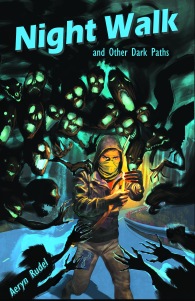
My biggest accomplishment of 2021 deserved its own section. Together with The Molotov Cocktail, I published my first collection of flash fiction entitled Night Walk & Other Dark Paths this past April. It contains 40 of my best flashes, most of which were previously published in various genre and literary magazines. Anyway, you can pick up a copy of the collection in print and eBook by clicking the awesome cover by Valerie Herron below.

Goals for 2022
My goals for 2022 are fairly specific. Here’s a quick summary.
- 100 submissions. This is kind of a perennial goal for me, though, honestly my best years have been those where I failed to hit that century mark. Might be something to that. Still, it’s a nice number to aim for, and it does keep me writing and submitting on the regular.
- Revise and submit Hell to Play. In 2020, I wrote a supernatural thriller novel called Hell to Play. I think it’s pretty good and so do my critique partners, but it’s still in need of some revision, and I just never found the motivation to get it done in 2021. I’d like to change that in 2022, complete the revision, and start querying the book with potential agents.
- Sell Late Risers. My other novel, Late Risers, is currently under consideration with a couple of small publishers. I’d really like to get that one sold this year. I think it’s good enough, but it’s not my opinion that matters, right? If it doesn’t get picked up by either of the two publishers currently holding it (a likely outcome), then I’ll explore other small press opportunities.
And that’s it for 2021. How was your year? I’d love to hear about it in the comments.
One-Hour Flash Success Stories (2021 Update)

Many of the stories I write begin life as part of a prompted bi-weekly one-hour flash fiction writing contest. I’ve been doing this contest with my writing group for years, and some of the stories produced during these sprints turn out good enough to publish (a lot more don’t). I first published a list of my one-hour successes back in 2018. At that time, I’d managed to place 23 one-hour flash fiction stories. Since then, I’ve published 27 more. Not too shabby. If you’re curious, my success rate is about 37%. I’ve written 135 one-hour flashes and 50 of them have been accepted. I think that’s a solid ratio, and I expect it might even improve.
The updated table below lists the story title, where it was FIRST published (many of these stories have been sold again as reprints), and the length it was published at (some of these tales were expanded considerably). You’ll see a lot of repeat offenders in the publisher column, of course. The Arcanist and The Molotov Cocktail have published me a lot, for example. A few publishers listed below have closed their doors, but most are still in operation, so tracking down these tales shouldn’t be difficult if you’re so inclined. Of course, you can read most of these stories in my flash fiction collection Night Walk & Other Dark Paths, so, you know, go do that. 🙂
| Story | Publisher | Length |
| A Man of Many Hats | The Molotov Cocktail | Flash |
| A Small Evil | The Arcanist | Flash |
| An Incident on Dover Street | The Molotov Cocktail | Flash |
| At the Seams | The Molotov Cocktail | Flash |
| Beyond the Block | The Molotov Cocktail | Flash |
| Big Problems | Havok | Flash |
| Burning Man | Havok | Flash |
| Caroline | Red Sun Magazine | Short Story |
| Cowtown | The Arcanist | Flash |
| Ditchers | Aphotic Realm | Flash |
| Do Me a Favor | The Arcanist | Flash |
| Fair Pay | Flash Fiction Magazine | Flash |
| Far Shores and Ancient Graves | NewMyths.com | Flash |
| Giving Up the Ghost | Flash Point SF | Flash |
| Grave Concerns | Metastellar | Flash |
| His Favorite Tune | Flame Tree Fiction Newsletter | Flash |
| Just Knock* | Ellipsis Zine | Flash |
| Liquid Courage | The Arcanist | Flash |
| Little Sister | The Molotov Cocktail | Flash |
| Luck Be a Bullet | EconoClash Review | Short Story |
| Masks | The Molotov Cocktail | Flash |
| Mixed Signals* | Flash Point SF | Flash |
| New Arrivals | Havok | Flash |
| Night Walk | The Molotov Cocktail | Flash |
| Old as the Trees | Ellipsis Zine | Flash |
| One Last Spell, My Love | Allegory e-Zine | Short Story |
| Outdoor Space | The Arcanist | Flash |
| Paint-Eater | The Arcanist | Short Story |
| Paper Cut | Red Sun Magazine | Short Story |
| Proxima B | Wyldblood Magazine | Flash |
| Reunion | The Arcanist | Flash |
| Scare Tactics | Devilfish Review | Short Story |
| Shadow Can | The Molotov Cocktail | Flash |
| Side Effects | The Molotov Cocktail | Flash |
| Simulacra | Ellipsis Zine | Flash |
| Stall Number Two | Ellipsis Zine | Flash |
| The Father of Terror | The Molotov Cocktail | Flash |
| The Food Bank | The Arcanist | Flash |
| The Grove | The Molotov Cocktail | Flash |
| The Rarest Cut | EGM Shorts CLOSED | Flash |
| The Sitting Room | The Molotov Cocktail | Flash |
| The Thing that Came With the Storm | The Molotov Cocktail | Flash |
| Things That Grow | Flame Tree Fiction Newsletter | Flash |
| Time Waits for One Man | Factor Four Magazine | Flash |
| Toward the Sun | The Molotov Cocktail | Flash |
| Two Legs | The Molotov Cocktail | Flash |
| What Kind of Hero | Ellipsis Zine | Flash |
| When the Lights Go On | The Arcanist | Flash |
| Where They Belong | DarkFuse Magazine | Flash |
| Wish You Well | The Arcanist | Flash |
*Forthcoming
The point of all this is that the one-hour flash contest, and more so, the limitations it imposes, has been and continue to be very good for me from a creative standpoint. Some of my best work has come out of these one-hour mad dashes. Basically, when I force myself to write outside my comfort zone (with a clock and a weird prompt), I am likely to write something I normally wouldn’t out of sheer desperation and less likely to fall back on overused concepts and tropes. In other words, the contest keeps me on my creative toes, and that’s a good thing.
If you’re in a bit of a creative rut, I wholeheartedly recommend giving the one-hour flash fiction contest a shot with your writing group. It’s fun, a little bit terrifying, and, who knows? You might just end up starting a one hour success list of your own. 🙂
Rejection Roundup: 3 Shortlist Rejections
I’ve received a fair number of close-but-no-cigar or final-round or shortlist rejections this year, which I’m just gonna shorthand to shortlist rejections (hah!) in this post to make things easy. Overall, this kind of rejection is a positive thing, as it generally tells you the story has some merit. I’ve covered why stories are held or shortlisted and then get rejected in previous posts, but today I want to talk about three types of shortlist rejections based on the feedback they provide and what that means to me.
As usual, I removed certain things from the example rejection letters in an attempt to conceal the identity of the publisher. These posts are always, always, always about what we can learn from rejections and not about calling out editors or publishers. Plus, all the publishers in this post are excellent markets, with great editors, and I would be honored to work with and be published by any of them. Okay, with that out of the way, let’s get to the rejections.
1) Shortlist Rejection – No Feedback
The first type of shortlist rejection is what it says. It’s just a rejection, usually a form rejection, that says nothing more than we’re not gonna publish your story. Here’s an example.
Thank you for submitting [story title] to [publisher]. We appreciate the chance to read it. Unfortunately, the story does not meet our needs at this time. We’re going to pass.
I wish you the best of luck finding a home for [story title] and I hope to read something new from you soon.
This is the same form rejection this publisher sends for stories that weren’t held for consideration. Writers might expect some feedback after a story is held, but not every publisher provides it in every shortlist rejection. The reason for this is simply due to time constraints (and maybe how close the story came to actual publication). Like any form rejection, this rejection doesn’t give a lot of information, and its best to avoid reading into anything. That said, the story was held for further consideration, which generally means the publisher liked something about it. So you can send it out again with some confidence.
2) Shortlist Rejection – General Feedback
Probably the shortlist rejection I receive the most, this one does give you some feedback, but it’s more general and usually positive. Here’s an example.
For a post-nuclear war story, [story title] is quite a touching story with believable characters. Thank you again for sending it. Unfortunately the story is not quite the best fit for us in our next two issues, and so we’re going to pass on it. We wish you the best of luck in finding a home for it elsewhere.
Thank you for thinking of us at [publisher] again. We hope you’ll continue sending us more of your work in the future.
As I said, thee bulk of shortlist rejection I receive look something like this. The editor will offer general praise for the story and then give you a reason why it wasn’t chosen for publication. That reason is usually about fit, which is, honestly, why a lot of stories are ultimately rejected. When you get this kind of rejection, take the editor at their word–they did like the story, and it was just a matter of fit–and send that story out again with real confidence.
3) Shortlist Rejection – Specific Feedback
The last type if shortlist rejection is, in my experience, the most difficult because it requires some real thought on the part of the writer. Here, the editor gives you specific, even targeted feedback on your story, and points out aspect that didn’t work for them (as well as aspects that did). This type of shortlist rejection looks like this.
Thank you for allowing us to read your story, [story title].
While we don’t always offer comments on stories, this time we did. The following comments are meant to be helpful; if you disagree with the comments, then you should feel free to disregard.
[Editor] said: I appreciated the clear character motivations and the dinosaur hunting action. Though I like epistolary formats I did wonder if that was the best choice here where the journal is presumably going to be destroyed very soon after. Readers generally liked the action and the ideas here.
Some readers had some plausibility questions about it. In the lack of survival gear, the oddity of having to continue hunting them with modern science it would probably be synthesized once found (though that could be handwaved away), and wondering how they prevent “butterfly effects” causing major changes to the future.
As you can see above, the editor gave me very specific feedback on the story and also included curated reader comments. I always appreciate it when an editor takes the time to give this kind of feedback, as it’s often incredibly helpful. That said, when you get feedback on a story in a rejection, it puts you at a decision point–to revise or not to revise. After you read the feedback, you should sit with it a few days, let it marinate, and give it serious thought. Then, you’ll either decide the feedback resonates with you, and you’ll revise the story, or it doesn’t, and you won’t. In this case, it definitely did, and I revised the story based on this feedback before I sent it back out. I like my chances a bit better now.
So there you have it, three styles of shortlist letters. Keep in mind is that a shortlist or a hold or a final-round rejection is ultimately a good thing. It tells you the story probably has legs, and whether you decide to revise it or not, you should feel fairly confident about sending it out again. Thoughts on shortlist rejections? Tell me about it in the comments.
Weeks of Writing: 11/29/21 to 12/12/21
Another couple of weeks in the books. Here’s how it went down.
Words to Write By
This week it’s another quote from Ray Bradbury
“You fail only if you stop writing.”
— Ray Bradbury
When you’ve had a tough week, month, or year in the ol’ writing trenches, I think it’s natural to stop, look around, and say to yourself, “Should I keep doing this?” I certainly have. When I feel like that, I try to remember this quote (and a few like it). You see, I’ve found that the answer to most of my writing woes is, well, more writing. The urge to give up after a disappointing rejection or a bad review or some tough but honest feedback is sometimes unavoidable, but if I drown that feeling in a sea of new words, more often than not, it fades away, and I can get back on track. I think the hundreds of thousands of words I’ve written in 2021 is a testament to this particular method. 🙂
Short Story Submissions
Another slow couple of weeks in submission land.
- Submissions Sent: 2
- Rejections: 2
- Acceptances: 0
- Publications: 0
- Shortlist: 0
- Withdrawn: 0
- Pending: 16
- 2021 Total Subs: 103
Just two submissions in the last two weeks. As I said in the last update, I’m definitely winding down for the year. Now that I’m over 100, I don’t feel any huge urgency to send out tons of subs in December. I might get a few more out, but I’m more concerned with getting responses from the 16 subs still pending. Hopefully, a few of those will resolve in my favor before the year’s end. The two rejections were run-of-the-mill form rejections, so nothing too exciting there.
Freelance Work
Wrote and turned in the final two stories (out of seven) I was contracted to write for Privateer Press’s Warcaster: Neo-Mechanika setting. Might be some light revision to do, but this job is pretty much complete. I’ve written a lot of fiction in this setting in 2021, and I’ve really enjoyed it. It’s epic science-fiction with a touch of magic, and just choked full of interesting concepts and characters. I sincerely hope I get to write more of it in the near future.
Goals
With freelance work done for the year, I’m likely gonna take a breather until 2022. I might get a few submissions out, but no real goals for the remainder of 2021.
Those were my weeks. How were yours?
Submission Statement: November 2021

November 2021 is but a memory. Let’s see how I did.
November 2021 Report Card
- Submissions Sent: 8
- Rejections: 5
- Acceptances: 1
- Publications: 1*
- Further Consideration/Shortlist: 0
November was a momentous month in submission land, not because it was special in the sense of the number of rejections or acceptances, though it was still decent. No, the real reason November was special is because I picked up rejection #500 since I’ve been tracking them through Duotrope. That’s a significant milestone, and I talk about it at length in this post. I also sent my 100th submission of the year, which is another important goal I can check off. I have slowed down a bit with submissions, and I only sent two more after hitting 100. I’m currently sitting at 102 for the year. The acceptance is from Metastellar, as is the publication, which is technically not a November pub since it went live on the 4th of December. Fuck it; close enough. 🙂
Rejections
Five rejections in November.
- Standard Form Rejections: 2
- Upper-Tier Form Rejections: 2
- Personal Rejections: 1
One of the upper-tier rejections was a shortlist heartbreaker from a pro market. Those have been excruciatingly common this year. The other rejections were pretty uneventful, though the personal rejection highlights an issue I tend to have with my work, which is I write short stories that are too horror for sci-fi/fantasy markets and too sci-fi/fantasy for horror markets.. What are you gonna do?
Publications
Though technically a December publication, you can read my story “Grave Concerns” over at Metastellar right now. Click the link below to do that.
Read “Grave Concerns”
And that was November. How was your month?
The First 500 Rejections: An Analysis

Earlier this week, I collected my 500th rejection since I’ve been tracking them through Duotrope. It took me almost ten years to amass that many, and, well I’ve certainly learned a fair bit in that time. In this post, I’ll break down what 500 rejections looks like, give you some raw numbers, and then talk a bit about what half a thousand not for us’s and we’re gonna pass’s has taught me.
First, let’s look at how many rejections I received each submission year.
| Year | Rejections |
| 2012 | 4 |
| 2013 | 14 |
| 2014 | 31 |
| 2015 | 37 |
| 2016 | 43 |
| 2017 | 65 |
| 2018 | 98 |
| 2019 | 62 |
| 2020 | 69 |
| 2021 | 77* |
Clearly, I didn’t start submitting in earnest until 2014. After that, you see a stead rise in the number of rejections, which is commensurate with the number of submissions I sent. My biggest rejection year was 2018, but I did send 120 submissions that year and collect 19 acceptances. *I have received a couple more rejections in 2021, but this post is about the first 500, so 2021 stops at 77 rejections. There will certainly be more before the years ends.
Here are a few other basic numbers.
- First Rejection: 5/5/2012
- 500th Rejection: 12/1/21
- Quickest Rejection: 10 minutes
- Slowest Rejections: 419 days
Quickest and slowest rejection are two records that have stood for five years now, and I don’t foresee them changing. I generally don’t submit to markets that take over a year to respond anymore and, well, I think it’ll take some serious doing to get a faster rejection than ten minutes (I hope).
So that’s total rejections, but what kind of stories where getting rejected. Here’s some of that info.
- Unique Stories: 117
- Flash Fiction: 91
- Short Story: 25
- Novella: 1
- Most Rejected Story: 25
- Rejected Stories Sold: 55
My 500 rejections constituted 117 unique stories, most of which were flash fiction. Interestingly, though flash fiction stories outnumber short stories by almost four to one, short stories make up almost 44% of the total rejections and average 8.8 rejections per story. Flash fiction, on the other hand, average only 3.1 rejections per story. Long story short (hah!); I’ve found short stories more difficult to sell. My most rejected story received 25 rejections before I retired it. Though I think the story has merit, it will likely work better as a novella. Of the 117 unique stories I’ve had rejected, I’ve managed to sell 55 of them, nearly half. That’s not bad, and I expect that number to improve.
Okay, what about the publishers? How were they represented in my 500 rejections?
- Unique Markets: 126
- Most Rejections by a Single Market: 47
- Most Rejections by a Single Market Without an Acceptance: 32
I submitted stories to 126 unique markets. I did combine imprints and contests held by a parent market into a single listing. For example, I counted The Arcanist and The Arcanist Flash Fiction Contests as a single market. When I was running these numbers, I was surprised at how many of these markets are now defunct or out of business. I counted 30, but there may be one or two more. The market that has rejected me most has also accepted me most, so as gaudy as that 47 rejections looks, it must be weighed against 16 acceptances. That’s not a bad ratio. The other market, however, has rejected me 32 times without an acceptance. That said, I’ve been final round shortlisted a number of times, so I keep trying.
But what have I learned from 500 rejections? What has half a thousand NOs taught me about submitting and publishing? A lot, honestly, but let me give you the three of the most important.
- Rejections are usually not an indication of skill or talent. Good authors and good stories get rejected all the time. I know folks who regularly sell to all the big markets, and they still rake in their fair share of rejections. Just about every story I’ve sold, even to pro markets, was rejected, often numerous times, sometimes ten or more times. If you’re getting shortlisted and close-but-no-cigar rejections, then often the rejection is simply a matter of fit with that particular publisher. Send it out again. That said, if you’re ONLY getting form rejections on a story, it might be time to revise the story or let your critique partners give you some feedback before you send it out again.
- Rejections get easier. When I first starting submitting my work, every rejection, be it form or personal, felt absolutely crushing. That passes as you develop a thicker skin and start to really understand point number one. Now, I barely notice form rejections, and it takes something special to get under my skin. For example, the day I received five rejections in a space of a couple hours. Also, shortlist, close-but-no-cigar rejections from pro markets still sting a bit. Ultimately, they’re a good sign you’re on the right track, but they do knock the wind out of your sails in the moment.
- Rejections are universal. Everyone gets them, from folks sending out their first submission to pros sending out their 1000th. One of the best ways to deal with rejections is to commiserate with other authors. No one is going to understand what it feels like better than another writer. My author friends and I often share rejections and offer mutual support. You don’t have to bear the burden of rejections alone, and if you can find a group of like-minded writers to see you through the tough ones, it’ll help keep you motivated (and sane).
And that’s what 500 rejections look like. Thoughts on rejections? Tell me about it in the comments and share you own rejection total if you like.
I’ll see you again for rejection #600 (or maybe I’ll wait until 750). 🙂
Effectively Wild – A Baseball Horror Story
Night Walk & Other Dark Paths
Acts of War: Flashpoint

Acts of War: Aftershock

Acts of War: Stormbreak

 Aeryn Rudel's Rejectomancy