
Guest Post – A Numbers Game by Ai Jiang

Hey, folks, today is a momentous day on the blog, and we’re celebrating two pretty awesome events. First, this day and this post marks TEN YEARS of Rejectomancy. That’s a lot of no’s, not for us’s, and we’re gonna pass’s, somewhere around 800 if my math is right. But those numbers are a drop in the bucket, a measly fraction of the awe-inspiring numbers of one extremely talented and nigh supernaturally prolific Ai Jiang. Her submission, acceptance, and rejection numbers are simply off-the-charts, and she was kind enough to compile those numbers and share some words of wisdom for the second awesome event for today, my first ever guest post. Needless to say, I am absolutely thrilled to have someone as talented and just plain cool as Ai Jiang to help me kick off the next ten years of Rejectomancy.
Chance, Fortune, Persistent: Publishing, a Numbers Game?
When I set out to make publishing a career, I didn’t have a very clear plan in mind, it had simply been “write, continue to write, and send out my work to as many places as possible as many times as possible and see where they land.” That, and improving my craft using short form, refining at the sentence level, before moving onto tackling longer narratives and larger worlds. I still haven’t gotten the hang of properly writing novels.
As someone mighty competitive, especially when it comes to competing against myself, one thing I’d found myself doing the deeper I dove into publishing, at least the short fiction world at the start, was that I had sort of come into a gamified strategy, the kind of grinding quantity mindset of gamers when they’re trying to cross into the next level.
For the first two and a half years of writing and submitting short stories, I aimed for volume, because I’d thought the more stories I had and the more submissions I sent meant the higher the chance I had at getting published. I’m also someone who learns largely by doing, so writing a large quantity of short stories helped me in figuring out how to tackle the form. That, and craft videos and workshops, both paid and free, though mostly the latter in terms of whatever resources I can find online at the beginning. But ultimately, reading and simply consuming literature and analyzing it helped place my mind in a space that’s constantly thinking about stories and the creation of them.
But without further ado, below are the stats I’ve wrangled together from late 2020, when I first forayed into the short fiction world, to the end of 2022, when my submissions became fewer in number, and I’d been fortunate enough to receive numerous anthology solicitations that cleared me of my backlog. I’d also begun building my backlog in long form because of just how long I realized publishing takes—from the process of querying and acquiring an agent, going on sub, selling the book and negotiating the contract, along with the lead up before the book is actually published and out in the world.
Currently, in the long form backlog, I have one book on submission, a novella completed and edited, a novel in the editing stages, a short story collection, and a poetry collection.
What I’ve learned in the past few years is not just how important persistence is in this industry, but also how important it is to keep plowing forward unhaltingly in working on the next project because you never know just when or if something will sell. The only thing we can really rely on are the things within our own control when so much else in publishing is dependent on the decision of others—falling to chance and timing.
Submission Stats from September 2020 — September 2021
This includes both literary + genre journals/magazine submissions, and I’d noticed that I’d had a higher chance of landing genre work than I did with literary, but that could also be because the response timelines for literary magazines were often much longer on average as well
Submissions Sent
- Total — 604 (544 excluding withdrawn submissions)
Acceptances
- Total — 24 (Including reprints)
- Acceptance rate — ~4.4%
Rejections
- Total — 434
- Personal Rejections — 132
- Form Rejections — 302
(This is a rough estimate for personal vs form, sometimes I might get it wrong)
Withdrawn
- Total — 60
Pending Submissions at Time of Stats
- Total — 86
Submission Stats from 2021 Alone
Acceptances
- Total — 25
- Genre Breakdown — 8 literary | 17 speculative
- Sales Breakdown — 2 SFWA Pro Sales | 5 HWA Pro Sale | Semi-Pro/Token 16
Stories Published
- Total — 16
- Genre Breakdown — 6 literary | 10 speculative
Poem Acceptances
- Total — 13
- Genre Breakdown — 7 literary | 6 speculative
- Total Paid Sales — 6
Poems Published
- Total — 9
- Genre Breakdown — 7 literary | 2 speculative
Submission Stats from September 2021 — September 2022 Stats
Below are the stats for a mix of stories, poetry, CNF, anthology invitations, and reprints — doesn’t include withdrawn/no response submissions.
Submissions Sent
- Total — 797
Acceptances
- Total — 77
- Sales Breakdown — 24 SFWA/HWA | 41 Semi-pro/token | 12 Unpaid
- Overall Acceptance Rate — 9.7%
Published
- Total — 53
Rejections
- Total — 578
Submission Stats from January 2022 — September 2022
Submissions Sent
- Total — 477
Acceptances
- Total — 59
- Sales Breakdown — 20 SFWA/HWA Pro Sales | 30 Semi-pro/Token | 9 Unpaid
- Overall Acceptance Rate —12.4%
Published
- Total — 39
Rejections
- Total — 364
Overall Publication Stats
- 2021: ~26 publications, ~38 acceptances
- 2022: ~53 publications, ~59 acceptances
- 2023: ~28 publications, 2 books + 1 mini collection
- 2024: ~17 publications
- 2025: ~22 publications (including forthcoming later this year), 1 book
- 2026: 2 books forthcoming, other publications yet unknown
Total Earnings from 2021-2024
- 2021 — $2,677.39
- 2022 — $6,075.64
- 2023 — $13,871.21
- 2024 — $49,389.43
*The # of publications is a mix of short stories, poetry, and nonfiction sales. In 2023 and 2024, the income stream was much more diverse with books, editing, workshop, and reading payments as well.
Some fun POV Stats out of the stories I’ve had published from late 2020-2022
Out of 73 stories sold (not including reprints/CNF), the POVs include:
- 1st past: 19
- 1st present: 16
- 1st past/2nd address: 2
- 1st present/2nd address/2nd present: 1
- 1st present/2nd address: 1
- 1st plural present: 4
- 1st plural past: 2
- 1st past/1st plural past/3rd past: 1
- 2nd past: 1
- 2nd present: 8
- 2nd present/past: 1
- 3rd past: 14
- 3rd present: 1
- 1st/2nd/3rd: 1 (Linghun)
- 1st past/3rd past: 1
- 1st present/past: 1
Huge thanks to Ai Jiang for sharing her submission numbers with us and for always being open and honest about the trials and tribulations of being a working writer. To learn more about Ai Jiang and her work, click the images below or head over to her website and check out all the riveting sci-fi, fantasy, and horror she’s written in both short story and long form.


One Comment on “Guest Post – A Numbers Game by Ai Jiang”
Leave a comment
Effectively Wild – A Baseball Horror Story

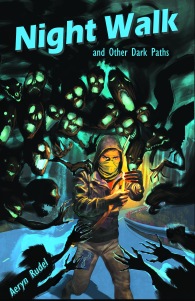
Night Walk & Other Dark Paths
Acts of War: Flashpoint

Acts of War: Aftershock

Acts of War: Stormbreak

 Aeryn Rudel's Rejectomancy
Those are some impressive numbers and statistics. I use duotrope to log everything I do and I’ve thought of going back the last two years to see how I’ve done (submissions vs acceptances/rejections). I know my numbers are nowhere near as large as yours, but you’ve still inspired me to look into it 🙂