
Three Things I Learned as a Staff Writer/Editor

Working as a freelance writer certainly has it’s challenges, but what’s made me an expert at hitting deadlines and producing work to order was the years I worked as an in-house staff writer and editor for a couple of gaming companies. My first gig in that arena was with Goodman Games in 2008, and I worked on tons of RPG material compatible with 4E D&D and got my first taste of editing a magazine, the short-lived but still awesome Level Up. After that, in 2010, I took a job as the editor-in-chief of No Quarter, the in-house magazine of tabletop miniature company Privateer Press. I produced twenty issues of No Quarter, and then, in 2013, I was promoted to publications manager and oversaw both No Quarter magazine and Privateer Press’s new fiction imprint, Skull Island eXpeditions.
So there are my bona fides, but what did I learn from working as a staff writer/editor? How did it shape me and influence the writer I am today? Well, let’s take a look. Here are three things I learned as a staff writer/editor.
- Break up the chaos. The Privateer Press offices were extremely busy, with folks coming and going and having conversations and meetings all day long. Not to mention, my duties as the EIC of No Quarter magazine and then publications manager had people visiting my office all the time with questions or updates on projects that often demanded my immediate attention. For me, the biggest takeaway from writing in a busy office, and something I still do today, is writing piecemeal. What I mean is that there was no way I would be able to sit down and bang out 3,000 words in a single go at the office. What I could do was find fifteen or thirty minutes to knock out 250 or 500 words at various times throughout the day. I could do that and stay on task with everything else, and, before I knew it, I’d have my complete article or story. I still do that today, writing in fifteen to thirty minute bursts and tackling other projects in between. I can easily hit 2,000 words or more in a day doing that and still get other things (like blog posts) done as well without feeling overwhelmed.
- Don’t hold up the line. When you’re a staff writer or editor, your work is part of a larger whole. Whether that’s a bit of fiction in a core rulebook or an article in the in-house magazine, someone is always waiting on you to do your job so they can do theirs. This makes hitting your deadlines and returning revisions promptly essential. If you don’t, you could delay publishing schedules that at a minimum create stress for your coworkers in editorial and graphic design and layout, and, at worst, actually delay the publication or release of the product. As a freelancer, I have the same mindset, because the rules still apply. That magazine I sold a story to needs those revisions so they that can move forward assembling the issue. Privateer Press/Steamforged Games needs me to hit my deadline on the novella I’m writing (as a freelancer) because they’re going to time it’s release with the release of a new model. If I fail to make those revisions promptly or hit my deadline, there are real consequences for the editor or publisher, and, well, it’s not cool and definitely not professional to put folks in that position. Beyond it being unprofessional, freelancers who don’t hit deadlines, don’t get more work.
- You can’t wait for inspiration. If there’s a more fickle force in the universe than creative inspiration, I don’t know what it is. In my experience, there’s nothing more unreliable, and if you wait to be inspired to write, you’re probably not gonna write much. Worse, if your J-O-B is writer, you have to write whether you’re feeling inspired or not. So, that’s something I definitely learned to do in the years I spent as a staff writer/editor. I can usually put my ass in a chair and start writing no matter how awful I’m feeling about the project or my skills as a writer, or, hell, if in the throes of an existential crisis. More often than not, inspiration will show up after I start pounding the keys. Sometimes it takes a couple of sentences, sometimes a whole page, but in the end, when I turn on the inspiration bat-signal, it’ll eventually skulk out of the shadows to do it’s fucking job. This is a very useful skill borne out of the sheer terror of failure and letting people down, and it’s one I’ve relied on to complete just about every writing project I’ve undertaken. 🙂
So, there you have it, three things I learned from my days as a staff writer/editor. My time in the staff trenches was honestly a blast and incredibly rewarding, and the skills I picked up from the various projects I worked on and the excellent creative folks I worked with have proven invaluable to my journey as a writer.
Do you have any experience as creative staff? If so, tell me what you learned about the craft in the comments.
For more things I’ve learned in my writing career, check out these other “three things” posts.
Three Things I Learned from 500 Rejections
Three Things I Learned Writing Media Tie-In
Three Things I Learned as a Magazine Editor
Three Things I Learned from Writing RPG Adventures
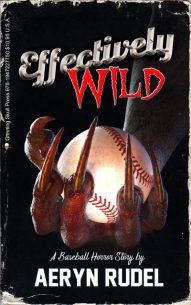
Effectively Wild – A Baseball Horror Story
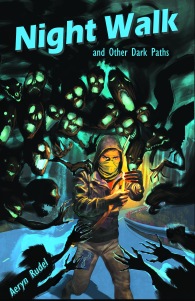
Night Walk & Other Dark Paths
Acts of War: Flashpoint

Acts of War: Aftershock

Acts of War: Stormbreak

 Aeryn Rudel's Rejectomancy