
First Issue of Red Sun Magazine
My story “Paper Cut” snagged the cover of the first issue of Red Sun Magazine, and the artist, Joas Miller, pretty much nailed the picture in my head. Check it out.
Ranks of the Rejected: Mark Allan Gunnells

Time for another Ranks of the Rejected. This time, I’ve convinced fellow horror and fantasy author Mark Allan Gunnells to reveal the dark, squishy truths about writing and rejection. I first met Mark over on the Shock Totem forums where he was a regular in the bi-weekly one-hour flash challenge. I was immediately impressed by his style and subtle grasp of horror . . . and his ability to knock out a bad-ass flash piece in under an hour. Mark has definitely been around the block in the publishing world, and he’s published a slew of excellent novels, novellas, and short stories. If you like horror or dark fantasy (or just great writing), do yourself a favor: read this interview, click the links at the end, and pick up one of Mark’s books. You won’t be disappointed.
1) What genres do you typically write? Do you have a favorite? If so, what about that genre draws you to it?
I favor fantasy and horror, by far my preferred genres. I do step outside those genres from time to time to stretch my creative muscles. I even have a romance novel under my belt. However, fantasy and horror keep me coming back. I’m not sure what it is about those types of stories that draws me, I have loved them since I was a child. I do love the limitlessness of fantasy and horror. It’s a playground for the imagination.
2) What does your typical writing work day look like? Do you have daily goals? Word count targets?
I’m actually very lucky in that I get to write at work. When I was on third shift I got a lot of writing done, but since I’ve been on first, I don’t have quite as much spare time. I’ve trained myself to write in the pockets of downtime that crop up. I may get fifteen minutes at a time or five, but it all adds up. I tend not to pressure myself regarding daily goals. My only goal is to write. Some days it may be several pages, others, only several paragraphs, but as long as I’m writing, I don’t beat myself up.
3) Okay, this blog is called Rejectomancy, so tell us about your first rejection letter or the first one that had a significant impact on you as a writer.
I started submitting as a teenager to various small horror magazines I found out about through the Writer’s Market, and I quickly started racking up form rejection letters. I had read that Stephen King had collected his when he started, so I copied that, posting them on the wall above my desk. While an acceptance would have been nice, when I would look up at the rejections I would feel proud because I was trying. I was writing. I was submitting. I was working at making my dream of being a professional writer come true.
4) In your opinion, what is the most important lesson writers can learn from rejection?
I think I have two answers to that one. One, you can learn a lot from rejection. You can’t let your ego get so big that you can’t see that sometimes criticisms have merit and you can actually use it to strengthen and tighten your writing. Two, not ALL criticism has merit. Some of it is just opinion, and those can vary from editor to editor. I’ve received some rejections that have really torn a story apart and then found an editor that loved it just as it was. If you believe in your story, you have to just keep putting it out there until you match it with the editor that gets it.
5) Got a favorite rejection? Memorable, funny, mean, just straight-up weird?
Recently, I posted about a rejection I got from a small magazine where I’d submitted several times. The editor finally sent me a message asking me to stop submitting because I wasn’t a very good writer. He went on to provide a detailed and loooong list of all the things that made me a bad writer. Basically he didn’t like the types of stories I told or the types of characters I used, and said, and I quote, “You may not realize it, but your stories consciously or subconsciously (whichever) are written to appeal to middle-class audiences and lifestyles.” As if the middle-class is not an audience you should be interested in. I used that rejection as great motivation to keep writing the kinds of stories I love.
6) What’s the toughest part of rejection for you? Pro tips for dealing with it?
I guess the toughest part for me is when I write something, I’m very excited about, and I have a deep desire to get it out there for others to enjoy. I crave feedback from readers, which you can only get once the story is available. Rejection keeps me from having that two-way relationship with readers. As for dealing with it, just keep writing what you love. As long as you are enjoying the process, everything else will just be gravy.
7) Okay, plug away. Tells us about your latest project or book and why we should run out and buy it.
Most recently, I released three books back to back (talk about over-saturation): two collections and one novella. FLOWERS IN A DUMPSTER, COMPANIONS IN RUIN, and FORT. I have a few projects coming out, including two collaborative novels (one with James Newman and the other with Aaron Dries) and a sequel to my earlier novel THE QUARRY. I’m currently working on a couple of novellas.
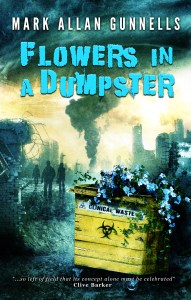
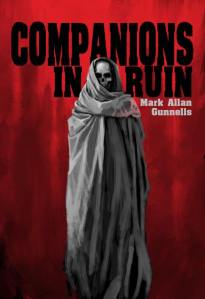
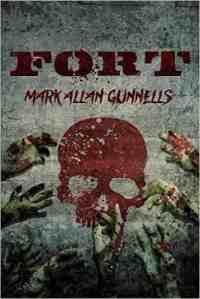
Mark Allan Gunnells loves to tell stories. He has since he was a kid, penning one-page tales that were Twilight Zone knockoffs. He likes to think he has gotten a little better since then. He loves reader feedback, and above all he loves telling stories. He lives in Greer, SC with his fiance Craig A. Metcalf. Blog: www.markgunnells.livejournal.com/, Amazon Author page: www.amazon.com/Mark-Allan-Gunnells, Facebook: www.facebook.com/mark.gunnells
New Flashpoint Cover & Lock & Load Book Signing
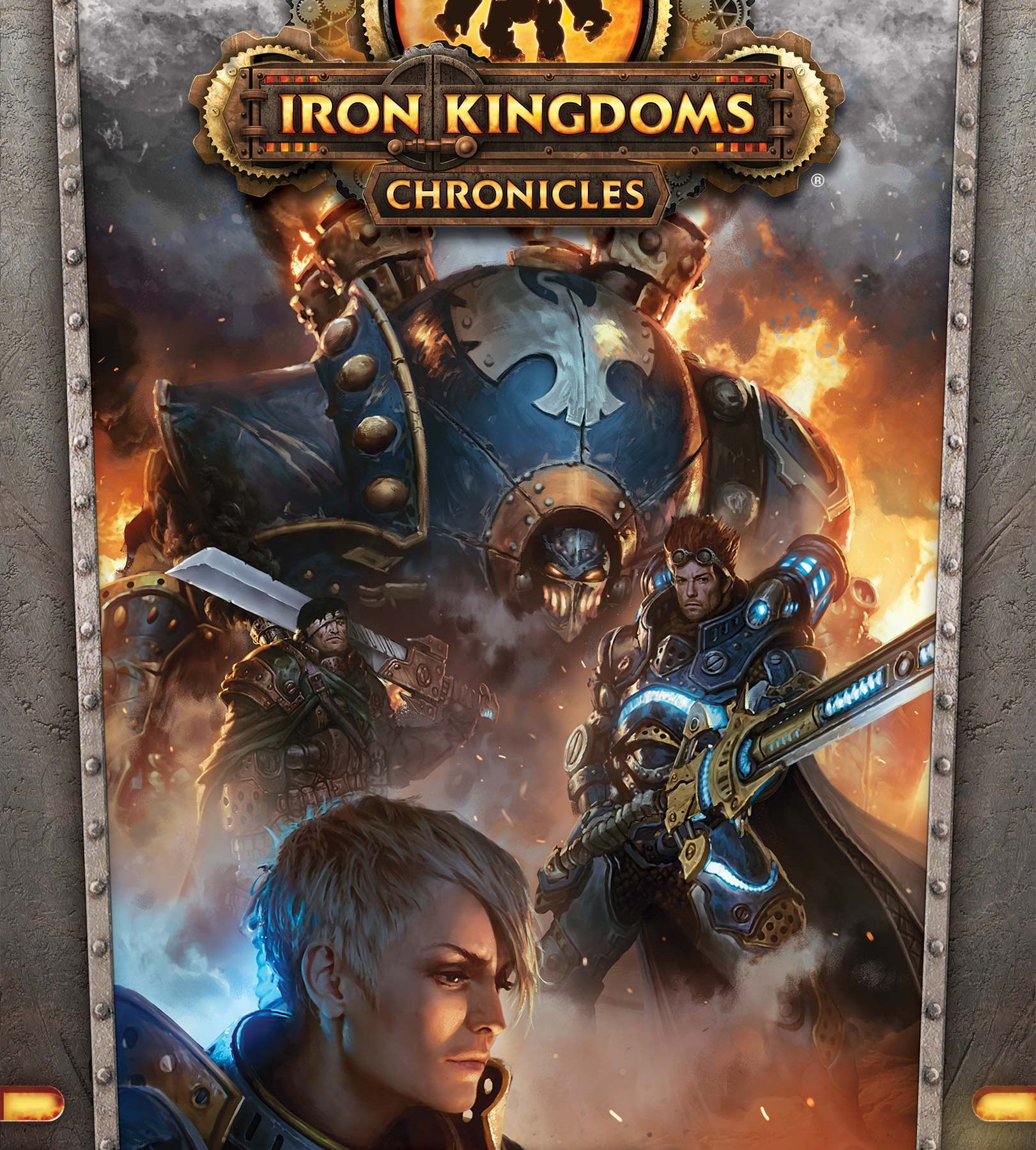
I’ll be saying this a lot over the next couple of weeks and months, but I wrote a book, and it’ll be available in your favorite reading format (including dead tree) on July 15th. The book is called Flashpoint, and it’s set in Privateer Press’ steam-powered fantasy world of the Iron Kingdoms. I’ve shown the cover before, but it was updated just before it went to press, and now it looks like this:
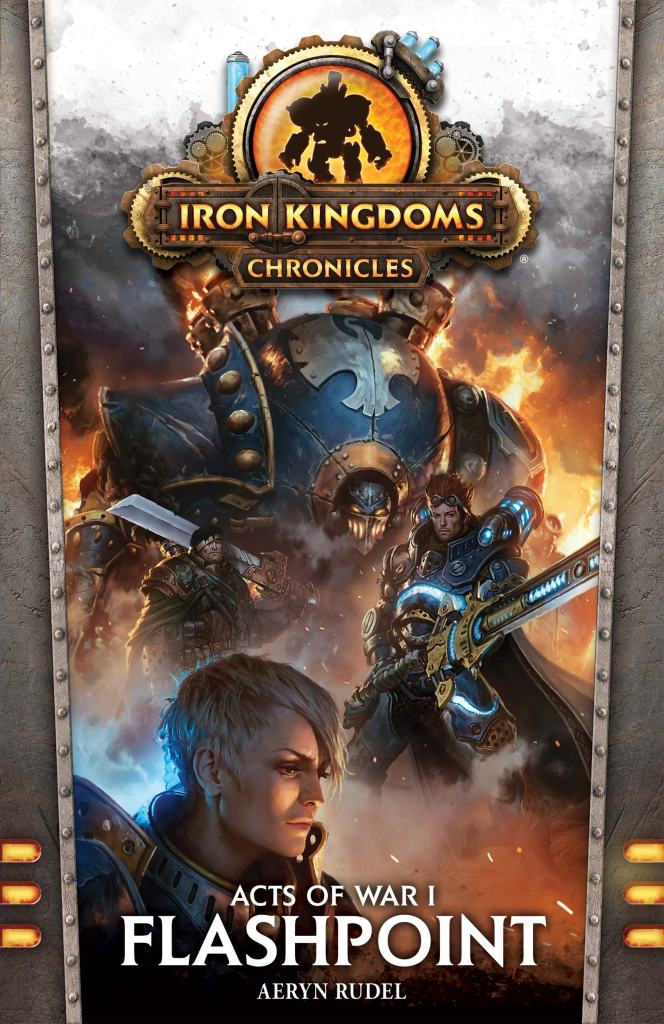
Pretty cool, huh?
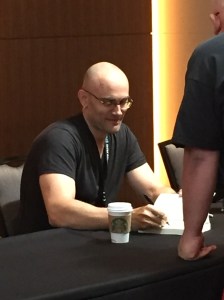
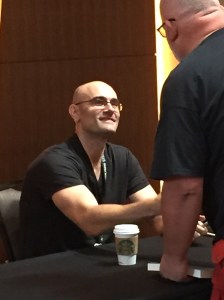
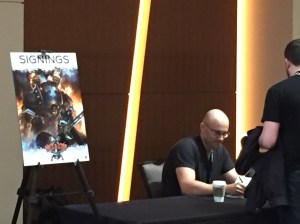
One other bit of news: Privateer Press offered a special pre-release of the book at their annual convention Lock & Load GameFest here in Seattle from June 10-12, and I was on hand to do my very first official book signing, which was a lot of fun. (Apologies to all for my atrocious signature.) Anyway, here are some photos of me at the signing, where I seem to be making weird faces in pretty much every shot. Oh, and a shout-out to my fellow authors Douglas Seacat and Zachary C. Parker with whom I shared the author’s table. (You should read their books too: The Blood of Kings and Wrath of the Dragonfather)
Thanks to my lovely wife, Melissa, for snapping these photos and a bunch of others. She did the absolute best possible with a very difficult subject.
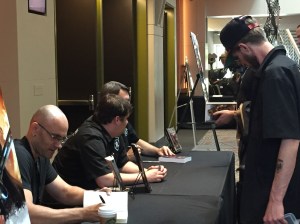
A sincere thanks to all the folks who came out to Lock & Load, bought a copy of Flashpoint, and let me scribble my name in it. I appreciate it more than I can properly express. I hope to see you all again next year and sign one, maybe two more books.
Poll: How Many Rejections Before You Retire/Revise?

Recently, I had a story accepted after sixteen rejections. I know; that’s a lot, right? I felt pretty confident about the story despite the mounting number of NOs, so I kept sending it out. I found an editor that liked it as much as I did, and in July, you can judge for yourself if it was worth all those rejections.
Anyway, the rejection count on that story got me thinking: How many rejections is typical before an author decides to retire or significantly revise a story*? With a few exceptions, I have my own target number, but I’d like to hear from all of you about yours. So I’m gonna try out WordPress’ handy poll feature and ask you to vote in the poll below. Yes, I know there are a lot of factors that go into deciding when to revise or retire, so feel free to expand or qualify your answer in the comments. I’ll update the post with my own magic number next week.
One more thing: my little jokes in the poll answers are just that, jokes (bad ones). I don’t mean to imply one answer is better than the other (I have stories that fit them all).
*By significantly revise, I mean rewrite at least fifty percent of the story or radically change the theme, arc, or POV. By retire, I mean shelf the story and stop submitting it.
6 Rejection Records & Other Dubious Achievements

When you’ve submitted your work long enough, you start to notice certain “firsts” and “bests” in the meandering pattern of rejections and acceptances that define the freelance writer’s career. I certainly don’t have as many data points as some, but I’ve got enough to compile the following list of record holders and whatnot. So here’s my “all-star” rejection roster.
1) Fastest Rejection: 2.5 hours
This is a recent record, beating my old time of four hours. The market in question isn’t known for super speedy rejections like this, but my last submission to them was short-listed (and eventually rejected), so maybe, just maybe, the editor was actually interested to see what I’d do next (and hated it). Or maybe I used the wrong font or something.
2) Slowest Rejection: 419 days
This rejection was from a magazine that is known to be slow to respond, but this was a long time even for them. In fact, I’d given up on the story after I’d sent them query letters with no response, and submitted it elsewhere. Then, 16 months later, I received a personal rejection telling me they nearly published the story after much deliberation but ultimately decided to pass. I’m a patient guy, but 16 months is a long time to wait.
Coincidentally, the rejected story here is the same story in the next rejection record.
3) Most Rejections before Publication: 16
Another recent accomplishment. This beat my old record of 13 pretty handily. Nothing dubious about this one, though. I liked this particular story a lot, and it had received a number of close-but-no-cigar rejections, so I stuck to my guns and kept sending it out. I finally found a publisher who liked it as much as I do.
The moral of the story here, I guess, is if you believe in a story, the rejections shouldn’t deter you from submitting it again. That said, 16 is A LOT, and I wouldn’t blame most folks for throwing in the towel long before that. I think what kept me going is a) I like the story a whole bunch and b) a writer friend of mine who has seen a lot of success recently had a story rejected 37 times before publication. I figured if he can weather 37 rejections, I should be able to withstand at least 20.
4) Fewest Rejections before Publication: 0
I had to check my records to make sure, but I’ve pulled of the one-and-done exactly twice. It’s not common, really. For me, anyway. This might have something to do with my submission targeting, which I think can be a bit off at times. I think writers can get to a certain point where their name alone can greatly improve their chances at publication, resulting in more one-and-done acceptances, but I am most certainly not there yet.
5) Most Rejections by a Single Publication: three tied at 5
When I looked this one up, I was actually surprised. It certainly feels like I’ve been rejected a lot more by certain publications, but 5 is the most (there’s a lot of 4’s, though). I’m well into triple digits in total rejections, and I’ve spread my stories around quite a bit more than I’d thought. That’s the great thing about services like Duotrope; they keep track of all that interesting (and potentially useful) submission data you would never track yourself.
6) Most Acceptances by a Single Publication: 7
Bless you, The Molotov Cocktail. Bless you. A lot of these come from placing in the Molotov’s various flash fiction contests, though I’ve published a few in their regular issues as well. Hey, you find a market that digs your work, and you stick with them. I’m certainly not the first writer to have done that. There’s two more markets that might fall into this category, though I’d need at least one more publication with them to be sure.
Got any records of your own? Share them with the class in the comments.
Guest Post: Simon Berman and Problem Glyphs

When last I blogged on this hallowed page, Aeryn had invited me to promote my then-current project The Book of Starry Wisdom. I know for a fact a number of Rejectomancy readers backed the Kickstarter, so let me first say thank you! Aeryn and I go way back at Privateer Press where we worked together on a number of projects, and it’s a pleasure to see he’s gaining a loyal and adoring audience—even if they seem to be tuned in mostly to see his rejections—but I digress!
Since last I blogged here, my own career has taken a path somewhat parallel to Aeryn’s as an independent author. The success of The Book of Starry Wisdom resulted in a number of other projects falling in my lap, and I’ve subsequently launched a publishing company to support them. Strix Publishing is my new baby, and while I’m currently neck-deep in getting it off the ground, I’ll be blogging about my experiences as an independent publisher later this summer.
At the moment, my current endeavor is in support of an art book for Eliza Gauger’s Problem Glyphs project. Gauger is an established and prolific author who has collaborated with numerous high-profile creators, including Warren Ellis and Jhonen Vasquez. You may remember the original “baby head” logo for iO9, which was one of her earliest commercial works. I’ve had the pleasure of working with Gauger for several years on a not-quite-ready-for-prime-time comic book Black Hole Wizard and the gasmask-chic role-playing game of neo-Victorian horror Unhallowed Metropolis, about which I will have more news soon, but again, I digress.
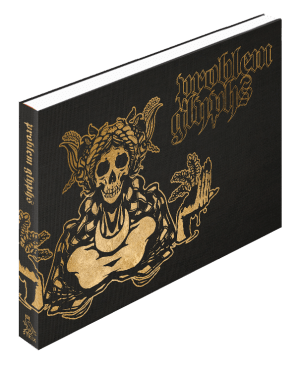
Problem Glyphs is a project I’ve had the privilege of observing since its earliest nights as something of a whimsical experiment with illustration software in the autumn of 2013. Since then, Gauger has crafted over two hundred sigils in response to the deepest, darkest problems submitted anonymously online by thousands of individuals. Drawing upon her background in fine art, mythology, and the occult, Gauger responds to these problems by creating intricate, symbol-laden glyphs that are published online with an accompanying descriptive title, free of charge
Gauger approached me about working on an art book sometime ago, but it was only after founding Strix Publishing that I felt confident I could produce a book to the standards required by a project that is not just illustratively beautiful but also emotionally important to thousands of people.
After months of discussion, mockup layouts, and printer samples, we settled on a format we think will do the project justice.
The Problem Glyphs art book contains 100 glyphs and their associated submissions, accompanied by an introduction by Eliza Gauger and a foreword by award-winning writer Warren Ellis. Problem Glyphs will be a premium edition, display-worthy art book, measuring 10″ x 12″ and featuring a Smyth-sewn, genuine clothbound hard cover with gold foil-stamped cover illustrations. The estimated 220 interior pages will be printed on beautiful matte coated art paper. Tremendous care has gone into every aspect of the book, from its binding to its typography, the beautiful and storied Doves Type. The choice of Doves Type was particularly special due to the strange circumstances in which the Type was thought lost in the depths of the Thames only to resurface nearly a decade later. I’ve blogged about it elsewhere, but it may be of interest to anyone fascinated by typography or just stories that could come straight out of an Edgar Allen Poe tale.
![[MAY WE BE MARTYRED IN SPACE]](https://rejectomancy.com/wp-content/uploads/2016/06/may-we-be-martyred-in-spacepng.png?w=698&h=423)
Cheers!
—Simon Berman
Introduction from Problem Glyphs by Eliza Gauger
“I don’t know how to explain Problem Glyphs.
Usually I tell people I’m a career illustrator, and that I’m running a project where I “make drawings in response to problems sent in by the audience.” It started November 2013, making it my longest continual project. As of this writing, there are over 200 glyphs, each with a name and origin, almost all of which have accompanying problems submitted by the audience. That’s roughly twice the size of a standard tarot deck. The first glyph, [I STAND MY GROUND], was posted to the blogging platform/social network Tumblr on November 3rd, 2013. That’s about two glyphs per week. Each glyph takes between 5 minutes (the very earliest, simplest ones) and 5 hours (the most recent, complex ones), including research and an artist’s obligatory staring-into-space time. I use a specialized, free drawing program called Alchemy, and sometimes Photoshop. That’s the nitty-gritty. There’s a tutorial on the Problem Glyphs site if you want to know more.
![[GOAT SWARM]](https://rejectomancy.com/wp-content/uploads/2016/06/goat-swarm.jpg?w=698&h=422)
So every time I get the next glyph request, I start research. Here’s the one I’m working on now:
I am mildly manic-depressive, and I regularly fuck up my relationships by being incredibly sweet one minute and then sinking into a depression the next. When depressed I tend to start ring emails to my girlfriend blaming her for my problems. I always regret it: she’s great at helping me face my moods in person, but she’s devastated when she gets my angry email tirades. I need a reminder that it is wise to take a breath, take time out, and stay away from the keyboard when I feel like shit.
—Anonymous, July 9th 2014, 6:43:00 pm
This is how glyphs start: I mull over my own experience with the problem, and recall how it feels. How it feels to fuck up, or to be fucked up. To be frustrated enough to ask for help. In this situation I always feel “radioactive”, as if my presence was enough to sicken and wither the people I loved. And it is, sometimes. I have learned to avoid people, or excuse myself, when I feel it coming on. I opened four or five tabs about radiation sickness, radioactive half-life, Chernobyl, and Fukushima. Nuclear fiction is a passion of mine, Fallout 2 being one of my earliest obsessions. I remembered a PDF I read once about a think tank that had to come up with a way to warn intelligent beings, 12,000 years in the future, to stay away from the nuclear waste we are burying now. I looked that up. I spent hours reading the PDFs on the Waste Isolation Pilot Project and Yucca Mountain websites. I looked at official biohazard and radioactivity warning insignia, clicked through dozens of Wikipedia articles, sifted through forums and official archives. Then I sat still, and thought about it for a few hours.
Warren Ellis calls this the “compost heap” method of writing: You shovel enough garbage into a midden and it’ll start to stew; come back a few weeks later and something useful will be there. He’s right, although in my case it’s more like a garbage fire . The finished glyphs are the last pulsing coals, raked over and ready to be walked across.
I don’t agree with platitudes much, particularly “it’s going to be okay” or “this too shall pass”. Sometimes—most of the time, you could argue—it’s not going to be okay. It won’t pass. It stays exactly the same, or it gets worse. Medications don’t work sometimes, or they stop working. Sometimes we can’t afford them in the first place. People change, or die, or stop talking to us. We break up, we divorce, or, best case scenario, we get to watch the person we love most in the world die of old age.
![[DAEDALUS]](https://rejectomancy.com/wp-content/uploads/2016/06/daedalus.png?w=698&h=437)
I was eleven years old when I accidentally told an adult I was thinking about killing myself. Sent to a child psychologist, I learned two things: that people who really wanted to help me (and were qualified to do so) sometimes couldn’t, and to stop bothering people with my problems. I tried therapy, and a variety of different medications , during various times in my life. They simply weren’t effective, or the toll was too high; in one of medical science’s cruel little jokes, many antidepressants cause a total loss of creativity. For someone with a typical job, that feeling of numbness or “zombification” with which some people react to SSRIs can sometimes be tolerable, or even a relief. But for someone who trades off their ability to draw from imagination on demand, the loss is catastrophic. It is, without hyperbole, my entire life. The compost heap won’t digest, the fire won’t light. Eventually, I aged out of my family’s insurance coverage and stopped having access to medical treatment at all. If I wanted to survive (and I did, usually), I had to try something else.
That “solution” was to own suicide – keep it like an ace up my sleeve.
Decades later, I still think about suicide a lot. But I’m still here, and will be until I decide otherwise. There are a few glyphs about that. [FORGIVENESS OF DEATH URGE], [LET’S DIE ALONE TOGETHER], and especially [DEATH WAITS WITHOUT RANCOR], which was one of the earliest glyphs that got “popular”.
If Problem Glyphs has any kind of agenda, it’s to meet Doom with eyes, arms, and mouths wide open. Legs, too.
—Eliza Gauger
Simon Berman is the owner and founder of Strix Publishing. He has worked as a staff writer for Privateer Press on the award-winning miniatures war games, WARMACHINE and HORDES, and the Iron Kingdoms Full Metal Fantasy Roleplaying Game, winner of 4 ENnies awards, as well as the ENnies nominated roleplaying game, Unhallowed Metropolis. He has also worked as a social media manager on Kickstarter projects for WARMACHINE: Tactics, Widower’s Wood, and The Book of Starry Wisdom. He currently lives in Seattle, Washington.
Eliza Gauger is an established freelance artist who has produced illustrations and flavor text for magazines, books, and role playing games. She has collaborated as an illustrator with Jhonen Vasquez and writer Warren Ellis, and has written for Wired, Kotaku, and Destructoid. She has taken part in solo and collaborative fine art shows in Berlin and Munich, including STROKE festival, and her work is in the permanent collection of the Hatch Gallery Berlin.
May 2016 Submission Statement

May is over, and it was a good month, if not an overly productive one. I spent much of May working on the final edits of my novel Flashpoint, so there wasn’t as much time to submit short stories as I would have liked. In fact, I managed only a single submission. That said, a few of the submissions I sent out in months previous bore some fruit.
March Report Card
- Submissions Sent: 1
- Rejections: 3
- Acceptances: 2
- Other: 1
- Publications: 1
Rejections
Let’s eat our rejection vegetables before we get to the tasty acceptance dessert, shall we?
Rejection 1: 5/5/16
Thank you for submitting “XXX” to XXX, but it’s not quite what we’re looking for and we’ve decided to pass on this one. Best of luck with your work.
This is just a standard form rejection, which, at this point, hardly registers on my woe-is-me meter, but this one was a little disappointing. You see, I had gotten a very nice referral rejection in April that suggested I submit the story to this publication. So, I got my hopes up a bit that I might get an acceptance here. Alas, it was not to be. What’s the lesson here, boys and girls? Don’t hope. Hope sucks.
Rejection 2: 5/14/16
Thank you for submitting work to our Flash Felon contest. The judging process seems to get more and more difficult each time. Some truly imaginative stories this time around.
Unfortunately, “XXX” didn’t make it into our Top 10. However, this entry did make it through several rounds of cuts and was ultimately very close. As a result, we gave you a shout-out on our results page as a “close-but-no-cigar.” If you’re so inclined, we would encourage you to submit this piece for consideration in our regular issues (free to submit). We’ve published a handful of close-but-no-cigar contest entries in our regular issues in the past.
Thanks so much for your participation. We couldn’t do these contests without you.
I don’t normally list the names of the publications in my rejections, but since I also got an acceptance from this publisher for the same contest AND it was published in May, it’s kind of hard to avoid. Josh Goller, the editor-in-chief at The Molotov Cocktail is a great guy, and I know he won’t mind. I’ve got nothing but great things to say about Molotov, and they’re one of my favorite publications.
Anyway, this was a rejection, but it fell into their close-but-no-cigar category for the Flash Felon contest, which means the story might have legs in their regular monthly issues. I might just submit it there.
Rejection 3: 5/31/16
Thank you for sending us “Story X”. We appreciated the chance to read it. Unfortunately, this piece is not a good fit for us. Best of luck with this in other markets.
This innocuous little form letter is actually the death knell for “Story X.” Yep, this was the tenth and final rejection. As promised, I revealed the story in its entirety when I posted the final rejection. You can read that here.
Acceptances
Two acceptances in May, both good ‘uns.
Acceptance 1: 5/14/16
Congratulations! Your Flash Felon entry, “The Sitting Room,” has been selected as an honorable mention. This means that it will be published in our upcoming Flash Felon mega-issue (to run on Monday, May 16th) and it will be included in our second annual Prize Winners Anthology print edition in October.
Thanks so much for your participation in the Flash Felon contest and for writing such a kick-ass story. We’re honored to be able to feature it.
Yep, one of my stories landed an honorable mention in The Molotov Cocktails Flash Felon contest. Again, I don’t mind letting you know who the publisher is here because I’m going to reveal it anyway when I get to the publications section. You should totally read my story, but, please, please, please make sure you also read the winner of the Flash Felon contest “The London Umbrella Company” by Jan Kaneen. It’s just one of the best goddamn pieces of flash fiction you’re likely to encounter in this world or the next.
Acceptance 2: 5/28/16
Thank you for choosing to submit your work to XXX. The staff enjoyed your story “XXX” very much, and we’d like to publish it as our feature story for issue #1 due in JUL.
What that means is we’d run your story as the headliner and interview you for our “Author Spotlight” section. We do this once per issue.
I’m sending a contract with electronic signatures. Please review the contract and sign.
Let me know if you have questions or concerns or if you do not receive the contract.
Okay, this one was especially sweet. Why? Because the story this market accepted is my most rejected story of all time; it’s also one of my favorite stories. It received a bunch of close-but-no-cigar rejections, but after many, many tries, it failed to find a home. Finally, the story has found its way to someone who liked it as much as I do. In other words, sometimes you have to just keep plugging away and go with your gut on a story, despite the rejections. Why? Because rejections don’t always mean “bad story,” they often mean just what the rejection letter says: not right for us, doesn’t meet our needs at this time, and so on, and so on.
Anyway, I’m pretty excited about this one, and I will, of course, give you all the details once its published.
Other
One letter that is neither a rejection nor an acceptance this month.
Further Consideration/Short list Letter 1: 5/12/16
Thank you for submitting “XXX” to XXX. One of our first readers has read your story and believes it deserves a closer look. We would like to hold it for further consideration. Good luck!
What we have here is a further consideration letter from one of the top markets in the speculative fiction industry. From this magazine come Hugo, Nebula, Shirley Jackson, and Bram Stoker Award nominees and winners (among others). This is the first time I’ve gotten anything but a form rejection from them, so, yeah, that’s pretty damn cool. I will not allow myself to get my hopes up here, though. The competition at a market like this is fucking fierce. I am, however, happy to have at least gotten through the front door, so to speak.
Publications
One of my stories was published this month.
Publication 1: 5/16/16
As I noted earlier, my flash story the “The Sitting Room” was awarded an honorable mention in The Molotov Cocktail’s Flash Felon contest. Give it a read if the mood strikes.
And that’s how my May shook out. What did yours look like?
An Excerpt from FLASHPOINT, My Iron Kingdoms Novel
As some of you may know, I wrote a book, and it’s going to be released upon the world in the very near future. It’s called Acts of War: Flashpoint , and it’s set in Privateer Press’s steam-powered fantasy setting of the Iron Kingdoms. So, if you like steampunk, magic, robots, swashbuckling fantasy action, and, well, my writing, then there’s a decent chance you’ll dig this book. Anyway, the folks over at Privateer Press have posted a an excerpt from the book on their website, so go have a look.
In the mean time, here’s the official cover along with some juicy back-cover text.
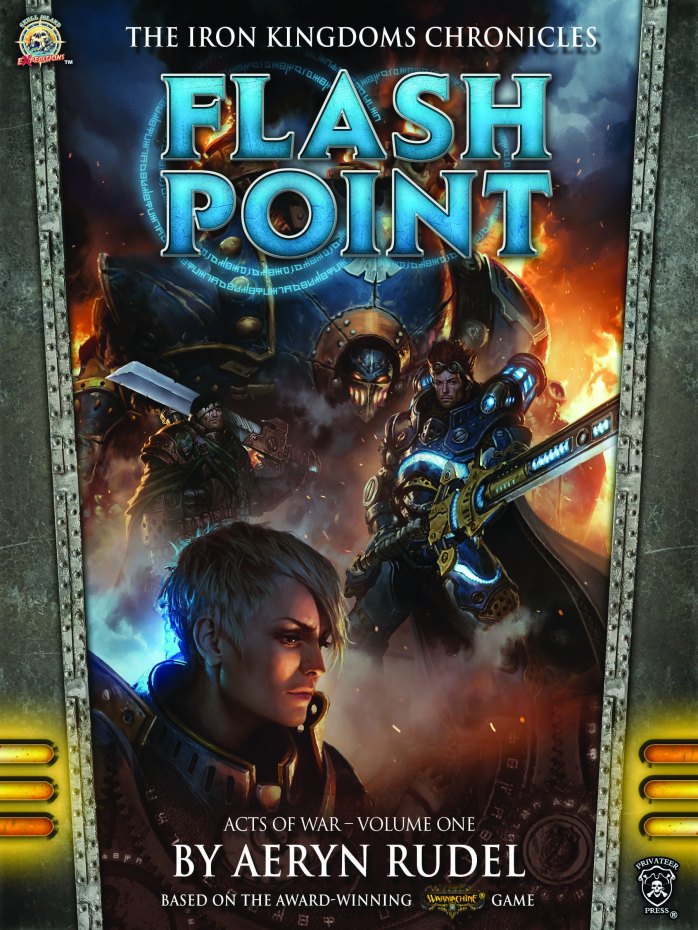
Forged in the fires of conflict, the Iron Kingdoms is a fantastic realm where the combined power of magic and technology thunders across a landscape shaped by war. Dominating the field of battle are rare individuals who have mastered both arcane and martial combat and who boldly lead mighty armies in the ongoing struggle to claim victory over these ancient lands.
An Untrustworthy Ally Is More Dangerous Than a Known Enemy
Lord General Coleman Stryker is one of the greatest heroes of the Iron Kingdoms. As a warcaster, Stryker leads the armies of Cygnar and commands the power of the mighty steam-powered automatons known as warjacks.
Chosen by his king to liberate the conquered lands of Llael from Cygnar’s long-standing enemy, the Empire of Khador, Stryker finds himself forced to work with one of his most bitter enemies—the exiled mercenary Asheth Magnus, a man to whom Cygnar’s king owes his life. Unchecked, Magnus could easily betray Stryker, undermine the mission, or even bring Cygnar to its knees. But to claim victory for his king, Stryker will have to find a way to put his faith in a man he can’t trust.
As the war against Khador and its own fierce commanders looms, Stryker’s success or failure will become the flash point that determines the fate of all the Iron Kingdoms.
New Kids on the Block: Evaluating Fledgling Genre Markets
In my search for genre markets, I often come across brand-spanking new magazines and webzines eagerly accepting submissions for their inaugural issue or issues. Duotrope has a handy way of identifying such markets, noting them as fledgling, which means, “This project is new and has been listed with us for less than six months.” So, with how quickly genre markets appear and disappear, should you send work to a fledgling market? Sure you should, but there are some things you might consider first.
Okay, numbered list time!
1) Do they pay? Let me preface this by saying I don’t think payment is necessarily an automatic indicator of a quality market, and some well-respected markets do not pay. But when I’m evaluating a fledgling market, knowing they have some skin in the game (so to speak) makes me more confident they might have some staying power. I feel even better if they’re paying at the semi-pro or pro tier.
2) Who is/are the editor/editors? Who’s running the show at a fledgling market is important. Do they have experience running a magazine? Have they been in a position to evaluate stories prior to this? Say, at a publishing house or another magazine? All good questions and usually not difficult ones to answer. If you’ve worked in the industry for any length of time, you’ve probably got a reasonable professional internet footprint, and I don’t think there’s anything wrong with looking up the EIC or managing editor of a fledgling market to see what kind of experience they have.
3) Professional presentation. You can absolutely judge a book by its cover sometimes, and there is a lot to be said for a professional presentation. I don’t need to see cutting-edge web design on a fledgling market’s site, but I would like to see something clean, well-organized, and easy to navigate, especially if they’re a web-zine that displays an author’s work directly on the site. Obviously, I don’t want to see typos or grammar and spelling issues. A professional-looking and professionally edited website tells me my story is likely in good hands.
4) Clear terms. What rights is the fledgling market buying? Do they have a standard contract? How long before I can publish my story as a reprint? All of these are important questions, and I want them answered clearly and concisely on the fledgling market’s web page, like this:
What we are buying: First World English Rights, First Electronic Rights, and Anthology Rights (a “best of” to be negotiated with the authors). We ask for exclusive rights to the author’s work for six months (the duration of a single issue’s run, plus two months), as well as exclusive anthology rights for a year, both to begin at the time of publication.
If a fledgling market really wants to give me the warm fuzzies, they might use something like the SFWA model contract. That kind of thing really puts an author’s mind at ease.
5) Standard guidelines. What I hope to see in a fledgling market’s submission guidelines is a request for standard manuscript format in a Word doc via email or a service like Submittable. That’s how most markets I’m familiar with do it these days, and a new market that makes it easy to submit a story is more likely to get me to hit the ol’ send button.
True, these are probably things you want to think about when submit work to any market, but with new markets I think their importance is magnified some. The bottom line is I want to make sure my story is going to get a fair shake from folks who know something about writing and editing, and if I’m fortunate enough to get a story accepted, that my work is going to be well represented. If a fledgling market hits all five of my criteria (or even just the first four), I feel a lot more comfortable submitting work to them.
Now let me put my money where my mouth is and give you some fledgling genre markets I’ve sent work to in the last year. All these markets meet the criteria I listed above (more or less). Note, the last two are no longer listed as “fledgling” at Duotrope, which means they’ve stuck around for a couple of issues. That’s a good sign.
Care to share your experiences with fledgling markets? Tell me about it in the comments.
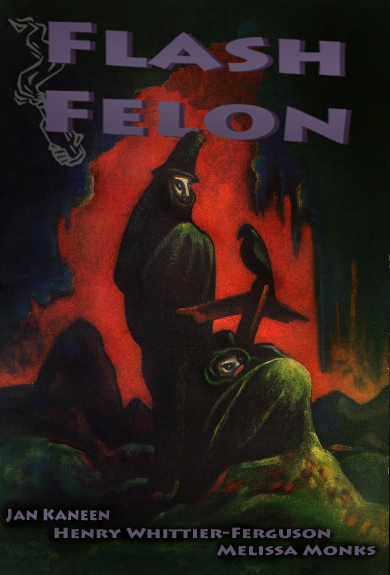
Read My Stuff: The Molotov Cocktail Flash Felon Results
Hey, look, it’s another of those self-aggrandizing posts where I urge you to go and read something I wrote. This time, it’s a story I placed with The Molotov Cocktail in their Flash Felon contest. I landed an honorable mention and a sixth-place finish with my story “The Sitting Room.” The top ten stories have all been published in the Flash Felon mega-issue, and you can and should read all of them by clicking the link below. There are some damn fine stories in the mix, and Jan Kaneen’s “The London Umbrella Company” is one of the finest pieces of flash fiction I’ve ever read. It’s absolutely no surprise she was awarded first place. Go forth and read.
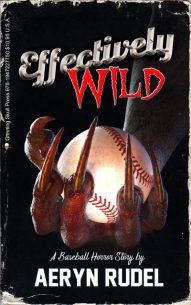
Effectively Wild – A Baseball Horror Story
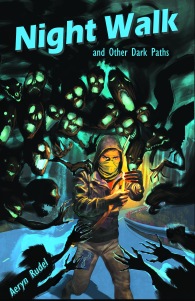
Night Walk & Other Dark Paths
Acts of War: Flashpoint

Acts of War: Aftershock

Acts of War: Stormbreak

 Aeryn Rudel's Rejectomancy