
The Hook Up: Yet More Fun With First Lines
A blog topic I keep coming back to is analyzing the first lines of my flash and short stories. As before, all this comes from the essay written by Stephen King called “Great Hookers I Have Known” in his now sadly out-of-print collection Secret Windows. The term “hooker” comes from an old bit of publishing slang that means a first line that hooks the reader. Over the years, I’ve been looking at the first lines of my published stories, rating them, and trying to find evidence that supports the theory that a great first line improves your chances of publication. So, here we go again.
First, let’s talk about what makes a good first line, in my opinion. There are three elements I think are necessary.
- Then What? I think the best first lines make the reader want to read more. They need to know what happens after you’ve set the hook.
- Informative. A good first line tells you something about the story. It sets the tone, gives you a glimpse of the protagonist’s motives, or even hints at what the story might be about.
- Attention-Grabbing. It doesn’t have to be over the top (though it can be), but a first line that is somewhat shocking or arresting or even just straight-up weird can be effective.
Now let’s look at a few of my recently published stores, analyze the first lines, see if they hit my three vital elements, then I’ll give them a letter grade. I’ll also link to the stories, so you can read the whole thing and see if the first line affects the overall piece.
1) “Mixed Signals” published by Flash Point SF
Colton peered through the binoculars at the tiny red cabin and frowned. “I don’t understand.”
As first lines go, this isn’t exactly hitting a homerun. Let’s see how it does with our three first line musts.
- Then What? Eh, sort of. It’s not a particularly exciting line, but there’s maybe just enough there to prompt a then what.
- Informative. You get one of the protagonists’ names but not anything about him. I’d say it mostly fails here.
- Attention-Grabbing. Nope. Pretty run of the mill, honestly.
This one kinda hits a single element and maybe brushes the surface of another. Grade: D
2) “What You Pay For” published by The Arcanist
When Angelos Hasapi woke, the demon sat in a chair next to his bed.
Okay, this is better. Let’s see how it does.
- Then What? Definitely. Dude wakes up and there’s a demon sitting next to him. I think most folks want to know what happens next.
- Informative. Some. The protagonist and antagonist are introduced, and since one is a demon, that does give the reader an idea of the kind of story they’re about to read.
- Attention-Grabbing. Yeah, I think so.
This line hits one point hard, another point pretty well, and another okay. Not bad. Grade: B
3) “Grave Concerns” published by MetaStellar
Heather glanced around the GraveSecure office, at beige walls, a desk of unvarnished pine, and two brown plastic IKEA chairs, one of which she currently sat in.
Yeah, not great.
- Then What? A woman sits in a beige office, so, no.
- Informative. The mention of GraveSecure is important and kind of interesting, but it’s lost in all that beige description.
- Attention-Grabbing. Haha. No.
Thank god editors generally read beyond the first line. The opening paragraph is good, which clearly saved me. Grade: F
4) “Fertilizer” published by Radon Journal
Victor stared down at the naked corpse of a man in his forties.
Another pretty good one.
- Then What? Yeah, I think so. Guy staring at a naked corpse puts a question or two in the reader’s mind.
- Informative. It kind of whiffs here. Giving the protagonist’s name isn’t really informative. There’s a bit of a tone thing but not enough to matter.
- Attention-Grabbing. Yes. Naked corpses are forty(ish) dudes are generally attention-getting.
So this one gets two out of three, and the two it does get, it gets pretty good. Grade: B-
5) “Rhymes With Dead” published by Wyldblood Press
“Knees, if you please, Brandon,” Rosie said, pitching her voice low to keep it from echoing in the cavernous space of the empty shopping mall.
This one’s not bad either.
- Then What? It’s not killing it here, but the description of the area is good enough along with the opening bit of dialogue that it gets the job done.
- Informative. This is the one the line hits the strongest. It introduces a character but also gives you a glimpse into her personality. The description of the space hints at some things too.
- Attention-Grabbing. The rhyme is pretty good, and the fact that it ties into the title I think works.
This line bullseyes one element and does an okay job with the other two. Some folks detest a story that opens with dialogue. I don’t, obviously, but I’ll downgrade this one a bit for that very real editorial bias. Grade: B
I don’t think I hit it out of the park with any of these, but how did the quality of my first lines affect things in the real world? Did I have difficulty publishing the stories with weaker first lines? Let’s take a look.
| Story | Grade | Rejections |
| Mixed Signals | D | 3 |
| What You Pay For | B | 4 |
| Grave Concerns | F | 4 |
| Fertilizer | B- | 4 |
| Rhymes With Dead | B | 1 |
I’d say that’s pretty inconclusive. The story with the worst first line got as many rejections as two stories with better ones. The other good one was a one-and-done, but that’s likely just good submission targeting (a rarity for me). So, what does this say? I think it says that a good first line can be helpful, but most editors will read past it even if it’s ho hum. I’d say a good first paragraph gets you further with an editor, and, of course, a good story get’s you to the vaunted state of acceptance. 🙂
Thoughts about my first line formula or the effect of good first lines in general? Let’s talk about it in the comments.
Three Things I Learned as a Magazine Editor

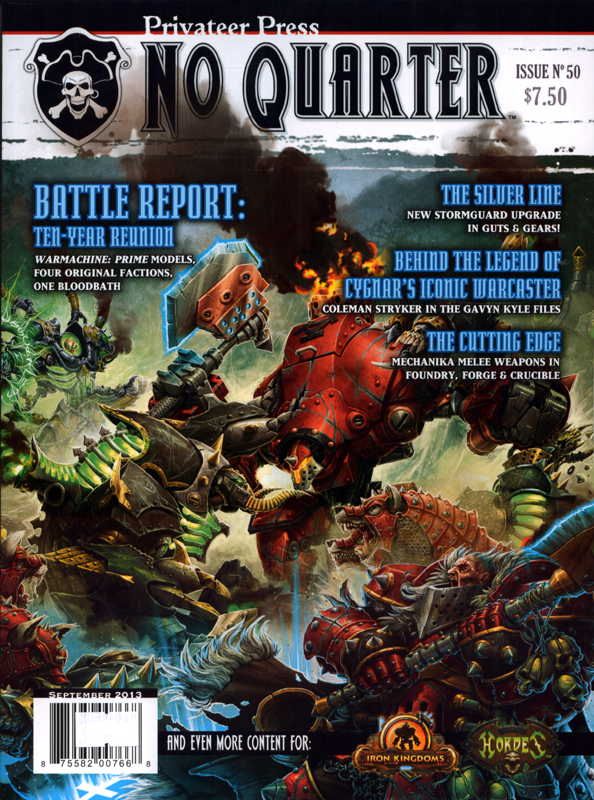
From March of 2010 to September of 2013, I was the editor-in-chief of Privateer Press’s in-house magazine No Quarter. I directly produced twenty issues (plus two special editions) as EIC and then another ten or so after I was promoted to publications manager (though the magazine had a new EIC at that time). Anyway, I’ve written about my first issue here, so I thought I’d write about my final issue as EIC and what I learned as a magazine editor.
Though I didn’t plan it this way, it was cool to go out on a nice round number AND the ten-year anniversary of WARMACHINE (the game No Quarter was created to support). It also had some seriously badass cover art by Andrea Uderzo.
So, after twenty-plus 96- to 112-page issues, here are three things I learned as a magazine editor and how they help me today.
- Prioritize. There is literally no way to run a magazine starting with the first article and working straight through to the last one. It just doesn’t work that way. You plan out all the articles, assign them to writers, assign art to artists, and then get cracking on the stuff you can do personally (editorials, articles I was writing, and so on). The writing and art comes in as it comes in, so if you get the writing for one article, you start editing, then if the art comes in for an article you’ve already edited, you switch tracks and get that article into layout. You do this, jumping around from article to article until you have a complete magazine. I would generally prioritize articles I could get into layout since that was completely out of my hands, and a finished article is something I could mark off my list. Also, cover assets were always prioritized. If you don’t have a cover, you don’t have a magazine. I know this seems haphazard, but once you get a couple of issues under your belt, there’s a definite flow to it, and you just surrender yourself to the editorial tides. That prioritization is a skill I’ve taken into writing novels and working on freelance projects (some of which ARE novels). Work on the stuff you can work on right now. When you’re waiting for a publisher to get back to you for edits and other directions, work on another part of the project if you can. When you’re struggling with one part of a novel, switch tracks and work on another part or work on something else entirely. In short, if you prioritize, you never stop working toward a finished product, be it a novel or a freelance gig.
- Collaboration. Another absolute must when running a magazine is learning how to play nice with others. You are absolutely beholden to writers, artists, and layout folks, and forging good relationships with these people is absolutely key. This is not to say that I didn’t expect freelancers to hit their deadlines, and an artist or writer who missed deadlines just didn’t get more work from me. I also relied heavily on in-house writers, sculptors, the graphic design department, the editing and continuity departments, and so on. My goal was always to make the jobs of in-house folks as easy as possible because, well, that’s just how I roll, and also there would definitely come a time where I’d need them to pull my ass out of the fire and building up goodwill definitely made that request go down easier. I also got a lot of experience dealing with freelancers, and that has definitely shaped how I approach freelance today. Essentially, I try to hit the trifecta of good writing, hitting my deadlines, and being easy to work with. Do those three things and editors will sing your praises and best of all, give you more work. When I found an artist or writer that could reliably do those things, I gave them a TON of work because it was one less thing I had to worry about.
- Get it DONE. You don’t have time for writer’s block or just-don’t-feel-like-it when your putting together a magazine. You write and edit beneath the harsh glare of THE DEADLINE. It’s a ticking clock you absolutely cannot defy. The magazine has to go out on time. If it doesn’t, subscribers don’t get their issues, the printer might not be able to accommodate, and you start at a deficit for the next issue. In short, you are fucked. So you do what is necessary to make sure that issue goes out the door on time. I wrote articles at the zero hour when a freelancer couldn’t meet their deadline. I scoured the vast library of art we had to find SOMETHING that would work for an article when an artist dropped the ball. I moved and replaced articles with frenzied abandon. What did I learn from this? Well, I learned how to write under adverse conditions. A noisy office, deadlines looming, pressure intensifying, and the knowledge that if I didn’t get it done, no one would. So, I can write quickly. I can write under tight deadlines. I can write with multiple changes to a project and roll with it. In short, being a magazine editor made me a better writer.
Now, the caveat to all this is, as usual, that it is entirely based on my experience and how I ran a magazine. Other editors might do things differently, and there are differences in running an in-house magazine as opposed to an independent one (no slush pile, for example). That said, I’d bet good money that my experiences are at least somewhat relatable to magazine editors everywhere.
If you have any questions about my tenure with No Quarter magazine or what it’s like to edit a magazine, fire away in the comments.
Three Things I Learned About Writing Media Tie-In
Today, I’m going to talk about writing media tie-in fiction for tabletop gaming companies. I actually know a thing or two about that because I’ve worked both sides of that particular fence. My last position in the industry was as a managing editor for a media tie-in fiction line, and I still write a lot of media tie-in for my former employer.
If you’ve never heard the term media tie-in, it’s fiction based on a pre-existing IP whose primary expression is in another medium, with movies, games, and comic-books being the most common. So Star Wars novels, Dungeons & Dragons novels, novels based on comic books, etcetera, etcetera. I am drawing a distinction between writing fiction for tabletop RPG and miniature war games over writing fiction for something like movies, comics, and video games. The reason is simple. I have a lot of experience with the former and very little with the latter. There are certainly similarities, but there are also big differences, which I am not qualified to talk about. I’ll stick to what I know.
My aim here is to clear up a misconception or two and provide a little advice on how to get into the gig. One quick caveat: even though I have a fair amount of experience in this area, what I’m about to say is still based on my personal experiences primarily with Privateer Press. Some tabletop miniature and RPG publishers might and probably do conduct things differently. As always, take this post with a grain of salt, and do some research.
Okay, here are three things I think you need to know about media tie-in fiction.
1) It’s not fan fiction. Let me begin this by saying I have nothing against fan fiction or the folks who write it, and fan fiction and media tie-in are cousins to some extent, BUT there are major differences. I think there is a misconception that fan fiction authors are essentially doing the same thing as media tie-in authors for the same IP. And while there might be some crossover, the goals of fan fiction and media tie-in are often miles apart.
In fanfic, the author writes what they WANT to happen. In media tie-in, the author writes what the publisher NEEDS to happen. Those two things generally don’t line up. In fact, the subject of much fan fiction is directly at odds with publisher interests and goals. A fan fiction author might write about a character death or two dire enemies becoming allies or even a romantic relationship between characters, and there’s nothing wrong with that. However, the publisher almost certainly has different goals for the characters and the setting that correspond to plans reaching YEARS into the future. These are things no one outside the company would know. In fact, the information contained in current and even new releases of models, books, and so on is often just the tip of the iceberg. So, even though killing a character, for example, might make for great fiction, it doesn’t work for the publisher if the next three years of releases are built around that character.
In my experience, fan fiction is not a direct path to writing media tie-in. This is not to say that fan fiction authors never get published by the parent IP, but there are reasons why this is rare (see above), some of them legal. So if you want to write media tie-in, take a look at the next point. It might be a better approach.
2) It helps to already be a published writer. Let me explain why. When I was running the fiction line at Privateer Press, my deadlines were SUPER tight. Because of that, I felt more comfortable with authors who had a proven track record of meeting deadlines and, more so, who already wrote media tie-in and understood what to expect.
Here’s another thing that might be surprising. I didn’t care if the author had zero experience with our IP. If they did, great, but it wasn’t necessary. Here’s why. Veteran media tie-in authors are adept at absorbing the exact amount of information they need to complete the project. I’d provide them with setting information and what we needed them to write. They’d get acquainted with that information, write an outline, which I would then mark up and maybe provide additional reference material if necessary. Then the author would write the first draft, which the editorial and continuity team would mark up so the author could make necessary changes to fit setting continuity and the like. This is a skill set developed over time, and, generally not a skill set a new writer possesses. For example, if I need an author to write a short story about Cygnar (a faction in WARMACHINE), I don’t need them to be well-versed on the ancient lore of Cryx (another faction) because Cryx is not in the story. I need them to know enough about the nation of Cygnar and the relevant Cygnaran characters to get the job done. Sometimes, if we had a specific story in mind, I’d even provide the author with a short outline myself. That made both our jobs easier, especially when the author was new to the IP.
But if you are a new writer, and you want to write media tie-in, how do you get started? I can only tell you what I know from my experience, but my advice is to seek publishing elsewhere first. Write and publish short stories, preferably ones in the genre of the media tie-in you want to write. For WARMACHINE, that’d be steampunk, fantasy, and sci-fi. Then, keep an eye out for open calls from media tie-in publishers you know and like. For example, Games Workshop has put out a number of open calls, and that’s a great place to start. GW open calls are pretty cool because they don’t require any previous publishing experience (though I’m sure that doesn’t hurt). It’s never a bad idea to check a publisher’s website and see if they’re hosting an open call or if they’re open to inquiries about writing year-round. Some might be.
Another thing you can do is put together a short writing resume and attend conventions where the publisher has a booth. At Gen Con, for instance, I often had people approach me to inquire about writing for Privateer Press. When they showed up with a short writing resume, I tended to give them more consideration. If you’re going to go this route, make sure you know who to talk to. Go to the publisher’s website and find out who makes decisions on hiring writers to the best of your ability (it’ll likely be someone with the word editor in their title). Then go to the publisher’s booth and ask for them. If they’re not around or busy, ask if you can leave a card and a resume for them. Don’t be offended if you’re asked to come back when it’s not as busy or if you’re asked to submit a resume via the publisher’s website or the like. Be polite. Be professional. Make a good impression.
3) It’s not your IP. When you’re writing for yourself, be it short stories, novels, or the above-mentioned fan fiction, you’re in complete control of the characters, the setting, and the style and tone. You own it. If you want to write media tie-in, you need to get used to the fact that it’s going to be a collaborative effort from the start, and you are essentially going be told what and who to write about. The main characters will usually be established and important to the setting, and they need to be written a certain way to maintain setting continuity. The same goes for setting elements. For example, when I’m writing WARMACHINE fiction, I might think it would be cool to create a brand new warjack that runs on primitive gasoline instead of coal, but if I did that, it would absolutely be called out by the publisher because it violates existing canon. Even if Privateer Press also thought it was a cool idea, the amount of work that would go into implementing it into the Iron Kingdoms is not something that begins in the fiction.
Now, this is not to say you have no creative freedom. You’ll get some leeway when it comes to secondary characters and the expression of game mechanics in the narrative. The latter does have some limitations, though, and you cannot have a character do something that is completely outside of their tabletop rules. For example, I can’t have an established warcaster in WARMACHINE use a magical ability that is not reflected in their rules. Both publisher (and players/readers) would rightly call that out. Again, the amount of freedom an author has likely differs from publisher to publisher, and authors with more experience writing for the IP are given more latitude when it comes to story and characters.
The most important thing to remember here is that you absolutely cannot be precious about your writing if you want to write media tie-in. Whatever you write is likely going to be heavily revised and changed to suit the publisher’s needs. That might change as you become more familiar with the the IP, but even then, expect to see a fair amount of red on your manuscripts.
So there’s my two cents on writing media tie-in. Again, this pertains to my own experience as and editor and writer for a tabletop miniature game. Take what I said here with a grain of salt as other publishers may operate differently. Do your research, look for open calls, and work on getting published elsewhere. That’s the best advice I can give you.
Thoughts or questions about writing media tie-in? Let me hear it in the comments.
If you’re wondering if I’m currently working on media tie-in, I am. Here’s an illustration by Andrea Uderzo of the character I’m currently writing, Kapitan Ilari Borisyuk. I’m having a blast with him, and it’s always great to work with all my old pals at Privateer Press.

Submission Statement: July 2022

July was another good month. The third quarter is definitely looking better than the first two.
July 2022 Report Card
- Submissions Sent: 5
- Rejections: 6
- No Response: 0
- Acceptances: 2
- Publications: 1
- Further Consideration/Shortlist: 0
Slightly better than last month, but five submissions in thirty-one days is not gonna cut it if I want to hit one hundred subs for the year. Right now, I’m at an even fifty, which means I need fifty more in five months. That’s ten a month, and doable, but I need to step on the gas. The good news is I received two more acceptance in July. So even though my submission output has been less than stellar, my acceptance rate has been good. I also had a publication last month, which I’ll detail later in the post.
The six rejections are mostly ho-hum form letters, but there’s one heartbreaker in the bunch. I currently have seven submissions pending, one short-listed, and three others that are getting long in the tooth. I hope to hear back on some of these soon, and, hopefully, that shortlist will turn to gold.
Rejections
Six rejections in June.
- Standard Form Rejections: 5
- Upper-Tier Form Rejections: 0
- Personal Rejections: 1
As you can see, most of the rejections were simple form jobs, but one of them was a personal note from a market I’ve been trying to crack for a long time. It’s as close as I’ve ever gotten (though, there’s no way to tell just how close), and that’s an encouraging sign. Here’s said rejection.
Thanks for submitting [story], but I’m going to pass on it. We had a good time reading it, but it’s not quite the right fit for me right now. Best of luck to you placing this one elsewhere, and thanks again for sending it my way. I look forward to seeing your next submission!
I break down this rejection and others I’ve received from the same market in this post. The progression is interesting, and it shows that rejectomancy is sometimes useful in divining whether or not you’re getting closer to an acceptance.
Publications
My old pals at The Arcanist published my story “Drums” last month. You can read it for free by clicking the image below.

The Rejectonomicon
The fourth installment of my Q&A column out at Dark Matter Magazine went up a few days ago. You can check it out by clicking the banner below. And, as always, send me your questions! Guidelines below.
Here’s how to send writing and rejection questions to me.
- Email your question to questions@rejectomancy.com.
- Put REJECTONOMICON in the subject line of the email.
- Write your question in the body of the email. Try to keep it brief.
- Please let me know if you’d like your first name published along with your question or if you’d like to remain anonymous.
- Please restrict your questions to the subjects of writing, submissions, and rejections. Those are pretty broad categories, though, and I’d be happy to field questions about my past career as a Tabletop RPG game designer/editor and media tie-in writer.
Got it? Then send me those questions!
And that was July. How was your month?
Charting Rejection Progression II

A few years ago, I posted the rejections I’d received from a pro market I’d been trying to crack from some time. The point of that post was to illustrate that rejections often indicate if you’re making progress with an editor/publisher and getting closer to an acceptance. This formula, in my experience, works best with the bigger pro markets, who tend to have tiers of rejection letters. Anyway, I recently received a rejection from another pro market that I believe shows I’m getting closer. To demonstrate what I mean, let’s look at two older rejections from this market and then the latest one to see what can be learned.
Rejection One – 2016
Thanks for submitting [story], but I’m going to pass on it. It didn’t quite work for me, I’m afraid. Best of luck to you placing this one elsewhere, and thanks again for sending it my way.
Analysis: This is a basic form letter. I’ve received a handful of these over the years, and the phrase “it didn’t quite work for me” is a pretty good indicator that this is the standard form rejection. No complaints here. This is perfectly polite and to-the-point rejection, which is what I prefer. I’m able to guess this is a basic form letter because it serves as the template for the other letters, which change slightly as I get closer to what the editor is looking for.
Rejection Two – 2020
Thank you for submitting [story] to [publisher], but I am going to pass on it. The body horror is nice, but overall it didn’t quite work for me. Best of luck placing this elsewhere, and thanks so much for sending it my way.
Analysis: You’ll notice a couple changes in this letter over the basic form rejection. One, the phrase “I am going to pass on it” is used instead of “it didn’t quite work for me.” I’ll admit to a little rejectomancy there, as different editors might use different basic phrases like this or the same editor decides to change things up. The big difference here is the short personal note. The editor points out what they liked about the story, which is crucially important information and informed my next submission.
Rejection Three – 2022
Thanks for submitting [story], but I’m going to pass on it. We had a good time reading it, but it’s not quite the right fit for me right now. Best of luck to you placing this one elsewhere, and thanks again for sending it my way. I look forward to seeing your next submission!
Analysis: Again, the same basic template, but now we have a personal note, the phrase “not quite the right fir for me right now”, and a comment about my next submission (a first). This rejection also took quite a bit longer to show up than the others. At this point, I’m a full-on rejectomantic haruspex , but the changes in rejection letters, albeit small, I think tell me I’m getting closer. Also, I remembered the comment from the second rejection, and this story I submitted here was also a body horror piece. I learned two things with this rejection. One, the story I submitted probably has legs, and I’m going to send it out again right away. Two, I’m getting closer. How close? I simply don’t know, but it feels like progress.
In summation, take note of the rejections you receive when you’re trying to crack a big market. Often times, small changes in the letter can tell you if you’re getting closer, sending the right kind of story, or a bit of both.
Thoughts on this rejection progression? Tell me about it in the comments.
Should You Read One-Star Reviews?
A common topic in writerly circles is whether or not authors should read bad reviews of their work on Amazon, Goodreads, and elsewhere. Just for clarification, when I say bad review, I mean a one- or -two-star review, though I know some might consider three stars to be “bad” as well. I’ve seen compelling arguments for both sides of the debate, and I have my own opinions (a subject for another time). In this post, however, I want to focus not just on bad reviews but REALLY bad reviews. The one-star reviews. It may seem like I’m splitting hairs, but in my experience, the bottom of the review barrel is a category all its own.
My experience reveals one-star reviews come in six broad types. Let’s have a look at each and then discuss what, if anything, an author can learn from them.
1) Nothing to do with the book. These are the classic the book was damaged “reviews” that have absolutely nothing to do with the author or the content of the work. They are universally loathed and for good reason.
What can we learn? Bubkis. It’s unfair to ding an author (and that IS what’s happening) because Amazon lost a package or the book has a damaged cover or whatever. There are ways of letting Amazon, Barnes & Noble, or whoever know without sticking the author with a one-star review. That review sure as shit won’t motivate the bookseller to do anything.
2) Axe to Grind. In these reviews, the reader is not reviewing the book. They’re reviewing the author in what is usually a thinly disguised personal attack. Often times, these reviews come from someone who hasn’t even read the book, a fact sometimes brazenly mentioned in the review.
What can we learn? Nothing, and since these reviews are generally abusive, I don’t think there’s any reason to subject yourself to them. That said, there may be some value in identifying such abusers, warning other authors, and reporting them to retailers.
3) Weirdly specific. The reviewer hyper-focuses on a detail most people might not even notice. Often, they’ll even have good things to say about the book overall, but this one thing causes them to leave a one-star review. I’ve seen issues ranging from objections to a character’s name to the problems with title of the book itself. Oddly, as I said, many of these reviews praise other parts of the book. For example, I received a one-star review years ago where the reviewer praised my writing, said the descriptions were fantastic, and then proceeded to give the book one star because they didn’t like the core premise (the villain wins).
What can we learn? Well, we can learn that a particular reader doesn’t like a particular thing. Is that useful? Not really. If you wrote a book about robots, and one ninety-nine people reviewed it, saying, “We love robots! More robots!” and one person was like, “Robots suck”, I wouldn’t pay attention to the one out of a hundred.
4) Why did you buy this? These reviews always surprise me. It’s the folks who buy erotica and complain about the sex or buy horror and complain it was scary. Often times, these reviews start with “I don’t like [genre]”, which of course leads you to wonder why they bought the book in the first place. I also see these reviews left for authors known in one genre who experiment in another. I mean, how DARE an author expand their writerly horizons.
What can we learn? Probably nothing, but read on. These are similar to the weirdly specific review. They’re often from people who are not your audience, so if you’re a horror writer, changing your style to please people who don’t like horror is absurd. That said, if you’re getting these a lot (and especially not just in one-star reviews), you might look at the sell text, cover image, and even the genre your book falls under with Amazon and other retailers. Is it misleading in any way? If so, an adjustment is in order.
5) Truly Hated it. Sometimes a book is just an absolute mismatch in style, voice, pacing, whatever for a particular reader. They really don’t like the book for legitimate reasons (for them). They’ll give the book a one-star review because they loathed the writing and story that much. Sometimes it’ll be an issue with the POV. For example, some folks absolutely hate first person (and I think that goes beyond weirdly specific). I find these types of one-star reviews to be pretty rare, but they’re out there.
What can we learn? These tend to be outliers. So, for example, if your book is consistently getting four and five stars, that single one-star review, even if given in good faith (though one-star reviews are always kinda suspect on that account) probably isn’t worth your time. The fact of the matter is this person is not your audience, why change what you’re doing if most folks are enjoying it to please one person? Answer: you shouldn’t.
6) Not ready for primetime. Self-publishing is a completely viable and legitimate form of publishing, and there are some supremely talented and experienced self-published authors putting out well-crafted fiction. These authors are also, for the most part, having their books professionally edited and taking care with cover design, trade dress, and so on. They are, in a word, professionals. On the other hand, there are folks publishing novels and whatnot who are simply not ready to do so. These books sometimes receive one-star reviews that reflect the author’s inexperience. They sort of fall under category five but focus on things that are more objectively wrong. I’m talking about basic grammar, punctuation, story structure, and the like.
What can we learn? Well, to be blunt, if you’re getting a lot of one-star reviews that are not particularly malicious yet criticize basic writing elements, it might be time to take a hard look at your work and improve your craft before you publish again. Get a group of good critique partners together who can give you an honest opinion and then strive to incorporate these things into your work. At the very least, find someone qualified to proofread your manuscript, so grammar and punctuation are correct. If you do these things, you’ll become a better writer, and your books will look more professional.
In summation, you might be able to learn something from a bad review, but I have my doubts you can learn much from a one-star review (with a few rare exceptions). They really are a breed unto themselves, and are very rarely constructive because, at best, they’re outliers, and at worst they represent something specific about the reviewer and not the book. If you’re book is getting fours and fives on the regular, I wouldn’t even bother reading the occasional one-star review (unless you have a thick skin and you’re just doing it for the laughs). It’s just gonna bring you down.
Thoughts on one-star reviews? Did I miss any? Tell me about it in the comments.
Submission Statement: June 2022
June has come and gone, and it was one of the better months of the year for short stories.
June 2022 Report Card
- Submissions Sent: 4
- Rejections: 1
- No Response: 0
- Acceptances: 2
- Publications: 0
- Further Consideration/Shortlist: 1
Like May, June was not a productive month in terms of submissions sent but very productive with acceptance and other good things. One of those acceptances was from Grinning Skull Press for my baseball horror novella Effectively Wild, and that’s a big one. One of the reasons I sent fewer submissions in June is simply that I was writing more, both freelance work and another novella. I also received a further consideration notice from Apex for a new story. This is my third further consideration from them, and here’s hoping I can break through. Even if I don’t, it’s a fair indication that the story is sellable, as I sold the other two stories they held. I only received one rejection in June, which is weird, but I’ll take it. 🙂
Rejections
Just one rejections in June.
- Standard Form Rejections: 1
- Upper-Tier Form Rejections: 0
- Personal Rejections: 0
Not much to report here. One standard form rejection of the most common variety.
Announcements
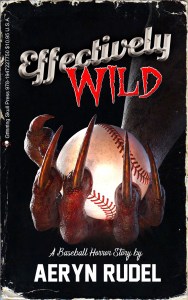
So, one of the acceptances is for my baseball horror novella Effectively Wild, which is slated for release in the fall. Grinning Skull Press has released the cover, and I’ll share that with you below.
The Rejectonomicon
As always, I need your questions form my Q&A columns out at Dark Matter Magazine, so check out the guidelines, and send them to me. 🙂
Here’s how to send writing and rejection questions to me.
- Email your question to questions@rejectomancy.com.
- Put REJECTONOMICON in the subject line of the email.
- Write your question in the body of the email. Try to keep it brief.
- Please let me know if you’d like your first name published along with your question or if you’d like to remain anonymous.
- Please restrict your questions to the subjects of writing, submissions, and rejections. Those are pretty broad categories, though, and I’d be happy to field questions about my past career as a Tabletop RPG game designer/editor and media tie-in writer.
Got it? Then send me those questions!
And that was June. How was your month?
Effectively Wild – A Horror/Baseball Novella
Way back in August of last year, I was joking with my wife about writing a baseball monster story featuring a certain type of monster. I offered the title Effectively Wild as a haha-isn’t-that-funny and got the appropriate eyeroll. Well, friends, that slightly silly idea began to take shape in the ol’ brain meats, and it wasn’t long before I had outlined a novella. Now, I love baseball, and I love monsters, so once I got started on this thing, I enjoyed the hell out of it. It wasn’t even the first time I’d done the monster baseball thing. Back in 2016, I published a story with Pseudopod called “Night Games”, which you can check out here.
Anyway, I finished a first draft of Effectively Wild, ran it through two excellent critique partners who pronounced it good, and then started submitting it. I knew it was gonna be a tough sell. For one, it’s more supernatural thriller than straight up horror, so that was strike one. Two, it features baseball, and, well, some folks are really not into sports, so strike two. Finally, there aren’t many short fiction markets that publish novella-length work. Strike three. I did try one short fiction market and received the simple form rejection I knew was coming. That led me to believe that independent book publishers interested in novellas would be a much better bet. So I went that route, and after two more rejections, I sent the novella to Grinning Skull Press. To my very pleasant surprise, I received an acceptance about six months later.
This will be the longest piece of fiction I’ve published outside of media tie-in (where I’ve published multiple novels), so this is an exciting development for me. Working with the staff at Grinning Skull has been a real delight, and a few days ago, the previewed the cover of Effectively Wild, which you can see below along with a short synopsis of the story (that’s spoiler free). I couldn’t be happier with the old-school 80s vibe of this thing. Check it out.
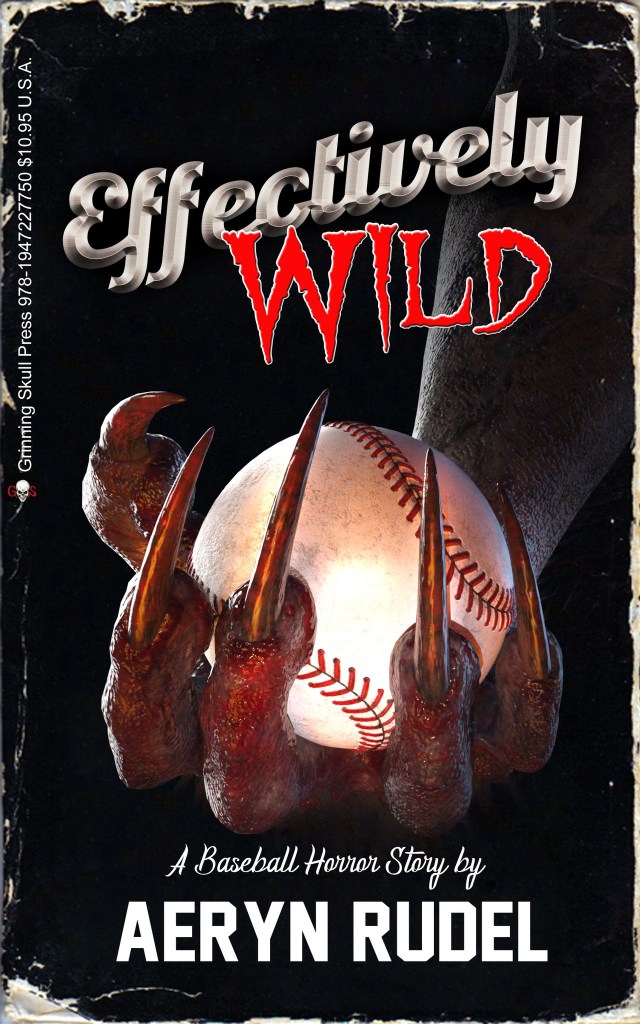
Martin Wagner, an aging catcher in the San Francisco Giants farm system, is offered a new assignment—take a promising young pitcher under his wing and show him the ropes. Martin’s manager is cagey about the new player, giving only his name, Andrei Dinescu, and his country of origin, Moldova. Despite the mysterious circumstances, Martin accepts the assignment, hoping to earn a return to the big leagues.
After his first bullpen session with the strange new pitcher, Martin is shocked by Andrei’s lack of physical ability and his unfamiliarity with the game of baseball. However, with each passing week, Andrei’s strength and skill grow exponentially, and his miraculous leaps in both ability and velocity begin to frighten Martin. This fear is compounded by the organization’s obvious attempts to keep Andrei separated from the rest of the team.
At the height of his prowess, Andrei is put into the rotation for his first start with Martin behind the plate. Before the game, the manager offers a devil’s bargain, and the source of Andrei Dinescu’s bizarre abilities becomes horrifically clear. Martin is faced with a desperate choice: walk away from baseball and everything he has known or deal with the monster on the mound and earn his way back to the majors.
This is just the cover reveal. The exact release date has yet to be determined, but it will be sometime in the Fall. Preorders are the next step, and I’ll post links to those as soon as I’m able.
Hopefully, there will be more monster/baseball mashups. I’ve got ideas for a bunch of them all loosely connected to Effectively Wild. I’ve even been tinkering with one tentatively titled Deep Count. 🙂
Further Considering Acceptance Rates
I recently received a further consideration/hold letter from an excellent pro market. This is my third story to make it through a first reader and be recommended to one of the editors for further review. Now, it can be hard to quantify exactly what it means when you get over that first hurdle. There a lot of questions you might ask. How many total submissions does the publication receive? How many stories make through the first round? And, finally, of those stories, how many end up accepted? Usually, all you can do is guess at those answers, but the editors at Apex Magazine recently gave us some hard numbers and shed some light on the situation.
I’ll link the Twitter thread here, but here’s the basic math.
According to the Apex editors, they received roughly 5,000 submissions through mid-May of this year, about 1,000 subs per month. Of those 5,000, around 100 were recommended to the editors (made it past the first reader). That’s around 2% of the total submissions received. Of those stories that made it through the first round, six stories were accepted for publication. That’s 6% of stories recommended to the editor and 0.12% of total submissions. I encourage you to read the Twitter thread, as it contains a more granular breakdown, but these are broad strokes.
I think you could expect similar numbers from other big genre markets like The Magazine of Science Fiction & Fantasy, Clarkesworld, Asimov’s Science Fiction, and others. These numbers do NOT mean you shouldn’t submit to these markets, but it’s good to understand the odds you’re up against, and, more importantly, what those odds mean. Let’s dive into that.
- A rejection from a market like this does not mean you’ve written a bad story. Even more so than smaller markets, It usually means you’ve simply written a story that isn’t right for the publication. Out of the 4,994 stories Apex rejected, I’d be willing to bet quite a few of them were pretty good and went on to be published elsewhere. So, don’t let a rejection from a big pro market get you down.
- If you do get a hold/further consideration letter from a market like this, you’ve reached rarified air. Publication is never a guarantee, but you’re certainly a big step closer. Even if the story is ultimately rejected, it’s a safe bet you’ve got a good one on your hands, and it just wasn’t quite the right fit for this market. Chances are good it will be for another. Case in point, the other two stories of mine Apex held for further consideration and ultimately rejected were sold elsewhere in fairly short order and to semi-pro or pro markets. Note, this does not mean Apex was wrong and the other publishers were right. It just means my stories were a better fit for those other markets.
- The number here demonstrates the crusty old adage that good stories get rejected too, and, as always, publication is about putting the right story in front of the right editor at the right time. Yes, the chance of acceptance is slim, but the chance of acceptance for the right story is always 100%. Keep writing, keep submitting, and eventually, you will beat the odds.
This kind of information is exceedingly helpful. So from this writer and I’m sure dozens of others, I would like to offer a sincere thank you to the editors of Apex Magazine for giving us a peek behind the curtain. It is very much appreciated.
Thoughts on these numbers and other pro markets? Tell me about it in the comments.
Swings & Misses IV: Revenge of the Rejection Streak
Submitting short stories to genre and lit magazines is a process that can be, uh, well, let’s just say discouraging. Why? Because rejections are inevitable, multiple rejections for the same story are expected, and even two or three rejections in the same day are not out of the ordinary. Most writers have a thick enough skin to withstand the fusillade of NOs, but what about when the rejections pile up and there’s not an acceptance in sight? Well, friends, I’m here to tell you that the dreaded rejection streak is also not that uncommon. I have endured three that crossed the twenty-rejection threshold. In fact, one just ended a few days ago. As I have done before with rejection streaks, I’m going to break down the latest one and see how it compares to the others. Then we’ll talk about why these streaks happen and what you can do about it.
First, data! Stat for my three rejection streaks in the table below.
| 2017-2018 | 2020-2021 | 2022 | |
| Rejections | 27 | 21 | 22 |
| Duration | 12/9/17 to 2/18/18 | 12/27/20 to 4/1/21 | 4/12/22 to 6/4/22 |
| Duration (Days) | 74 | 96 | 54 |
| Unique Stories | 13 | 13 | 13 |
| -Flash Fiction | 8 | 9 | 7 |
| -Short Stories | 5 | 4 | 3 |
| -Novellas | 0 | 0 | 1 |
| -Other | 0 | 0 | 2 |
| Markets | 17 | 14 | 15 |
| -Pro | 12 | 10 | 9 |
| -Semi-Pro | 5 | 4 | 5 |
| -Token | 1 | 0 | 1 |
The key difference in the three rejections streaks is duration. The other numbers are eerily similar. I mean, look at the unique stories line. That isn’t a mistake. Those with triskaidekaphobia would be understandably horrified. The rest of the data–number of markets, types of markets, and lengths of stories–are all pretty much the same. So what’s happening here? I’m a modestly successful short story writer with lots of publications. Why am I running afoul of these long streaks not-for-us’s? Now that I have a lot of data, some of my answers to that questions have changed, while some are evergreen and immutable. Let’s discuss.
- Bad Luck: Let me start with this a sports analogy. (Sorry.) In baseball, when a player goes on an extended hitless streak at the plate, his coaches will often turn to the analytics to figure out why. Sometimes, they can see that his exit velocity off the bat is consistently high, i.e., he’s hitting the ball hard, but by sheer luck he’s hitting the ball right at the defense and his hitless streak continues. My rejection streaks are similar. Hard hit baseballs translate to close-but-no-cigar rejections, and each of these streaks tends to feature more than usual. In other words, I’m making good contact, but the hits just aren’t dropping in. There is absolutely nothing you can do about that. You just have to keep stepping up to the plate and telling yourself this time it’s going over the fence.
- Tough Markets: I tend to submit primarily to pro and semi-pro markets. Often the acceptance rates at these markets are vanishingly small, so even a good story is likely to get rejected and require multiple submissions before it finds a home. Nearly all the short stories I’ve sold to pro markets were rejected upwards of ten times. You get a couple of those out there at the same time, and hello streak-ville.
- Long-Form: Unlike previous rejection streaks, this current one included a novella. Long-form fiction can be tougher to sell because there are fewer markets, and many of those markets are short story publishers that might occasionally publish a novella. In other words, the odds are stacked against you even more with pieces over 10,000 words or so. A fair number of rejections in this streak were for the novella I’ve been shopping around, but I’m happy to report there’s some good news on that front. 🙂
- Stuck in a Rut: We all have our go-to tropes and themes and narrative styles, and even if they are generally successful, you can find yourself churning out the same story over and over again. If you submit to a lot of the same publishers, they might get tired of reading ANOTHER tale about two people talking in a bar and one of them is a zombie/vampire/demon. I mean, who would write such a thing? 🙂 Anyway, I definitely needed to break out of a certain mold and get a little more creative with my work. It’s not that I’m not still writing about demons and vampires and weird psychic phenomenon. I’m just trying to stretch a little in terms of character and narrative structure. Too soon to tell if I’ll be successful, but I feel pretty good about the latest crop of stories.
So what’s the takeaway here? Essentially, the more you submit work, the more rejections you get, and occasionally, through bad luck and a few other factors, those rejections pile up. You honestly can’t avoid it, in my opinion. The thing to remember though, is that streaks, by their very nature, must end. You just have to be patient, try to take an objective look at your work, and see if there’s anything you can adjust. Often times, there isn’t, and it’s really about getting the right story in front of the right editor at the right time. So, hang in there, keep writing, keep submitting, and keep going.
Effectively Wild – A Baseball Horror Story
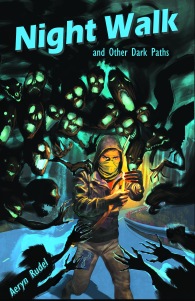
Night Walk & Other Dark Paths
Acts of War: Flashpoint

Acts of War: Aftershock

Acts of War: Stormbreak

 Aeryn Rudel's Rejectomancy