
Climbing the Impostor Syndrome Ladder

Hey, follow writers, let’s talk about impostor syndrome. You know, that particularly pernicious brain weasel that constantly reminds you you’re not good enough, chewing your confidence and discipline down to the nub until you can barely string a sentence together. It’s a real son-of-a-bitch, and like all of you, I struggle with impostor syndrome on a daily, hell, an hourly basis. But what can you do about it? Sure, can keep writing and try to tune out impostor syndrome as best you can, but I came up with a little exercise that might make it a tad more manageable. It’s called the impostor syndrome ladder. Here’s how it works. One of the worst things impostor syndrome does to me is invalidate my achievements, never letting me revel in any accomplishment because all it wants me to focus on are the things I haven’t achieved. The lie it tells me is if I could just accomplish the next thing, then I’d finally feel good about my writing. So, I’m gonna give it what it wants and list some of the milestones in my career and describe how imposter syndrome told me they weren’t good enough. Follow along; this’ll all make sense at the end. I promise. 🙂
Rung One: If I could just get published.
It’s 2004, and I’m posting short stories and creations from my D&D campaign on a popular message board. I’m getting noticed by publishers, and one of them offers me an actual paying gig to write for them. I’m gonna get published! Like legit published!
Ooh, look at the author over here, impostor syndrome says. Dude, one publication? That doesn’t mean squat. You need to get published regularly if you want to be taken seriously as a writer.
Well, damn.
Rung Two: If I could just get published regularly.
it’s 2007, I have dozens of writing and editing credits in the TTRPG industry. I’m even making a decent supplemental income off those publications. Pretty good, right?
Well, not so fast, my guy, impostor syndrome says. We both know those publications don’t mean much unless they get you an actual full-time gig as a writer or editor.
Aw, man. Really?
Rung Three: If I could just get a full-time writing/editing gig.
It’s 2008, and I have a full-time gig as a staff writer and editor for Goodman Games. I’m living the dream. I’m earning my living writing and editing. That’s great, right?
Hold your horses there, champ, says impostor syndrome. All those publication credits and that fulltime writing/editing job don’t mean a thing if you haven’t been published by the biggest publisher in the industry. Who’s gonna take you seriously?
Goddamn it.
Rung Four: If I could just get published by the biggest publisher in the industry
It’s 2011, and not only am I the editor-in-chief for Privateer Press’s inhouse magazine No Quarter and working for one of the biggest publishers of fantasy miniature games, I’ve also published a dozen adventures and articles with Wizards of the Coast, the biggest publisher of RPG content on the planet. I’m a legit, widely published writer and editor who works fulltime for a fantastic company with fantastic people. Awesome, right?
Sorry, bud, says impostor syndrome. All that game stuff is okay, but you’re not a real writer until you publish more fiction.
Seriously?
Rung Five: If I could just publish more fiction.
It’s 2014, and I’ve sold multiple short stories to various genre magazines, and even better, I’ve published a lot of media tie-in fiction with Privateer Press as well. So, not only has my game design and editing resume grown more impressive, now I have a bunch of fiction credits to add to it!
Nice job, sport, says impostor syndrome, but we both know you’ve only published short stories with semi-pro markets. Until you actually sell a story to a professional market, what are we even doing?
Sigh.
Rung Six: If I could just publish fiction with a pro market.
It’s 2015, and I’ve sold a dozen short stories to various markets, including a couple of professional markets. My sale of a baseball vampire story called “Night Games” to PseudoPod is the crowning achievement in my pursuit of professional publication. I’m also now the managing editor of Privateer Press’s fiction line, Skull Island eXpeditions. I’m kinda killing it.
Wow, good going, bro, says impostor syndrome, but, come on; short fiction? Everyone knows real writers write novels, so let’s get busy.
Ugh, fine!
Rung Seven: If I could just publish a novel.
It’s 2019, and I’ve published multiple novels with Privateer Press, and I’m working on a novel with my own IP. Holy shit, I’m a novelist! I’m also continuing to sell dozens of short stories to both semi-pro and professional magazines AND publish media tie-in articles and short stories. I’ve got hundreds of writing and editing credits. At this point, I am definitely a legitimate professional author, right?
Ooh, I don’t know, pal, says imposter syndrome. I mean, from what I hear, legitimate professional authors have published novels based on their own IP. Have you done that yet?
Fuck.
Rung Eight: If I could just publish a novel with my own IP.
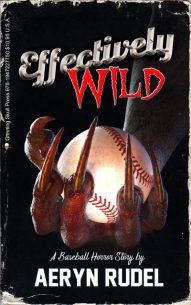
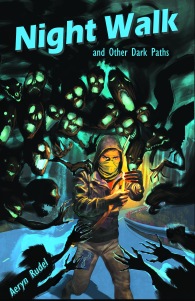
It’s 2024, and I have over five hundred writing and editing credits. I’ve written and published a dozen media tie-in novels and novellas with Privateer Press, over a hundred short stories with various sci-fi, fantasy, and horror magazines, and another hundred and fifty more media tie-in stories. I’ve also published a collection of short fiction called Night Walk and a fun little horror novella called Effectively Wild. I’ve written two novels based on my own IP, one of which I queried and received multiple full manuscript requests, and the other, which I know is a better novel, I’m about to query. I’ve run a blog called Rejectomancy for almost a decade with a loyal following, where I talk honestly and openly about the trails and tribulations of writing and rejection. Dozens of writers have told me how much reading my blog has helped them deal with their own challenges, and I find that immensely satisfying. By anyone’s measure, I am an accomplished professional writer.
Now hang one there, buckeroo, says impostor syndrome. You still need to–
Shut the fuck up.
Damn, that felt good. Now, the reason I wrote out my impostor syndrome ladder is not so that I could wallow in all the things I haven’t done (though the temptation is strong). It’s so that I can see, right there in black and white, all the things I have accomplished and how absolutely wrong impostor syndrome is when it tells me I’m not good enough. At any rung on this ladder, it would have been perfectly okay to stop and say to myself, you know what, I AM a good writer. Of course, some might think that little voice pushing you to achieve more and to grow as an artist is the same thing as impostor syndrome. In my opinion, it isn’t. Those voices are very different. At least in my head. The former feels good, motivating in a positive way, the latter just makes me feel like shit, and I actually can’t write when impostor syndrome is yammering in my ear.
So, if impostor syndrome has you down, try writing out your own ladder (you don’t have to do the impostor syndrome voice). I’d bet real cash money that when you’re done, you’ll have a list of accomplishments you can be legitimately proud of. 🙂
Effectively Wild – A Baseball Horror Story
Night Walk & Other Dark Paths
Acts of War: Flashpoint

Acts of War: Aftershock

Acts of War: Stormbreak

 Aeryn Rudel's Rejectomancy